DD
MM
YYYY

PAGES

DD
MM
YYYY

spot_img

PAGES

Home Blog Page 5118

Tekedia Unveils “Tekedia Corporate Town Hall and Consultancy with Prof Ndubuisi Ekekwe”

0

Tekedia Institute unveils a new program: “Tekedia Town Hall and Consultancy with Prof Ndubuisi Ekekwe”. It is a live program which takes place on Zoom. It focuses on business strategies, mechanisms, models, frameworks, etc, which companies of all sizes can deploy to win new markets and territories.

Like the ancestral town halls, it is designed to be unit-, department- or company-wide with Prof Ekekwe as a guest. The overriding objective is to provide a platform where companies can get insights from an external thought-leader, helping them to refine, upgrade and execute their missions better.

Indeed, as the global economy is being rattled and redesigned due to many factors, this program will help your organization deepen capabilities to survive and thrive, despite any economic upheaval. We have developed playbooks and protocols which your team will find useful in your operations.

The program will run for three hours on Zoom. Prof Ekekwe will make a presentation for 60 minutes with specific focus on the client’s sector. The subsequent minutes will be for Questions/Answers and interactive engagements with the participants. We expect the conversations to focus on the frictions and wins the company is experiencing. Tekedia Institute will provide perspectives, drawing from our practical industry and academic experiences.

To learn more and register your company, go here and pay N450,000 naira (or US$1,000). Once done, our team will send you a calendar to pick a time for the session.

Sample certificate to be issued to learners

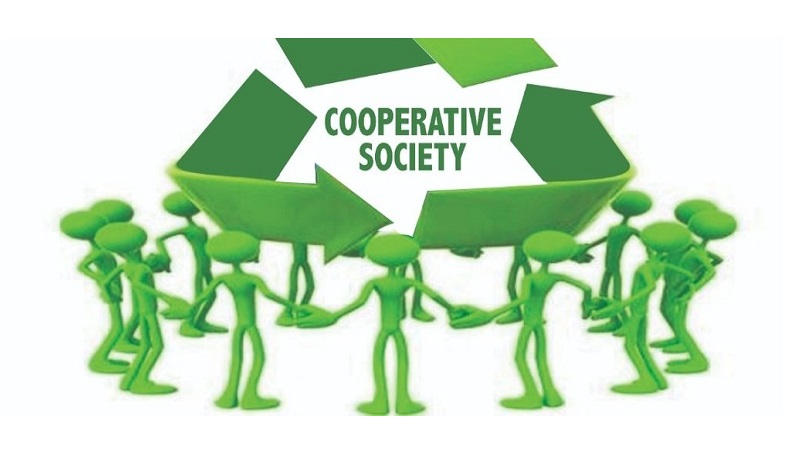
How to set up a Digital Co-operative Society in Nigeria

4

It goes without saying that at this point in time and considering the economic state of Nigeria that there’s a more pressing need to look back to one’s roots to understand the principles of traditional financial management, and tried and tested native financial institutions.

This need led to the introduction of a very simple but never before seen Fintech unicorn candidate :- the Digital Ajo/Esusu.

Ajo(Yoruba) and Esusu (Igbo) systems are simply informally created societies based on the African principles of communal economic development, with one member seen as a link in an overall chain of members, who build one another up, via monetary daily or weekly contributions, that form a pool of funds that serve as a line of credit, and an investment pool-source for members.

This grassroot-level human adaptation of ants working in unison, remains the biggest source of alternative finance in Nigeria, accounting for a cumulative funds pool in Lagos assessed at 33Billion Naira at least!

These native financial institutions are what have also been captured under Nigerian law as Co-operative societies, which are defined as voluntary associations made up of individuals joined by a common bond and interest, who converge for the purpose of economic benefits to everyone in the group.

Co-operative societies are a cheaper alternative to registering a Limited liability company in Nigeria and have as their advantages when registered:-

  • Perpetual succession (they can outlive their members like companies);

  • Cheaper to register than companies (Registration costs can be as low as 10,000.00 Naira minus other fees);

  • They are free from the burdens of Tax regimes that typically plague companies;

  • They can own, sell, acquire and lease movable and immovable properties;

  • When registered, they present the purest examples of democratic management compared to companies that sometimes depend a lot on majority shareholders and a hierarchy within the Nigerian Code of Corporate Governance;

  • Co-operative societies are allowed to have group investments such as Co-op Microfinance Banks(which require a minimum share capital of 50million Naira).

Co-operative societies are governed by the Nigerian Co-operative societies Act at the Federal level through the Office of National Civil Registration at the Federal level or at the State level in states like Lagos, the Director of Co-operatives at the Ministry of Commerce, Industry & Co-operatives.

Co-operative societies come in classes or types and under Nigerian law come with minimum membership requirements at the point of registration as seen in the following examples :-

a). An Agricultural Co-operative society – (50 members minimum).

b). A Savings and Credit society, the core focus of this article – (20 members minimum).

c). Specialized skill Co-operatives -(10 members minimum).

d). Multipurpose/General Co-operatives – (20 members minimum).

e). Other types of Co-operatives- 10 members minimum.

Regarding the topic of who can be members of a Co-operative society, the following rules apply under Nigerian Law :-

  • A member must be AT LEAST 15 years old.

  • A board member must be AT LEAST 18 years old.

  • Every member must have a need identical to that of other members of the society necessitating membership of the society.

  • A member must show proof of the ability to pay fees of the society and buy shares.

  • Every member must be in a line of business or occupation/job relevant to the society e.g. A Medical Doctor has no business joining a Co-operative made up of architects.

Digital Co-operatives :- A digital Co-operative society in this case simply refers to a Cooperative that operates virtually in terms of membership applications, cashless member contributions, and digital rendering of benefits associated with benefits such as loans.

In addition to the requirements associated with registering a Co-operative, a digital “Ajo” system would require the setting up of a digital/online platform,most likely an app, which will have to be registered as a Trademark alongside its copyrights along with the required Frontend and Back-end development contracts as an extra security measure against Intellectual Property theft.

Co-operative society applications usually get approved in about 3 months, although Certificates of Registration are only presented after about 3 years to in order to verify the functionality of the Co-operative and that the Cooperative is not being operated for an ulterior motive such as Money-laundering.

Requirements for the Registration of a Digital Co-operative Society.

The following is necessary for an application for registration of a Co-operative to succeed :-

  • An application for registration of the Co-operative society to the Director of Co-operatives signed by at least 10 individuals qualified for membership of the society of it’s a primary society(a society with only individual members) or if it’s a secondary society (a society with another Co-operative society as its member) then a duly authorized member of the member society)

  • The proposed name of the society (which will be confirmed by a Name search and approval).

  • The proposed office address/location of the Co-operative.

  • The objectives of the society.

  • The purposes or ends to which the monetary contribution pool of the society will be applied, kept, or invested.

  • Membership admission and conduct rules.

  • The society’s By-laws.

  • A feasibility report as to the operation guidelines of the Cooperative society.

  • Copies of a resolution passed at the first meeting of the Co-operative society with the Province Cooperative Officer in charge of registration(this must at least involve the appointment of a chairman, secretary and treasurer of the Co-operative)

  • Letters of intent to join the society by prospective members of the society.

  • An official Stamp duty of the Co-operative to be tendered after the Cooperative name approval.

  • Evidence of Registration fee payment.

  • A detailed IT Policy including password policy.

  • A SCUML/AML/CFT/KYC compliance framework application by virtue of Co-operatives being Designated Non-financial Institutions.

  • A Data Protection Compliance Framework set-up commenced by an application to the National Information Technology Development Agency (NITDA).

Core Rules Of Digital Cooperative Societies (Especially Savings and Credit Societies).

  • A primary society will not be registered except it is made up of a minimum of 10 members who are at least 21 years old.

  • The word “Co-operative” must be part of the name of the society to be registered.

  • A Cooperative Society CANNOT gives loans to non-members except as its by-laws provide, another Co-operative society.

  • A Cooperative Society dedicated to lending money to other registered societies is referred to as a Central Financing Society.

  • All disputes arising from Cooperative Societies must first be subjected to arbitration.

What You Need a Lawyer For When Setting Up a Digital Cooperative Society.

You need a lawyer for the following services when registering and operating a Cooperative Society:-

  • The preparation of your Co-operative society registration application.

  • The preparation of the by-laws and objectives of your Co-operative society.

  • The documentation of the Front-end and Back-end development contracts of your app.

  • The application for SCUML certificates and the continuous rendering of AML/ CFT/KYC/STR/CTR returns.

  • The registration of your Co-operative’s Intellectual Properties such as your app .

  • The documentation of loan agreements involving your loan disbursements.

  • Acting as the first point of detached contact in the event of a dispute.

  • Rendering compulsory Data Protection Compliance returns to the NITDA.

  • Rendering applicable Tax advisory services.

  • Performing liaison officer functions between your Co-operative and the Director of Co-operatives or the Office of National Civil Registration.

  • The rendering of all Legal support functions in the execution of Investment decisions of the Co-operative.

  • Engaging in Debt Recovery services on behalf of your Co-operative society.

From the above, it can be seen that the future of 21st century Traditional Financing is finally here, and with the right hands guiding you, the Digital Co-operative is the bridge between ages-old traditional financial wisdom, and Financial Technology in its most helpful form.

Coca-Cola Expands ‘Coke Studio’ Globally

0

Coca-Cola is expanding its music platform “Coke Studio” to a global stage. Originally launched in Pakistan in 2008, the Coke Studio program is digital-first, always-on and provides an opportunity for emerging talent to partner, create and deliver moments of musical magic to new audiences.

The first moment is the introduction of a 90-second film titled “The Conductor” featuring Nigerian singer songwriter and producer Tems and six other global superstars namely Grammy nominated American R&B sensation Ari Lennox; British singer songwriter Griff; Turkish electro-pop producer Ekin Beril; Latin urban pop powerhouse Mariah Angeliq; Canadian-Indian rapper and producer Tesher; and colourful, multilingual K-Pop girl band TRI.BE.

‘The Conductor’ pays homage to the legendary rock band Queen through a unique collaboration that encapsulates the multicultural magic at the core of the Coke Studio platform. The 90-second film centers on a re-recording of Queen’s iconic ‘A Kind of Magic’ melody, produced in an extraordinary collaboration with global breakthrough artists who each bring their own unique style to the music, reimagining the track for a new generation.

According to Pratik Thakar, Head of Global Creative Strategy and Content, Coca?Cola, “Coke Studio is a direct extension of Coca?Cola’s Real Magic philosophy. It celebrates the unique ability of music to unite and uplift and provides a connection point for fans around the world to come together and enjoy a new experience.”

“The Coke Studio platform was born in Pakistan and has gone on to have great success there as well as in Africa and the Philippines, including 11 million YouTube subscribers. We believe it has the potential for exponential growth, and today we’re excited to introduce it to a wider global audience, using the reach of our iconic brand to help bring new audiences to some extraordinary artists,” Pratik Thakar adds.

In Africa, Coke Studio was hitherto known as “Coke Studio Africa“, a non-competitive music reality show organised by the Coca-Cola company where Africa’s biggest Musicians are paired to perform life. It featured top musicians like King Sunny Ade, M.I., Waje, Bez and Salif Keita.

“We set out to do something different with Coke Studio,” said Joshua Burke, Head of Global Music & Culture Marketing, The CocaCola Company. “Coca?Cola has always had a strong connection with music, working with stand-out emerging talent in different communities in all corners of the world, as well as a strong heritage in connecting people across borders and cultures. Coke Studio brings these two things together in a way that’s powerful and future-facing, supporting the development of talent in the music industry, while also connecting new audiences to new music – and to each other.”

Burke also said that “We see ‘The Conductor’ as both a homage to the legendary Queen and an opportunity to refresh and reinterpret one of their greatest tracks in different ways across cultures and musical genres, for a new generation. There’s magic in that too.”

The launch of Coke Studio and ‘The Conductor’ has been curated in partnership with Universal Music Group, the world leader in music-based entertainment, with five of the participating breakthrough artists signed to the company’s iconic record labels, and a sixth with its Universal Music Publishing Group (UMPG) division. ‘The Conductor’ was created with creative agency, BETC London and produced with Iconoclast’s director Pierre Dupaquier (WAFLA).

“Collaborating with these incredible artists and the Coca?Cola team on both the music and creative vision for this launch was magic,” said Richard Yaffa, EVP, Global Brands, Universal Music Group. “Our companies are aligned in our deep commitment to showcasing phenomenal talent, to partnering with artists from all over the globe and to supporting them in sharing their music while creating opportunities to expand their fanbase.”

‘The Conductor’ and Coke Studio™ global platform is live now.

Though the Coke Studio started earlier, Coca Cola was lenient in making it a global platform that will compete in the music industry. Apple Music which started in 2015, has become a global music force and a huge source of revenue for the iPhone maker.

This move by Coca Cola to expand the Coke Studio is also a strategy of diversification – divesting from consumables to multi-billion dollar music industry.

Microsoft Announces Plan To Support 10,000 Start-Ups In Africa

0

Under the aegis of its recently established Africa Transformation Office (ATO), the global Information Technology (IT) giant, Microsoft, in March 2022, graciously announced new initiatives to accelerate the growth of 10,000 African start-ups and fast-track investment on the continent’s ecosystem over the next five years.

Microsoft’s recently launched global Founders Hub will now be available to African start-ups through the ATO.

It’s noteworthy the Founders Hub is a self-service venture that provides start-ups with a wide range of resources, including access to mentors, skilling content, tools like Microsoft Azure and GitHub, and go-to-market and business support.

Microsoft is also creating new partnerships with accelerators and incubators across Africa, including Grindstone, Greenhouse, FlapMax and Seedstars to provide industry-based start-ups with access to markets, technical skills and funding opportunities.

These partnerships would provide African start-ups with access to skilling programs and markets, including opportunities to co-sell with Microsoft, as well as access to technology, with support from Microsoft’s engineering and product teams for co-innovation opportunities.

To enable start-ups to rapidly scale through using investment funding, Microsoft is establishing industry alliances and partnerships with venture capital investors that would facilitate access to $500 million in potential funding for African start-ups.

This funding would reportedly come from a network of venture capital investors, who would dedicate a portion of their financial support to start-ups in the Microsoft network.

It would interest us to note that Microsoft had already established partnerships with several key venture capital investors, including Banque Misr, Global Venture Capital and Get Funded Africa, and the intention was to grow this network of venture capital investors in the next five years to increase funding and enable them to scale up and drive economic growth.

Microsoft believes the vibrant African start-up market is well placed to become a cornerstone of the continent’s digital economy, supporting local innovation through relevant solutions to societal challenges.

The Managing Director of the Microsoft ATO, Wael Elkabbany said, “Investments into Africa’s start-up ecosystem are growing at an exciting pace. According to the Organisation for Economic Co-operation and Development (OECD), there are more than 640 active tech hubs across Africa, accelerating innovation and creating employment, particularly among the youth.”

“However, currently the African start-up market represents less than one per cent of total investments worldwide. This needs to change.”

He reveals that Microsoft’s endeavour to dramatically scale its impact would be driven by an overarching strategy with three key focus areas.

Elkabbany concludes, “There is huge potential for Africa to become a thriving hub of digital innovation on the global start-up landscape. Our ambition is to see an explosion of local inventions that will contribute positively, not just to Africa’s digital economy, but to global society.”

On his part, the Start-ups Lead of the Microsoft ATO, Gerald Maithya further disclosed that Microsoft was establishing partnerships with venture capital investors, primarily those with global reach and regional bases, who are interested in one or more regions within Africa.

He said, “Our goal in establishing these partnerships with venture capital investors is to extend the network of potential partnerships between Microsoft, venture capital investors and start-ups, thereby increasing the funding made available to eligible start-ups.”

“We understand that each start-up is unique and exists beyond the limitations of a one-size-fits-all partnership model. This is why Microsoft will tailor each partnership to the needs of individual start-ups, providing support and access – whether to technology, markets and co-sell opportunities, funding or digital skills – to enable them to grow and contribute to the wider economic growth of Africa.”

What was more of interest in Microsoft’s report, where it mentioned that ‘currently the African start-up market represents less than one per cent of total investments worldwide’ having acknowledged that the continent could boast of more than 640 active tech hubs.

This is to say that the concerned authorities on the African continent aren’t doing enough as expected of them, hence the compelling need to expedite actions in a bid keying into the needful.

Eight Months After AbokiFX Forex Shut Down, Naira Hits N610/$1

2
Nigeria Naira US Dollar

Naira has hit its lowest rate in history at N610/$1 in the parallel market, stoking fresh concern that Nigeria may be heading toward another recession as inflation has begun to increase its numbers again.

Since about seven years ago, the Central Bank of Nigeria (CBN), has been pointing accusing fingers at many factors for naira’s free fall. Among the factors that the apex bank has blamed as the naira nosedives are Bureau de Change (BDCs) and the most controversial, AbokiFX – an online exchange aggregator that publishes daily exchange rates and has become popular among Nigerians.

The CBN governor Godwin Emefiele had accused the outlet of manipulating the foreign exchange market, thereby undermining Nigeria’s economy. That was in September last year. AbokiFX was forced to shut down operation as Emefiele unsubstantially made his claims and vowed to go after the aggregator. The naira was exchanging around N570/$1 then.

It has been eight months since then and Nigerians eagerly want to know why the naira has further fallen N40 below its then position against the dollar.

“$1 is truly N610? I thought since Aboki Fx has been banned, $ should be trading at N100 or less,” Wale Adetona tweeted.

The CBN also stopped forex supply to BDCs, accusing them of inflating exchange rates and stirring dollar scarcity. The launch of eNaira weeks after AbokiFX was shut down was touted by the central bank as a panacea to the naira’s ordeal. But these measures taken by the apex bank have fallen short of the solution to naira’s weakness.

”$1 is officially N610 in Nigeria. So was Aboki Fx the problem? Godwin Emefiele connived with President Buhari. Both men destroyed the Naira. CBN Governor’s E-Naira was another Air Nigeria Scam,” Nefertiti, another Nigerian Twitter user wrote.

The resulting consequence of naira’s free fall – inflation, is pushing Nigerians to the edge. As of March, inflation rate has risen to 15.92%, a five-month high that has further shot up the cost of living in Nigeria.

As lack of dollar liquidity, which experts have rightly blamed for naira’s downfall, persists due to economic headwinds emanating from oil market’s crisis and recently, Russia-Ukraine war, the call for Nigeria to diversify its economy from oil hasn’t been louder. The CBN governor Godwin Emefiele admitted last year that Nigeria is spending about 40% of its forex on petroleum import due to lack of functioning refineries in the country.

Though recently, crude oil price has risen above $100, Nigeria’s foreign reserve has yet to increase its volume to retain sustainable forex liquidity that will upset the current status of the naira against the dollar. This is because the Nigerian government is paying fuel subsidies that have gulped up to N7.5 trillion of the 2022 budget.

While the current situation of Nigeria’s FX market has exonerated AbokiFX, Nigerians are worried that Emefiele’s blame game and other inconsistencies will further harm the naira and Nigeria’s economy before 2023. The CBN governor has been politically active, instigating calls for his resignation.

Early this month, Emefiele made a baffling move to run for president, defying the CBN act that prohibits its officers from being political. Though he has withdrawn his interest, including the lawsuit he filed seeking a legal backing to presidential aspiration, the development has added to the concern that the naira in the care of Emefiele, will see more dips.