DD
MM
YYYY

PAGES

DD
MM
YYYY

spot_img

PAGES

Home Blog Page 5161

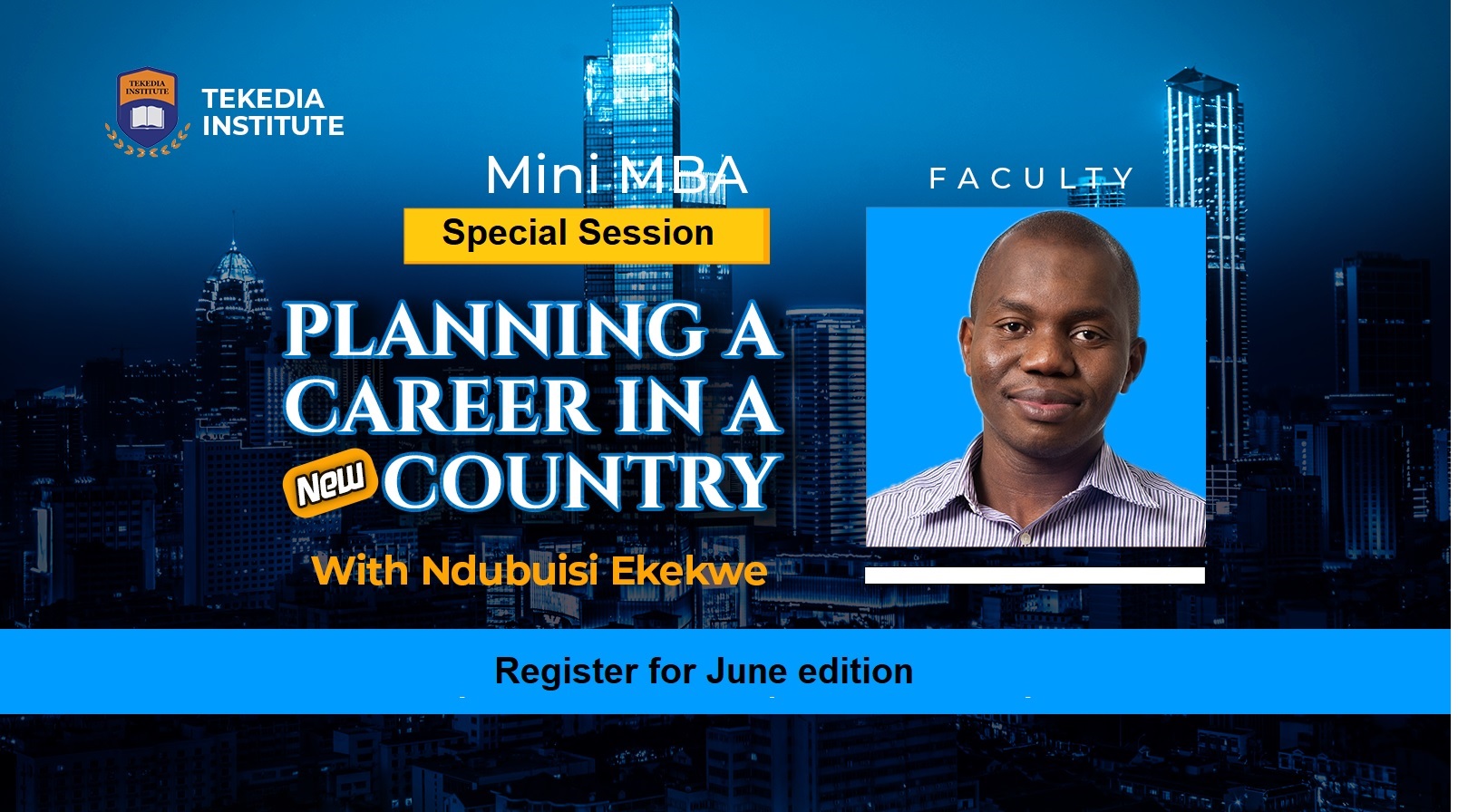
Join Tekedia Mini-MBA On “Planning a Career in a New Country”; Register Today

0

At Tekedia Institute, we educate with the mindset that your career can take you to another country. And before you leave that home base, there are things you must do, if you want that translation to be seamless. For instance, how do you warehouse all your academic credentials so that as you leave the home base, you never have to ask your schools for those, again?

Many years ago, after reading on Yahoo Groups (those days!) how Nigerians were frustrated on delayed transcripts, I applied for all my academic transcripts and sent them to World Education Services.  Magically, if I need to send a transcript, I just go to WES, pay and send it to the institution, with no need to deal with any Nigerian school!

In this special session, we will discuss how you can become “richer” through better credit management. Many will tell you: “never take a credit card”. They are wrong. The problem is not the credit card but how you manage your credit. You need those credits to “extend” your financial positioning. Trust me, I was a good banker before I got out.

This is my message: the key to financial ascension is bumping how much you make an hour and not working all hours in America. If you get a certification, you can double your pay, saving you precious time. Working all hours is a bad strategy: boost how much you earn per hour. We will discuss how certifications, licenses, etc can put you on a great path. Register today for Tekedia Mini-MBA; we’re transforming lives . Begin here 

Nigeria’s Freight Forwarding Startup, Topship, Raises $2.5m Seed Round

0

The Nigerian logistics sector has seen tremendous growth in recent time. Spurred by technology adoption and uptick in export of goods and services from the West African country, the emerging market has risen to become one of the fastest growing industries in Nigeria. As of 2018, the value of Nigeria’s logistics sector was estimated to be 250 billion naira ($696 million), a rise of 50 billion naira ($140 million) from 2017 figures, according to data from the US Department of Commerce.

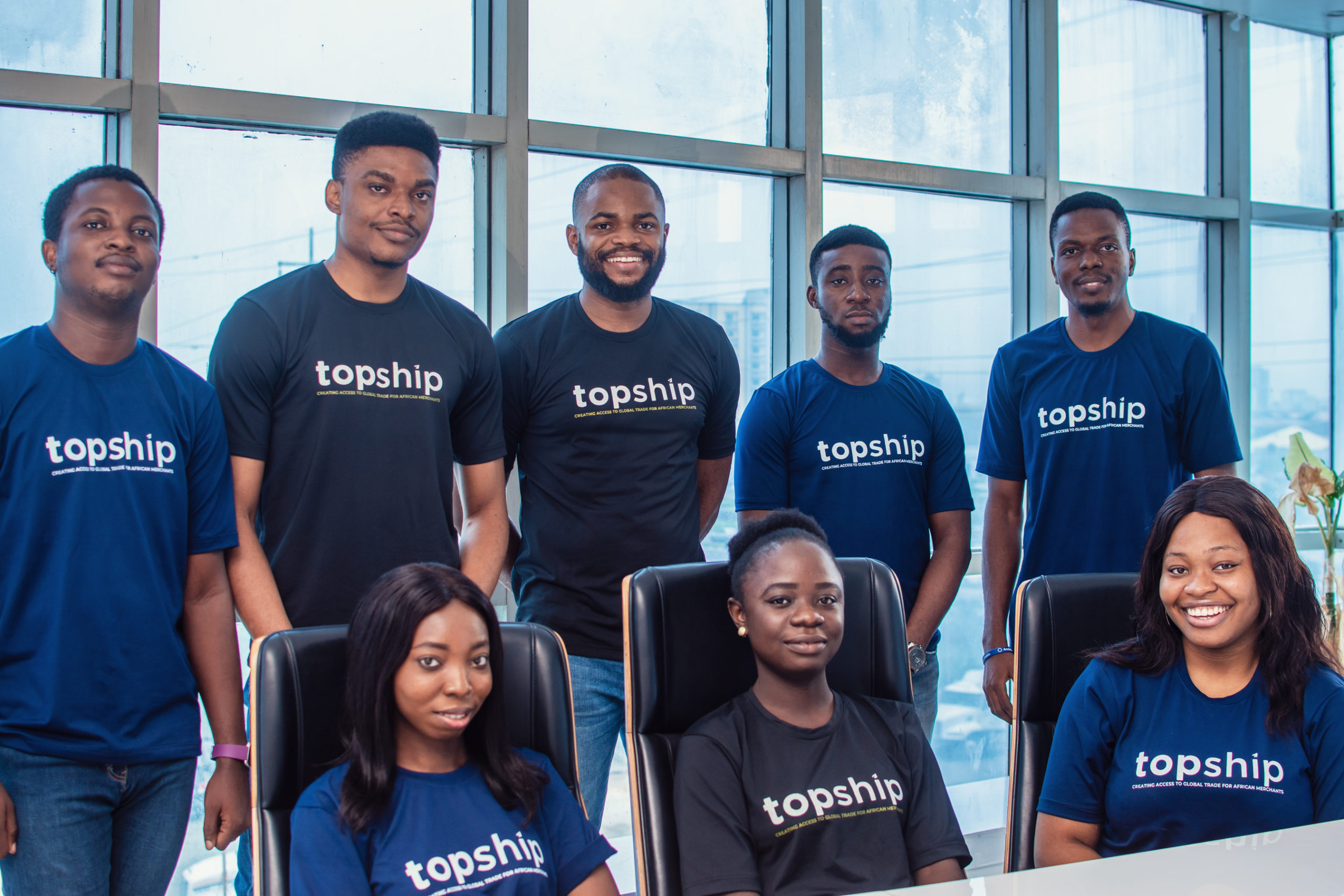
This has inspired the inflow of investors to the sector and many startups are grabbing huge sums of the investments’ flow. The latest among them is Topship – a Nigerian-based digital freight forwarding startup.

The company announced that it has raised $2.5 million in a seed round led by Flexport. The recent YCcombinator alumnus has other investors in this round including Soma Capital, Starling Ventures, Olive Tree Capital, Capital X and True Capital. Individual investors such as Immad Akhund, Mercury CEO and Arash Ferdowsi, co-founder of Dropbox were also involved in this round.

Founded in 2020 during the pandemic, Topship helps African businesses ship their goods to any destination in the world. CEO and co-founder Moses Enenwali says that it helps about 1,500 merchants move cargo and parcels from Nigeria to more than 150 countries. For now, it only receives cargo deliveries from the U.S., the U.K and China for Nigerian merchants.

Topship earns revenue by selling shipping insurance and taking a margin on transactions. Enewali however said the company is exploring other revenue streams, including trade financing and customs clearance charges. The company claims it has recorded ~50% month-on-month revenue growth since getting into YC.

Enewali told TechCrunch in a discussion about Topship’s revenue growth after YC: “I think what YC does more than anything is just push you to dive as deep as possible in understanding your users.”

“Looking into the future, a lot of it’s coming from that ethos of the user being the most important piece of the puzzle, and we have to be obsessive about it. We’re taking all the learnings and insights that we’ve learned from our users over the past five months or six months and building it into the product in a way that is merchants-focus,” he adds.

Topship’s business model focuses rather on air cargo even as others explore a mix of air, ocean and truck haulage pioneered by Flexport. Enewali says that he does not think that the Flexport model will work in Africa because it is heavily dependent on ocean cargo movement

“The reason why the Flexport model wouldn’t work here is it’s heavily invested in ocean freight and we don’t have enough ports on the continent. For example, in Nigeria, we have one function port, and for ocean freight to work, we need ports, railways and roads for trucking. But we don’t have the roads, and we don’t have the railways,” said the CEO.

“It’s difficult to connect the continent with ocean freight. Flexport’s business model makes a lot of sense even with how they attack problems aggressively, and I love that. But for Africa, we need to tweak it to fit the use case here. So what we’ve seen is the way to connect the continent is via air. Every country and major city on the continent has a functioning airport, and airlines are flying to all those airports daily.”

Topship says that it is considering invitations from merchant groups to start operations in Ghana, Kenya and Tanzania. So this new funding will help it analyse the possibility of starting operations in these countries. Some of the funding will also be used to improve its asset-light technology and build out a proprietary global shipping infrastructure to make imports and exports significantly faster and easier.

Other African competitors in this business include Sote, SEND and OnePort365 who just secured $5 million in a seed funding round last month.

Following covid-induced shift to digital life which has seen Nigerians increase their e-commerce activities, the market revenue is expected to reach a CAGR of 20.5% in 2023, resulting in a market volume of around US$ 10,290.6 million by 2023, according to data from Mordor Intelligence, a market intelligence firm.

In 2019, the market’s largest segment was Fashion with a market volume of US$ 1,761.9 million and User penetration was 52.2% and is expected to reach 75.2% by 2023, the data said.

Nigeria’s ‘energy transition pathway’ includes technology, investment, business strategies and policy.

0

The Federal Government (FG) of Nigeria has disclosed it was following an ‘energy transition pathway’ that combines technology, investment, business strategies and policy.

The Minister of State for Petroleum Resources, Timipre Sylva made this known on Tuesday, 17th May 2022 at the virtual Society of Petroleum Engineers (SPE), Lagos Annual Technical Symposium and Exhibition, with the theme, ‘‘Energy Transition In Africa: A Strategic Pathway To Net Zero”.

According to the Petroleum boss, the aforementioned plan would enable Nigeria transition from its current energy system to a low-carbon energy system with natural gas playing a pivotal role over the next generation, between now and 2060.

Sylva opined that natural gas was a key resource for energy transition and had all the credentials to support Nigeria and indeed Africa meet up with her commitment with the United Nations (UN) 17 Sustainable Development Goals (SDGs).

He stated that as a major source of wealth and energy in Africa, the development of oil and gas resources proved critical for the continent’s economic growth and revenue expansion, saying fossil fuels would remain relevant in the energy mix despite ongoing campaigns and global energy transition.

He said, “First off, Africa and the world need oil, and gas for that matter. The world needs oil and gas because it is what the world relies on for its most basic needs. And that will not change overnight.

“Therefore, African governments and leaders should continue to invest in oil and gas, even as we work to help speed progress to a lower-carbon future. The International Energy Agency, on its part, has reversed its calls for lower oil and gas spending.

“In just a few months, the industry think tank group has changed its tune and is now urging oil and gas companies to increase production. Multiple pathways to the energy transition should and must exist in order to ensure that no country is left behind in the process of achieving net-zero by 2060.”

The Petroleum minister further stated that as a continent, Africa needed to be intentional and recognize the need to develop hydrocarbon resources in environmentally and socially responsible ways.

“And as alluded to by the African Union, we need to be realistic in choosing the energy transition pathways which addresses our unique requirements and circumstances.

“We need to enhance policy, legislation and implementation approaches across national, regional, and continental levels, to enable a favourable environment for development. We need to develop bankable projects to scale up access to funding and investment.

“We need to adopt a mix of energy solutions to address the needs of each country including solutions to high tariffs and accessibility to sustainable energy options.

“We need to promote energy efficiency which is necessary for energy transition and focus on building energy infrastructure and strengthening transmission corridors.”  he said.

Sylva lauded the Memorandum of Understanding (MOU) signed on Monday 16th May 2022 between the African Export-Import Bank (Afreximbank) and the African Petroleum Producers Organisation (APPO) for the creation of a multi-billion-dollar African Energy Bank.

He disclosed the energy bank would provide vital financing for new and existing oil and gas projects, as well as energy advancements across the whole value chain, with the goal of increasing private sector investment in African oil and gas projects, noting that the bank was arriving at a critical time for Africa’s energy sector, following major oil company divestment and a shift in global investment trends.

The problem with Nigeria remains that her various leaders would make brilliant speeches at events, but would fail to subsequently act in line with what they preach at the public sphere. Hence, they are double-mouthed.

Leveraging on technology to create Nigeria’s ‘energy transition pathway’, as pointed out by Sylva, cannot be feasible if formidable policies aren’t put in place and duly implemented.

This is one of the areas borrowing becomes imperative, especially as Afreximbank and APPO sign MOU for creation of African Energy Bank. But it’s pathetic that it’s only in this part of the world that funds borrowed by the government are eventually channeled into recurrent expenditure.

Tekedia New Course: “Personal Economy Scenario Mapping (Nigeria, Global)”

0

One of the greatest surprises when I started work as a banker was this: the university system prepared me on how to manage resources for companies but did a very poor job on how I could manage my own personal resources. In FUTO, we studied great topics in Engineering Management like  Engineer Turns Manager, Managerial Accounting, etc. In all those domains, everything was on how to optimize resources for the employer (yes, the company).

Dissatisfied, I went to a legend in the bank: Emmanuel Akpobovbo, a fellow of the chartered accountant of Nigeria, and he provided a path which I remain thankful for. Simply, I wanted to understand how to manage Ndubuisi Ekekwe’s resources, not just the bank’s.

As local (Nigeria) and global economies are being redesigned as a result of the Russia-Ukraine conflict, US inflation, banditry in Nigeria, high interest rates for emerging economies to refinance debts, Naira deterioration, political risk,  you must pay attention to your Personal Economy.

Our school wants to help because that is what every great school should do. Of course, we already have great courses on Personal Finance and Wealth Management, Retirement Planning, etc. This one is an addition with specific focus on the events of 2022.

Tekedia Institute is introducing a new course on how you can do scenario mapping to ensure you are prepared for whatever comes. Go here and register for the edition which begins on June 6 here.

Time for Scenario Mapping – Huge Nigeria, Global Dislocations Coming

Liverpool come from behind at the Southcoast to keep title hopes alive

0

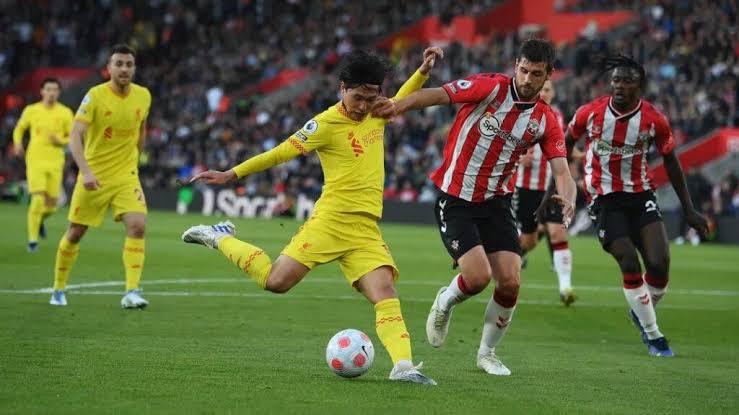
Jurgen Klopp’s men pulled off another miracle with a bionic showing against The Saints as they overhauled Southampton to keep the title still in contention.

Very unpredictably, Klopp made nine changes to the side that triumphed in the FA Cup final last weekend. With injuries already dealt to Salah, Van Dijk and Fabinho, the starting line-up was further star-striped as essentials like Arnold(replaced by Gomez), Robertson(replaced by Tsimikas), Mane, Diaz, Thiago were made to sit out on this one, Klopp turning his squad entirely upside down. Opting for less of a capable squad, the German tactician managed to get the important job done.

The Reds’ evening was seemingly getting sour as The Saints picked up an early lead courtesy of a 13th minute counter attack that saw Redmond break through the left flank before curling a shot into the net off Milner’s foot.

Liverpool drew level shortly before the half hour mark as Joe Gomez weaved a good cross into the box and Jota teed up Minamino for a powerful blast into McCarthy’s goal.

Minamino’s effort silenced Southampton’s and the away side continued to put pressure eventually claiming the highly coveted three points through an awkward second half Joel Matip header whose projectile trajectory managed to beat McCarthy.

It was a decent night for Klopp and his away fans. Konate was great, Matip did a good job, Tsimikas was able to deliver a number of crosses, Jones frequently cut through the left flank and middle, holding for Liverpool.

In the end, Liverpool were able to sidestep this challenge without a handful of top stars thanks to Jurgen’s canons. The Reds now sit on 89 points behind City’s 90 and will travel to Wolves this weekend for a do-or-die fixture whilst hoping club legend and Aston Villa manager, Steven Gerrard can do them a huge favour by upsetting their competitors when his side takes on Guardiola’s.