DD
MM
YYYY

PAGES

DD
MM
YYYY

spot_img

PAGES

Home Blog Page 5181

Google Opens First African Product Development Center in Kenya

0

Google has continued to implement its digital transformation investment plan in Africa. The web search giant has been picking different African countries to establish each of the initiatives tied to the transformation plan.

On Tuesday, Google announced the launch of a product development center in Nairobi, Kenya’s capital – its first in the continent. The new hub is designed to build “transformative” products and services for the African market and the world.

The center is Google’s second major research and development investment in Africa.

The burgeoning African fintech has further exposed digital opportunities in the African tech ecosystem that Google appears to be positioning itself for its digital economic boom. By 2030, Africa will have 800 million internet users and one-third of the world’s under-35 population.

In 2019, Google launched the first AI and research center in Ghana. In October last year, the tech giant announced plans to invest $1 billion in Africa over the next five years. It will focus on four key areas; enabling affordable access to the internet and building products for every kind of African user, helping businesses with their digital transformation, investing in entrepreneurs to spur next-generation technologies and supporting nonprofits working to improve lives across Africa.

Google said it will hire over 100 tech talent including software engineers, researchers and designers over the next two years to help solve difficult and technical challenges, such as improving the smartphone experience for people in Africa, or building a more reliable internet infrastructure, according to Google VP for products, Suzanne Frey.

There is growing interest in Africa from American tech giants, who, in the past five years, have been setting up digital and innovative hubs across the continent. Lagos, Johannesburg, Accra and Nairobi are all getting their investment share.

Two weeks ago, Visa announced that it had set up its first innovation center in Nairobi, to co-create payment and commerce solutions with partners. This came shortly after Microsoft launched a research and development center in Nairobi.

“Africa has been at the forefront of innovation, and we believe that we are going to continue to develop and innovate right here from the continent,” said Google’s policy lead for Sub-Saharan Africa Charles Murito.

Google said it plans to continue building partnerships, products and services to get more people connected to the internet, support small and medium-sized businesses and non-profit organizations.

“We have 300 million people on the internet in the region [Africa] today. We also know that in the course of the rest of this decade, we’re going to have another half a billion people who will experience internet for the very first time, which is why it is incredibly important that we build products and experiences that are helpful to these people that are going to be experiencing the internet just in Africa,” said Google in Africa managing director, Nitin Gajria.

Africa’s internet economy is expected to leap 56% to $180 billion in gross merchandise value by 2025, buoyed by massive digital transformation. This is as the world pushes to sustain the pandemic-spurred shift to digital life.
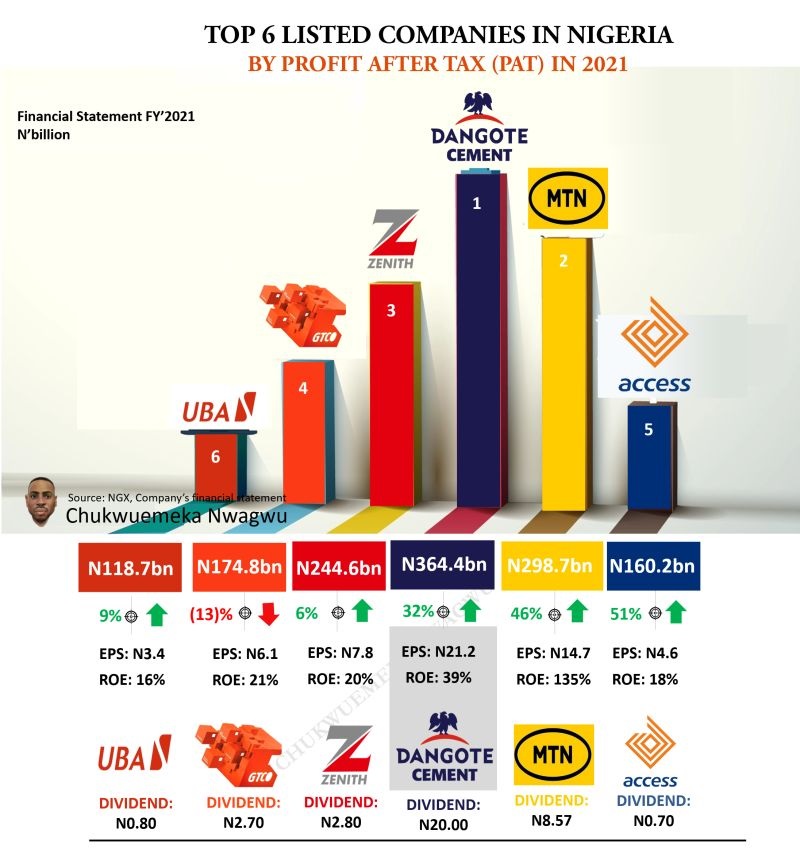
Nigeria’s Profit Race for Publicly Traded Companies

0

My home state of Abia has a budget of N147.28 billion for 2022; Dangote Cement made a profit after tax of N364.4 billion in 2021.  Who should be His Excellency? The one managing N147 billion or the person generating N364 billion.

Like Hamlet answered Lord Polonius “Words, Words, Words”, in Hamlet, by William Shakespeare, at this moment, it is “Profit. Profit. Profit”. Like Samuel Taylor Coleridge’s “The Rime of the Ancient Mariner”  where those lines were dropped:  “Water, water everywhere, / Nor any drop to drink”. Turns of profit in Nigeria, yet, many are seeking for the home of abundance.

Good People, Chinua Achebe said it all,  “an adult does not sit and watch while the she-goat suffers the pain of childbirth tied to a post”; shine ya eyes for Naija. Yes, opportunities remain because frictions abound. Sure, we can do better. But note this – abundance LIVES here.

Credit: from Chukwuemeka Nwagwu Bsc, Msc

Comment on LinkedIn Feed

Comment: It tells you where true value lies, that government is not the answer but entrepreneurship. Check every person who has blamed the government for his/her misfortunes and lack of success, there’s always a glaring capability gap.

We have not achieved sufficiency in anything, but most people can’t still see the opportunities therein. Between developed and developing country, which should hold greater opportunities? But again, you need that visioning capability to make sense of unharvested abundance.

Entrepreneurs lead, governments follow, but when you expect governments to lead in wealth creation, poverty and miseries abound.

The social media everyone enjoys today wasn’t a creation of governments, but after its emergence, governments started coming into the space to assert their relevance, that is government for you. What would have happened if governments were tasked with creating social media for all peoples? It would have been unusable.

Worry more about your lack of capacity and foresight, not government inefficiencies. Anything you want to see happening, get to work, and once you create big activities there, government will take notice and work with you to make it better.

Those who create wealth are the true excellencies.

SEC Regulates Capital Market And Not CAC

0
SEC Nigeria

Most times when i advise some clients to make sure they carry out due diligence before investing on any platform they are quick to point out that they have done their homework and that they have checked if the company they want to invest in is registered with the corporate affairs commission (CAC) and it is registered, therefore the company been registered with the CAC must be genuine.

This line of thought that every company registered with the corporate affairs commission is genuine and legit is marred with ignorance.

For the record, not every company or business registered with the CAC is genuine; some fraudsters register their businesses or companies with the corporate affairs commission too.

It should be noted that although CAC is expected to make sure that every business or company registered with them is legit, their main function as a governmental body as set out in section 7 of the Companies and Allied Matters Act, includes: administering the Act, the regulation and supervision of the formation, incorporation, management and winding up of companies.

But when it involves investment companies, that the company is registered with the CAC does not prove the authenticity of the company. CAC documents and certificates that the company holds mean nothing when it comes to proving their authenticity.

It is the Securities and Exchange Commission (SEC) that is a body that regulates all capital market operators including investment platforms. The Securities and Exchange Commission (SEC), is the Apex Regulator of the Nigeria Capital Market and they are responsible for developing and regulating the capital market.

Some of the functions of the Security and Exchange Commission include;

To Develop and Regulate a Capital Market that is Dynamic, Fair, Transparent and Efficient, to Contribute to the Nation’s Economic Development.

The Securities and Exchange Commission is mandated to Regulate and Develop the Nigerian Capital Market.

The Securities and Exchange Commission oversees securities exchanges, securities brokers and dealers, investment advisors, and mutual funds in an effort to promote fair dealing, the disclosure of important market information, and to prevent fraud.

If you want to confirm or verify if an investment platform is genuine, first you will need to confirm if they are registered with SEC or licensed by SEC to carry out the business of crowdfunding, capital investment, capital market, etc, SEC is the right body to approach, you can go to their website and you will see the list of all licensed capital market operators.

The SEC maintains surveillance over licensed capital market operators and investment platforms with the mandate of ensuring orderly and equitable dealings and protecting the market against fraudulent activities.

You can always contact them or write to them for your inquiries.

Their Contact details are:

SEC TOWERS,

Plot 272, Samuel Adesujo Ademulegun Street, Central Business District

P.M.B:315, Garki, Abuja

+234 (0) 94621100; +234 (0) 94621168

Email: sec@sec.gov.ng

Website: sec.gov.ng

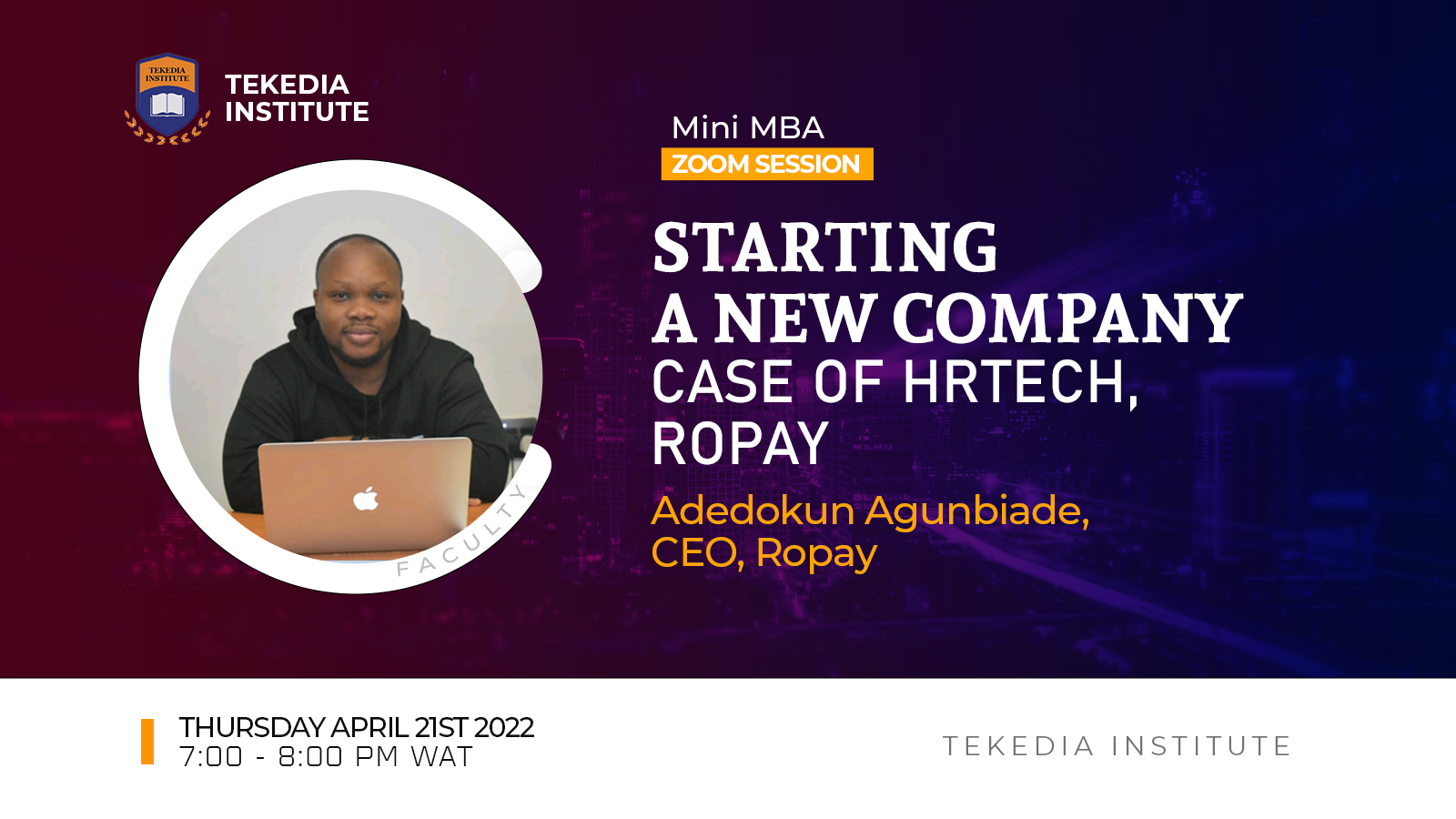
Tekedia Live: Starting A New Company – Case of HRTech, Ropay

0

Join Tekedia Mini-MBA Live tomorrow as we examine a case study on how to build a new company. HR technology startup, roPay, will be the case study. The company helps organizations manage payroll and other HR matters. It offers many HR technologies to organizations of all sizes. Ropay CEO Adedokun Agunbiade will lead the session. Zoom link in the Board.

To register for the next edition of Tekedia Institute Mini-MBA before the price increases after the early bird deadline, go here 

Dorsey Joins Musk to Criticize Twitter Board As Argument for Twitter Acquisition Heats On

0

Elon Musk has taken a swipe at the Twitter board after his push to purchase the microblogging app was undermined by the ‘poison pill’ that the board adopted on Friday.

Musk went on to criticize the board on Twitter during the weekend for turning down his offer. He accused them of holding the company back from growth, saying they’re irresponsible for turning down his bid.

Last week, the Tesla CEO made a $43 billion takeover bid for Twitter. Musk said he invested in Twitter because he believes in its potential to be the platform for free speech around the globe. But now realize “the company will neither thrive nor serve this societal imperative in its current form. Twitter needs to be transformed as a private company.”

Earlier, before making the bid for a hostile takeover, Musk had bought a 9.2% stake in Twitter, making him the largest shareholder. But that was quickly countered by one of Twitter’s biggest shareholders, Vanguard Holdings, who upped its shares to 10.3 percent, toppling Musk.

Musk had asked that Twitter shareholders, not only the board, be allowed to vote on his bid. He believes his offer, which is roughly $6 billion above Twitter’s current $37 billion market capitalization, is “best and final.”

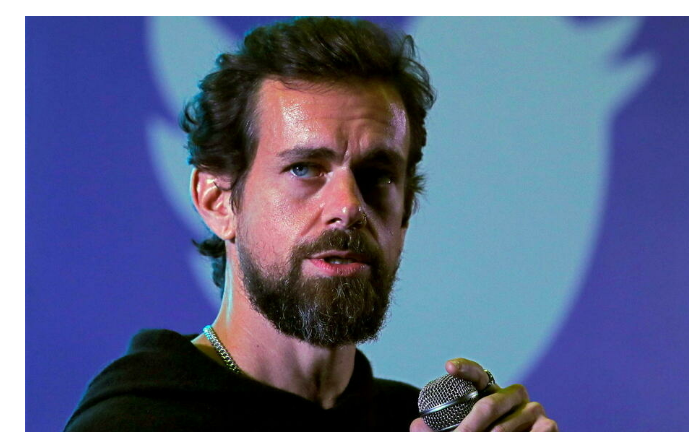
Weighing in on the matter, Twitter co-founder and former CEO Jack Dorsey, joined Musk in criticizing the board. Dorsey said in a series of tweets where he responded to questions that as a public company, Twitter has always been “for sale.”

When asked why he owns close to nothing as Twitter founder, Dorsey said the board took most of his shares when he was booted out as the CEO in 2008, labeling the board as “consistently the dysfunction of the company”. He also agreed with venture capitalist Gary Tan, who said that a badly run board “can literally make a billion dollars in value disappear.”

Musk had implied that the board had no economic interest in Twitter to protect as they own little to nothing of the company’s shares. “With Jack departing, the Twitter board collectively owns almost no shares!” Musk wrote. “Objectively, their economic interests are simply not aligned with shareholders.”

Out of 12 members of the Twitter board, only Dorsey owns more than 1% at 2.253%, and he will be leaving the board next month.

The unexpected criticism from Dorsey is not clearly going to pave the way for Musk as some shareholders had criticized the bid, saying it doesn’t measure up to Twitter’s value. Musk said he will not make another offer, giving the board a seeming win as investors are unlikely to back his bid that some have already said it’s not enough.

However, there is another hurdle to Musk’s push to acquire Twitter. Investors have been skeptical that he would be able to cobble together the funds needed to buy Twitter, according to a report by New York Times. Analysts have estimated Mr. Musk would need $15 billion to $20 billion in debt to fund his efforts.

This is because Musk’s wealth is largely tied up in stock.

But there is a potential participation in the bid. The Times reported, citing sources, that private equity firm Apollo Global Management is considering participating in the bid by offering debt financing to potential buyers, including the Tesla chief executive Elon Musk.

The Times also reported on other potential buyers. At least one other private equity firm, Thoma Bravo, has expressed interest in acquiring Twitter. However, it is not clear if Musk is willing to team up with others to push his bid. What is clear is that Musk’s bid to acquire Twitter, though stagnant for now, is still possible.