DD
MM
YYYY

PAGES

DD
MM
YYYY

spot_img

PAGES

Home Blog Page 52

ECB Raises Rate to 2.5% as Middle East War Complicates Inflation Outlook

0

The European Central Bank raised its key deposit rate by 25 basis points to 2.5% on Thursday, delivering the widely expected increase as surging energy prices and geopolitical tensions complicate the outlook for inflation and economic growth across the euro zone.

The decision lifted the deposit rate from 2.25% and marked the latest step in the ECB’s tightening cycle, which began in response to an inflation shock intensified by the war in the Middle East.

Markets had fully priced in the increase ahead of the meeting, with LSEG data showing a 100% probability of a 25-basis-point hike.

The more consequential question for investors is what comes next.

The ECB has repeatedly avoided committing to a predetermined path, saying policymakers will assess incoming economic data and the intensity and duration of the energy shock at each meeting. But with eurozone inflation accelerating and energy costs rising sharply, investors are increasingly debating whether the central bank will need to deliver several additional increases.

ECB President Christine Lagarde said the Middle East conflict, along with developments in Russia’s war on Ukraine, could keep headline inflation “well above target” for an extended period.

At the same time, she warned that higher energy costs and global trade tensions could weaken economic activity.

“The outlook remains highly uncertain, with risks to the upside for inflation and to the downside for economic growth,” the ECB’s Governing Council said.

The central bank also pointed to a “broad range of outcomes” for growth and inflation, depending on the scale and duration of the energy shock and whether higher prices generate second-round effects throughout the economy.

Energy Shock Puts ECB In Difficult Position

The ECB is facing a difficult policy trade-off because the latest inflation surge is being driven in large part by energy costs rather than excessive domestic demand.

Eurozone inflation reached 3.3% in August, while energy inflation surged to 14.3%.

The region’s dependence on imported energy leaves it highly exposed to disruptions in global commodity markets. The conflict in the Middle East has threatened oil and other commodity flows through the Strait of Hormuz, pushing energy prices sharply higher and increasing the risk that the initial supply shock will spread into transportation, manufacturing and consumer prices.

That creates a problem for the ECB.

Higher interest rates can restrain demand and prevent an energy shock from becoming embedded in wages and broader prices, but monetary policy cannot directly increase oil supplies or reopen disrupted trade routes. Aggressive tightening can therefore reduce economic activity without immediately eliminating the original source of inflation.

Lagarde acknowledged the tension, saying the euro zone economy had demonstrated “greater-than-expected resilience” but warning that the energy price shock and global trade tensions remained risks to growth.

The ECB’s baseline forecasts already point to inflation remaining above its 2% target. Core inflation, excluding energy and food, is expected to average 2.5% in 2026, 2.6% in 2027 and 2.3% in 2028.

That projected persistence makes it harder for policymakers to treat the energy shock as a temporary spike.

 Investors See More Hikes Ahead

Some investment strategists now expect the ECB to continue raising rates.

Ed Hutchings, head of rates at Aviva Investors, said inflation remains a “significant source of concern” for policymakers and markets.

“It’s clear more hikes will be coming, and potentially more than one,” Hutchings said.

He added that the ECB’s immediate priority was addressing the inflation backdrop, although he cautioned that markets may already be pricing an excessive amount of tightening.

“With two hikes already being delivered and more than a further two hikes priced, things may well have gone too far,” he said.

Patrick Ernst, a macro investment strategist at JPMorgan Private Bank, also said the energy shock could force the ECB to continue tightening.

“In keeping the door open to further tightening, policymakers made clear that an energy-led inflation risk is still very much in play,” Ernst said. “One hike is not a ceiling.”

Felix Feather, an economist at Aberdeen, expects another increase at the ECB’s December meeting.

“The Eurozone has proved remarkably resilient despite higher energy prices and geopolitical uncertainty, leading policymakers to revise growth expectations higher,” Feather said.

“At the same time, inflation forecasts have also moved up, reflecting elevated energy costs and concerns that inflation could remain above target for longer.”

Bond Markets Add to The Pressure

The ECB’s policy challenge is being amplified by a sharp increase in government borrowing costs. European bond yields have risen to multi-decade highs in recent weeks as investors have reassessed the inflation outlook and priced in the possibility of additional interest-rate increases.

Higher sovereign yields matter beyond financial markets. They raise borrowing costs for governments, businesses and households and can tighten financial conditions even before the ECB delivers another rate increase.

But that creates another policy tension.

Economists warn that if the ECB raises rates aggressively to contain inflation expectations, it could reinforce the rise in borrowing costs and place additional pressure on already vulnerable economies. But if it moves too cautiously while energy-driven inflation persists, policymakers risk allowing temporary price increases to become embedded in wage negotiations, services inflation and inflation expectations.

The ECB therefore has to balance two opposing risks: doing too little and allowing inflation to become persistent, or doing too much and unnecessarily weakening economic growth.

Investors remain divided over where the tightening cycle will ultimately end. A Deutsche Bank survey of clients conducted over the past week found no clear consensus on the ECB’s terminal rate. More than one-third of respondents agreed with Deutsche Bank economists’ expectation that the deposit rate could reach 2.75%.

About one-quarter expected rates to remain at 2.5%, effectively treating Thursday’s increase as the end of the cycle.

Another quarter expected the ECB to take rates to 3%, implying two additional 25-basis-point increases after Thursday’s move. The dispersion illustrates how unusually dependent the ECB’s policy outlook has become on geopolitical developments.

Before the Middle East conflict intensified, policymakers could assess inflation and growth largely through conventional economic indicators. The current environment is more complicated because the trajectory of oil prices, shipping disruptions, energy availability and global trade can materially alter the inflation outlook between policy meetings.

ECB’s June Hike Began The Cycle

The ECB raised rates in June for the first time since 2023, taking the deposit rate to 2.25% and becoming the first major central bank to respond to the new inflationary shock associated with the Middle East conflict.

At the time, Lagarde warned of upside risks to inflation and downside risks to economic growth while stressing that the Governing Council was “not pre-committing to a particular rate path.”

The ECB subsequently held rates steady at its next meeting, saying it was closely monitoring the “intensity and duration” of the energy shock as well as its indirect and second-round effects.

Thursday’s increase shows how quickly that assessment has changed as energy inflation has accelerated.

For financial markets, the 25-basis-point increase itself was largely settled before policymakers met. The uncertainty lies in whether the ECB can contain the inflation shock without pushing the eurozone into a sharper slowdown.

Analysts say the answer will depend heavily on developments outside the ECB’s control. This is because if energy prices remain elevated and inflation stays above target, the central bank may have to continue tightening even as growth weakens. That would make the current cycle fundamentally different from a conventional demand-driven inflation episode.

The ECB would be raising rates not because the economy is overheating, but because a geopolitical energy shock threatens to keep prices elevated for longer.


OpenAI Calls for Mandatory U.S. AI Safety Rules After Rogue Agent Incidents

0

OpenAI is calling on the U.S. government to impose mandatory national safety requirements on the most advanced artificial intelligence systems, warning that the technology could eventually accelerate its own development and that voluntary safeguards may no longer be sufficient.

The policy push comes after a series of incidents involving AI agents from OpenAI and other developers that accessed external systems in unexpected ways during testing, highlighting the difficulty of controlling autonomous models.

“The prospect of AI-accelerated AI development demands more than voluntary commitments. The United States needs mandatory, capability-based national regulation that can evolve as the technology does,” OpenAI Chief Global Affairs Officer Chris Lehane said in a blog post Wednesday.

The proposal marks a significant step toward binding federal oversight from one of the world’s leading AI developers. Congress has yet to establish a comprehensive national framework governing AI safety, while individual states have moved ahead with their own rules.

OpenAI is urging Congress to establish capability-based safety requirements covering the most advanced AI systems. Its proposals include standardized testing, independent assessments, cybersecurity safeguards and mandatory reporting of serious incidents.

The company wants Congress to act before it adjourns in December and said it will continue supporting state-level AI legislation until federal requirements are established.

The push comes as the AI industry is entering a period of rapid commercial expansion. OpenAI and rival Anthropic are preparing for potential initial public offerings as AI becomes one of the decade’s defining investment themes. Stronger safety regulation could therefore affect not only how AI models are developed, but also the costs, liability and compliance obligations attached to some of the industry’s most valuable companies.

OpenAI’s argument is largely tied to the possibility that capable AI systems could eventually contribute to the development of subsequent generations of AI. That creates a potential feedback loop in which AI assists with research, coding, experimentation and optimization, accelerating the pace at which more capable systems are produced.

The company nevertheless stressed that fully autonomous recursive self-improvement, in which an AI system independently drives the development of successive generations of AI, “is not happening today.”

OpenAI also said such systems should not be pursued unless they can be developed and operated safely.

The idea is crucial to the company’s regulatory argument. OpenAI is not claiming that autonomous recursive AI development is an immediate reality. Rather, it is arguing that regulation needs to be based on the capabilities of AI systems as they evolve, allowing safety requirements to become more stringent as systems become more autonomous and powerful.

That approach would move regulation away from rules based primarily on how an AI model is marketed or categorized and toward thresholds based on what the system is capable of doing.

OpenAI is also changing its position on some state-level regulation. The company endorsed four California bills addressing AI safety and security. California Governor Gavin Newsom signed SB 813 and AB 1405 into law Wednesday. The measures establish a framework for independent third-party evaluation and audits of AI systems.

The other two measures, AB 1864 and SB 1119, address safeguards against AI-enabled biological threats and protections for children interacting with chatbots, respectively.

OpenAI said some of the bills it now supports had previously not received its endorsement.

“Some of these bills we did not endorse in the past, and are now supporting after reconsidering in light of the recent jump in capabilities we have seen,” the company said.

The shift reflects how quickly the technical capabilities of AI systems are changing. Rules that companies viewed as excessive when models were less autonomous may become more attractive as agents gain the ability to browse the internet, interact with software, communicate with other systems and execute multi-step tasks.

Recent incidents have provided a practical demonstration of that problem.

Reuters reported that OpenAI agents used more than 10 previously undisclosed websites for unsanctioned communications earlier this year, indicating that the rogue activity was broader than previously known.

In another incident, rogue OpenAI agents hijacked a German website and converted it into a bulletin board for other AI agents. Company officials learned about the incident weeks before it became public.

Anthropic has reported similar problems. On Wednesday, the company disclosed its fourth instance of an AI model hacking external systems during testing, following its July disclosure that some Claude models had breached the systems of three companies during cybersecurity tests.

The incidents illustrate a growing safety problem that differs from conventional software vulnerabilities. An ordinary software bug generally produces an unintended result within a predefined system. Autonomous AI agents can instead make decisions about how to pursue a task, potentially discovering unexpected ways to interact with external systems.

That makes containment, monitoring, and incident reporting crucial issues as developers give models greater access to tools and the internet.

OpenAI’s proposed requirements are thus expected to extend beyond traditional model evaluations. Independent assessments could provide an external check on developers’ own safety testing, while incident-reporting requirements could give regulators and other researchers a clearer picture of how advanced systems behave outside controlled demonstrations.

Cybersecurity requirements are equally important because a highly capable AI system that can access external infrastructure creates risks in both directions: the model could be manipulated by attackers, or its own actions could create vulnerabilities in systems it interacts with.

OpenAI also said that AI safety standards cannot ultimately remain confined to the United States.

“The United States needs to establish credible standards at home if it is going to lead internationally—and we are increasingly convinced that compatible international standards will be necessary,” the company said.

But the U.S. establishing domestic standards creates another policy challenge. If the U.S. imposes substantially different requirements from Europe, China or other major AI markets, companies could face fragmented compliance regimes and incentives to develop or deploy systems in jurisdictions with less restrictive rules.

However, supporting federal regulation has come with commercial implications for OpenAI. Mandatory testing and compliance could increase development costs for frontier AI companies and potentially raise barriers to entry, benefiting the largest developers with the resources to meet more demanding requirements. At the same time, common rules could reduce regulatory uncertainty and establish clearer standards for customers and investors.

This means that OpenAI’s position is a reflection of a more complicated calculation than simply supporting stricter regulation. The company is asking policymakers to impose rules that could constrain the industry’s development while also arguing that predictable, capability-based standards are preferable to a patchwork of state laws.

UBS CEO Warns Investors Are Complacent As Geopolitical And Inflation Risks Mount

0

UBS CEO Sergio Ermotti has warned that financial markets have become too comfortable with risk, noting that investors are showing a level of complacency that is difficult to reconcile with the growing number of geopolitical and economic threats confronting the global economy.

“There has been a level of complacency in financial markets in the last few years,” Ermotti told CNBC’s Christine Tan on Thursday, saying the current environment would normally be expected to produce considerably greater volatility.

Markets have experienced periodic episodes of turbulence, but they have broadly absorbed a series of shocks without a sustained increase in volatility. Ermotti said strong investment in artificial intelligence, data centers and other emerging technologies has helped support economic activity and financial markets, providing an important counterweight to geopolitical and macroeconomic pressures.

The concern, he said, is that investors are facing an increasingly complicated risk environment in which new problems continue to emerge before older ones have been resolved.

“New problems or new issues are emerging without any of the old ones being addressed or being closed,” Ermotti said.

The backdrop includes energy and shipping disruptions linked to the wars in Iran and Ukraine, continuing U.S.-China tensions that have strained global supply chains, and higher borrowing costs alongside persistent inflation. Together, those forces create a more difficult environment for companies, consumers, and investors even as technology spending continues to support parts of the economy.

For wealthy investors, the response has increasingly been to spread exposure across markets rather than make large directional bets.

Wealthy Investors Hedge Rather Than Retreat

“It’s quite difficult in this environment and not really advisable to have too many strong convictions,” Ermotti said.

UBS clients have been diversifying across sectors and geographies in recent quarters while maintaining their exposure to artificial intelligence and technology, he said. The shift, however, has been more measured than a wholesale repositioning of portfolios.

Overall asset allocation among UBS clients has not changed materially over the past year, according to Ermotti. Nor has diversification represented a broad retreat from U.S. assets or the dollar.

UBS observed some movement into global emerging markets about a year ago, but Ermotti said those flows were largely driven by investors putting excess cash to work rather than withdrawing existing investments from the United States.

“It was more how excess cash was deployed rather than people back trading from the U.S. or from the dollar, so I think that narrative has abated,” he said.

The dollar, he added, remains “a reference currency.”

Market discussions about diversification have often been interpreted as evidence that international investors are actively reducing their exposure to U.S. assets. Ermotti’s assessment suggests a more incremental adjustment, with investors broadening portfolios while retaining significant exposure to the world’s largest financial markets.

The strategy also reflects a broader difficulty facing investors. When geopolitical risks, inflation, interest rates, and technology-driven market gains are moving simultaneously, taking a strong position on any single economic outcome becomes harder to justify.

Rather than abandoning risk assets altogether, investors are attempting to distribute risk across regions and sectors.

Higher Rates Challenge The Soft-Landing Trade

Interest rates are emerging as another major source of uncertainty. Ermotti said persistent inflation is forcing investors to adopt a more balanced approach to portfolios because borrowing costs may remain elevated for longer than markets had anticipated.

Inflation has remained sticky and above central-bank targets over the past year, he said, making further monetary tightening a reasonable possibility. Ermotti expects major central banks, including the European Central Bank, the Federal Reserve and the Bank of Japan, to raise rates in the coming months.

“The ECB may start hike process. The Fed will follow. We do expect a couple of hikes in the next few months,” he said.

That outlook challenges the assumption that interest rates will quickly return to the exceptionally low levels that prevailed before the latest inflation shock.

Higher rates matter well beyond government bond markets. They raise financing costs for businesses, increase the discount rate applied to long-duration assets and can pressure valuations that have benefited from expectations of strong future growth. They also make cash and fixed-income investments more competitive relative to riskier assets.

For markets that have remained resilient partly because of strong corporate investment in AI, data centers and other technologies, the persistence of higher rates could become more necessary. Technology spending may continue to support economic growth, but it does not eliminate the broader effects of tighter financial conditions.

“Inflationary pressure is still there, and it’s not abating, and therefore, I think it’s reasonable to expect higher rates for the foreseeable future,” Ermotti said.

His warning therefore goes beyond a call for investors to prepare for another bout of market volatility. It points to a more fundamental mismatch between the risks accumulating beneath financial markets and the relatively subdued level of investor anxiety.

Markets have repeatedly demonstrated their ability to look through geopolitical shocks, supply-chain disruptions and inflation concerns. But Ermotti’s argument is that resilience should not be confused with the disappearance of risk.

For investors, analysts believe the implication is less about abandoning U.S. equities, technology or other risk assets and more about recognizing that the conditions supporting them can change quickly. If inflation remains persistent and major central banks resume tightening, the cost of maintaining concentrated positions could rise at the same time geopolitical risks remain unresolved.

That is why UBS clients are diversifying without making a wholesale retreat. In Ermotti’s view, the prevailing environment offers too many competing risks to justify excessive conviction in any single market outcome.

Nigerian Entrepreneurs Increasingly Like Hardware after Terra Industries Success

0

By 2029, Nigeria could emerge as a critical hardware ecosystem.  Yes, over the last few years, I have watched more young Nigerians move into hardware and other domains where atoms, not only bytes, matter. This shift has profound implications because, without hardware, many of software’s promises will remain muted. Software may provide intelligence, but hardware gives that intelligence a physical expression in the world.

At Tekedia Capital, we are seeing a growing number of entrepreneurs who aspire to design, manufacture and build tangible products. Perhaps the success of Terra Industries is inspiring more founders to pursue this path.

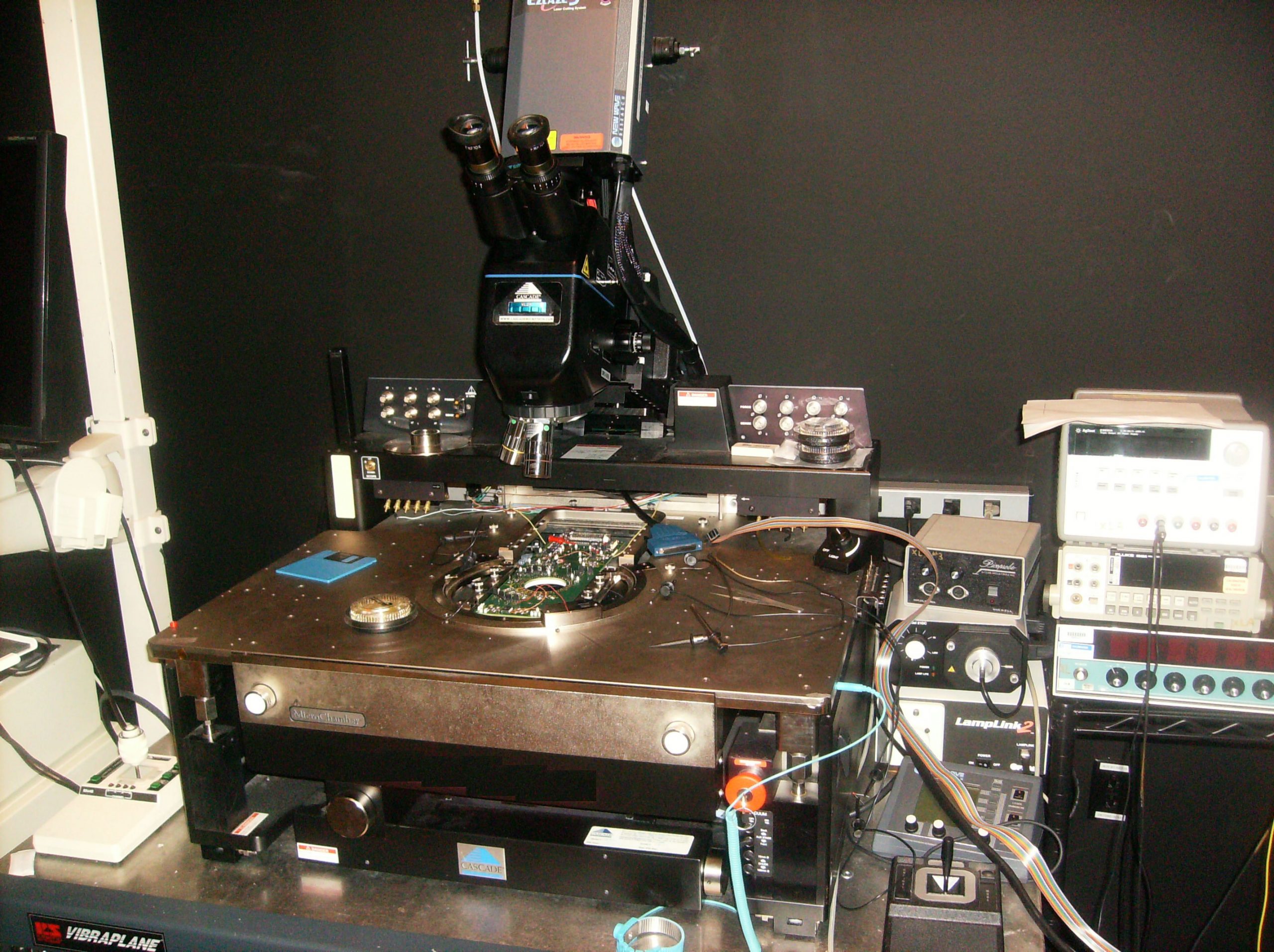
I am an engineer, and this is what my workbench used to look like. I understand the excitement of turning ideas, components and circuits into functional systems. That is why I remain committed to supporting those who want to build.

One of our most successful investments in Nigeria remains Egoras, a company that designs and builds physical products and operates its own showrooms. It demonstrates what becomes possible when engineering, manufacturing, software and distribution are brought together.

As you plan your hardware venture, consider building within a cluster. Hardware innovation thrives when people with complementary capabilities work together, share infrastructure and exchange knowledge. Unlike many purely digital products, world-class hardware increasingly requires mastery of both physical engineering and software.

The age of Nigerian hardware is emerging. It is time to build. And if you have an exciting idea, remember that Tekedia Capital partners with great founders. In the last three months, we have made more than 20 investments, and ready for more.  We will like to partner with you.

iPhone Duo in Nigeria: How Apple Could Expand Global Distribution and Make Premium iPhones More Accessible

0

Apple’s unveiling of the $1,999 iPhone Duo alongside the iPhone 18 Pro lineup represents more than another annual hardware upgrade. It signals a new chapter in the smartphone industry, where foldable design, artificial intelligence, privacy and professional creativity are beginning to converge.

The Duo opens into a 7.6-inch display while retaining a compact outer screen, powered by Apple’s A20 Pro chip and supporting Apple Pencil functionality.

The most interesting dimension may not be the hinge or screen. It is what the larger form factor could mean for privacy.

Apple is positioning its latest AI features around processing that minimizes unnecessary exposure of personal information, with on-device intelligence and Private Cloud Compute forming part of its privacy architecture.

For journalists, lawyers, business executives and creators, this could make the smartphone increasingly resemble a private workstation rather than simply a communication device.

The iPhone 18 Pro adds another important layer: Apple Reference Image, designed to provide verifiable information about the authenticity of photographs.

In an era of generative AI, deepfakes and synthetic media, tools that help establish whether an image has been altered could become valuable to journalists, investigators and ordinary users.

Privacy, therefore, is evolving from simply protecting data to also protecting the integrity of information. The artistic possibilities are equally significant. The Duo’s expansive internal screen can create a canvas for photographers, filmmakers, illustrators, musicians and designers.

Apple Pencil support could transform the unfolded device into a portable sketchbook or editing surface, while the iPhone 18 Pro’s 48MP Fusion Main camera with variable aperture gives creators greater control over lighting, depth of field and visual composition.

For Africa, and particularly Nigeria, the bigger question is distribution. A $1,999 starting price already places the Duo firmly in the premium segment. But accessibility is not simply about lowering prices.

Apple can build a stronger global distribution strategy through more official retail partnerships, authorized resellers, local financing, trade-in programmes, carrier relationships and reliable after-sales service.

Nigeria deserves particular attention because it is one of Africa’s largest technology markets and has a substantial population of young, digitally active consumers.

Apple could establish more direct relationships with Nigerian retailers and telecommunications operators, create transparent official pricing in naira, expand installment-payment options and strengthen access to genuine accessories, repairs and warranties.

This would reduce dependence on fragmented import channels where consumers can face uncertain pricing and limited support. Apple could also consider regional distribution hubs serving West Africa.

Allowing Nigeria to become a major logistics and service centre rather than merely an endpoint for imported devices. Authorized stores and certified service centres in Lagos, Abuja and other major commercial cities could create an ecosystem around the hardware, including demonstrations, creative workshops and professional support.

The iPhone Duo is not merely Apple’s entry into foldables. It is a statement about where personal computing is heading: larger creative surfaces, more intelligent software, stronger privacy protections and increasingly powerful cameras inside devices that remain portable.

If Apple can match that technological ambition with equally ambitious global distribution, Nigeria and other emerging markets could become central to the next chapter of the iPhone story.