DD
MM
YYYY

PAGES

DD
MM
YYYY

spot_img

PAGES

Home Blog Page 5229

EU Reaches A Landmark Agreement On A New Legislation That Will Scuttle Big Tech’s Dominance

0

Big tech companies operating in Europe will have a new challenge in the markets as a new set of rules designed to alter the operation of internet companies as we know it, is getting ready to be unveiled.

The European Union has been working on a digital legislation that will check the excesses of the big players in the online industry, holding the “gatekeepers” such as Google, Meta and Amazon, accountable like never before. The AP reports below that the bloc is a step closer to finalizing the landmark digital rules.

EU officials agreed late Thursday on wording for the bloc’s Digital Markets Act, part of a long-awaited overhaul of its digital rulebook. The act, which still needs other approvals, seeks to prevent tech giants from dominating digital markets, with the threat of whopping fines or even the possibility of a company breakup.

For instance, they face tighter restrictions on using people’s data for targeted online ads — a primary source of revenue for Google and Facebook — while different messaging services or social media platforms would be required to work together.

The new rules underscore how Europe has become a global pacesetter in efforts to curb the power of tech companies through an onslaught of antitrust investigations, stringent regulations on data privacy and proposed rules for areas like artificial intelligence.

“What we have been deciding about yesterday will start a new era in tech regulation,” the European Union’s lead lawmaker Andreas Schwab said at a press conference Friday.

The same day, however, the European Union reached a preliminary agreement with the U.S. that paved the way for Europeans’ personal data to be stored in the U.S.

In its crackdown on tech giants, the EU also has another set of rules, the Digital Services Act, that aim to ensure online safety for users through stricter requirements to flag and remove harmful or illegal content or services like hate speech and counterfeit goods. Both are expected to take effect by October, EU competition chief Margrethe Vestager said.

The European Consumer Organisation, or BEUC, welcomed the agreement on the Digital Markets Act, saying it would help consumers by creating fairer and more competitive digital markets. Digital rights group EDRi said it will “narrow the power imbalance between people and online platforms.”

Tech companies were less enthusiastic.

Apple said it was concerned that parts of the Digital Markets Act “will create unnecessary privacy and security vulnerabilities for our users while others will prohibit us from charging for intellectual property in which we invest a great deal.”

Google said it will study the text and work with regulators to implement it.

“While we support many of the DMA’s ambitions around consumer choice and interoperability, we remain concerned that some of the rules could reduce innovation and the choice available to Europeans,” the company said.

Amazon said it is reviewing what the rules mean for its customers. Meta, which also owns Instagram and WhatsApp, didn’t reply to a request for comment.

The Digital Markets Act includes a number of eye-catching, groundbreaking measures that could shake up the way big tech companies operate.

They wouldn’t be allowed to rank their own products or services higher than those of others in search results. That means Amazon, for example, wouldn’t be allowed to list its own brand of goods ahead of rival offerings from independent merchants.

Essential software or apps such as web browsers can’t be installed by default along with the operating system, in the same way Google’s Chrome comes bundled with Android phones. There’s also a measure aimed at loosening Apple’s stranglehold on iPhone apps through its App Store.

A user’s personal data also couldn’t be combined for targeted ads unless “explicit consent” is given. That would prevent Google from collecting information on YouTube viewing, online searches, travel history from Maps and Gmail conversations to build a profile to serve up personalized ads, unless users agree to each one.Messaging services and social media platforms must work with each other to avoid the domination of a few companies that have already established big networks of users. That opens up the possibility, for example, of Telegram or Signal users being able to exchange messages with WhatsApp users.

Online services would have to ensure that users can opt out just as easily as they can sign up.

That’s “aimed at services where it’s super easy to sign up — boom, you’re a customer — but unsubscribe is hidden under three levels of menus,” such as Amazon Prime, said Jan Penfrat, senior policy adviser at EDRi. “They push it on to you with big, colorful buttons, but getting out of it is really difficult.”

Criteria for defining a gatekeeper under the rules have been tweaked to include companies that earn at least 7.5 billion euros ($8.3 billion) in annual revenue in Europe in the past three years, have a market value of 75 billion euros, provide services in at least three EU countries, and have 45 million users and 10,000 business users each year in the bloc.

Violations could be punished with whopping fines: up to 10% of a company’s annual income. Repeat offenders could be fined up to 20% of worldwide revenue, which could amount to billions of dollars for wealthy Silicon Valley companies.

Negotiators from the European Parliament and European Council, which represents the 27 EU member countries, reached the deal after months of talks. It now needs to be endorsed by the Council and the European Parliament.
Rise Of Mental Health Among Entrepreneurs – The Way Forward

0

According to research, 72% of entrepreneurs suffer from mental health issues, which is incredibly high. Forbes calls depression an epidemic among entrepreneurs and creatives. Aside from the flexibility and glamorous nature of entrepreneurship which often entices people, the emotional side is often overlooked. Statistics show that entrepreneurs report significantly higher mental health issues than everyday working professionals. 

The most challenging part of entrepreneurship is usually at the beginning. The startup journey can be emotionally tasking. Starting a business can bring about financial instability, feeling of isolation, and strain on relationships. While researching on this topic, I stumbled on a piece that states that “creativity leads to big emotions, passion can lead to obsession, competitiveness and risk-taking can lead to deep feelings of failure”. Due to the high competition of businesses, entrepreneurs are constantly brainstorming on ways to employ strict and strategic measures to remain in business, and also stay ahead of their competitors.

By doing these things, they often neglect their well-being, in a bid to grow their ventures. Most of them also suffer from insomnia because they are always strategizing, which makes it difficult for them to sleep. One common trait that is common among entrepreneurs which often leads to their breakdown, is the ability to act like everything is okay, even at the edge of failure. They put up with this facade that all is well and refuse to seek help so that they do not have to appear weak. According to Carl Rodgers, a renowned psychologist, he states that human beings are disturbed when their expectations are not met, and most entrepreneurs always have expectations about their business.

Even when in the workplace, entrepreneurs always like to give the impression to their employees that they are made of steel and can overcome whatever challenges that may pose to the business. A lot of entrepreneurs are usually egocentric and uncomfortable with relying on others or acknowledging that they have limitations. Particularly in the early stages, most entrepreneurs get to work alone which can incredibly be socially isolating, which is a precursor to depression.

The Way Forward

Surround With The Right People: One of the best things an entrepreneur can do is to surround himself or herself with the right kind of people. Surrounding with the right kind of people is a vital key to career growth. Entrepreneurs should surround themselves with people who have the same burning desire as they do. I.e People who can go to any length to ensure the success of the business. They need people who can constantly encourage them to keep them on track and keep their hope alive.

Address Mental Health Concerns Immediately:  When entrepreneurs don’t manage mental health concerns quickly, they can turn into adverse outcomes. If mental health symptoms are left unattended after a prolonged period, it can lead to more severe mental health concerns. Mental health awareness begins by gaining an understanding of the factors that could exacerbate your stress level.

Leverage Of Team: It’s okay for entrepreneurs to admit their limitations. An entrepreneur should know that he or she cannot go on the journey alone. An entrepreneur should always ensure to leverage the knowledge and experience of their team members, by sending them to do jobs that require a larger amount of their skill or expertise. They should also be involved in decision-making, as well as have them mentor younger less experienced employees. Entrepreneurs should be willing to rely on their team where necessary to move their business forward. Always doing things alone, in a bid to show superiority can lead to breakdown and frustration.

Learn To Accept Failure: Entrepreneurs must learn to accept failure. They should understand that in the journey, they will encounter many obstacles. When failure comes they shouldn’t be too hard on themselves and see themselves as failures, rather they should strategize on ways to move on from failure and put things right.

Delegation: Another quick way to overheat and face an even higher level of stress is when entrepreneurs try to do everything by themselves. Even if the startup isn’t in a place to take on full-time employees quite yet, there are endless resources available to help a business outsource certain tasks. This is important because burnout can happen very quickly when a business is forming, and that process tends to speed itself up if the founder is trying to do everything on their own. Another option to avoid wearing down is going into business with a partner. Typically, each person would be an expert in a certain area of the company which would not only take things off one’s plate but also is beneficial in driving the business forward.

Conclusion 

Entrepreneurs must understand that the entrepreneurship journey is a very sensitive one, and if not properly handled, it can lead to depression and frustration. They need to put in place measures that will make the journey less difficult for them.  Of course, there will be obstacles, but with the right measures taken, they will overcome and achieve their organizational set goals.

Nigeria’s Economic Status And The Mining Sector

1

It’s indisputable that Nigeria’s mining sector is presently in a moribund state, despite the government’s diversification mantra.

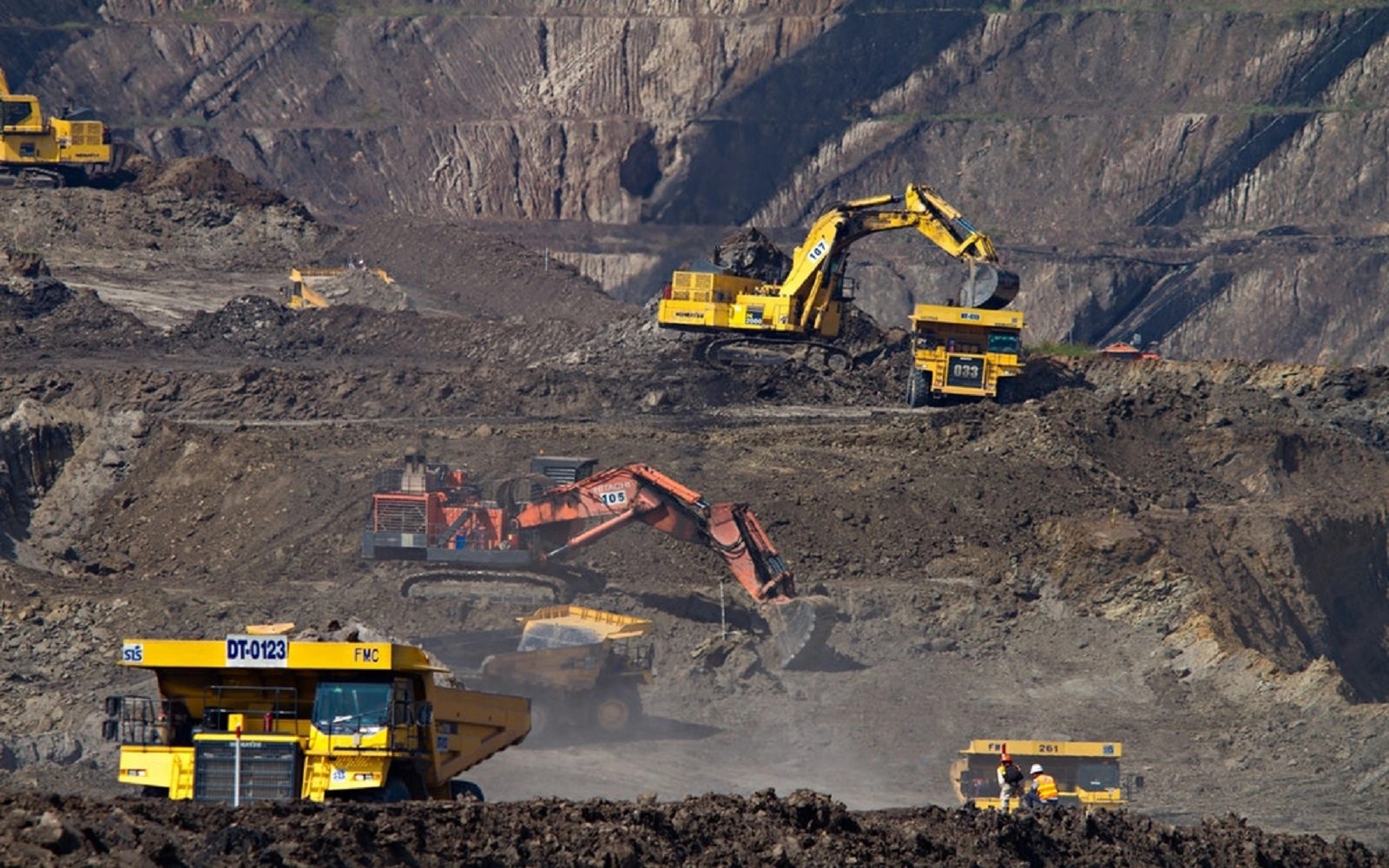
Mining is usually referred  to as the extraction of valuable minerals cum other geological materials from the earth crust, usually from lode, vein, ore-body, seam, reef, or placer deposits.

These deposits constitute a mineralized package that is of economic interest to the prospective miner. Ores obtained via mining activity are gemstones, limestone, coal, oil shale, metals, dimension stone, clay, gravel, potash, and rock salt, among others.

Mining is required to obtain essential commodities that cannot be possibly grown via agricultural processes, or created artificially in a factory or laboratory. Mining of stones and metals has been a well-recognized human occupation since the prehistoric era.

Modern days mining processes involve prospecting for ore bodies, analyzing the profit potential of the proposed mine, extraction of the desired materials, and final reclamation of the affected land after the mine is closed.

The economic importance of mining cannot be overemphasized. In Ghana, for instance, the country’s mining sector is a very vital segment of its economy, and has played a significant role in its socio-economic development since the colonial period. Historically, the Ghanaian mining sector’s contribution to the country’s gross foreign exchange – particularly gold – has only been paralleled by its cocoa sector.

Not only do the products power the family car as well as heat the family home, the manufacturing sector, high tech industries, and even the better known resource industries, are all dependent – in one way or the other – on the mining industry.

The mining industry will continue to be an important support to the economy of any country that embraces it. Aside from boosting Gross Domestic Product (GDP), it encourages high rates of employment opportunities and equally thrives to ensure that the number of entrepreneurs in the country is increased tremendously.

In spite of the ongoing boom in the sector, Nigeria still lags behind. It’s shocking to note that notwithstanding the unquantifiable solid minerals the country is blessed with, mining presently accounts for barely 0.3 per cent of the country’s GDP, due to the influence of its vast petroleum resources.

The country’s domestic mining industry is conspicuously underdeveloped, leading to importation of minerals such as, but not limited to, iron-ore and salt, that could be domestically produced with ease. It’s a shame that the only material that’s overtime mined across the country is sand.

Rights to ownership of mineral resources is held by the Federal Government (FG) who grants titles to interested organizations to explore, mine, and sell mineral resources, but the business has hitherto been relatively unpopular.

The Chief Olusegun Obasanjo’s administration began a process of selling off government-owned mining corporations to private investors in 1999. It’s pathetic and disheartening to acknowledge that till date, those firms are ostensibly lying moribund.

On assumption of duty, perhaps piqued by the ongoing devastating physiognomy of Nigeria’s mining sector, the President Mohammadu Buhari-led government strongly assured the teeming Nigerians that the administration would rejuvenate the industry.

Little wonder the government recently approved a sum of N12.7 billion solid minerals exploration contract. Yet at the moment, pathetically no serious and practical impact has been recorded, probably owing to lack of policy direction.

It’s therefore high time Nigeria started mining the available solid mineral deposits abound in the country – to include tale, gypsum, lead, zinc, bentonite, gold, uranium, bitumen, coal, rock salt, gemstones, kaolin and barite – all which are highly lucrative and of great economic value. This can only be actualized by deploring the required techniques tactically as well as imbibing viable policies into the system.

Surface mining and subsurface (underground) mining are the available two major forms of mining. The target minerals are generally divided into two categories of materials namely, placer deposits and lode deposits. The former comprises valuable minerals contained within river, gravels, beach sands, and other unconsolidated materials, whilst the latter are those found in veins, layers, or in mineral grains widely distributed throughout a mass of actual rock.

Both classes of deposits could be mined by either of the aforesaid mining types. Moreover, in-situ leaching is another technique mainly used in mining rare earth elements cum soluble minerals like uranium, potash, potassium chloride, sodium chloride, and sodium sulfate. Of all, surface mining is at the moment much more common and viable.

However, it’s pertinent to comprehend that mining, likewise petroleum drilling, is associated with various environmental factors. These include erosion, formation of sinkholes, and loss of biodiversity, coupled with contamination of soil, ground cum surface water by chemicals from mining processes.

In some cases, additional forest logging is done in the vicinity of mines to create space for the storage of the created debris and soil. Basic examples of pollution from mining activities include coal fires, which can last for years, producing severe amounts of environmental damage.

These menaces, as outlined above, can be properly controlled through the effort of the concerned law enforcement agency by implementing stringent environmental and rehabilitation Acts as well as functional policies.

Now that diversification is apparently the only way to revive Nigeria’s troubled and epileptic economy, the governments at all levels ought to endeavour to take the bull by the horn towards ensuring that the mining industry is accorded a well-deserved attention.

Taking into cognizance the impact the said sector stands to create on the country’s economy at large, it’s needless to state that its exploration is long overdue, thus feasible policies and actions are seriously needed. 

The Nigeria’s Social contract

0

The social contract theory is a political philosophy that tends to concern itself with the legitimacy of the authority of the state over the citizens or individuals who call the state home.

Social contract theorists propound the arguments that posit that individuals or citizens of a particular state have consented, either explicitly or impliedly to surrender some (if not all) of their freedoms and natural rights and submit themselves to the authority of the state or to submit to the decision of the majority in exchange for protection of their remaining rights against aggression or invasion and maintenance of the social order.

The starting point for the social contract theory can be directly linked to an English philosopher; Thomas Hobbes when he propounded that man at his natural state is a bully and hence there is the need for there to be an authority which man or citizens can surrender their freedoms or submit to in the exchange for protection by the state.

Thomas Hobbes argued that without a constituted social contract, the society will be like a jungle where the big or the powerful will be feasting on the weak and it will be like the animal kingdom where the order of the day is the survival of the fittest and life in this state will be nasty, brutish and short.

The social contract theorists seek to demonstrate why rational individuals would and should voluntarily consent to give up their natural freedom to obtain the benefits of the political order of the state for the benefit of everyone in the society.

Everyone must consent (expressly or impliedly) to give up some of his natural rights and freedom in exchange for the provision and protection by the authority to which everyone submits.

This theory is of the view that the society or the state came into being and can only exist by a consensual contract that was made between the individual and the society or the contract that was made amongst the individual people.

There are five notable elements of the social contract theory which is worthy of mention:

(1) the role of the social contract

(2) the parties which are usually the state and the individuals

(3) agreement or the contract

(4) the object of agreement or contract

(5) what the agreement is supposed to show.

Every constitution of a republican country or a democratic government tends to boldly display this contract in its constitution, usually in the preamble of the constitution.

For example, the preamble of the constitution of the federal republic of Nigeria, 1999 (as amended) reads;

We the people of the Federal Republic of Nigeria

Having firmly and solemnly resolved, to live in unity and harmony as one indivisible and indissoluble sovereign nation under God, dedicated to the promotion of inter-African solidarity, world peace, international co- operation and understanding

And to provide for a Constitution for the purpose of promoting the good government and welfare of all persons in our country, on the principles of freedom, equality and justice, and for the purpose of consolidating the unity of our people

Do hereby make, enact and give to ourselves the following Constitution:-

This preamble is an indicator of the social contract which everyone that is a member of the Nigerian society is a party to.

Governor Soludo Orders All Public Servants To Work On Mondays Against The Sit-At-Home Order

0

Ever since the trial of the leader of the indigenous people of Biafra, IPOB, Mazi Nnamdi Kanu began, the group ordered the shutdown of businesses on Mondays, declaring it as a sit-at-home which is solely carried out to stand in solidarity with the Biafran leader. Just recently, the newly elected Governor of Anambra state Gov. Charles Soludo has ordered all public servants in the state to go to work on Mondays and other weekdays, and also ordered businesses to be opened as well.

Governor Soludo, therefore, warned that absence from work will attract sanctions. In a circular that went into circulation in the state, the memo reads “following the need to reposition the service for better performance and productivity, his excellency, the governor of Anambra state, Prof. Chukwuma Soludo has directed that henceforth, all public servants should report at their places of work every Monday like every other weekday. Consequently, absence from work on Monday, or any other day without any approval will be viewed as serious misconduct, which will attract appropriate sanctions. This directive takes immediate effect”.

Recall that last year, Governor Soludo, who was not yet the governor of the state at the time he made this statement, lamented on the sit-at-home order. He disclosed that such an order hurts the economy of the state, saying that the state loses an estimated N19.6 billion every Monday. As someone who was one time the governor of the central bank, I strongly believe that Gov. Soludo is well-grounded on the implications of such an order on the state, so therefore his cancellation of the order should be strictly adhered to.

I remember vividly during his inaugural speech, he disclosed that he was ready to engage the Ipob group in a round table discussion for both parties to come to a common agreement. He lamented that many criminals now hide under the guise of freedom fighting to perpetuate criminality in the state, such as looting, arson, harassment of people, killings, etc. This statement by the governor is indeed true as all these vices above-mentioned were evident during the Ipob movement. Hoodlums hijacked it, using it to carry out dastardly acts that don’t align with the motive of the IPOB group.

I will say the cancellation of the sit-at-home order by Governor Soludo is a welcome development, and I strongly commend him for implementing the order, not minding whose ox is gored. In one of my articles, I wrote extensively on the impact of the sit-at-home order in the South-Eastern part of Nigeria. The sit-at-home order hurts the economy of States in the Eastern Region, and it also crippled economic activities thereby incurring so many losses. You cannot say you are standing in solidarity with your leader, and at the same time inflict hardship on a large number of your people. It’s counterproductive!

This order is more like the Igbos shooting themselves on the foot, as the order has no positive effect on the release of the Biafran leader. Some people compared the sit-at-home order as akin to drinking poison and hoping that your enemy would die. Regular observance of the sit-at-home in the Southeast is not even effective for the actualization of Biafra. It has affected and killed so many businesses. Big organizations have been said to have moved out from the region because a lot of them were greatly affected by the order.

When these organizations begin to move out of the region en masse, how will the economy grow? Let’s not forget that the Eastern part of Nigeria suffered great damage during the Biafran civil war, and they have tried rebuilding it back. So, therefore, anything that will retard growth and progress in the Eastern part of Nigeria is not ideal and welcomed.