DD
MM
YYYY

PAGES

DD
MM
YYYY

spot_img

PAGES

Home Blog Page 5485

Facebook’s Name Change – A Solution Far From Its Problems

0

Since 2004 when it was founded, Facebook has grown from a campus network app to a formidable behemoth, holding a huge influence on the lives of billions of its users around the world. The social media app, which originally was built to help people stay connected, has grown eventually to become a giant of many faces – but that has come with a mammoth of problems.

Facebook has become a parent to many rival social media companies. It purchased Instagram for $1 billion in 2012, and WhatsApp, for $19 billion in 2014. There have been other standalone companies like Oculus and Messenger that have become part of Facebook’s growing conglomerate. While each of them has contributed in making Facebook a multi-billion dollar company it has become, they have as well, added to its problems.

Since the past five years, Facebook has been in the news for many wrong reasons that have not only stirred the anger of a large section of users, but also have attracted antitrust scrutiny from the authorities around the world – and in most cases, heavy penalties followed.

“Facebook is the world’s foremost social media network, it has extraordinary reach and influence, and it impacts billions of consumers worldwide. It is therefore held to a higher public standard, and opinions, expectations and reactions are so much greater than for other enterprise or consumer companies,” said Kirsten Wolberg, chief technology and operations officer at DocuSign.

For a behemoth with the goldfish status, Facebook has been spotlighted at every corner for moral and technical shortfalls. In 2019 alone, Facebook paid about $6 billion in fines for various antitrust offenses, with the record $5 billion Cambridge Analytica data breach penalty being the highest in its history.

It is 2021, and the story has not changed. It has continued in the same setting and narrative style, with the latest leak of Facebook’s internal research findings by the platform’s former product manager, Frances Haugen, being the latest. Haugen had alleged that Facebook knows about the harm its platforms cause, especially for young people, but chooses profit over public safety.

As the issues around Facebook and its products compound over the years, CEO Mark Zuckerberg, has been on a wild-goose chase to whitewash his darling company and what it stands for. But as each effort fails, new ideas are developed. So it was not surprising, when in July, Zuckerberg announced the formation of a metaverse product group, as part of an effort to rebrand Facebook and build something brilliantly new and different from what everyone used to know.

Earlier in the week, The Verge reported that Zuckerberg is expected to announce a new name for Facebook. But the identity baptism that is expected to wash all Facebook’s sins clean has prompted some questions about where the solution to the social media’s many problems lies.

In June, US Congress had touted breaking up Facebook as a way to tame the wildling monster that has apparently slipped out of control. But Haugen, in her testimony to Congress, argued that a breakup wouldn’t eliminate the concerns, and instead, she recommended regulation.

“I’m actually against the breaking up of Facebook. Right now Facebook is the internet for lots of the world,” she said.

After 16 years, 90 acquisitions, and billions of dollars – Facebook has become one of the most popular names in the world. While the name over the years has been characterized by ‘misinformation, ‘misuse of private data’, ‘promotion of hate’ antitrust inquiries and heavy fines; branding experts believe that changing it wouldn’t make all that go away.

“Everyone knows what Facebook is,” says Jim Heininger, founder of Rebranding Experts, a firm that focuses solely on rebranding organizations. “The most effective way for Facebook to address the challenges that have tainted its brand recently is through corrective actions, not trying to change its name or installing a new brand architecture.”

Facebook is expected to announce its new name next week, amidst concern of its would-be impact on the vast majority of the platform users, who overtime, have fallen in love with the name. However, the real challenge lies on the other side of the concern – the components that make up the dirt on the name are in the algorithm, powered by decisions made in Facebook offices. Therefore, for many, the name Facebook is not what the US Congress and antitrust regulators around the world are after – and it should be left alone.

“A new name might give the company a facelift. But a name change is not a rebrand,” says Anaezi Modu, the founder and CEO of Rebrand, which advises companies on brand transformations. Branding comes from a company’s mission, culture, and capabilities, more than just its name, logo, or marketing. “Unless Facebook has serious plans to address at least some of its many issues, just changing a name is pointless. In fact, it can worsen matters.” Renaming a company can create more mistrust if it comes off as distancing itself from its reputation, he added.
On The Nigeria’s Gas Flaring Quagmire

0

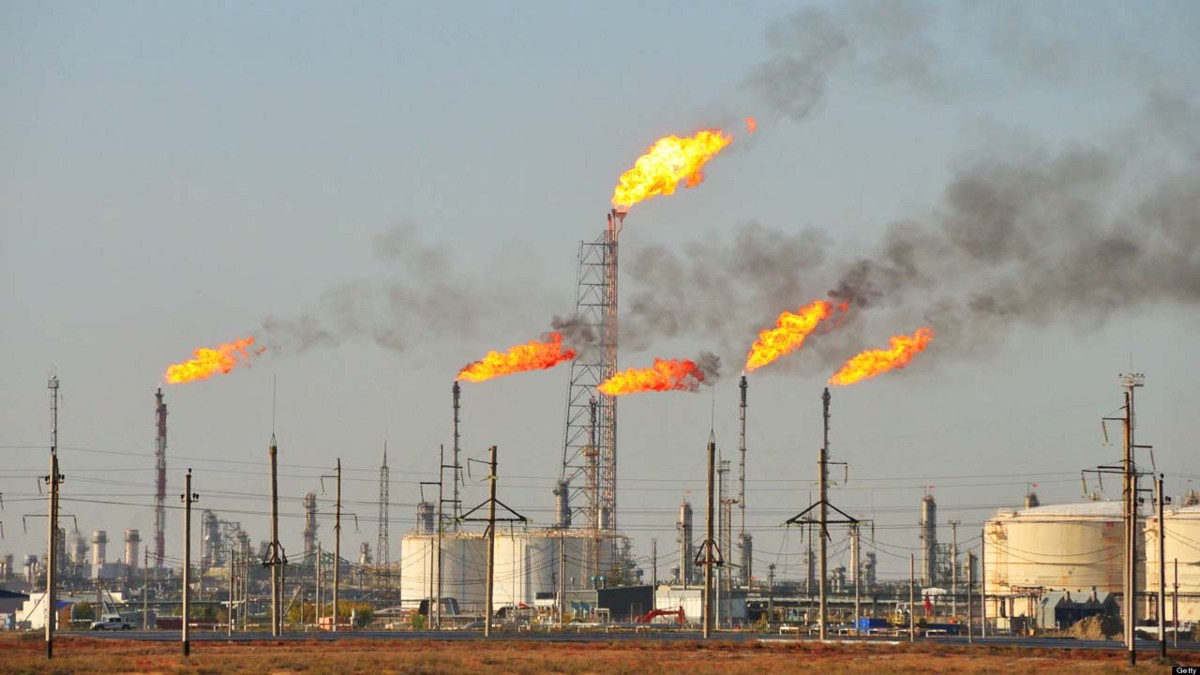
Gas flaring has over past decades remained an environmental phenomenon of tremendous concern and worry within the shores of the oil-producing areas in Nigeria.

A gas flare, alternatively known as a flare stack, is a gas combustion device used in industrial plants such as petroleum refineries, chemical plants, natural gas processing plants as well as at oil/gas production.    

Gas flaring is the burning of natural gas that is associated with crude oil when it is pumped up from the ground. In petroleum-producing areas where insufficient investment was made in infrastructure to utilize natural gas, flaring is employed to dispose of this associated gas.    

Flares are important safety devices used in refineries and petrochemical facilities. They safely burn excess hydrocarbon gases which cannot be recovered or recycled. During flaring, excess gases are combined with steam and/or air, and burnt off in the flare system to produce water vapour and carbon dioxide.

A flare system comprises a flare stack and pipes that feed gas to the stack. Because natural gas is valuable, companies would rather capture than flare it. However, there are several reasons it may be necessary to flare gas during drilling, production or processing.

In industrial plants, flare stacks are primarily used for burning off flammable gas released by pressure relief valves unplanned over-pressuring of plant equipment. However, during plant or partial plant startups and shutdowns, flare stacks are equally utilized for the planned combustion of gases over relatively short periods.

The fact is that gas flaring at several oil and gas production sites protects against the dangers inherent in over-pressuring industrial plant equipment. This is the reason the practice has seemingly become inevitable to the various oil firms operating within the shores of countries like Nigeria.

A good example of the consequences of failure to flare escaping gas was evident in the Bhopal disaster on 3rd December 1984 in India when a flare tower was broken and couldn’t flare escaping Methyl isocyanate gas. The gas in question had reportedly been in an over-pressurized tank and released by a safety valve, which resulted in its release into the surrounding area.

When petroleum crude oil is extracted and produced from oil wells, raw natural gas associated with the oil is brought to the surface, especially in areas of the world that are lacking pipelines and other gas transportation infrastructure. Vast amounts of such associated gas are commonly flared as waste or unusable gas.

It’s noteworthy that the flaring of associated gas may occur at the top of a vertical flare stack or it might occur in a ground-level flare in an earthen pit. Preferably, associated gas is often re-injected into the reservoir, which saves it for future use while maintaining higher well pressure and crude oil production.

When industrial plant equipment items are over-pressured, the pressure relief valve is invariably an essential safety device that automatically releases gases and sometimes liquids. These pressure relief valves are usually needed by industrial design codes and standards as well as by law.

The released gases and liquids are then routed through large piping systems known as flare headers to a vertical elevated flare. They are thereby burned as they exit the flare stacks. The size and brightness of the resulting flame depends solely upon the flammable materials’ flow rate.

To keep the flare system functional, a small amount of gas is continuously burnt, like a pilot light, so that the system is ceaselessly ready for its basic purpose as an overpressure safety system.

It’s worth noting that flaring can affect wildlife – likewise other living creatures – by attracting them such as birds and insects, among others to the flare. Survey indicated that about 7,500 migrating songbirds were attracted to and killed by the flare at the liquefied natural gas terminal in Saint John, New Brunswick, Canada on September 13, 2013. Similar incidents have taken place at flares on offshore oil and gas installations in some other countries.

Two years back, the then Nigeria’s Minister of State for Petroleum Resources, Dr. Ibe Kachikwu informed the general public that some pertinent committees had been set up by the Federal Government (FG) led by President Muhammadu Buhari towards tactically addressing the scourge of gas flaring currently experienced in the country’s Niger-Delta region.

This development, according to the honourable minister, was necessitated by the FG’s bid to fully implement the National Gas Policy as approved by the Federal Executive Council (FEC) in June, 2017. He posited that gas flaring was unacceptable and condemnable, hence must be completely phased out.

Dr. Kachikwu made this known at an International Press Briefing held on 11th April 2019 at the Petroleum Trust Development Fund (PTDF) Tower, Abuja, which focused on the theme “The journey so far and the next line of action for the Nigerian Gas Flare Commercialization Programme (NGFCP)”.

He further described the recent enactment and approval of the Flare Gas Regulations, 2008 and its endorsement by the president on 5th July 2018, as “key accomplishment, historic and record breaking”.

The boss stated that two of the bodies inaugurated, namely the NGFCP Ministerial Steering Committee and the Programme Management Office (PMO), were directed to activate the NGFCP Community, Awareness and Sensitization/Participation Plan (CASP) to ensure widespread awareness and full participation of key stakeholders in the Niger Delta areas.

The minister, who assured that docility and apathy wouldn’t be tolerated from anyone involved, equally notified the gathering that a Proposal Evaluation Committee (PEC) was also set up by the Buhari-led government to receive applications and aptly consider applicants who are ably qualified to handle the contracts by painstakingly scrutinizing their respective qualifications. He therefore used the occasion to declare the submission of qualifications open.

It’s indeed appalling and saddening that over two years of initiating the said lofty policy, the Nigeria’s government is yet to make any tangible move towards considering the clauses enshrined therein, let alone implementing them.

The bitter truth is that the ongoing practice of gas flaring, in which the natural gas associated with petroleum extraction is burned off in the atmosphere rather than being removed by alternative means such as subterranean re-injection or confinement to storage tanks for eventual sale, is particularly controversial to assert the least.

Gas flaring immensely contributes to climate change by emitting carbon dioxide – the main greenhouse gas – which has serious implications for both Nigeria’s environment and the rest of the world.

More so, the unending industrial practice causes the surrounding communities to suffer from increased severe health risks to include respiratory illnesses and other related diseases, thereby leading to premature deaths.

Gas flares have potentially-harmful effects on the health and livelihood of the people in the affected areas, as they release poisonous chemicals. This is why it is high time the governments at all levels expedited action with a view to bringing the societal menace to a full stop.

Apart from the dwellers who died owing to hardship occasioned by gas flaring, it’s worth noting that several environmental activists had lost their precious lives – or been reportedly killed – while fighting for a better life for the people of the Niger Delta. A good example of members of this group is the Late Ken Saro-Wiwa who fought doggedly till he was executed by the military regime.

In spite of all the countless bad omens and ordeals that transpired in the past as a result of gas flaring, the government is ostensibly yet to learn a lesson, or be moved by the untold sufferings of the Nigerian people whose lands have hitherto been the major – if not sole – surviving point of the entire country.

Aside from the health and environmental effects of gas flaring, reports show that Nigeria invariably loses about N197bn to the practice in just nine months. It was reliably revealed that oil and gas firms operating in the country flared approximately a total of 215.9 billion standard cubic feet of natural gas in the first nine months of 2018 alone, amounting to a potential loss of the aforementioned sum of money.

For Nigeria to get it right, a strict and genuine tech-driven measure is earnestly required from the concerned authorities. Hence, the constituted committees, which apparently went into moribund on arrival, must endeavour to embrace all the needed technicalities towards aptly delivering on the mandate given to them.

Most importantly, for all the regulations and extant laws forbidding gas flaring to be fully adhered to, the government is expected to wear the required political will like clothing. This is a step we must see as a priority and inevitable.

We can’t continue to dwell on a retrogressive approach at a time we are yearning for progressive one. 

Amazon Topples FedEx, Ranks Second in US Shipping Market

0

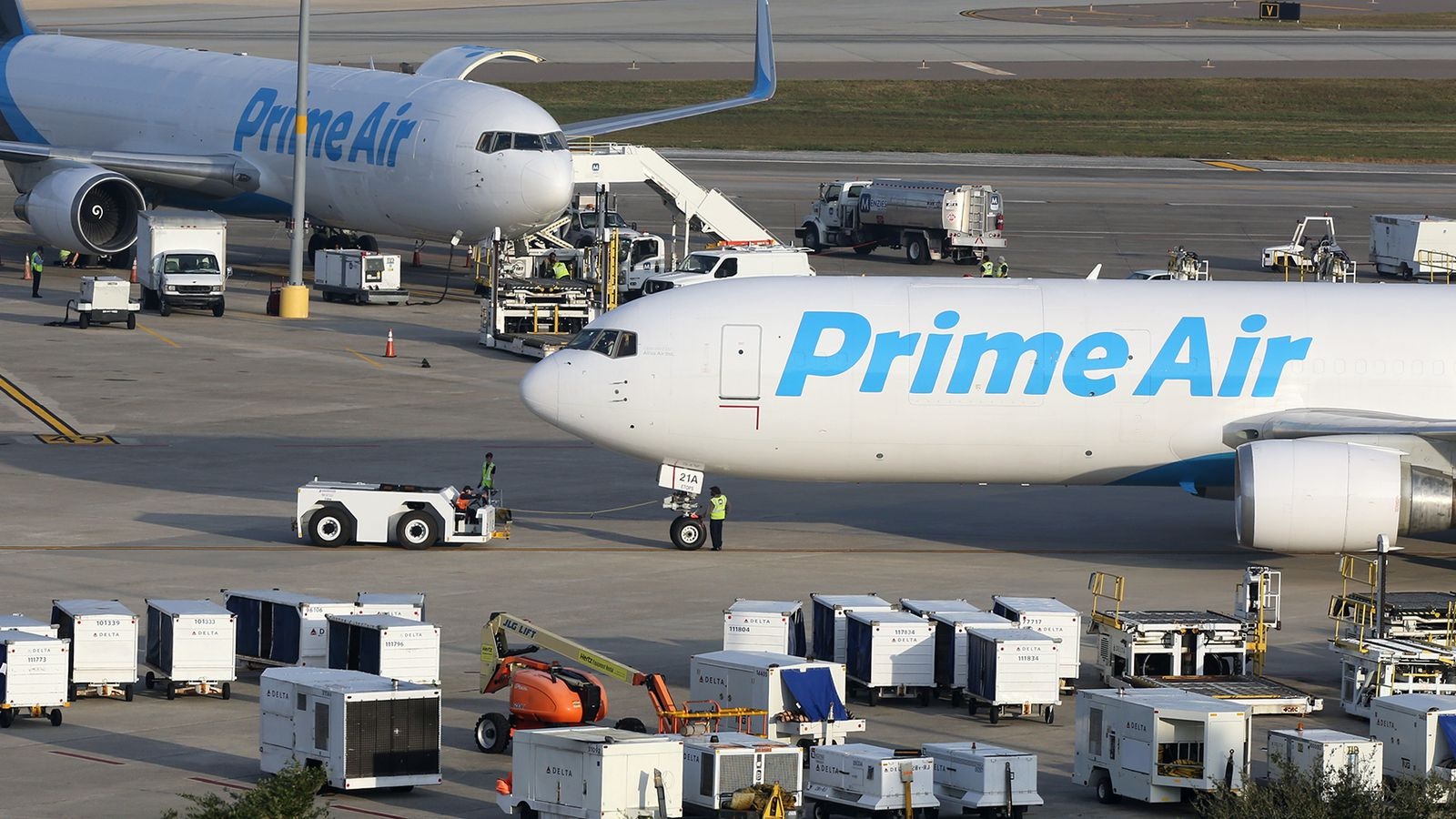
In a surprising shift in the US logistics industry, Amazon shipped more parcels than FedEx in 2020, indicating that the e-commerce giant has unlocked a new market and will rule it soon.

For years, the US logistics market had been under the control of a few players; FedEx, UPS, US Postal Service. But the 2020 market numbers signal that a new sheriff is coming to town.

Per Axios, Amazon has 21% of the U.S. shipping market — right behind UPS (24%) and ahead of FedEx (16%). The USPS remains dominant with 38%, and all other shippers account for just 1% of the market, according to Pitney Bowes, which tracks the global shipping and e-commerce industry.

Eventually, UPS’ 3% leadership is going to be trumped by Amazon, considering the swiftness the online store has climbed the market’s ladder.

As of 2014, Amazon was completely reliant on other players in the US logistics market; FedEx and UPS handled its deliveries. The tide turned in less than five years, after Amazon remarkably increased its market shares from 0 to 21%. Amazon’s delve into deliveries significantly cut the market shares of FedEx and UPS, as a large percentage of their shipments came from Amazon.

Awakened to the revenue benefits in logistics, Amazon has revved up commitment to lead the market, pouring in resources into building a network of warehouses, trucks, planes and delivery drivers.

“In 2019, Amazon had partnered with 800 companies with 75,000 drivers who picked items across Amazon’s then 150 Delivery Stations,” market research firm RBC Capital Market wrote in 2020. “Now, Amazon partners with 1,300 companies that employ 85,000 workers, across what we think are currently approximately 400 Delivery Stations in the US.”

As Axios noted, the company is now turning shipping from a cost to a source of revenue by offering its logistics capabilities as a service, and that means a huge revenue slump for other players in the market.

Compared to others, Amazon is in a league of its own in building logistics networks. RBC noted that the company has grown its logistics network over the last three years the same amount that Walmart has grown its network over the past 50 years.

With the supply chain requiring more boost as it expands e-commerce globally, Amazon shipping business is likely to rule not only in the US, but also in other countries.

However, other delivery companies will still generate revenue off Amazon’s shipping. Supply Chain Dive reports that the company still leans on legacy shippers for the last mile. That means even though more packages are coming from Amazon’s shipping apparatus, they’re getting passed off to other companies along the way.

In 2020, a record 4.2 billion parcels originated from Amazon, and about 2.8 billion of them were passed to other companies for last-mile delivery, according to data from Pitney Bowes.

Nigeria Deposit Insurance Corporation Liquidates More Than 500 Banks

0

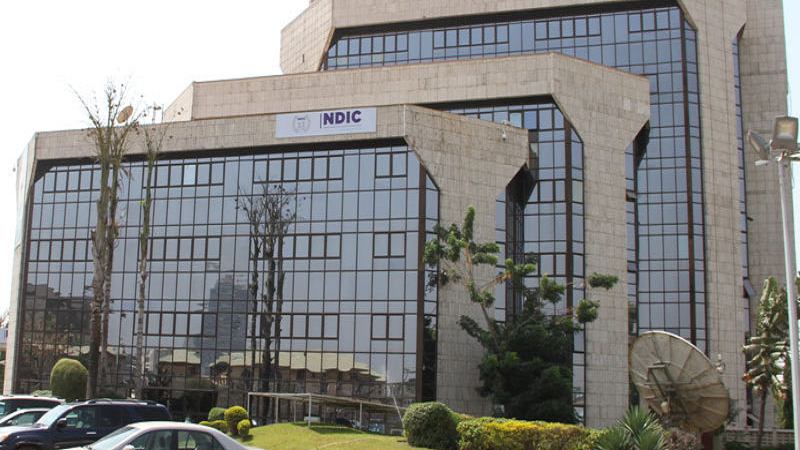
In line with the goal to consolidate Nigeria’s financial industry, the Nigeria Deposit Insurance Corporation (NDIC) has been collaborating with the Central Bank of Nigeria (CBN), to uphold regulatory sanctions against financial institutions in the country.

The NDIC said it has liquidated at least 500 deposit money, microfinance, and primary mortgage banks whose licenses were revoked by the Central Bank of Nigeria, NAN reports.

The corporation also disclosed that it was currently settling the liquidation dividends of depositors of the banks.

Galadima Gana, the Director, Insurance and Surveillance Department of the NDIC, revealed this at the 2021 Financial Correspondents Association of Nigeria workshop on Friday in Ibadan.

According to Mr Gana, the corporation had closed 325 MFBs, 50 PMBs, and 49 DMBs whose licenses were revoked by the CBN with minimal effects on the stability and confidence in the banking sector.

Mr Gana also mentioned that NDIC had cumulatively paid N8.27 billion to insured depositors of DMBs, N3.38 billion to insured depositors of MFBs, and N11 billion to insured depositors of PMBs.

He stated that the payment to uninsured depositors, creditors, and shareholders of DMBs cumulatively stood at N100.85 billion, N1.27 billion, and N4.83 billion, respectively.

He said this represented 51.07 per cent, 73.13 per cent and 92.81 per cent of the respective amounts.

The Managing Director of the NDIC, Bello Hassan, explained on the sidelines of the event that the corporation was settling the liquidation dividends of depositors of the banks.

”One of our mandates is also to liquidate license deposit institutions whose deposit has been revoked by the CBN. So you have various categories that are currently in liquidation, the Deposit Money Banks (DMBs), Micro Finance Banks (MFBs), and Primary Mortgage Banks (PMBs),” Mr Hassan explained. “As liquidator, what we do immediately there is (a) revocation of license is to pay the maximum insured amount.”

After that, he stated the corporation “proceeded to recover the loans and advances” granted by the liquidated institutions before revocation and “also realize the assets” left behind “so that we can pay it to the depositors.”

Mr Hassan added, “We only pay the maximum insured amount at the point of liquidation then, subsequently, begin to pay depositors and after that, we wind up, but the payment is currently ongoing.”

In 2018, over 153 insolvent MFBs and six PMBs got caught in CBN’s sanitation exercise and eventually lost their operating license. Most of the banks were battling with high level of non-performing loans which resulted in high portfolio risk, impairing their capital and liquidity.

The number of financial institutions impacted by the CBN’s cleanup exercise has increased since then. The apex bank, in line with its recapitalization and consolidation ultimatum, added more microfinance banks and mortgage banks to the list of those to be axed.

The recapitalization requirement for tier 1 Unit MFBs is N100 million by April 2020 and N200 million by April 2021. Tier 2 Unit MFBs are required to meet N35 million and N150 million by April 2020 and April 2021 respectively. Also state MFBs are required to increase their capital to N500 million and N1 billion by April 2020 and April 2021 respectively.

However, the CBN was restrained by the Nigeria’s House from enforcing the deadline of the recapitalization due to the covid-19-induced economic strains that have largely impacted Nigeria’s financial sector.

Although the NDIC has complemented the CBN in sanitizing the financial sector and has ensured that affected depositors get their money back, many depositors lament that they hardly get half of their funds trapped in the troubled banks.

I have a dream that one day…Africa’s educational system will become a lab for the future!

1

The microprocessor worked – and the university asked the University Press to document it. I just realized that those photos were actually filed and archived in the university library. And today, Getty Images licenses them globally. That was my PhD research which was patented. In 2017, I signed some paperworks for the US Government to use in NASA’s latest mission into space. I had designed it for robots that operate inside humans. But it turns out that the dexterity my chip delivers – 34 axial movements – could be useful when astronauts try to control objects in space.

May the Lord give Africa great leaders, to turn village boys and girls, into high priests of innovation via quality education. That is a simple prayer but it is a momentous one! America’s factory works wonders and they have got many miracles in the labs. Ordinary people transformed to become productive contributors in a way even the actors cannot explain.

I have a dream that one day…our educational system will become a lab for the future!