DD
MM
YYYY

PAGES

DD
MM
YYYY

spot_img

PAGES

Home Blog Page 5542

Nigeria Opens The Playbook – “beneficiaries must … sign a bond to serve their state for 5 years”

2

Nigeria needs teachers and now it is inventing something: pay undergraduate students in the education domain  N75,000 per semester in any public university across the country. Students in the National Certificate in Education (NCE) programme in public institutions will get N50,000. But magically, the government added that dreaded word which many have been pushing is not for the modern world: bond.

Yes, “beneficiaries must attend public institutions only and sign a bond to serve their state for five (5) years on graduation,’ says a statement from the government. It is very intriguing that this is coming from the government. Banks can now rejoice because they usually like to bond workers after those foreign training programs.

Largely, the government through the Ministry of Labour has  been fighting companies which bond workers. So, it is a huge irony that the government has joined and is scaling the practice at the highest level: at schools well before the students begin work!

Personally, I do not believe in bonding workers and it should be outlawed. If you want to keep your workers, find better ways to do so – and those options include stock options, contracted labour agreement which requires paying them more with certainty on availability (those given to CEOs), etc. 

For a government, I do not think it is necessary. Yes, if you think giving young people N150k yearly for 4 years will make them commit to serve you for 5 years, post graduation, you have an issue. In a nation of massive unemployment, that is not necessary. What is necessary is making the public sector (including teaching in public schools) to be driven by merit so that more energetic and motivated people will show interest.

All together, bonding the youth to work for the government is a bad idea. But making the public sector attractive via merit and opportunities will send the best to the government.

Comment on LinkedIn Feed

Comment #1: There is no free lunch Sir, If the government is footing the bills, it’s not unreasonable to expect for return on the their investment.

It’s quite simple really, They will educate the students and pay them, and in return they’ll work for them to pay back. Only thing is that If those students wish to leave early and not engage in the proscribed field, then they should able to refund the cost Borne by the government in full.

My response: Government will get students but this policy will not attract the best. To attract the best which remains the challenge, the teaching opportunity has to be extended. It is not just getting teachers, it is making teaching a career. Those things are two different things. If any government opens a website to hire 100 teachers, it will get possible 10,000 applications. But those are not the ones government wants. To get the ones it wants, it needs to change many things. Paying a teacher N18,000 a month or N25k as in some cases will not make this work. This piece is not political – it is going to the root cause.

Comment #2: The mad rush of Doctor/japa generation out of the country after graduating from public schools has thought our policy makers something new. What the government is basically saying is, “what will you give back in return for collecting this money?” A lot of our undergraduates are not aware that their education is heavily subsidized by the same government they love to criticise at every given opportunity.

My Response: This is not a blind criticism, it is a constructive way of shaping what government does. Government will do this but it cannot get the right students. To get the ones it wants, that N18,000 monthly salary has to change.

Subsidizing education does not mean the best in classes will agree to be paid N18k because govt helped them. If we improve the teaching profession, the best will go there.

Google To Deploy $1 Billion for Massive Digital Transformation in Africa

0
CEO of Google

Google plans to invest $1 billion in Africa over the next five years to ensure access to fast and cheaper internet and will back startups to support the continent’s digital transformation. The company made the announcement at a virtual event where it launched an Africa Investment Fund, through which it will invest $50 million in startups, providing them with access to its employees, network and technologies. The core focus would be fintech, e-commerce and local language content.

Sundar Pichai, CEO of Google and Alphabet, said, “Google is building global infrastructure to help bring faster internet to more people and lower connectivity costs. The subsea cable Equiano will run through South Africa, Namibia, Nigeria and St Helena and connect the continent with Europe.

“Internet access is also hampered by the affordability of smartphones. Android has developed a device locking technology as part of the Android platform that will enable partners to offer financed devices. Google has collaborated with Kenya’s largest carrier Safaricom to support the launch of the first “Device Financing” plan in Kenya, and will expand this initiative across Africa with partners like Airtel, MTN, Orange, Transsion Holdings and Vodacom, and more. These partnerships will help millions of first-time smartphone users gain access to quality, affordable Android smartphones.”

“We’ve made huge strides together over the past decade — but there’s more work to do to make the internet accessible, affordable and useful for every African. Today I’m excited to reaffirm our commitment to the continent through an investment of $1B over five years to support Africa’s digital transformation to cover a range of initiatives from improved connectivity to investment in startups,” he added

Checking Endless Building Collapse In Nigeria

0

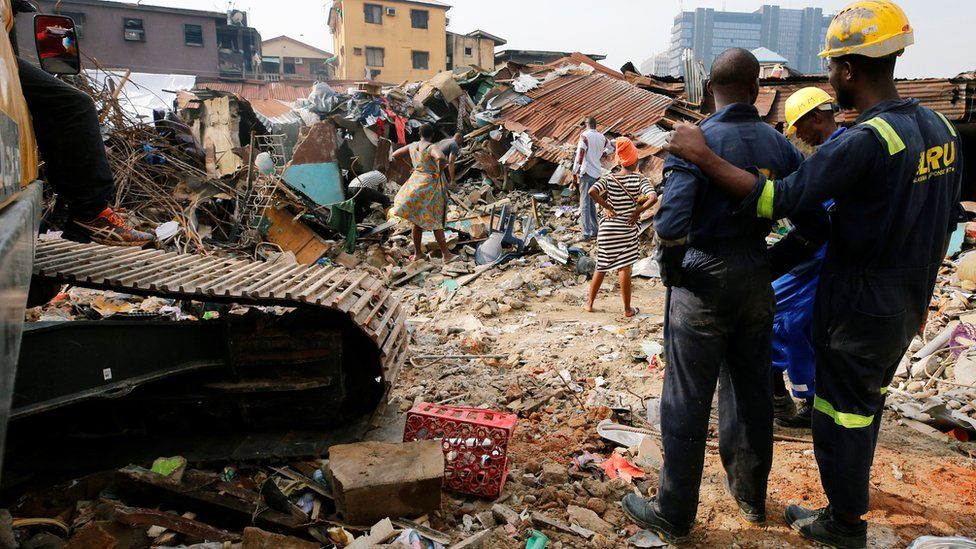
Over the last two decades, building collapse has remained a phenomenon that exhibits tremendous worry and concern in contemporary Nigerian society.

The aberration, which has claimed hundreds of innocent souls, maimed thousands as well as rendered scores of families homeless, has caused a colossal harm to not just the engineering-technology sector but Nigeria at large. In some quarters, it has made most residents to now sleep with one eye open on a daily basis.

On 13th March 2019, Nigerians were shocked to their bone marrow when notified that a certain 3-storey building situated on the Victoria Island of Lagos State abruptly collapsed, thereby claiming about twenty lives and inflicting different degrees of injury on countless others.

It was consequently reported that the third floor of the collapsed structure was being occupied by primary school pupils who were already unfortunately present for their usual studies prior to the bad omen.

Barely forty-eight hours after the ugly and unspeakable incident, it was learnt that another 3-storey building in Ibadan, the Oyo State capital equally collapsed unannounced, injuring a lot of Nigerians, though no life was reportedly lost.

Statistics indicate that within the aforementioned period, countless buildings situated across Nigeria have collapsed unceremoniously as if a structure can be brought to the ground at any time by mere breeze or thunder storm.

In March 2006, the top nine floors of a 21-storey building belonging to the Bank of Industry, located on the famous Broad Street – still on the Lagos Island – caved in, killing two and injuring twenty-three others.

In August 2010, a 4-storey uncompleted building at Ikoli Street in Garki, Abuja brings the Federal Capital Territory’s name into the list, thus reportedly claiming not fewer than twenty-one lives and endangered nine.

Survey reveals that between 2012 and 2016 alone, Nigeria recorded about fifty-four building collapses. Though the unfortunate situation is not peculiar to the country, its recent alarming rate calls for an apt and urgent attention.

To duly tackle the societal menace, the concerned authorities must comprehend the rudimentary factors that invariably constitute the quagmire. Building collapse is mainly attributed to substandard products, quackery, mediocrity, cheating, and/or soil texture cum topography, coupled with other environmental factors, as the case may be.

The dangers inherent in the use of substandard building materials cannot be overemphasized. These materials such as brick blocks, cement, sand, and rods, are not in any way meant to be used in constructing mere boys’ quarters let alone deploying their services in storey building constructions.

Regarding blocks, it’s either the cements used in the moulding weren’t good enough, or the sand utilized was nothing to write home about. There are specified sands meant for moulding but most block industries don’t bother going for them, probably owing to the cost of conveying it to the moulding site.

Since people, especially those residing in cities are often in a hurry, they are invariably left with no option than to patronize such block firms as stipulated above, hence posing danger for the proposed structure.

Quackery and mediocrity cannot be left out. It’s worth noting, perhaps shocking, that most of those who claim to be structural engineers, architects, or what have you, never attended any engineering or architectural class even for a day let alone becoming professionals. These amateurs go about causing avoidable harm in their respective jurisdictions.

They are just mere quacks parading themselves as chartered technologists. Pathetically, some of them who had the privilege to pass through a higher institution didn’t obtain the required training or expertise, thereby constituting structural defects when contracted to handle a certain building project.

A sound and qualified contractor is expected to thoroughly inspect the site for the proposed building, adequately advise the prospective landlord, tactically implement the project, complete it within a stipulated period, as well as know what to do while converting a mere bungalow to a storey building. When any of these professional functions is missing, it becomes a burden to the affected building when purportedly completed.

Away from substandard products and quackery, soil texture or topography, as might be the case, has equally been a thing of great concern while discussing building collapse in Nigeria. Houses are usually built on swampy sites in reverie areas like Lagos and Port-Harcourt without carrying out the required preliminary design, thus leading to collapse in the nearest future.

The aforementioned type of land is not strong. They are sandy or loose, but contractors build on them using templates that are meant for better compacted lands. Sometimes the contractor would know what to do but rather than doing the needful, would be only interested in his money or what he stands to gain as long as the contract lasts. This aspect of cheating or insincerity is currently on the rampage in the present days’ Nigeria.

Similarly, an architect is expected to thoroughly ascertain the nature of the land where the proposed building is to be sited before putting up the required design. The kind of structure to be erected on a certain site is directly dependent on the type of soil or land topography. It’s even more appalling to realize that most of these structures are erected without a building plan.

There must be a plan before a proposed house or building is eventually built. An eligible civil engineer is needed to inspect the design or building plan before it would be implemented by the site contractor who should be a builder or structural engineer. These professionals are meant to work hand-in-hand towards erecting a formidable structure.

The Standards Organization of Nigeria (SON) in collaboration with the Nigeria Customs Service (NCS) must take a drastic and severe step toward ensuring that substandard materials are no longer smuggled into the country as it has reportedly been the case in recent times. Hence, the various borders need to be holistically strengthened headlong. The SON ought to also properly regulate the locally made ones.

On the other hand, relevant professional bodies, including the Council for the Regulation of Engineering in Nigeria (COREN), Nigerian Institute of Building (NIOB), Nigerian Society of Engineers (NSE), and Nigerian Institute of Architects (NIA), ought to respectively employ a stiff measure towards addressing the crisis.

When any building is under construction, they should in their, individual or collective, capacity endeavour to ascertain the contractor handling the project to ensure his credibility as well as inspect the site and plan being utilized.

If a building eventually falls, they must ascertain the root causes of the collapse and not hesitate to issue the apt sanction to the affected contractor if found guilty. They should equally go beyond sanctioning; any culpable individual ought to be arraigned without any fear or favour, so that he will squarely face the wrath of the law.

Inter alia, the authorities on physical planning or development control situated in the various states across the federation must be very proactive and professional in their respective dealings with prospective landlords and developers.

It has been reported in various quarters that most of these government agencies oftentimes pay attention to frivolities to the detriment of priorities. The concerned governments must therefore look inwards with a view to addressing this kind of illegitimate and uncalled for acts.

Intending landlords are also advised to consult aptly whenever they intend to erect a building. Don’t just jump to any so-called contractor you find on your way. If you succeeded in contracting any, endeavour to confirm his/her authenticity or background by enquiring from the relevant authorities.

Eligible structural contractors, on their part, ought to feel free to consult their colleagues for any professional assistance when need be. And, they should also regularly be research-oriented towards enhancing their expertise at all times.

All in all, every structural professional mustn’t be reminded that foundations and pillars, as well as decking in the case of storey building, remain the basic factors that determine the validity or wellbeing of any building, thus should be taken very seriously at all cost. 

US Dollar Scarcity Is Disconnecting Nigeria From The World

1

British Airways issues notice to travel agents: “I wish to inform you of British Airways intention to control their Global Distribution System inventory by removing all the lower classes from the GDS, leaving only the below classes to be sold and issued and we all know the cost implications to this: Economy Y, Premium Economy W; Business Class J; First Class F. This became necessary due to fluctuating and unstable exchange rate in Nigeria.” 

Simply, BA and other foreign airlines plan to reduce the “total number of tickets they sell on Nigerian routes amid worsening dollar scarcity that has made it difficult for them to repatriate billions of naira in ticket sale proceeds to their head offices abroad”.

If the world cuts off Nigeria, that would be fearful because what that means is that we may not even have the airlines to fly to go and borrow more money. There is also rumour that some airlines now want to be paid in US dollars or pounds sterling; the Central Bank of Nigeria promised to investigate  this planned “dollarization”.  According to IATA, an industry association in the airline sector, Nigeria holds $143.8m which foreign airlines are struggling to repatriate due to dollar scarcity.

“It is worrisome that airlines in Nigeria can’t repatriate about $144m. Imagine if this situation is applicable to other countries, the industry will be in jeopardy. The government should know that without this repatriation, the airlines won’t be able to fund maintenance, operations, aircraft purchases, salaries and other commitments. The government has to seriously look into this and find a solution as this is embarrassing for a country like Nigeria.”

People, do not be surprised if these airlines go on “strike” in two years and magically we will be disconnected from the world. Do not wish for that as everything will collapse including the ability to visit IMF, World Bank, etc for more loans.

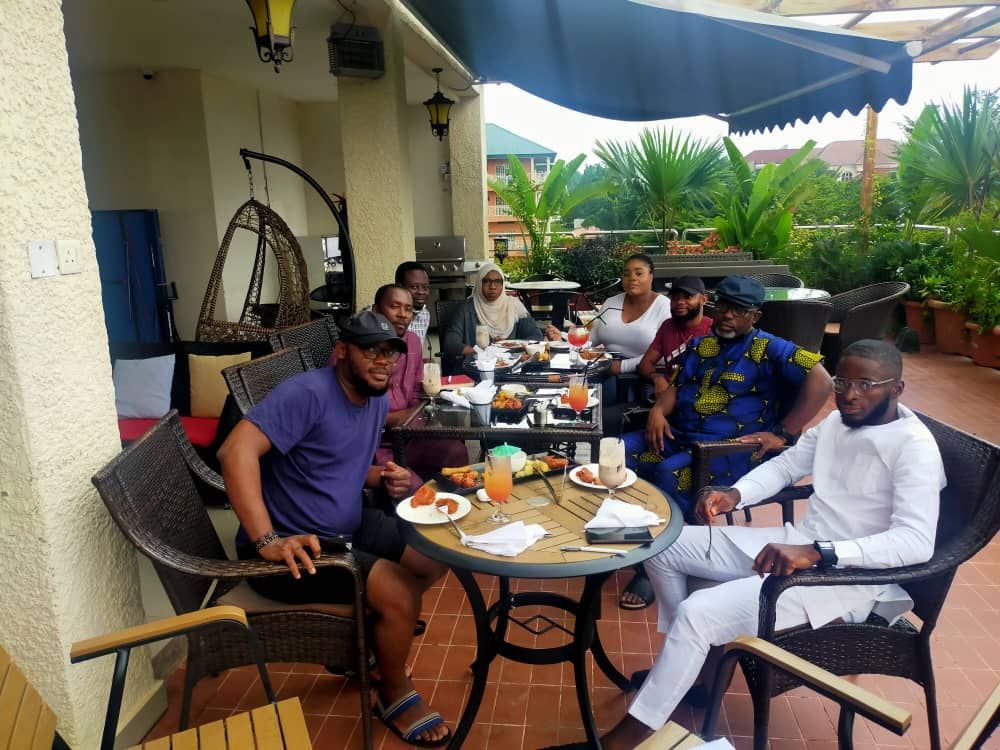
Let Us Know About Your Tekedia Institute Hangout and Meetup (Photo from Abuja Hangout)

0

Happy Sunday everyone and an amazing week ahead. Let me also thank all Tekedia Institute community members who are organizing hangouts and meetups across cities. This is the beauty of our shared vision: master the mechanics of business in our school and go into the real world and have impacts through partnerships. Tekedia will offer logistical support to our members who plan to organize physical meetups and hangouts.

Write to Admin with date, time and venue (as possible) along with the contact of the organizer(s), the team will help share the message; I will also share here and tag you.

I know that many take place in Lagos, Ilorin, etc regularly. I am aware that a Kaduna group has formed a joint company to export agro-products to Europe. This photo is from Abuja Tekedia Hangout which happened this weekend.  Thanks Emmanuel Bassey for sharing.

Nnamdi OdumodyEyitayo Adeleke and other Tekedia Institute team members are here to provide support. And note that if you invite me for a short Zoom/Whatsapp call in, I will honour it.