DD
MM
YYYY

PAGES

DD
MM
YYYY

spot_img

PAGES

Home Blog Page 5556

Migrating From Crude To Mechanized System In Nigeria

0

A system that’s crude is ancient, simple, outdated and unsophisticated. Among all, the most unique feature that’s embedded in a crude system is attributed to its ancient and outdated nature.

Ancient, in the sense that, its emergence in the world could be traced to the making or creativity of the ancestors; outdated, meaning literally that its existence on earth is no longer in vogue or has been overtaken by events.

If a certain ongoing pattern, method or style – as might be the case – is truly ancient, then it’s high time it is dropped or jettisoned, because its progenitors wouldn’t be happy that their offspring haven’t been able to introduce another pattern into the system.

For instance, if I succeeded in inventing a certain system of life into a clime I belong to, I would strongly wish and pray that someday in the future my children or any of them would create another system.

In other words, every discerning mind seriously prays for succession because it is one of the basic features of progress. An individual or entity can only boast of progression when a new thing belonging to them emerges at intervals to their delight.

It’s appalling – and pathetic too – when realized that in Nigeria today, most individuals or groups still depend on crude ways of doing things in a century that has boldly and proudly welcomed a modern pattern of living or operation.

It becomes more disturbing and disheartening when observed that most people who address themselves as ‘professionals’ still make use of this crude pattern that ordinarily ought to have been eroded by the emergence of the ‘digital age’.

It’s noteworthy that the modern/digital age is synonymous with technology. Hence, for anyone to be fully part of the contemporary society, he/she must integrate him/herself into the tech world.

Individually or as a group, we must be ready to duly embrace this modern system of living in our respective fields of endeavour. We mustn’t continue to dwell in a retrogressive approach while addressing any plight that arises.

Nigeria as a country, in various areas of her economy, these crude measures are invariably deployed. On a daily basis, most sectors within the shores of the country suffer great neglect or ineptitude as a result of inability of the concerned authorities to imbibe modern methodology.

In the mining sector, for example, several solid minerals such as gemstones, metals and what have you, are abundant in different quarters of the Nigerian State. But most times, these minerals are still being dug from the earth crust via the use of crude techniques.

Also, owing to lack of mechanized techniques, whenever the minerals are acquired from the ground, they would be exported to the foreign nations as raw materials because they can’t be readily processed here. In the long run, the citizens would end up purchasing foreign-made products that ordinarily, should have been produced in the country. Such a practice is a shame, to assert the least, hence calls for a due review from the relevant bodies.

Even the oil and gas sector, where the country currently relies on, is experiencing such colossal neglect. The citizenry consistently purchases fuel and allied products, which were processed overseas, because the country lacks the required mechanized system known as refinery to carry out the processing as soon as they are drilled.

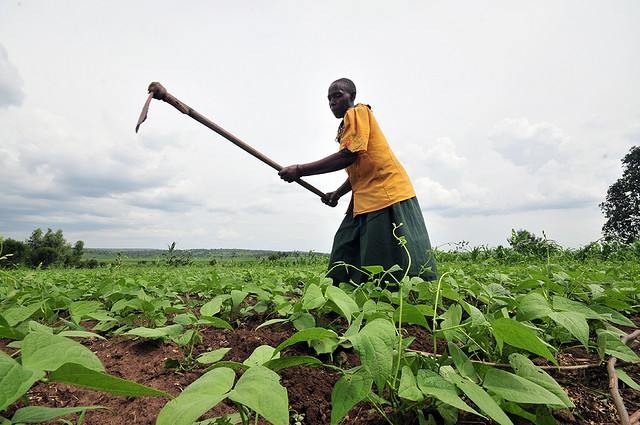
The agricultural sector isn’t left out. The country’s farmers, particularly the commercial ones, still participate in farming via crude patterns. The four major segments in the agric wing, namely, cultivation, harvest, processing and storage, are yet to be fully carried out with the aid of a mechanized system.

A particular farm produce, when aptly processed, could provide a variety of foods in the markets or on the table. It’s worth noting that many of the products possess this fantastic quality. But, regrettably, it’s often being exported as a single commodity, thereby causing the country to lose several millions of naira on a regular basis.

Nigeria’s education and health sectors are also suffering from this plight or phenomenon. The old ways of teaching or impaction of knowledge are still being deployed in the various citadels of learning therein. That’s the reason most of the students are still, or still finding it difficult, to key into the Information Technology (IT) world.

In most hospitals or health centres across the federation, outdated instruments cum laboratory equipment still dominate the arena, hence making it impossible for the practitioners to perform their duties effectively and efficiently as required.

What about the country’s public service system? It’s indeed saddening that a sector of this kind, that’s densely characterized with highly learned individuals, is still dwelling in the past. Just a peep into the said domain would make you gush fathomless tears.

The list is obviously endless as regards the sectors that still adore the crude pattern of operation within the shores of the country. This is why the governments must act fast and genuinely if they are truly ready to get it right or move in the more deserved direction.

Though the choice is theirs, they must comprehend that as long as this custom lingers, they will continue to deprive themselves of a milestone that’s liable to positively turn the country’s economy around in its entirety. This is the reason actions are required to be expedited without further ado.

The situation has conspicuously gone out of hand that a stringent measure is needed towards addressing it headlong. The deplorable state of Nigeria’s various institutions and sectors, due to the continual use of crude pattern, is seriously in need of a candid and strict approach if she must progress headlong.

It’s high time the existing orientation is changed by facing the realities of the day squarely at all cost. The leaders need to unequivocally challenge themselves by understanding that technology has come to stay, hence ought to be seen as the only pattern in vogue.

They must key into the most reigning and acceptable methods by jettisoning the ones that are obsolete, or have been overtaken by events, by throwing them into the waste bin where they rightly belong. This is the only and best way the country can forge ahead for the good of all.

There should be strong legislation regarding this clarion call. There’s need for a comprehensive legislative backing with a view to fully embracing tech-driven policies and measures in most of the country’s public sectors. This will surely go a long way in tackling the menace.

It’s even amusing, and shocking too, to realize that the country’s legislative chambers still deliberate their plenaries with the aid of mere crude methodology. It’s painful to acknowledge that, at the moment, the institutions that are constitutionally imbued with the powers to come up with the required legal backing as proposed above are yet to embrace modern techniques or mechanized pattern. It’s really astonishing, to say the least.

We can only end this glaring self-deceit by understanding that the benefits inherent in any technologically-approach system are unquantifiable, thus cannot be overemphasized. It enables work to be done so easily and swiftly, thereby saving time, energy, cost, and what have you.

In different quarters, it has been reliably proven that systems that are tech-driven or mechanized often boast of greater efficiency in performance, productivity strength, and output, among others. More so, it has been observed to be result-oriented when compared to the crude ones.

Even though you would spend more funds to acquire – or migrate to – a mechanized system, the interesting truth remains that in the long run, you stand to make several more millions of the money invested. This is a fact we must embrace in earnest.

Isn’t it time we make our ancestors proud by letting them comprehend that we are really progressing, since progress remains their only prayers for us? 
Asia Tech Voyage in Africa

0
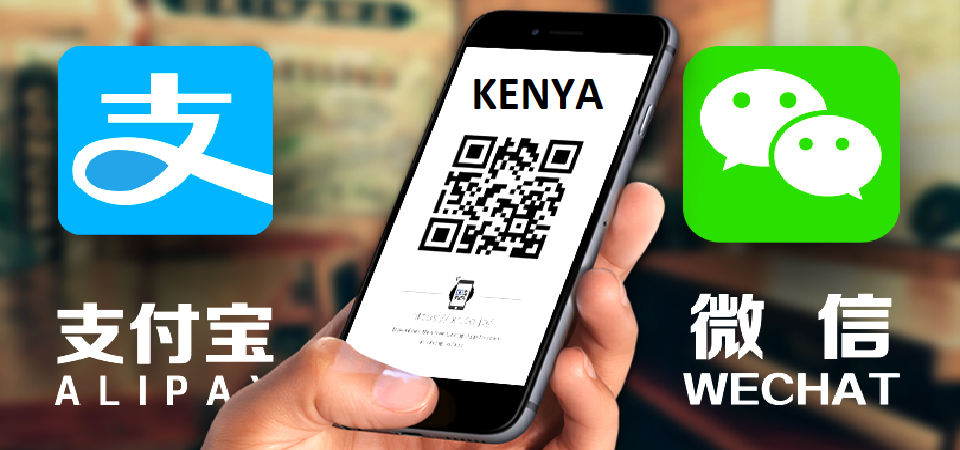
Kenya WeChat Alipay

If the growth of a nation is to be personified, then a tree would be a proper fit. So, it is good we look at this set of living things to gain wisdom on how they navigate their path. Firstly, for there to be a tree there has to be a seed, and this seed must be buried in soil before it encounters the richness of the soil for its growth. The Ideas are the seeds and the people in the geographical location are the soil. However, whilst growing these ideas must be managed as they take root in the soil. This leads to pruning.

Pruning is a process of taking away parts which would not be helpful so it can be more productive. By the way, you can only prune a growing tree. However, this pruning could be deceptive, because to the tree it looks like another death since it is painful, however it’s not rather an agro process of making it produce much better yield.

Christianity holds this, John 15: 2 He cuts off every branch of mine that doesn’t produce fruit, and he prunes the branches that do bear fruit so they will produce even more (New Living Translation).

All this is about the China service space. The crackdown is a pruning process for communal goals. However, as the crackdown of Asia’s largest market China continues, it’s expected with great certainty that resources ( Humans, and Capital) would find their way into Africa. It would be done as a cover measure by firms who wish to see a surge in their annual turn over. Whilst largely the actions of the regulatory bodies are seen as vindictive communist command to put China’s beloved Alibaba Founder in line, this actions undisputable holds value. Indeed, no man, either good or bad should not be too big else he competes with the gods. Men rarely live humbly.

Also, it must be understood that humans are creatures of greed and possess within themselves the potential to do anything to be satisfied. By the way that is the whole essence of economics- finding ways to make the limited resource satisfy needs at scale. Regulators just make sure that limited resources do not concentrate on few, it’s the prosperity of all that matters. This human negative tendencies creates the need for Accountability.

But this incident offers a bright side. It is said in Western Nigeria that, “Omo buruku lojo ti e”, translated, ” Even a bad child has days of relevance”. This crack down holds massive value if it could be managed wisely.

The Tech Investors (Service) should route the same path their manufacturing counterpart did when China was dense. They should come down to Africa.

Although I am skeptical of Nigeria and other big goons in terms of attracting funds for startup due to dynamic regulatory issues- it may not appear so but if heavy cash comes in, then we would see zealous regulations. Regulations in the big goons may be slow because they copy but it’s always dynamic and harsh- Tough love. Nevertheless, it would be largely for all, especially the vast untapped market.

Whilst in the past Africa witnessed massive funds go to limited areas. This has the potential to grow the tech service sector in other parts thus helping in the unification of the country thereby aiding the implementation of Africa Continental Free Trade Agreement (AfCFTA). I expect Asia investors to go to a less regulated region- Tanzania- of the continent capitalizing on their little advancement in knowledge against the backdrop of impressive development.

Updated with: So, since the thought of the coming of Asians is materializing has seen with Softbank investment in Opay and Didi vacancy, it expedient we look into the players that would make this a smooth sail: The Regulators, Investor and Tech Entrepreneur.

The Tech Entrepreneurs

There is a western Nigeria proverb that goes, “Ayo ló n pá ??yán” , this is translated to mean it is excessive unguarded joy that kills a man not hardship! This joy certainly comes from the realization of a blessing. For the sake of perspective: If there is anything, most third world battles aside, bad leadership is the resource curse- a situation where abundance of resources brings poor development as compared to the expected enormous prosperity. And since the funds coming here are to help make industrialization attainable it is good we escape silly mistakes by handling the excitement with moderation.

This may seem misplaced, however if you look closely there are tech firms who spend lavishly as soon as they encounter cash because of their immaturity due to early exposure to large cash. From Wework’s fiasco to Wirecard fraud, Car45 ruins(a working dead firm), Uber slips not forgetting the shameful fall of Archegos- which is a red flag that stupidity still exists amongst humans- insider information reveals that lack of character accounts for all this collapse. So personal values of founding members must remain central if longevity is a thing of priority.

The Tech Investors

Undoubtedly, the coming of this firm into this space is not for charity, if they wanted they could do it to their kinsmen, rather it’s explosive growth from an urge to be so big that the touch sky and last till the end of time, largely something impossible! This explosive growth regardless of its loftiness comes with the possibilities of unrealistic expectations which may trigger them engaging in corporate practice which are far worse than what orchestrated their voyage.

The Regulators

Undeniably these men are the working fluid in this system and should be very careful as to how they set up policies- not too soft else’s they would create a situation where they would have to undo later and not too hard else they would drive away investment. It knows that coping is much easier than creating however we have. to be very dynamic with our backwardness else we would lose out on this window of opportunities.

Join Ndubuisi Ekekwe In First Bank Fintech Summit 5.0 As He Speaks on Open Banking

0

One of the finest moments in Nigeria’s entrepreneurial ecosystem happened in the decade of 1990s when new species of banks were created. What happened then was “intra-bank” evolution where the banks essentially linked their branches into a mammoth network, making it possible that once you open an account in one branch of a bank in Nigeria, you can bank from all the bank’s branches.

As we moved from voice telephony to the mobile internet age, we upgraded that “intra-bank” to “inter-bank”, through NIBBS, offering a unified quasi-banking ordinance. With Open Banking, it goes beyond banks to now include insurance, mortgage, etc to drive the new age of application utility era which I expect to be massive. This is the cambrian moment of the new age of new Africa.

Join me at First Bank of Nigeria Fintech Summit 5.0 on Oct 7. I will speak on Open Banking and the Grand Unification.

Ndubuisi Ekekwe To Keynote First Bank Fintech Summit 5.0

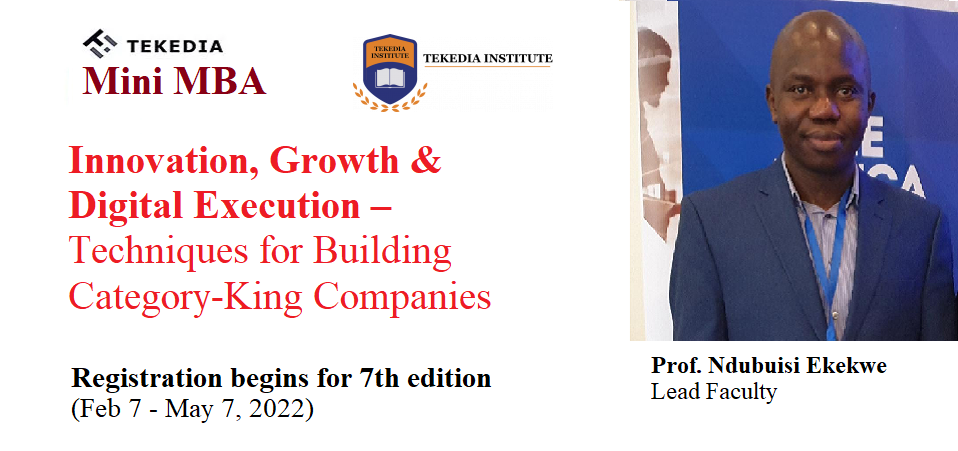
Registration for Tekedia Mini-MBA

1

Welcome to Tekedia Institute. We run an amazing business school which has attracted professionals and students from 38 countries. Our Faculty members come from Microsoft, Shell, Flutterwave, Nigerian Breweries, Jobberman, Coca Cola, and other great organizations. Thrice weekly, I personally coordinate live Zoom sessions on the mechanics of business systems. We bring our Faculty and Guests on those sessions, covering industries and business domains. REGISTER today and join us!

– Prof Ndubuisi Ekekwe, Lead Faculty.

Invent, innovate and drive organizational transformation, performance, and growth. Capture emerging opportunities in changing markets while optimizing innovation and profitability. Digitally evolve your business or functional area, turning digital disruption into a competitive capability and advantage. Master the concepts of building category-king companies, and thrive.

Registration for the 6th edition of Tekedia Mini-MBA (Feb 7 – May 7, 2022) opens. Tekedia Mini-MBA, from Tekedia Institute, is an innovation management 12-week program, optimized for business execution and growth, with digital operational overlay. It runs 100% online. The theme is Innovation, Growth & Digital Execution – Techniques for Building Category-King Companies. All contents are self-paced, recorded and archived which means participants do not have to be at any scheduled time to consume contents. Our programs are designed for ALL sectors, from fintech to construction, healthcare to manufacturing, agriculture to real estate, etc.

More so, the sector- and firm-agnostic management program comprises videos, flash cases, challenge assignments, labs, written materials, webinars, etc by a global faculty coordinated by Prof Ndubuisi Ekekwe. When we finish, we will issue a certificate from the Tekedia Institute, Boston USA.

Register and join us. You will emerge transformed with tools and capabilities that engineer confidence, performance and growth.  Accelerate your leadership ascent with us! Here are our programs and costs.

Tekedia Live (Zoom) schedules for the ongoing edition is here.

How To Register

Group Registration Benefits

Slide Anything shortcode error: A valid ID has not been provided

Curriculum for Tekedia Mini-MBA

Additional Registration Benefits

Capstone Program

Here are the 12 tracks:

The program is completely capstone-based. Tekedia capstone is a research paper or a case study exploring a topic, market, sector or a company. It is the project component of Tekedia Min-MBA.

Important Links

Selected Tekedia Mini-MBA Corporate Clients


Tekedia Mini-MBA Syllabus

Theme: Innovation, Growth & Digital Execution – Techniques for Building Category-King Companies

Introduction

Over the last few decades, digital technology has emerged as a very critical element in organizational competitiveness. It has transformed industrial sectors and anchored new business architectures, redesigning markets and facilitating efficiency in the allocation and utilization of factors of production. The impacts have been consequential: continents like Africa are moving towards knowledge-based economic structures and information societies, comprising networks of individuals, firms and states that are linked electronically and in interdependent relationships. In this program, we will examine this redesign within the context of fixing market frictions and deploying growth business frameworks in a world of perception demand where meeting needs and expectations of customers are not enough.

Program Time: Feb 7– May 7, 2022

Venue & Format: Online via videos, articles, webinars, and flash cases. Program is self-paced which means you consume the materials at your own time and pace. It is completely online. Where you live or your time zone would not be an issue as program is not live-delivered.

Cost: US$140 (N50,000 naira). We have a payment plan, i.e. installment payment plan (email us for details)

Target Audience: This program is designed for professionals and students across functional areas like sales, marketing, technology, administration, legal, strategy, finance, etc across all business sectors and domains.

Learning Objectives: To innovate is to set a new basis of competition in an economy, business sector or market. Sometimes, it results in disruption. This program is designed for private (large, SMEs, startups, sole businesses), public and government institutions, and individuals. Participants will:

  • Master the mechanics of growth – the reward of innovation – through frameworks, cases and evolving strategies.
  • Understand how to undergo transformation journey that is fully aligned with corporate objectives through measurable and realizable benchmarks.
  • Acquire business capability tools that do not just RUN their firms but can TRANSFORM them.
  • Design corporate growth experiments in Lab sessions based on One Oasis Strategy, Aggregation Construct, Double Play Strategy, Accumulation of Capability Construct, and more.
  • ETC

Tekedia Advanced Diploma Programs – Immediate Access Upon Payment

Each track of Tekedia Advanced Diploma programs runs for 8 weeks (2 months). A track has no Live Zoom session, and it is completely self-paced and online. Upon payment, you have immediate access to start learning. The program includes class notes, flash cases and videos, but no webinar.  Each track costs $100 or N36,000 naira per participant. The tracks and curriculum are presented below.

DLSM Advanced Diploma in Logistics & Supply Chain Management
DBIS Advanced Diploma in Business Innovation, Growth & Sustainability
DBPM Advanced Diploma in Project Management
DIRM Advanced Diploma in Risk Management
DIBA Advanced Diploma in Business Administration
DIDT Advanced Diploma in Innovation & Design Thinking
DIAT Advanced Diploma in Accounting, Auditing, Forensics & Taxation

Part A – General for All Tracks

In the first 4 weeks, all the tracks take the same courses.

 Week Part A – Common to All Tracks
1 Innovation & Growth:

Growth and Innovation of Firms

Digital Transformation, Innovation & Strategy

2 Business Systems & Processes:

Grand Playbook of Business & Entrepreneurial Pursuit

Process Improvement and Operations Management

3 Business Model & Transformation:

Modern Business Models and Growth Execution

Effective Organizational Change Management

4 Design and Innovation Lessons:

Innovation Lessons (5in5, Global, Africa)

Product Design and Packaging

The electives for the tracks are presented on this slider-table.

Tekedia Live Sessions

We run optional three Live Zoom sessions (two weekdays and one Saturday). This provides a way for our members to ask our Faculty and experts live questions and get feedback.

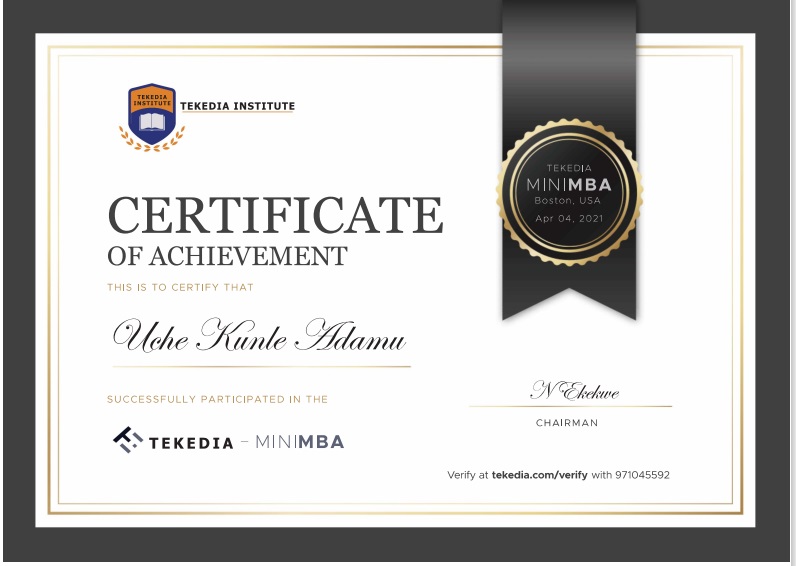
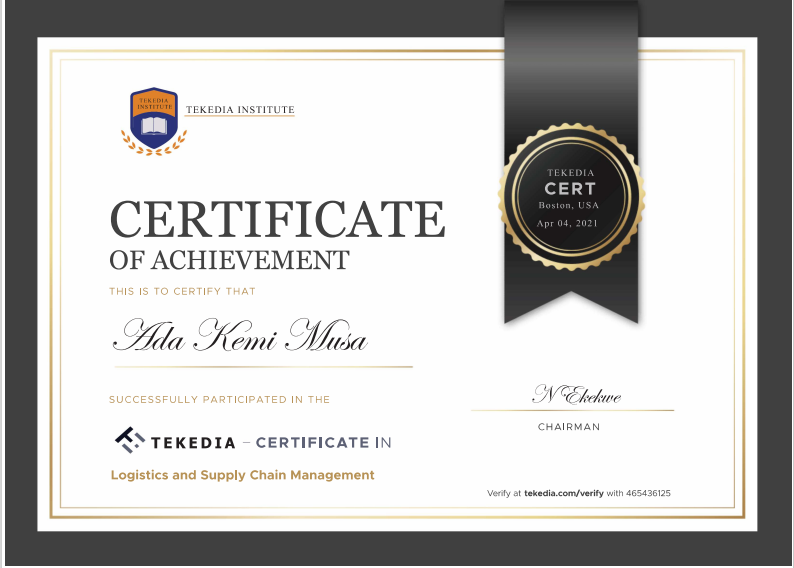
Tekedia Mini-MBA certificate sample


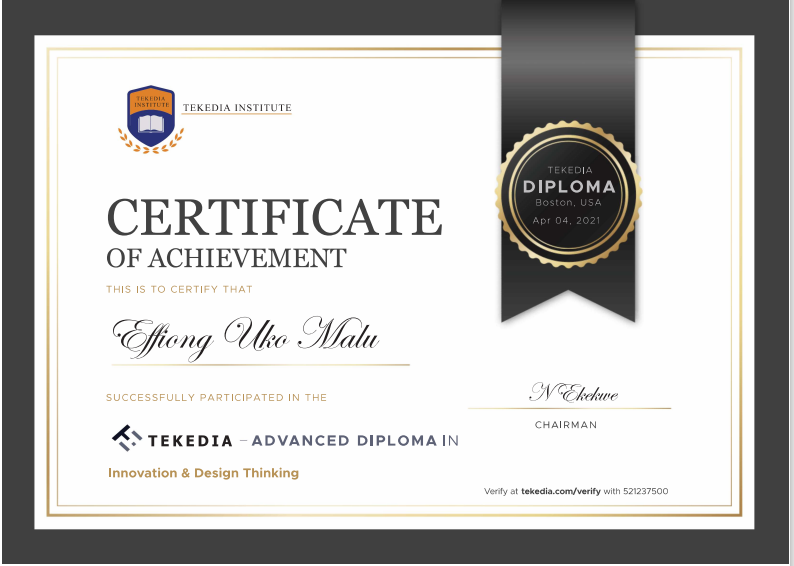
Tekedia Diploma program certificate sample


Tekedia Capstone program certificate sample

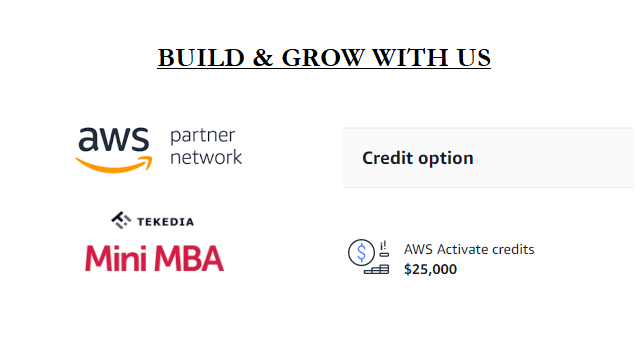
Amazon AWS Credit to Innovators

Tekedia Mini-MBA is a quasi startup accelerator, extending the school core innovate & grow mindset to support innovators. That means, innovators and companies can have access to resources which our Fund provides. If you are in our program, and need support, we will help. We have credits  to support founders and companies in Tekedia Mini-MBA who are bootstrapping or have raised small money. Then, as you grow, we will offer you more credits.

Tekedia Now Offers Amazon AWS Credit To Innovators In Mini-MBA

Special Weeks

Tekedia runs two special annual programs – Tekedia Career Week (not designed for finding jobs but rather planning careers) and Tekedia Innovation Week for our members. Admission is that member must have attended a Tekedia Mini-MBA program in that year. The dates are announced in our program curriculum. For the last edition, click here.

Our Career Week is not designed for finding jobs. Rather, it is structured to TRANSFORM workers, founders & professionals into business leaders and champions of innovation in their companies. The sub-theme is Nurturing Innovators: Career Planning & Resilience During Disruption. It is packaged under the Tekedia Mini-MBA theme of Innovation, Execution & Growth. Our knowledge experts for the Week include human resources experts and leaders from MNCs and startups, across industries and global regions:

Other Tekedia Institute Programs

  • Tekedia CollegeBoost  is a version of the Advanced Diploma in Business Administration for colleges and schools.
  • Tekedia Mini-MBA for Corporates is a customized version of the general Tekedia Mini-MBA for companies.
  • Tekedia Mini-MBA for Governments is a customized version of the general Tekedia Mini-MBA for governments, government agencies and related public institutions. 
  • Tekedia Practice has both coursework and internship components, and it  is designed to provide practical experiences to learners. Simply, a member goes through a curated domain-specific training, and follows it up with an internship in a company.
  •  Business Growth Playbooks w/ Ndubuisi Ekekwe is a live program which takes place on Zoom. It focuses exclusively on growth strategies, mechanisms, models, frameworks, etc which businesses can deploy to win new markets and territories.
For more details about these programs, click here. For institutions, if you need a brochure, email us for one.

Our Contact Email: tekedia@fasmicro.com

Lead Faculty of Tekedia Institute

Prof Ndubuisi Ekekwe is the Lead Faculty of Tekedia Institute

  • PhD, Electrical & Computer Engineering, Johns Hopkins University, USA
  • MBA, University of Calabar, Nigeria
  • BEng Electrical & Electronics Engineering ( Federal University of Technology, Owerri, Nigeria)

Prof Ndubuisi Ekekwe invented and patented a robotic system which the United States Government acquired assignee rights. Dr Ekekwe holds two doctoral and four master’s degrees including a PhD in engineering from the Johns Hopkins University, USA. He earned undergraduate degree from FUT Owerri where he graduated as his class best student. While in Analog Devices Corp, he co-designed an accelerometer for the iPhone. A recipient of IGI Global “Book of the Year” award, a TED Fellow, IBM Global Entrepreneur and World Economic Forum Young Global Leader, Prof. Ekekwe has held professorships in Carnegie Mellon University and Babcock University, and served in the United States National Science Foundation Committee.

The South African press called him “a doctor of innovation” for helping organizations on the mechanics of business innovation, strategy, and growth. Since 2009, the Chairman of Fasmicro Group which controls many startups and entities has been writing in the Harvard Business Review. He was recognized by The Guardian as one of 60 Nigerians Making “Nigerian Live Matter” on Nigeria’s 60th Independence Day (Oct 1, 2020).

Selected Faculty & Testimonials

We have more than 85 Faculty members; see the full list here.  For selected testimonials on our program, click here.

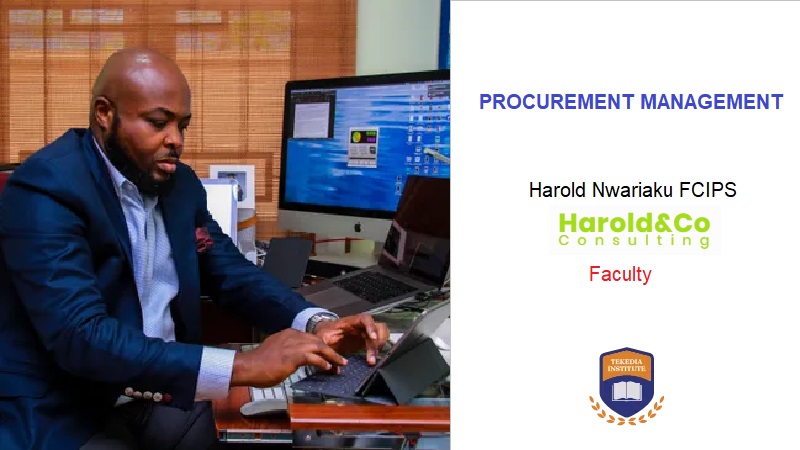
Learn Procurement Management At Tekedia Mini-MBA

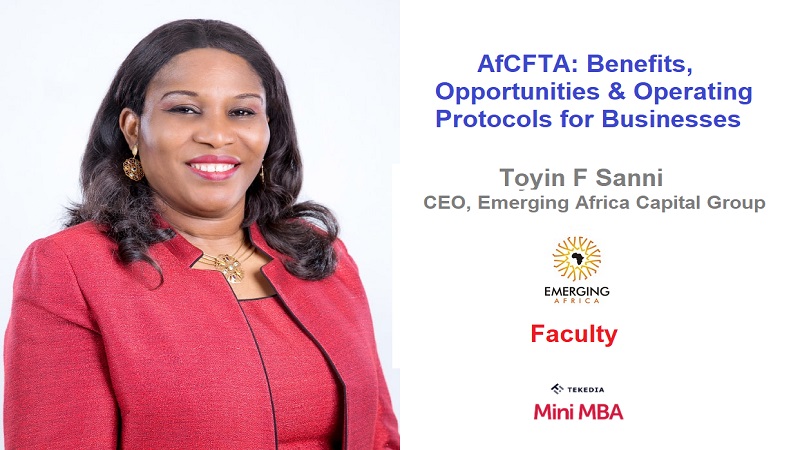
Learn The Mechanics of AfCFTA At Tekedia Institute


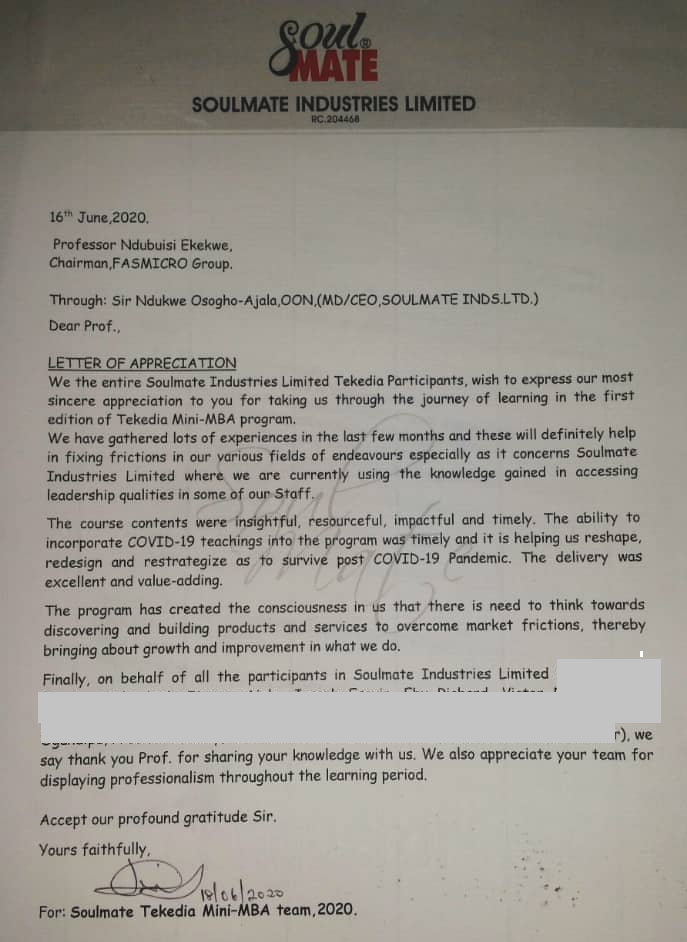
Testimonial from Soulmate Industries Ltd


ebook Free for early registrants
Free for early registrants