DD
MM
YYYY

PAGES

DD
MM
YYYY

spot_img

PAGES

Home Blog Page 5746

As Tekedia Receives Mhagic $60,000 Prize, Thank You Faculty for Transforming Careers and Firms

0

They are the most amazing faculty members in the world. They come from all aspects of business and technology domains. They are icons, legends and thought-leaders. They lead firms and move market systems. They are agents who want to create a future they can predict. They are Tekedia Institute Faculty. 

Because of them, a generation of young people are understanding in a deeper way the mechanics of business systems. From strategy to innovation, business law to accounting, technology to pricing, and indeed all key domains, these experts have transformed careers and companies.

As we receive Velocity Mhagic’s $60,000 prize today, I want to thank our Faculty. Some of them are listed here and space will not permit me to tag them. But one thing is evident: all our learners and community members appreciate the excellence they have brought.

We dedicate this prize, which is committed 100% to scholarships, to all our Faculty. As the 5 TV stations cover the event in Lekki Lagos, we want you to know that without you, today might not have been possible. But with you, we will rise to the mountaintop and receive that prize for the Tekedia nation which is committed “to discover and make scholars noble, bright, and useful”.

Thank you,  the world’s finest faculty in business and management.

As Tekedia Receives Velocity Mhagic N25 Million Prize, We Thank These Institutions and People

0

Good People, as Tekedia Institute receives Velocity Mhagic N25 million Prize today, we want to recognize the following companies and people for supporting this largely one year vision (we are donating 100% of the prize to fund 430 students via scholarships). Five TV stations will cover the event.

David Onaolapo – offered dozens of scholarships to Tekedia Mini-MBA

Late Most Supreme Apostle Matthew Omodayo Owotuga Foundation – endowed a yearly scholarship fund for funding dozens of students. JB Omodayo-Owotuga, FCA, CFA coordinates for the family.  

Soulmate Industries – led by industrialist Sir Ndukwe OsoghoAjala; has sent dozens of staff in all editions.

Lily Hospitals – when 40 medical professionals and doctors joined, we celebrated a validation.  Thanks Dr. Austin Okogun who leads this institution. 

Reliance Infosystems –  When Olayemi Popoola, a technology legend veteran sent 40 staff, we knew we had a mission.

Infoprive – has sent staff to all editions of Tekedia Mini-MBA. Thanks CEO Adetokunbo Omotosho.

Fatima Ahmed & Family – for offering scholarships to dozens of  learners.

Axa Mansard – before the banks, etc started sending, this company made us believe. 

Corporate members: Tekedia has dozens of corporate members from across Africa and beyond. We thank you for the support. 

Scholarship Donors – there are dozens of you, many anonymous. We want to thank you so much.

Co-learners: you are the best, trusting us to co-share and co-learn with you. We understand the confidence when men like Emmanuel S Akintunde has prepaid 5 years ahead. I just checked dozens have paid for 3 years. We are truly thankful.

Our Faculty – we will make a separate post for THE BEST FACULTY in the world.

The Tesla Double Play – Selling Emission Credits To Bitcoin Miners

0

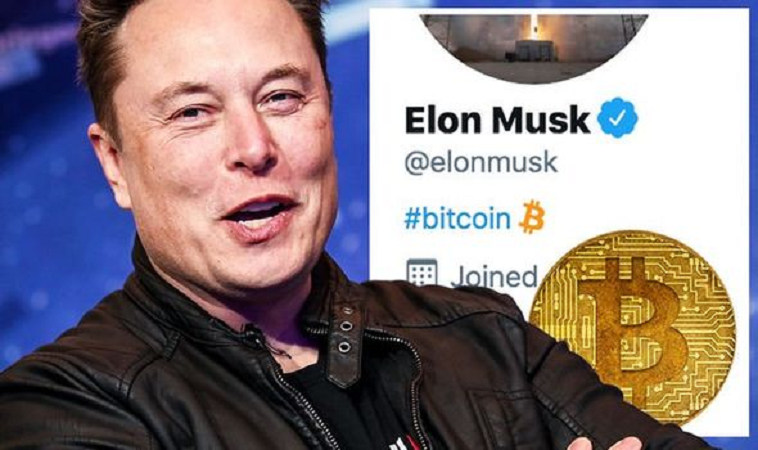
In a recent Harvard Business Review piece, I explained the One Oasis Strategy and Double Play Strategy. As the news that Elon Musk was divorcing Bitcoin because of his desire to save the planet hit the world, many were skeptical of the core hypothesis he was making the call. Yes, was Tesla really concerned about the climate? Yes, you are right to ask that question because mining Bitcoin is not a state secret, and Tesla knew how it has been done before they bought the first coin. So, the reason they gave must be examined.

Bitcoin has lost one of its biggest fans, Elon Musk. The Tesla CEO, whose announcement of accepting bitcoin for Tesla’s purchase earlier in March, fueled the lead-cryptocurrency’s rally that hit $64,000 in April, made a statement on Wednesday that wiped as much as $365 billion off cryptocurrency market. In a blow-dealing U-turn, Musk said Wednesday that Tesla will no longer accept bitcoin, citing mining energy concerns:

Here is a big possibility: the recent playbook from Elon will likely open for Tesla to sell emission credits to Bitcoin miners. I have already noted another possibility, relying on renewable energy which Elon through SolarCity is well invested in: ‘Elon Musk, cited the “rapidly increasing use of fossil fuels” for mining and transactions, and the cryptocurrency plunged. Now, Elon has just seeded another business for his empire: mining Bitcoin with renewable energy.’

Tesla sells cars as the one oasis, and sells emission credits as a double play. It is very possible that by putting Bitcoin mining in play, Tesla will unlock massive value from those buying credits, to offset Bitcoin mining. If that happens, Tesla which makes electric vehicles will win: “Last year, Tesla raked in about $1.4 billion selling emission or carbon credit to fellow carmakers who produce combustible vehicles. Analysts believe the credit revenue probably will rise to $2 billion in 2021.  In the first quarter of 2021, emissions credits accounted for $518 million in Tesla’s revenue with a pretax income of $533 million and a net income of $438 million on a GAAP basis, according to data from Autoweek. This means, the credits account for almost the entirety of Tesla’s profit for this quarter.”

Simply, anything which can extend those emission credit sales for Tesla is part of the playbook, and getting Bitcoin players (banks, investors, miners, etc) into the emission credit business will not be a bad play for Tesla. So, left and right, Tesla is moving to the edges of the smiling curve and will capture more value therein.

“Sales of emissions credits have been a major source of revenue for Tesla for quite some time, contributing to hundreds of millions in income for the past few quarters. The automaker accumulates regulatory credits because it produces only EVs and sells them for a profit to other automakers that are short of these credits,” Autoweek report said.

Could it be that Musk initiatedTesla’s abrupt divorce of bitcoin to sell more emission credits, knowing that cryptocurrency mining companies will scramble to switch to sustainable energy or to ameliorate the impact of fossil and coal powered mining through offsets?

The $2 billion revenue projection is based on expected carbon credit sales to carmakers, which means, the revenue will quadruple when the sales expands to cryptocurrency miners. Musk knows the short term consequences of his decision to quit bitcoin, but he also knows the long term benefits. Tesla will return to bitcoin as soon as there is a clear sign of sustainable energy in its mining, instigating another frenzy that will shoot the price up while making millions of dollars selling emission credit.

But this is what we know: Tesla is not leaving the coin sector because it knows that it is going to be part of the future of money, Bloomberg reports.

The history of modern finance has seen several monetary orders, from the gold standard of the 19th century to the current fiat-based era starting in 1971. Each period had its dominant reserve currency, starting with gold and then moving to the British pound and U.S. dollar. The current system is 50 years old, about the average length of previous monetary orders.

The lesson is that nothing lasts forever. The prudent should be preparing for the next monetary order, with all signs pointing to decentralized finance using a stablecoin as its reserve currency. How regulators and Wall Street handle this transition will significantly impact the global economy, as it seems destined to happen with or without their blessing.

Cryptocurrencies are decentralized computer networks that run on networks with no on/off switch or an overarching authority that makes rules. The mantra here is “code is law.”

Tesla Vs Bitcoin: Is Elon Musk Smartly Creating a Strategy to Sell More Carbon Credits?

0

After Tesla’s CEO, Elon Musk’s announcement on May 12, stating that the world’s leading electric vehicle manufacturer will no longer accept bitcoin transactions due to carbon emissions emanating from mining, the cryptocurrency market went down, losing over 15% of its value.

Ever since then, speculations about the future of bitcoin has been on the rise, as losing Musk, one of its biggest cheerleaders, will have a long-term negative impact not only on bitcoin but also the entire Cryptocurrency market. Musk says Tesla is “looking for cryptocurrencies that use <1% of Bitcoin’s energy/transaction,” fueling the growth of some altcoins like Cardano that has relative sustainable mining energy.

But it seems there is more to Tesla’s decision than the environmental concern. On Friday, Greenidge Generation Holdings Inc., a New York-based bitcoin mining firm, announced that effective June 1, 2021, it will operate an entirely carbon neutral bitcoin mining operation at its facility in Upstate New York.

The firm said it will purchase voluntary carbon offsets from a portfolio of U.S. greenhouse gas reduction projects.

“In addition to offsetting 100% of its carbon emissions from bitcoin mining, Greenidge also intends to invest a portion of its mining profits in renewable energy projects,” the firm said.

While this beckons hope of sustainable energy in bitcoin mining, it also points to Musk’s ingenious strategy for the bigger picture.

About eight years ago, the University of California kicked off the “offsets” program as a way of mitigating the impact of carbon emissions on the planet.

“The whole purpose of offsets,” said University of California at Berkeley climate policy researcher Barbara Haya, “is to create a way for an individual or a company or a university to pay someone else to reduce emissions to cover emissions that they can’t reduce themselves.”
ClimateSeed defined it as “any activity that compensates for the emission of carbon dioxide (CO2) or other greenhouse gases (measured in carbon dioxide equivalents, CO2e) by providing for an emission reduction elsewhere.”

“In other words, carbon offsetting is a mechanism through which an individual or an organization can compensate for their CO2 emission through the support of certified emission reduction projects that absorb or reduce CO2 emissions. This action is realized through the purchase of carbon credits, where 1 carbon credit corresponds to 1 tonne of CO2 absorbed or reduced by the projects. The price of the carbon credit reflects not only the CO2 reduction capacity of the project but also other ecosystem services, the protection of biodiversity, social benefits, and the contribution to the UN Sustainable Development Goals that the emission reduction project achieves. It is important to specify that carbon offsetting here refers to “voluntary offsetting,” which includes “all the approaches adopted by actors who voluntarily choose the compensation method to limit their CO2 emissions.”

As part of efforts to fight global carbon emission and reach net-zero emissions at a global level, the regulated or the “compliance market” was established by the Kyoto Protocol and sees companies and governments, bound by law to account for their GHG emissions, trade allowances either to make a profit from unused allowances (CO2 that was not emitted) or to meet predetermined regulatory targets.

Therefore, a company that reduces its pollution can sell its emission credits to companies that fail to reduce their pollution: If a company fails to meet its emission-reduction target, it will need to buy additional emission credits to cover its excess emissions. The deals are usually approved by recognized Offset Project Registries, such as the American Carbon Registry (ACR), the Climate Action Reserve (CAR) and Verra, ensuring that any projects funded by responsible company reduce emissions or increase sequestration of greenhouse gas in a manner that is real, permanent, and verifiable.

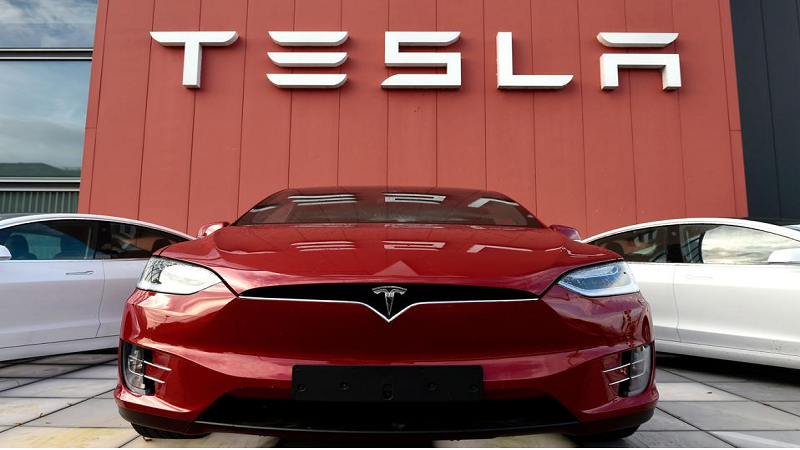
Last year, Tesla raked in about $1.4 billion selling emission or carbon credit to fellow carmakers who produce combustible vehicles. Analysts believe the credit revenue probably will rise to $2 billion in 2021.

In the first quarter of 2021, emissions credits accounted for $518 million in Tesla’s revenue with a pretax income of $533 million and a net income of $438 million on a GAAP basis, according to data from Autoweek.

This means, the credits account for almost the entirety of Tesla’s profit for this quarter.

“Sales of emissions credits have been a major source of revenue for Tesla for quite some time, contributing to hundreds of millions in income for the past few quarters. The automaker accumulates regulatory credits because it produces only EVs and sells them for a profit to other automakers that are short of these credits,” Autoweek report said.

Could it be that Musk initiated Tesla’s abrupt divorce of bitcoin to sell more emission credits, knowing that cryptocurrency mining companies will scramble to switch to sustainable energy or to ameliorate the impact of fossil and coal powered mining through offsets?

The $2 billion revenue projection is based on expected carbon credit sales to carmakers, which means, the revenue will quadruple when the sales expands to cryptocurrency miners. Musk knows the short term consequences of his decision to quit bitcoin, but he also knows the long term benefits. Tesla will return to bitcoin as soon as there is a clear sign of sustainable energy in its mining, instigating another frenzy that will shoot the price up while making millions of dollars selling emission credit.

On Grades of Life, Focus More On Fixing The Processes, To Win

0

Let me extend that conversation on making As and academic grades in general. Here is the deal: whenever you have a setback, on anything, besides looking at the outcome, spend more time on the process that produced the failure. A student who graduated with a poor grade in a university should examine his/her actions in school. It is only by looking at that process that the student will avoid repeating poor grades in future life endeavors.

This piece was written to provide a deeper perspectives to this one . Certainly, life does not end in As. Every phase could be graded. That you made all As in college does not mean that you will make all As at work. But if we focus on the processes, there is a connection on how developing good productive habits can predict making As in all facets of our lives. Good luck people.  I honestly do not want to make those who did not make As to feel bad. Not the intention; I want to challenge young people to push themselves, aim HIGHEST and achieve. Yes, nothing but the best.

If you worked hard, gave your best and ended up with poor grades: the world has a future for you. That attitude will lead to opportunities. Do not beat yourself down because of setback. Rather, make sure the cause of that failure is not systemic.

Companies hire top graduating students not necessarily because they are the smartest BUT because being the top of the class symbolizes dedication, commitment, and focus.  The implication is that if the student (now worker) commits to those principles at work, the company will win. 

The biggest failure is NOT fixing things that lead to failures. Whether A, B, or C in college, every phase of life has a grade, but all are united by one thing: process. If you have a good process, you will unlock futures, as a student, worker, or whatever.

Go for A Grades – Aim higher and challenge yourself to be the best