DD
MM
YYYY

PAGES

DD
MM
YYYY

spot_img

PAGES

Home Blog Page 5833

The Nigeria’s 33.3% Unemployment Rate

0

Nigeria’s unemployment rose to 33.3% in the Q4 of 2020, according to data released by the Nigerian Bureau of statistics (NBS) on Monday.

The unemployment rate rose from 27.1% in the second quarter 2020 to reach the new height, putting the number of unemployed people in Nigeria at 23.19 million.

The NBS report said that while the unemployment rate rose by 6%, underemployment rate witnessed a decrease.

“During the reference period, the computed national unemployment rate from 27.1% in Q2, 2020 to 33.3% in Q4, 2020, while the underemployment rate decreased from 28.6% to 22.8%. A combination of both the unemployment and underemployment rate for the reference period gave a figure of 56.1%.

“This means that 33.3% of the labor force in Nigeria or 23,187,389 persons either did nothing or worked for less than 20 hours a week, making them unemployed by our definition in Nigeria. This is an additional 1,422,772 persons from the number in that category in Q2, 2020,” the report said.

The total number of people in employment (i.e., people with jobs) during the reference period was 46,488,079. Of this number, 30,572,440 were full-time employed (i.e., worked 40+ hours per week), while 15,915,639 were under-employed (i.e., working between 20-29 hours per week). This figure is 20.6% less than the people in employment in Q2, 2020.

The data highlight a significant rise in unemployment and underemployment among youths, urban and rural dwellers.

The unemployment rate among rural dwellers was 34.5%, up from 28.2% in Q2, 2020, while urban dwellers reported a rate of 31.3% up from 26.4%. In the case of underemployment among rural dwellers, it declined to 26.9% from 31.5%, while the rate among urban dwellers decreased to 16.2% from 23.2% in Q2, 2020.

For the period under review, Q4, 2020, the unemployment rate among young people (15-34years) was 42.5% up from 34.9%, while the rate of underemployment for the same age group declined to 21.0% from 28.2% in Q2, 2020. These rates were the highest when compared to other age groupings.

Under State disaggregation, Imo State reported the highest rate of unemployment with 56.6%, followed by Adamawa and Cross River States with 54.9% and 53.7% respectively. The State with the lowest rate was Osun in the South-West with 11.7%.

For underemployment, the state which recorded the highest rate was Benue with 43.5%, while Lagos State recorded the lowest underemployment rate, with 4.5% in Q4, 2020.

A total number of 12,160,178 did not do any work in the last 7 days preceding the survey, the NBS data said.

With these figures, Nigerian has surpassed South Africa and it’s running after Zambia’s 33.4%, which leads on Bloomberg’s list of 82 countries with rising unemployment rate.

Over the last five years, Nigeria’s labor market has recorded alarming figures of job loss, compounded recently by the decline in oil revenue and emergence of COVID-19, which forced many companies to downsize.

It has become more like a race for Africa’s largest economies. South Africa, which just like Nigeria, fell into recession last year, has 32.5 unemployment rate. Although the two countries share a common problem of insecurity and civil unrest stemming from the rising number of youths without jobs, Nigeria has further concern.

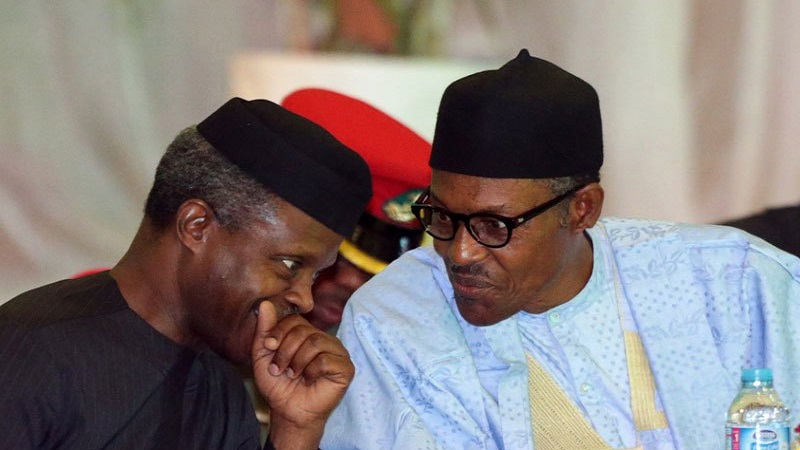
Inflation has been on the rise since August 2019, when the oil-rich nation closed its borders to enforce its food import ban. With inflation at 17.33%, food prices rose above 20% year-on-year in January, stoking the hunger crisis that president Buhari administration’s economic policies have failed to address.

Nigeria has an exploding population of more than 200 million people with over 40% living below the poverty line ($2 per day). The Q4, 2020 unemployment rate means additional 1,422,772 persons may likely be added to the growing number of people fighting extreme hunger in Nigeria.

Dependency has become a survival strategy for those not working. 148.7 million Nigerians are depending on 57.8 million who are working. This means, approximately, only 28% of the population is actually working, and on average, about three persons depend on one working Nigerian, according to data from StatiSense.

The International Monetary Fund said the recovery of Nigeria’s battered economy will be slow. With its current 1.5 growth rate, output will only recover to pre-pandemic levels in 2022, the IMF said.

Oil accounts for 90% of Nigeria’s GDP which plummeted as the oil market came under the weight of the pandemic. Although there has been recent signs of recovery with Brent Crude rising as high as $69 last week, its sustainability is not guaranteed as economies are yet to fully reopen.

With the current economic outlook, the number of people becoming jobless will increase, and with the food import ban and crisis in the north limiting farming activities, inflation will continue to rise as population growth outpaces output expansion.


Tekedia Mini-MBA Special Live Session – “Coming & Thriving in America”

0

Tekedia Institute is proud to announce the introduction of a Live session – Coming & Thriving in America. The goal of this session is not to move Africa to America, but to provide knowledge systems which will help African professionals in diasporas to thrive. The course will run for 2 hours on a Saturday, and it is 100% LIVE. The course is broken into four sessions:

  • Preparing at home nation: this focuses on playbooks and critical things one has to do before journeying to America.
  • Integrating into the American system: this focuses on skills and things one has to do to integrate and find value within the US system upon arrival.
  • Harvesting the efforts: this explains career strategies, business ventures, and options after capabilities have been developed in the earlier phases.
  • Connecting back to home nation: when established in America, how to link those capabilities to the home nation.

To register for Tekedia Mini-MBA, check below.

NB: The current Tekedia Live which runs on Saturdays will be unaffected by this new course.

Flutterwave Brings Paypal to African Merchants

2

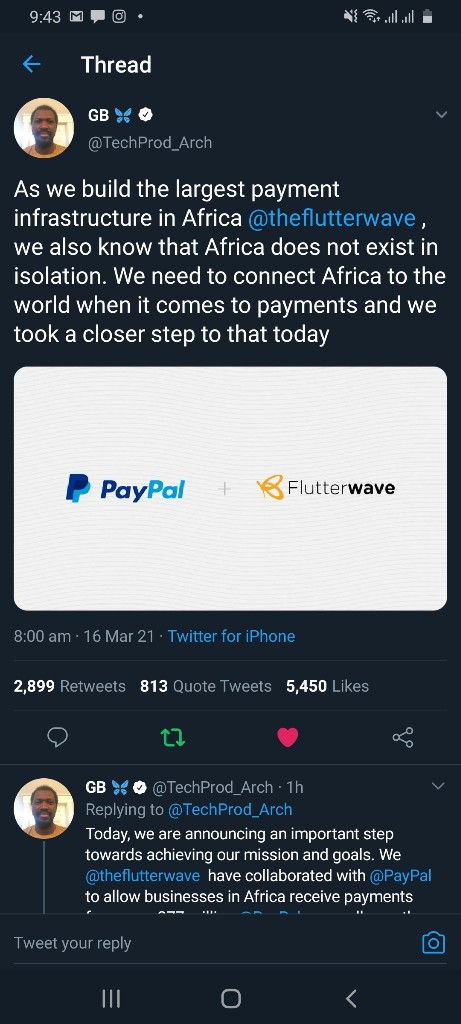
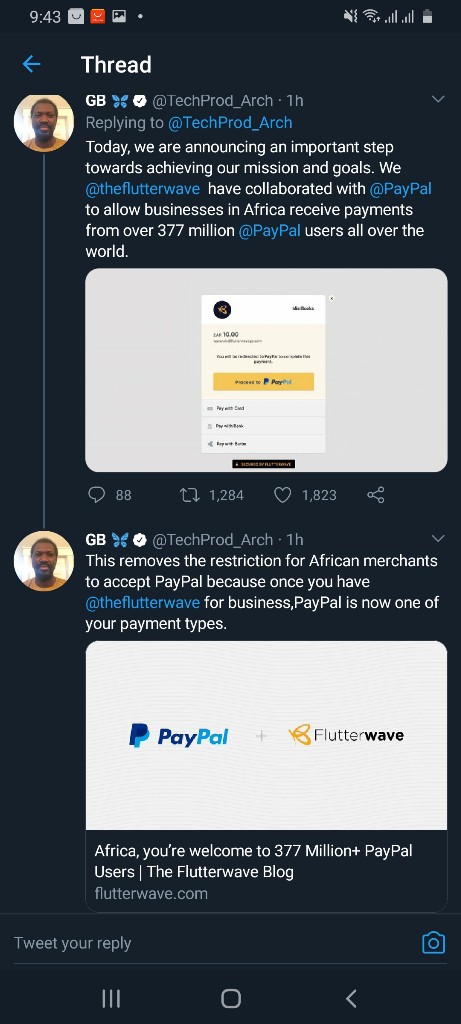
Flutterwave has closed one of the most challenging links in global digital payments for most African merchants and creators: inability to receive payments from Paypal. Yes, you can pay but you are not allowed to receive, until now. According to the company,  it has a “ collaboration with global payment leader PayPal to enable PayPal customers globally to pay African merchants in the continent through Flutterwave’s platform.

The collaboration will be instrumental in supporting SMEs and freelancers to overcome the many challenges presented by the highly fragmented and complex payment and banking infrastructure, as well as connecting them with more than 377 million PayPal account holders globally.” This is monumental as more people can reach the Western Europe and American customers, out of Africa.

If you are a member of Tekedia Mini-MBA and need support on integrating with Paypal and Flutterwave, we have made resources available to provide guidance. Tekedia already uses this Flutterwave technology – our support team will assist.  We want you to sell globally and internationally.

Again, we congratulate Olugbenga ‘GB’ Agboola, the CEO of Flutterwave, a Tekedia Mini-MBA fintech faculty.

The press release

Flutterwave, Africa’s leading payments technology company, today announces a new collaboration with global payment leader PayPal to enable PayPal customers globally to pay African merchants in the continent through Flutterwave’s platform. The collaboration will be instrumental in supporting SMEs and freelancers to overcome the many challenges presented by the highly fragmented and complex payment and banking infrastructure, as well as connecting them with more than 377 million PayPal account holders globally.

Traditionally, Africa’s ecommerce ecosystem has lacked suitable payment solutions to meet demand for seamless transactions worldwide, further constraining its contributions to the global digital economy. However, this collaboration eliminates significant barriers that have previously hindered African consumers and businesses from the untapped potential of cross-border ecommerce.

Flutterwave has transformed the payments space in Africa by offering flexible, quick and affordable payment services to individuals and businesses across the continent. As of today, African businesses have even more access to sell to global customers using PayPal’s secure platform to receive and make payments online. Cross-border ecommerce continues to provide significant growth opportunities for Africa’s economy. Research firm Statista estimates that the total value of ecommerce in Africa generated $16.5 billion in 2017 and is expected to reach $29 billion by 2022. This growth potential will provide many opportunities for SMEs and freelancers worldwide, subsequently increasing Africa’s share of global trade.

This announcement solidifies Flutterwave’s position as the global African payments partner of choice for multinationals looking to enter new markets, further reassuring new and existing merchants and investors of Flutterwave’s global capabilities, secured platform and high standards of safety.

Speaking on the announcement, Olugbenga ‘GB’ Agboola, Founder and Chief Executive Officer of Flutterwave, said: “We are excited to bring PayPal’s fully integrated services to businesses across Africa. The collaboration reinforces our vision of creating a seamless digital payments system for Africa’s business communities that can now transact with international consumers.

By working with PayPal, we can further strengthen our commitment to our customers and service users as we will be enabling them to transact and expand their business operations to reach new markets. PayPal’s global reach is unrivalled and collaborating with them allows our customers to explore new markets where PayPal is embedded.

“Through our collaboration with PayPal, we are also bringing together two trusted global payment brands to provide millions of consumers and businesses a gateway to new opportunities,” he said.

Since inception, Flutterwave has processed over 140 million transactions worth over USD $9 billion worldwide and continues to expand its footprint to ensure consumers and merchants receive the best-in-class digital payment service. This collaboration further underscores its commitment to ensuring merchants have vast opportunities to deliver services and conveniently transact through its platform.

Just last year 2020, PayPal‘s 377 million+ users made transactions that saw PayPal end the year with a $936 billion total payment volume for the year 2020. This trillion dollar opportunity didn’t include most African businesses until this new integration between Flutterwave and PayPal.

Nigeria’s University Lecturers Threaten to Resume Suspended Strike Over Delays on Salaries

1

I just read a new threat from the Academic Staff Union of Universities (ASUU) informing the federal government of Nigeria that it could resume its suspended 9-month strike if the government does not honour its agreement to pay its members on time. First, the federal government is wrong to have promised what it knew it could not easily do. Secondly, ASUU was naïve to have believed everything in that document.

This is the reality: Nigeria cannot fund our current university system. If you check our national education budget, it is way smaller than what Harvard University spends! In short, Harvard spends close to 3x what Nigeria budgets for the ministry of education, from primary to university levels.

The problem is complicated because the professors are part of the problems. Yes, everyone wants to be a Vice Chancellor and the more schools established, the higher the number of opportunities. So, as politicians mushroom opening new schools (not necessarily for increasing access for students), professors have hailed them. For most politicians, it is simple: locate a university in your local government and be remembered eternally for that achievement. 

And for the professors, that is another opportunity for more VCs, DVCs, and all those administrative positions. So, at the end, we are scaling university bureaucracy even when the main academic and research work suffers.

More than 80% of federal universities which have been started since 2000 could have been colleges within existing university systems, under unified administrations. By the time you run the numbers, and if Nigeria followed that model of administrative efficiency, that nation could be saving billions of naira which will then go into actual learning. Today, what do we have? Bureaucratic systems where a former VC of Kwara State University could buy a bulletproof Toyota at the cost of N74 million as an official car, even when the school borrows N400 million monthly to pay salaries!

For decades, ASUU strikes have not achieved much – and there is no certainty that future strikes can have different outcomes. The problem of ASUU is a mirror of Nigeria’s problems: no accountability and responsibility. Yes, how do you expect a governor to pay your salaries and expect him to allow you to run the school in Nigeria? You want autonomy except financial autonomy. None of this generation of political leaders will hand you the cheque books and relinquish power, strike or no strike!

About two months before he was to leave office, in 2019, as vice-chancellor of Kwara State University, Abdulrasheed Na’Allah wrote to then Kwara State governor, Abdulfatah Ahmed, asking for a N74 million official vehicle; a vehicle he would go away with after he left office. This was despite the institution borrowing almost N400 million monthly to pay salaries, according to a panel that later probed the decision.

The N74 million vehicle was part of the N100 million severance package that the panel indicted the vice-chancellor of going away with under controversial circumstances. The professor was given a chance to defend himself before the panel. He did not.

ASUU Statement

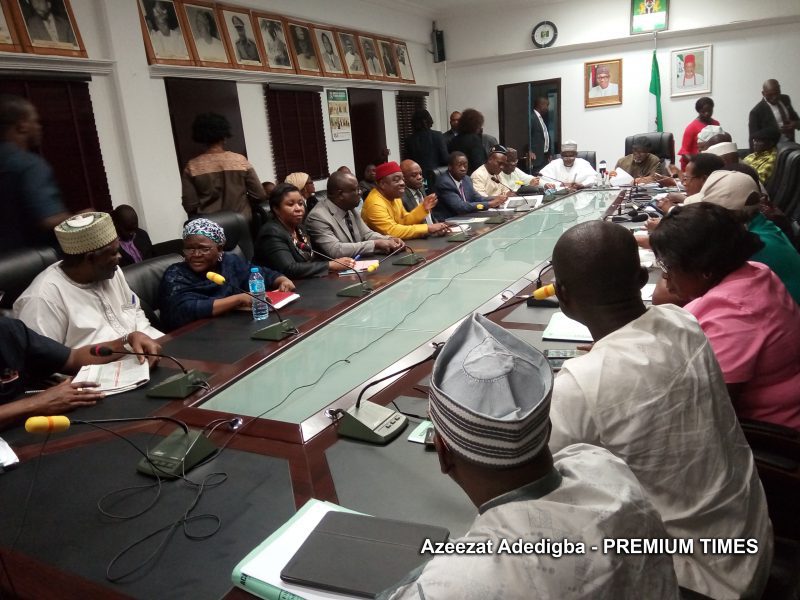
While ASUU as a union and her members as individuals in various branches have remained faithful to this agreement by returning to classes and performing their respective duties, the Federal Government, true to type, has reneged on its part.

“Contrary to FGN affirmation of its commitment to pay all withheld salaries of ASUU members who have not enrolled in the Integrated Personnel and Payroll Information system (IPPIS), three months after the suspension of Strike, thousands of ASUU members across various branch are still being owed salaries.

 “Instead of deploying the University Transparency and Accountability Solution (UTAS) software developed by ASUU, which has been adjudged effective for payment of salaries, some of our members are still being denied their salaries and others are being coerced by agents of the government to register on the repressive IPPIS for payment of salaries.

“The Union ASUU and her members are made to suffer from all the aforementioned attacks by the federal government while the public expects our members, some of who now live on the charity of family members and colleagues for survival to use their personal resources to discharge their duties diligently in the universities.

“These harsh conditions would have terrible consequences on public tertiary education in Nigeria and when push eventually comes to shove, as it definitely will in no distant future, the Nigerian public should accordingly blame the Federal Government for its insincerity.

“Blame the federal government of Nigeria if the universities are shut down again.”

Applying the “Survival of the Fittest” Model in All Aspects of Life

0

When Charles Darwin extended the theory of Survival of the Fittest to explain how nature selects organisms, he was buttressing Herbert Spencer’s adaptability model. Both Darwin and Spencer were talking about evolution and how nature picks only the best amongst the organisms. They revealed that only the organisms that adapt to their environments, irrespective of how unsuitable situations are, can survive and reproduce. This means that plants and animals that refuse to adjust to the changes in nature will die because nature will not change for them. Spencer and Darwin might have focused their theory on reproduction and populating Earth when they projected this theory but they, unknowingly, taught humankind a very crucial life’s lesson.

The theory of Survival of the Fittest (or Natural Selection) is used only in Biology to explain evolution. Our teachers used it then to teach us why desert plants have thorns and waxy leaves. It was also used to explain why fish and birds have streamlined bodies. Closer to this theory is that of competition, which explains why living things compete for available resources. Bring these two theories together and you will realise that what Darwin was saying then is, “fit into your community and sort yourself out or you will lose.”

If you look at how things happen around you, you will understand how the fittest “survive”. By “fittest” I do not mean having “six packs”, bulgy arms, hour-glass figures, or an athlete’s body. “Fittest” here stands for those that understood their societies and adjusted themselves by adopting behaviours and ideologies that are required to survive there. “Fittest” in this sense means “going to Rome and behaving like the Romans”. It connotes being smart enough to understand that people change to fit into societies and not the other way around. It simply tells you not to fight changes but to learn to live with it.

One thing that affects people a lot is insisting that something must be done a certain way because they saw it work in other places. If a cactus decides that because it shares some characteristics with roses (such as having thorns) it is going to have soft sweet-smelling leaves/flowers instead of the hard waxy type, it will never survive in the desert. Of course, it has the option of living in rain forest like any other green plants, but will it be valued when placed beside other plants? This can also apply to many of us, especially those that want what is obtainable in location A to be the same with that of location B. Remember that every society is unique in its own ways. No two communities are exactly the same, thanks to cultural differences.

But let’s look at some things that happen around us today. Darwin said that living things must adapt to their immediate environment or they will not survive. In your place of work, for instance, there are modalities already put in place to determine how, why and when employees will be rewarded or punished. But some employees kick against those processes because they expect their employers to set up modalities like the ones found in other companies. Employees like this become difficult to manage but they end up being sacked. This also applies to those that expect the cultures and practices of the communities they find themselves to change because they are unfavourable to them. Today, Darwin is telling people like this to adapt or face sack.

Of course, no one is saying that, because a person needs to survive, bad societal practices should not be challenged. But it should be understood that “Rome wasn’t built in a day”. However, for you to change misnomers in a community, you have to be its member because the best way to bring changes is from within. Hence, to live and survive in the community, you have to adopt their way of life, understand them, and discover reasons they behave the way they do. Other than that, you will be kicked out before you even make a move.