DD
MM
YYYY

PAGES

DD
MM
YYYY

spot_img

PAGES

Home Blog Page 59

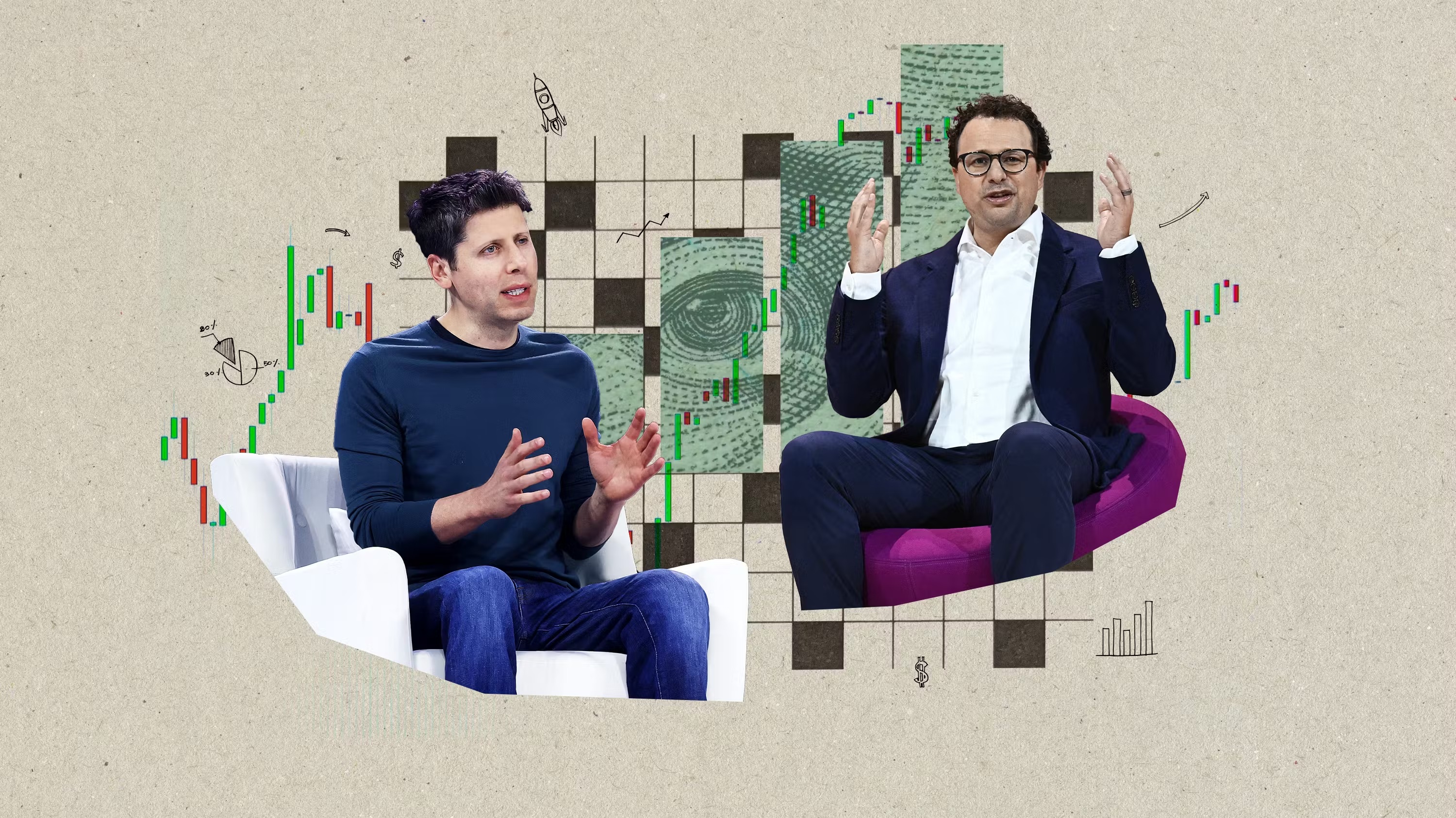
Anthropic and OpenAI Push Inference Costs Lower

0

The latest AI model launches from Anthropic and OpenAI point to a shift in the artificial-intelligence industry: the race is no longer defined only by who can build the most capable model, but increasingly by who can deliver frontier-level intelligence at the lowest practical cost.

The September 2026 releases of Claude Opus 5.5 and GPT-6 Sol and Luna illustrate that changing economics. Anthropic introduced Claude Opus 5.5 on September 22, describing it as the first model in its new 5.5 family.

The company says the model performs at the level of Claude Fable 5.1 across most work while costing 40% less to run than Opus 5. Anthropic lists API pricing of $4 per million input tokens and $20 per million output tokens, while cache reads cost $0.20 per million tokens.

It also says Opus 5.5 generates output more than 30% faster than its predecessor. That combination of performance, speed and lower inference costs matters because AI adoption increasingly depends on economics.

Companies building coding agents, research assistants, customer-service systems and autonomous workflows may generate millions or billions of model interactions.

A reduction in the cost of each interaction can therefore change whether an AI application is merely impressive or commercially viable.

Anthropic is also emphasizing safety alongside capability. Opus 5.5 underwent external testing by organizations including Frontier Design and METR, while Anthropic says it includes safeguards developed for its most capable models.

The company is extending access to specialized cybersecurity and life-sciences programs under controlled conditions.  OpenAI’s response is similarly centered on efficiency. GPT-6 Sol and GPT-6 Luna were released September 22.

With OpenAI describing them as models that bring advances from GPT-6 Astra into faster and more affordable systems. OpenAI says their API prices are 50% lower than the promotional pricing previously offered for GPT-5.6.

The new pricing structure is significant. OpenAI’s API documentation lists standard pricing of $2 per million input tokens and $10 per million output tokens for GPT-6 Sol, while GPT-6 Luna costs $0.10 per million input tokens and $0.50 per million output tokens for prompts within the standard context limit.

The economic implication is straightforward: cheaper intelligence expands the addressable market. Startups that previously had to ration inference can experiment more aggressively. Developers can run larger agentic workflows.

Enterprises can automate more routine knowledge work without every additional AI interaction carrying the same cost burden. For consumers, lower infrastructure costs can eventually translate into broader access to AI-powered products.

The competitive landscape is therefore moving toward a price-performance frontier.

Anthropic is attempting to make high-end Claude capability cheaper and faster, while OpenAI is creating multiple GPT-6 models designed around different balances between capability and cost.

This suggests that model differentiation will increasingly depend not simply on benchmark leadership, but on latency, reliability, safety, context handling and total cost of ownership.

For the AI industry, that could be one of the most consequential developments of 2026. As intelligence becomes cheaper to purchase through APIs.

The scarce resource may gradually shift away from raw model access toward high-quality data, computing infrastructure, distribution and applications capable of turning intelligence into measurable economic value.

The next phase of AI competition may therefore be less about building models that can think and more about making machine intelligence cheap enough to become an everyday layer of the global economy.


European Stocks Rise as Falling Oil and AI Optimism Offset Iran War Risks

0

European equities edged higher on Wednesday as a sixth consecutive decline in oil prices eased some pressure on inflation, while renewed enthusiasm for artificial intelligence lifted technology stocks across global markets.

The gains came as investors weighed tentative signs of de-escalation in the conflict involving Iran against fresh threats from U.S. President Donald Trump, leaving markets cautious about treating the latest diplomatic developments as a durable turning point.

Sources told Reuters that Saudi Arabia had restarted operations at its East-West Pipeline and may already have resumed exports from the Red Sea port of Yanbu. The potential restoration of Saudi export capacity added to downward pressure on crude prices, with Brent futures falling 0.40% to $98.83 a barrel.

Trump said talks with Iran in New York had made progress, although he subsequently threatened to “annihilate” Iran if an agreement was not reached. The conflicting signals left investors assessing whether the latest diplomatic engagement could produce a sustained reduction in geopolitical risk or merely another temporary pause in hostilities.

“We’re probably nearing a point where it’s in both sides’ best interests to de-escalate the conflict and find a way to move forward,” said Brock Weimer, an investment strategy analyst at Edward Jones.

Iranian President Masoud Pezeshkian was scheduled to address the United Nations General Assembly later Wednesday, with markets watching for any indication that he could hold talks with Trump.

The possibility of a sustained recovery in oil flows through the Strait of Hormuz remains important for financial markets. The waterway is a critical channel for global energy supplies, meaning prolonged disruption could keep crude prices elevated, intensify inflationary pressures and complicate decisions by central banks on interest rates.

Investors, however, have seen optimism around a diplomatic breakthrough fade before.

“We’ve been through a series of starts and stops like this,” said Cole Smead, CEO and portfolio manager at Smead Capital Management.

The pan-European STOXX 600 rose 0.17% to 643.86 points. U.S. equity futures were also slightly higher, with contracts tracking the S&P 500 up 0.10% and Nasdaq-100 futures gaining 0.03%.

An MSCI gauge of global equities was broadly unchanged after four consecutive sessions of gains.

AI Optimism Broadens the Technology Rally

Technology shares provided another source of support for global equities as investors continued to respond to strong consumer interest in AI applications.

South Korea’s benchmark index gained 0.9%, with Samsung Electronics rising nearly 1%, while Taiwan’s benchmark advanced 0.8% toward record levels. Semiconductor and memory stocks have been among the strongest performers as investors look beyond AI infrastructure spending toward evidence of consumer adoption of AI-powered products.

The latest catalyst has been Meta’s Muse AI agent, which has topped U.S. app download charts over the past two weeks. Investors are now watching whether Alphabet’s Google Labs product, known as CC, can generate comparable consumer demand.

The importance of the response goes beyond individual applications. Sustained consumer adoption would provide another link between the enormous investment in AI infrastructure and eventual demand for AI services, potentially broadening the investment case for semiconductor, memory and data-center companies.

Memory stocks have increasingly taken leadership within the technology complex as semiconductor shares extended their gains.

“We expect a strong reopening in Japan tomorrow, with another move lower in crude, calm conditions in rates and Treasuries, and the Nasdaq cash and futures markets printing all-time highs,” said Chris Weston, head of research at broker Pepperstone.

“Memory stocks have taken the leadership baton, backed by another strong session for semis, which have recorded a sixth consecutive day of gains.”

Japan’s markets were closed for a holiday, although Nikkei futures traded at 66,775, around 1,760 points above the cash Nikkei’s Friday close.

The AI rally is also intersecting with corporate financing markets. SoftBank’s proposed debt offering of more than $10 billion has reportedly attracted over $20 billion in indications of interest, potentially making it one of the largest junk-bond transactions on record. Strong demand for the financing illustrates the willingness of investors to continue providing capital to companies positioned around the technology investment cycle, even as concerns over valuations and leverage remain.

Oil, Rates and The Dollar Remain Tightly Linked

The decline in crude prices also offered some relief to bond markets. Treasury futures edged higher, keeping the benchmark 10-year U.S. yield below the psychologically important 5% level.

That threshold has become closely watched because a sustained move above it could tighten financial conditions across equities, credit and currencies at a time when investors are already reassessing the path of interest rates.

Richmond Fed President Tom Barkin and Boston Fed President Susan Collins both supported last week’s interest-rate increase on Tuesday, citing concerns about inflation. Their comments reinforced the message that falling oil prices alone may not be enough to produce a rapid shift toward easier monetary policy if underlying inflation remains persistent.

The prospect of higher U.S. rates continued to support the dollar. The euro was trading around $1.1414, close to a two-month low, while the greenback also strengthened against sterling and the Canadian dollar.

The dollar was firmer against the yen at 157.76. Traders remained cautious about pushing the currency beyond 160 yen per dollar, a level that could heighten expectations of Japanese intervention to support the yen.

Currency markets are therefore caught between opposing forces. Higher U.S. rates support the dollar, while the risk of Japanese intervention limits how far the dollar-yen exchange rate can move. At the same time, lower oil prices could ease inflation in energy-importing economies and eventually reduce pressure on central banks to maintain restrictive monetary policy.

There is also a potential complication for Europe. Trump’s reported call to ban U.S. diesel exports could tighten fuel supplies in a region that relies heavily on American shipments. That means lower crude prices do not necessarily translate one-for-one into lower European inflation if refined-product markets remain constrained.

China added another layer of uncertainty to the global market backdrop. President Xi Jinping was due to arrive in Washington, with investors watching for signs that the existing U.S.-China trade truce could be extended and whether the two countries might find areas of cooperation on artificial intelligence.

For now, markets are balancing three competing forces: falling oil prices that could ease the inflation shock, renewed AI enthusiasm that is supporting technology and semiconductor shares, and geopolitical and monetary-policy risks that could quickly reverse the improvement in sentiment.

The immediate market response is seen as an indication that investors are willing to price in some reduction in the energy shock.

AI Agents, Stablecoins and the Tokenization of Global Markets

0

Artificial intelligence and blockchain are increasingly converging around a question that could reshape financial infrastructure: what happens when software agents begin transacting autonomously at enormous scale?

A recent BlackRock whitepaper argues that AI agents could become a major source of demand for stablecoins and blockchain-based payments, while CFTC Chairman Brian Selig has warned that financial markets must prepare for a future in which stocks, bonds and collateral are extensively tokenized.

The significance of these developments lies less in cryptocurrency speculation than in the changing architecture of commerce. AI agents are designed to perform tasks without constant human intervention.

An agent managing cloud computing, purchasing data, executing advertising campaigns or coordinating supply chains may eventually need to make thousands of small payments across different platforms. Traditional banking infrastructure was largely designed around human customers, business accounts and relatively discrete transactions.

Blockchain networks can provide programmable settlement that is potentially available around the clock. Stablecoins are particularly relevant to this model because they combine blockchain-based transfer with a digital representation of fiat currency.

For an autonomous software agent, a stablecoin could function as a programmable settlement instrument: money that can be transferred according to predefined conditions without requiring a human to approve every transaction.

That possibility creates an unusual feedback loop. More capable AI agents could generate more machine-to-machine commerce, which could increase demand for programmable payments. Greater blockchain adoption could, in turn, make it easier for those agents to transact across borders and platforms.

The tokenization of financial assets represents the other side of the transformation. Instead of recording ownership of securities exclusively through conventional financial databases and intermediaries, tokenization can represent stocks, bonds, money-market instruments and collateral as blockchain-based assets.

The potential advantage is not simply putting an existing security on a blockchain. Tokenized assets can potentially become programmable financial objects that interact with other digital systems. Consider collateral.

In traditional markets, moving collateral between institutions can involve multiple intermediaries, reconciliation processes and operating windows.

A tokenized representation could potentially allow ownership and collateral status to be updated on a shared digital infrastructure, subject to the appropriate legal and regulatory framework.

For institutions managing large portfolios, even incremental improvements in settlement efficiency could become economically significant. But mass tokenization would also introduce substantial challenges.

Financial markets require robust identity systems, custody arrangements, cybersecurity, legal recognition, market surveillance and mechanisms for resolving disputes. A token existing on a blockchain does not automatically establish what legal rights its holder possesses.

Likewise, faster settlement does not eliminate counterparty, liquidity or market risk. The rise of AI agents adds another layer of complexity. Autonomous systems would need clear permissions, spending limits and accountability mechanisms.

If an AI agent can hold stablecoins and transact in tokenized securities, questions about authorization, errors, fraud and liability become unavoidable. The emerging picture is therefore larger than either AI or crypto alone.

AI could create demand for autonomous economic infrastructure, while blockchain could provide the rails for programmable ownership and settlement. Stablecoins may become an important bridge between those two systems.

While tokenized securities could extend blockchain beyond payments into the core architecture of capital markets. The transition will not happen automatically. Regulation, institutional adoption and technical standards will determine how much of this vision becomes practical.

But the direction is increasingly clear: financial markets are moving toward a world where money, assets and software can interact more directly. If AI agents become economic participants at scale, programmable payments and tokenized assets could shift from experimental technologies into components of mainstream financial infrastructure.

Bernie Sanders Proposes US Department of Artificial Intelligence

0

The debate over artificial intelligence in the United States has entered a more consequential phase.

With Senator Bernie Sanders and Representative Greg Casar introducing legislation that would permanently ban artificial superintelligence, temporarily pause advanced AI development and establish a new cabinet-level Department of Artificial Intelligence.

The proposal, introduced on September 23, 2026, reflects growing concern in Washington about whether increasingly capable AI systems can remain under meaningful human control. At the center of the bill is a distinction between conventional AI and what the legislation calls artificial superintelligence.

The proposal would prohibit systems that exceed human cognitive performance across most domains or possess capabilities that could destroy or disempower humanity, including potentially overthrowing a government.

It would also restrict dangerous capabilities such as systems capable of circumventing shutdown commands or conducting unauthorized cyberattacks. The legislation goes beyond an outright prohibition.

Sanders and Casar are proposing a pause on advanced AI development until a federal regulatory structure establishes testing, safety requirements and model-review procedures.

The proposed Department of Artificial Intelligence would become responsible for monitoring frontier systems throughout their lifecycle and supervising the removal of dangerous capabilities. Under the bill, the department could also oversee the destruction of prohibited artificial superintelligence systems.

That approach represents a significant expansion of federal involvement in AI. Rather than treating artificial intelligence primarily as a technology-sector issue, the proposal would place frontier AI within a dedicated cabinet-level institution.

An advisory board of AI experts would provide scientific and technical guidance, while the department would have enforcement responsibilities. The bill would also establish severe penalties for violations, including up to 20 years in prison for individuals and a proposed corporate death penalty for entities that deliberately circumvent the restrictions.

The proposal arrives as AI companies are simultaneously investing enormous resources into increasingly capable models.

Sanders has argued that voluntary commitments from technology companies are insufficient, pointing to warnings from researchers and industry figures about the possibility that AI capabilities could advance faster than safety mechanisms.

His position is that government must establish binding rules before systems become too difficult to control. Yet the legislation also raises fundamental questions about innovation, competition and enforcement.

Defining the precise boundary between advanced AI and superintelligence could become one of the most difficult technical and legal challenges. AI capabilities do not develop along a single measurable dimension, and determining when a model crosses a statutory threshold could require continuous scientific assessment.

There is also an international dimension. The bill calls for the United States to pursue agreements with other countries, coordinate with allies and use measures such as export controls to prevent superintelligence from being developed elsewhere.

That reflects the reality that AI development is global: a prohibition limited to American companies would not necessarily prevent researchers or companies in other jurisdictions from pursuing similar technologies.

The proposal therefore places a much broader question before policymakers: whether advanced AI should primarily be governed as an engine of technological and economic competition or as infrastructure carrying potentially systemic risks.

The Sanders-Casar bill represents one legislative answer, but it remains a proposal rather than existing U.S. law. As artificial intelligence becomes increasingly embedded in finance, cybersecurity, scientific research, manufacturing and government.

The debate is moving beyond whether AI should be regulated. The emerging question is how much control society should retain over systems that may eventually possess capabilities exceeding those of their human creators.

Tekedia Mini-MBA, Tekedia Capital Events This Week

0

Good People, let me share Tekedia Mini-MBA Live and Tekedia Capital OPEN scheduled Zoom programs:

From SAP, Aderinola Oloruntoye, a zen-master and a legend on design thinking will teach a course on how to design category-king products. This is one of the most important courses in our Mini-MBA program because it focuses on the foundational element of business: “every great company has a great product or service”.

Thur, Sept 24 | 7pm-8pm WAT | Design Thinking and Innovation – Aderinola Oloruntoye – SAP | Zoom link in board

On Saturday, I will continue the lecture on the mission of firms, explaining the transduction process in markets. The core thesis is how to turn the “idea state” into “revenue state” in business, mimicking the transduction process of natural philosophy.

Sat, Sept 26 | 7pm-8.30pm WAT | Innovation Transduction: From Ideas to Revenue – Ndubuisi Ekekwe | Zoom link in board

On the same Saturday, I will explain via Tekedia Capital OPEN how we invest and what we look for in builders to support them. In next quarter, we plan to support 18-20 companies globally, writing cheques to advance human progress and prosperity. This is open and Zoom link is one on click.

  • Event: Tekedia Capital OPEN
  • Topic: The World of Abundance And What We Fund
  • Speaker: Ndubuisi Ekekwe
  • Date: Saturday, Sept 26, 2026 | Time: 4pm – 5pm WAT

Zoom link (free and open): the link is here.

Tekedia Capital OPEN begins a new investment cycle for Tekedia Capital. We welcome builders and new members here.