DD
MM
YYYY

PAGES

DD
MM
YYYY

spot_img

PAGES

Home Blog Page 58

US Senators Seek Fast-Track Chinese Vehicle Ban as Trump Prepares to Meet Xi

0

U.S. senators are seeking to fast-track bipartisan legislation that would make the existing restrictions on Chinese vehicles permanent, putting the issue at the center of Washington’s economic and national-security debate as President Donald Trump prepares to meet Chinese President Xi Jinping this week.

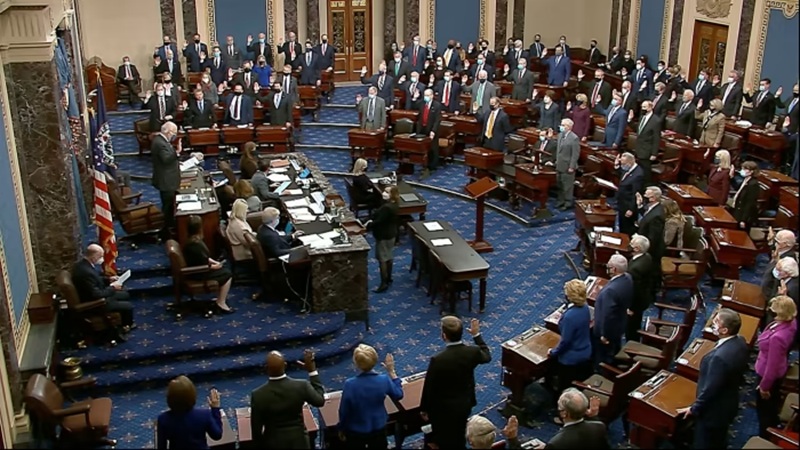
The effort is being led by Democratic Senator Elissa Slotkin of Michigan and Republican Senator Bernie Moreno of Ohio, whose Connected Vehicle Security Act of 2026 would prohibit Chinese-origin vehicles and key connected-vehicle technologies from entering the U.S. market. The bill has already passed the Senate Commerce Committee unanimously, and supporters are now seeking approval by the full Senate.

Slotkin and Moreno are aiming for unanimous Senate approval this week. A notice circulated to Democratic senators said Moreno intended to seek unanimous consent, although congressional aides said some Republican senators had raised concerns and it remained unclear whether any would object. Reuters reported that the legislation has 51 Senate supporters, while its House counterpart has more than 100 cosponsors.

The timing adds significance to the legislation. Trump is expected to meet Xi in Washington this week for talks covering a broad range of trade and economic issues. China has opposed the U.S. restrictions on its automotive industry, while Trump has recently indicated that he could accept Chinese automakers building vehicles inside the United States.

Earlier this month, Trump told Fox News that he would be comfortable with Chinese companies establishing U.S. factories to build cars. That position has unsettled parts of the American auto industry because the proposed congressional legislation would close not only the import channel but also potential routes into the U.S. market through local manufacturing.

Slotkin has argued that allowing Chinese automakers to establish production in the United States would threaten the existing domestic auto industry.

“Whether you are a Democrat or Republican, no one wants Chinese cars in America,” she said at a Capitol Hill press conference on Wednesday.

The dispute highlights an important question in the U.S.-China auto relationship: should Washington’s restrictions apply only to vehicles imported from China or also to Chinese companies that manufacture vehicles inside the United States?

The question is becoming more relevant as Chinese automakers expand internationally. Chinese manufacturers have rapidly increased their global market share, while companies such as BYD have developed large-scale EV manufacturing and battery supply chains. Allowing those companies to manufacture inside the United States could potentially circumvent some of the restrictions imposed on direct imports, depending on the ownership, technology, and component rules applied.

The proposed bill seeks to close that possibility.

Its supporters say the legislation would restrict Chinese-origin vehicles, software and critical hardware across the production, importation and sales chain. The measure is also aimed at connected-vehicle technology because modern cars function as mobile computing platforms capable of collecting location, communications and other information.

That is central to the national-security argument behind the restrictions.

The Biden administration introduced rules in early 2025 that effectively barred Chinese automakers from selling or building passenger vehicles in the United States under rules targeting connected-vehicle technology and potential access to sensitive data. Washington has also maintained tariffs exceeding 100% on Chinese electric vehicles.

The concern extends beyond the vehicle itself. Bluetooth, Wi-Fi, cellular connectivity, and certain satellite communications technologies can allow connected vehicles to gather and transmit data. U.S. policymakers have argued that Chinese-linked technology could create security risks if information collected from American roads, drivers, or sensitive locations were accessible to Chinese entities.

The proposed legislation would therefore turn what has largely been an executive-branch regulatory policy into a statutory restriction, making it harder for a future administration to issue waivers or reverse the policy.

The auto industry’s position has added momentum to the effort.

Six major automotive trade groups representing companies including General Motors, Ford, Toyota, Volkswagen, Hyundai, Stellantis and Tesla recently urged Trump to keep Chinese automakers out of the U.S. market. The groups said the government should maintain restrictions on Chinese companies seeking to sell, import, or manufacture vehicles in the United States.

Their argument combines national security with industrial policy. The groups contend that Chinese investment could shift production and employment away from established manufacturers that have invested heavily in American factories and supply chains.

The position also reflects concern about the competitive economics of China’s auto industry. Chinese manufacturers have developed significant scale in electric vehicles, batteries, and components, allowing them to compete aggressively on price in markets outside the United States.

For American automakers, the potential arrival of Chinese competitors would not simply mean another group of vehicle brands entering the market. It could introduce companies with highly developed battery supply chains and manufacturing ecosystems into an industry already undergoing a costly transition from internal-combustion vehicles to electric and software-defined vehicles.

There is, however, a separate economic argument surrounding the restrictions. Supporters of Chinese vehicle access say greater competition could increase consumer choice and put downward pressure on vehicle prices. U.S. vehicles remain expensive, and restricting lower-cost Chinese manufacturers removes a potential source of competition.

The policy consequently sits at the intersection of three competing objectives: protecting national security, maintaining U.S. industrial capacity, and preserving competition and affordability for consumers.

The political divide over how to balance those objectives is not neatly aligned with party lines. The Slotkin-Moreno legislation itself is bipartisan, and its committee passage was unanimous. At the same time, Trump’s openness to Chinese companies manufacturing in the United States introduces a different policy option: allowing investment and domestic production while imposing conditions on ownership, technology, data handling, and supply chains.

That approach could potentially distinguish between where a vehicle is manufactured and who controls the underlying technology and data. The proposed legislation takes a substantially more restrictive approach by targeting Chinese-origin vehicles and connected technologies more broadly.

The outcome could have implications beyond the automotive industry.

China dominates important parts of the global battery and electric-vehicle supply chain, while Chinese companies are also major players in battery materials, components, and related technologies. Analysts say a permanent U.S. prohibition could encourage American manufacturers to deepen sourcing from domestic and allied suppliers, but it could also increase the cost of building competitive EV supply chains.

For China, the restrictions represent another barrier to entering the world’s second-largest vehicle market by sales. Chinese automakers have already expanded aggressively across Europe, Southeast Asia, Latin America and other emerging markets, but the U.S. remains effectively closed to Chinese-branded passenger vehicles.

The legislation would make that exclusion considerably harder to reverse.

The immediate political test is whether Moreno can secure unanimous consent in the Senate this week. If senators object, the legislation would have to proceed through the chamber’s normal legislative process rather than passing immediately.

China Examines Broadcom Hardware in State Data Centers as Beijing Pushes Domestic AI Infrastructure

0

Chinese authorities are examining the extent to which Broadcom hardware is used in state-backed data centers, in a move that could further pressure US technology suppliers as Beijing accelerates efforts to reduce dependence on foreign AI infrastructure.

The State-owned Assets Supervision and Administration Commission, or SASAC, which oversees China’s state-owned enterprises, has in recent weeks surveyed the use of Broadcom switches across data centers controlled by state entities, the Financial Times reported on Wednesday, citing people familiar with the matter.

The review comes as China intensifies its push for technological self-sufficiency amid its broader rivalry with the United States. Beijing has increasingly focused on building domestic supply chains for semiconductors, artificial intelligence and other critical technologies, while providing support to smaller specialized companies designated as “little giants.”

The reported review of Broadcom equipment suggests that the campaign is increasingly extending beyond chips and AI processors to the networking infrastructure that connects computing systems inside data centers.

According to the Financial Times report, the SASAC survey found that Broadcom switches could account for as much as 90% of networking equipment in use at some state-controlled data centers. The finding, if confirmed, would illustrate the extent of Chinese data centers’ reliance on foreign networking technology even as Beijing seeks to localize the broader technology stack.

Based on the preliminary findings, SASAC may issue informal guidance encouraging state-run data centers to reduce their reliance on Broadcom switches, the newspaper reported. Such a move would form part of Beijing’s “domestic chips for domestic use” campaign, which seeks to expand the adoption of Chinese-made semiconductors and AI technologies across the public sector.

The development could put Broadcom in an increasingly sensitive position in the Chinese market. The company is one of the major suppliers of high-end networking switches used to connect servers and computing infrastructure, alongside Nvidia and Huawei.

The networking layer has become more important as data centers scale up to support AI workloads. Training and running large AI models require vast numbers of processors operating together, making high-speed networking equipment a critical component of AI infrastructure.

That means restrictions on Broadcom’s products could have implications beyond individual switches. A broader shift toward domestically produced networking equipment could accelerate the development and adoption of Chinese alternatives while reducing the role of US suppliers in one of the fastest-growing segments of data-center infrastructure.

China has already taken steps to restrict the use of some foreign AI hardware in state-backed facilities. Nvidia products have been barred from these data centers, according to the Financial Times report, while Broadcom’s switches have continued to have a significant presence.

Beijing’s efforts to reduce foreign dependence have moved toward controlling the entire technology ecosystem rather than focusing exclusively on advanced AI accelerators.

Huawei has emerged as a major domestic competitor in several parts of that ecosystem, while Chinese authorities have also backed specialized technology companies as part of a broader effort to develop local alternatives to US and other foreign suppliers.

For Broadcom, the reported survey represents another potential source of pressure in China at a time when geopolitical tensions have already reshaped the global semiconductor supply chain. US restrictions on advanced technology exports to China have encouraged Beijing to accelerate domestic alternatives, while Chinese measures have affected the operating environment for American technology companies.

The immediate significance of the SASAC review remains uncertain. The reported survey does not establish that China has decided to ban Broadcom switches from state-owned data centers, and the possibility of informal guidance to reduce their use has not been independently confirmed.

Still, the reported 90% figure highlights the scale of the transition Beijing could face if it attempts to replace foreign networking equipment across its state-controlled infrastructure. Moving away from an established technology supplier would require data centers to identify domestic alternatives, test compatibility, manage costs, and potentially upgrade or replace existing equipment.

The episode also underpins a broader shift in China’s technology policy. Beijing’s drive for self-sufficiency is no longer confined to producing advanced processors. It increasingly involves building a domestic technology stack spanning chips, servers, networking equipment, AI models and the infrastructure required to operate them.

The situation has resulted in a longer-term risk beyond individual export restrictions for US technology suppliers. Even where their products remain commercially available, government-led procurement policies could gradually reduce their presence in China’s strategic technology infrastructure and create a larger domestic market for Chinese alternatives.

Hyperliquid Open Interest Hits Record $18B as HYPE Nears $98 While BitMEX Shuts Down

0

The crypto market is producing a striking contrast this week: while one of its most established derivatives exchanges is shutting its doors after more than a decade, a newer decentralized venue is reaching unprecedented levels of activity.

Hyperliquid’s open interest has climbed to an all-time high of $18 billion, while its native HYPE token has approached the $100 mark. At the same time, BitMEX has officially ended its exchange operations after 11 years.

Hyperliquid’s $18 billion milestone is significant because open interest measures the value of outstanding positions rather than trading volume.

The figure is calculated on a two-sided basis, meaning longs and shorts together account for the reported amount. The latest record surpassed the previous $16.36 billion high set on September 19.

Bitcoin, Ether and HYPE remain among the largest sources of positions, while Hyperliquid’s expansion into stocks, commodities and indices through its HIP-3 markets is adding another layer of activity.

The rise also illustrates how decentralized derivatives markets are evolving beyond their original role as venues for crypto-native speculation.

Traders are increasingly able to access markets that resemble traditional futures products while remaining within a blockchain-based trading environment.

That combination is important because derivatives have historically been one of the strongest bridges between crypto infrastructure and professional financial markets.

HYPE’s move toward $98 adds another dimension. The token’s price performance is occurring alongside record positioning on the underlying platform, linking the market value of Hyperliquid’s ecosystem with growing demand for its trading infrastructure.

Yet the relationship should not be interpreted mechanically. High open interest does not reveal whether traders are collectively bullish or bearish. It indicates that more capital is committed to outstanding positions and, consequently, that the market has greater exposure to potential liquidations when prices move sharply.

Then comes the other side of the story: BitMEX has closed its exchange. Founded in 2014, BitMEX became one of the defining institutions of the early crypto derivatives era.

The exchange helped popularize the highly leveraged perpetual swap, including contracts offering leverage of up to 100 times.

BitMEX says its platform operated for more than 11 years without losing customer funds to a hack, a record that became part of its identity within the industry.

The closure was announced in July following a strategic review by HDR Global Trading Limited, BitMEX’s owner and operator. The company said the decision followed an assessment of its business and the broader cryptocurrency industry and was not caused by legal or regulatory issues.

Trading and exchange services officially ceased at 04:00 UTC on September 23, while customers can still access accounts and withdraw available funds during the wind-down. The juxtaposition is revealing.

BitMEX represents the first generation of institutional-style crypto derivatives platforms, while Hyperliquid represents a newer model in which derivatives infrastructure is built directly around blockchain settlement and decentralized market architecture.

The industry is therefore not simply growing or shrinking. It is changing form. As BitMEX closes one chapter, Hyperliquid’s record open interest suggests that demand for sophisticated derivatives has not disappeared.

Instead, capital and traders may increasingly be migrating toward platforms that combine deep liquidity, perpetual contracts, and broader on-chain financial markets. The $18 billion milestone is consequently more than a record: it is another indication that the center of gravity in crypto derivatives continues to move.

The Winners and Losers From the Agentic Boom

0

The artificial intelligence story is entering a new phase. The first wave was dominated by chatbots that could answer questions, summarize documents and generate code.

The emerging phase is increasingly about AI agents: systems capable of planning tasks, using software, calling tools, retrieving information and acting with less human intervention.

This shift could redistribute value across the technology economy, creating clear winners while putting pressure on companies whose business models depend on human attention or repetitive digital work.

The biggest potential winners are the companies providing the infrastructure on which agents operate. Semiconductor manufacturers, cloud providers and data-center operators stand to benefit as agents require substantial computing power.

Unlike a chatbot that may respond to a handful of prompts, an autonomous agent can perform dozens or hundreds of model calls while completing a complex assignment.

That creates a potentially larger and more persistent demand for GPUs, networking equipment, storage and electricity. Cloud companies also occupy an important position because enterprises increasingly need secure environments in which agents can access corporate databases, applications and internal tools.

The companies capable of combining computing infrastructure with identity management, cybersecurity and enterprise software could capture significant value as businesses move from AI experimentation toward deployment.

Another group of winners could be software companies that successfully transform their products into agent-driven platforms. Enterprise applications that once required employees to navigate menus.

Spreadsheets and dashboards could increasingly become destinations where agents execute workflows directly. Customer support, accounting, procurement, software development, research and sales are particularly exposed because many processes already follow structured digital rules.

Financial infrastructure could become another important beneficiary. If agents eventually transact independently, they will need machine-readable identities, permissions and payment systems.

Stablecoins, programmable accounts and blockchain-based settlement networks could become useful infrastructure for machine-to-machine commerce, particularly where agents need to make small or frequent payments across borders.

But the agentic boom also creates losers. Companies selling repetitive digital labor face some of the clearest disruption. Outsourcing businesses, basic customer-service operations, data-entry providers and certain administrative services could experience pressure as enterprises automate portions of their workflows.

The impact will not necessarily mean immediate mass unemployment. More likely, individual jobs will be redesigned, with employees supervising automated systems rather than performing every task themselves.

Some traditional software businesses may also struggle. Applications built around human interaction can lose value if customers increasingly access their functionality through agents.

If an AI assistant can search multiple services, compare options and execute a transaction, the application that previously controlled the customer relationship may receive less direct traffic.

Advertising-driven platforms face a similar structural question. The traditional internet monetizes human attention: people browse pages, watch videos and click advertisements. Agents do not necessarily behave like humans.

They can retrieve information without viewing advertisements, compare products without visiting dozens of websites and complete transactions without spending time inside a social feed. That could challenge business models built around impressions and engagement.

Yet the agentic economy is unlikely to produce a simple winner-takes-all outcome. Its economic consequences will depend on reliability, regulation, security, computing costs and consumer adoption. Agents must be trusted with increasingly consequential tasks, and failures could impose financial or legal costs.

The deeper transformation is therefore not simply that AI is becoming smarter. It is that software is beginning to act rather than merely respond. Companies selling the infrastructure, permissions, computing and financial rails for that activity may capture new markets.

While businesses dependent on repetitive human labor or passive digital attention could face structural pressure. The agentic boom is ultimately a reallocation of economic activity—from humans operating software toward software operating software.

South Korea Targets 50% Cut in Middle East Oil Dependence After Iran War Disrupts Energy Flows

0

South Korea plans to cut the share of its crude oil imports sourced from the Middle East to 50% by 2035, stepping up efforts to diversify energy supplies after the Iran war disrupted flows through a region on which the country has relied heavily for decades.

The Industry Ministry said on Wednesday that the country needed a “fundamental shift” in its natural-resource supply chains, citing the disruption caused by the conflict and the vulnerability created by South Korea’s dependence on Middle Eastern producers and the Strait of Hormuz.

South Korea obtained about 70% of its crude oil from the Middle East in 2025, according to the ministry, with most of those supplies transported through the Strait of Hormuz. The waterway is one of the world’s most important energy chokepoints, making South Korea particularly exposed to any military conflict or disruption affecting shipping through the region.

The new target would reduce that dependence by roughly 20 percentage points over the next decade. More importantly, it signals a change in how Seoul views energy security. Rather than relying primarily on large strategic stockpiles to cushion temporary disruptions, the government is seeking to diversify the physical sources of supply so that a single geopolitical shock cannot cut off such a large share of the country’s imports at once.

Under its updated 10-year natural resources security plan, the government will expand crude-oil stockpiles by about 20 million barrels by 2030.

The additional reserves are intended to provide a larger buffer during periods of supply disruption, but stockpiling alone cannot eliminate South Korea’s exposure. A prolonged disruption to Middle Eastern exports would eventually require alternative suppliers, shipping routes, and refinery adjustments, particularly for an economy that depends heavily on imported energy.

That is why Seoul is also targeting condensate, an ultra-light form of crude that is widely used to produce naphtha, a critical feedstock for South Korea’s large petrochemical industry.

The conflict has already exposed vulnerabilities in the country’s naphtha supply chain. South Korea imports about 45% of the naphtha it consumes, and roughly 77% of those imports normally come from the Middle East, according to the ministry.

That concentration creates a second-order risk from an oil supply shock. Even if South Korean refiners can secure alternative crude, petrochemical producers may still face shortages or higher costs for the specific feedstocks required by their plants.

Naphtha is special because South Korea is a major exporter of petrochemical products. Disruptions therefore have implications beyond the energy sector, potentially affecting the cost and availability of plastics, synthetic materials and other industrial products further down the manufacturing chain.

The government’s plan to secure additional condensate reflects that distinction. Energy security is not simply about ensuring that refineries have enough barrels to process. It is also about ensuring that manufacturers have access to the particular grades and feedstocks needed to keep industrial production running.

Natural gas is another area where Seoul is seeking to rebalance its exposure.

The government wants to keep South Korea’s dependence on Middle Eastern natural-gas imports below 30% by 2035. That represents a higher ceiling than its 2025 level, when Middle Eastern gas accounted for about 20% of imports, but the target nevertheless establishes a limit on how far that dependence can rise.

The broader strategy is designed to reduce concentration across several critical inputs rather than simply replace one Middle Eastern supplier with another.

South Korea’s vulnerability is amplified by the structure of its economy. It is one of the world’s largest manufacturing and exporting economies but has limited domestic supplies of oil and gas. Energy-intensive industries, including refining, petrochemicals, steel and semiconductor manufacturing, therefore depend heavily on uninterrupted imports.

A disruption can consequently transmit through the economy in several directions at once: higher crude prices increase transportation and manufacturing costs, expensive naphtha raises petrochemical input costs, and shortages can reduce industrial output. For exporters, the effect can then show up in margins and international competitiveness.

The government’s decision to broaden the plan to minerals underscores how the concept of supply security has expanded beyond traditional energy.

South Korea will increase its list of critical minerals to 51 from 38, adding 10 rare-earth elements as well as germanium, a material that is important for semiconductor production.

The additions reflect the growing overlap between energy security, industrial policy and technology supply chains. Rare earths are important for a range of advanced industrial applications, while germanium is used in semiconductor-related technologies and other high-performance applications.

For South Korea, securing such materials is necessary because its economy is deeply integrated into global technology supply chains. The country is a major producer of semiconductors, batteries, automobiles, ships and electronics, leaving its manufacturers exposed not only to energy shortages but also to restrictions or disruptions involving critical industrial inputs.

The Iran war has therefore provided Seoul with a practical stress test of vulnerabilities that had previously been viewed largely as long-term risks.

The new strategy also illustrates the limits of diversification. Moving away from Middle Eastern oil will require South Korea to compete for supplies from other producers, potentially increasing transportation costs or requiring refiners to adapt to different crude grades. Building additional inventories also ties up capital, while expanding alternative supply relationships can carry higher costs during normal market conditions.

The economic trade-off is therefore between efficiency and resilience. Purchasing from the cheapest or most geographically convenient source can reduce costs during stable periods, but concentrating imports creates potentially enormous losses when a geopolitical disruption shuts down a major supply route.

Seoul is now placing a greater value on resilience.

The 2035 targets, the additional crude stockpiles, the push for condensate supplies and the expanded critical-minerals list collectively suggest that South Korea is attempting to build redundancy into supply chains before the next crisis occurs rather than relying exclusively on emergency measures after disruption begins.

The challenge will be turning those targets into actual diversification. Cutting Middle Eastern crude exposure to 50% will require sustained changes in procurement, refinery operations and shipping patterns, while reducing mineral concentration will require alternative suppliers, recycling, stockpiling and potentially new processing capacity.

South Korea’s lesson from the Iran war is considered broader than the immediate danger posed by oil prices or the Strait of Hormuz. The disruption has exposed how an economy built around imported energy and globally integrated manufacturing can be vulnerable when a single region supplies a disproportionate share of essential inputs.

The government’s new roadmap is an attempt to make that vulnerability less concentrated before another geopolitical shock tests it again.