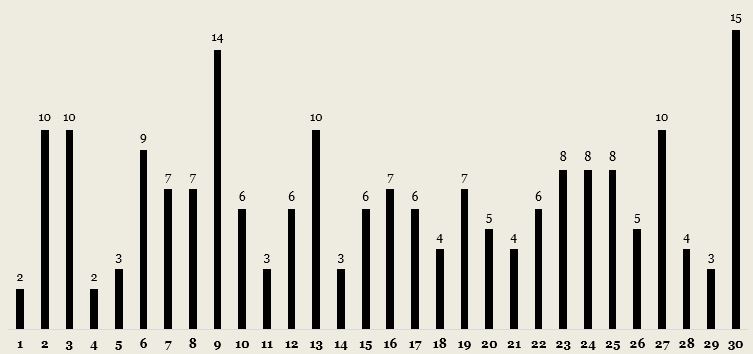
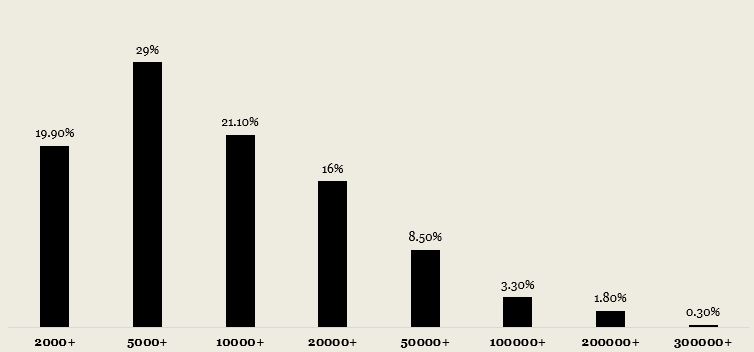
With the less than a few hours to the end of the first month in 2021, our analysis has shown that Nigeria attained more than 6.3 million Internet search volume in 30 days, generated from 331 searches. This was gleaned from the data mined and analysed by our analyst. According to the Google Trends, the primary source of the data, activities of Nigerians and those reside in the country on the Internet using Google Search Engine led to the volume search. More than 19,250 volume of search was found as average per day during the period. Over 5,000 volume of search was recorded the most.
Analysis shows that sports and, life and style were the specific information Nigerians and other nationals consumed the most. Out of the 331 searches, according to our analysis, sports information category had 59.81%. These outcomes similar to what our analyst had previously found for the Internet activities of January 4 and January 8, 2021.
Exhibit 1: Frequency of Searching Sports Related Information per day
Source: Google Trends, 2021; Infoprations Analysis, 2021
Exhibit 2: Search Volume in 30 Days of January, 2021
Source: Google Trends, 2021; Infoprations Analysis, 2021
The implications of these results are not different from what our analyst had noted in the previous analysis that people searched and read what appealed to them during the period of analysis based on their needs. For instance, within sports category, people searched and read foreign football matches and players than local ones. Foreign musicians and artistes occupied people’s mind when they sought information or read the news within the life and style category.
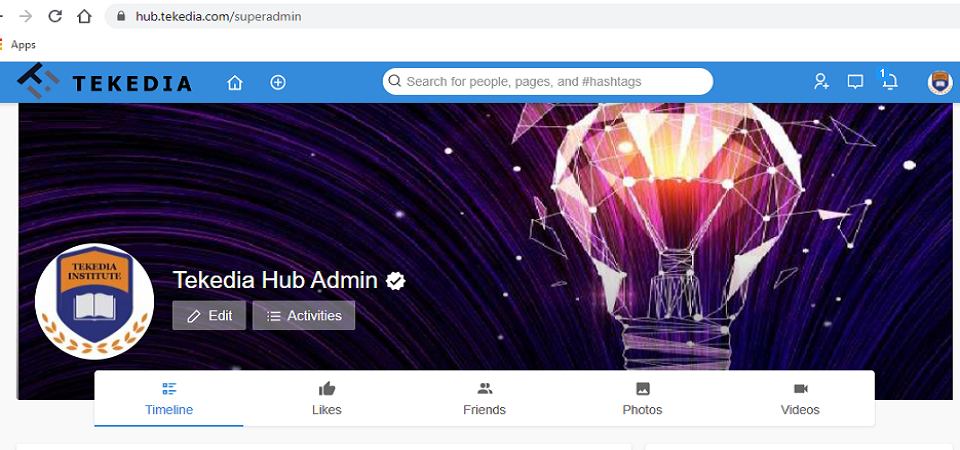
To sign-up and login to the web web version, go herehub.tekedia.com. You can download the Android app here.
Good People, I am very happy to announce that Tekedia Hub is ready. This ecosystem is developed to ensure that innovators in our community can advance their missions. WhatsApp could not serve us due to our scale. Now, we have our own “Facebook for Innovators” and members can do great things. It is an open ecosystem for everyone. Feel free to go and create an account, and connect with others.
Hopefully, when we begin Tekedia Mini-MBA on Feb 8, we will see people discussing business strategies, frameworks, forming private groups, hashtagging on topics, and co-learning to accelerate leadership ascents. Our goal is simple: help innovators and growth champions to advance companies and institutions.
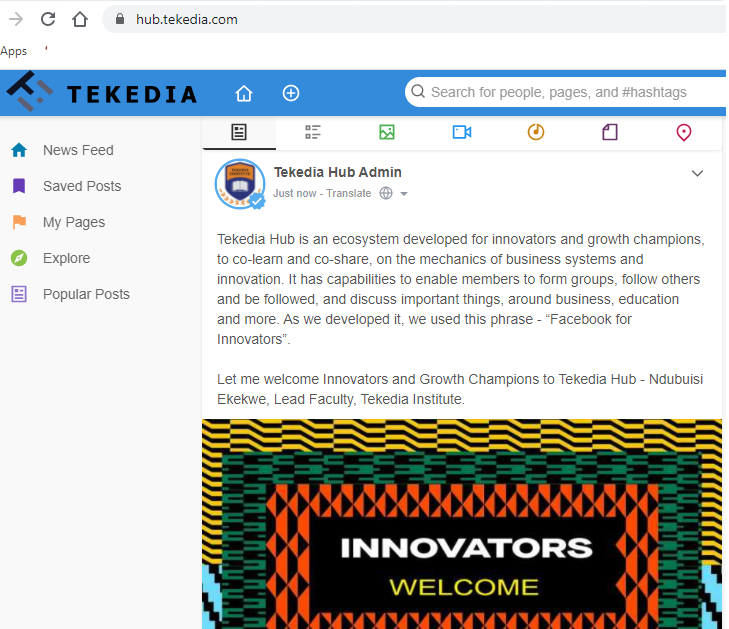
Tekedia Hub is an ecosystem developed for innovators and growth champions, to co-learn and co-share, on the mechanics of business systems and innovation. It has capabilities to enable members to form groups, follow others and be followed, and discuss important things, around business, education and more. As we developed it, we used this phrase – “Facebook for Innovators”.
How to Join and Suggestions to Follow:
Go tohub.tekedia.com and create a FREE account. The system will email you and ask you to activate. Once done, you are ready for the Hub.
Now, tell your friends, colleagues and associates to join. You can create a group and topics. If you run a mentoring growth, you can create one and ask the mentees to join in a group.
Our focus here is innovation and business across all industrial sectors and territories.
The Android app version arrives later in the week once Google approves it.
This Hub (web and mobile app) replaces WhatsApp in Tekedia Mini-MBA and becomes the platform to communicate with members.
Verification of Profile
Good People, good morning. Though we have put some requirements to add the “Verified sign” on profile, all you need to do is simple: capture a screenshot of your LinkedIn profile with the URL, and also capture another webpage with your photo/name [company website, newspaper, press release, etc). Once you have them, click the Verification request; Tekedia runs 24/7 and my team will evaluate and verify. Then the Verified sign will show.
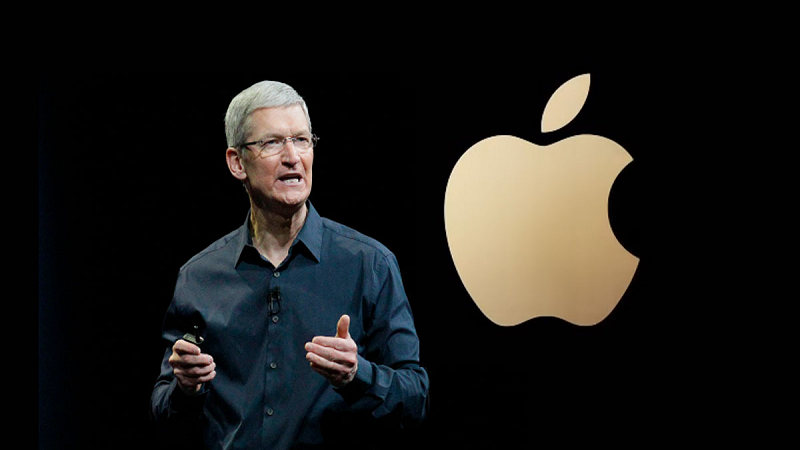
Theanimosity between Apple and Facebook is taking a new turn. Facebook is reportedly planning to file a lawsuit against Apple for its recent privacy policy that gives users the ability to stop apps from tracking their data across the web.
Last year, after the smartphone maker announced the new iOS 14 policy, the social media platform called them out, saying the decision would halve its earning and jeopardize publishers and developers ability to earn from ads.
The faceoff it generated between the two giants has aggravated their already soured relationship. Apple has maintained that its policy is in line with the recent clamor by both consumers and antitrust watchdogs to protect users’ privacy, while Facebook said the new policy is anticompetitive.
The social media platform has been building an antitrust lawsuit that accuses Apple of using its App Store to disadvantage competitors. Earlier reports byThe Information said Facebook is close to filing a lawsuit against Apple for its actions that the former deemed anticompetitive.
“As we have said repeatedly, we believe Apple is behaving anti-competitively by using their control of the App Store to benefit their bottom line at the expense of app developers and small businesses,” Facebook spokesperson Ashley Zandy said when asked to comment on the lawsuit.
Tech leaders
Apple and Facebook are not considered competitors, given that the former generates revenue through sales of devices while the latter makes money from selling ads. However, many Facebook users use iPhones, where the Apple Store which houses thousands of apps live.
“We expect these changes will disproportionately affect Audience Network given its heavy dependence on app advertising. Like all ad network on iOS 14, advertiser ability to accurately target and measure their campaigns on Audience Network will be impacted, and as a result publishers should expect their ability to effectively monetize on Audience Network to decrease,” Facebook said after Apple announced the new policy.
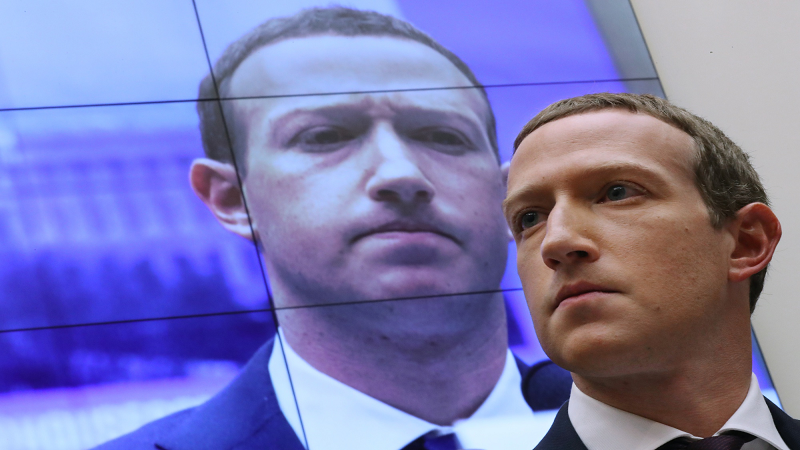
Efforts by the social media’s founder and CEO Mark Zuckerberg, to get Apple to bend the rules proved futile.
In December, Apple’s senior VP of software Craig Federighi said during the European Data Protection and Privacy Conference, that Google and Facebook risk being removed from the iOS store if they don’t comply with the new Cupertino’s privacy rules.
The iOS 14 means that companies no longer have the freedom to track people’s movement online, and it was implemented by Apple through the introduction of the App Tracking Transparency (ATT) feature.
Apple has under its control, a staggering number of internet users that will impact the revenue of the advertising industry. It has expected a fight-back from the advertisers and is standing its ground on the ATT.
Data privacy was the core legacy of Apple’s founder Steve Jobs, who believed consumers’ permission is needed whenever their personal information is to be used.
“I believe people are smart, and some people want to share more data than other people do. Ask them. Ask them every time. Make them tell you to stop asking them. Let them know precisely what you’re going to do with their data,” Jobs said before his death.
Apple, which has more than $2 trillion in value, has stood on this message to push its data privacy policies. Federighi said in December that the tech company seems to be carrying the moral burden of respecting and protecting private information alone while other tech companies prey on it, pointing finger at Google and Facebook.
FB CEO
Although the tension between Apple and Facebook dated back to 2010, when Jobs shared a conference stage with Zuckerberg and publicly drew a sharp contrast on how their companies handle private data, it has recently escalated.
Last August, Facebook supportedEpic Games’ lawsuit against Apple following the controversy of the 30% in-app commission fee that Apple charges app owners in its store.
Apple has remained adamant as Facebook rallied for support against the iOS 14 policy.
With obvious slim chance against the Cupertino-based tech giant, Facebook’s recent attempt to cull data from WhatsApp users is believed to be a ploy to fill the gap from Apple’s iOS 14 policy. As the attempt hits a wall of resistance following the mass exodus of WhatsApp users, the social media company appears to be counting on a lawsuit to regain access to iPhone users’ data.
Facebook has become notorious in private data and anti-competition controversies. The irony this time is that it is coming when both Facebook and Apple are facing antitrust probes in Washington from the Department of Justice and Federal Trade Commission.
It is not clear if Facebook will proceed with the lawsuit, what is clear is that the two giants are no longer hiding their contempt for each other.
Elon Musk’s quest for a global fast internet is taking a new step.SpaceX is readying to begin production of the next-generation of its Starlink internet satellites, to add to more than its 1,000 existing first-generation satellites in orbit, CNBC reported.
An opening for a lead software engineer for Starlink hardware testing, to “define and lead [the] test software roadmap for Starlink v1 and v2.0 production” was posted on the company’s career’s page on Friday.
Musk’s rocket internet has seen an upsurge and relative success recently. In early January, SpaceX Falcon 9 rocket sent 60 more of its Starlink satellite into orbit, putting its satellite constellation at 180 satellites, and making SpaceX the company with the highest number of internet satellites in orbit.
Apart from the satellite deployment, SpaceX also has successfully landed for the 48th time, the first stage of its rocket, enabling it to be reused for a future launch.
The efforts are paying off. Late last year, SpaceX presented the Federal Communications Communication (FCC) Starlink internet performance tests, revealing download speed of about 102Mbps to 103Mbps, with upload speeds of 40.5Mbps to nearly 42Mbps, with a latency of 18 milliseconds to 19 milliseconds.
SpaceX plans to shoot more 4,425 satellites into orbit by 2024, after it has successfully launched 11, 943 satellites since it was approved by FCC in 2018. The company said in August it’s building 120 satellites per month, a production quota the company told the Commission they’re increasing launches to meet.
The v0.9 and v1.0 Starlink is the latest of its project with 1,023 deployed satellites. The new generation v1.5 and v2.0 satellites are targeted at building interconnected internet networks with thousands of satellites, to deliver high-speed internet to consumers anywhere on the planet.
“Once these satellites reach their target position, we will be able to roll out a fairly wide public beta in the northern US and hopefully southern Canada. Other countries to follow as soon as we receive regulatory approval,” Musk said in a tweet in November.
SpaceX is creating a new technology named “space lasers” by Musk, an intersatellite link which would allow the satellites to create data connections to each other – rather than individually connect to points on the ground.
Intersatellite links will also help improve the Starlink system by reducing the number of ground-based stations needed to operate globally, as well as decrease the network’s latency and increase its speed, the CNBC report said.
With selected countries that include the UK, SpaceX began a public beta program of Starlink in October. The service package is priced at $99 a month, in addition to $499 upfront cost to order the Starlink kit. The kit includes a user terminal and Wi-Fi router to connect to the satellites.
However, there have been some challenges. A public outcry went out from astronomers in April 2020 that the numerous spacecraft were appearing as bright streaks across images taken by telescopes. To fix the complaint, SpaceX started adding “sun visors” to its Starlink satellites in June.
In addition to this, SpaceX is on a collision course with Amazon’s project Kuiper, a similar satellite internet initiative of the e-commerce founder Jeff Bezos.
SpaceX
Musk had on Tuesday, reiterated his appeal to the FCC to allow SpaceX to move some of its Starlink satellites to lower altitude than originally planned, arguing that “it does not serve the public to hamstring Starlink today for an Amazon satellite system that is at best several years away from operation.”
Amazon’s project Kuiper plans to launch 3,236 internet satellites into low Earth orbit in a striking competition with Starlink.
Musk believes the project is far from being operational since Amazon is yet to begin producing or launching satellites, and thus, SpaceX should be allowed to alter the original altitude plan for faster internet service.
In a response to Musk’s claim, Amazon told CNBC that the Kuiper system was designed to avoid interference with Starlink, and Musk’s proposal will not only smother competition, it will create a dangerous environment for collision in space.
“The facts are simple. We designed the Kuiper System to avoid interference with Starlink, and now SpaceX wants to change the design of its system. Those changes not only create a more dangerous environment for collision in space, but they also increase radio interference for customers. Despite what SpaceX posts on Twitter, it is SpaceX’s proposed changes that would hamstring competition among satellite systems. It is clearly in SpaceX’s interest to smother competition in the cradle if they can, but it is certainly not in the public’s interest,” an Amazon spokesperson said.
The faceoff between the two richest men in the world has resulted in a horde of lobbyists from both Amazon and SpaceX going to the FCC, each trying to convince the regulator to do their bidding.
In December, Amazon spoke to the Commission’ chairman Ajit Pai, urging the regulator to limit SpaceX’s satellites to a minimum altitude of 580 kilometers until the FCC “fully evaluates the detailed record on the significant interference concerns” that Starlink’s modification will cause.
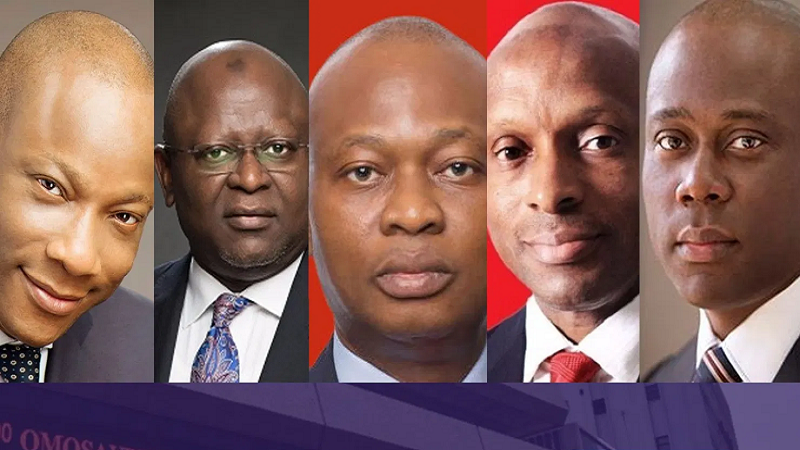
I am certainly biased having worked as a banker in Lagos [Wake up at 5 am, be at work at 6.30am to get systems up before others start coming. Leave work at 10pm. But get paid really well]. Yes, I do think that the most productive professionals in Nigeria are in the banking sector. And they are the most innovative to get out of troubles, fast. After them, you put telecoms who are also showing resilience. Yes, you can argue that the carpenter is working harder, but here, I have used two words – “productive” and “innovative”!
Yes, no matter what the economy has thrown to the banking sector, it has found a way to make money and avoid troubles. But in 2020, I was worried when Covid-19 switched off the nation via lockdowns. I wrote here that we could see an 8% Non-Performing Loans (NPL) ratio in the banking sector. Honestly, I was concerned about a potential avalanche of bad loans.
The number is out: they kept things low at 6.01% [the Central Bank of Nigeria prudential maximum threshold is 5.0%]. That is an achievement because in this business, you look at things in parts of a unit percentage as 0.1% of billions of naira is a huge amount of money.
“The Monetary Policy Committee (MPC), however, noted the marginal increase in the Non-Performing Loans (NPLs) ratio which rose to 6.01% at end-December 2020 from 5.88%at end-November 2020 and above the prudential maximum threshold of 5.0%. While noting that this development is not unexpected under the prevailing circumstances, it urged the Bank to strengthen its macroprudential framework to bring NPLs below the prescribed benchmark,” Central Bank of Nigeria MPC
For the FUGAZ (FBNH, UBA, GT Bank, Access Bank and Zenith Bank) – well done. Sure, there are other banks but those ones are marginal in the real scheme of things.
Update: Yet, looking at things technically, the 6% would have tracked my 8% if not for the regulatory forbearance from CBN: “Nigeria’s NPL ratio of 6% could have been worse than it currently is were it not for the regulatory forbearance granted by the central bank due to the Covid-19 pandemic” notes Nairametrics.
Banks were allowed to restructure most of their loans deferring principal repayments for borrowers who faced cash flow challenges due to covid-19.
Without the forbearance, the non-performance ratios of the banks could have been worse than the 6%.