DD
MM
YYYY

PAGES

DD
MM
YYYY

spot_img

PAGES

Home Blog Page 5911

Mr. President’s Second Place in West Africa!

1
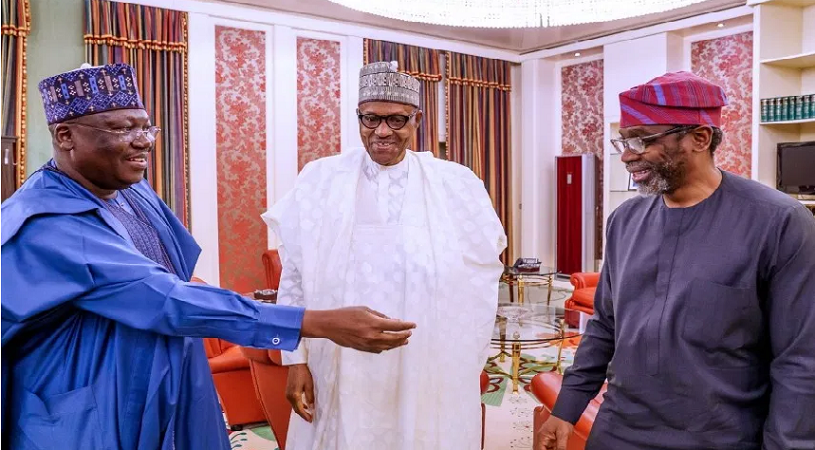
Nigeria leaders

President Buhari’s legacy looks cloudy and he is not getting any vibe from any angle. I am not sure he has new ideas for the economy. Possibly, they will just play it out, as the nation looks like it is on autopilot, with no vision to connect the citizens into nation building. Perhaps, it could be that the National Orientation Agency is not doing its job. 

Pardon me, I do not honestly understand at this point what his government wants to achieve. During Obasanjo, we could argue that he was trying to liberalize the economy through privatization. Jonathan lost election partly because he lost focus later in his presidency. Initially, there was that effervescence on improving systems and processes to drive Nigeria into a new economic era. 

But for Mr. Buhari, he has multiple challenges: insecurity, a battered economy and now a reputation that Nigeria is the den of corruption. Yes, the Transparency International’s Corruption Perception Index (CPI) 2020 has put Nigeria on 149th position out of 180 countries. The nation also scored 25 out of 100 points (the higher, the better).

With this new ranking, Nigeria is just below Guinea-Bissau on the scoreboard of the most corrupt nation in West Africa. That is a second for Mr. President, but I am not sure he would be happy for that one.

Yet, Mr. Buhari is a victim of Nigeria, but as the president, we have to put everything on his feet. The impunity in the Nigerian Judiciary is the biggest issue in the land. Why should it take 15 years to try a former governor for corruption? Why should it take 10 years to try bank looters? I mean, you can go on. 

Mr. President, your nation is not healthy – you need to lead.

Comment on LinkedIn Feed

Comment #1: Prof. Ekekwe, your colleague, Prof Wole Soyinka said discussing the Buhari presidency is not good for his sanity. So, he now prefers to live as if the administration does not exist. Hence like millions of other Nigerians, I have tuned off on the regime.

However, the woeful performance of the regime is the best argument against rotational presidency that makes the grossly incompetent president. Alert was sounded on that grave risk in my “Distorted Federalism and Pervasive Insecurity” serialized by The Guardian in March 2013 ever before the present regime could dream of gaining power. Yet, those who prefer lootocracy to democracy banded together to install the Buhari government.

Rotational presidency is fit only in a confederacy where the incompetence of the central government does not negatively impact the federating units – the presidency is ceremonial. But here in our unitary government the progress of all is hamstrung by a rotational president. That informs the cry for restructuring that is now almost deafening.

My response: Nigeria is not working – everyone is a victim. Like I say, if Yobe has a literacy rate of less than 20% and Imo has 96%, Yobe kids have not been served even if the governor has been rotated in all villages there. Rotating inefficiency is not a solution. The key is building healthy competition and productivity in systems: I support a revamped and restructured economic federalism so that the principle of comparative advantages will work.

I was in Usman Danfodio University a few years ago and saw a GREAT renewal energy project. Those kids could power the north under market systems. But Nigeria slows them just as the ones in south are slowed in their passions. We need to be honest that NG is not working.

Another commenter follow-up: Prof. Ndubuisi Ekekwe, please you are even going too far by comparing Yobe State with Imo State because the two states are not mates. Imo state is 15 years older than Yobe State

Yobe State and Abia State are classmates as they were created on 27th August 1991. On GDP per Capita basis (as of 2007 data), Yobe State have $843 while Abia State have $3,003, in simple terms people in Abia State earn 3.6 times more than people in Yobe State – since this is calculated by dividing the area’s total income by its total population.

But the puzzle is this:

Yobe State have 17 LGA, Population = 2.757 million
Abia State have 17 LGA, Population = 4.112 million

Both States presumably have been receiving the same amount of money from the FG Federal Allocation Money Sharing Scheme since August 1991, so if after 16 years (as of 2007) of receiving the SAME amount of money from FG based on the same number of LGA and even with a lesser population and Yobe State GDP per Capita is almost 4 times smaller than Abia State’s GDP per Capita, then Nigeria is in trouble!

I only picked just Yobe State and Abia State because you mentioned Yobe State. We can run the numbers for other states.

No System can continue to function in this type of mess!

My response: This man, that is a Master’s thesis you just summarized here. Great perspectives and it goes to Tekedia blog under this entry. To add to your point, take those LGAs to UBE (universal basic education) which moves funds via LGAs for basic education. If states were getting the same money (per capital) and one produced 96% literacy and another <20%, has somebody asked where the money sent via UBA to train the kids went into? Ideally, someone diverted the funds, resulting to the outcomes.
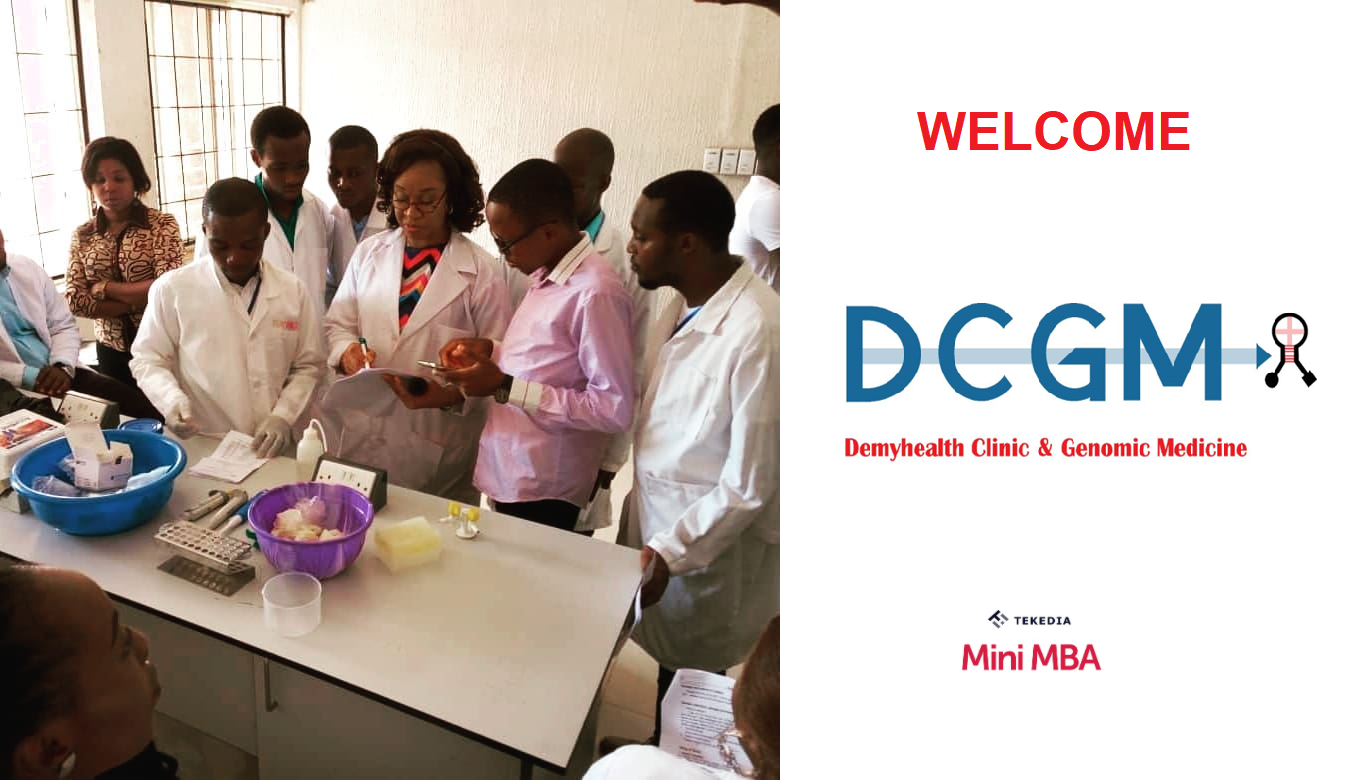

Demyhealth Clinic and Genomic Medicine – DCGM – Welcome to Tekedia Mini-MBA

0

Tekedia Institute welcomes staff of Demyhealth Clinic and Genomic Medicine – DCGM to Tekedia Institute. DCGM works in the domains of life science research, pharmaceutical, food and beverage industries providing services in the following areas: setting up of molecular laboratories for clinics, hospitals, medium and complex laboratories, schools, food & beverage industries,  and governmental/non-governmental organizations.

We look forward to next month as we co-share and co-learn on the mechanics of  businesses systems. Welcome to Africa’s largest business school.

Learn more on Tekedia Mini-MBA here.


MTN Donates $25m to AU Vaccine Program As Bill Gates Urges Nigeria to Focus on Health Sector

0

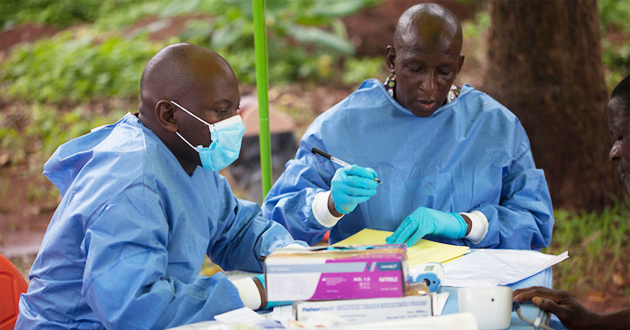
Big corporations across Africa have continued to get involved in the fight against COVID-19. Beyond helping governments through provision of palliatives and medical equipment, some businesses are taking a step further.

In a unique public/private partnership, MTN, Africa’s leading mobile network, has announced a donation of $25 million to support the African Union’s COVID-19 vaccination programme.

The donation will help secure up to seven million doses of the COVID-19 vaccine for health workers across the continent, which will contribute to the vaccination initiative of the Africa Centres for Disease Control and Prevention (Africa CDC).

“The devastating impact of COVID-19 has been unprecedented and profound. Public and private partnerships are needed if we are to succeed in the fight against the pandemic and restore social and economic norms for our continent and our communities,” says Ralph Mupita, President and Chief Executive Officer of MTN Group.

On 14 January 2021, President Cyril Ramaphosa, Chairperson of the African Union, announced that the African Union had secured a provisional 270 million COVID-19 vaccine doses on behalf of its Member States, through advance procurement commitment guarantees of up to $2 billion to the manufacturers by the African Export-Import Bank.

This was a remarkable milestone in efforts to ensure equitable access to the COVID-19 vaccine for Africa’s people. However, with a population of about 1.3 billion, Africa requires many more doses to achieve at least 60 percent herd immunity. Contributions by private organizations, like MTN, are therefore essential to help the continent reach its target.

“Our goal is to ensure that all those who need the COVID-19 vaccine have access to it very quickly, but the biggest hurdle in Africa has been financing of the vaccines, and the logistics of vaccinating at scale. We therefore welcome the right partnerships, like the one with MTN, to achieve our minimum 60 percent vaccination target,” says Dr John Nkengasong, Director of Africa CDC.

Since the beginning of the pandemic, MTN has made significant contributions to help limit the spread of COVID-19 and save lives and livelihoods within its African market. This donation is another example of MTN’s efforts to help find lasting solutions to the challenges facing the continent and to guarantee a healthy Africa, for all Africans.

“We believe ongoing collaborations with key stakeholders across sectors are essential as vaccines are deployed in all our markets, with communication tools, technology and digital services being vital support infrastructure for a successful mass vaccination programme,” concludes Mupita. “In the coming months, MTN Group will look at similar support commitments for the markets in which we operate in the Middle East.

As of Jan. 28, Africa has recorded 3,494,117 COVID-19 cases, resulting in 87,937 deaths according to data from Africa CDC. The rising figures as well as the economic impact of the pandemic on the continent are propelling the push to secure as much vaccine as possible.

But compared to the rest of the world, Africa has so far had a more manageable situation, and many believe that overhauling the continent’s health sector should be prioritized.

Bill Gates, Microsoft founder and Chairman of Bill and Melinda Gates Foundation, a charity organization with focus in Africa, urged the most populous nation in the continent, Nigeria, who among others has been making efforts to secure Pfizer vaccines, to focus more on rehabilitating its debilitated health sector.

Nigeria’s health minister, Osagie Ehanire, had in December, told the Senate that the country will require N156 billion in 2021, and N200 billion in 2022 for vaccination. But Gates said the fund should be channeled into making the healthcare system work.

“There is no doubt that the impact of putting money into the health system particularly the primary healthcare system will be very high in terms of saving children’s lives.

“Nigeria should not divert the very limited money that it has for health into trying to pay a high price for COVID-19 vaccines.

“I’m an advocate for the government to have more resources and prioritize health. Obviously I’m not a voter in Nigeria, so Nigeria can decide that independently.

“So my advice is that the primary healthcare system is what is super important and that with those finite resources, you have to prioritize expenditure,” Gates said.

Gates urged Nigeria to wait on GAVI, the Vaccine Alliance, a public-private global health partnership to increase access to immunization in poor countries, where she is a beneficiary.

“And in that case, waiting for the GAVI vaccines would be the best thing and to put into other areas so that vaccine coverage rates, that are as low as 20 per cent in some areas, get up to 80/90 per cent to save children’s lives,” he added.

$55m Per Person: SpaceX’s Crew Dragon Readies for the First Fully Private Trip to the ISS

0
SpaceX

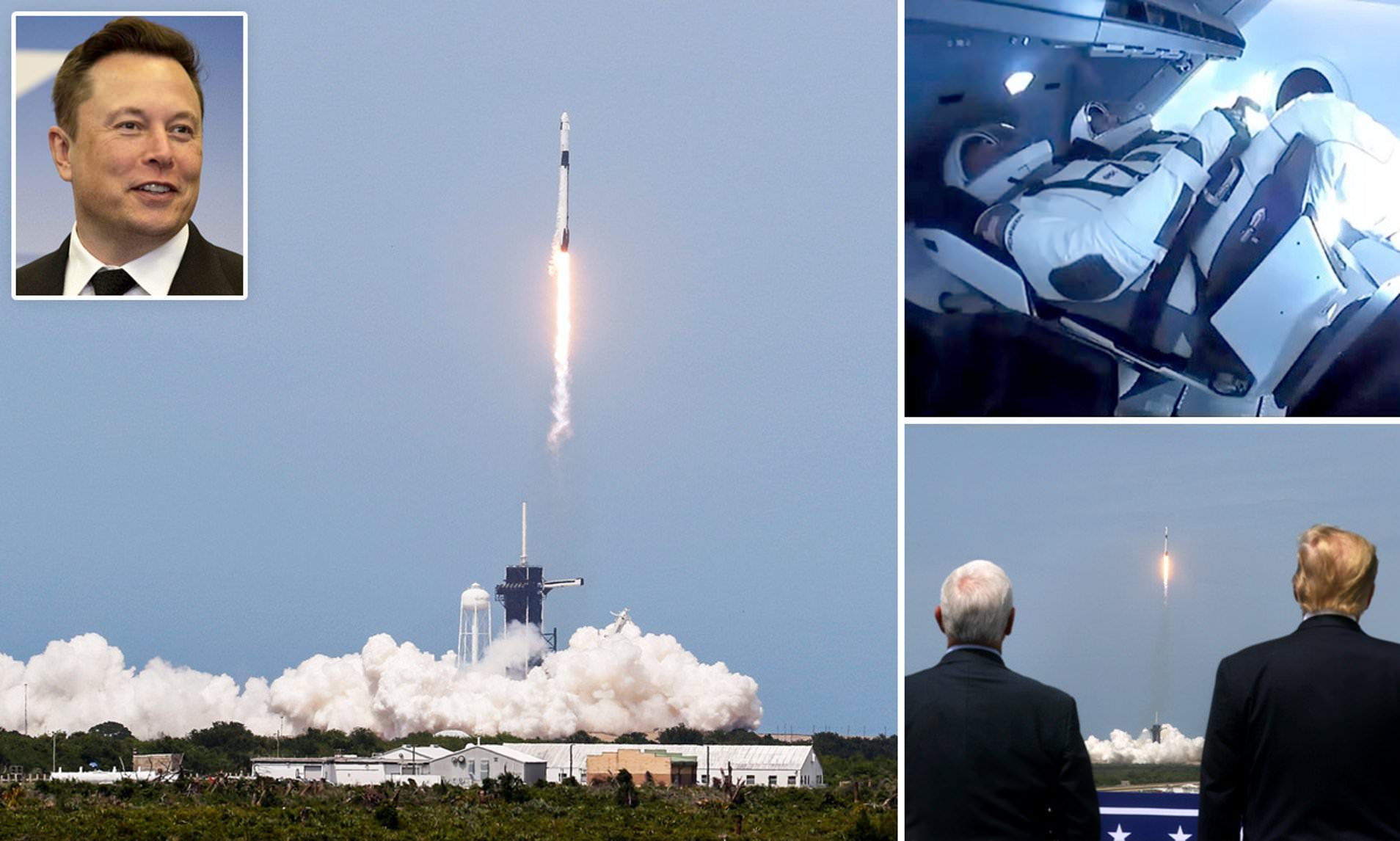
The dram of the SpaceX founder and CEO, Elon Musk, to run a commercial transport service to space is becoming truer with each day passed. Last year, SpaceX recorded a historic feat with two successful missions to space, paving the way for everyone who can afford the cost to jump the rockets.

Now, a trio of American real estate investors, a Canadian investor, and a former Israeli Air Force pilot are teaming up to pay $55 million each to be part of the first fully private astronaut crew journey to the International Space Station (ISS). The Verge reported that the trio will hitch a ride on SpaceX’s Crew Dragon capsule early next year, with a veteran NASA astronaut as the commander.

The trip, named Ax-1 mission is being organized by Texas-based space tourism company Axiom Space, and will underscore a milestone in the quest to make space travel accessible to private customers.

“As the first fully private mission to go the ISS, we feel an enormous responsibility to do it well. We realize that this is the trend-setter, the bar-setter for the future, and so our goal is to really exceed all expectations,” Michael Lopez-Alegria, the mission commander told The Verge.

The SpaceX Crew Dragon capsule, with seven seats capacity was approved last year by NASA under its Commercial Crew Program to fly humans to the space station.

The Crew Dragon was first tested in March 2019, when SpaceX performed an uncrewed test flight to the ISS. But the progress suffered setbacks in April, when the spacecraft disappointedly exploded following a valve malfunction while in a routine test back on earth.

Musk and his team turned things around the next year, and the trip to the ISS became a success.

The Verge reported that Larry Connor, an entrepreneur and non-profit activist investor, Mark Pathy, the Canadian investor and Philanthropist, Eytan Stibbe, the former Israeli fighter pilot and an impact investor, were made known on Tuesday morning by Axiom as the company’s inaugural crew. And Connor, 71, would become the second oldest person to fly to space after John Gleen, who flew the US space shuttle Discovery at 77 years old.

SpaceX show

The report reveals some details of the trip including a breakdown of the $55 million expense. The Crew’s flight to the space station, an orbital laboratory some 250 miles above Earth, will take two days. They’ll then spend about eight days aboard the station’s US segment, where they’ll take part “in research and philanthropic projects,” Axiom said in a statement.

However, the Crew will have to find a sleeping space for themselves somewhere in the ISS as US, Russia and German astronauts will take the only sleeping quarters there.

“There aren’t any astronaut crew quarters for us, which is fine. Sleeping in Zero-G is pretty much the same wherever you are once you close your eyes,” said Lopez-Alegria.

As the dream of running commercial trips to the ISS and beyond got closer to reality, NASA, which previously prohibited private visits to the ISS on US spacecraft, reviewed its policy to allow private astronauts flights to the ISS. The trip will mark the first since 2000 when seven private citizens flew to the station as wealthy tourists on separate missions via Russia’s Soyuz.

A breakdown of the trip’s bill published in the 2019 NASA’s policy update reveals a hefty price tag. Using the toilet and life support systems will cost $11,250 per astronaut, all necessary crew supplies, including food, air; medical supplies etc. will cost $22,500, and $42 per kilowatt-hour for power. It thus sums the bill to about $35,000 a night person, which for the crew members on the Ax-1 mission, there is $1.1 million to pay for eight nights.

But Axiom says those nightly costs are included in the $55 million price private astronauts are already paying.

“The company bills itself as a turnkey, full-service mission provider that interfaces with all other parties (e.g NASA) for the astronauts. Any and all necessary costs are part of Axiom’s ticket price,” Axiom’s spokesman said.

However, The Verge reported that the Ax-1 mission will have to be approved by the Multilateral Crew Operations Panel, the space station’s managing body of partner countries that include the US, Russia, Canada, Japan and others. But Lopez said the process has already kicked off.

“I don’t think that there’s any doubt that the background and qualifications of the crew are more than adequate to be accepted by the MCOP, so I feel good about that,” he said.

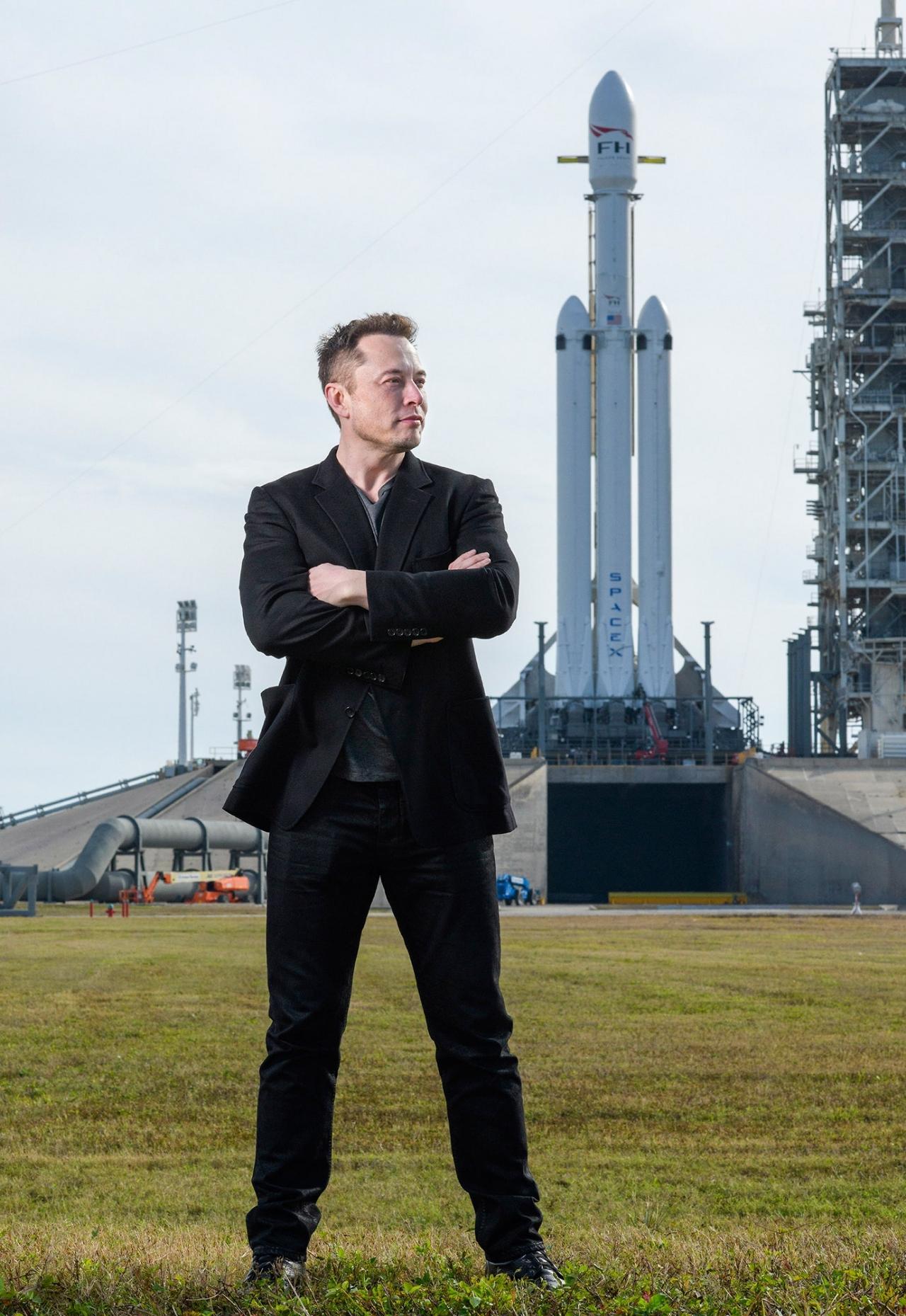
Elon Musk, CEO SpaceX

The $55 million bill for the trip might seem expensive but it’s quite cheaper than the $90 million American astronauts used to pay per seat to Russia to board its Soyuz. But that changed through the US government’s partnership with private spaceflight companies to build private spacecraft to replace the defunct.

In 2010, under president Obama, a program called the Commercial Crew Development (CCDev) began to replace the existing space shuttle going on retirement. The aim was to replace the shuttle with a privately built spacecraft. Two US companies, SpaceX and Boeing were contracted with $2.6 billion and $4.2 billion funding respectively to build a new spaceflight for the National Aeronautics and Space Administration.

But Musk has a bigger plan to put people on the moon using a Starship vehicle, a larger spacecraft he is building to accommodate more private travelers.

The Starship vehicle is expected to accommodate up to 100 passengers. SpaceX is planning to include it with two other vehicles in its Artemis program billed to commence Moon trips in 2024. The Ax-1 mission is part of SpaceX’s contract with NASA, which requires it to continue to deliver astronauts to the ISS increasing the number of passengers up to four.

The Poverty Situation in Nigeria and Newton’s First law of motion

1
Nigeria poverty

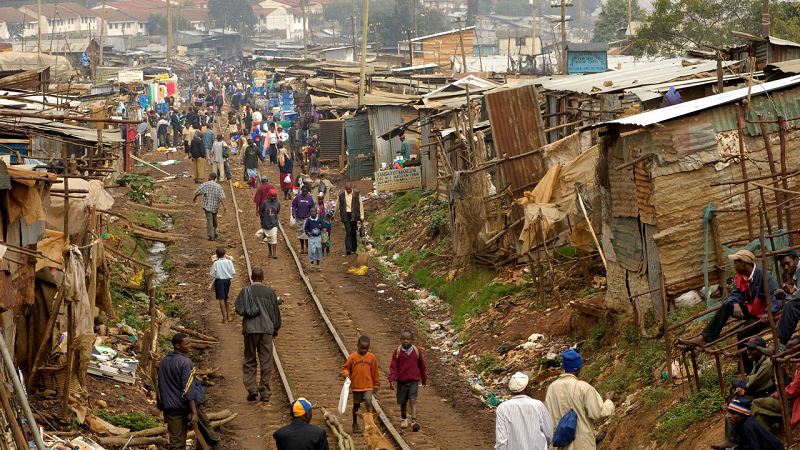
This morning I saw a LinkedIn notification reminding me to write a post for my audience on the professional network. I began to ponder on the aspect of poverty to write about this morning as poverty eradication lies in my passion and is my ultimate career goal. Then it dawned on me that I could write on the worsening poverty situation in Nigeria- which continues to grow over the nation like unchecked cancer. Considering the rampaging nature of poverty in the country, I also thought of analyzing the crisis in the light of Newton’s law of motion.

Newton’s first law of motion states that an object will continue in its state of motion or rest unless acted upon by an external force. Given that poverty has largely increased in Nigeria in the years, I propose that poverty will continue to accelerate and cover several more millions people in the country unless some strong intervention is implemented. And yes this is obvious especially for people in the policy space. A social crisis is bound to continue unless it is appropriately approached by a policy intervention.

Figures show that Between 1980 and 2010 poverty rose by 153.6 % which in absolute figures implies an increase from 39.2 million to 112.47 million (Nigerian Bureau of Statistics). The World Poverty clock reveals that the number of Nigerians living in extreme poverty rose from an estimated 70 million in 2016 to 90 million in 2021.

External Forces that can Check poverty

In its current state of acceleration, poverty can be arrested by three things; deliberate policy intervention from the government (or private sector and international organisations) , a positive shock in poor communities, and institutional innovation among the poor communities.

Deliberate Policy intervention

A deliberate policy intervention could come from the Nigerian government, international organisations and the private sector. At the moment, the Nigerian government is committed to social protection programmes targeted at poor people in selected communities. These programmes include the Social Safety net Programme, Home grown School Feeding Programme and N-Power. Among the many reasons while these efforts may not challenge the rising poverty numbers is poor funding and consequently coverage. Too many poor people are not included in these programmes.

The international community has been very benevolent to the country. A good number of international organisations such as the United Nations Development Programme, Danish Council, OXFAM, and others are currently working in poor communities and are providing several empowerment schemes to poor communities.

Private sector organisations such as the Tony Elumelu Foundation have given annual grants of 5,000 dollars to more than 9,000 entrepreneurs in Africa- more than 2000 Nigerians are among this number. A growing private sector will create jobs and new markets that cut across poor communities thereby improving the living conditions of the poor.

UN has a goal for NO Poverty

Positive Shocks

Shocks are most of the time unforeseen. A positive shock could entail the discovery of a mineral resource in a community. If such a discovery is followed by a swift agreement between the government and willing private investors, then the host community will benefit from compensation packages from the venture. This occurrence could also lift an entire community out of poverty.

Individual/institutional Innovation

Very often the poor remain poor because they are excluded from market systems. For instance, poor people may most likely not be eligible for loans for lack of collateral, they may not be eligible for health insurance because they have no income to spare and they cannot access credit to engage in income-earning ventures. However, traditional innovations such as daily contributions, village money lenders, and group lending have been developed within communities of low-income earning individuals to serve their needs. There has been some evidence of such platforms leading to the improvement of livelihoods in communities.

In conclusion, the government must take the lead in the fight against poverty. On the other hand, there is also need for a private sector coalition to work towards checking poverty in the country.