DD
MM
YYYY

PAGES

DD
MM
YYYY

spot_img

PAGES

Home Blog Page 5913

Impact of Fintech On The Nigerian Capital Market And The Need For Effective Legal and Regulatory Framework

0
Nigeria's central bank boss

The importance of technology to modern day commercial activities is indispensable and has occupied a pervasive role not only in commercial transactions but all other spheres of human activities. Indeed so numerous are its forms and the chief among is Financial Technology popularly called Fintech. Innovations brought by technology have brought tremendous and radical changes to the traditional way of conducting commercial activities. Virtually all sectors of the economy of the countries in the world have been disrupted by the innovation brought by technology. Trading and provision of services have now been made easier as physical contact is no longer needed before commercial transactions can take place.

Capital market, a financial market for trading securities of companies, is not left out of this tremendous changes brought about by the technology, as many online platforms now available for buying and selling of company securities quoted on the Nigerian Stock Exchange. Hence, this article tends to bring out the impact of financial technology in the Nigerian Capital market and the needs for effective legal and regulatory framework.
DEMYSTIFICATION OF SOME CERTAIN TERMS

Before delving into the heart of this discussion, it is pertinent to demystify some certain terms like Financial Technology and Capital market for proper and easy understanding.

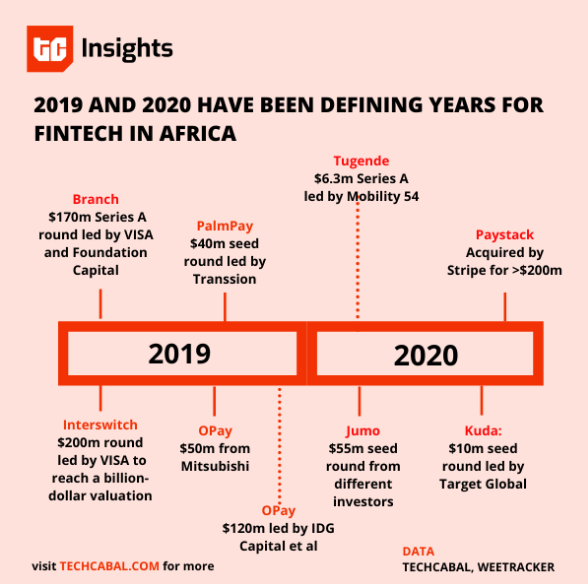
Financial Technology: Fintech, as it is mostly called and the name implies refers to that technology used in delivering financial services as opposed to the traditional banking method of delivering financial services. According to investopedia, Financial technology (Fintech) is used to describe new tech that seeks to improve and automate the delivery and use of financial services. It has also been referred to as the synergy between finance and technology, which is used to enhance business operations and delivery of financial services. Examples of Fintech are Paystack, Paypal, Flutterwave, E-transact, Remittal, etc

Capital Market: Investment and Securities Act, 2007, the chief legislation on Capital Market, makes no provision for definition of capital market. But it has been defined as the financial market where trading of companies’ securities takes place. It has also been described as a financial market for long term financial assets such as government bonds, corporate bonds and equity and unlike money market which functions to provide short term funds : rather, it is a network of financial institutions that in various ways bring together suppliers and users of capital, facilitating the issuance of secondary and long term financial instruments

It is a market where investors and companies engage in trade of financial securities like bonds, stocks, etc

It is a market for buying and selling of shares and other financial securities. The Capital market is divided into primary markets where newly issued stocks are sold to the investors through a process called underwriting and secondary market for financial instruments that already exist.

Companies quoted on Nigerian Stock Exchange raise funds to cater for their financial needs

THE IMPACT OF FINANCIAL TECHNOLOGIES ON THE NIGERIAN CAPITAL MARKET

The elementary but chief function of FinTech is facilitating automated financial services delivery to the consumers. However, Fintech has now expanded beyond this role as many online platforms now exist for savings, crowdfunding, buying and selling of company’s securities, thereby making investment a lot easier for investors and companies to raise capital for their financial needs.

Security and Exchange Commission, the chief regulator of the Nigerian Capital market in its attempt to provide a regulatory framework for operation of Fintech firms and startups in the country launched a FinTech Roadmap Committee at the Q3 meeting of its Capital Market Committee in 2018. This shows that the SEC has come to the reality and impact of Fintech to the Nigerian Capital Market. The Committee came up with a report titled the “Future of FinTech in Nigeria”. It was formerly by the SEC on the 29th October 2019 at the Nigerian Fintech week.

Financial Technology now provides a platform where not only the investment in securities of companies take place but also commodities exchanges where tangible goods like agricultural products are traded. Examples of such platforms are Weath.ng, Chaka, Bamboo, etc. In others words, these platforms can be called online securities and commodity platforms. Also, the Nigerian Stock Exchange has adopted an automated trading system for securities trading on its floor.

It has increased participation of people investing in the securities of both local and foreign companies, thereby making it easier for both the investors and the companies to interact without physical contact.

Convenience: as reported by Mckinsey & Company on their website customer adoption of fintech is primarily driven by access and convenience. This in turn, reduces the time and stress in going through the traditional way of investing in securities of a company. Toeing this pathway, this has increased participation of low and middle income earners in the Nigerian Capital Market. It has promoted and still promotes easy access to the Nigerian Capital Market.

Accountability and Transparency are one of the driving forces of any financial investment as Fintech tends to portray these traits in their provision of financial services to the both the key players in the Nigerian Capital Market, even at a reduced level of documentation. Payment of taxes and other charges are done automated thereby promoting accountability and transparency. One can actually conclude here on this, that there has been a tremendous increase in government as there is no need for cash to exchange hands.

Integration and facilitation of payment for shares bought by investors is another chief role Fintechs play, as payment cannot be made possible without their services. This is made possible through card payment whether debit or credit, payment with account or bank transfer without visiting the traditional Banking institutions.

Finally, FinTech is invaluable to the development of the Nigerian Capital Market and its overwhelming role cannot be overlooked, hence the need for a proactive and effective legal and regulatory framework.

Naira

THE NEEDS FOR EFFECTIVE LEGAL AND REGULATORY FRAMEWORK FOR FINTECHS IN THE NIGERIAN CAPITAL MARKET.

Provision of clarity and effectiveness of legal and regulatory framework of any legal system works magic. This cannot be over emphasized as this we result in the development of that country especially its economy. Lack of effective legal and regulatory framework on fintechs providing online securities and commodities exchanges trading has stifled the innovations and creativity of the fintech firms thereby limit their participation in the Nigerian Capital Market. This can be seen in the recent case between Chaka, an online platform for trading of securities and SEC, whereby the latter secured an interim order from the Investments and Securities Tribunal restraining the former and its promoters from advertising or offering for sales securities. This has led to the confusion on whether fintech firms dealing with securities as a stock broker or not.

It has been aptly argued that existing capital market regulations are inadequate in providing clarity as to the status and compliance requirements of Fintech companies.

As society keeps changing, legal frameworks must also be in motion in order to meet up the dynamic nature of the society. Our laws and regulations must keep to time and not remain static. This can be achieved by having proactive regulatory bodies saddled with the responsibility of making regulations for the Market through their enabling laws. The Capital Market of every country plays crucial roles in their economies, hence the needs for innovations.

Effectiveness and Clarity of legal and regulatory framework for FinTech in the Nigerian Capital Market would pave a pathway for development of the market which would enhance and equip it to compete globally.

CONCLUSION

In conclusion, Fintechs have come to stay and play a crucial role in the Nigerian Capital Market. The needs for an effective legal and regulatory framework cannot be faulted as this would lead to more innovations being brought by the fintechs to the development of the market.

References.

See http//: corporatefinancialinstitute.com

See the paper titled “An Introduction to the Capital Market”, delivered at a seminar in Abuja on 12th October 2000 by Dr (Mrs) Ndi Okereke Onyiuke, DG and the CEO of the Nigerian Stock Exchange. Quoted at pp 361 of Com pany Law and Practice in Nigeria by Hon. Dr J Olakunle Orojo.

https://www.mckinsey.com/featured-insights-midle-east-and-africa/harnessing-nigerians-fintech-potentials

Tayo F. ‘SEC VS Chaka: Key Lessons for Regulators and Securities FinTech Companies’ https://www.busnessday /opinion/article/sec–v- chaka-keylessons-for-regulators-and-securities-companies/amp/ .


Sports Dominate as Nigeria Records 6.3 million Internet Search Volume in 30 Days

0

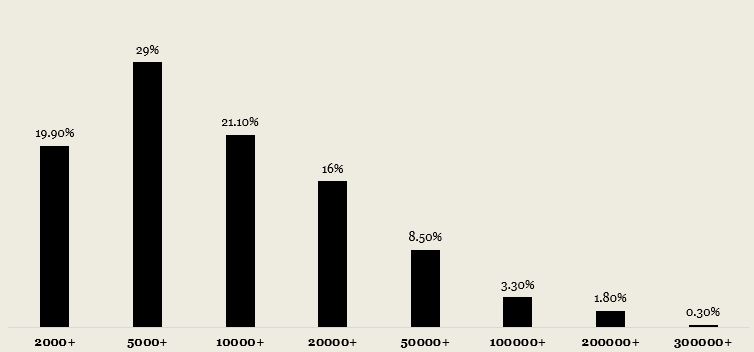
With the less than a few hours to the end of the first month in 2021, our analysis has shown that Nigeria attained more than 6.3 million Internet search volume in 30 days, generated from 331 searches. This was gleaned from the data mined and analysed by our analyst. According to the Google Trends, the primary source of the data, activities of Nigerians and those reside in the country on the Internet using Google Search Engine led to the volume search. More than 19,250 volume of search was found as average per day during the period. Over 5,000 volume of search was recorded the most.

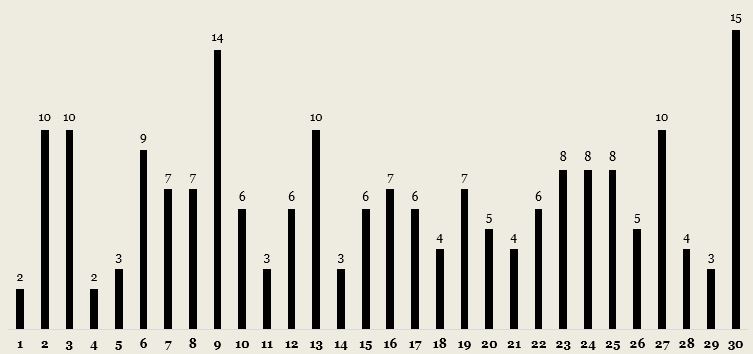
Analysis shows that sports and, life and style were the specific information Nigerians and other nationals consumed the most. Out of the 331 searches, according to our analysis, sports information category had 59.81%. These outcomes similar to what our analyst had previously found for the Internet activities of January 4 and January 8, 2021.

Exhibit 1: Frequency of Searching Sports Related Information per day

Source: Google Trends, 2021; Infoprations Analysis, 2021

Exhibit 2: Search Volume in 30 Days of January, 2021

Source: Google Trends, 2021; Infoprations Analysis, 2021

The implications of these results are not different from what our analyst had noted in the previous analysis that people searched and read what appealed to them during the period of analysis based on their needs. For instance, within sports category, people searched and read foreign football matches and players than local ones. Foreign musicians and artistes occupied people’s mind when they sought information or read the news within the life and style category.

The Launch of Tekedia Hub – “Facebook for Innovators”

0

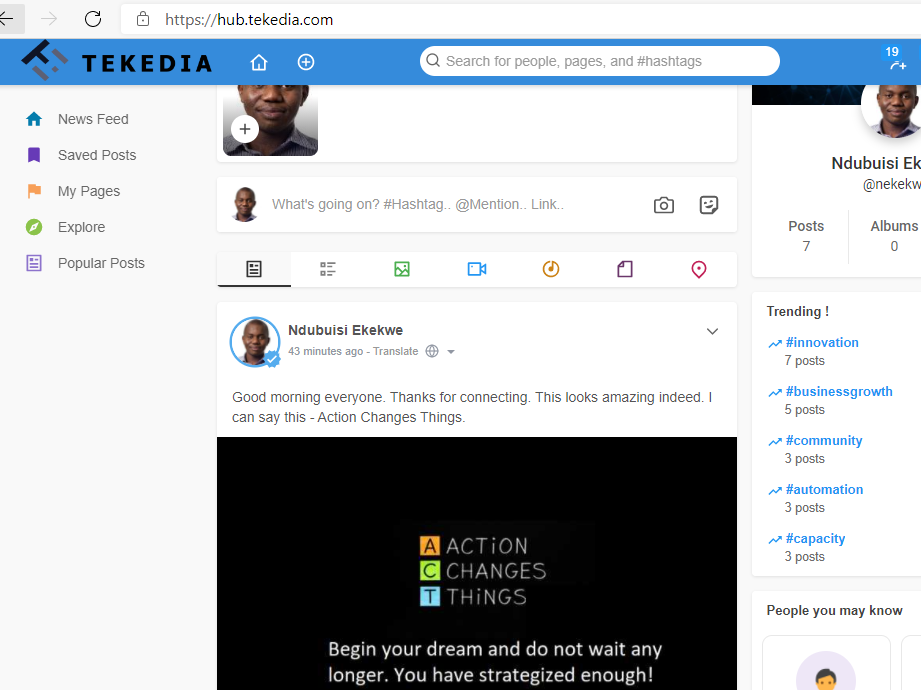
To sign-up and login to the web web version, go here hub.tekedia.com. You can download the Android app here.

Good People, I am very happy to announce that Tekedia Hub is ready. This ecosystem is developed to ensure that innovators in our community can advance their missions. WhatsApp could not serve us due to our scale.  Now, we have our own “Facebook for Innovators” and members can do great things. It is an open ecosystem for everyone. Feel free to go and create an account, and connect with others.

Hopefully, when we begin Tekedia Mini-MBA on Feb 8, we will see people discussing business strategies, frameworks, forming private groups, hashtagging on topics, and co-learning to accelerate leadership ascents. Our goal is simple: help innovators and growth champions to advance companies and institutions.

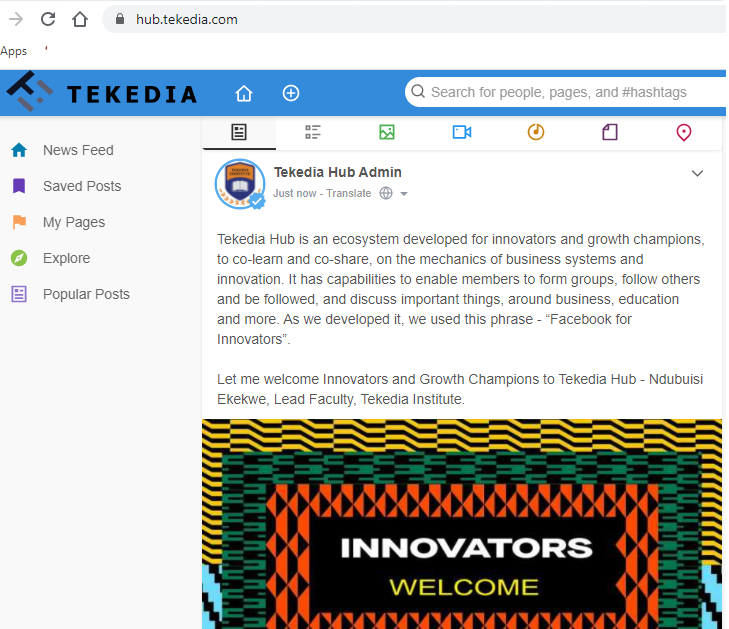
Tekedia Hub is an ecosystem developed for innovators and growth champions, to co-learn and co-share, on the mechanics of business systems and innovation. It has capabilities to enable members to form groups, follow others and be followed, and discuss important things, around business, education and more. As we developed it, we used this phrase – “Facebook for Innovators”.

How to Join and Suggestions to Follow:

  • Go to hub.tekedia.com and create a FREE account. The system will email you and ask you to activate. Once done, you are ready for the Hub.
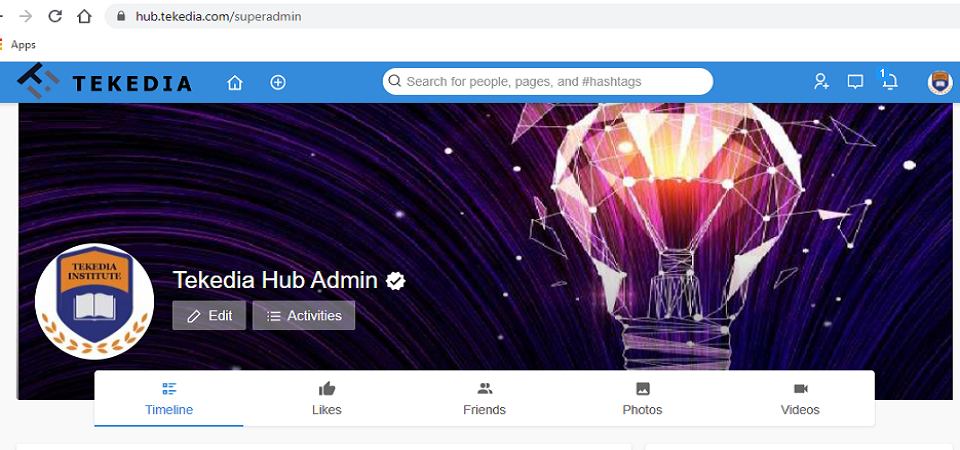
  • I suggest you join our Tekedia Hub Admin and myself – Ndubuisi Ekekwe.
  • Now, tell your friends, colleagues and associates to join. You can create a group and topics. If you run a mentoring growth, you can create one and ask the mentees to join in a group.
  • Our focus here is innovation and business across all industrial sectors and territories.
  • The Android app version arrives later in the week once Google approves it.

This Hub (web and mobile app) replaces WhatsApp in Tekedia Mini-MBA and becomes the platform to communicate with members.


Verification of Profile

Good People, good morning. Though we have put some requirements to add the “Verified sign” on profile, all you need to do is simple: capture a screenshot of your LinkedIn profile with the URL, and also capture another webpage with your photo/name [company website, newspaper, press release, etc). Once you have them, click the Verification request; Tekedia runs 24/7 and my team will evaluate and verify. Then the Verified sign will show.

Data Privacy: Facebook Reportedly Planning to Sue Apple as the Animosity between the Tech Giants Deepens

0

The animosity between Apple and Facebook is taking a new turn. Facebook is reportedly planning to file a lawsuit against Apple for its recent privacy policy that gives users the ability to stop apps from tracking their data across the web.

Last year, after the smartphone maker announced the new iOS 14 policy, the social media platform called them out, saying the decision would halve its earning and jeopardize publishers and developers ability to earn from ads.

The faceoff it generated between the two giants has aggravated their already soured relationship. Apple has maintained that its policy is in line with the recent clamor by both consumers and antitrust watchdogs to protect users’ privacy, while Facebook said the new policy is anticompetitive.

The social media platform has been building an antitrust lawsuit that accuses Apple of using its App Store to disadvantage competitors. Earlier reports by The Information said Facebook is close to filing a lawsuit against Apple for its actions that the former deemed anticompetitive.

“As we have said repeatedly, we believe Apple is behaving anti-competitively by using their control of the App Store to benefit their bottom line at the expense of app developers and small businesses,” Facebook spokesperson Ashley Zandy said when asked to comment on the lawsuit.

Tech leaders

Apple and Facebook are not considered competitors, given that the former generates revenue through sales of devices while the latter makes money from selling ads. However, many Facebook users use iPhones, where the Apple Store which houses thousands of apps live.

“We expect these changes will disproportionately affect Audience Network given its heavy dependence on app advertising. Like all ad network on iOS 14, advertiser ability to accurately target and measure their campaigns on Audience Network will be impacted, and as a result publishers should expect their ability to effectively monetize on Audience Network to decrease,” Facebook said after Apple announced the new policy.

Efforts by the social media’s founder and CEO Mark Zuckerberg, to get Apple to bend the rules proved futile.

In December, Apple’s senior VP of software Craig Federighi said during the European Data Protection and Privacy Conference, that Google and Facebook risk being removed from the iOS store if they don’t comply with the new Cupertino’s privacy rules.

The iOS 14 means that companies no longer have the freedom to track people’s movement online, and it was implemented by Apple through the introduction of the App Tracking Transparency (ATT) feature.

Apple has under its control, a staggering number of internet users that will impact the revenue of the advertising industry. It has expected a fight-back from the advertisers and is standing its ground on the ATT.

Data privacy was the core legacy of Apple’s founder Steve Jobs, who believed consumers’ permission is needed whenever their personal information is to be used.

“I believe people are smart, and some people want to share more data than other people do. Ask them. Ask them every time. Make them tell you to stop asking them. Let them know precisely what you’re going to do with their data,” Jobs said before his death.

Apple, which has more than $2 trillion in value, has stood on this message to push its data privacy policies. Federighi said in December that the tech company seems to be carrying the moral burden of respecting and protecting private information alone while other tech companies prey on it, pointing finger at Google and Facebook.

FB CEO

Although the tension between Apple and Facebook dated back to 2010, when Jobs shared a conference stage with Zuckerberg and publicly drew a sharp contrast on how their companies handle private data, it has recently escalated.

Last August, Facebook supported Epic Games’ lawsuit against Apple following the controversy of the 30% in-app commission fee that Apple charges app owners in its store.

Apple has remained adamant as Facebook rallied for support against the iOS 14 policy.

With obvious slim chance against the Cupertino-based tech giant, Facebook’s recent attempt to cull data from WhatsApp users is believed to be a ploy to fill the gap from Apple’s iOS 14 policy. As the attempt hits a wall of resistance following the mass exodus of WhatsApp users, the social media company appears to be counting on a lawsuit to regain access to iPhone users’ data.

Facebook has become notorious in private data and anti-competition controversies. The irony this time is that it is coming when both Facebook and Apple are facing antitrust probes in Washington from the Department of Justice and Federal Trade Commission.

It is not clear if Facebook will proceed with the lawsuit, what is clear is that the two giants are no longer hiding their contempt for each other.