DD
MM
YYYY

PAGES

DD
MM
YYYY

spot_img

PAGES

Home Blog Page 5915

Learn Managerial Accounting at Tekedia Mini-MBA

0

He is an amazingly brilliant. He graduated with First Class from University of Lagos and holds the prestigious CFA charter. A chartered accountant, he has worked in three of the Big 4. Call him one of his nation’s very best!

Idris Ayinde, ACA, CFA teaches Managerial Accounting in Tekedia Mini-MBA. He has broken those complex accounting things and common people like us can understand. Our goal in this session is to empower our community to understand how deeper insights on accounting ratios, and other elements, could make them better decision makers and growth makers.

He graduated with First Class from University of Lagos and holds the prestigious CFA charter. A chartered accountant, he has worked in three of the Big 4. Call him one of his nation’s very best!

In other words, when they use what Idris has put in his lectures, innovation happens, execution becomes easier, and growth takes place.

And the awesome one, the Lab 3 assignment is adopted from Idris’ work. Yes, everyone needs to balance the books, and make business decisions. Join us here.

Tekedia Academic Programs

Learn Effective Enterprise Marketing At Tekedia Institute

0

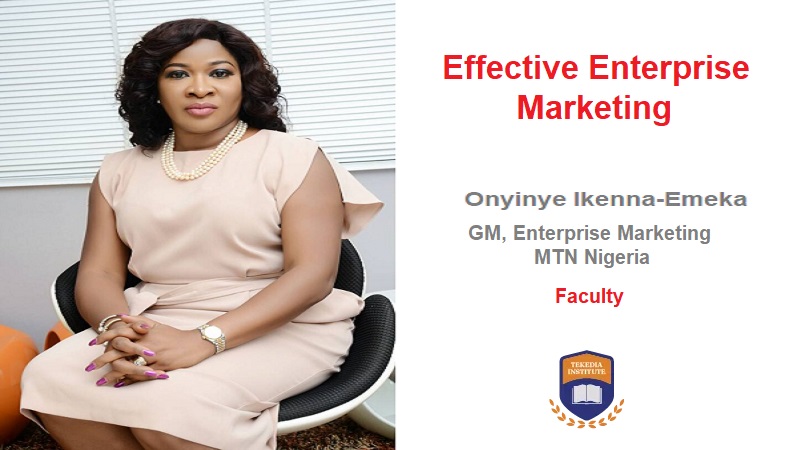
How can you effectively sell to enterprises? General Manager, Enterprise Marketing of MTN Nigeria, Onyinye Ikenna-Emeka, will teach a course at Tekedia Mini-MBA, a community service designed to make innovators and growth champions better. Join professionals from 35 countries in Africa’s largest business school. Class begins Feb 8 here.

A Great EHR Solution Is Important In Any Healthcare System

0

At the heart of healthtech innovations, the place of a great EHR solution is not negotiable. Like they say, data is the new oil; in the health sector it’s the same story. All healthtech innovations have their foundation on data, and by implication a working Electronic Health Record solution.

The EHR solution serves as a house to health sector data; but beyond that, it is primarily a healthtech innovation with the goal of making healthcare delivery easier and seamless. It’s relevance however outweighs that and in the end, it powers other innovations in the space. Start with Telehealth or telemedicine; The doctor wouldn’t be able to properly and effectively diagnose patients and recommend medications if he cannot access the patients records from previous encounters. This is obviously served by an EHR solution. In addition, most of the prescriptions and doctor’s comments, since it’s a virtual meet up, are delivered using the same EHR system.

Now let’s take the huge invasion of Artificial Intelligence in medicine. AI algorithms are increasing the efficiency of healthcare delivery in a lot of ways one of which includes helping to detect early stage disorders like cancer and heart attack, and also in speeding up medical research and vaccine development.

AI basically works with data. The effectiveness of these algorithms is totally dependent on the quality and quantity of data used. This can’t be powered by paper records, only EHR solutions have the ability to deliver the needed dataset in the needed quality. This is why practices and institutions that are planning for the future of healthcare delivery are already migrating to Electronic Health Record solutions.

Payments and Health insurance is also another area where technology is improving operations in healthcare. Well built EHR solutions have the ability to power payments within their platforms and also effectively enforce health insurance schemes. This helps practices easily evaluate their earnings and tell what level of the value chain they have more profits from.

Any practice that is looking to still feature in the future of healthcare delivery, with respect to the massive disruptions caused by technology across different sectors needs to already migrate their operations to a functional Electronic Health Record system to serve as a pillar to coming innovations.

Did Nigeria Fail David Ntekim Rex?

0

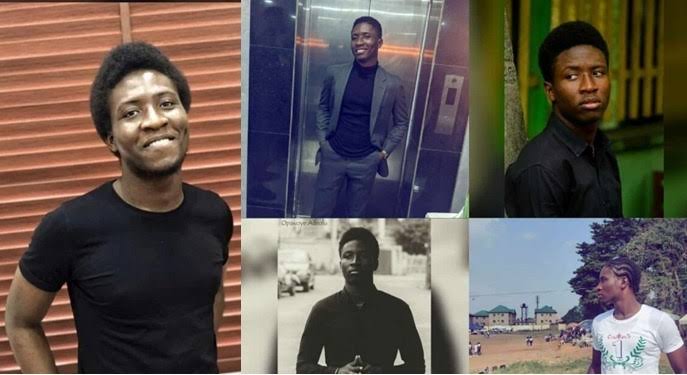
The painful death of David Ntekim Rex, a young Nigerian IT genius, who was fatally shot by armed robbers in Lagos, threw social media users into mourning. According to a Twitter user, Roy Mustang, with the Twitter account, @Magnanimous_, David was shot around 8 pm at an undisclosed place and date. The police were alerted by undisclosed person/s but when they came, they did not take David to the hospital immediately. Roy insisted the police officers, who were drunk and misbehaving, were more interested in determining why the dying man had a laptop than in saving his life. He also said the officers were taking pictures while David gasped for air. Nevertheless, they took David to three different hospitals, the last one being LUTH. But then, the doctors and nurses in those hospitals ignored the dying man until he finally gave up the ghost.

The story is quite pathetic, considering that no one offered help to David when he needed it the most. He was not helped by the citizens, who would rather call the police than rush him to the hospital. The police came and concentrated on building a report instead of helping him receive medical attention. When the needful was finally done, the doctors and nurses that swore an oath to save lives abandoned David. If this is truly how it happened, then the system failed David. But, unlike what many Nigerians say, David wasn’t failed by Nigeria, but by Nigerians – the assailant(s), the witnesses, the police, the doctors, and the nurses.

The Duty of the Witnesses to David
According to Section 2(1) of the Compulsory Treatment and Care for Victims of Gunshot Acts, 2017, “Every person, including security agents, should render every possible assistance to any person with gunshot wounds and ensure that the person is taken to the nearest hospital for immediate treatment.” This section made it obligatory that you and I should ensure that victims of gunshots receive immediate medical attention. Maybe the people that would rather call the police than take David to the hospital are not aware of their duties to the injured man. It is also possible they didn’t want to get involved because they don’t know David or they are not sure of his dealings with his assailants. So, they would not want to be invited by the police to write a statement, or worse, be held by the hospital to pay for the medical services rendered to the injured. They might not have prior knowledge that Section 8 of this Act provides that they should not be harassed or interrogated unnecessarily when they help gunshot victims. So, to avoid trouble, the easiest thing these people could do was push the responsibility to the government. Who knows, David could have made it if someone was brave enough to act like the scriptural Good Samaritan.

The Duty of the Police Officers to David
Even though the officers that visited the crime scene must have discovered David was fatally shot, they did not take him to the hospital immediately. Their instant investigation of the victim and the cause of the gunshot were inappropriate. Even though Section 3(1) of the Compulsory Treatment and Care for Victims of Gunshot Acts, 2017 requires that officers should commence an immediate investigation into the circumstances that led to the shooting, they should have used their discretion to understand that David’s life should be saved first. Because of their lack of discernment, Nigeria was thrown into mourning.

However, the actions of the police officers show that it is possible these men received no training on moving injured persons or even offering first aid. It could be they delayed moving David because they lacked basic knowledge of how to do so. If this is the case, then a lot of things are wrong with the NPF. Nevertheless, they should have placed a call to the people that could handle the situation immediately if they couldn’t do so. But assuming their drunkenness, according to Roy, contributed to their slowness could not be determined since there is no evidence to prove it.

The Duty of the Hospital Staff to David
Section 1 of the Compulsory Treatment and Care for Victims of Gunshot Acts, 2017 states, “As from the commencement of this Act, every hospital in Nigeria whether public or private shall accept or receive, for immediate and adequate treatment with or without police clearance, any person with gunshot wound.” This section gives hospitals the right to save the lives of gunshot victims without fear of police harassment or sanctions. But according to the story narrated by Roy, the hospitals to which David was taken did not attempt to help – not even to apply first aid. They ignored the poor boy until there was no pulse. Roy did not state why these doctors and nurses acted this way but, whatever reason it could be, they failed David.

Did Nigeria Fail David?
It is assumed by many that Nigeria failed David. They believe David would not have died if he were in a developed country. Of course, if things work the way they are supposed to, the people that called the police would have taken David to the hospital by themselves without fear of police harassment and extortion, or the hospital’s demand for money deposit and victim’s details. Further, if the police are well trained, they would have known what to do at the right time. As for the hospitals that failed to attend to David at the critical moment, if sanctions are placed on hospitals for negligence, things like this will not be heard of. Finally, if there were ambulances and ever-ready paramedics at people’s disposal, they, and not the police, would have been called. This is to say that David was a victim of a bad and ill-working society.

The death of David Ntekim revealed the plight of many gunshot victims, who lost their lives as a result of their injuries. A lot would have survived if help came to them on time. Many Nigerians that would readily come to the aid of accident victims avoid those with gunshot wounds because of harassment, interrogations, detentions, and, possibly, extortions that would accompany it. Maybe if these factors are taken care of, people will readily be of help. I strongly believe David would have had a chance if the passers-by or witnesses took him to the hospital before contacting the police.

My Parents inspired me to excel in Petroleum Engineering – Sokhna Keinde

0

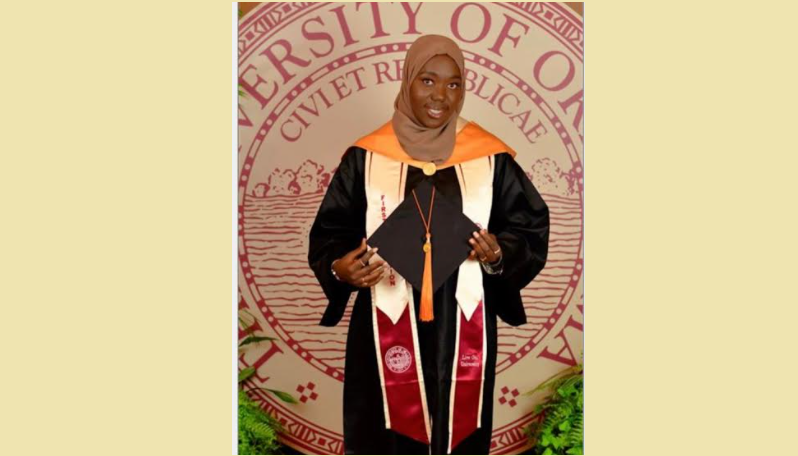
Her story has all the ingredients of being a special one. She is a Senegalese-American first generation college graduate. She has parents who did not attend college. She chooses to pitch her tent with a profession that is male-dominated (Petroleum Engineering) in the United States of America. Yet, she has excelled graduating with a Special Distinction in Petroleum Engineering. She shared her story with Rasheed Adebiyi. Here are the excerpts…

Tekedia: Could you tell us about yourself?

Sokhna Keinde: My name is Sokhna Keinde. I am 23 years old. I was born and raised in Senegal, where I did my high school before coming to the US. I graduated from the University of Oklahoma with a Special Distinction and a B.S in Petroleum Engineering.

Tekedia: You recently graduated from the University of Oklahoma with a Special Distinction. What does this mean to you?

Sokhna Keinde: It means a lot to me as I have always been a hard worker. I am extremely proud when my parents brag about their young daughter graduating with the highest GPA of the Petroleum Engineering class of 2020. Both of them not attending college, I guess this means more for them than it is for me. I did it for them.

Tekedia: Could you share the story behind your tertiary education?

Sokhna Keinde: When I came here, I was first interested in Mechanical Engineering. I had my associate at LaGuardia Community College. During my last semester, my dad brought into my interest the oil and gas industry. In Senegal, there was a lot of debate on the potential future oil development there. After research and with the guidance of my Dad, I decided to change my major to Petroleum Engineering.

Tekedia: As a woman, you seem to have chosen a path in a men dominated profession. What led you to this choice?

Sokhna Keinde: I was innocently just interested in science. I love Maths, Physics and Chemistry. It was after high school that I saw the stigmatization and lines that society has built for us. I remember my older brother was very scared and skeptical for me to continue pursuing Engineering. Being a black, Muslim and a woman in the industry scared him. I saw it more as a challenge and I love that. I had to be good at whatever I was doing to get respect in the area. I was fine with that because I know I can work hard and attain my goals.

Tekedia: As a Senegalese-American, what was your experience passing through a system that many have regarded as a race-conscious system?

Sokhna Keinde: Racism is a reality but people are different. Through my experience, I was able to see easy going people that respect you because of your uniqueness. On the other hand, I have seen some not very open to it. I usually act and adjust based on the environment.

Tekedia: What next after your degree?

Sokhna Keinde: I am open to full time engineering opportunities within or outside of the energy industry. Let’s see what God has written for me.

Tekedia: Thank you for your time.

Sokhna Keinde: It is my pleasure