DD
MM
YYYY

PAGES

DD
MM
YYYY

spot_img

PAGES

Home Blog Page 5921

Trump Impeached for Incitement of Insurrection

0

President Donald Trump has become the first U.S. president to be impeached twice, following a bipartisan condemnation of the insurrection he orchestrated at the U.S. Capitol against Congress last week Wednesday.

In a swift move that was backed by both Democrats and Republicans, the House voted 232 to 197 to impeach Trump after attempt to invoke the 25th Amendment failed. Ten Republicans including House’s No.3 Republican, Liz Cheney of Wyoming, voted with Democrats to impeach Trump for “incitement of insurrection”, making it the second time in barely one year the House was voting for Trump’s impeachment.

Calls to oust Trump from office have increased since last week even from among his loyalists. Vice President Mike Pence, who defied Trump to preside over the certification of president-elect, Joe Biden’s electoral votes, was urged to invoke the 25th Amendment and remove the President from office, declaring him unfit to serve and a danger to American democracy. Pence’s refusal to act has prompted the House to introduce an article of impeachment on Tuesday.

“We know that the president of the United States incited this insurrection, this armed rebellion against our common country,” House Speaker Nancy Pelosi said on the House floor before the vote. “He must go. He is a clear and present danger to the nation that we all love.”

For weeks, Trump was exhorting and inciting his supporters to believe falsely that victory in the 2020 presidential election had been stolen from him and that constitutionally required Joint Meeting of Congress for the purpose of counting the votes of elector and announcement of the result by the president of the Senate was illegitimate and intended to complete the theft of his victory.

He also failed to take action to protect and defend Federal officers and personnel, property, buildings, and institutions were besieged by his supporters on January 6, resulting in extensive damage to the property of the United States and the deaths of more than four persons.

The event of last week Wednesday has stirred unprecedented bipartisanship between the Democrats and Republicans who have united in condemning Trump for inciting the insurrection which has undermined American democracy.

“There has never been a greater betrayal by a President of the United States of his office and his oath to the Constitution,” said Cheney.

The swift response of members of the House underscores a shift in Trump-leaning sentiment. In December 2019, only two Republicans voted to impeach Trump and the GOP-controlled Senate trial was preemptive due to the overwhelming support he had from the Republican Party.

Trump did not take responsibility for the insurrection and said what he told his supporters is “ totally appropriate”, calling the impeachment move “ridiculous.” He said the impeachment push is “causing tremendous anger” across the United States and “it’s the continuation of the Greatest Witch Hunt in the history of politics.”

The bipartisan approach to the impeachment also underlines the need for Congress to send a deterrence message for future occupants of the Oval Office, that there would be consequences for bad behavior.

In the Senate, the trial will have to wait as Majority Leader McConnell is not planning to bring the Senate back for a trial before January 19. McConnell who indicated his support for impeachment as he believes impeaching Trump will make it easier to get rid of him in the Republican Party, told his GOP colleagues he will need more time.

“I have not made a final decision on how I will vote and I intend to listen to the legal arguments when they are presented to the Senate,” he said. McConnell, who parted ways with Trump weeks ago and vowed never to speak with him again, said investigation is still ongoing and will help to shape the votes in the Senate.

Trump’s action is believed to be the reason why the Republicans lost Georgia’s senatorial seats which has given the Democrats control of the Congress, and many Republicans don’t want further damage.

The Impeachment Article involves the 14th Amendment which prohibits any person who has “engaged in insurrection or rebellion” against the United States from holding any office. It is not clear if the Senate will consider banning Trump from holding public office ever again. That will mean that Trump’s hope of contesting the presidential election in 2024 will be dashed.
Trump Makes History!

0

Poor Donald Trump; running America seems different from flipping houses and building skyscrapers. If this is a company, he has clearly lost majority control with 10 Republicans joining Democrats to deliver the eviction notice (as in real estate) with the Senate possibly going to be the judge! Sure, he would be acquitted but he is tainted. I am evidently sure that Mr. Trump would not like his standalone new world record: two gbozaas of impeachments for one president.

President Donald Trump has become the first U.S. president to be impeached twice, following a bipartisan condemnation of the insurrection he orchestrated at the U.S. Capitol against Congress last week Wednesday.

In a swift move that was backed by both Democrats and Republicans, the House voted 232 to 197 to impeach Trump after attempt to invoke the 25th Amendment failed. Ten Republicans including House’s No.3 Republican, Liz Cheney of Wyoming, voted with Democrats to impeach Trump for “incitement of insurrection”, making it the second time in barely one year the House was voting for Trump’s impeachment.

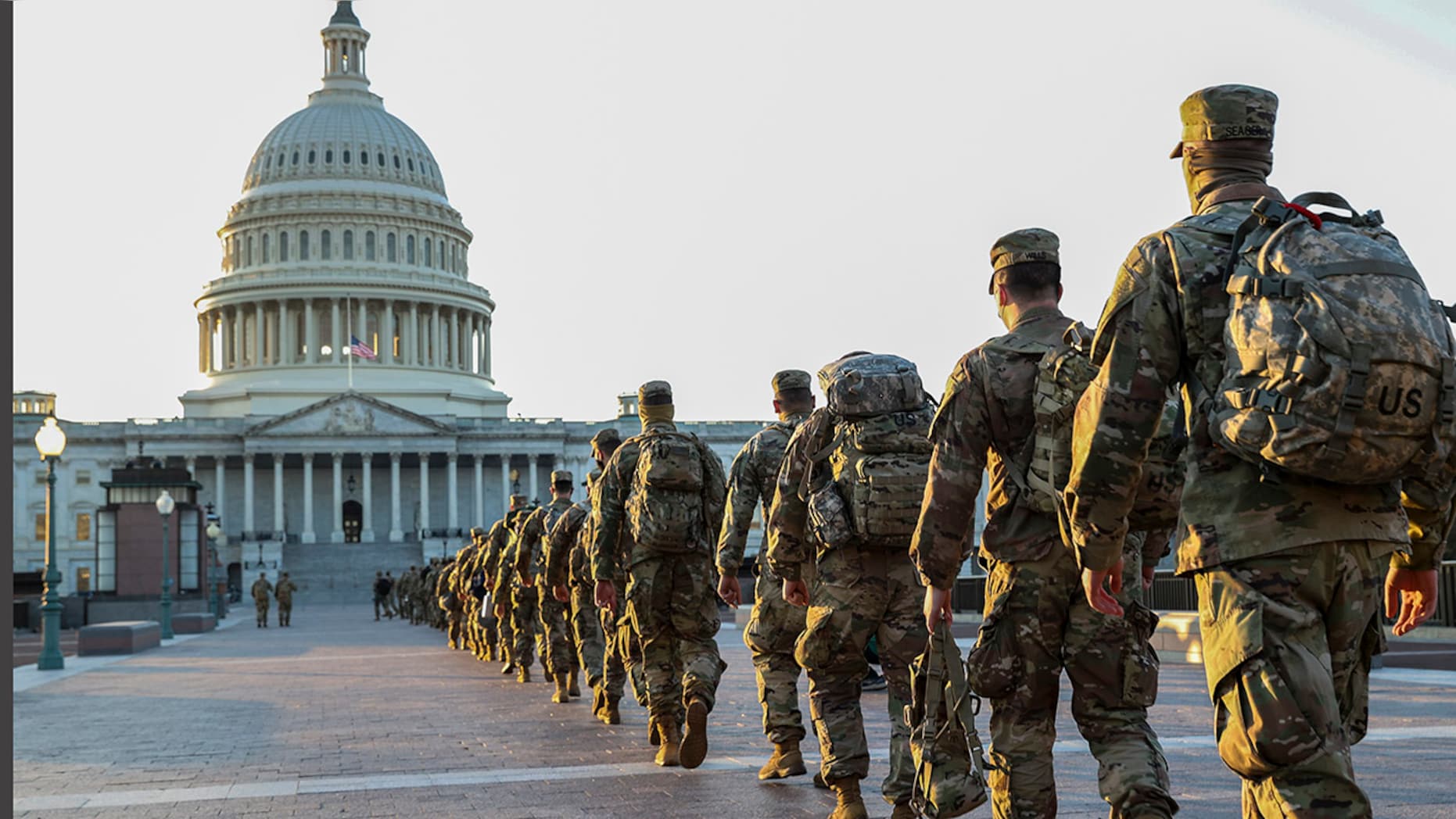
Meanwhile, members of the US National Guard have arrived in the U.S. Capitol in Washington, DC. The Pentagon is deploying as many as 15,000 National Guard troops to protect the inauguration on January 20, amid fears of new violence. These  15,000 troops equal 3 times the number of US troops in Iraq and Afghanistan combined.

My question is this: considering what is happening in Washington, what can Nigeria learn?

Comment from LinkedIn Feed

I don’t know what Nigeria could learn, because we are grouped in tribes, religions, not parties or political ideologies. Ethnicity and religion have the greatest weights in our case, so the real argument will disappear, once you turn it into ‘our person’ and ‘those that hate us’; from this point, everything is going downhill.

The National Assembly has encouraged or suggested to the president to change his service chiefs, and what did the latter do? Cold shoulder! If it were to be in the US, it’s enough reason to introduce Articles of Impeachment, just frame it as ‘the president is killing his compatriots’, the heat would be so much that meetings will be going on day and night, just to see how many congress people that could be placated. Try it here, magically, the DSS could barricade the Assembly Complex, the lazy Police and military will flood the roads as hawkers and people returning from a vigil.

America is America, if you push too much there, the same people previously supporting you would turn around and tell you that you are mad, suddenly, you are left in the cold. Their political experimentation has matured to the level that if you get too angry and think that people will be afraid of you, they even punish you the more.

Trump Impeached for Incitement of Insurrection

Product Analysis : Paylink

0

My personal definition of what the ideal business looks like is Microsoft. Microsoft is a largely organic (only went public because they had to) B2B business that produces software (asset light) that powers more than a million businesses worldwide.

I clearly have a bias for businesses in the B2B space. At US$2.17 trillion, Apple is one of the most valuable businesses in the world. And although Apple operates primarily in the B2C market segment, my definition of what a successful business looks like is still Microsoft.

There’s a very good reason for that; My personal bias towards B2B businesses means that I’d prefer to sell a US$10,000 product to 600 businesses (who are usually less price sensitive), and make US$6 million than try and sell a US$60 product to 100,000 people to make the same US$6 million.

In my opinion, the B2B market segment (especially in Africa) is one of the best segments to innovate, create and extract value from.

The closest business to Microsoft in the Nigerian tech space is SystemSpecs.

SystemSpecs

SystemSpecs is a leading provider of payment and human management technology in Nigeria.

However, the purpose of this article isn’t to talk about SystemSpecs as a business in itself, but to analyse its most recent addition to its product lineup – Paylink.

If you want to learn more about Systemspecs, I have a note you can follow up with to get some of the basics down. Here’s the link.

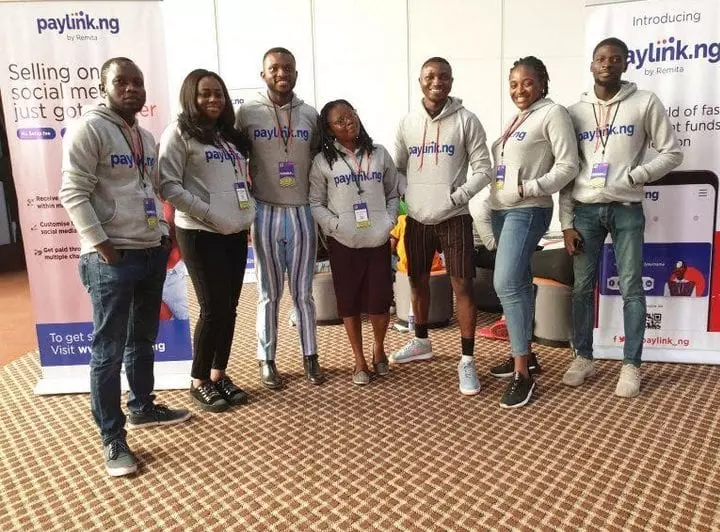
PayLink

Paylink is Systemspecs attempt to leave it’s primarily B2B and B2G market segment to innovate for the B2C market.

Paylink is a product that provides users with a special link they can share to customers and clients and receive payments with, rather than sharing their bank details for security reasons. Paylink also allows vendors innovatively display their products using the embedded customizable link.

Paylink is a free product with a caveat – all transactions are processed by Remita. Which is really just common sense; I cannot run poultry, and still go to buy chicken from an outside source.

The strategy (and idea) behind Paylink begins to look clearer – finding a way to route more payments through Remita.

Paylink’s Value Proposition

Paylink’s value proposition is built and hedged around safety – Paylink is a safer way to receive payments for services by businesses and institutions nationwide, with a large emphasis on SME (Small and Medium sized enterprises).

Paylink’s Trade Off

Ideally, every solution is a tradeoff. More than 1.3 million people die every year from car accidents. The probability of losing 0.00022% of the population annually is less scary (and embarrassing) than walking from Iyana Ipaja to Ikeja, or hopping on a horse (can road safety legally stop you from riding a horse to work?).

Paylink’s solution creates a tradeoff between security and experience.

Paylink sells security, but at the expense of a more arduous customer experience. As a rule of thumb, creating a better product experience is first and foremost seen in the amount of clicks you will need to make from origination to achieving the desired end results.

Platform businesses are very good at exploiting this – it is easier to read a LinkedIn article while you scroll through your feed than to have to visit an external site, or worse still type the link into your browser yourself.

Microsoft Teams had a massive scalable advantage over Slack because it was bundled in suite with Microsoft Office, and more than a million businesses worldwide use Office products.

Trading off experience isn’t necessarily a bad thing – large enterprises will likely choose a horrible customer experience (a complex product) that gives them better security than choose poor security with an overall admirable customer experience. The challenge is that the market Paylink targets are SMEs, and SMEs think in congruence with everyday customers.

Security Perception

The general perception of financial security in Nigeria is primarily; keep your card numbers, pin, and BVN a secret. Most people do not fear their bank account numbers being publicly displayed.

If there is a high chance a person will send you funds, you will (in most cases) usually have no problem with sharing your bank account number with that person.

Obviously, you don’t want to go around dropping your account number in public places (or hanging it on billboards to see who will miraculously send you money), but the perception that keeping that number a secret is high value security is not there, especially among everyday consumers.

Therefore, trading off a good customer experience (few clicks) for an arguable perception of security does not birth a great product. It births customer churn rates and apathy.

I perform most (if not all) of my banking transactions using USSD codes. By typing in a code and following a couple of quick prompts after that, I can send money to anyone in Nigeria without the need to step out of my house, or go to an ATM gallery.

That simple straightforward experience means a lot to me, and I do not intend to lose it for something else.

Paylink’s perception of security and its user’s perception of security may not be the same.

As much as I consider Systemspecs to be a phenomenal business (organically grown, great culture, and a strong B2B focus), I can’t help to believe that a lot of market research wasn’t carried out before building this product.

Marketing

Most people don’t know Systemspecs owns Remita, most people have never heard of Human Manager, and that’s fine really, businesses operating in the B2B space usually have the privilege of being discrete. Nobody really has to know you’re making money, just keep running your business. That’s why I describe Systemspecs as that quiet guy that nobody really knows makes any serious money, until you visit his 6 bedroom house in Parkview Estate Ikoyi and see a black 2020 Mercedes Maybach parked at one end, and a silver 2018 Porsche Cayenne parked at the other end.

When you operate a consumer product, it can’t be low key.

I personally don’t know anyone that knows Paylink, matter of fact I only became aware of its existence because I worked on a case study on Systemspecs some months back.

Systemspecs definitely needs to up their marketing on Paylink.

Final thoughts

It is easier to write than to build. Paylink doesn’t actually have the best all round integration – you only have an option of two banks for transfers, and the only wallet you have access to is Paga.

A person sending this link to a customer/client to make a payment ideally wants to make it as simple as possible for them to make a transaction, and not burden them in any way to avoid them changing their minds.

The major market for Paylink is SMEs, and most SMEs tend to think like consumers.

Way Forward

Redefine Paylink’s value proposition: you can’t tradeoff customer experience for a perception of security your target market doesn’t necessarily agree with.

Reduce customer touch points and experiences: the fewer the clicks an end user has to make to reach their desired goal, the better the consumer experience.

Scale up integrations: the more options end users have to pay for a service using Paylink, the better. Especially if it’s an option the end user in question already uses.

Scale up Marketing: if a tree falls in a forest, and nobody is around to hear it, does it make a sound? No matter how good a product is, if no one knows it exists, it creates very little tangible value. Find more effective marketing channels, and make the most of them.

Conclusion

Paylink is a phenomenal product, and with a proper redesign, I believe it can fully and properly achieve the goal it was designed for.


Inspired by the Holy Spirit


P.S: I recently signed up for Paylink, so this isn’t some random guy yapping into thin air, this is customer feedback.

P.S2: for consultation services, you can send a mail to the email below.

CAC Unveils DIY Services as New CAMA Takes Effect in Nigeria

0
CAC

The registrar of Corporate Affairs Commission (CAC), Alhaji Garba Abubakar said on Tuesday that the Commission has started the implementation of Allied Matters Act 2020, (CAMA 2020) as part of efforts to enhance the ease of doing business in Nigeria.

Abubakar made this known to the News Agency of Nigeria (NAN) in Abuja while disclosing other measures taken by CAC to implement CAMA and improve their standard of service. He said the Commission has launched a new self-service portal that allows for end-to-end electronic submission by customers.

The new CAMA, which was a repeal and replacement of the 1990 Companies and Allied Matters Act, generated a lot of controversy when it was signed into law back in Aug. last year, especially from religious organizations who said it will mean that the government will interfere in the affairs.

Experts believe that the new CAMA has merits that will foster economic development in Nigeria if they are duly implemented, while the federal government has assured concerned parties that they have nothing to worry about as the new Act is designed to foster economic development and not to victimize anyone.

Abubakar told NAN that as part of the implementation of the new CAMA which took effect on Jan. 1, the CAC has given registered companies until March 31 to update their information.

He said the implementation will remove some bottlenecks that had hindered the ease of doing business in the country, and the commission has upgraded its software to enable electronic registration and other functions of the commission that will hasten service delivery.

Finance Minister, Nigeria

“The Honourable Minister approved the Companies Regulation 2021 towards the end of December 2020 and the approval says it is effective from Jan. 1, 2020. Already the implementation has started and we have upgraded software that allows you to register your company electronically.

“The law has come with a lot of innovations and changes to some of the old provisions off CAMA 1990, so we need to make some changes to bring them up-to-date, consistent with the new law. We need to make necessary changes to the Registration software to accommodate the reforms introduced by the new law, and that took some time.

“The portal started working Jan. 3 and customers are already using it; so from the comfort of your home or using your own phone, you can now register your company,” he said.

Abubakar explained that among many positive changes that new CAMA will bring, it will strengthen the regulatory and oversight powers of CAC and provide for greater disclosure and accountability by registered entities.

He explained further that the CAC now has an integrated system that had reduced the time and processes for company registration, in line with Ease of Doing Business (EoDB) campaign of the federal government.

According to him, unlike previous procedures, where certificates were being printed by the commission and then sent to customers through designated courier services, the new system allowed for end-to-end electronic submission.

“When you file, you get your certificate electronically; and you can either print it or save it, and you get your certified extract, your certified Memorandum and Articles of Association electronically.

“For the first time, post-incorporation filings are also being done electronically, in the past they were done manually. The upgrade has also introduced a new interface that allows for post-registration; so when you register your company, you can change your directors without having to come to CAC.

“Unlike the formal system, where the applications are in silos, where you have different applications for registration, document upload and document archival, the new system is integrated,” he explained.

Abubakar said all documents issued after registration now come with a QR Code that allows one to scan to confirm their authenticity. He explained that the electronic system of operations allows officers of the commission to work from home, any day of the week, even during holidays.

“This is one the best innovations you can have anywhere in the world, as the system we have built is comparable to any other registry you can have anywhere in the world. In fact, our own is even different in so many areas, because as at today, there is no registry that uses QR Code for validation.

“Also, the public search is available once you can enter the name or address; it gives you information about such a company for free.

“If you want to view the details of the company, there is a paid service portion you can click on, where you can view such information for a fee of N1,000,” he said.

Abukakar explained that among other benefits, business owners can now register their companies without using the service of a lawyer or a third party. And as part of the reforms, an individual can now form and incorporate a private company.

However, while the progress recorded so far is being applauded, experts believe that the new CAMA will need more flexibility to attain its full potential.

“More flexibility is required for foreign companies who wish to operate business in Nigeria such that a branch registration should be permitted while incorporating a subsidiary will be optional,” said PwC Fiscal Policy partner Taiwo Oyedele.

For it to yield the needed result, it has to be harmonized with other laws such as the Companies Income Tax Act which still requires audited accounts by all companies regardless of size, he added.

Occupational Hazards of Sedentary Jobs

0
Oil workers

Every job has its hazards. However, not all job hazards are pronounced or believed to exist. One of the jobs in this category includes sedentary work, where workers have to sit down for more than eight every day.

Unknown to many people, sitting down for a long time affects one’s health. Workers, such as secretaries, front desk officers, software developers, writers, pilots, bus drivers, and so many others, face the risk of developing health complications as a result of their jobs. These workers must have discovered they experience certain challenges after sitting for a long time but they do not know how to complain about them because their jobs are believed to be less strenuous. Further, many managers do not allow desk officers to leave their desks, thereby making them sit all day, except for a few toilet breaks. This makes it imperative for both affected employees and their employers to understand the dangers of sitting for a long time at a stretch.

Dangers of Sitting for a Long Time

  1. Anxiety and Depression: Sitting in a place for a long time means the person will not be able to engage in small talks with colleagues or even ask them for directions towards solving a particular problem. When workers sit before their computers all day, they are bound to feel gloomy and lonely at a particular point in time. Anxiety can also set in as a result of work-related pressure, which could have been dissipated by the presence of colleagues and friends. But in situations where workers could not leave their desks, they are bound to experience depression and anxiety.
  2. Heart Diseases: Sedentary works prevent vigorous body movement. It causes a lack of exercise. As a result, sedentary workers burn few calories since they use less energy. This puts sedentary workers at the risk of excessive weight gain and obesity, which in turn leads to heart problems, such as hypertension, heart failure, cardiac arrest, and the rest. Diabetes has also been linked to sitting for a long time.
  3. Body Pains: It might sound ironic to state that sitting for a long time, without doing any strenuous activity, causes body pains. Sedentary workers can attest to experiencing back pain, neck stiffness and pain, and waist pain. These pains are caused by the body posture while sitting and the pressure placed on the waist. Those that use badly built seats are bound to experience more severe pains than those with more comfortable seats. Nevertheless, sitting for a long time puts the body in pain irrespective of the type of seat one sits on.
  4. Weak, Swollen, and Numb Feet and Legs: As a result of the inactivity that accompanies sitting, body fluid is retained at the feet and ankles. Further, the muscles of the legs tend to become weak since they are not exercised. Clots could also form in the legs and become fatal if they break and any of them finds its way to the lungs. You may also need to know that sitting (and standing) in a place for a long time could cause varicose veins. For professional evaluation and treatment of circulation problems such as varicose veins, you can visit Metro Vein Centers, where specialists provide advanced, minimally invasive vein care solutions.
  5. Cancer: Research is still on-going to determine why sitting for a long time leads to cancer of the colon, lungs, and uterine. However, associated weight gain is considered as the causative factor so far.

What You Should Do

You must have realized by now that the symptoms you are experiencing are the effects of your job type. By now, you should have acknowledged that sedentary works have their occupational hazards. But you don’t have to leave your jobs because of these hazards because you will meet one kind of risk or another wherever you go. So, you may need to do the things listed below to minimize these dangers posed by your job.

  1. Stand up every thirty minutes. When you do so, move around a little or simply stretch your muscles to allow blood flow to your legs and other parts of your body. Standing up will also ease the stress your sitting position placed on your waist and spine. Moving about will help to exercise your muscles and prevent stiffness, weak muscles, and pains.
  2. Work while standing. If your desk is high, or you have a high table or counter close-by, consider standing up for some minutes as you work. Remember that the essence of standing is to aid blood circulation and to ease pressure on some joints, so don’t stand in one position for long. Move your feet about now and then to relieve the pressure your weight placed on them and to trigger blood circulation.
  3. Exercise vigorously. Even though it has been discovered that sitting for a long time makes exercises ineffective, research has shown that intense physical activities that are done for at least one hour daily help to prevent heart diseases that might arise from inactivity for the rest of the day. These intense physical activities supply abundant oxygen to the body, which allows metabolism to take place and burn off calories while it does it so. Further, these physical activities make the heart pump faster, hence strengthening its muscles. So, find that one hour from your twenty-fours to keep your body and soul together.

Now that you have learnt the hazards of sedentary works, what do you plan to do with the information? This question is directed to bosses and supervisors, who insist their employees and subordinates must never leave their desks irrespective of any circumstances. If you are the one directly affected by this, let your bosses receive the information as you do your best to relieve the symptoms you are experiencing.