We onboarded a special partner today. The client, a midsize microfinance bank, has outsourced its business training school to Tekedia Institute. We are very thankful because now its workers will learn of things happening in Lagos, and not just esoteric cases in New York and London via training packages developed somewhere in New York with no relationship to the business climate in Nigeria.
And the fun part: all the Executive Directors are now faculty along with the CEO in their School@Tekedia Institute. We worked with them to develop their courses and maintained that if they want the mission to work, they need to teach the team. The time of outsourcing to London and New York via mass training packages is over!
I want to speak with you on how to bring a part of your company training program into Tekedia Institute. Outsource it to us; the courseware will be uniquely designed and developed for your needs. There will be a timetable with HR when the team members will be going for training.
The way to learn has changed; adapt and thrive. Contact my team today.
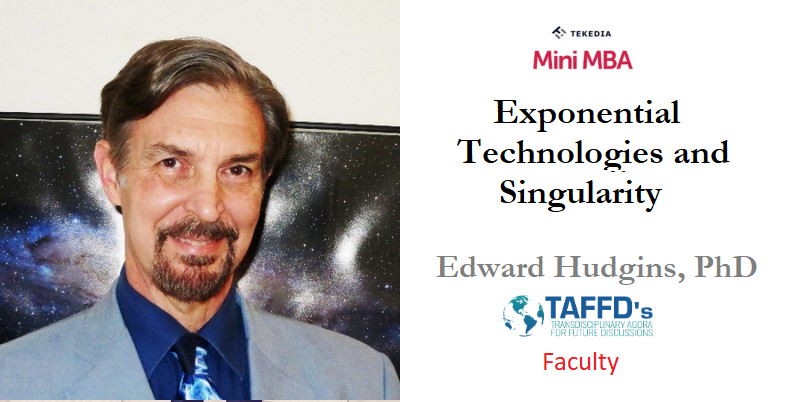
A course he co-developed at Tekedia Institute has been turned into a book, titled “Seizing Our Singularity Future” [available at Amazon here ] . Edward Hudgins, PH.D teaches “Exponential Technologies and Business Opportunities in the Age of Singularity” within our “Exponential Technologies and Singularity” course.
Dr. Hudgins comes from Transdisciplinary Agora for Future Discussions Inc. ( TAFFD’s ) , Georgia, USA where they look at technologies in the horizon of decades. The key essence of this course is to help our community deepen their understanding of possibilities of the future as technology reshapes the constructs of market systems and competition.
Hudgins has a B.A. in government from the University of Maryland, an M.A. in political theory from American University, and a Ph.D. in political philosophy and international political economy from the Catholic University of America. He has taught at universities in the United States and Germany.
Learn from the best, attend Tekedia Institute by registering here.
Beat the early bird registration deadline this weekend for Tekedia Mini-MBA (Feb 8 – May 3, 2021). Do it by Sunday for all the amazing benefits: books, Facyber cybersecurity courses (management, policy, tech, etc), special weeks, and more. Our program is online, self-paced, and costs $140 (or N50,000 naira).
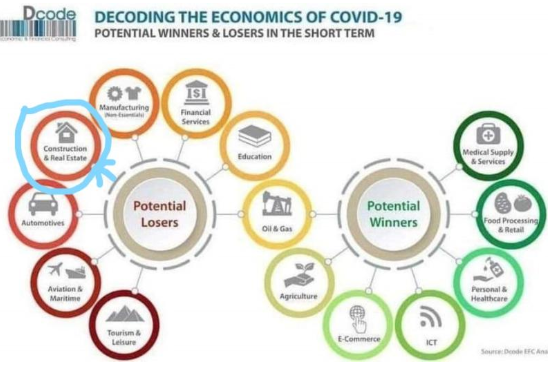
The first and the last time to start immersive facilities management practice in Nigeria is now. From late 2019 to 2020, businesses and individuals experienced how pandemic can disrupt every aspect of the society. In developed and developing countries, the first 15 days of 2021 has indicated that more need to be done in making society works for businesses and individuals in the face of ravaging COVID-19. Available reports about the disease impacts across the world are not positive. People are dying. Businesses are losing revenue.
As Nigeria continues to have her pie of the impact, immersive facilities management practice is becoming more necessary now than the year we envisaged it would come into reality in Nigeria [outcomes of the research have not been published]. Immersive within the context of smart business operation practice has been seen as deeply engaging, multisensory and digitally driven by Deloitte, a global management consulting company. According to the management guru, using virtual reality, automated reality, 360° video, mixed reality, and other technologies have the potential of creating a sustainable superior client experience. Unity 3D and Photon Unity Networking are also available.
Among the numerous technologies available for IFM practice, virtual reality remains the most appropriated. It enables co-value creation and co-experience sharing. In places, where it is adopted, building users, facilities managers, vendors and designers usually walk together in the same ‘virtual building’.
When these stakeholders are together fun and imaginations about the building are explored. These experiences are not totally neglected in the current FM practice. However, the pandemic has pushed the need for adoption and implementation of immersive FM practice, which will encourage the utilization of interactive tools for maintenance of critical, soft and hard facilities. When immersed in virtual reality, facilities managers, users and owners of facilities would be more protected from contracting the disease.
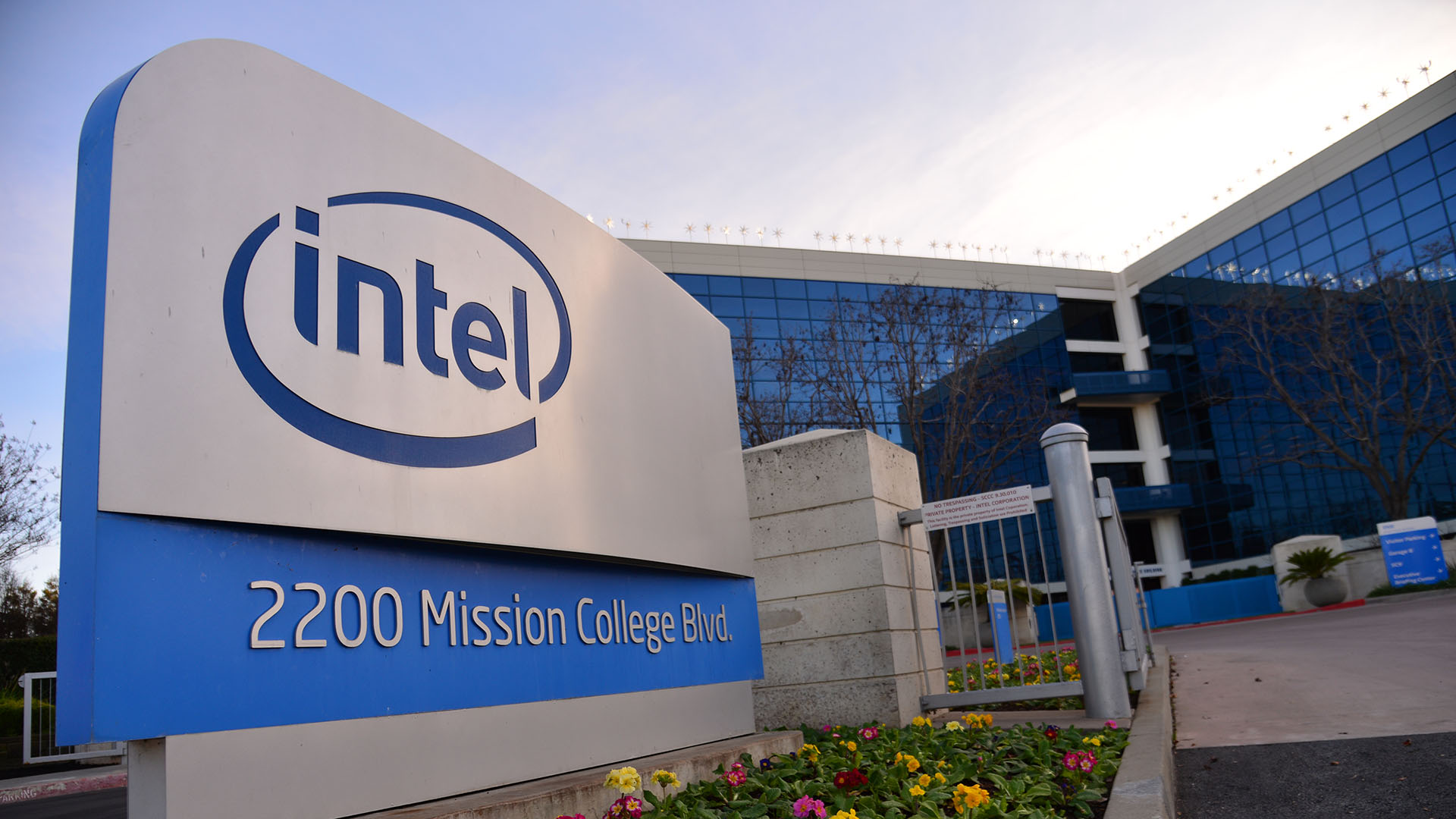
The Robert Noyce Building in Santa Clara, California, is the world headquarters for Intel Corporation. This photo is from Jan. 23, 2019. (Credit: Walden Kirsch/Intel Corporation)
Poor Intel. It used to be the best company for the finest designers in the game of electronics. Intel was unrivalled on innovation, financial warchest and partnership capabilities. Simply, with “Intel Inside”, the world ran on Intel. I admired the company and received a job offer from it. I later decided to go with Analog Devices as they promised to put me in the Apple Product Team, creating a sensor for the iPhone.
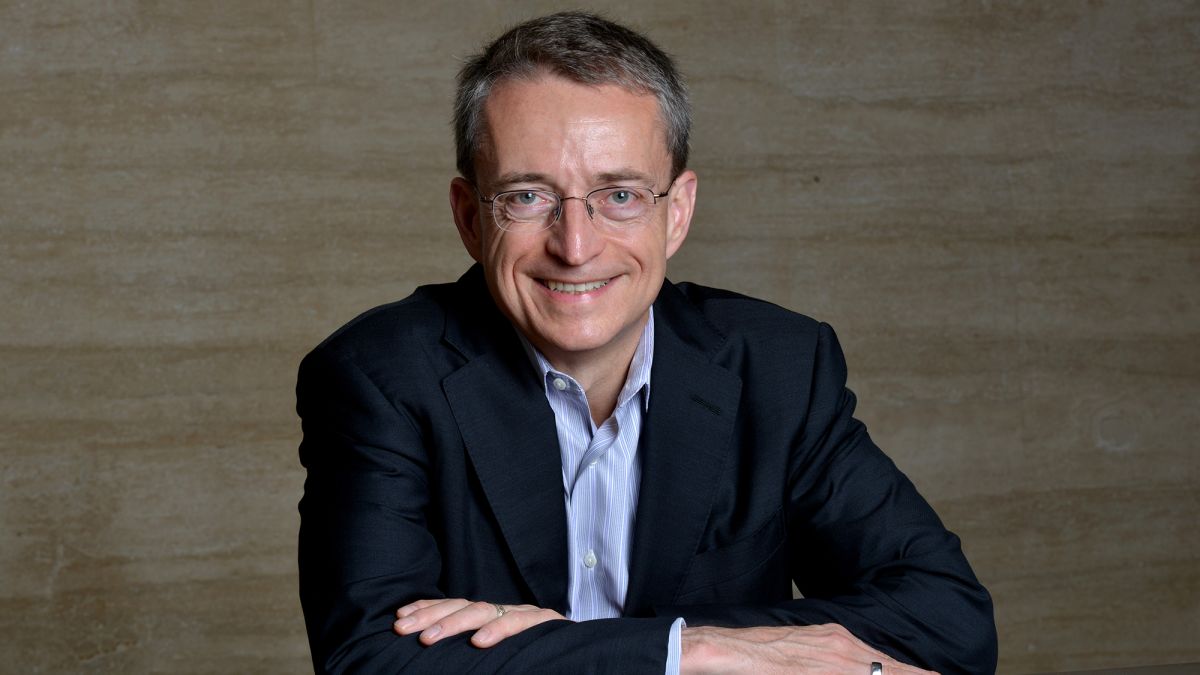
In a “surprise move,” Intel is parting ways with its CEO Bob Swan. The tech giant announced it will be bringing back its former CTO Pat Gelsinger, who is the current chief at VMware, effective Feb. 15. The chipmaker has had a number of recent fumbles, including losing the title of America’s most valuable semiconductor company to Nvidia last year. The Wall Street Journal reports the change in leadership brings the company “closer to its engineering roots.” (source)
But that old Intel has been severely wounded. Call it a double whammy: AMD/Nvidia innovation angle on pure circuit combination on one side, TSMC on the manufacturing side. With TSMC, the castle of Intel was stolen because what made it special – the manufacturing prowess- now looks ordinary. Yes, anyone can design and send toTSMC to fabricate, Intel or no Intel, and with that, Intel’s moat was broken and many companies went into its castle. Magically, Intel has competitors from all angles and it is finding it hard to catch up. The financial advantage, over competitors, muted by an outsourced foundry in Taiwan!
Intel has been disintermediated by TSMC with its legendary manufacturing moat dismantled by the global contract chip manufacturer. The implication is that the castle which Intel has protected for decades is largely vulnerable now. Nvidia does not build big foundries but focuses on R&D designs while its manufacturing partners make the chips. It is a leader in modern chips for datacenters, gaming, AI and more. If ARM goes to Nvidia, it will pick a huge part of the mobile sector, and if that happens, Intel will bleed for years.
On the circuit side, Nvidia has created a new basis of competition on its industry-leading GPU. AMD has also resurrected and mounting real challenges in the industry. With ARM under the arm of NVIDIA, Intel is under severe frontal and flank attacks. No wonder, Intel wants to return back to what made it powerful: engineering.
So, Intel has brought its former legendary CTO as the new CEO. Bob Swan is gone and Pat Gelsinger is back from VMWare. Expect good things to happen. Intel will begin to win on engineering and that will show in the financials. That is how engineering companies win, not on shiny commercials.