
DD
MM
YYYY

PAGES

DD
MM
YYYY

spot_img

PAGES

Home Blog Page 6

Anthropic Releases Beta Version of its New Claude Security AI Tools

0

The release of Claude Security in public beta by Anthropic marks a significant inflection point in the evolution of enterprise cybersecurity. As artificial intelligence systems grow more capable—not only in generating software but also in identifying and exploiting its weaknesses—the need for equally advanced defensive tools has become urgent.

At its core, Claude Security is an AI-powered system designed to scan software repositories for vulnerabilities and automatically generate patches. Unlike traditional security tools that rely heavily on static analysis and predefined rules, Claude Security applies reasoning capabilities akin to those of a human security researcher. It can trace data flows, interpret business logic, and analyze how different components of a system interact, enabling it to detect complex and previously overlooked vulnerabilities. This shift from pattern matching to contextual reasoning is crucial, as modern software systems are too intricate for rule-based systems alone to adequately protect.

The timing of this release is not incidental. AI models have recently demonstrated an unprecedented ability to uncover software flaws at scale, raising concerns that malicious actors could leverage similar technologies to accelerate cyberattacks. Anthropic itself has acknowledged that future AI systems may be capable of autonomously discovering and exploiting vulnerabilities with minimal human intervention.

Claude Security is positioned not merely as a productivity tool, but as a defensive necessity—an attempt to tilt the balance of power back toward defenders in an increasingly automated threat environment. Claude Security builds upon earlier iterations such as Claude Code Security, which began as a research preview earlier in 2026. The transition from preview to enterprise beta signals a maturation of the technology, with expanded features tailored for organizational use.

These include scheduled and targeted scans, integration with audit systems, and workflows for tracking and validating identified issues. The system is also designed to fit seamlessly into existing development pipelines, allowing security teams to incorporate AI-driven analysis without overhauling their infrastructure. A defining feature of Claude Security is its ability to not only identify vulnerabilities but also propose actionable fixes.

This closes a critical gap in traditional security workflows, where detection and remediation are often handled by separate tools and teams. By generating patches automatically, Claude Security reduces the time between discovery and resolution—an essential advantage in a landscape where the window between vulnerability disclosure and exploitation continues to shrink. However, Anthropic emphasizes a human-in-the-loop approach, advising organizations to review AI-generated patches before deployment, particularly in mission-critical systems.

The enterprise focus of the beta release is also noteworthy. Large organizations, with their sprawling codebases and complex dependencies, stand to benefit the most from AI-driven security tools. By initially limiting access to Claude Enterprise customers, Anthropic can refine the system in high-stakes environments while gathering feedback from sophisticated users. Broader availability to smaller teams and individual developers is expected in the future, indicating a phased rollout strategy.

Beyond its immediate utility, Claude Security reflects a broader trend toward the specialization of AI systems. Rather than serving as general-purpose assistants, models are increasingly being tailored for specific domains such as cybersecurity, finance, and scientific research. This specialization allows for deeper integration with domain-specific workflows and higher performance on targeted tasks.

In the case of cybersecurity, it also introduces new ethical and regulatory considerations, particularly around the dual-use nature of vulnerability discovery technologies. The launch of Claude Security in enterprise beta underscores the growing convergence of artificial intelligence and cybersecurity. As AI continues to reshape both offensive and defensive capabilities, tools like Claude Security will play a critical role in determining how organizations adapt to this new reality.

Japanese Exchange Group Signals 2027 Timeline for Introduction of ETFs

0

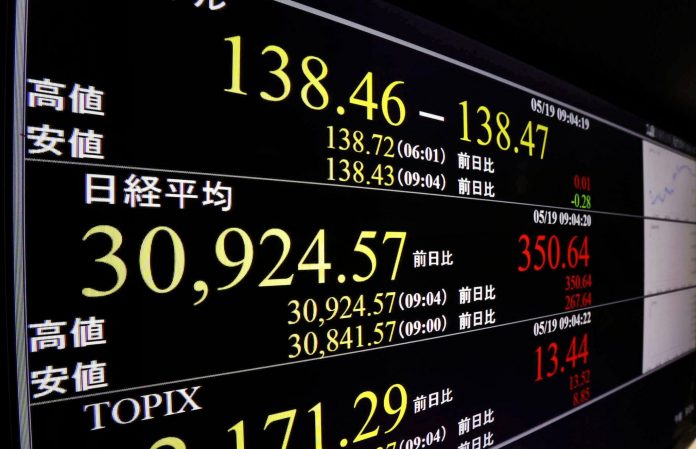
Japan’s financial sector is once again positioning itself at the frontier of regulated digital asset adoption, as the Japan Exchange Group (JPX) signals a potential timeline of 2027 for the introduction of crypto exchange-traded funds (ETFs). This development reflects a broader recalibration of Japan’s stance toward cryptocurrencies—one that balances its historically cautious regulatory posture with the growing global momentum behind institutional crypto products.

At its core, the move toward crypto ETFs represents an effort to bridge traditional finance (TradFi) and the digital asset ecosystem. ETFs are widely regarded as one of the most accessible and regulated investment vehicles, allowing retail and institutional investors to gain exposure to underlying assets without directly holding them. In the case of cryptocurrencies, this eliminates many of the operational and security challenges associated with custody, private keys, and exchange risks.

For Japan, a country with a strong retail investor base and a deeply structured financial system, this format offers a pragmatic pathway to mainstream crypto participation. The timeline of 2027 is notable. Unlike jurisdictions that have moved more rapidly—such as the United States with its approval of spot Bitcoin ETFs—Japan appears to be taking a methodical approach. This reflects lessons learned from past incidents, including major exchange hacks that shaped the country’s regulatory framework.

Japanese authorities, particularly the Financial Services Agency (FSA), have historically prioritized investor protection and systemic stability over rapid innovation. As a result, the JPX’s target date suggests a phased strategy involving legal adjustments, tax reforms, and infrastructure readiness. One of the key barriers to crypto ETF adoption in Japan has been the existing classification and taxation of digital assets.

Cryptocurrencies are currently treated as miscellaneous income, subject to relatively high tax rates compared to capital gains on traditional securities. For crypto ETFs to gain traction, there will likely need to be a reclassification that aligns them more closely with equities or investment funds. Such a shift would not only enhance investor appeal but also create parity with global markets, where tax efficiency plays a significant role in capital allocation decisions.

Another dimension of JPX’s strategy involves market infrastructure. Launching crypto ETFs requires robust pricing mechanisms, reliable custody solutions, and transparent reporting standards. Given the volatility and fragmentation of crypto markets, establishing a benchmark index that meets institutional standards is no trivial task. Japan’s exchanges and financial institutions will need to collaborate closely with global liquidity providers and blockchain analytics firms to ensure price integrity and risk management.

The competitive landscape also cannot be ignored. Financial hubs such as Hong Kong and Singapore are actively advancing their own digital asset frameworks, aiming to attract capital and talent in the crypto space. Japan, while a pioneer in early crypto adoption, has in recent years ceded some ground due to regulatory rigidity. The JPX’s crypto ETF initiative can be seen as part of a broader effort to reassert its relevance in the evolving financial order.

By offering a regulated and trusted environment, Japan could differentiate itself from less stringent jurisdictions and appeal to risk-averse institutional investors. From a macroeconomic perspective, the introduction of crypto ETFs in Japan could have significant implications for capital flows. Institutional participation tends to bring deeper liquidity and reduced volatility over time, although it can also increase correlation with traditional markets.

For Japanese investors, who have long operated in a low-yield environment, crypto ETFs may offer an alternative avenue for diversification and return enhancement. However, risks remain. Regulatory uncertainty, global market fluctuations, and technological vulnerabilities could all impact the success of such products. Moreover, the philosophical tension between decentralized assets and centralized financial instruments persists.

Crypto ETFs, while convenient, may dilute some of the core principles of self-custody and financial sovereignty that underpin the crypto movement. JPX’s 2027 target for crypto ETFs represents a calculated and strategic step toward integrating digital assets into Japan’s financial mainstream.

By prioritizing regulatory clarity, investor protection, and infrastructural robustness, Japan is aiming not just to participate in the crypto economy, but to shape its institutional evolution. Whether this measured approach will position Japan as a leader or a laggard in the global race remains to be seen, but it undeniably marks a pivotal moment in the convergence of traditional and digital finance.

PayPal Elevates Crypto into its Core Business Segments

0

PayPal’s decision to elevate cryptocurrency into one of its three core business segments marks a pivotal shift in both its corporate strategy and the broader evolution of digital finance. Once viewed as an experimental or peripheral offering, crypto is now being positioned alongside PayPal’s traditional payments and merchant services as a foundational pillar of its future growth.

This move reflects not only the maturation of the cryptocurrency market but also the increasing convergence between conventional financial infrastructure and blockchain-based systems. For years, PayPal has operated as a dominant force in digital payments, facilitating seamless transactions for consumers and merchants worldwide. Its core strengths have historically revolved around payment processing, peer-to-peer transfers, and merchant checkout solutions.

However, the rapid rise of cryptocurrencies such as Bitcoin and Ethereum—and the growing demand for decentralized financial tools—has compelled established fintech firms to rethink their value propositions. By formally integrating crypto into its core structure, PayPal is signaling that digital assets are no longer a niche interest but a permanent fixture in global finance.

This strategic shift did not happen overnight. PayPal first entered the crypto space by enabling users to buy, hold, and sell select digital assets within its platform. It later expanded these capabilities to include crypto payments, allowing users to check out with digital currencies that are automatically converted into fiat for merchants. These early steps served as a testing ground, helping the company gauge user demand, regulatory challenges, and technical feasibility.

The decision to elevate crypto to a core segment suggests that these experiments have yielded sufficient confidence in both user adoption and long-term viability. One of the key drivers behind this move is the changing behavior of consumers, particularly younger demographics who are more inclined to view cryptocurrencies as both an investment vehicle and a medium of exchange. By embedding crypto more deeply into its ecosystem, PayPal can capture this growing user base and increase engagement across its platform.

This integration also opens the door to new revenue streams, including transaction fees, custody services, and potentially staking or yield-generating products, depending on regulatory frameworks. From a competitive standpoint, PayPal’s decision positions it more aggressively against both traditional financial institutions and emerging crypto-native platforms. Companies like Coinbase and Binance have built their businesses entirely around digital assets, while banks are increasingly exploring tokenization and blockchain infrastructure.

By making crypto a core segment, PayPal is effectively bridging these two worlds, leveraging its existing scale and trust to compete in a rapidly evolving landscape. Regulation remains a critical factor in shaping the trajectory of this strategy. The global regulatory environment for cryptocurrencies is still fragmented, with different jurisdictions adopting varying approaches to oversight, taxation, and consumer protection. PayPal’s established compliance infrastructure gives it an advantage in navigating these complexities, but it also means the company must remain cautious and adaptive.

Its ability to work within regulatory boundaries while still innovating will be a key determinant of success. Another important dimension is the potential for PayPal to integrate stablecoins and blockchain-based payment rails into its core operations. Stablecoins, which are pegged to fiat currencies, offer a compelling use case for reducing transaction costs and settlement times, particularly in cross-border payments. If PayPal can effectively incorporate these technologies, it could significantly enhance the efficiency of its payment network while maintaining price stability for users.

PayPal’s elevation of cryptocurrency to one of its three core segments represents a strategic acknowledgment of the digital asset economy’s permanence and potential. It underscores a broader industry trend in which the lines between traditional finance and decentralized systems are increasingly blurred. While challenges remain—particularly in regulation and market volatility—the move positions PayPal at the forefront of a financial transformation that is likely to define the next decade.

U.S. Authorities Seized $450M of Iranian-linked Cryptocurrency

0

The seizure of $450 million worth of Iranian-linked cryptocurrency by U.S. authorities marks a significant escalation in the ongoing financial and geopolitical contest between Washington and Tehran. It underscores how digital assets—once heralded as tools of decentralization and financial freedom—have increasingly become entangled in global enforcement regimes, sanctions compliance, and statecraft.

Far from existing outside the reach of governments, cryptocurrency networks are proving to be highly traceable, and in some cases, more transparent than traditional financial systems. At the center of this development is the U.S. government’s effort to enforce longstanding sanctions imposed on Iran. These sanctions are designed to limit the country’s access to global financial markets, constraining its ability to fund activities deemed destabilizing, including military programs and regional proxy operations.

Over time, Iran has sought alternative channels to bypass these restrictions, with cryptocurrency emerging as a particularly attractive option. Its borderless nature, combined with the relative ease of setting up wallets and conducting peer-to-peer transactions, made it an appealing tool for evasion.

However, the assumption that crypto transactions are anonymous has repeatedly proven flawed. Blockchain analytics firms, working alongside law enforcement agencies, have developed sophisticated tools capable of tracing transaction flows across wallets and exchanges. In this case, investigators were able to link a network of wallets to entities associated with Iranian financial operations. Once identified, these funds—often held on centralized exchanges or routed through identifiable intermediaries—became vulnerable to seizure.

The scale of the $450 million confiscation is notable. It reflects not only the growing reliance on cryptocurrency within sanctioned economies but also the increasing effectiveness of enforcement mechanisms. For U.S. authorities, such actions serve a dual purpose: disrupting illicit financial flows while sending a clear deterrent signal to other actors attempting similar strategies. It demonstrates that even decentralized systems are not immune to centralized intervention when chokepoints—such as exchanges, custodial services, or infrastructure providers—are involved.

This development also raises broader questions about the evolving role of cryptocurrency in global finance. While proponents argue that digital assets empower individuals and reduce dependence on traditional institutions, governments view them through a more pragmatic lens. Cryptocurrencies are now part of the financial system’s perimeter, subject to regulation, surveillance, and enforcement.

The increasing integration of compliance tools, such as Know Your Customer (KYC) and Anti-Money Laundering (AML) protocols, reflects this shift. For Iran, the seizure represents both a financial setback and a strategic challenge. The country has invested in cryptocurrency mining and blockchain initiatives as part of its broader effort to mitigate the impact of sanctions. Losing access to such a substantial pool of funds not only weakens these efforts but also highlights the vulnerabilities inherent in relying on digital assets for state-level financial maneuvering.

It may prompt a reassessment of how such tools are deployed in the future, potentially pushing activities further into decentralized or privacy-enhancing technologies—though these come with their own limitations and risks. On the global stage, the incident reinforces the growing convergence between technology and geopolitics. Cryptocurrency is no longer a niche domain confined to traders and technologists; it is a battleground where issues of sovereignty, compliance, and power projection play out.

The ability of the U.S. to identify, track, and ultimately seize these assets illustrates the enduring influence of its regulatory and enforcement apparatus, even in ostensibly decentralized ecosystems. The $450 million seizure is more than a headline figure—it is a case study in the maturation of cryptocurrency as both a financial instrument and a regulatory challenge. It highlights the tension between decentralization and control, innovation and oversight.

Crypto Card Spending Surged Past $600M in April 2026

0

The rapid evolution of cryptocurrency from a speculative asset class into a functional medium of exchange has reached a notable milestone: crypto card spending has surged past $600 million in a single month, marking a new all-time high. This development underscores a broader shift in how digital assets are being integrated into everyday financial activity, moving beyond trading and investment into real-world consumption.

At the core of this trend is the growing adoption of crypto-linked debit and credit cards. These products, typically issued through partnerships between fintech firms and traditional payment networks, allow users to spend cryptocurrencies such as Bitcoin, Ethereum, or stablecoins seamlessly at merchants worldwide. Behind the scenes, the crypto is often converted into fiat currency at the point of sale, enabling compatibility with existing payment infrastructure. For consumers, this abstraction removes much of the friction historically associated with using digital assets for purchases.

Several structural factors are driving this surge in spending. First, the maturation of the crypto ecosystem has significantly improved user experience. Wallet interfaces are more intuitive, transaction speeds have increased on many networks, and fees—while still variable—are increasingly predictable. These improvements reduce the cognitive and operational barriers that previously discouraged everyday usage.

Second, the proliferation of stablecoins has played a pivotal role. Unlike volatile cryptocurrencies, stablecoins are pegged to fiat currencies, most commonly the US dollar. This stability makes them far more suitable for transactional use. Consumers are more willing to spend assets that maintain consistent purchasing power, and merchants are more comfortable accepting them, even indirectly via card rails.

Third, incentives offered by card issuers have accelerated adoption. Cashback rewards, often denominated in crypto, create a compelling value proposition. In some cases, these rewards exceed those offered by traditional credit cards, effectively subsidizing user acquisition and encouraging higher transaction volumes. This mirrors the early growth strategies of fintech disruptors, where aggressive incentives were used to bootstrap network effects.

Geographically, crypto card usage is expanding beyond early adopter markets. While North America and Europe remain dominant, emerging markets are increasingly contributing to transaction volume. In regions with unstable local currencies or limited access to banking infrastructure, crypto cards provide a hybrid solution: exposure to digital assets combined with the usability of global payment networks. This dual functionality is particularly valuable in economies where inflation erodes purchasing power and financial inclusion remains uneven.

However, the growth in crypto card spending is not without its complexities. Regulatory uncertainty continues to loom over the sector. Different jurisdictions have varying stances on crypto usage, taxation, and compliance requirements. For instance, in some countries, each crypto-to-fiat conversion at the point of sale may constitute a taxable event, complicating the user experience and potentially dampening adoption.

Additionally, the reliance on centralized intermediaries—such as card issuers and payment processors—introduces counterparty risk. While the underlying ethos of cryptocurrency emphasizes decentralization, crypto cards inherently depend on traditional financial rails. This creates a hybrid model that, while practical, diverges from the original vision of peer-to-peer electronic cash systems.

Security is another critical consideration. As transaction volumes increase, so does the attractiveness of these platforms to malicious actors. Ensuring robust security measures, including multi-factor authentication and secure custody solutions, is essential to maintaining user trust and sustaining growth.

Despite these challenges, the trajectory is clear: crypto is increasingly being used not just as a store of value, but as a medium of exchange. The $600 million milestone in monthly card spending is less a peak and more a signal of accelerating integration between digital assets and the global financial system.

In the long term, the continued convergence of crypto infrastructure with traditional payment networks could redefine consumer finance. As usability improves, regulatory frameworks solidify, and incentives evolve, crypto card spending may transition from a niche behavior into a mainstream financial habit—one that reflects the broader digitization of money itself.