DD
MM
YYYY

PAGES

DD
MM
YYYY

spot_img

PAGES

Home Blog Page 6007

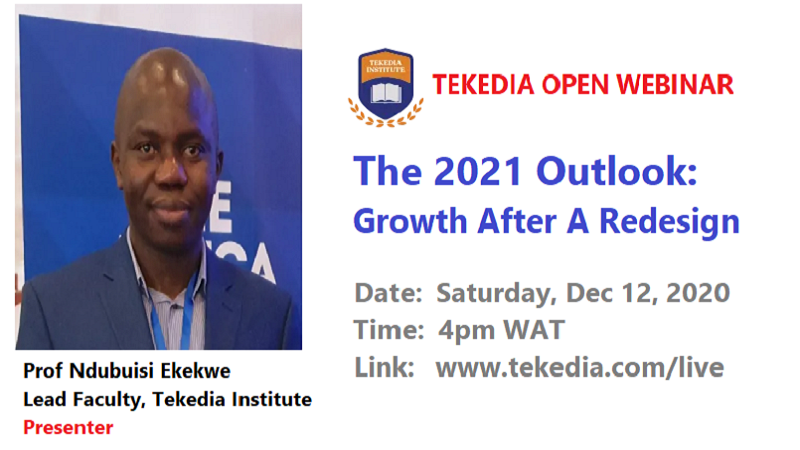
Webinar Invitation: The 2021 Outlook – Growth After A Redesign

0

Greetings. The Tekedia Institute has worked with thousands of innovators, companies and public institutions in 2020. Through co-creation and co-learning, we deepened capabilities, and advanced the knowledge of our members, on the mechanisms to efficiently utilize factors of production, to fix market frictions. Our overriding theme has been innovation, growth and digital execution.

As 2020 passes, we are now looking forward to 2021. In Nigeria and across Africa, we see 2021 as the Year of Accelerated Growth, especially for tech-anchored businesses. Massive opportunities would be unlocked as technology continues to transform markets and economies. In an upcoming Harvard Business Review article, I asked: how can companies capture value? Yes, what do firms need to do to advance their missions despite the structural redesigns in today’s market systems, after Covid-19?

During 2020 Tekedia Mini-MBA, we held 162 exclusive webinars, anchored by executives from Coca Cola, Shell, Schlumberger, Deloitte, Access Bank, Infoprive, TAFFDs USA, Jobberman, etc. The last of the year will be open, and for everyone. It is scheduled as follows to prepare for 2021:

TopicThe 2021 Outlook in Nigeria, Africa & Global: Growth After A Redesign

Date:  Saturday, Dec 12, 2020

Time: 4pm – 5.30pm  WAT

Webcast Link: https://www.tekedia.com/live/

Speaker: Prof Ndubuisi Ekekwe, Lead Faculty, Tekedia Institute

Prof Ndubuisi Ekekwe invented and patented a robotic system which the United States Government acquired assignee rights. Dr Ekekwe holds two doctoral and four master’s degrees including a PhD in engineering from Johns Hopkins University, USA. He earned an undergraduate degree from FUT Owerri where he graduated as his class best student. While in Analog Devices Corp, he co-designed an accelerometer for the iPhone. A recipient of IGI Global “Book of the Year” award, a TED Fellow, IBM Global Entrepreneur and World Economic Forum Young Global Leader, Prof. Ekekwe has held professorships in Carnegie Mellon University and Babcock University, and served in the United States National Science Foundation Committee. Since 2009, the Chairman of Fasmicro Group which holds stakes in at least 30 startups and entities has been writing in the Harvard Business Review. He was recognized by The Guardian as one of 60 Nigerians Making “Nigerian Lives Matter” on Nigeria’s 60th Independence Day. 

About Tekedia Institute

Tekedia Institute is a US/Nigeria-based institution with focus on business management and leadership. We offer training and advisory services for individuals, corporations, organizations and governments around the world. Our programs include Tekedia Mini-MBA, Advanced Diploma programs, etc. You can learn more and register for upcoming programs here: https://school.tekedia.com/
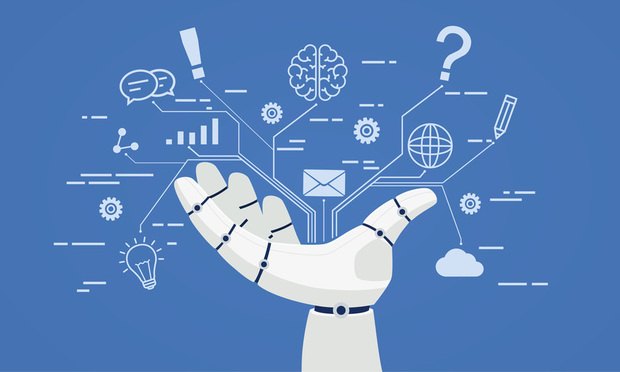
Nigeria: Securing Jobs of the Future, Smart Business Operations with Rain Knowledge and Skills

0
AI would anchor many areas of legal practice (souce: law)

Everything is being disrupted by emerging technologies. These technologies are being developed by humans to collect and create jobs for humans. This is a double edge sword for the humanity, according to experts. Artificial intelligence, which is usually referred to machine intelligence is an intelligence displayed by machines in dissonance to the natural intelligence displayed humans and animals.

As noted earlier, RAIN when it is highly adopted in developing countries as it being used in some advanced countries will be replacing jobs in the future. Robotics and artificial intelligence will permeate wide segments of daily life by 2025. Among the experts, expectation is that RAIN will significantly collect jobs from workers working in industries such as agriculture, construction, health, and manufacturing.

The demand for workers who understand the nitty-gritty of developing robotics and machine learning products will rise. Already, we have seen how Zenvus, one of the AI driven products from Nigerian inventor, Professor Ndubuisi Ekekwe, is encouraging African farmers to embrace smart farming practice. Zenvus monitors farms with electronic sensors communicated via GSM, WIFI or Satellites to cloud servers.

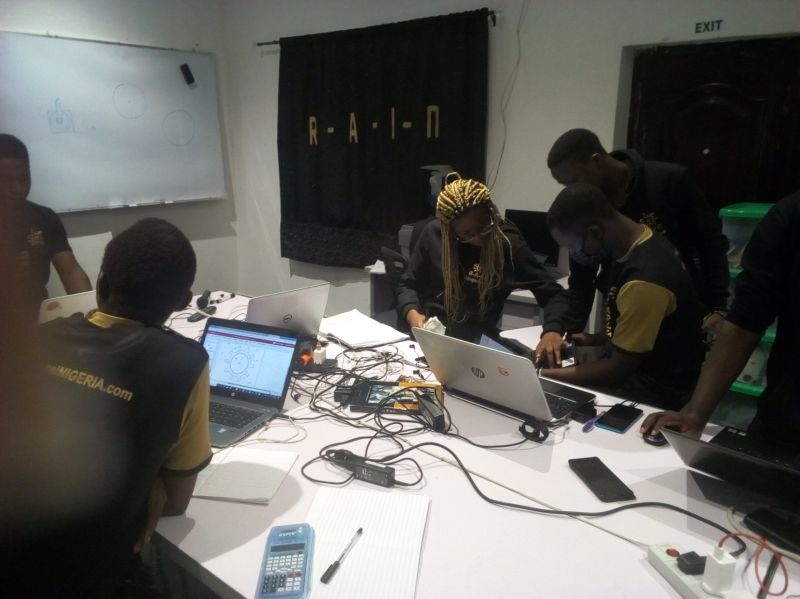
Students, learning one of Robotics and Artificial Intelligence courses in Ibadan

In our experience, we have learnt that interest in learning RAIN is growing across cities and towns with required infrastructure and learning environment. Abuja, Port-Harcourt and Ibadan are coming up, joining Lagos, which has been the centre of information technology for years. We have also discovered that RAIN has a future in emerging cities such as Ibadan, where Robotics and Artificial Intelligence [RAIN] centre is located. A recent visit to the centre by our analyst indicates that it has what it takes to produce competent robotics engineers and artificial intelligence experts for Nigeria, especially Ibadan.

While launching national centre for Artificial Intelligence and Robotics learning in Abuja, Dr Isa Pantami, Minister of Communications and Digital Economy, said: “Artificial Intelligence is the refinery of the digital economy and Robotics is very useful in supporting companies as they carry out repetitive tasks. These are two very important emerging technologies that will shape the face of future technologies and we have decided to be proactive to enable us to play a key role in how these technologies evolve.

“The Fourth Industrial Revolution, fuelled by Big Data, propelled by robust computing capacity, advanced software and Artificial Intelligence is ushering new ways of living, well-being, learning, travelling and working. Its innovative use-cases are quickly changing lives for the better and creating new types of jobs.’’


4 Things To Drive Tech Growth in Nigeria, Africa in 2021 [Video]

0
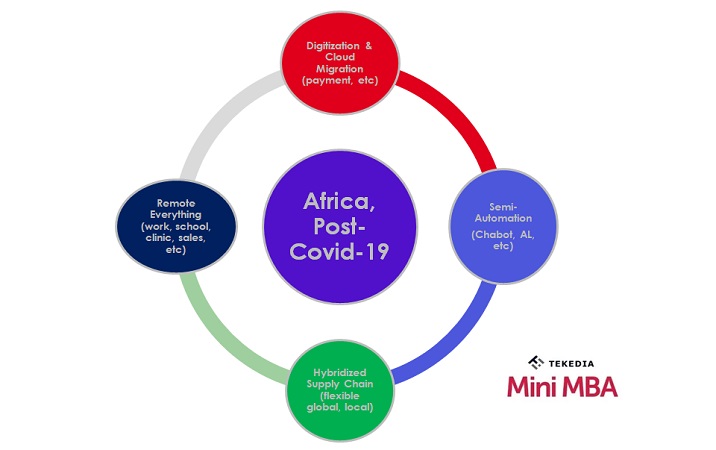
The 4 key tech redesigns in Africa, post-covid-19

I expect technology expenditure in Nigeria to double in 2021 compared with the 2020 number. From conversations I am having with business leaders, the trajectory is clear: companies will spend and spend next year. These elements will drive this spending in Nigeria, as I noted in The State of the Tech Nation (recorded in April 2020, below) address.

  • Hybridized Supply Chain: Flexible, adaptive, global and local, at the same time.
  • Remote Everything: The web will run the world across sectors.
  • Digitization and Cloud Migration: The pace will accelerate.
  • Semi-automation: Disintermediation of humans will accelerate.

If you are selling or offering services, find how to deliver services in or around these elements because they will drive business, in the next coming years in Nigeria and Africa in general.

The State of Tech Nation [Video]
I gave this presentation in April 2020 to our members in Tekedia Institute . I was trying to channel our minds on the evolving opportunities due to coronavirus. The 15-minute video has a message: there is abundance in the future.


1,919,430,500% Returns in 11 Years!

1

On Oct 12 2009, a Finnish developer Martti Malmi sold 5,050 BTC for $5.02. Since that time, that digital value has returned  close to 1,919,430,500%. While I do not do crypto, it is something to think about, on how someone created such a staggering wealth from thin air.

Meanwhile, China continues its digital Yuan vision. Nikkei writes “China will expand trials of its digital yuan Friday evening with a feature letting individuals send money to each other by just touching their smartphones together, broadening use of the new currency beyond physical stores.”

The trial is timed to see whether the platform can handle digital yuan payments without a hitch under heavy stress. Online retailers offer steep discounts on Dec. 12 — a shopping event known as “Double 12” — and usually see a flood of orders right when the day begins at midnight.

Tests are also moving along in other cities. In Chengdu, people invited by employees at major banks are allowed to download a wallet app that can freely convert cash into digital yuan. The electronic currency can be spent at local supermarkets and other stores, and used to pay bills for smartphone service.

Why can’t we have a digital Naira to reduce corruption through electronic trails? Maybe a good idea or maybe the server will crash and all the money will be lost! You decide. But one thing is evident: nations have BIG roles to drive national growth, anchored on private sectors. Japanese government via Bank of Japan  is the largest investor in Japan’s stock exchange! China has funded state-owned-enterprises. America sends stimulus checks despite preaching capitalism, since capitalism works when things are fine, but needs socialism to bail it out at hard times.

The Bank of Japan has taken over as the biggest owner of the nation’s stocks, with the total value of its holdings climbing well above $400 billion.

Massive exchange-traded fund purchases by the BOJ to support the market amid the pandemic this year combined with subsequent valuation gains pushed its Japanese equity portfolio to 45.1 trillion yen ($434 billion) in November, according to estimates by Shingo Ide, chief equity strategist at NLI Research Institute.

Nigeria needs to pick a position and run its own playbook: there is no universal principle on how nations must run their economic policies.

What Nigeria’s Over 1,800 Trademark Applications Mean to Its Innovation Output

0

As businesses and individuals prepare for the year 2021, our analyst has discovered that profit and non-profit oriented establishments have filed a total of 1,889 trademark applications in Nigeria. This is gleaned from the database of the Nigerian Law Intellectual Property Watch, an organisation that curates and publishes trademark applications in the country.

NLIP notes that its database is “for information purposes only and is not the official register for trademarks in Nigeria. The official register is kept at the Registrar’s office in Abuja, Nigeria.” Looking at the applications, our analyst discovered that both Nigerian owned and non-Nigerian owned businesses and non-governmental organisations submitted applications as at October, 2020 [for the year].

Information has it that “trademark is the most active Intellectual Property Rights in sub-Sahara Africa most especially in Kenya, Ghana, Gambia, Nigeria, and South Africa. This is the area of IPRs which had witnessed numerous applications from nationals of the region.”

This position is highly supported with the preliminary outcomes of our ongoing analysis of patent and intellectual property rights in Africa.

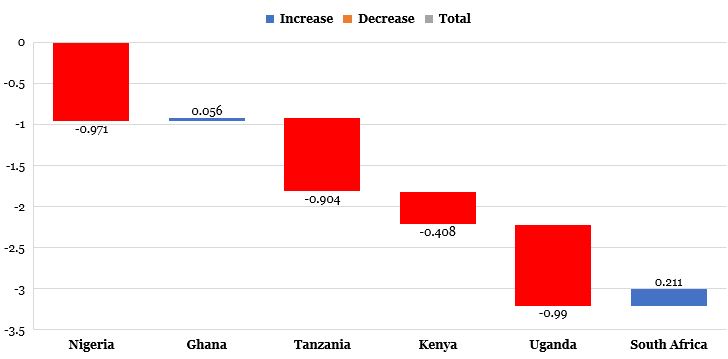
We have discovered how businesses of the Africa origin submitted little trademark and patent applications between 2017 and 2019. The preliminary results also indicate that South Africa is better in the area of patent and intellectual property protection than most African countries we analysed. The country demonstrated the leadership through its strong policies and institutional framework for the enforcement of intellectual property and patent rights.

To increase innovation ecosystem, our analyst notes that African leaders need to ensure sustainable patent and intellectual property protection. This is highly imperative in Nigeria, Kenya, Tanzania, Uganda and other countries where failure to file patent and trademark is reducing innovation output.

Exhibit 1: Link Between Intellectual Property Protection and Innovation Output (2017-2019)

Source: Global Competitiveness Index, 2020; Global Innovation Index, 2020; Infoprations Analysis, 2020