DD
MM
YYYY

PAGES

DD
MM
YYYY

spot_img

PAGES

Home Blog Page 6015

Congratulations Paschal Osita Onah

0

He attended Tekedia Institute Mini-MBA and used that knowledge to develop a new operational model in the company he works in United Area Emirates (read Dubai). It was so good that his company celebrated him. They shared it on Tekedia Mini-MBA WhatsApp Group, and I want to congratulate our member. Do more, fix market frictions and advance the wealth of nations. Congratulations Paschal Osita Onah. 

Zenith Bank Is The Zenith of Alpha – PBT of N177 Billion in 9M 2020

2

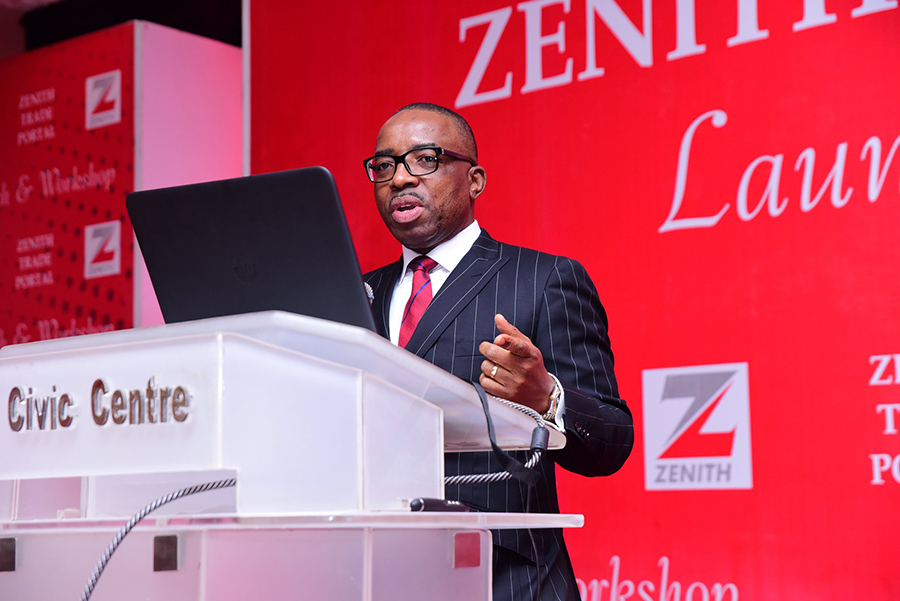
Zenith Bank Plc has recorded a Profit Before Tax of N177.3 billion for 9 months ended September 30, 2020. GTBank put N167 billion during the same period. These are indeed the two best wholly indigenous banking institutions in Nigeria at the moment. They continue to put on really great shows. Yes, their abilities to capture value could be considered legendary when you look at the abysmal state of the Nigerian economy. The National Bureau of Statistics just recorded that the nation has entered recession. Well done Zenith Bank, understanding how to capture value is the most important skill in business.

The Q3 report released by the Nigerian Bureau of Statistics (NBS) showed that Nigeria’s economy has slid into recession for the second time in four years.

“Nigeria’s gross domestic product (GDP) recorded a growth rate of -3.62% (year-on-year) in real terms in the third quarter of 2020. Cumulatively, the economy has contracted by -2.48%,” the NBS said in the report.

It noted further that while the report represents an improvement of 2.48% points over the -6.10% growth rate recorded in the preceding quarter (Q2 2020), it also indicates that two consecutive quarters of negative growth have been recorded in 2020, and growth in Q3 was slower by 5.90% points when compared to the third quarter of 2019 which recorded a real growth rate of 2.28% year on year.

More highlights of the NBS data:

  • The contraction in the oil sector represents 7.26% points lower than the growth recorded in the previous quarter (Q2 2020, -6.63%) while the non-oil sector contracted by 2.51% in the review quarter.
  • The sector contributed 8.73% to total real GDP in Q3 2020, down from 9.77% and 8.93% respectively recorded in the corresponding period of 2019 and the preceding quarter, Q2 2020.
  • The average daily oil production recorded in the third quarter of 2020 stood at 1.67 million barrels per day (mbpd), or 0.37mbpd lower than the average production recorded in the same quarter of 2019 and 0.14mbpd lower than the production volume recorded in the second quarter of 2020.
  • On the other hand, The non-oil sector grew by –2.51% in real terms during the reference quarter, which is –4.36% points lower than the rate recorded in Q3 2019 but 3.54% points higher than in the second quarter of 2020.
  • In real terms, the non-oil sector contributed 91.27% to the nation’s GDP in the third quarter of 2020, higher than its share in the third quarter of 2019 (90.23%) and the second quarter of 2020 (91.07%).

Looking at Zenith Bank’s 9M 2020 results, the company actually saw positives across key metrics.

  • Gross earnings increased to N508.97 billion, +3.6% Y-o-Y.
  • Profit Before Tax grew to N177.3 billion, +0.6% Y-o-Y.
  • Net interest income increased to N225.18 billion, +4.91% Y-o-Y.
  • Impairment charges grew to N25.11 billion, +37.5% Y-o-Y.
  • Personnel expenses increased to N59.93 billion, +5% Y-o-Y.
  • Loans and advances to customers grew to N2.7 trillion, Up by +32.7% Y-o-Y.
  • Total assets increased to N7.97 trillion, +33.4% Y-o-Y.
  • Customers deposit grew to N5.2 trillion, +32.2% Y-o-Y.
  • Earnings Per Share boosted to N5.07k, +5.6% Y-o-Y.

Meanwhile, Nairametrics reports that banks are not lending, and the central bank has debited some of them.

Deposit Money Banks (DMBs) have collectively suffered a debit of N226 billion in compliance with the Cash Reserve Requirements (CRR) fixed by the CBN.

According to a reliable source, the debit occurred in the week ended November 20, 2020. This follows a whopping N917.5 billion debit recorded a month ago as reported by Nairametrics. The central bank imposed CRR sequesters on banks that fail to meet its minimum lending targets as a percentage of deposits.

Nigeria’s Economy Falls into Recession After Contracting -3.62%

0

The Q3 report released by the Nigerian Bureau of Statistics (NBS) showed that Nigeria’s economy has slid into recession for the second time in four years.

“Nigeria’s gross domestic product (GDP) recorded a growth rate of -3.62% (year-on-year) in real terms in the third quarter of 2020. Cumulatively, the economy has contracted by -2.48%,” the NBS said in the report.

It noted further that while the report represents an improvement of 2.48% points over the -6.10% growth rate recorded in the preceding quarter (Q2 2020), it also indicates that two consecutive quarters of negative growth have been recorded in 2020, and growth in Q3 was slower by 5.90% points when compared to the third quarter of 2019 which recorded a real growth rate of 2.28% year on year.

The decline in GDP growth was attributed to the downturn in oil revenue and restrictions to movement and economic activity implemented across the country in early Q2 in response to COVID-19 pandemic.

However, the report noted that following the lifting of the restrictions and reopening of businesses, there have been notable improvements in economic activities resulting in positive growth. A total of 18 economic activities recorded positive growth in Q3 compared to 13 activities in Q2 2020.

“During the quarter under review, aggregate GDP stood at N39,089,460,61 million in nominal terms. This performance was 3.39% higher when compared to the third quarter of 2019 which recorded an aggregate of N37,806,924,41 million,” said the report. But it added that the rate was, however, lower relative to growth recorded in the third quarter of 2019 by -9.91% points buy higher than the proceeding quarter by 6.19% points.

Nigeria’s GDP is 90 percent oil-based; therefore, the economy took a nosedive as the pandemic plummeted global oil revenue.

The NBS report said the oil sector was -13.89% (year on year) in Q3 2020, indicating a sharp contraction of -20.38% points relative to the rate recorded in the corresponding quarter of 2019.

“Real oil growth decreased by -7.26% points when compared with oil sector growth recorded in Q2 2020 (6.63%),” it said, adding that quarter on quarter, the oil sector recorded a growth rate of 9.64% in Q3 2020. The sector made a contribution of 8.73% to total real GDP in Q3 2020, down from 9.77% and 8.93% respectively recorded in the corresponding period of 2019 and the preceding quarter Q2 2020.

Central Bank Governor, Nigeria

Non-oil sectors also took a hit from the pandemic. Apart from the telecommunication and agricultural sectors, others were totally vulnerable to the health crisis.

The non-oil sector grew by -2.51% in real terms during the reference quarter, which is -4.36% points lower than the rate recorded in Q3 2019 but 3.54% higher than in the second quarter of 2020. Construction, Financial and insurance institutions, and public administration were among the sectors that revved up the non-oil sector contribution to the real GDP.

“In real terms, the non-oil sector contributed 91.27% to the nation’s GDP in the third quarter of 2020, higher than its share in the third quarter of 2019 (90.23%) and the second quarter of 2020 (91.07%),” said NBS.

The International Monetary Fund (IMF) said it expected Nigeria’s economy to contract by 4.3% in 2020 from 2.2% in 2019 and later recover with a growth rate of 1.7% in 2021.

While the recession has been expected due to the pandemic-induced economic turmoil, the Nigerian government’s preparedness and economic sustainability plan seem far from the recommended framework to exit the recession.

As the oil economy dwindles, the Nigerian government has resorted to borrowing and increasing taxes. Nigeria’s total debt increased from N28.63 trillion ($79.3bn) in March to N31.01 trillion ($85.9bn) in June, according to data from the Debt Management Office.

The minister of finance Mrs. Zainab Ahmed said recently that the government will increase Value Added Tax from 7.5% to 10% in attempt to increase government’s revenue generation. That is in addition to other newly introduced taxes such as Stamp Duty Charge.

Finance Minister, Nigeria

The IMF had warned that imposition of taxes will do more harm than good to countries hardly hit by the pandemic, and advised the Nigerian government to grant tax waivers to businesses instead. It also said the recovery focus should remain on medium-term macroeconomic stability, with revenue-based fiscal consolidation essential to keep Nigeria’s debt sustainable and create fiscal space for priority spending.

However, Nigeria’s government decision to shut its land borders has cast doubt on its readiness to implement the IMF’s recommended Economic Recovery Growth Plan. Nigeria’s macroeconomic stability has a strong root in intra-African trade. Many SMEs have been shut out of business following the land border closure.

Therefore, the road to economic recovery to the 1.7% growth rate predicted by the IMF seems far as the oil revenue remains plummeted, and the federal government of Nigeria has shown no indication that the border will be reopened soon.

Tencent to Invest in Udemy as the Online Institute Plans IPO

0

Tencent Holdings Ltd is leading other investors in a funding round that puts the value of the online education startup Udemy Inc. at more than $3 billion, Bloomberg reported, citing sources.

The development is coming at a time when Udemy is contemplating pursuing an initial public offering, according to people familiar with the matter.

It is not clear how much Tencent is investing in the San Francisco-based startup, but Udemy said on Wednesday that it has raised $50 million in a round to put the company’s value at $3.25 billion before the new round of investment.

According to regulatory filing in Delaware, Udemy is looking to raise $100 million in new funding. It is not established if the new round of funding lives up to the expectation.

However, Tencent’s involvement in the fundraising underscores its liberty where its Chinese counterparts are under restriction. Except for its super app, WeChat, which recently came under the US radar, Tecent has more to worry about in China than in the United States.

In the US, Huawei is banned while TikTok is fighting to stay in business. Outside the US, they are operating under serious scrutiny from other governments, under pressure from Washington, and lack the freedom to invest in American companies.

Last year, the Committee on Foreign Investment in the United States (CFIUS), a US government panel that reviews deals for potential national security risks, revisited ByteDance acquisition of Musical.ly (TikTok) in 2017.

The review ushered in a new wave of scrutiny that spurred Washington to issue the 45 days divestment ultimatum to the short video app. But it also became contagious, touching WeChat, which has become popular among Americans.

The CFIU had unanimously recommended that president Trump take the action in order to “protect US users from exploitation of their personal data.”

Nevertheless, it was a sequel of Huawei’s ordeal extended to both WeChat and TikTok, although with a peck of lifeline – the court rulings stopping the US government from forcing a sale. The Chinese telecom giant, unlike its Chinese siblings, has had it hard from the Trump administration’s national security punchline, and it is barely surviving.

While Huawei and TikTok’s parent company, ByteDance, battled to stay alive, Tecent was roaming around the world with enviable freedom, investing in whatever it deems fit.

Beyond its core gaming and social media empire, Tencent invests in China and increasingly outside it, grooming upstarts in everything from supplying fresh vegetables to building electric vehicles. Tencent has investment in a range of US companies, including Epic games, Reddit, Warner Music Group Corp. and Activision Blizzard, the report said.

In the era of COVID-19, when virtual life has become the new normal, Tencent saw an investment opportunity in online studies. As the pandemic shut conventional schools, Udemy, Coursera, Hubspot etc became top destination for students, opening an array of investments that Tencent is cashing in on.

Udemy Chief Executive Officer Gregg Coccari said the pandemic generated “five years of worth of growth in five months” for Udemy consumer business.

Udemy, like Coursera, offers professional, technical and personal development courses, as well as an array of classes like cybersecurity and guitar. Data from its website said it has enrolled 35 million in more than 130,000 online courses.

In China, Tecent is pushing its in-house learning platform through competition with online learning platforms TAL Education Group, ByteDance and NetEase while investing in startups such as Yuanfudao and VIPKid offering after-school tutoring.

Tencent’s investment in Udemy represents a larger interest in online education outside China. According to Bloomberg, Tecent’s largest investors include Naspers Ltd., the South African parent company of Prosus, which is also an Udemy backer. With the new round of funds, Udemy, which was earlier in the year valued at $2 billion, will become one of the most valuable education technologies in the world.

While the new round of funding puts Udemy closer to IPO, the educational institute said there is no set date yet.

“We’re of course preparing the company for that eventuality if the board so Chooses, we haven’t taken any steps,” Coccari said.

He added that Udemy has millions of dollars and there have been inquiries from blank-check companies, which allow a business to public through a merger rather than an IPO, but no decision has been taken yet.

“It was all inbound interest, nothing that we were chasing at all. The board will consider any kind of options that we have in the future,” Coccari said.

The Central Bank of Nigeria (CBN) Has Failed The Naira!

13
Nigeria Naira US Dollar

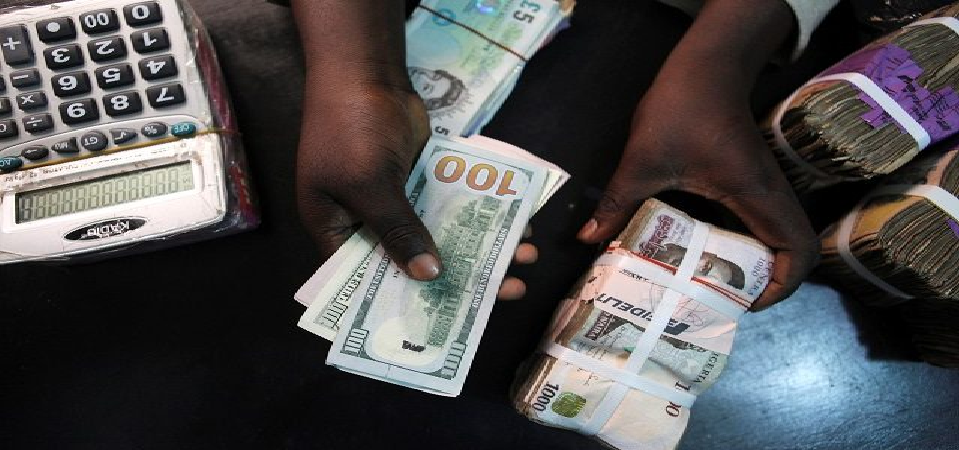
It is very painful: the Central Bank of Nigeria has failed the naira. This Bloomberg piece explains it all. Since 2017, the naira has been unlucky, not because of crude oil prices, but due to unhinged experimentations. You export something, CBN pays you N385 per dollar but when you want to import, you have to source it in the black market at N460. How can a business operate like that?

“How do you tell an exporter to export and you are giving him 386 per dollar? Is that fair to the exporter?” said Muda Yusuf, director general for Lagos chamber of Commerce and Industry.

So, when CBN put one of those thoughtless rules, everyone left the formal channel for exports and with that, pressure mounted on the Naira sending it close to N500 per dollar. I am happy they have backtracked.

Do we  test these policies in economic models before pushing them out? A secondary school economics student would have picked holes in some of these policies.

Nigeria’s central bank has backtracked on a rule that banned companies from sourcing imports from third parties other than manufacturers after the naira extended losses in the black market due to rising demand.

A circular by the regulator to banks this week explained that importers can open bills of collection in favor of agents and third parties to import goods, a softening of restrictions introduced in August.

The directive forced importers to redirect their dollar demand to the parallel market, resulting in a weakening of the local unit to a three-month low of 480 naira to the dollar on Friday. The naira traded at 385.50 to the greenback on the importer and exporter window as of 4:22 p.m. in Lagos, with the spot rate at 383.

Sliding Further

Insufficient dollar supply pressures the naira to weakest in three months

The widening gap in the official and parallel is rates is being fueled by individuals and companies diverting export proceeds and their remittances away from approved channels. The central bank has said banks should report any exporter caught in the act.

“How do you tell an exporter to export and you are giving him 386 per dollar? Is that fair to the exporter?” said Muda Yusuf, director general for Lagos chamber of Commerce and Industry.

There is a need to allow the foreign-exchange market to function properly to attract more inflows of foreign exchange to avoid transactions being driven underground, Yusuf said.

The previous central bank directive hurt businesses, Bala Idris, import manager for snacks and cereal-maker Nasco Group said. It led to his firm cutting production capacity and reducing working hours by 10% due to increase in the local prices of raw materials after it was unable to import.

The central bank has to allow for a more flexible and practical exchange rate to improve liquidity, Idris said. Authorities should allow the naira to change hands at 450 to 480 per dollar because “that will motivate exporters to bring all their inflow into the market for genuine importers.”

Source: Bloomberg

The Biggest Problem in Nigeria – The Gyration of Naira is Now A National Security Threat