DD
MM
YYYY

PAGES

DD
MM
YYYY

spot_img

PAGES

Home Blog Page 6069

China’s Economy Grew 4.9% in the Third Quarter, Beating IMF’s Forecast

0

China’s economy grew by 4.9 percent in the third quarter of the year compared to the same quarter in 2019, to mark a significant recovery from the plunge of COVID-19.

The economy recorded a 1.7 percent increase compared to the 3.2 percent growth the South Asian country recorded in the second quarter of the year, according to the data published by the National Bureau of Statistics (NBS) on Monday.

China was the foremost in reopening businesses after prolonged lockdowns aimed at curtailing the spread of coronavirus. The world’s second largest economy set on the path of recovery as local authorities gradually ease restrictions and allow factories and businesses to reopen.

The economy had contracted by 6.8 percent in the first quarter of the year, marking its official contraction since the end of Cultural Revolution in 1976.

“Year-on-year growth was up from 3.2 percent in quarter two, showing that the economic recovery from COVID-19 continues, led by strength in industry driven by robust investment and exports,” said Louis Kuijs, head of Asia economics at Oxford Economics. “But GDP growth was lower than our forecast of 5.3 percent year on year, reflecting slowing infrastructure investment growth and lingering softness in corporate investment and consumption.”

The NBS data noted key areas of the economy that yielded the growth, including export which rose above Bloomberg’s projection.

Industrial production, a gauge of activity in the manufacturing, mining and utilities sectors, grew by 6.9 percent in September from the past year following a 5.6 percent rise in August. That’s 1.1 percent increase above the 5.8 percent estimated by Bloomberg.

The NBS reported that retails’ sales as a key measurement of consumer spending, contributed to the growth as it recorded 3.3 percent rise to improve its August 0.5 percent increase, and beat the 1.7 percent projected by Bloomberg.

Retails recorded its first expansion in August this year, following improved consumer spending that beat other areas of the economy. The third quarter results indicate momentous spending and increase in importation. According to data published by China’s Custom last month, imports rise 13.2 percent in September compared to the same quarter last year. The increase means inbound shipments went up to an all-time high of $203 billion.

Another sector, fixed-asset investment, a gauge of spending on infrastructure, property, machinery and equipment, rose by 0.8 percent in September, indicating an increase from 0.3 percent plunge in the previous months of the year. It’s the sector’s first record of growth in nine months.

The surveyed urban jobless rate was down from the peak of 6.2 percent in February and 5.6 percent in August to 5.4 percent in August.
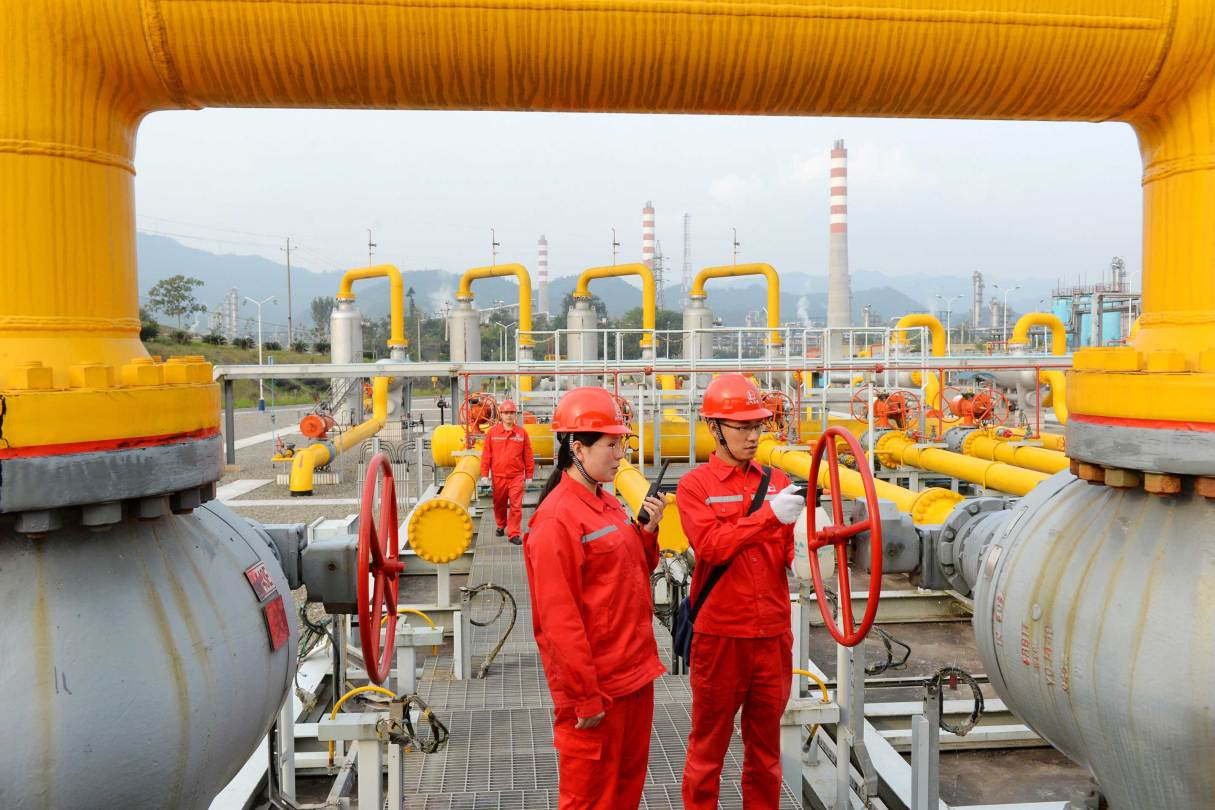
SCMP reported that the Chinese government has set a target of creating 9 million new urban jobs in 2020, 2 million less than the 2019 target, and maintaining a surveyed urban unemployment rate around 6 percent, compared with 5.5 percent last year. China created 13.52 million new urban jobs in 2019, beating its 11 million target.

However, the report indicated that the surveyed urban jobs do not represent the entire unemployment situation in China, as it excludes millions of migrant workers.

China has managed to remerge from the ravages of the pandemic to surprisingly beat economics projections. Last week, the International Monetary Fund (IMF), said the world’s most populous country’s economy will grow by 1.9 percent this year, trumping its earlier forecast in June by 0.9 percent, and making China the only G20 economy with a positive economic estimate.

Premier Li Keqiang had said at the National People’s Congress in May that China will not set an economic growth target this year, according to SCMP. But China’s central bank governor said Yi Gang said the economy will grow by about 2 percent in 2020.

“I think the accumulative growth for the first three quarters of this year will be positive… for the whole year; we predict China GDP growth of around 2 percent.

“The Chinese economy remains resilient with great potential. Continued recovery is anticipated, which will benefit the global recovery,” Yi said.

The IMF’s World Economic Outlook estimated that the global economy will contract by 4.4 percent this year – more favorable than the 4.9 percent decline it had forecasted in June. The 2021 growth is expected to yield 5.2 percent rebound, or 0.2 percentage points lower than June’s estimate.

The adjustments in June’s forecast figures are mainly as a result of the rebound in China’s economy. With the US and Europe still battling with coronavirus and counting on vaccines, China leads the global economy with the gains from its re-emerging sectors.
Trump Shares America’s TraderMoni, FarmerMoni as Election Draws Closer

0

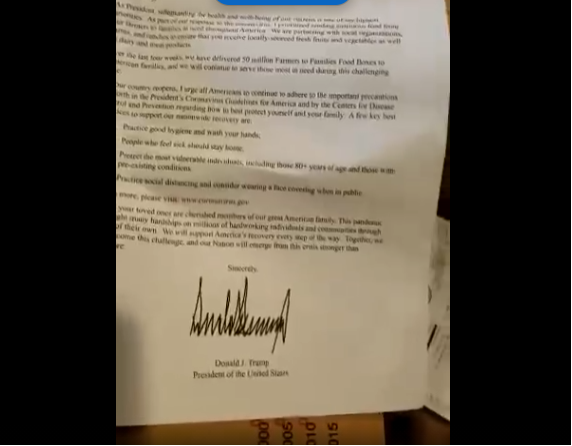
I do not know the family in this video. But as Nov 3 arrives for the U.S. election, I have just realized that Nigeria and America are united by one thing: politicians are funny. In the video, a letter signed by Trump was dropped in a free food basket given to churches to distribute. That is America’s TraderMoni, FarmerMoni, and all those vote-inducing schemes APC (and PDP with different names during their time) used to rig elections of the minds in Nigeria.

But as that happens, I respect the American political system. These guys have modelled my family very well. My wife, Ifeoma, gets a different messaging from what they send to me. They show her pictures of kids and schools; mine is about making things easier to grow a business. Yes, even in the same house, they are able to ultra-target the messaging.

This is an election built on data. They have gotten really close!

Sweden Kicks Huawei and ZTE Out of Its 5G Roll Out

0

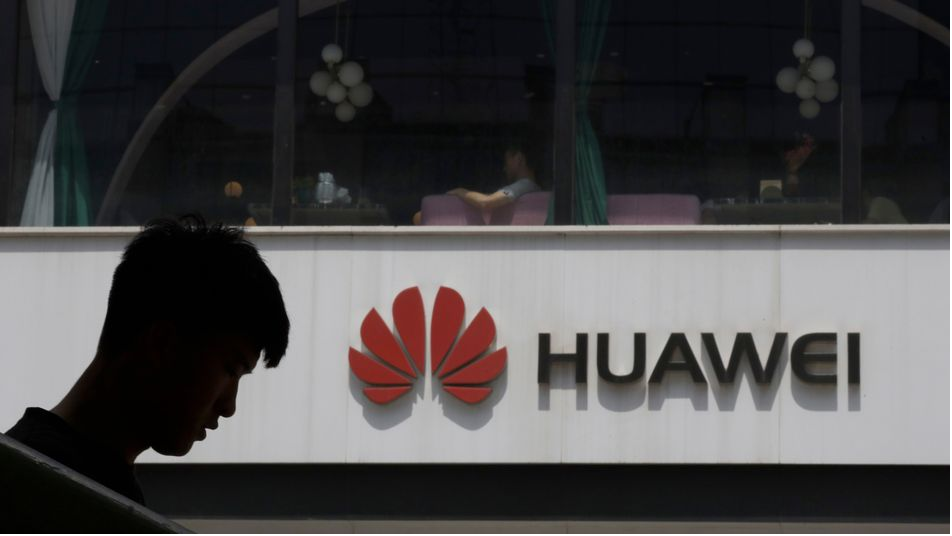
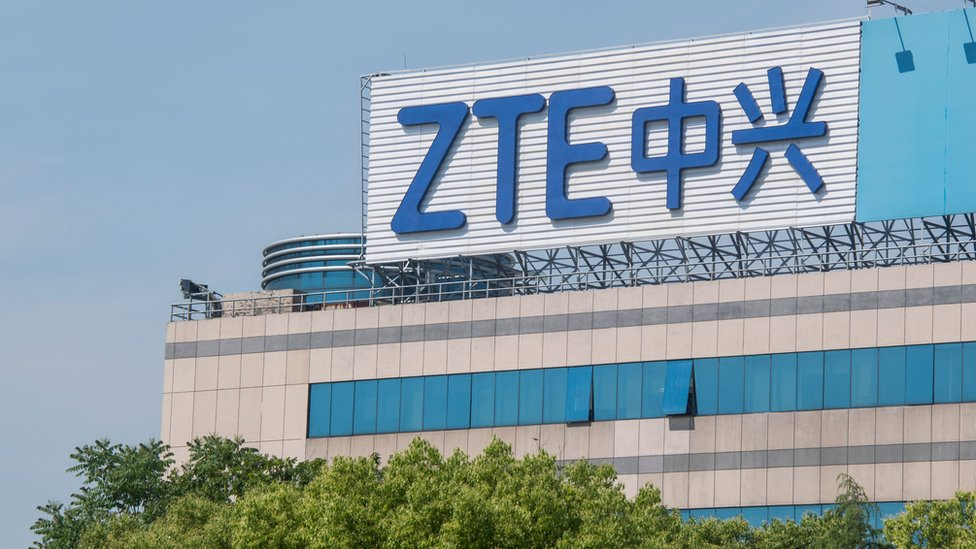
Sweden has become the latest country to ban the use of Huawei equipment for 5G roll out. The European country announced the decision on Tuesday after consultation with its security services.

“In accordance with new legislation, which entered into force on 1 January 2020, an examination of applications has been conducted in consultation with the Swedish Armed Forces and the Swedish Security Service, to ensure that the use of radio equipment in these bands does not cause harm to Sweden’s security.

“New installations and new implementation of central functions for the radio use in the frequency bands must not be carried out with products from suppliers Huawei or ZTE. If existing infrastructure for central functions is to be used to provide services in the concerned frequency bands, products from Huawei and ZTE must be phased out 1 January 2025 at the latest,” the Swedish Post and Telecom Authority (PTS) said in a statement.

Security concerns over the use of Huawei’s 5G infrastructure has been gaining momentum in Europe, following US pressure.

In January, Sweden enacted a law to protect its communication from security breaches. Under that law, a radio license holder must take technical and organizational actions to ensure that the use of the radio does not cause breach of Sweden’s security. Based on national security concerns that have forced many nations to sever ties with Huawei, Sweden can’t guarantee that the embattled Chinese company can be trusted to keep the law.

Sweden’s security service called China “one of the biggest threats against Sweden”.

The development followed London’s decision to oust Huawei from its 5G infrastructure in July. Belgium also announced the ban of Huawei from its 5G deployment earlier this month. The decisions however, may result in slower and higher costs of 5G roll out in Europe, and risk a possible backlash from China who has been fighting to protect Huawei’s global 5G leadership.

“The ban leaves network operators with less options and risks slowing the rollout of 5G in markets where competitions is reduced,” said Ben Wood, chief of research at CCS Insight.

Chinese government may target European commodities in retaliation, especially now that the EU is seeking bilateral partnership to overcome the economic strains of the coronavirus pandemic.

“It could be that some of the European vendors will sell less in China going forward if the Chinese are selling less in Europe going forward,” said Kjell Johnsen, CEO of Swedish-based telecom operator Tele2 in a post-earnings conference call.

The bans on Huawei have placed Finish Nokia and Swedish Ericsson in a lucrative position as their participation in the 5G roll out has increased significantly in the past few months.

The PTS approved the participation of Sweden’s Hi3G Access, Net4Mobility, Telia Sverige and Teracom in the planned spectrum auction of 3.5 GHZ and 2.3 GHz, key bands crucial for the roll out of 5G.

Tele2 and Telenor will participate together as Net4Mobility to secure spectrum for a joint nationwide 5G network.

Tele2 uses Huawei equipment but said, according to Reuters, “that the decision of PTS will not change our plan substantially”.

“Many operators have already proven that when they rip and replace Chinese equipment, it doesn’t have a negative impact on their capital spending,” said John Strand, and industry consultant.

Among the European countries facing the decision to axe Huawei, Germany has been dragging its feet in fear of ruining its chances of developing new business relationships with China.

The WSJ reported in July that China is considering retaliating against European telecom companies, Nokia and Ericsson if the European Union follows the United States and Britain in banning Huawei.

China’s Ministry of Commerce is looking into export controls that would prevent Nokia and Ericsson from sending products it makes in China to other countries, according to the report.

Germany is in economic talks with China aimed at revamping its economy plummeted by the COVID-19 pandemic. The European economic power is wary that any move to disengage Huawei will affect its chances of securing a deal with the world’s second largest economy.

Sweden appears to have little to lose as Ericsson is positioning itself as a gainer of increasing Huawei’s fallouts with many countries. But while some European countries have insouciantly followed the steps of the United States in axing Huawei, others are carefully trying to avoid picking the axe in fear of retaliation from China.

Examining Jevinik And Chick-Fil-A; Creating Value in Fast Food Sector in Nigeria, Africa

0

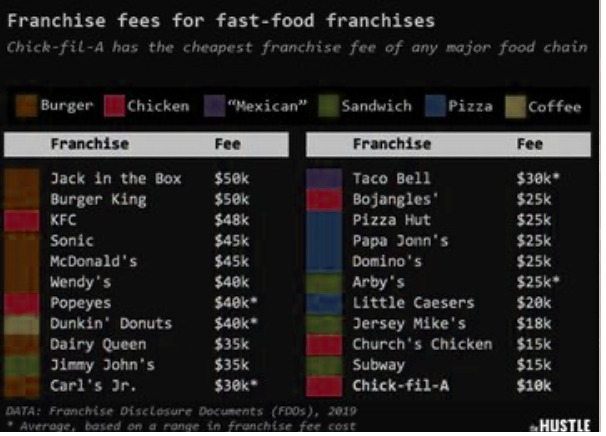
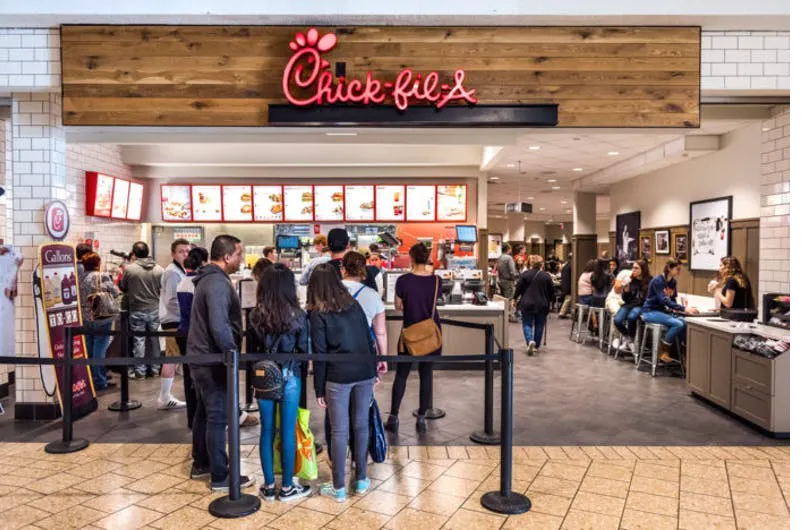
I am learning a lot about fast food business as I work on a business case for our program. Jevinik, the quasi-fast food, sit-down restaurant chain in Nigeria, is one we have chosen to study. As part of the process, we are learning new things in this global business. Chick-Fil-A, a fast food chain in the US which prepares chicken, is a revelation. It has a cheap fee to open a chain but it has a premium royalty. 

The big one: 60,000 people apply for an outlet operating license but only 80 are selected yearly! This company which has the highest customer satisfaction in the fast food business, in the U.S, has built a Perception Demand. How did it do it? Yes, you need small bucks to start and yet you make tons of money from the process

Jevinik does not run a franchise model. Franchising is always challenging in Nigeria. You can remember how they used franchising to destroy Mr. Biggs when lack of standards across the outlets destroyed the brand. Yet, franchising is going to become part of the future and understanding how Chick-Fil-A and others have done this could help unlock value for practitioners in this space in Nigeria.

Our work would advance that perspective in the Institute. It would help our Tekedia Mini-MBA members. If you are in the sector, I invite you to co-learn with us.

Tekedia Academic Programs

Lagos Paused As Governor Babajide Sanwo-Olu Declares 24-hour curfew

2

Speech below:

Dear Lagosians,

I have watched with shock how what began as a peaceful #EndSARS protest has degenerated into a monster that is threatening the well-being of our society. Lives and limbs have been lost as criminals and miscreants are now hiding under the umbrella of these protests to unleash mayhem on our State.

As a government that is alive to its responsibility and has shown a commitment to the movement #ENDSARS, we will not watch and allow anarchy in our dear State.

I, therefore, hereby impose a 24-hour curfew on all parts of the State as from 4pm (today,) Tuesday, 20th October,2020. Nobody, except essential service providers and first responders must be found on the streets.

Mr Babajide Sanwo-Olu
Governor, Lagos State.