DD
MM
YYYY

PAGES

DD
MM
YYYY

spot_img

PAGES

Home Blog Page 6118

Spectrum Bands For 5G

0

Spectrum is a scarce finite resource, which refers to radio frequencies, needed by telecommunication operators (otherwise referred to as telcos) to transmit and receive radio waves, which enables us to communicate and connect with one another.

First, at the international level, various countries, major players and companies (including regulators, telcos, equipment vendors, smart phone makers etc.), meet at international events like the world radio congress to agree on spectrum usage and its harmonisation in other to deal with issues around cross border interference, international roaming agreements, inter-operability etc.

Then, at the national level, it is regulated by regulators like NCC, who auction the spectrum and provide the licensing conditions as well as roll out obligations for those who obtain such spectrum for use within the country.

5G seems to be the innovation force which would ultimately lead to the digital transformation of various countries. It will be an evolutionary step, with a revolutionary impact, transforming and automating industries like agriculture, mining, transportation, e-commerce, health care, utilities, homes, education, oil and gas, manufacturing, financial services, logistics, etc, as well as hyper and immensely connecting humans to machines, ultimately triggering the birth of the fourth industrial revolution.

For these reasons, and more, the 5G networks have been designed to provide exponential and intelligent connectivity, ultra high bandwidth, faster speeds, low latencies, massive smart connections over large geographic areas etc. For all of these things to happen, 5G networks have been designed to work with three key bands, which will be discussed below. They are the low, mid and high band respectively. 

Figure: Software Defined Networking within a 5G system [29]
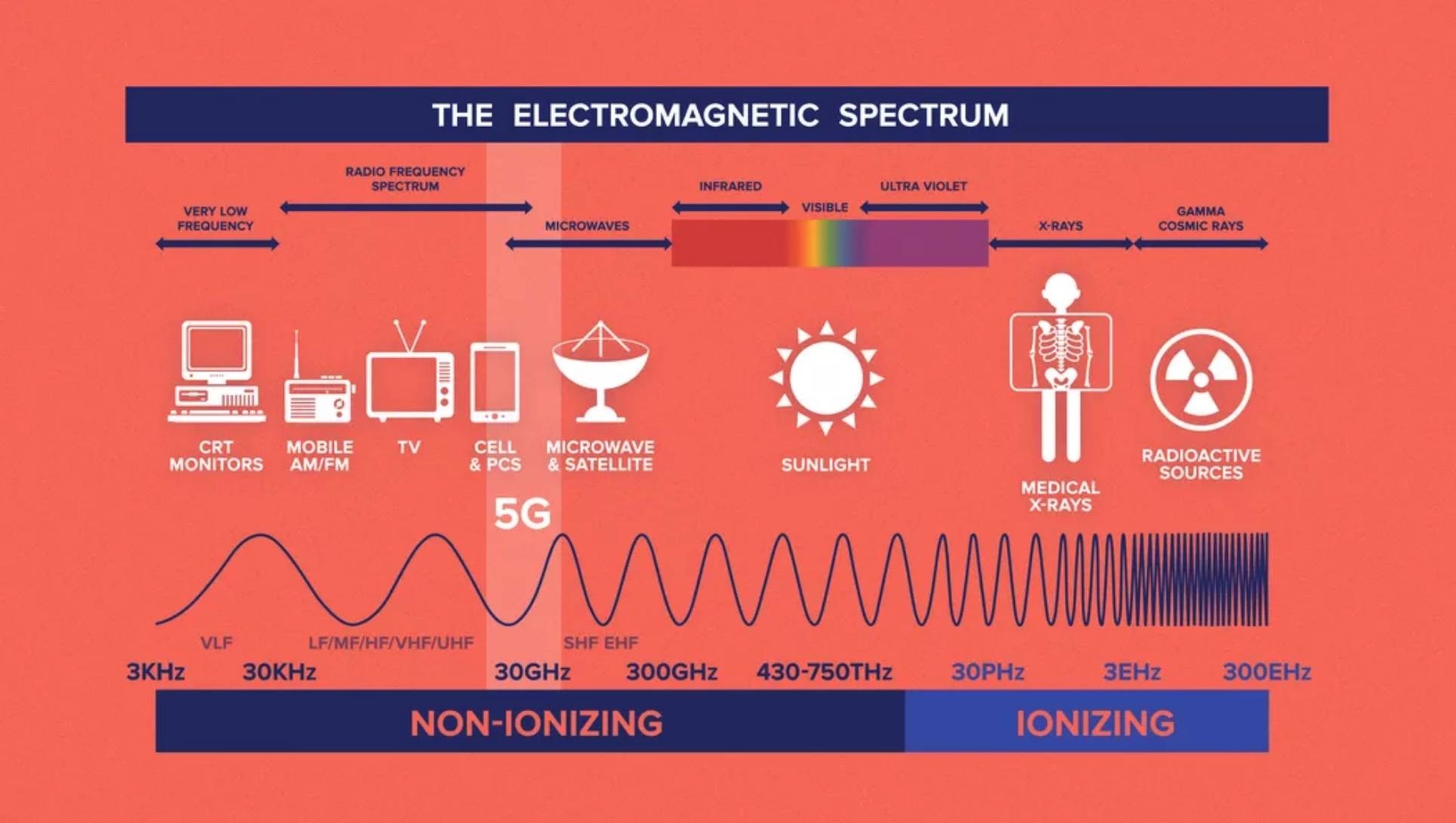
Low band: This refers to the lower frequencies in the sub-1GHz e.g. 700MHz. at lower frequencies, signal propagation is excellent and can travel over long distances. The radio signals, at these frequencies, can also pass through dense objects. These frequencies are typically used for coverage and for rural areas. E.g. think of your gsm (2G) signals with good coverage. Frequencies in this band have been pre-assigned for other applications such as TV broadcasting; hence operators cannot obtain ample capacity in this band. This band is for coverage, not capacity. 

Mid band: This refers to frequencies within 1-6GHz. These frequencies are typically used for coverage and capacity, suited for urban areas (with huge capacity demand). The higher frequencies enable the operator to transmit a large amount of data. This band is for both coverage and capacity. 

High band: This refers to frequencies within and above 6GHz. They are termed the mm wave frequencies. They would enable the operator to transmit a very large amount of data but are very limited in terms of propagation distances. This is the band that holds the 5G’s promise of delivering higher speeds. The radio signal by these frequencies can be easily absorbed or blocked by objects within the communication path. This is suited for use in hot spots (with huge capacity demands). This band is for capacity, not coverage. 

Hence, it is important that the spectrum in all three bands are combined in an intelligent way to fulfil the promises of 5G networks by providing for coverage (connectivity over large geographic areas), where needed and/or capacity (faster speeds, exponential and intelligent connectivity, ultra high bandwidth etc.), where equally desirable. 

Definition of terms used

Coverage: refers to the geographic area over which radio communication (in this case) can occur, without any interruption to such communication services.

Capacity: is the amount of traffic (data, voice, sms etc.) a network can handle at a given period.

Guardian Newspaper Nigeria Runs A Film Studio, Jumia Pay Adds Gaming – New Playbooks

0

Guardian Newspapers Nigeria has opened a film production subsidiary. One of its productions, Eyimofe “This is my desire” is set to premiere in the United Kingdom, at the BFI London Film Festival. The film, which had its world premiere at the 70th Berlin International Film Festival in February, is also billed to celebrate its U.S premiere at the AFI Fest. According to a statement to Tekedia, Eyimofe is the 2020 official selection for Vancouver International Film Festival, an annual film festival held in Vancouver, British Columbia. Call this updating your playbook after a massive dislocation from news aggregators like Facebook and Google. Well done, Guardian,

A GDN Studios production (www.GDNStudios.ng), the 114 minutes film directed by twin brothers Arie and Chuko Esiri, features Jude Akuwudike, Temi Ami-Williams, Cynthia Ebijie, Sadiq Daba, Tomiwa Edun, Jacobs Alexander, Tomiwa Edun, Chioma ‘Chigul’ Omeruah and others.

Funded entirely in Nigeria and shot in 16mm and filmed across 48 locations in Lagos, the two chapter drama follows the stories of Mofe (Jude Akuwudike), a factory technician, and Rosa (Temi Ami-Williams), a hairdresser, on their quest for what they believe will be a better life on foreign shores.

A passport, photos and a visa form recurring elements. The characters’ misfortunes are part of their everyday life and they are sketching out the need to leave Nigeria at the same time. At the bottom of the socio-economic ladder, status, money, gender, skin colour and family structures are inextricably connected. The longing for another life is but one thread in this complex mesh, a promise that floats above things at once near and far away.

It would be recalled that Eyimofe is the 2020 official selection for Vancouver International Film Festival, an annual film festival held in Vancouver, British Columbia.


As that happens, Mondia,  a company which specializes in the marketing and distribution of digital content is partnering with Jumia, the Africa’s e-commerce platform, to create  Jumia Games. Jumia Games will live inside the JumiaPay App. Yes, that is it: if you do not have money to buy things, you can play games by spending small money. Jumia just wants you to stay on the platform. This makes sense because winning the control of demand is important in the digital economy domain. Possibly, those games would result to buying or owning virtual Aso Rock palace, Second Nigeria Bridge toll gate, Ikoyi mansions,  Banana Island biggies, etc.

People, update your playbook because the world is changing. Yes, you must meet or stimulate a new dimension of customers needs to thrive.

Afreximbank Director To Anchor Tekedia Mini-MBA Live Today, 7pm WAT

0

He is a Fellow of the Institute of Chartered Accountants of Nigeria (ICAN), the zenith of the accounting profession in Nigeria. He is an experienced director of internal audit & risk control with a demonstrated history of working in the financial services industry. He is skilled in enterprise risk management, internal audit, banking, accounting, and internal controls. He has worked with SMEs and understands all domains of audits for growing businesses.

A Certified Risk Analyst (CRA) with BSc in Accounting, MBA from University of Lagos, and MSc Economics from ESUTH Enugu. He worked in EY, and today he is the Director Of Internal Audit & Risk Control at African Export-Import Bank (Afreximbank).

Abel Osuji, a Tekedia Institute Faculty, will lead a Tekedia Live session on Internal Auditing Strategy for SMEs in Tekedia Mini-MBA. For Tekedia Mini-MBA which begins Feb 8, 2021, he has also developed a course on the same topic.

Fri | 7pm-8pm | Internal Auditing Strategy for SMEs – Abel Osuji, Afreximbank | Zoom Link

Tekedia Academic Programs

UI VC Selection: Senate Addresses Crisis Trailing Election of Representatives

1
University of Ibadan, a federal university

As part of an inclusive process for the selection of a new Vice Chancellor of the University of Ibadan, the Senate of the University held a strategic meeting today to resolve the lingering crisis around the election of the representatives of the Senate. Two Professors of the University had earlier petitioned the Senate, stated that the election of Senate Representatives was fraught with irregularities.

According to information available to our analyst, the meeting was convened at the instance of the University of Ibadan Pro Chancellor and Chairman of Governing Council, Nde Joshua Mutka Waklek who directed Senate to examine the petitions filed by two Professors who had lost out in the election of members to the Senate-Council Joint VC Selection Committee.

The two aggrieved professors, Professor Ademola Dasylva (Department of English) and Professor A. Fasanmade (Department of Physiology) had challenged the process and outcomes of the election. In their petitions, they had accused the Technical Committee on e-Voting of bias, and manipulation of the process. In his second petition, Professor Dasylva as well accused the Vice Chancellor of being biased in favour of a contestant.

Four Professors (Francis Offor, Deji Omole, Abiodun Ayodele and Ayodeji Ogunjuyigbe and a Deputy Registrar (Mrs Morenike Afolabi) who were implicated in the petitions had responded to the allegations showing proofs of their innocence, and defended the integrity of the election.

The Senate meeting debated all the allegations raised in the two petitions one after the other, as well as the responses presented by the defendants.

Speaking at the end of the meeting, Professor Oyebamiji Babalola of the Department of Chemistry noted that “It was a well-attended physical, Covid-19-compliant Senate meeting. It was a very peaceful, transparent and well-conducted meeting that showed the ingenuity of UI Senate members”.

Also commenting on the meeting, Professor Wole Olatokun of the African Regional Centre for Information Science, said it was “well-coordinated in an unbiased and transparent manner. Members were given opportunity to freely express their minds on all the issues about the election petitions brought before Senate. All the proceedings were transparently and dispassionately handled from start to finish”.

Although members refused to divulge the outcome of the meeting, they noted that it was not just well-attended, it was characterised by civility and frankness.

“After every suggestion or motion, the Vice Chancellor insisted on having a dissenting opinion. He took his time. And it was after all shades of opinion had been exhausted and resolved that he moved on to another point” said Prof Ayo Ojebode, who was also at the meeting.

Members however refused to divulge the key decisions taken at the meeting in response to the pleas of the petitioners and the rejoinders.

According to Professor Adebola Ekanola, Deputy Vice Chancellor (Academic), while the University Management appreciates the importance of timely release of information to the press and to the public, it would be procedurally wrong to announce to the public or the press the decisions taken at the meeting. He said, “the University Council asked us to meet over the petitions; it is to the Council that we should report the decisions we have taken, not to the press for now.”

Another member of Senate present at the meeting, Professor of Sociology, Lanre Olutayo described the meeting as characterised by transparency, frankness and openness. In his words, the meeting was “very honest and transparent. I am proud to be privileged to be a member of UI senate”.

The significance of the Senate meeting was underscored by Professor Ayo Ojebode who said “the petitioners exercised their rights to air their grievances though their petitions should have been differently routed. The accused persons also did an excellent job, with incontrovertible proofs. I think we just had an intellectually stimulating Senate meeting. What is more important, though, is that Senate today spoke with one voice. A divided Senate is a potential disaster; we are lucky to have one strong Senate of the University of Ibadan.”

At the beginning of the meeting, the Vice Chancellor, Professor Abel Idowu Olayinka, informed Senate that the meeting should be considered a family gathering to resolve family matters. He therefore implored everyone who had anything to say to please speak out. In his words, “what matters most is that we speak frankly to the issues and remain family members after resolving it. We must eschew bitterness. Even if you have been falsely accused, please put the hurt aside for the time being.”

US Explores Options to Ban Tencent and the Ant Group

2

Jack Ma’s Ant Group and Tencent Holding Ltd have become the latest targets of Trump’s administration. The duo’s payment platforms have become popular among Americans, and now, Washington thinks it could pose a threat to the United States national security.

Bloomberg broke the news on Wednesday citing sources. The report said senior US officials are seriously debating the idea, though decision is not expected soon. The idea was discussed in a meeting held at the White House on September 30.

The sources said US officials are concerned that payments platforms of Chinese origin will likely dominate global digital payment space, and thus, give China access to banking and personal data of hundreds of millions of users.

The development however, opens a new chapter in the US vs China political playbook, and exposes both Tencent and Alipay to a future of business uncertainties.

But the move is at its early stage and will likely meet a lot of challenges. According to the report, officials acknowledged that they are yet to sort out the mechanism, and that is proving difficult to do as they are yet to find a legally sound approach. And there is no indication that the idea has been presented to Trump due to his illness. Trump tested positive for COVId-19 a day after officials met to discuss China, and the issue hasn’t made progress at senior level since then, a source said.

This is developing at a time when the Ant Group and Alibaba Group Ltd are gearing up for their blockbuster IPO on Hong Kong and Shanghai’s markets that is billed to happen simultaneously next month. The market debut is expected to surpass Saudi Aramco’s $29.4 billion last December, which still holds the largest IPO record till date.

Reuters reported that the Ant Group is seeking to raise about $35 billion in the dual IPO after assessing early investor interest and based on a higher valuation of about $250 billion or more.

The move by the US officials may stain the chance of Ant Group to reach its IPO prospectus, as it would cast doubts on the minds of investors who are already lining up to invest billions into the companies.

Although the Ant Group said in a statement that it is unaware of any administration discussions, moreover, “business is primarily in China and we are excited about our own growth prospects in the China market,” the development will affect its chances of growth in the global market.

It is not clear on what basis of authority the US officials will push the matter. However, analysis by Bloomberg showed a few options of authority that restriction measures could be implemented on.

One of the options would be to use the authorities granted under a 2019 order to protect the digital supply chain. But with the election due November 3, and its outcome uncertain, the option would likely add weeks to the administration’s timeline. Another option, which is considered speedier, would be to tread along the line of presidential executive orders that placed bans on TikTok and WeChat.

But executive orders have their disadvantages; it gives room for lawsuits, and courts may rule against the government. Just like in the case of TikTok and WeChat where the court granted injunctions halting Trump’s administration aim to ban the apps and granting temporary reprieve to the apps from being removed from online stores.

In the ruling, the court said White House may have exceeded its authority. But it may be a different story in the case of Ant Group and Tencent. One official said the administration thinks it would have an easier time in the courts if it went that route because TikTok and WeChat bans were challenged on the grounds of free-speech, a situation which is not applicable with Alipay and Tencent.

Another option on the administration’s menu is putting Ant Group and Tencent on the Treasury Department’s specially designated national list, making them radioactive for US companies, and probably, firms outside the United States, to do business with.

While everything is still under debate, any of the options would hurt the already strained relationship between Washington and Beijing.

Trump has been aiming at China on many fronts, particularly technology. A means he believes the Chinese Communist Party is using to spy on other nations and promote propaganda.

With Huawei reeling through US sanctions and TikTok and WeChat fighting to stay alive, Chinese tech companies, including the Ant Group and Tencent are learning to keep their growth mainly with China.

Trump said on Wednesday that China will pay for coronavirus, and it is not yet clear how he wants the South Asian giant to pay. However, the discussion suggests the administration is all out for a vendetta with the Chinese tech industry, if it is not as revenge for the ravages of the virus on the US, it will be as a result of China’s growing dominance in the global digital space.