DD
MM
YYYY

PAGES

DD
MM
YYYY

spot_img

PAGES

Home Blog Page 6120

Features of iPhone 12 5G

1

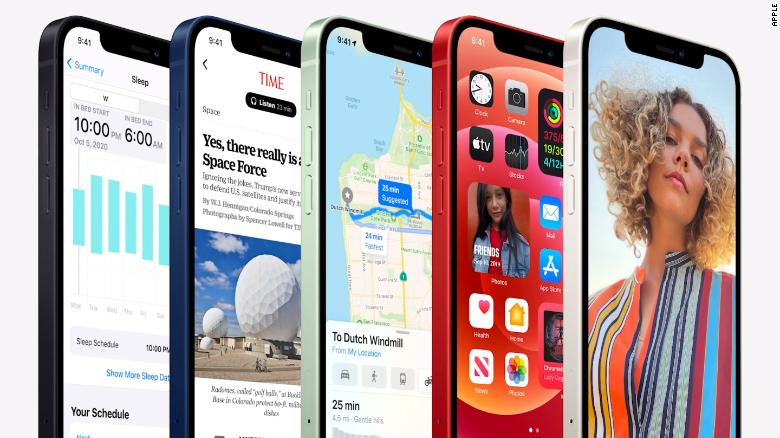
5G speed. A14 Bionic, the fastest chip in a smartphone. An edge-to-edge OLED display. Ceramic Shield with four times better drop performance. And Night mode on every camera. iPhone 12 has it all — in two perfect sizes.

Apple’s 5G smartphone lineup is finally here. The company announced four new iPhones in a virtual event on Tuesday — the iPhone 12, the iPhone 12 Pro, the iPhone 12 Pro Max and a new, smaller, iPhone 12 mini. All the phones are 5G-equipped, meaning they can connect to the next-generation high-speed wireless networks.

“This is a huge moment for all of us and we’re really excited,” Apple CEO Tim Cook said.

Apple will be hoping that its historically loyal user base will continue to shell out the big bucks to upgrade, even as the coronavirus pandemic continues to ravage the economy and forces millions to stay home. The cheapest phone in its new lineup — the iPhone 12 mini — starts at $699, while the top-of-the-line iPhone 12 Pro Max — featuring Apple’s biggest ever smartphone display at 6.7 inches — will start at $1,099.


Prices: iPhone 12 Pro and iPhone 12 Pro Max will be available in 128GB, 256GB, and 512GB models in graphite, silver and pacific blue starting at $999 and $1,099, respectively. Buyers can also get iPhone 12 pro for $29.12 a month or $699 with trade-in and iPhone 12 Pro Max for $30.37 a month or $729 with trade-in from Apple.com
The iPhone 12 and 12 Pro will be available for pre-order on Oct. 16 and in store on Oct. 23. The iPhone 12 mini and 12 Pro Max will be available for pre-order on Nov. 6 and in store on Nov. 13.
The iPhone 12 comes in five colors — black, white, red, green and blue — and is thinner, smaller and lighter than its predecessor, the iPhone 11, the company said. It also features an upgraded XDR display and a new, tougher glass atop the display that Apple calls Ceramic Shield.

Press Release

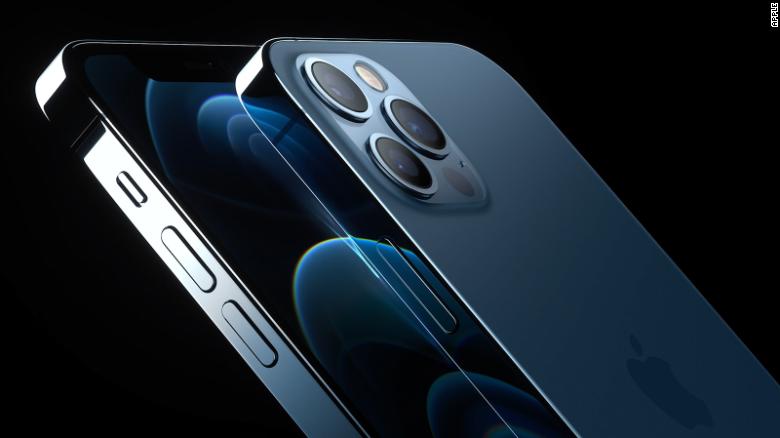
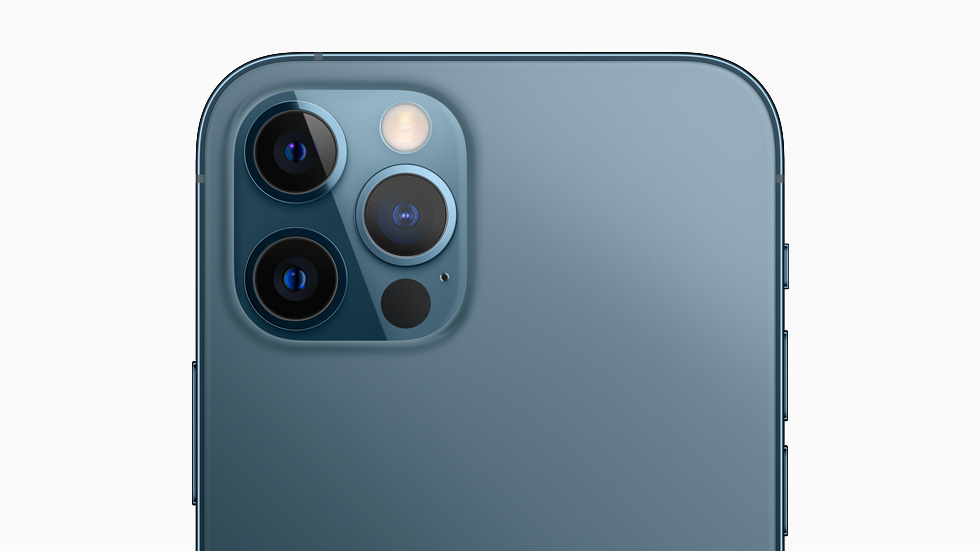
Apple today announced iPhone 12 Pro and iPhone 12 Pro Max, introducing a powerful 5G experience and advanced technologies that push the boundaries of innovation for users who want the most out of iPhone. iPhone 12 Pro models feature a new design and edge-to-edge Super Retina XDR displays, the largest ever on iPhone, protected by the all-new Ceramic Shield front cover, which provides the biggest jump in durability ever on iPhone. The Apple-designed A14 Bionic chip, the fastest chip in a smartphone, powers impressive computational photography features including the all-new Apple ProRAW for more creative control in photos, and enables the first end-to-end Dolby Vision video experience, up to 60 fps. The reimagined pro camera systems include an expansive Ultra Wide camera, a Telephoto camera with an even longer focal length on iPhone 12 Pro Max, and new Wide cameras to capture beautiful professional-quality images and video in bright and low-light environments. iPhone 12 Pro models also introduce a new LiDAR Scanner for immersive augmented reality (AR) experiences and MagSafe, which offers high-powered wireless charging and an all-new ecosystem of accessories that easily attach to iPhone.

iPhone 12 Pro and iPhone 12 Pro Max will be available in four stainless steel finishes, including graphite, silver, gold, and pacific blue. Pre-orders for iPhone 12 Pro begin Friday, October 16, with availability beginning Friday, October 23. iPhone 12 Pro Max will be available for pre-order Friday, November 6, and in stores beginning Friday, November 13.

A Superior 5G Experience
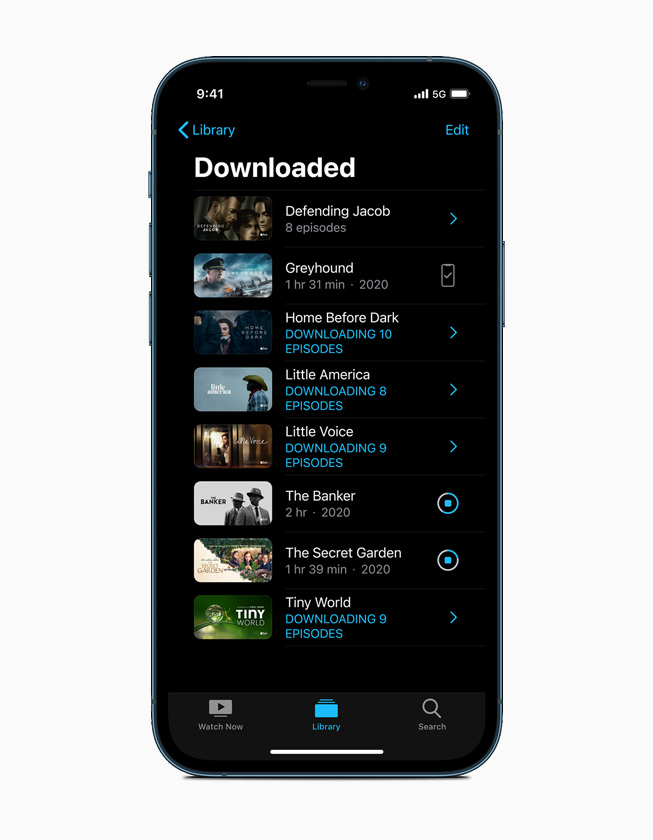
iPhone 12 Pro and iPhone 12 Pro Max deliver an advanced 5G experience on a global scale, engineered with a seamless integration of world-class hardware and world-class software. 5G on iPhone boasts improved speeds for faster downloads and uploads, higher quality video streaming, more responsive gaming, real-time interactivity in apps, FaceTime in high definition, and much more. Customers will also be able to enjoy a secure, fast connection, reducing the need to connect to public Wi-Fi hotspots.
A14 Bionic: Powerful and Efficient
Generations ahead of the competition, A14 Bionic is the first chip in the smartphone industry built on 5-nanometer process. Faster and more efficient than ever, A14 Bionic has the fastest CPU and GPU by up to 50 percent compared to the fastest competing smartphone chips, enabling console-quality gaming experiences, powerful computational photography, and more, while delivering great battery life. Pushing the limits of machine learning (ML), A14 Bionic features a 16-core Neural Engine — for an 80 percent increase in performance — that is capable of completing 11 trillion operations per second, enabling improved performance on even the most intense ML models.

New Design and Innovative Display Technologies
Designed with premium materials, iPhone 12 Pro models boast a new, sophisticated flat-edge design that features a gorgeous surgical-grade stainless steel band paired with a precision-milled matte glass back, and introduces the incredibly durable Ceramic Shield. The Ceramic Shield front cover, tougher than any smartphone glass, goes beyond glass and is infused with nano-ceramic crystals to dramatically improve toughness and increase drop performance by 4x.

Versatile Pro Camera System

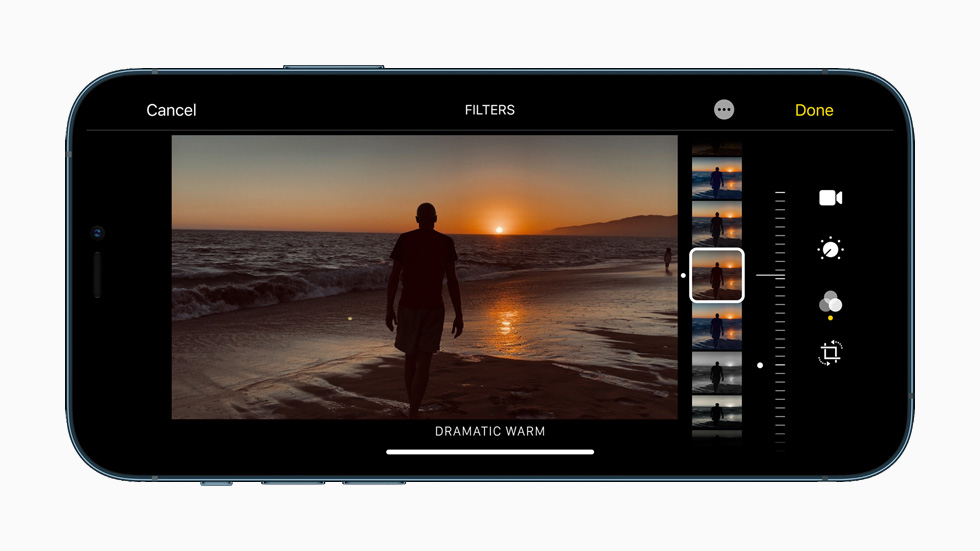
The world’s best pro camera is an even more versatile tool for all levels of photo and video enthusiasts with state-of-the-art camera hardware powered by A14 Bionic. Together with the new image signal processor (ISP), A14 Bionic drives increased image quality and enables powerful computational photography capabilities not possible with traditional cameras. iPhone 12 Pro models also feature the new Apple ProRAW, coming later this year, which combines Apple’s multiframe image processing and computational photography with the versatility of a RAW format. Users can experience full creative control over color, detail, and dynamic range natively on iPhone or with other professional photo editing apps.

Disney Reorganizes Business Structure to Focus on Streaming

0

Disney announced Monday, a major reorganization move to boost its streaming services. The entertainment industry is among the hardest hit by COVID-19, that forced many companies in the entertainment ecosystem, including Disney, to think of new strategies to stay in business.

Disney has been riding on Disney+, the streaming service it launched in November last year, as the pandemic took its toll on businesses. The service offers came at $6.99 monthly subscription, a price cheaper than of many competitors, which thus spurred the channel to unprecedented growth within a short period and appears like a lifeline to the troubled company.

Disney drew more than 100 million subscribers to its Disney+, Hulu and ESPN+ streaming worldwide.

It appears the company is acting on the advice of activist investor Daniel Loeb of hedge fund Third Point, who had earlier urged Disney to forgo a dividend payment and double its programming investment in streaming.

“We are pleased to see that Disney is focused on the same opportunity that makes us such enthusiastic shareholders; investing heavily in the (direct-to-consumer) business, positioning Disney to thrive in the next era of entertainment,” Loeb said in a statement.

Other Disney investors see the restructuring as the right move as it uses the direct to consumer model which is believed to be the future of many businesses.

“This is further proof that the direct to consumer model is not only well received, but more critical than ever to Disney’s future. These moves will not only result in higher quality content, and focused distribution, but allow the company to streamline corporate complexity and hopefully lower expenses,” said Tip tiller, a Disney investor and managing partner at hedge fund Gullane Capital Partners.

Under the restructuring, Disney will separate the development and production of programming from distribution to be more responsive to consumer demands.

“Given the incredible success of Disney+ and our plans to accelerate our direct-to-consumer business, we are strategically positioning our company to more effectively support our growth strategy and increase shareholder value. Managing content creation distinct from distribution will allow us to be more effective and nimble in making the content consumers want most, delivered in the way they prefer to consume it,” said Disney Chief executive Bob Chapek.

The revamp means Disney studios, general entertainment and sports business would come under one division while distribution and commercialization would fall under a separate global unit, the company said.

Under the new structure, Disney said its creative teams would develop and produce programming for streaming and traditional platforms, and the distribution group would decide where customers would see it.

However, the reorganization has come at a cost. Chapek told CNBC in an interview that there would be layoffs as a result of centralization of functions.

As part of its reorganization strategy, Kareem Daniel, who used to be the president of consumer products, games, games and publishing will head the new media and entertainment group.

Alan Horn and Alan Bergman will continue to head Disney’s studio operations, which will manage programming from big franchises including Marvel, Star Wars, Disney animation and Pixar. Peter Rice will run general entertainment programming and Jimmy Pitaro will oversee sports, Disney said.

Disney+ strategically became a saving grace for the entertainment company as the global health crisis delayed Disney’s film, stalled productions and halted social activities.

With Disney’s parks shuttered, the company’s profit dropped a whopping 91% last quarter, an indication that it needed to act fast to savage what is remaining. Streaming thus became a strategy to the rescue – following Loeb’s argument that the company needs to cut its dividend to increase spending on new TV shows and movies for a quick sign up of new customers.

Disney said it would provide more information on its streaming strategy on investor day.

The Opera, OPay Big Conflation – Investors Sue in New York

0

Poor investors – that was a convoluted one from Opera and OPay. Yes, “investors in web browser company Opera … told a federal judge in Manhattan that the company and some of its brass must face their proposed securities class action because Opera failed to properly inform them about its participation in the fintech sector in the leadup to its 2018 public offering.” Yes, Opera, the browser business, omitted fintech from its IPO, investors say.

OPay (not Operahad a microlending business (among many other businesses). Plaintiffs improperly conflate Opera and OPay in the complaint,”

The owner of Opera (he bought it from the European creators) is known as the kingpin of fintech including OPay, the category-shaking operator in Nigeria. Some investors thought they were buying into OPay without knowing OPay was not part of the Opera IPO deal. Not sure about that though, as IPO is never on a word of mouth, everything is written down. They could have read properly.

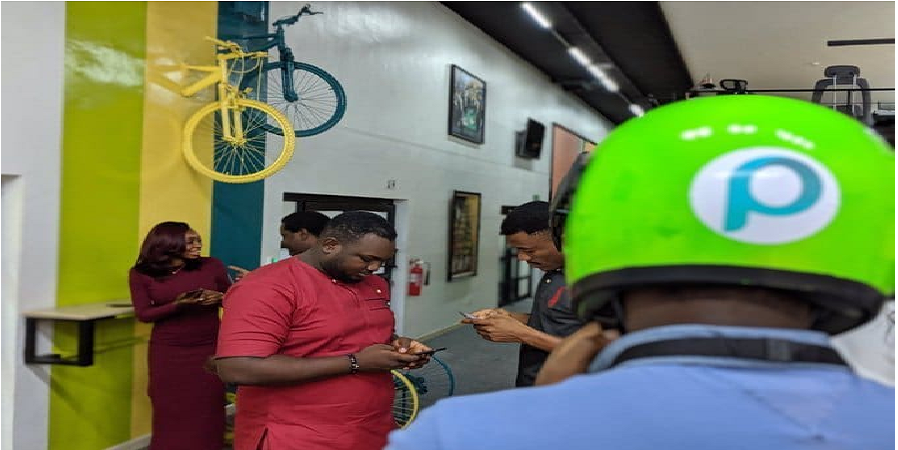
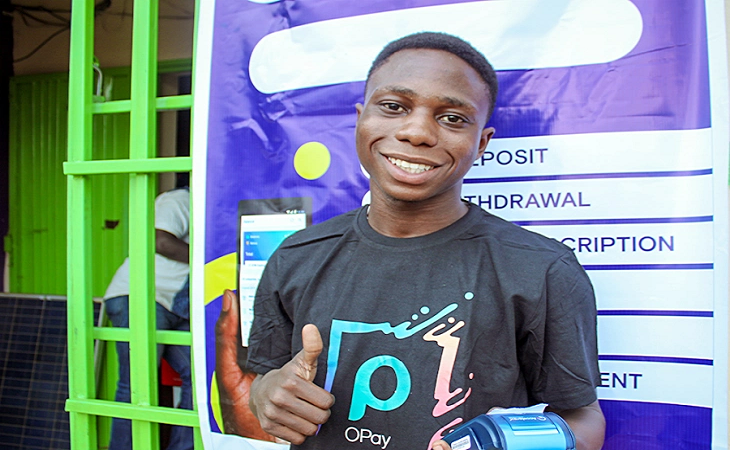
OPay today, the company claims, holds 60% of the mobile money market in Nigeria with excess of 5 million customers. If that is true, and with its claimed 300,000 agents, OPay is bigger than Paga, First Bank and other banks on agency banking size. So, looking at the trajectory and the huge prize ahead, the investors want help from the court on Opera and OPay.

Largely, Opera is not a great business but OPay is a superb venture. Of the $301 billion consumer transactions in Nigeria, more than 95% remain on cash. So, there is a huge prize in this business of digitizing payment. Investors want some of those goodies as part of investing in Opera. The court has a job at hand.

Tekedia Mini-MBA for Governments Signs A Major Client

0
The coat of arm of Nigeria

This morning, I spoke with a governor. Tekedia Mini-MBA for Governments gets its first major client. Our proposal to state is simple: we will help you transform from being inventive to becoming innovative. 

Tekedia Mini-MBA Corporate is a customized version of the general Tekedia Mini-MBA. It is  designed for private and public institutions. It focuses on the same theme of innovation, growth and digital execution. But unlike the 12-week general Mini-MBA, the Corporate vision goes for 4, 6, 8,10 or 12 weeks.

Through Tekedia Mini-MBA for Governments, a flavour of Tekedia Mini-MBA for Corporates, but structured for the public sector, we work with governments across many dimensions which include training of workers, training of constituencies (like youth), acceleration of innovation initiatives, and more. Email for our brochure.

Ending SARS In A Complex System In Nigeria

0

The first law of ecology says that everything is connected to everything. This law is the first of the four ecological laws as outlined by Barry Commoner in his 1971 book The Closing Circle.

Ecology is described by Farnam Street as the study of relationships and processes linking living things to the physical and chemical environment.

It can also be seen, simply, as the relation of the different elements that make up a complex system.

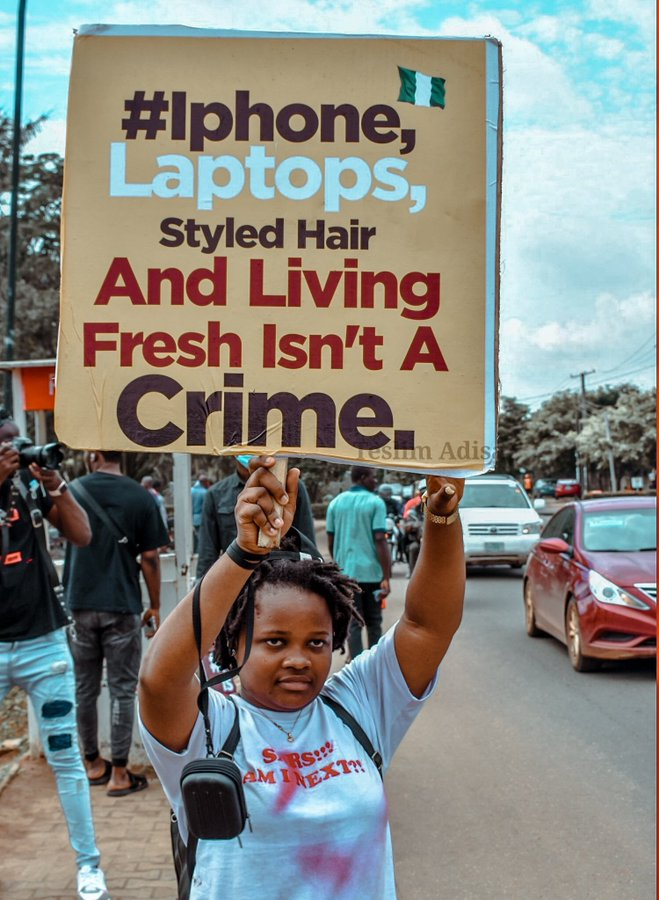
In view of the recent dissolution of the Special Anti Robbery Squad by the IG of police, the first law of ecology tells us that in a complex system, like the Nigeria society, the dissolution is connected to other things.

Yes, the disbandment will help curb police brutality, but that won’t be all, as there is also a likelihood of it resulting in an increase in insecurity, which may in the long run cancel out the calm, peace, and needless loss of lives we are going to get as an effect now.

A friend, upon hearing that SARS has been disbanded reluctantly told me that the government should better come up with another security outfit, because it is SARS that terrifies these bad boys.

True to that, we can all agree that SARS wasn’t created to kill innocent Nigerians, rather it was created as a special outfit of the Nigeria Police Force, which is currently wallowing in a state of utter ineffectiveness, to better combat crime and criminality.

SARS has since its creation become reputable for tactical assaults against criminal elements, creating a kind of fear of criminals which the NPF, due to its numerous inefficiencies, has been unable to create. Only, in this process, we see the emergence of an evil we never envisaged —a SARS which in the process of doing its job went too far, and became a threat to, in addition to criminals, the lives of innocent citizens.

Note, the emergence of a brutal SARS is a second-order outcome of the creation of a police unit whose first-order effect is to fight crime well enough; and this goes to show that too often we are more likely to not consider the second-order effect of our actions. In a complex system where everything is connected to everything, our actions will have immediate consequences, but things won’t stop there, as the immediate consequences will escalate into other, second-order, consequences which are not always visible to us from the point of our actions.

By disbanding SARS, we shouldn’t forget that there is likely going to be a second-order consequence which, as I have stated earlier, is the likelihood of increased insecurity, which may in the long run cancel out the positive, present effect we got from disbandment.

Another critical thing we can take away from the first law of ecology is that, as a result of the interconnection of things, a single action may not always be enough to fix a problem in a complex system; and to this end I’ll like to say that just disbanding SARS is not enough.

Yes, the IGP had on Sunday outlined further steps the force will be taking following the disbandment. Among the things outlined is that all SARS employees are to be redeployed immediately; that is, fix them into other sections of the NPF.

The disbandment is an important first move, but redeploying these guys, I’m not sure. It begs the question of what the real problem is, is it SARS officers, or is it the system.

If the officers are the problem, there is no guarantee they won’t go rogue even as they work in other wings of the NPF. Redeploying them shows we don’t think they’re the problem, so we are left with if the system is the problem.

If the system is the problem, we still have to be fearful of the creation of another police unit to combat crime and criminality, a move included among the next moves of the police after the disbandment.

We have to make sure we don’t disband SARS and still create another SARS.

It is a faulty system that created a faulty police unit like SARS, but if we don’t fix the system, there is a likelihood it will continue creating a faulty police unit.

Consequently, other moves should follow disbanding SARS. The first is to ensure crime doesn’t increase; and the second, if we are going to create another police unit, we should do it in such a way that we don’t create, from a faulty system, a faulty police unit.

At the end, a total reform of the NPF (the system) is what will ensure we effectively deal with police brutality, and still be able to fight insecurity.