

Notes: None. Tekedia LIVE Wed | 11am-12 noon | Digital and Cybersecurity – Adetokunbo Omotosho, Infoprive | Zoom link Fri | 11am-12 noon | Wealth Management – Japheth Jev | Zoom Link Saturday | 11am – 12noon | General – Ndubuisi Ekekwe | Zoom Link Week Theme: Finance, Investing, Fundraising Introduction to the Week — […]
The Good News from Edo State
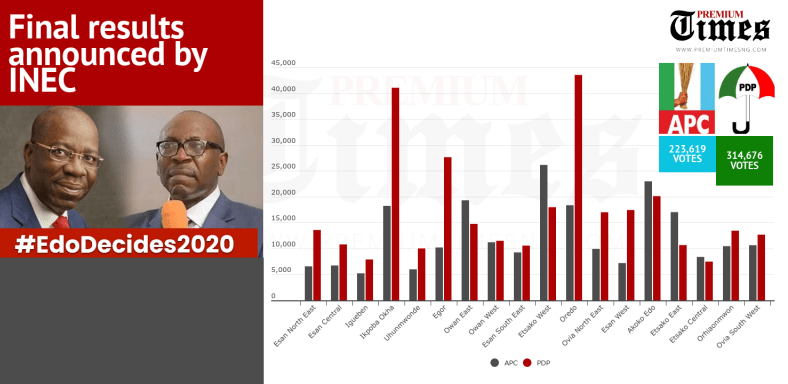
In Edo state, governor Godwin Obaseki, the PDP candidate, has scored the highest number of votes to defeat APC’s candidate, Osagie Ize-Iyamu. Mr Obaseki polled 307, 955 votes while Osagie Ize-Iyamu received 223, 619 votes. I am not from Edo state and certainly know little on the politics therein. But I cannot pass the opportunity to comment on how APC kicked Obaseki out of the party by disqualifying him on technicalities. This APC loss is also a low point for the former labour leader and APC chairman, Adam Oshiomole.
This is not a PDP victory or an APC loss. This is a victory for the Edo people. Yes, godfatherism politics has indeed died in Edo to a large extent.
Let us celebrate the Edo people here. Forget the loser and winner; they are the same. Watch out, Obaseki may be planning to return to APC while Ize-Iyamu makes it back to PDP for the next season. It is permanent interest for them, and only them.
Looking For A Telecom Business Executive To Develop A 5G Course for Tekedia Mini-MBA

Good People, I am looking for a telecom business executive who has worked on the commercial and business sides of 5G networks. We are adding 5G as one of the technologies we want our next edition Tekedia Mini-MBA members to understand. Yes, we want them to know the promises and possibilities so that they can prepare.
This sub-course should also include insights on how satellite broadband services like SpaceX Starlink could affect value-chain investments (MVNOs, airtime resellers, etc) on GSM terrestrial services (MTN, Glo, Safaricom, etc). Recently, SpaceX announced that its latency has achieved parity with most terrestrial networks: “SpaceX says its satellite internet service, Starlink, has achieved a latency under 20 milliseconds, which is on par with ground-based broadband.”
This course is expected to give clarity on how our members can reconcile these evolving paradigms, equipping them with practical insights to thrive at work. CDMA challenged land telephony in Africa. GSM destroyed CDMA and made land telephony largely history. Satellite broadband offers a new basis of competition if affordable satellite phones and improved latency materialize. What is the future of GSM and how can value chain investors plan for any potential redesign?
We want our learners to take this course and then return to their offices with deeper perspectives on the future. This course should inform, educate, etc around these nexus.
We will appreciate any recommendation; our contact is here.
Focused and Attentive Leadership: The Lesson of Burning Bush and Call to Mission
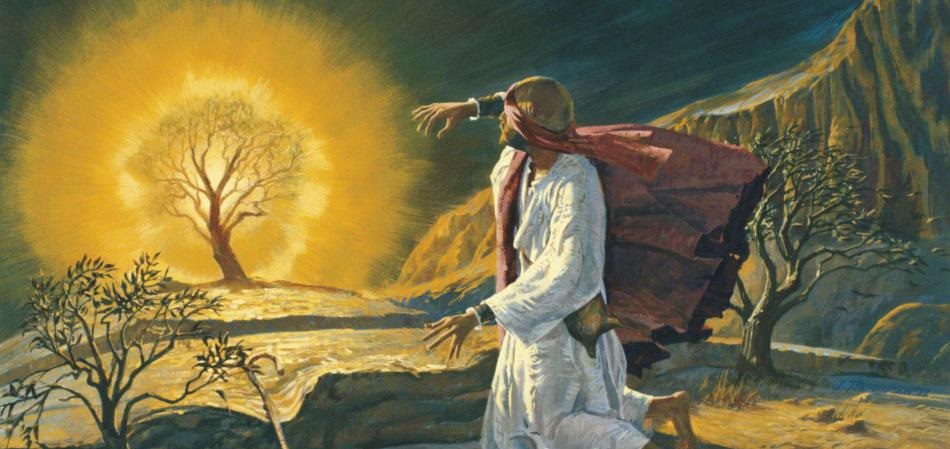
He was on Horeb, and saw a burning bush: the bush was on fire but it did not burn up. So he thought, “I will go over and see this strange sight—why the bush does not burn up.”
First, his attention was needed [undistracted] for a very important message. He needed to be consumed by something uncommon. Second, his bravery was tested: he went over instead of running away when he saw the burning bush.
Then, his God called him “Moses! Moses!” and revealed a mission: “I am sending you to Pharaoh to bring my people the Israelites out of Egypt”.
In companies, only undistracted and attentive people are typically called to execute higher missions – think of new market opportunities and shifts in customer preferences. Companies typically put the selected ones through tests with uncommon KPIs and targets to see how they respond.
Some workers give up while others take the challenges and look up. Usually, in the middle of that challenge, glory comes [Moses would lead Israel; he has been hired]. In business, the role could be a CEO, Executive Director, etc!
Always remember, your most useful talent is the one that the world knows that you possess. Unless someone knows, that call to mission will not come.
Nigeria And Its History Failings

As I recently listened to a popular sports show on a local Lagos radio station, it was the same day when the Nigerian domestic football fraternity was celebrating the birthday of one of Nigeria’s most under-recognized – at least- players in person of Victor Ezeji. For starters, Victor Ezeji is a retired professional footballer who duly paid his dues in Nigerian football. This was one of those Nigerian footballers who made a tremendous success of his career playing back home in the Nigerian domestic football league. In fact, Ezeji played for 20 solid years on the domestic front, with a very short stint abroad in Tunisia and is regarded by any above average follower of Nigerian league football as a legend of the game when it comes to home-based professional football.
Therefore, back to the initial discussion. As the radio show went on with the anchor eulogizing the former footballer’s achievement, the turning point for me was when he asked a very vital question of whether it was possible to see images or videos or any other material of Ezeji’s debut league game. There is even a big doubt that the player himself can lay hold of anything of material matter relating to that first game, this is not to even talk of other matches played throughout his career. Statistics as simple as the total number of career goals scored by Ezeji in the league is hard to come by.
This then takes us to the crux of this discourse, which is the disposition and almost ultimate disregard for history as a country. At this point, it goes without saying that Nigeria’s culture of data and record keeping is one that is at an abysmal level, which can summarize the general attitude and regard for History and related matters. Not long before listening to that particular radio show, I had been watching a documentary on the creation of Nigeria. Right From pre and post amalgamation, to pre and post independence and all the in-betweens, a sober moment during that clip was the civil war period.
What actually struck was the effect the war had on the country during that time right up to the present day and upon reflection to discover that the present generation of younger Nigerians have absolutely next to knowledge or interest in this piece of history that still shapes the country till date. Another important moment of Nigerian history was the June 12 1993 elections.
It is widely regarded as the most credible polls held in the Nigerian history, with the late Chief MKO Abiola regarded as the winner. Not a few experts and commentators have dubbed him fittingly as “the president Nigeria never had”. Despite all this, a critical question comes to mind; that is, how many generations of Nigerians born from the start of the new millennium and later genuinely shows interest or can confidently recount what happened at those periods in Nigeria’s lifetime, which then leads to the next issue.
A couple of years ago, it was public knowledge that History as an academic subject was scrapped from the Nigerian school syllabus. A move that seemed preposterous and seriously ill advised which eventually turned out to be counter-productive.
It took tremendous efforts by a combination of experts and scholars in the field, under the Historical Society of Nigeria as a body to reinstate History back to the learning curriculum- a leading figure for this effort was Professor CBN Ogbogbo, Professor of History at the University of Ibadan and other notable experts. The need for a society to understand their history is a fundamental part of its progress. As it is often said, that ‘history repeats itself’ when we fail/refuse to learn from it which is sadly where Nigeria finds herself as an entity. The disregard and poor attitude to history is not only reflected in the manner of the younger generation, it is also seen in the older set of Nigerians. History is a subject that should never be toiled with in the first place. The significance of recognizing this is that it allows for proper context when trying to plan or think of the next course of action. It is crucial for us as individuals and as a nation to acknowledge the past in our present reality in order to be able to project the future.
The effectiveness of historical awareness reveals itself when crucial subjects of national importance are brought to the front burner. An even recent event in the political scene gives us a glimpse into past occurrences. A peripheral instance is the recent probe into the activities of the Niger Delta Development Commission (NDDC) – an agency established and saddled with the power to handle affairs of the south south region of Nigeria. This is in addition to the Ministry of the Niger-Delta created recently as 2015. A basic knowledge of Nigerian politics will make you realize that there have been several probes in the past by the National Assembly with nothing tangible to show for them except for the usual drama/shenanigans thrown up by the major actors in them.
At the end of the day, we are back to the proverbial square one!
While it is often said that you cannot change the past, we have the power and ability to change the future, but that ability can only be utilized with proper understanding of the past. A critical look at things will indicate that many challenges we face presently as a country would have been avoided if only we had good students of history at the helms of affairs.
A former governor of Lagos and current minister of works and housing for the federal Republic of Nigeria, Babatunde Fashola, in a recent meeting with education stakeholders called for a unified version of Nigeria’s history. This means a singular version that can be taught in the various institutions of learning right from the primary level onwards. This suggestion probably represents a good starting point in our quest to correct the misdemeanours of the past in terms of passing on historical knowledge to Nigerians from a tender age and preserve legacies.