DD
MM
YYYY

PAGES

DD
MM
YYYY

spot_img

PAGES

Home Blog Page 62

Turkey’s $18 Billion Fund Liquidation Draws Nearly 500,000 Investors Into Market Crisis

0

Turkey’s latest stock-market turmoil has drawn nearly half a million individual investors into a regulatory intervention involving more than $18 billion of investment-fund assets, exposing the liquidity and valuation risks that can emerge when large pools of money are concentrated in thinly traded shares.

The Capital Markets Board, known as the SPK, said on Wednesday that 455,758 individual investors hold stakes in the funds ordered to be liquidated. The figure, based on records from Turkey’s central securities depository, gives the clearest indication yet of the retail reach of a market disruption that began with difficulties meeting withdrawal requests and quickly spread into the wider stock market.

The SPK had ordered the liquidation of 131 funds managed by seven portfolio-management companies after the market selloff exposed problems at some funds. Authorities have also suspended transactions involving the affected funds and introduced measures designed to prevent the liquidity shock from generating a broader wave of forced selling.

The intervention came after some funds struggled to meet redemption requests as investors rushed to withdraw their money. That created a classic liquidity problem: funds can hold assets that appear valuable when markets are functioning normally but cannot necessarily be sold quickly at those prices when many investors seek cash simultaneously.

The problem became more acute because parts of Turkey’s equity market have relatively limited free floats and relatively few highly liquid companies capable of absorbing large institutional transactions. Reuters reported that the BIST-100 index fell more than 8% last week, its worst weekly performance since March 2025, as concerns over funds exposed to illiquid stocks intensified.

The mechanics have become necessary because if a fund receives heavy redemption requests, it must raise cash by selling assets. Where the portfolio contains thinly traded shares, those sales can push prices sharply lower. Falling prices reduce the value of the remaining portfolio, potentially encouraging more investors to redeem. That can create a feedback loop in which withdrawals cause selling, selling causes lower valuations, and lower valuations generate further withdrawals.

Turkey’s authorities moved quickly to interrupt that cycle.

The central bank increased funding available to banks, while regulators eased certain margin and capital requirements to reduce the risk of forced sales elsewhere in the market. Reuters reported that central-bank repo funding rose to 603 billion lira, while banks’ interbank borrowing limits were increased tenfold. The SPK also temporarily eased margin-trading requirements.

The liquidation process itself is unusually significant. Under the SPK’s framework, two banks have been appointed as custodians and will conduct the wind-down process. Portfolio assets are to be converted into cash while taking account of market depth and liquidity conditions, with proceeds distributed to investors according to their holdings. The liquidation period is expected to run for up to three months, although the regulator can extend it.

That structure makes the coming weeks important for investors. The key question is how much cash can be realized from underlying assets without triggering another destabilizing wave of selling.

The episode also points to weaknesses that existed before the latest panic.

Turkey has hundreds of listed companies, but relatively few have the size and free float needed to absorb substantial institutional investment. Many large businesses remain closely controlled by founding families or have limited shares available for public trading. That can leave funds concentrated in a relatively narrow group of stocks and make prices more sensitive to changes in fund positioning.

Regulatory changes introduced in late August added another source of pressure. The SPK imposed limits on funds’ exposure to illiquid stocks, with limits of between 2% and 8% being phased in over the coming months. Analysts told Reuters that the rules forced some funds to reassess concentrated positions and liquidity requirements, contributing to selling pressure before the wider market decline.

The investigation into trading in three companies has added a separate dimension to the crisis.

The SPK filed criminal complaints involving transactions in Katilimevim, Gundogdu Gida and Destek Finans Faktoring. Reuters reported that the regulator had referred 38 people to prosecutors over alleged market manipulation and imposed two-year trading bans on them. Pusula Portfoy, a fund manager linked to Katilimevim, was also barred from trading the shares on its own account for two years.

Turkish media reported that five people detained in recent days appeared in court on Wednesday and were jailed pending trial. The Justice Ministry said individuals face charges including violations of the capital markets law, membership of a criminal organization and aggravated fraud allegedly committed by company executives or others acting on behalf of a company during commercial activities.

Those are allegations rather than findings of guilt, and the criminal proceedings will determine whether the suspected conduct occurred.

The connection between the trading investigation and the fund-liquidity crisis is nevertheless significant for market confidence. The three companies under investigation had experienced exceptionally strong share-price gains before the recent selloff. Reuters reported that Katilimevim and Destek Finans remained more than 300% higher for the year even after their recent declines, while Gundogdu Gida was still up more than 140%.

That gap between headline valuations and the ability to transact in size is at the heart of the problem. A quoted market price does not necessarily mean that a large portfolio can be liquidated at that price. When free float is limited and trading becomes one-sided, the executable value of an asset can fall substantially below its previous marked value.

The episode is also occurring at a sensitive time for Turkey’s efforts to deepen its capital markets and attract international investment. MSCI has previously raised concerns about possible coordinated trading involving fund holdings and smaller Turkish-listed companies and has indicated that regulatory progress could affect Turkey’s status in its equity indexes.

For the government, containing the immediate liquidity shock is only the first task. The more difficult issue is restoring confidence in valuation, governance, liquidity management and the ability of investment funds to honor redemption obligations under stressed conditions.

The nearly 500,000 investors now caught up in the liquidation process make that challenge considerably more consequential than a problem confined to a handful of fund managers.

Microsoft Announces New Round of Job Cuts, Affecting 500 Roles

0

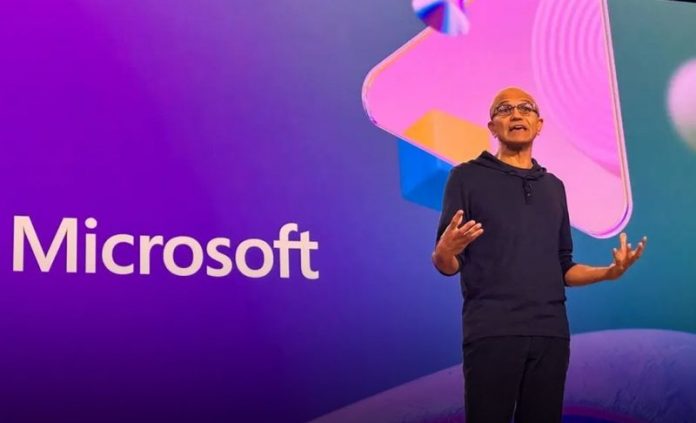
Microsoft is cutting another 500 jobs, with most of the reductions coming from Xbox, as the company pushes deeper into a restructuring of its gaming business following years of expansion and acquisitions.

The latest cuts, announced Tuesday, include 268 roles across Halo Studios, other first-party studios and Xbox Game Studios’ management and central functions, according to a memo from Xbox executive Matt Booty. A smaller number of positions are also being eliminated in other Microsoft businesses, including Cloud + AI.

The reductions come just two months after Microsoft announced plans to cut about 4,800 jobs, or 2.1% of its global workforce, in July. Within gaming, Microsoft is working through a broader plan to reduce Xbox’s workforce by roughly 20% by the end of its fiscal year while consolidating studios, reshaping management and deciding which businesses and properties it should continue to own.

Booty said the latest actions, combined with studio divestitures completed since July, mean Xbox is about three-quarters of the way through the restructuring previously announced.

The scale of the changes shows that Microsoft’s gaming reset is not simply a conventional cost-cutting exercise. The company is reorganizing how its studios operate, shifting responsibilities among major publishing groups and reducing the number of separate business units.

“First, we are eliminating 268 roles across Halo Studios, other first-party studios, and the XGS management and central functions layer,” Booty wrote in the memo. “The actions completed since July, inclusive of the studio divestitures, bring us roughly three-quarters of the way through previously announced restructuring.”

Xbox Consolidates Its Studios

The restructuring will give several of Microsoft’s largest gaming organizations broader responsibilities.

Activision will expand its remit to include World’s Edge and Rare. It will also take responsibility for developing the next Halo game through a new purpose-built team separate from the teams working on Call of Duty.

Halo Studios will retain a smaller team responsible for supporting the existing Halo community and games already on the market.

Bethesda will expand its responsibilities to include Obsidian, which will continue work on existing projects including Grounded and a new Fallout project being developed in collaboration with Bethesda Game Studios.

King, Microsoft’s mobile gaming business, will take responsibility for Microsoft Casual Games, combining two organizations focused on casual games and live operations.

Playground and Turn 10 will also be combined into a single studio focused on the Forza and Fable franchises.

The changes effectively reduce organizational complexity across Xbox’s first-party portfolio. Rather than maintaining a large number of separately managed studios, Microsoft is grouping teams around franchises and publishing capabilities. That could make the gaming division easier to manage, but it also represents a significant reversal from Microsoft’s acquisition-driven expansion of the past several years.

Microsoft spent tens of billions of dollars building its gaming portfolio, including the acquisitions of Bethesda parent ZeniMax Media and Activision Blizzard. Those deals gave Xbox an enormous collection of franchises and studios, but they also created a much larger and more complicated organization.

The current restructuring suggests Microsoft is now placing greater emphasis on extracting value from those assets rather than continuing to expand the portfolio at the same pace.

Divestitures Reshape Microsoft’s Gaming Footprint

The restructuring also includes the sale or separation of several studios.

In August, Compulsion Games and Double Fine returned to management with their intellectual property, back catalogs, and funding. Undead Labs has now completed a similar transition and will release State of Decay 3 day one on Game Pass through a new publisher.

Other studio changes are less certain.

Two separate agreements involving Ninja Theory fell through, according to Booty. Microsoft will begin consultations with employees over a proposed closure while continuing to explore alternatives.

Consultations involving Arkane are also continuing and are expected to run through the end of the year.

The decisions highlight the difficult economics of maintaining large game-development organizations. Major titles can require years of development and hundreds of employees, while unsuccessful projects can leave publishers carrying substantial costs without a predictable return. At the same time, Microsoft’s Game Pass strategy creates a different challenge. The company has increasingly emphasized subscription access to its games, which can broaden audiences but changes how Microsoft monetizes individual releases.

The restructuring appears designed in part to concentrate resources around franchises with established audiences while reducing duplication between studios and management structures.

AI Spending And Broader Microsoft Cuts

The Xbox reductions are occurring alongside broader workforce adjustments at Microsoft as the company continues shifting resources toward artificial intelligence and cloud infrastructure.

Although only a small portion of the latest cuts outside gaming affect Cloud + AI, the broader pattern illustrates the competing priorities facing Microsoft. The company is spending heavily on AI infrastructure, data centers, and model development while simultaneously looking for efficiencies across more mature businesses.

That does not mean the Xbox cuts are simply funding AI investment. The gaming division has its own operational pressures, and Microsoft’s memo focuses primarily on studio consolidation and restructuring. But the contrast is significant: Microsoft is simultaneously increasing investment in emerging AI capabilities while reducing headcount and organizational complexity elsewhere.

The company’s July layoffs affected thousands of employees across its global operations, and the latest Xbox cuts demonstrate that the restructuring is continuing beyond that initial round.

For Xbox, the immediate objective is to complete the reset while maintaining what Booty described as a strong upcoming game pipeline. He said the company would use an October 6 town hall to bring the broader Xbox organization together to review the restructuring and look ahead to its upcoming releases.

The outcome of the reset will ultimately be measured less by the number of positions eliminated than by whether Microsoft can produce major games more efficiently and turn its enormous portfolio of franchises into stronger returns.

The company now has fewer organizational layers, fewer independently managed studios and a clearer concentration of responsibilities across its major gaming groups. The trade-off is that the restructuring comes with further job losses and the closure or separation of studios that were previously part of Microsoft’s expanded first-party strategy.

CBN’s 350bp Rate Reset Reshapes Nigeria’s Monetary Policy With Mixed Expectations

0

The Central Bank of Nigeria has delivered its biggest interest-rate reduction in nearly two decades, cutting the Monetary Policy Rate by 350 basis points to 23% as easing inflation, stronger economic activity and improved macroeconomic stability give policymakers room to recalibrate monetary conditions.

The decision, announced Tuesday by CBN Governor Olayemi Cardoso after the Monetary Policy Committee’s 307th meeting in Abuja, reduced the benchmark rate from 26.5% and marked the second reduction this year. The new MPR is the lowest since February 2024, when it stood at 22.75%.

The scale of the move is significant by historical standards. The 350-basis-point reduction is the biggest cut since December 2006, when then-CBN Governor Charles Soludo reduced the benchmark rate by 400 basis points from 14% to 10%. The CBN subsequently implemented 200-basis-point reductions in 2007 and 2009.

The latest decision also comes after the CBN kept the MPR at 26.5% at its July meeting, making the size of the adjustment particularly notable.

Cardoso has sought to distinguish the decision from a conventional shift toward looser monetary policy. The CBN described the move as a “reset”, explaining that the recalibration is intended to make monetary policy more effective rather than signal an abandonment of its price-stability objective.

“The MPC emphasized that the recalibration of the corridor does not constitute a change in the current monetary policy stance, but rather an operational reset to enhance the effectiveness of monetary policy and support the transition to an inflation targeting framework,” Cardoso said.

The move is considered necessary because the central bank had increasingly faced a gap between its formal policy rate and the rates actually influencing financial markets.

“There is a clear disconnect between CBN’s Monetary Policy Rate (MPR) and effective market rates,” Cardoso said. “The MPR was 26.5% while the interbank rate stood around 22%, same as the standing deposit facility rate. Thus, the MPR became the de jure rate with the SDF rate as the de facto.”

The CBN said banks had increasingly used the Standing Deposit Facility rate in pricing financial transactions, weakening the transmission of monetary policy to the real economy. The latest reset therefore attempts to bring the official benchmark closer to the rates already prevailing in the financial system.

The immediate backdrop to the decision is the improvement in Nigeria’s inflation and growth indicators.

The MPC said headline inflation moderated for a third consecutive month to 15.39% in August 2026. Real GDP growth accelerated to 4.43% in the second quarter, while the composite Purchasing Managers’ Index reached 52.7%, providing further evidence of expanding economic activity.

The CBN said the moderation was occurring across major components of inflation rather than being driven by isolated temporary movements.

“The simultaneous moderation across major inflation components provides stronger evidence that underlying price pressures are easing rather than reflecting temporary movements in individual components,” the MPC said.

The committee also pointed to the combination of falling inflation and stronger output as evidence that the economy is entering a more balanced phase.

“Simultaneous strengthening of output and moderation in inflation is particularly significant,” the MPC said. “The coexistence of accelerating economic activity and broad-based disinflation suggests that recent macroeconomic adjustment is becoming more balanced, providing greater scope to recalibrate the monetary policy framework without abandoning the commitment to price stability.”

That is a major change in the policy environment from the period when the CBN relied on aggressive monetary tightening to contain inflation and stabilize the naira.

The MPC also cited sustained exchange-rate stability and improved inflation expectations as positive developments supporting the decision.

Rewane Warns of Pressure on The Naira

The biggest immediate concern surrounding the rate reset is its potential impact on the attractiveness of naira-denominated assets.

Bismarck Rewane, managing director of Financial Derivatives Company, described the move as a “jumbo cut” and warned that the size of the reduction could affect savings, investment flows and the exchange rate.

“So it’s a jumbo cut from 26.5% to 23%, 350 basis points is huge by any stretch of imagination. So that’s a big risk,” Rewane said in an interview with Channels Television.

The immediate foreign-exchange reaction was relatively muted. The naira traded around N1,387 to the dollar before briefly weakening to about N1,390 in the parallel market before returning toward N1,387.

The longer-term concern is that lower domestic interest rates could reduce the returns available to investors holding naira assets.

“Effect of a 1% rate cut, return on savings will fall by 0.12%. The stock market, potentially positive,” Rewane said.

He also said diaspora inflows could provide some compensation if foreign portfolio investment weakens.

“Diaspora flows will be a substitute for the foreign portfolio investments,” he said.

Rewane expects the naira could come under depreciation pressure, although he argued that the scale of any decline would depend on wider market conditions.

“…the Naira may depreciate, but not as much …, because the Naira fair value is about 1,150 Naira to a dollar,” he said.

The key issue is therefore not simply the nominal MPR, but the return investors receive after accounting for inflation and exchange-rate risk.

Rewane said the real rate of return had fallen from 11.1% to 7.61% following the rate reset.

“The real rate of return for investors here dropped from +11.1 to +7.61, it’s still very good for those who involve themselves in carry trade,” he said.

That still leaves Nigeria with a substantial positive real-rate differential, but the cushion is narrower than before.

Lower Rates Could Weaken Savings

The effect on domestic savings is another important part of the equation.

Nigeria needs higher domestic savings to deepen its financial system and provide a larger pool of capital for investment. Lower deposit and fixed-income returns could make saving less attractive if the decline in rates outpaces the improvement in household incomes and confidence.

Rewane warned that the country’s already-low level of national savings could come under additional pressure.

“Savings are a function of interest rates, very sensitive. You either save or you consume, but the amount, national savings is very low. So when you do this, it falls further,” he said.

He also warned that savers and investors could shift toward alternative assets if returns on naira instruments fall too far.

“The danger is that you may then begin to start to buy alternative assets. Which includes dollars, Bitcoin, we don’t know,” Rewane said.

This creates a policy balancing act for the CBN. Lower rates can support credit and investment, but excessively rapid declines in domestic yields could weaken the incentive to hold naira assets.

The fact that the CBN retained existing cash reserve requirements suggests that the rate reset is not an across-the-board removal of monetary restrictions. Commercial banks’ CRR remains at 45%, merchant banks at 16%, while the requirement on non-TSA public-sector deposits remains 75%.

Government Could Gain From Cheaper Borrowing

The fiscal implications may be among the most significant benefits of the rate reduction. Nigeria’s government has faced a substantial debt-service burden, and lower domestic interest rates could eventually reduce the cost of refinancing existing obligations and issuing new debt.

Rewane estimated that the Federal Government spends about N15.8 trillion on debt servicing.

“Government debt service, I think it’s important that we are spending about N15.8 trillion on debt service. By cutting this down sharply, the amount of money government is going to spend on debt service is actually going to reduce,” he said.

The benefit, however, will depend on how much of the CBN’s rate reduction is transmitted to government bond yields.

A lower MPR does not automatically mean that every government security will immediately become cheaper to issue. Investors will continue to assess inflation expectations, fiscal borrowing requirements, liquidity conditions, and the risk associated with Nigerian assets.

The rate reset nevertheless creates room for lower funding costs if the decline in the benchmark rate feeds through the yield curve.

Businesses Could See Funding Pressure Ease

The private sector is another major beneficiary if the reduction eventually translates into lower lending rates.

Jerry Igwilo, chief executive of Nisela Capital, linked the decision directly to the decline in inflation and the high cost of funding confronting Nigerian businesses.

“I think the inflation rate has consistently been dropping. So, that will allow them to give our people a little bit of relief. Now, that is actually the intention,” Igwilo said.

He connected lower interest rates to the government’s ambition of building a $1 trillion economy, arguing that companies need cheaper access to capital to expand.

“If you want to have a trillion-dollar economy, it also means that you have to do some certain things drastically to be able to support the economy… The only thing that central bank can do is to reduce interest rates. To say to businesses, we hear you. The cost of funding is very high. We hear you,” he said.

For companies carrying substantial naira debt, lower rates could reduce financing expenses and improve margins. Businesses could also find it easier to finance inventory, capital expenditure and expansion.

The transmission will not necessarily be immediate. Banks still have their own funding costs, liquidity requirements and credit-risk considerations, meaning the reduction in the MPR may not be passed through one-for-one to borrowers.

The effectiveness of the rate reset will likely depend heavily on whether commercial lending rates eventually move lower.

Equities Could Benefit

The stock market provides another transmission channel. Lower interest rates can make equities relatively more attractive compared with fixed-income instruments, while cheaper corporate borrowing can improve earnings for companies with significant debt.

Rewane said the relationship between interest rates and equity valuations could work in favor of stocks.

“If you are borrowing and you reduce that, then your margins will increase, and therefore your stock price will also increase, and that plays into the interest rates going to inverse relationship with equities,” he said.

The Nigerian stock market gained 0.18% following the announcement, according to the source material.

That initial market response is relatively small, but the broader effect could emerge over time as investors reassess the relative attractiveness of equities, government securities and bank deposits. For companies, the potential improvement in margins could be particularly relevant if the lower interest-rate environment coincides with continued economic expansion.

The rate reset also shifts some of the burden from monetary policy toward fiscal policy.

Rewane argued that monetary easing will have limited effectiveness unless government improves fiscal management and reduces leakages.

“I think the real issue is not coordination, it is to achieve fiscal consolidation, that is, you achieve price stability by blocking leakages. And so the fiscal authorities have their job cut out for them,” he said.

His argument is that lower interest rates cannot independently resolve Nigeria’s structural economic pressures. If government borrowing remains high, fiscal demand could offset some of the benefits of monetary easing. If fiscal pressures weaken confidence in the naira, the CBN could also find it more difficult to continue reducing rates.

Rewane noted that the CBN’s easing cycle had taken the MPR from 27.25% in September 2024 to 23%, a cumulative reduction of 4.25 percentage points, while inflation had fallen by about nine percentage points over the same period.

That divergence provides the central bank with a stronger case for recalibration, but it also raises the question of how much further rates can fall without changing investor behavior.

The Real Test Is Monetary-Policy Transmission

The significance of the 350-basis-point reset ultimately rests on whether the CBN can make monetary policy more effective. The central bank’s own explanation points to a problem that had developed during the tightening cycle: the formal MPR no longer adequately represented the rate conditions influencing financial markets.

With the MPR at 26.5% while the interbank and SDF rates were around 22%, the official benchmark had become increasingly detached from the rates at which banks and investors were operating.

The reset is intended to close that gap and support the CBN’s transition toward inflation targeting.

But the risks are equally clear.

A faster decline in yields could weaken the incentive to hold naira assets. If that leads to stronger demand for foreign currency, the exchange rate could come under pressure. If the naira weakens materially, imported inflation could return and limit the room for further easing.

That is why the CBN’s characterization of the decision as a “reset” matters. The central bank is not presenting the move as the beginning of unrestricted monetary loosening. It is attempting to align the policy rate with market conditions at a point when inflation is falling, and economic activity is strengthening.

Thus, the 23% MPR marks a new phase in Nigeria’s monetary-policy cycle. The country has moved from the aggressive tightening that followed the inflation and foreign-exchange shocks of the previous years toward an environment in which policymakers can begin testing the benefits of cheaper capital.

AI’s Criminal Arms Race Is Becoming a Governance Problem

0

Artificial intelligence is becoming one of the most useful tools in finance—and one of the most efficient tools for criminals.

According to TRM Labs, criminal use of AI rose 40% over the past year, reflecting how quickly scammers are incorporating the technology into increasingly sophisticated attacks.

The development points to a broader transformation in digital crime: the problem is no longer simply that criminals have better tools, but that those tools can operate at scale.

For years, online scams depended heavily on human effort. A fraudster might manually contact potential victims, construct convincing messages, impersonate a company executive or search for information that could make a scam more believable.

Generative AI changes the economics of that process. It can produce personalized messages, imitate communication styles, translate languages and automate repetitive interactions, allowing relatively small operations to target far more people.

Crypto markets are particularly exposed because transactions can move rapidly across borders and, once completed, can be difficult to reverse. A convincing phishing message or fabricated investment opportunity can therefore become a financial event within minutes.

AI does not necessarily create entirely new forms of fraud; instead, it can make existing techniques cheaper, faster and more convincing.

That creates an uncomfortable symmetry for cryptocurrency exchanges. The same technology being used to attack financial infrastructure is increasingly being deployed to defend it.

Exchanges can use AI and machine-learning systems to identify unusual transaction patterns, flag suspicious accounts, detect coordinated activity and prioritize investigations.

But this introduces another layer of risk. When an exchange relies on automated systems to identify potentially criminal behavior, the quality of those systems becomes part of the security architecture.

A model can produce false positives, miss sophisticated attacks or react incorrectly to unusual but legitimate behavior. In a financial environment, an error is not merely technical. It can mean a delayed withdrawal, a frozen account or a legitimate transaction being treated as suspicious.

This is where governance becomes as important as detection. KuCoin’s acquisition of ISO/IEC 42001:2023 certification for its AI management system illustrates the emerging focus on that problem.

The international standard addresses how organizations establish governance around artificial intelligence, including responsibilities, processes and oversight. Its significance is therefore different from a claim that an AI system will always make the correct decision.

An AI management certification cannot guarantee that an automated fraud-detection model will never make a mistake. What it can provide is a framework for asking whether an organization has established procedures for managing those risks.

Who is responsible when an AI system produces an erroneous result? How are models reviewed? How are failures documented? Can decisions be challenged? And how does an organization respond when criminals adapt to the system?

These questions will become increasingly important as AI becomes embedded in financial infrastructure. The next phase of crypto security may therefore involve an arms race between automated offense and automated defense.

Criminal groups can use AI to increase the volume and sophistication of attacks, while exchanges can use AI to process enormous quantities of transactions and identify anomalies that humans could not efficiently detect.

The decisive issue may not be whether AI is used, but whether its use is governed responsibly. As artificial intelligence becomes part of the machinery protecting billions of dollars in digital assets, transparency, accountability and human oversight are becoming security controls in their own right.

The technology can detect threats, but governance determines what happens when the technology itself becomes wrong.

Wall Street’s Earnings Test Meets the AI Agent Monetization Question

0

As another earnings season approaches, Wall Street is entering a familiar but increasingly complicated phase: investors must decide whether lofty expectations for corporate growth are actually supported by earnings.

While simultaneously trying to understand where the next generation of artificial intelligence businesses will generate durable revenue. Morgan Stanley has highlighted more than a dozen stocks it is watching closely heading into earnings season.

Reflecting a market where expectations have become almost as important as the reported numbers themselves. For investors, the question is no longer simply whether companies can beat quarterly estimates.

It is whether management teams can demonstrate that current valuations are supported by sustainable demand, improving margins and credible growth.

That distinction matters particularly for technology companies. The artificial-intelligence boom has already produced enormous gains for chipmakers, cloud providers and software companies supplying the infrastructure behind increasingly sophisticated models.

But earnings season can expose the difference between capital expenditure and actual economic returns. Companies may be spending heavily on AI because they fear falling behind competitors.

Yet investors need evidence that these investments can translate into higher productivity, stronger pricing power, new customers or entirely new revenue streams.

That leads directly to another question highlighted by Goldman Sachs: How will AI agents actually make money? AI agents represent a potential shift from today’s chatbot economy.

Instead of simply answering questions, agents are designed to perform tasks: conducting research, managing workflows, writing software, arranging transactions or interacting with other digital systems.

If that vision becomes commercially viable, the economic model could move beyond subscriptions and toward transaction-based or outcome-based payments. An agent that completes a business process could potentially be paid according to the value or volume of the work it performs.

A sales agent might generate revenue through completed transactions. A coding agent could be priced according to software development output. A financial agent might eventually execute permitted services and receive fees associated with those activities.

But monetization remains unresolved. The challenge is that AI agents could also place enormous pressure on existing software businesses. If one agent can replace several software interfaces, customers may become less interested in paying for dozens of separate applications.

Instead, they could pay for an intelligent system capable of completing the underlying task. That would fundamentally change the economics of software. For public markets, earnings season therefore becomes a test of two related narratives.

The first concerns whether today’s AI spending is producing measurable financial returns. The second concerns whether tomorrow’s AI products can establish business models capable of capturing those returns.

Morgan Stanley’s stock watchlist and Goldman’s focus on agent monetization point toward the same underlying issue: AI enthusiasm eventually has to become an income statement reality. Investors will be watching revenue growth, margins, capital expenditure, guidance and customer demand for clues.

Meanwhile, the AI industry is still experimenting with how autonomous systems should be priced and what customers will actually pay for. The market may have already priced in much of the technological promise.

The harder task now is identifying the economic architecture that converts that promise into recurring cash flow. This earnings season, therefore, is not merely about who beats estimates. It is increasingly about whether the companies building the AI economy can prove that intelligence itself can become a scalable business.