HiTV failed. TStv is struggling. DStv is winning territories. If you look at these companies, you will notice a clear catalytic difference: funding mechanisms. DStv was built by the largest purse in Africa, the unlimited Naspers of South Africa, which has so much money that it could buy all the publicly traded stocks in Nigeria with just 30% of the Group’s market cap. This is a company that battles Facebook and comes out as a winner. MultiChoice, though separated and traded differently now, connects to that heritage of wealth. At any point, Naspers has more cash on its balance sheet than …. (let me not make people feel bad).
This is my point: MultiChoice was not built with debt. But HiTv and TStv went through life via debts. In the media business, in Nigeria, that is very risky. It is nearly impossible to grow faster than your bank interest rate. Yes, if the interest is 25%, it technically means that to have the capacity to pay that loan, you need to be hitting excess of 40%, on value creation. That is nearly impossible in a media business where leverageables are linear, not exponential.
Read this piece by Toyin Subair, the former CEO of bankrupt HiTv. He summarized the HiTv paralysis elegantly: “As I said earlier, we were impeded from doing this at the right time. At 25-27% interest on debt, most businesses cannot survive and you will be a slave to the banks for life. That is why they take collateral from you. They lend against your collateral not your business case.” Then, he dropped more lines on why HiTv failed.
We paid 40 million dollars for the first year of the second term of the EPL from mostly equity. But still had to come up with a guarantee of about 70 million dollars for the latter 2 years and in Nigeria, guarantee requires cash in bank. The alternative bank we were forced to use despite all their assurances and being offered half of the amount by another Bank failed to issue same on that fateful Tuesday and only offered it to us on Thursday. Meanwhile the EPL sold it to our competition on Wednesday morning.
[…]
What laws do you need, or what interpretations of the laws do you require, go and get it passed or adjudicated. Don’t assume its there and don’t be afraid of offending anyone. A few weeks before we lost the EPL rights we were approached by the competition to share it with them, in writing. We agreed and were completing the approvals on both sides when we lost the rights. Since they bought it, we asked them for it on the same terms as we had agreed to give it to them just 2 weeks prior, they refused. We ran to government to enforce the fairness clauses of the NBC Act but it fell on deaf ears.
There is one conclusion here: if you take debts, running at 25% per year in a total addressable market of about30 million people, with only possibly 20% interested (i.e. 6 million customers), you need to do magic to survive your 5th birthday on this business. (MultiChoice has about5.2 million customers). Largely, the size of the effective market is too small to fund that level of debt in Nigeria. Based on that, there is no way anyone can build DStv challenger on debt. The best path remains equity where the cost of capital is not high, directly at most, on the business balance sheet.
One can build on debts on some sectors. So, it is not a blanket statement. The point is that the business most grow faster than the rate of debt-growth for that debt to be leverageable. But you cannot be growing 10% when you debt is at 27%! I have a small equation for the inflection point – when to go debt or equity across sectors. But note that dollar denominated debts when you are collecting revenue in Nigerian naira will largely fail.
From the University community to the larger society, all eyes are on the people and committees in charge of the selection of a new Vice Chancellor. Since the creation of the University and appointment of indigenous professors as Vice Chancellors, this year’s selection and appointment remains the most debated. As captured in some of our previous analyses, it has generated a number of divided views driven by ethnicity, religion and politics [internal and external influences].
In preparation for the new administration after the end of Professor Abel Idowu Olayinka’s tenure, the outgoing Vice Chancellor, the congregation election has been held. Reports indicate that the election has never been really competitive like what was recorded in July, 2020. According to the reports, in the past, the University usually begged academic members to contest for posts to meet the required 153 seats. One of the factors that made this year’s election competitive is that some of the aspirants for the Vice Chancellorship position were seen printing and distributing form to their trusted ones.
From our previous analyses, it emerged that selection and appointment of the new Vice Chancellor should be done within academic and administrative leadership metrics including grants attraction factors [see Emerging Insights]. In the current piece, our analyst proposes a televised debate, where each candidate will present his or her plans to the University community and the larger society. This is imperative as it evident that the University needs to set the right example for other universities. Beyond this, Nigerians, especially the parents and guardians, including Alumni of the University have the right to know how any of the contenders will manage human and material resources for sustainable growth and development.
Emerging Insights
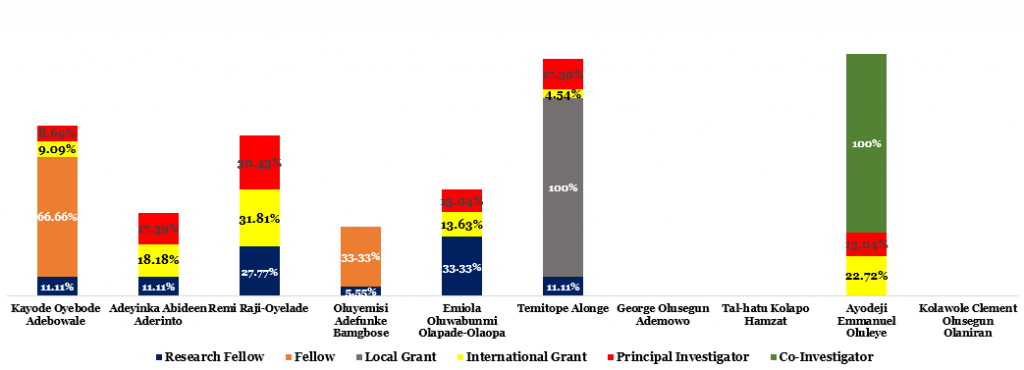
Exhibit 1: Grants and Participation Metrics
Source: Staff Profiles on the University’s Website, 2020; Others; Infoprations Analysis, 2020
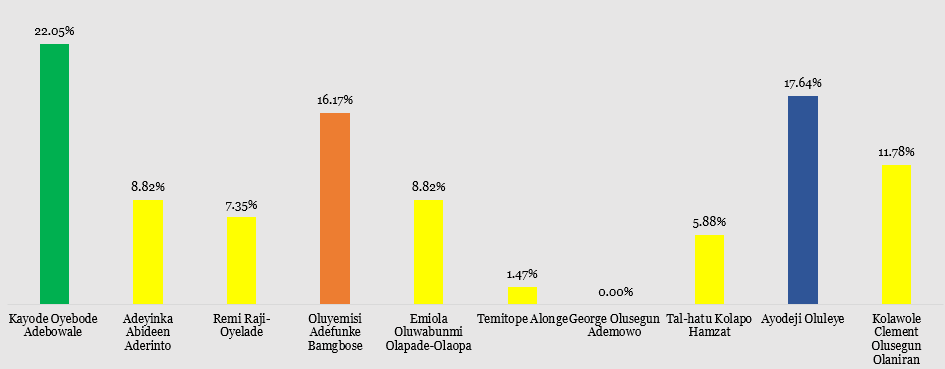
Exhibit 2: Current and Previous Leadership Positions Metrics
Source: Staff Profiles on the University’s Website, 2020; Others; Infoprations Analysis, 2020
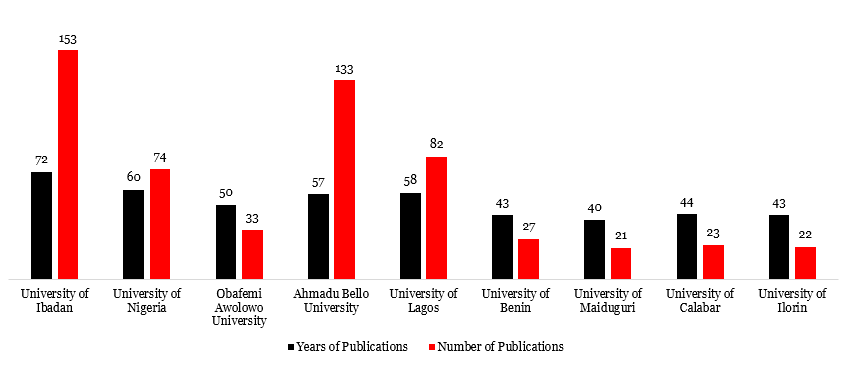
Exhibit 3: Academic Leadership Metrics
Source: Google Scholar, 2020; Infoprations Analysis, 2020
We are updating this page as readers, critics and reviewers comment on this book. To read this book, you must be a participant in Tekedia Mini-MBA. Join here.
This book is a worthy read to all aspiring, low-fly and high-flying entrepreneurs, including those envious of the privileges that Dangote Empire has enjoyed. Noteworthy to say, I doubt Mr Aliko Dangote himself understands these privileges as a Conglomerate Tax (reward for helping Government out on high-pains by moving upstream) and not benefits of tribalism, feudalism, and/or Northern Nigeria cabalism. (source)
This book is a very amazing piece. It presents concise, well thought-out and very clear insights on how to build companies with focus on solving problems not many people can solve and consequently, have government’s attention and support. Thank so much for this Prof. (source)
Though relatively new in the core business world, this is the best business book I have read after reading some international ones. Thanks, Prof Ndubuisi Ekekwe for this book and all your faculty for this platform. I have taken numerous courses on Coursera and the like, but this platform is down to our business climate. Kudos. (source)
Nice job, thanks! A great read to start a prosperous year journey. (source)
The focus of this book will certainly culminate into creating great African innovators. It is a great book (source)
“This is my best read so far in 2021. I’m reading “The Creative Edge” by Matthew Ashimolowo now, let’s see if it will topple this one”. (source)
“Ndubuisi – a really great effort on this book. Very nice you ask your Tekedia Mini-MBA members to read it as a practical case study. I see things differently now. I never knew that Dangote Group had failed in other ventures. I will check Dangote Noodles, Liberty Merchant Bank, Dangote Capital, etc to learn more. While he gets government support, I can see his success is not only through government since government could not help him in other areas he did not have intrinsic advantages. All my managers are reading and I have asked them to give me one area we can become a king. Elumelu/Ovia for banking, Dangote/ASR for cement, … brilliant perspective and thought leadership”(email)
The insights in this book are educating and inspiring. I have learned what it takes for a business to be a conglomerate( moving from downstream to upstream) with Nigeria as a case study. Thank you very much indeed for this. (source)
Well researched and presented book. I’ve learnt a lot and a good eye opener. (source)
“This book is a very amazing piece. It presents concise, well thought-out and very clear insights on how to build companies with focus on solving problems not many people can solve and consequently, have government’s attention and support. Thank so much for this Prof.” A critic/reviewer, on “The Dangote System”.
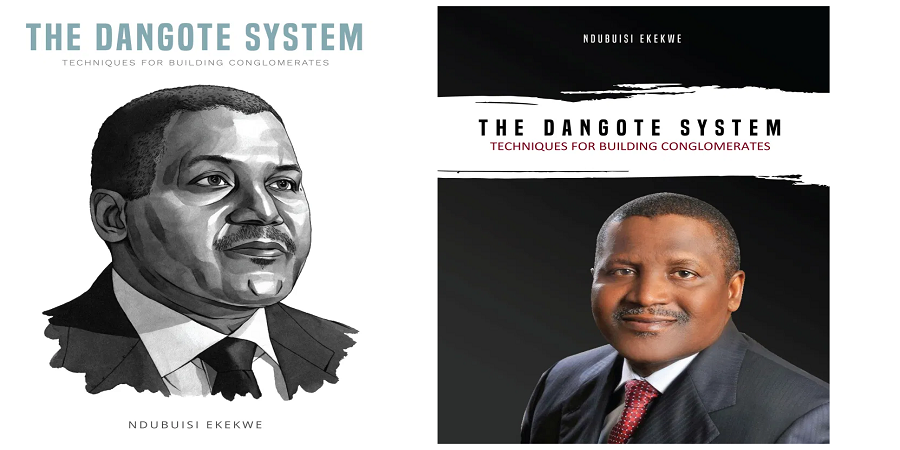
Read “The Dangote System: Techniques for Building Conglomerates”, and master what it takes to build great companies. It is exclusive to Tekedia Mini-MBA participants, register here for full access.
Since the announcement of the removal of Professor Oluwatoyin Ogundipe as Vice Chancellor of the University of Lagos by the Governing Council led by Dr Wale Babalakin few days ago, different reactions have continued to trail the announcement. Our checks reveal that the removal communicated by the Registrar and Secretary to the Council, Mr Azeez Oladejo has led to the emergence of academic and non-academic unions’ insistence on the recognition of Professor Ogundipe as the substantive Vice Chancellor of the institution.
From meetings to the media, Unions in the institution believe that the removal was illegal and that the Governing Council should be dissolved by the Federal Government. As the debates on whether the Council has legal instrument to remove the Vice Chancellor or not rage on, historical retrospect analysis conducted by our analyst indicates that this is not the first time that Vice Chancellor and Governing Council face-off happened in the institution.
Tim Livsey, a lecturer at the Department of African History, University of Oxford. In his book titled “Nigeria’s University Age: Reframing Decolonisation and Development”, the University Don documented how the appointment of Professor Eni Njoku by Aja Nwachukwu [Federal Minister of Education], an Igbo, was not accepted by the leading Yoruba politicians. When Richard Akinjide, a Yoruba, emerged as the new Minister of Education, information has it that the Governing Council refused to renew Professor Njoku’s appointment and Professor Saburi Biobaku (1918-2001), a renowned historian and an Egba man from Igbore, Abeokuta, present day, Ogun State was appointed as Vice Chancellor.
This development nearly led to the death of Professor Saburi Biobaku, when “a radical student activist, identified as Kayode Adams, surged forward from the crowd [during a public engagement with the University Community by Professor Biobaku] and stabbed the Vice Chancellor at the back, ostensibly in protest against Njoku’s removal.” Now, it appears that the history is repeating itself.
As the groups and individuals continue expressing their views on the matter, this piece takes a look at what the law says and what people and entities has said about the issue on digital sphere. Our analyst specifically examines ongoing conversation on the face-off within the Nigerian Twitter Community in relation to the public interest in understanding actors through information seeking using the Internet.
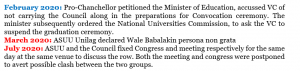
Examining the genesis of the crisis, our analyst discovered that the face-off became public knowledge in February, 2020 within the frame of what could be described as ‘early warning’ to other stakeholders [see Exhibit 1]. Further checks reveal that there were no proactive steps by the concerned stakeholders to resolve the crisis during the month. The inability to resolve the matter in February, 2020, according to our analyst led to the announcement of the University’s Pro-Chancellor, Dr Wale Babalakin as persona non-grata by Staff Unions in the University.
This Act [which has been subsequently amended by the Universities (Miscellaneous Provisions)(Amendment) Act 2003 and Universities (Miscellaneous Provisions)(Amendment) Act, 2012) was designed to reconstitute the Councils of all Federal Universities and among other things, to set out a uniform procedure for the appointment of Vice-chancellors, and other Principal Officers.
Powers of the Council
The powers of the Council shall be exercised, as in the Law and Statutes of each University and to that extent establishment circulars that are inconsistent with the Laws and Statutes of the University shall not apply to the Universities.
Independence of the Council in exercise of its functions
(1) The Governing Council of a university shall be free in the discharge of its functions and exercise of its responsibilities for the good management, growth and development of the university.
(2) The Council of a university in the discharge of its functions shall ensure that disbursement of funds of the University complies with the approved budgetary, ratio for-
(a) Personnel cost:
(b) Overhead cost;
(c) Research and development;
(d) Library developments; and
(e) the balance in expenditure between academic vis-a-vis non-academic activities 11.
Vice-Chancellor of a University.
(1) There shall be a Vice-Chancellor of a University (in this Act referred to as “the Vice-Chancellor”) who shall be appointed by the Governing Council” in accordance with the provisions of this section.
(2) Where a vacancy occurs in the post of a Vice-chancellor, the Council shall-
(a) Advertise the vacancy in a reputable journal or a widely read newspaper in Nigeria, specifying-
(i) The qualities of the persons who may apply for the post, and
(ii) The terms and conditions of service applicable to the post, and thereafter draw up a short list of suitable candidates for the post for consideration;
(b) Constitute a Search Team consisting of-
(i) A member of the Council, who is not a member of the Senate, as chairman;
(ii) Two members of the Senate who are not members of the Council, one of whom shall be a professor;
(iii) Two members of Congregation who are not members of the Council, one of whom shall be a professor, to identify and nominate for consideration, suitable persons who are not likely to apply for the post on their own volition because they feel that it is not proper to do so.
(3) A Joint Council and Senate selection Board consisting of –
(a) The pro-Chancellor, as chairman;
(b) Two members of the Council, not being members of the Senate;
(c) Two members of the Senate who are professors, but who were not members of the Search Team, shall consider the candidates and persons on the short list drawn up under subsection (2) of this section through an examination of their curriculum vitae and interaction with them, and recommend to the Council suitable candidates for further consideration.
(4) The Council shall select and appoint as the Vice-Chancellor one candidate from among the three candidates recommended to it under subsection (3) of this section and thereafter inform the Visitor,”
(5) The President may appoint as Vice-chancellor, any one of the candidates recommended to him in accordance with the provisions of subsection (4) of this section.
(6) The Vice-Chancellor shall hold office for a single term of five years only on such terms and conditions as may be specified in his letter of appointment.
(7) For the avoidance of doubt the provisions of subsection (6) of this section shall –
(a) Only be applicable to those appointed to the office of Vice-chancellor after the commencement of this Act;
(b) Not confer on a person serving a first term of office as Vice-chancellor before the commencement of this Act, any right to renewal of the appointment for a further term of four years
(8) The Vice-Chancellor may be removed from office by the Governing Council on grounds of gross misconduct or inability to discharge the functions of his office as a result of infirmity of the body or mind, at the initiative of the Council, Senate or the Congregation after due process”.
(9) When the proposal for the removal of the Vice-Chancellor is made, the Council shall constitute a joint committee of Council and Senate consisting of-
(i) Three members of the Council one of whom shall be the Chairman of the committee,
(ii) Two members of the Senate, provided that where the ground for removal is infirmity of the body or mind, the Council shall seek appropriate medical opinion.
(10) The Committee shall conduct investigation into the allegations made against the Vice-Chancellor and shall report its findings to the Council.
(11) The Council may where the allegations are proved remove the Vice Chancellor or apply any other disciplinary action it may deem fit and notify the Visitor accordingly provided that a Vice- Chancellor who is removed shall have right of appeal to the Visitor.
(12) There shall be no sole administration in any Nigerian University.
(13) In any case of a vacancy in the office of the Vice- Chancellor, the Council shall appoint an acting Vice-Chancellor on recommendation of the Senate.
(14) An acting Vice-Chancellor in all circumstances shall not be in office for more than 6 months”.
From the above sections and provisions, it is clear that the Governing Council has the right to appoint a Vice Chancellor, subjected to the Visitor approval. It is also obvious that the Council has the legal right of removing Vice Chancellor when he or she was found guilty of wrongdoings. We can well see that Vice Chancellor can appeal to the Visitor.
The Data: Complication in Actors and Actors in Complicated Discourse
From the staff of the University, their declaration of Dr Wale Babalakin as non-persona grata remains a struggle against “arbitrariness, tyranny and unbridled dictatorship” and that there is a need to reinstate Professor Ogundipe as Vice Chancellor of the University.
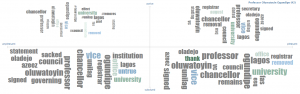
As the staff continue supporting Professor Ogundipe, Nigerians in the Twitter Community are also expressing their feelings about the removal and the possible implications for the University. Between 6pm on August 12, 2020 and 2pm on August 13, 2020, our analyst discovered that Nigerians discussed the matter with the specific reference to the Governing Council and the University’s Registrar. Purported and illegality were the two words predominantly employed by the members of the Community [Twitter].
Starting from the first user, who tweeted at 6:51 on August 12, 2020 and the last user, who tweeted at 2:34 on August 13, 2020, insistence and remove frames permeated the Community along with purported and illegality topics of the discourse. With this, our analyst describes the simultaneous emergence of the topics as complicated discourse. This is premised on the fact that the users were found to use the topics to explicate who should be blamed and who should be praised among the two primary actors [Professor Ogundipe and Dr Babalakin].
The complicated discourse becomes more useful in understanding the actors, when analysis reveals that the discourse connected with the public interest in the actors by same percent [the discourse led to same 64.3% connection]. Surprisingly, analysis shows that the discourse had 66.7% linkage with public interest in knowing more about the Governing Council.
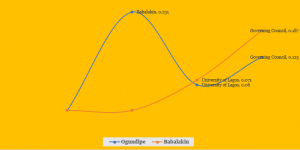
Analysis further shows that one percent of public interest in Professor Ogundipe increased information seeking about Dr Babalakin by 23.1%, while a percent interest in Dr Babalakin increased the need to seek information about the Governing Council by 18.7%. This is quite different from what we found for Professor Ogundipe. One percent interest in Professor Ogundipe only increased public’s need of seeking information about the Governing Council by 12.5% [see Exhibit 2].
Exhibit 2: Nexus among the Actors
Source: Google Trends, 2020; Infoprations Analysis, 2020
The Extracts
University of Lagos’ dated August 12, 2020 and signed by Oladejo Azeez, Esq, Registrar and Secretary to Council, stating that the Vice Chancellor, Professor Oluwatoyin T. Ogundipe, FAS has been removed from office with immediate effect. The purported removal is an illegality. [Insistence]
Professor Oluwatoyin Temitope Ogundipe remains the Vice-Chancellor of University of Lagos. Thank you. Signed Professor Oluwatoyin T. Ogundipe, FAS Vice Chancellor, University of Lagos. [Insistence]
EdugistNG: This decision was based on the Council’s investigation of serious acts of wrongdoing, gross misconduct, financial recklessness and abuse of office against Professor Oluwatoyin T. Ogundipe, FAS. https://t.co/IgjSMSJ7hO [Remove]