DD
MM
YYYY

PAGES

DD
MM
YYYY

spot_img

PAGES

Home Blog Page 6215

Nigerian Communication Commission (NCC) Reverses Determination on USSD Pricing

1

In July 2019, the Nigerian Communication Commission (NCC) waded into a dispute between telcos and banks, over Unstructured Supplementary Service Data (USSD)’s pricing. Banks and telcos had increased the charges on transactions carried out using the USSD channel, and it didn’t augur well with consumers.

As consumers protested the increment, the regulators of banking and communication industries ordered a reversal of the added pricing on USSD.

“After receiving briefing about the proposed USSD charges, I realized there was no justification for the new tariff and consequently, I directed its immediate suspension. Any telecom operator that violates this directive would be sanctioned appropriately,” The Minister of Communication and Digital Economy, Dr. Isa Pantami said then.

The CBN governor, Godwin Emefiele told the banks then that the charges incurred using the unstructured supplementary service data is sunk cost and would not be allowed to happen.

“I have told the banks that they have to move their business, move their traffic to a telecom company that is ready to provide it at the lowest cost possible, if not at zero cost. And that is where we stand, and we must achieve it,” he said.

Based on these directives, the proposed additional USSD charges were quashed, even though the telcos protested.

However, over one year after the directive was given; the Commission has made a turnaround to allow the industries’ players to decide how much is paid and who is paying.

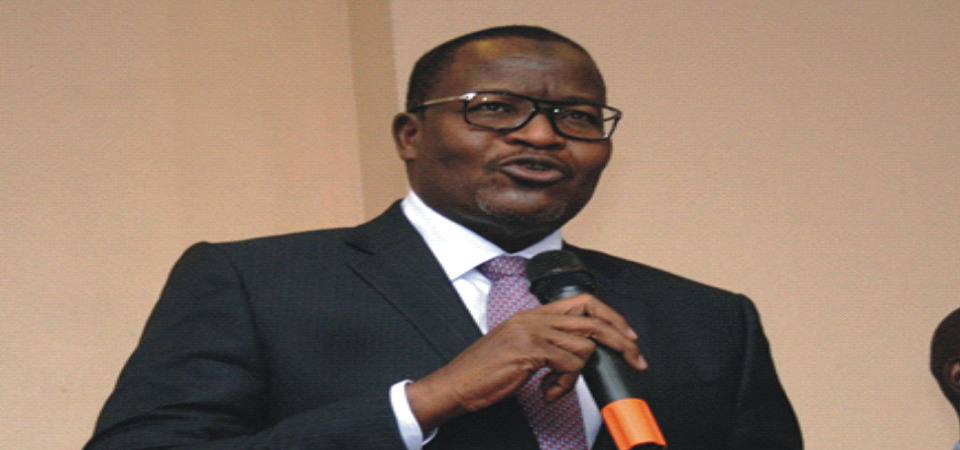
In a press release signed by NCC’s Director of Public Affairs, Dr. Ikechukwu Adinde, on Wednesday, the Commission announced that it is reversing its directive restricting mobile network operators from implementing increased charges on transactions executed through USSD platform.

The Nigerian Communications Commission, in furtherance of its mandate to protect the interests of consumers and support a robust telecommunications sector, has revised its Determination on Unstructured Supplementary Service Data (USSD) pricing published on the 23rd of July, 2019.

The amendment was necessitated following a protracted dispute between Mobile Network Operators and Financial Institutions on the applicable charges for USSD services and the method of billing.

As a responsive and effective regulatory authority, the Commission recognises that its policies are not static and may be modified from time to time as circumstances demand.

This is coming on the heels of a recent directive by the Hon. Minister of Communications and Digital Economy, Dr. Isa Ali Pantami, regarding a review of the USSD pricing by all parties involved, following a presentation made by the Commission on the billing structure, determination of USSD pricing, current status and the way forward.

Speaking during the presentation, the Minister stated that he took the decision to suspend the commencement of end-user billing (where the consumers are charged directly from their airtime balance for use of USSD channels as opposed to corporate billing where the banks paid the MNOs for the use of USSD service) because he was “genuinely besieged with a barrage of complaints at the attempted commencement of end-user billing by service providers.”

The Minister also clarified that “USSD is a service to banks and not to the Telecom Consumers, and as such, banks should see themselves as corporate customers of telecom operators with a duty to pay for using the telecom network and infrastructure, including USSD channels extended to them for service delivery to their customers.”

According to him, “Mobile Network Operators (MNOs) have no direct relationship to bank customers, and cannot, therefore, charge directly for usage of USSD channel.”

The USSD channel has evolved over time from a telco-exclusive channel used for only telco services such as balance inquiry and recharges to a channel for the deployment of a broad spectrum of services, including financial, insurance, agricultural, government services and more. The use of USSD channel has become a critical resource in the economy even more so in this era of the Covid-19 pandemic that has witnessed a rise in reliance on digital services.

The Executive Vice Chairman of the NCC, Prof. Umar Garba Danbatta, in the interest of the consumers and other stakeholders, has revised the Determination previously issued by removing the Price Floor and the Cap to allow the Mobile Network Operators and the banks negotiate rates that will be mutually beneficial to all parties concerned.

The NCC also determined that Mobile Network Operators must not charge the consumers directly for the use of USSD channels for financial services in the form of end-user-billing. The transaction should be between the MNOs and the entity to which the service is provided (i.e. Banks and Financial Institutions). A copy of the Determination is available on the NCC’s website, www.ncc.gov.ng.
Corporate Indigenization Maybe The New Order

0

Could It be that the definition of democracy is taking a new shape through 2020. We have always defined it this way: Leadership, Of the People, by the People, for the People. According to John L. Haney, Proceedings of the American Philosophical Society.

Whilst comparing democracy in politics with globalization in the corporate world, we can assume that a few terms that encourage globalization is somehow becoming a thing for the diary. There is no doubt that indigenous people are somehow giving more open arms to their fellow indigenes, with belief that it gives them better security, sense of belonging and opportunity to grow within a familiar ecosystem. Countries are now encouraging more products made Of their People, by their People, and for their People.  

It will be great to stand by Globalization, rather than Overzealous indigenization. The earth in its natural state, encourages one man for another, that is why it spreads its seeds in different quantities and quality shares across various shores. Gold in the east, Silver in the west, so that the east will be encouraged to trade with the west. Even the holy book supports merchandising, foreign investment, and international trade as strategies of financial safety, freedom and love for humanity:

Read: Ecclesiastes 11:1-6

  1. Invest your money in foreign trade, and one of these days you will make a profit. 
  2. Put your investments in several places – many places even – because you never know what kind of bad luck you are going to have in this world. More in the holy book.

This could be the birth of globalization, but due to certain human cupidity, the science of globalization is becoming more like a simple art work, just designed and decorated in our history books. 

What About Exchange of Intercultural Innovations for Growth:

The fun and excitement of being a human is the ability to interchange cultural blessings in the form of; Music, Stories, Trading, Nation to Nation diplomatic support, exchange of Technology and Medical expertise et al. Encouraging indigenization, should never exterminate that sense of the world as a small village. In this small community called earth, do not fight the special blessing of your neighbor, because you never know when even his cough will save you from an intruder. 

Using Tiktok as example, being banned in India, and to be bought over in America by Microsoft instead of ban, I recall an article by Professor Ndubuisi Ekekwe (PHD) in The MicroTok for America!, where he said and I quote:

Poor TikTok in America as it makes its way to Microsoft. Forget it. I am not sure if MicroTok, my suggested name for the Microsoft future version,  will live up to the glory of the real TikTok. It would be complicated as what makes TikTok hot is the AI which drives those short video recommendations to align perfectly for users. Mess up those AI systems, you have nothing. 

There is a possibility that MicroTok could struggle because of one thing: the zero privacy in China makes its mobile solutions more engaging as they can use data which American companies cannot use in improving their models. 

Going for Our Own only, in other words, indigenization, may sound so interesting and instantly impressive, but it can never be innovative enough to match the fun and adventure, the multinational localization of businesses would have given. The generation after us may need something to connect them with their sister nations, not just their sister and brother in the same house.

That calls up the word; Multinational. If the world powers, change Democracy by the people into Democracy by “Our Own” people, which in the corporate world means, changing of Corporate Globalization of into Corporate Indigenization;

  • What happens to the sense of having Multinational corporations. Will that also be swept under the carpet? which may also linger to intensified interstate corporate localization.

This issue of, “Indigenization ,” needs to be addressed, quickly and effectively.. 

  • So that globalization will not be ‘just’ a fancy word, lying breathless in our government study and business books. 
  • The term, Multinational Corporation (MNC) will not be a thing of the past. 
  • International trade/trading; Import Export will not be a fantastic thing of the past

Because, they said that, if one hand touches oil, it may span to the other four fingers. If indigenization becomes the order of the day, localization may become the innovation of the near future, and every business will be forced to adapt to it else excuse the geopolitical zone.

Learn from Average Nigerian:

Average Nigerian likes to dress Italian, drive German, party Caribbean, spend Arab, breathe American and bleed Nigerian. This may sound uninteresting, but differential attention will teach you that, this is the reason the dollar man still wishes to invest in Nigeria, host Nigerian in his country and even identify with a Nigerian. By nature a Nigerian man welcomes innovations, and encourages local business to innovate with international outlook else stand a chance of exemption. 

The world needs to be Nigerian by the mind of welcoming innovation; we are still one world, whose affluence in milk complements another’s deficiency in protein. PingSmile.com Tech is coming from Nigeria, and will live and thrive across nations of the world, because we propagate the art of globalization.

Indigenization concern should really be treated with great attention to save the future of the business world. Instead of banning entirely a particular lucrative product in your land, what about regulating the features and security-wise if that may be the case. 

In conclusion:

Dear world, and super intelligent regulatory bodies, we need one another to thrive on this planet earth of ours. It is more interesting to see Facebook running and thriving in China, while WeChat is thriving in the USA. It is so much fun seeing Indian dancers on Tiktok, while shopping on JioMart in China. The world is a global village, let it continue to be like that. 

Tax Treaties At Tekedia Institute

1

Good People, we are bringing an expert to develop a session on “Understanding Tax Treaties and Their Benefits”. He is a Deputy Manager with the Federal Inland Revenue Service (FIRS, Nigeria), a barrister at law who holds a master’s degree in International Tax Law from University of Melbourne, and he knows so much on emerging digital tax ordinance. Emmanuel Eze has won a continental tax essay competition organised by the African Tax Administration Forum (ATAF). He will help our Tekedia Mini-MBA community to understand tax treaties and how we can use them to advance our business missions.

Simply, if you run a company in the fintech, logistics, etc domains across borders, there is a chance you can be subjected to multiple taxation. What this program plans to do is to educate companies that there are treaties which they can use to avoid that. In other words, you avoid being subjected to multiple taxation as you scale outside your home nation.

Most Nigerian startups are paying taxes as they scale across ECOWAS which under extant tax treaties they are not supposed to pay. But because they are not informed, they just pay. We are happy that an expert from our government will lead a session to help innovators know when they can say NO. The same applies in continental Africa in this age of AfCFTA: understand the treaties and spare wasting that money.

Register as class begins Aug 10.

https://www.tekedia.com/mini-mba-3/

NIPOST Is Part of Nigeria’s Weakest Links

1

The Nigerian Postal Service (NIPOST) is one of the main components derailing Nigeria’s economic advancement especially in the rural areas.  With operational paralysis of NIPOST, rural and urban Nigeria have been disconnected.  In my village Ovim (Abia state), we built a better post office than the one in the state capital, knowing that having a local and functioning postal service would help our community. It has always been the strategy: build schools, police station, etc with your money, and hand them over to the government.

But for the Ovim post office, while it was easy to build structures and offer accommodations to NIPOST staff, running logistics was another story. Today, that post office which was commissioned by Postmaster General of Nigeria in the presence of Ovim luminaries like Admiral Kanu, General Nwachukwu, Justice Johnson, and Prof Ogbonna, is gone.

NIPOST was not out-competed by anyone and changes in communication – indeed email – was not the fatal blow. NIPOST simply gave up because Nigeria failed to reform its systems.  That one company is a regulator and an operator, taxing its competitors, makes no sense in a modern market system. Operators are expected to contribute 2% of their annual revenue to NIPOST via the postal fund which does nothing of value to Nigerians. Which company can survive in a tight margin business like courier and  logistics?

We are still trying to get used to STAMP Duty where you buy stamps for sending electronic money to others. These policies will not drive innovation. Simply, NIPOST does not need to function to make money!

Mr Yusuf also noted that citizens should not be compelled to patronise NIPOST irrespective of the size or weight of an item as stated in a courier regulation.

He referred to the stipulation that says: ”All courier items/articles such as Right Issues, Shares Certificates, Statement of Accounts, Cheques, Letters or Offer documents, etc weighing below 0.5kg brought to a courier/logistics service operator shall be recorded and referred to the nearest Post Office of the Nigerian Postal Service for processing and delivery.

“Failure to do so will attract payment to Nigerian Postal Service of a penalty of 90 per cent of the amount charged on the item by the erring Operator.”

He described it as an unfair provision and an infringement on the rights of citizens and in conflict with the principle of fairness.

NIPOST’s problem is not recording losses, but the fact that it is not working. Most postal systems around the world these days are strategic loss-makers. Yes, “the United States Postal Service (USPS) announced an annual loss of $8.8 billion for fiscal year 2019, more than double its annual loss for FY18. This loss, the largest on record, marks the 13th consecutive year the USPS has finished in the red.” Yet, if you examine the period when the USPS lost this amount of money, businesses actually expanded in the core domains it served. Largely, USPS losing money was not necessarily a bad thing as its functions were critical for most of those companies to thrive. 

Possibly, for every $10 billion lost by the U.S. Post, it could be adding excess new $200 billion of value in the economy. For the United States, in general, that is a net positive. The USPS saw marginally revenue increase despite the match to global digitization, implying that it was powering core elements of that new redesign. Simply, Nigeria needs to decide the role NIPOST will play in our economy and that means reforming it. What we have now does not make sense.

Samsung Building Strategies Around Anti-China Sentiment to Take Back Indian Market

0

Samsung Electronics Co Ltd is seeking a way back to India market as anti-China sentiment continues to grow. A military conflict in June between China and India stirred anti-China sentiment that has affected its companies business presence in India.

As the anti-China sentiment escalates, non-Chinese companies are positioning to take advantage of the situation. Samsung is the only non-Chinese player in India and has seen an opportunity to penetrate the smartphone market where Chinese companies dominate.

Following the June conflict, India banned 59 apps of Chinese origin, particularly TikTok. The ban opened the way for indigenous apps and renewed the interest of American companies in doing business in the country.

The development seems to have stirred Samsung to fight for a leading position in India’s smartphone market even though it is dominated by companies from China that have won consumers with cheap prices.

Though Samsung still has a huge market in India, it has for long lost the smartphone market to China. Counterpoint, a tech researching firm said that India accounts for some 7.5% billion in annual retail smartphone revenue for Samsung, which makes it its second biggest market after the United States.

Reuters reported that Samsung recorded 26% market share in the second quarter to secure the No. 2 spot behind Xiaomi’s 29%, which leads the smartphone market in India. The report noted that the South Korean tech company’s diverse and inhouse supply chain helped it to beat product delays that affected other companies due to COVID-19 lockdowns.

It has been over three years since Samsung lost its dominance in India to Chinese companies. Its bounce back strategy seems to rest on its ability to source phones components internally.

Samsung has a mega mobile phone manufacturing plant in New Delhi, where it tests new devices and assembles them for export. With the manufacturing power, it has been able to curtail cost of production that took a toll on its rivals amidst the pandemic.

Reuters reported that in May, Samsung and Facebook partnered to train over 200,000 brick and mortar stores selling its phones to use social media for sales and marketing.

Xiaomi and Oppo, the leading Chinese brands in India were severely hit by the disruption of the global supply chain, following lockdowns induced by coronavirus. However, Samsung stayed in business through local production, online sales and delivery.

Samsung is building on this advantage, using its ability to manufacture internally, to fight for its place in the Indian market. It is hoping that making phones locally will cut the cost that has over the years, driven consumers to Chinese companies.

Since June, it has launched seven new smartphones, three of them cost $133,63 (less than 10,000 rupees), including its cheapest Android offering at $75, according to Reuters.

A source familiar with Samsung’s strategy in India said coronavirus has forced many online activities in the country, and therefore necessitated low budget phones.

“The COVID crisis has pushed people to use smartphones for everything from online education to digital payments to even connecting with friends on video calls. That’s why these budget phones are focused on the mass market,” the source said.

As part of its strategy, Samsung initiated installment-payment for its customers and incentive schemes designed to attract more consumers to its base, including offering students discounts on some devices.

But while Samsung appears to be gaining ground, there is still a mountain of challenge ahead of it. Although there is growing apathy toward Chinese companies, competition is still ripe. Xiaomi and Oppo still have a base of loyal customers who don’t care about what the Chinese and Indian governments are doing at the border. The companies have won them over through cheap phones and hope to use Prime Minister Narendra Modi ‘Made in India’ campaign to beat the anti-China sentiment.

On the other hand, the Google and Reliance’s Jio partnership could ruin Samsung’s prospects, as it will be offering the most affordable models of phones to Indians.

However, Samsung has a brand reputation that Indians trust, and would choose over Xiaomi and the others if the prices get close.

“Samsung is India’s No. 2 smartphone brand after Apple by image. So a phone priced between 6,000 rupees to 15,000 rupees from Samsung is very well placed today to capture market share from Chinese rivals,” said brand strategist Harish Bijoor.

Apple devices are out of the contest due to their costs, and the company is not considering lowering the price to woo customers. The cheapest iphone in India costs about 31,500 rupees, while the cheapest Xiaomi is around 7,500 rupees. So the competition is between Samsung and Chinese companies.