DD
MM
YYYY

PAGES

DD
MM
YYYY

spot_img

PAGES

Home Blog Page 6216

The iPhone “WeChat Exodus” and American Own-Goals

1

President Trump wants to ban WeChat, one of the most important digital platforms in the world. It is part of the pieces for the control of the new data age. I have called it the Data World War in which China and the United States are just entering the early phases. The data of nations would define the prosperity of nations because at the end of everything, data connects us back to that old century postulation by Pythagoras: the world is made up of numbers. The more you understand data, the better you can fix frictions in markets and nations. Indeed, data is the gunpowder of the knowledge economy. Anyone who controls and dominates on it will win the castles of wealth.

President Trump has signed an executive order to ban U.S. transactions with ByteDance, the parent company of TikTok, as well as WeChat owner Tencent. The move was issued under the International Emergency Economic Powers Act and comes into effect in 45 days, following growing tensions with China over security concerns. Microsoft (LinkedIn’s parent company) is currently in talks to acquire the U.S. operations of video-sharing app TikTok, which has up to 80 million active monthly users in America (LinkedIn)

Interestingly, like I noted, if China wants to retaliate and ban Microsoft Windows, it would score an own-goal: “Ban Microsoft Windows or Apple iPhone? Not really because those would be own-goals to China. For every Windows sold, China makes money because the machines which power Windows are largely assembled in China for Dell, HP, Lenovo and others”. 

In association football, an own goal occurs when a player causes the ball to go into their own team’s goal, resulting in a goal being scored for the opposition

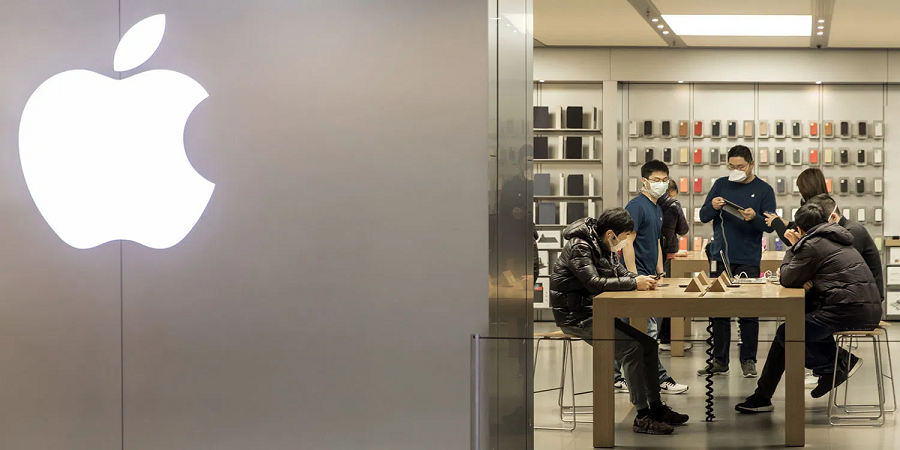
But it is not only China that could score an own-goal; America could also score own-goals. Indeed, if the U.S. bans WeChat, many Chinese iPhone users will have no other option than to drop iPhones and pick another phone brand where they could easily use WeChat. Without WeChat, no one could function normally in China, unlike the iPhone which has clear substitutes. According to Bloomberg, “A survey on the twitter-like Weibo service asking consumers to choose between WeChat and their iPhones has drawn more than 1.2 million responses so far, with roughly 95% of participants saying they would rather give up their devices.”

iPhone loyalists across China are now reconsidering their attachment to the device after Donald Trump issued an executive order last week barring US companies from doing business with WeChat […]

A survey on the twitter-like Weibo service asking consumers to choose between WeChat and their iPhones has drawn more than 1.2 million responses so far, with roughly 95% of participants saying they would rather give up their devices. ‘The ban will force a lot of Chinese users to switch from Apple to other brands because WeChat is really important for us,’ said Sky Ding, who works in fintech in Hong Kong and originally hails from Xi’an […]

The ban threatens to turn iPhones into expensive ‘electronic trash,’ said Hong Kong resident Kenny Ou, who sees WeChat as one of the most essential software on his handset

Banning WeChat will have marginal impacts in China because the nation has no alternative and will stick with WeChat, but it could cause massive dislocation for Apple and American hardware makers. The implication is simple: devices made by American companies which cannot possibly install WeChat would simply disappear in China as they would have no material value without WeChat. If President Trump goes ahead and bans WeChat, call it an own-goal as we say in football (yes, soccer). Apple needs better pastors to pray against WeChat ban!

Where China has to pay attention is its companies traded in the U.S. If Trump wins re-election, the risk of some of these companies being delisted will rise. I noted that in a piece where I wrote, “I think China will just chill – it has met an unpredictable American leader that cannot be modeled by any communist party algorithm. That would be wisdom because any nonsense move, Trump can delist all Chinese companies in Wall Street!”. That seems to be on the fly.

U.S. Treasury Secretary Steven Mnuchin on Monday said companies from China and other countries that do not comply with accounting standards will be delisted from U.S. stock exchanges as of the end of 2021.

Mnuchin and other officials recommended the move to the U.S. Securities and Exchange Commission last week to ensure that Chinese firms are held to the same standards as U.S. companies, prompting China to call for frank dialogue.

COVID-19 Impact: UK Economy Plunges Into Recession

0

The UK economy slumped by 20% in the second quarter 2020 to record its worst performance since 1955, plunging the country into its deepest recession since 2009.

The coronavirus pandemic unleashed unprecedented havoc on the country’s economy, forcing shutdown of industries and causing job losses that resulted in a 2.2% contraction in the first quarter.

UK finance minister Rishi Sunak said the worst is yet to come but the country will get through it.

“Today’s figures confirm that hard times are here. Hundreds of thousands of people have already lost their jobs, and sadly in the coming months many more will. But while there are difficult choices to be made ahead, we will get through this, and I can assure people that nobody will be left without hope or opportunity,” Sunak said.

UK household spending shrank following coronavirus lockdown that shut businesses and forced spenders to get closefisted.

London as a top tourist destination keeps the UK hospitality business booming. But the global travel restrictions and flight bans held the hospitality industry to a standstill forcing companies to furlough workers and eventually laid them off. The UK economy has lost over 730,000 since the outbreak of COVID-19 pandemic.

The economy succumbed to the pressure and Kallum Pickering, a senior economist at Berenberg said things may get worse.

“Typically, recession data are subject to heavy reasons. Nevertheless, taken at face value, the bigger-than-expected contraction suggests some down risk to our call of a 9.5% contraction suggests some downside in full year 2020,” he said.

Britain’s economic woes have been linked to its handling of coronavirus lockdowns that shuttered retail stores and put self-employment and other public services to a halt.

“The larger contraction primarily reflects how lockdown measures have been in place for a larger part of this period in the UK,” the Office for National Statistics said.

The UK recorded the worst outcome compared with other European countries that were severely hit by the pandemic. There was 22.1% decline in economic output in the first half of 2020, which compared to Germany, France and Italy is a milestone of economic trouble.

The Office for National Statistics (ONS) said the record doubles the 10.6% fall the United States recorded. But among G7 members, Britain is expected to have more GDP growth.

While other economies in Europe were showing signs of recovery, Britain was embarking on lockdown and was way behind in reopening. It was until July 4 that it allowed restaurants and some shops to open, while Italy, although hardly hit, allowed opening in Mid-May. Germany started to reopen bookstores, bike shops and car dealerships on April 20.

The months of lockdown exerted a crippling economic impact on the UK’s GDP, as business activities including sports events were suspended. But in June when the economy gradually opened, the GDP recorded an increase of 8.7%, according to ONS. But it could do a little to salvage the already ravaged economy. Deputy national statistician for economic statistics, Jonathan Athow, said: “despite this, the gross domestic product in June still remains a sixth below its level in February, before the virus struck.”

While the lockdown took the larger part of the blame, it is believed that the economy was already heading in the direction of recession. Shadow chancellor Anneliese Dodds blamed Prime Minister Boris Johnson for the escalation of the economic downturn. He said: “a downturn was inevitable after lockdown – but Johnson’s job crisis wasn’t.”

Many workers have been sustained by the government’s furlough scheme of job subsidies, but it is due to end after October. Sunak said workers know that the scheme is “not sustainable indefinitely,” and the government shouldn’t pretend that “absolutely everybody can and will be able to go back to the job they had.”

While Sunak assured that the economy would bounce back, the time frame isn’t certain and there are signs it could get worse. Alpesh Paleja, an economist at the Confederation of British Industry, said companies are still finding it hard to pay their bills, and “a sustained recovery is by no means assured.” He added that “the dual threats of a second wave and slow progress over Brexit negotiations are also particularly concerning.”

Uber Will Shut Down California Operation if Forced to Classify Drivers As Employees

0

The state of California’s legal challenge on Uber’s gig economy business model has got the ride-hailing app threatening to shut down in California.

A California state attorney had sued Uber following the state’s new labor law (AB5) that declassified ride-hailing drivers as independent contractors. A San Francisco court ruled that Uber and Lyft drivers in California should be treated as employees, and Uber is not having it.

In an interview with MSNBC, Uber CEO Dara Khosrowshahi said Uber will likely shut down temporarily if it doesn’t appeal the ruling. Judge Ethan Schulman of the San Francisco superior court gave a preliminary 10-days window to allow Uber and others affected by the ruling to file an appeal.

Uber has maintained that there is nothing wrong in running its business on the gig economy, after all, it’s what most of the drivers want. Consequently, Khosrowshahi has expressed his disappointment over the ruling, calling it “unfortunate.”

“We think the ruling was unfortunate. We respect, obviously, the law and the court and the judge. If the court doesn’t reconsider, then in California, it’s hard to believe we’ll be able to switch our model to full-time employment quickly, so I think Uber will shut down for a while,” he said.

Khosrowshahi said the cab company may have to shut down until November, to allow voters to decide on Proposition 22. Uber and a coalition of gig economy firms had launched over a $100 million referendum aimed at saving the business model.

Part of Proposition 22 is improved welfare for the drivers, and in January, Uber announced new features to its app that will provide more ‘flexibility’ and ‘improved pay’ for the drivers. But it did not address the concerns raised by the state of California, which includes work benefits such as healthcare and government protection in times of crisis.

Moreover, under the improved work measures rolled out by Uber, researchers at the UC Berkeley Labor Center found that the measure would only guarantee $5.64 an hour wage, about $10 less than what was proposed under Proposition 22.

For Uber, it is a battle to survive in a state holding its biggest market, and to prevent a precedent that will rock its business model.

Apparently, Uber has been raking in millions of dollars at the expense of drivers, providing affordable rides that cannot foot the $15 per hour minimum wage, but enough to keep its business afloat and its revenue coming.

Khosrowshahi said during the interview that forcing Uber to comply with the AB5 law will mean unaffordable rides in a few cities.

“You would get a much smaller service, much higher prices, and probably a service that’s focused in the center of cities or the suburbs that we operate in right now,” he said.

Understandably, compliance with AB5 will hurt Uber to a great deal, given that its business has been built around and driven by a large population of riders enticed by cheap rides. But this business model has been described by analysts as ‘predatory’ as it only protects the interest of the company.

To address the situation, Khosrowshahi proposed a new law that would force gig economy companies to pay into benefits funds for drivers.

A New York Times op-ed reported him as saying: “drivers can continue to have the flexibility they have, but they can enjoy the protections – benefits fund, an earnings standard-so that they’ve got the protections many associate with full-time work.”

It is not clear how much he wants paid into the benefits fund, what is clear is that it will not cover employee benefits.

Uber has been enmeshed in regulatory controversies since it came into existence in 2009, and has been known for inciting drivers’ and public sympathy to have its way.

The push to have its drivers recognized as employees started in 2016 in London, and has recently begun to garner momentum in American states. Against this backdrop is Uber’s fight to survive the most trying time of its existence – the pandemic. Coronavirus showed up early in the year and forced the ride-hailing company to change its focus from competition to staying in business.

The effects of the pandemic, which include lockdowns and movement restrictions, halted Uber’s operations around the world, forcing it to focus more on food delivery. Surrounded by these hurdles and legal battles, any change in the gig economy business model now will mean a threat to Uber’s existence.

JumiaPay TPV Hits “A Year-over-Year Increase of 106%”

1

Jumia is having a good party. I have written why the future of this business looks promising. JumiaPay has come to become a very powerful double play which can help the ecommerce business. Simply, even if the ecommerce operation does not perform well, JumiaPay has the volume to normalize the financials. As a separate company, JumiaPay is one of the largest fintech companies in Africa today, with operations in more than half a dozen nations. In the Q2 earnings report, Jumia offers a mixed signal: something for bears and more for bulls.

Jumia has reduced its operating loss over the last 6 quarters; €37.6 million, from €47.4 million recorded in Q1.  As it pivots to a marketplace, GMV dropped by 13% year-on-year when compared with the Q2 2019 number. JumiaPay TPV (total portfolio value) reached an all-time high of €53.6 million, a year-over-year increase of 106%. Also, JumiaPay Transactions reached 2.4 million, a year-over-year increase of 36%, representing 35.6% on-platform penetration in terms of Orders.

However, Jumia will pay $5 million as a court settlement brought against it for alleged misstatements and omissions in connection with, and following, the initial public offering. But largely, Jumia had a good party in Q2.

I have written so much about Jumia when it was a pure ecommerce company. I never liked the business model then. But when Jumia changed and added payment, I became a fan. My change of heart was supported by data: the world has not seen any successful ecommerce company without double play. In other words, you cannot make money just by doing ecommerce, especially in emerging economies. Rather, you add something on that ecommerce, and use the transaction volume which comes from ecommerce to make money from something else. Alibaba became better with Alipay, its paytech unit. India’s Flipkart depended on PhonePe to become a better company. Even Amazon relied on AWS to find favour before Wall Street.

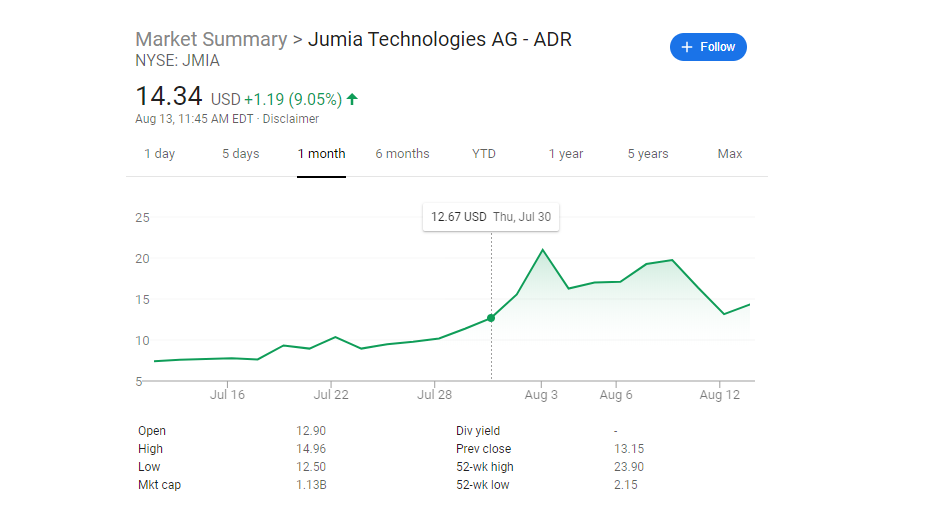
Jumia has gone paytech and today is one of the largest fintech companies in Africa with more than 6 million users. Wall Street has noticed and its stock is rebounding. In the last 3 months, it has doubled its market cap, and the trajectory looks positive

As always, alleged crimes committed in Nigeria are settled outside the nation; America pockets $5M, Nigeria gets nothing. We have no justice department. Look at the Malabu Oil scandal, Europe has made tons of money from oil firms on fines; yet, the victim has not even defined its sufferings!

Jumia stock chart


Results highlights

  • Usage growth
    • Annual Active Consumers reached 6.8 million, a year-over-year increase of 40%.
    • Orders reached 6.8 million, a year-over-year increase of 8%.
    • GMV was €228 million, a year-over-year decrease of 13% compared to GMV1 in the second quarter of 2019.
  • Monetization development
    • Gross profit reached €23.3 million, a year-over-year increase of 38%.
  • Cost efficiency
    • Gross profit after Fulfillment expense reached a record €6.0 million, compared to a loss of €0.7 million in the second quarter of 2019.
    • Sales & Advertising expense was €7.2 million, the lowest absolute amount since 2017, and a year-over-year decrease of 51%. 12-month Sales & Advertising expense per Annual Active Consumer decreased by 38% from c. €10.8 in the second quarter of 2019 to €6.7 in the second quarter of 2020.
    • Adjusted EBITDA loss reached €32.9 million, decreasing by 26% on a year-over-year basis. Excluding a net expense of €3.6 million related to the class action settlement described below, Adjusted EBITDA loss would have been €29.3 million, decreasing by 34% on a year-over-year basis.
    • Operating loss was €37.6 million, a 44% decrease year-over-year.
  • JumiaPay development
    • TPV reached an all-time high of €53.6 million, a year-over-year increase of 106%, more than doubling on-platform TPV penetration from 9.9% of GMV in the second quarter of 2019 to 23.5% of GMV in the second quarter of 2020.
    • JumiaPay Transactions reached 2.4 million, a year-over-year increase of 36%, representing 35.6% on-platform penetration in terms of Orders.

“We have made significant progress on our path to profitability in the second quarter of 2020, with Operating loss decreasing 44% year-over-year to €37.6 million. This was achieved thanks to an all-time high Gross Profit after Fulfillment expense of €6.0 million and record levels of marketing efficiency with Sales & Advertising expense decreasing by 51% year-over-year,” commented Jeremy Hodara and Sacha Poignonnec, Co-Chief Executive Officers of Jumia.

“We are navigating these uncertain times of COVID-19 pandemic with strong financial discipline and operational agility which positions us to emerge from this crisis stronger and even more relevant to our consumers, sellers and communities.”

Innovation Lesson: VR Launch of Mitsubishi Pajero Sport to Nigerians

3

Everyday here, we write on why companies must innovate, especially in this age of distortion from a pandemic. New business models are evolving, across markets and sectors, and firms must advance to reach customers. That takes me to something which happened a few days ago: an automobile company hosted the first-ever virtual car launch in Nigeria.  Yes, Mitsubishi Motors unveiled its Pajero Sport in the largest platform in the world, the web. If you believe that the web is unbounded and unconstrained, you will see this playbook as elegantly brilliant. There are many things we can learn from it: the limitations on the physical space should not be a constraint in our operations.

I encourage everyone to watch what this company did and how it was able to elevate immersive feelings for its customers via the web. Listen to the music, hear the thought-leadership and experience the unveiling of the car. Watching the virtual launch, you would even prefer it to the typical physical one. Simply, from here, we can learn how brands can keep their audience engaged and excited despite social distancing and limitations on movements.

More so, they virtualized their showroom, making it possible that anyone could go through the showroom in Victoria Island via their laptops and mobile phones, and experience Pajero Sport from the comfort of their homes, offices, etc.  This is 3D virtualization and a real practical example of use cases of these technologies in action. Virtual reality (VR) and many technologies went into that.

The power of technology is huge and it is amazing to see some practical use cases. If you are selling cosmetics, shoes, etc, there are things you can learn from this. I like Mitsubishi Pajero – I drive it whenever I travel out of the city in the U.S; Mitsubishi Pajero Sport is tough, reliable, and comfortable.

Today, no one needs to fight Lagos traffic as Mitsubishi Motors, embracing virtual reality as a means to engage with its target audience, has brought the showroom to phones, during this time of Covid-19 global paralysis. Watch the video, and replicate that playbook in your small business: it is the way to go.