DD
MM
YYYY

PAGES

DD
MM
YYYY

spot_img

PAGES

Home Blog Page 6236

Jump-starting Ailing Economies: The G. Okewih Economic Restoration Model

0

The resources of various countries of the world, regions, continents as well as the global economy was neither destroyed nor set aside – never to be used again; the effect of the corona virus pandemic only caused a disruption and misalignment in the flow of the economic cycles of these countries and regions. The same can be said for all depressions, there’s always a cause, which either results to a disruption in the flow of the economic cycle of that region, or a transfer of resources and value out of that region.

The global economy is currently faced with looming depression, and according to IMF, ‘probably the worst since the Great depression’. This to a large extent was caused by the corona virus pandemic which nearly led to a total shutdown of global economic activities. However, one thing is certain – resources and value weren’t transferred from the global economy to outer space, they are simply poorly distributed or market forces have gone out of sync with each other.

THE MODEL

The G.Okewih economic restoration model can be said to be a form of hedging the economy of a country or region against itself, by artificially setting the forces of demand and supply in vibrant motion.

The model aims to jumpstart the economies of countries and regions resulting to a rapid realignment of market forces in various economies, which in turn results to global economic revival. This is akin to manually cranking the crankshaft of an Internal Combustion Engine for it to start, prior to the flywheel taking over.

The model is most suitable when movement restrictions have been relaxed, and businesses have been permitted to resume operations to some extent.

Components of the Model

The various components of the chart above include:

  1. IMF (International Monetary Fund)
  2. Government [Federal, State & Local]
  3. Civil and Public servants, Defence, Police and Paramilitary, Pensioners and other government social programs.
  4. Products and services from sectors directly affected by Covid-19 and/or the resulting lockdown.
  5. Products and services from sectors not directly affected by Covid-19 and/or the resulting lockdown.
  6. Staff 1 – People employed on a contract basis by the Pot (4).
  7. Staff 2. – People working for (6) prior to Covid-19 lockdown.
  8. Staff 3 – People working for (7).
  9. Warehouse (Real and Virtual).
  10. Informal sector.
  11. Dependents

Interactions between Various Components

Cash from Contributors (3) goes into the Pot (4) as ‘economic restoration capital’. The exact amount required is the ‘Pot Value’.

This cash is used to make bulk advance purchases of products and services from companies and organizations directly hit by the corona virus pandemic and/or the resulting lockdown (6), for a specified period of time and agreeable price (about 50-60% of pre Covid-19 value). 70% of staff salaries for companies in (6) will be withheld when making payments for advance purchases.

The purchased products and services are held in the Pot’s warehouse (11) under its direct control.

Withheld salaries for Staff 2 (9) are used to make direct payments to them on a monthly basis from (4), for the time and labour given to (6). These salaries are 30% less than their pre Covid-19 take-home, and still very taxable by the Government (2) – unless it decides otherwise.

Cash from the Pot (4) is also used to make payments to Staff 1 (8) for the time and labour given to it.

Staff 3 (10) render time and labour to their various companies and organizations (7), and are compensated accordingly without any interference from (4), but with some oversight from Government (2) to prevent unnecessary layoffs.

Government continues the regular business of governance, which also includes maintaining its Civil and Public servants, security and paramilitary operatives, pensioners as well as other ongoing social programs (5); while still carrying out oversight functions for the Pot and entire model, which is under the supervision of the IMF (1).

(8), (9) and (10) as well as (5) and the Informal sector (12) all have direct access to purchase products and services in the Pot’s warehouse (11). While Staff 2 can get an approximately 30% discount (pre Covid-19 prices) on all products and services from (11), Staffs 1 and 3 as well as (5) and (12) would get them at discounted prices of approximately 20%. During the lifespan of this intervention program, all products and services rendered from (6) are controlled and disbursed by (4).

(8), (9) and (10) as well as (5) and (12) would access and purchase products and services from (7) under prevailing market forces of demand and supply without any interference from (4). These market forces to some extent should be positively influenced by the intervention program.

As was the case prior to the corona virus pandemic, the Informal sector (12) generally thrived on transactional interactions with (8), (9) and (10) as well as (5) guided by market forces. Owing to the very informal nature of their operations, this relationship would remain unchanged.

Dependents (13) both young and elderly not under any government program are catered for by previous support structures prior to Covid-19.

At the expiration of the intervention program in a given country or region as determined by (1) and (2), cash collected in (11) for the sale of products and services gotten from (6) is transferred to (4), which in turn transfers it to (3) as principal contribution plus accrued interest less facilitation fees, royalties and tax.

Dissecting the Various Components

  1. IMF (International Monetary Fund)

The G.Okewih economic restoration model would achieve optimal deployment if adopted as an IMF (1) program for interested member nations. Direct supervision by IMF would boost contributors’ confidence to a large extent and as such encourage contributions. IMF also brings along a high level of professionalism, know-how, credibility and much needed integrity in implementing the model. There also could be unique countries and regions that could be better served by different variations and alterations of the model, having a single supervisor helps in identifying necessary variations to be made.

  1. Government [Federal, State & Local]

The role of Government (2) would be to carryout oversight functions and assist the smooth running of the program, continue in the business of governance, as well as make contributions to the Pot as a Contributor (3) should the need arise.

Government could also grant conditional tax holidays to (3) and (7), so as to encourage contributions from (3) and prevent or minimize employee layoffs, as well as incentivise the operations of (7).

  1. Contributors:

This refers to the various categories of people, companies and organizations funding the Pot within a specific country or region. These include and should be limited to:

  • The IMF (International Monetary Fund)
  • Federal Government
  • Central or Reserve banks
  • State Governments
  • Local Governments
  • Banks and other financial institutions within the country or region
  • Corporate organizations operating within the country or region
  • High and Ultra High Net Worth Individuals (H & UHNWIs)
  • Other individuals excluding H & UHNWIs
  • Foreign Organizations besides the IMF.

The percentage of ‘Pot Value’ allocated to each group of Contributors is to a large extent determined by the level of maturity of the economy and the direction economic planners desire the economy to take upon recovery.

For optimal economic reawakening and realignment, contributions in the form of ‘cash at hand’ and mid to long term ‘cash savings’ from f, g, h and i only should be appropriate, with input from a, b, c, d and e as a backup measure only. The acceptance of contributions from j should be taken as an extreme measure only.

As an incentive, tax holidays could be granted to some categories of Contributors.

  1. Pot

The virtual safe or account where all the monies contributed by Contributors are paid and domiciled is called the Pot.

The amount required to be injected into the economic cycle of that country or region to initiate a jumpstart is the ‘Pot Value’.

The Pot Value of an economy is relative to the size of that economy with respect to its GDP. An over-injection of liquid cash into any economy could lead to hyper-inflation.

Broadly speaking, Contributors (3) invest money into the Pot (4) and get a return on their investments at the expiration of the restoration program. As an incentive, the Government (2) could forego taxes expected from accrued interests.

While being under the direct supervision of IMF (1) and overseen by Government (2), the Pot (4) could be managed by the central or reserve bank of that country. 

  1. Civil and Public servants, Defence, Police and Paramilitary, Pensioners and other Government social programs.

This group of people work directly for the government, and as such are on its payroll. Nonetheless, as an extra source of income, some of them could still be engaged in businesses, trades or professions that could fall under (12), (6) or (7), depending on the provisions of the civil and public service laws of that country.

These people could also be Contributors to the Pot under category ‘i’.

  1. Products and services from sectors directly affected by Covid-19.

This refers to the products and services offered by ‘for profit’ companies and organizations from economic subsectors that have been directly impacted negatively by the Covid-19 pandemic.

Employing the economics of scale, these products and services are purchased and pre-purchased by the Pot in large quantities from the companies at discounted prices of up to 50%, depending largely on the particular company and the industry in which it operates, the product itself, the degree of impact of the pandemic on the company, the quantity being pre-purchased and other factors.

All output (pre-purchased products and services) from these companies are placed under the direct supervision of the Pot.

Companies affected by the pandemic that would be permitted into (6) must have their products and services verifiable, quantifiable and can be monitored by Staff of the Pot (8); otherwise they’ll be labelled as (7). During the program, no additional unit of product or extra service shall be rendered by these companies; all their operations shall be centred on fulfilling the demands of customers of (11).

  1. Products and services from sectors NOT directly affected by Covid-19.

While every sector in an economy would be affected one way or the other by the economic downturn caused by the Covid-19 pandemic, some wouldn’t feel the impact directly. Businesses manufacturing and retailing essential household consumer items are an example of companies within this sector. Broadly speaking, such businesses still have sufficient room to recover from the economic downturn without massive staff layoff or requiring a jumpstart; as such they would not be listed in (6). Notwithstanding, the effect of the economic jumpstart on (6) should indirectly impact businesses in (7) positively. As such, the Government could put incentives or restrictions in place to avoid unnecessary layoffs by (7).

Furthermore, those with sufficient capacity can become Contributors to the Pot in category f or g.

  1. Staff 1 – People employed on a contract basis by the Pot (4)

These would largely comprise of IMF and Government staff deploying, implementing and overseeing the program, with other contract staff employed for the duration of the program for the purpose of categorizing, vetting and monitoring (6), managing the disbursement of (11) and a host of other activities including preparing salaries for (9).

Staff 1 should be people of high integrity to avoid systemic fraud or any boycott of the program by (6).

While salaries of (8) would come directly from the Pot’s (4) operating costs at full value for their services, they would be able to purchase products and services from (11) at about 20% less than their pre Covid-19 prices. Their interactions with (7) and (12) would remain governed by prevailing market forces.

Members of (8) could still be Contributors (2) to the Pot (4), provided they are citizens of that country or region, and made such contributions before becoming (8) or prior to the commencement of operations by the Pot (4).

  1. Staff 2 – People working for (6) prior to Covid-19 lockdown

These comprise of the workforce of companies and organizations in (6), immediately prior to when lockdown was initiated in that country or region, excluding staff contracting for (6) under different corporate organizations.

A precondition for companies in (6) would be no staff layoffs several months after the expiration of the program. 70% of total staff salaries that was withheld from payments made to (6) during purchase, would be paid directly to (9); thereby implying a 30% salary reduction.

(9) would be able to purchase products and services from (11) at 30% less than their pre Covid-19 prices – 10% less than (8) can get them for. Their interactions with (7) and (12) would remain governed by prevailing market forces.

  1. Staff 3 – People working for (7)

These comprise of people working for (7), neither them nor the companies they work for are under the Pot (4). Their post Covid-19 salaries are still determined by their employers, and they stand the risk of being downsized. However, Federal government tax deduction incentives could be given to companies that refrain from downsizing staff.

(10) would be able to purchase products and services from (11) at 20% less than their pre Covid-19 prices, and their interactions with (7) and (12) would remain governed by prevailing market forces.

They would also be able to serve as Contributors (2) to the Pot (4) in category i if they have the capacity and desire.

  1. Warehouse (Real and Virtual)

The Warehouse (11) shall be in real and virtual forms. The virtual warehouse is basically an online platform which shall have all products and services displayed on it with detailed descriptions and prices. Services and intangible items, including those that can be represented electronically would be sold from the virtual warehouse and transferred directly to the clients, stating redemption centres for services; products on the other hand must be delivered to client or picked up by client from real warehouse. Storage spaces used by companies for the storage of products prior to the Covid-19 crisis would remain in use to serve as real warehouses, but under the control of the Pot (4).

  1. Informal sector

This sector comprises of unrecognized income sources from unincorporated enterprises and other activities not monitored by government. While some have grown to structured business entities, most remain unstructured. As a result, most government social economic programs are unable to directly cater for the interests of this sector. To a large extent, (12) thrives on transactional interactions with (5), (8), (9) and (10).

While (12) would be able to purchase products and services from (11) at 20% less than pre Covid-19 prices, its interaction with (7) would be governed by prevailing market forces.

While it should not be entirely ruled out, it will be difficult accepting contributions to the Pot from (12), so as not to promote money laundering by people and organizations without verifiable income sources.

  1. Dependents

Dependents (13) both young and elderly not under any government program are catered for by previous support structures prior to Covid-19. 

NOTES, SUGGESTIONS AND CONCLUSION

  1. Certain aspects of the model are determined by the economic outlook of the country or region it’s to be deployed in, and as such these would vary from country to country.
  2. Percentage deductions stated above are largely suggestive and should be determined in actuality by a combination of (1), (2) and (8) operating in that country or region, relative to its peculiarity.
  3. A clear definition of the cause(s) of the depression should be stated so as to determine the degree to which each economic sector and subsector is affected. This would help to accurately place products and services of companies in either category (6) or (7).
  4. Each company or organization categorized under (6) should be uniquely scrutinized and labelled by (8), not as a one-size-fits-all.
  5. An adoption of the model in a country or region can boost short to midterm investors’ confidence in the stocks of publicly listed companies under (6), further aiding the companies directly and the market in general.
  6. The products and services pre-purchased from (6) by (4) should exclude finished products imported from outside that country or region after the commencement of the program.
  7. After broadly examining the viability of the model, the goal is to carry-out a research (preferably postdoctoral) on the workability of the model in a sample country or independent state within a country, prior to any large scale rollout. This research can be spearheaded by the International Monetary Fund (IMF) directly, a reputable academic institution, The World Economic Forum (WEF) or the Government of the participating country or state.
  1. Though the model can be individually adopted and deployed by countries under the supervision of existing Governments without the IMF; it however will achieve higher participation and better efficiency under IMF.
  2. As an alternative to being adopted by IMF, the model could be adopted as a for-profit business by investors, organizations and/or governments.
  3. There exist deeper dimensions to the model.
  4. The author is not an economist.

In conclusion, while fiscal and monetary policies are useful economic restoration measures, they may not be entirely sufficient during demand and supply disruptions. The G.Okewih Economic Restoration Model which ‘enhances supply’ and ‘incentivises demand’ could be used in conjunction with existing economic restoration measures for optimal resuscitation of a nation’s ailing economy.
Google Balloons Africa

1

In June 2017, I made a case that 2022 will be the inflection year where mobile internet will begin to seed new business models in Nigeria and Africa at scale. It will be the year of Wireless Africa. That will take our decade of App Utility in Africa to the next level.

In today’s videocast, I make a case that Africa will enter the era of affordable broadband internet in 2022. That will be the year we will begin a new dawn of immersive connectivity where you can eat and surf all you can. Industry players will take off the Internet meter and then focus on service, experience and quality. From satellite broadband vendors to the MNCs with balloons and drones, the sector will become very competitive and service will drive growth. This has happened in the past – every decade, Africa experiences a major industrial transformation. We saw that in banking and voice telephony. 2020s, starting at 2022, will be the decade of immersive connectivity.

The trajectory is clearer now: Google wants to balloon Africa as it searches for more IP addresses to keep Wall Street happy. Yes, drop $1 billion in Africa and Latin America, and acquire millions of new users in your ecosystems. If that stays consistent, add $200 billion to your market cap, and create more millionaires within shareholders.

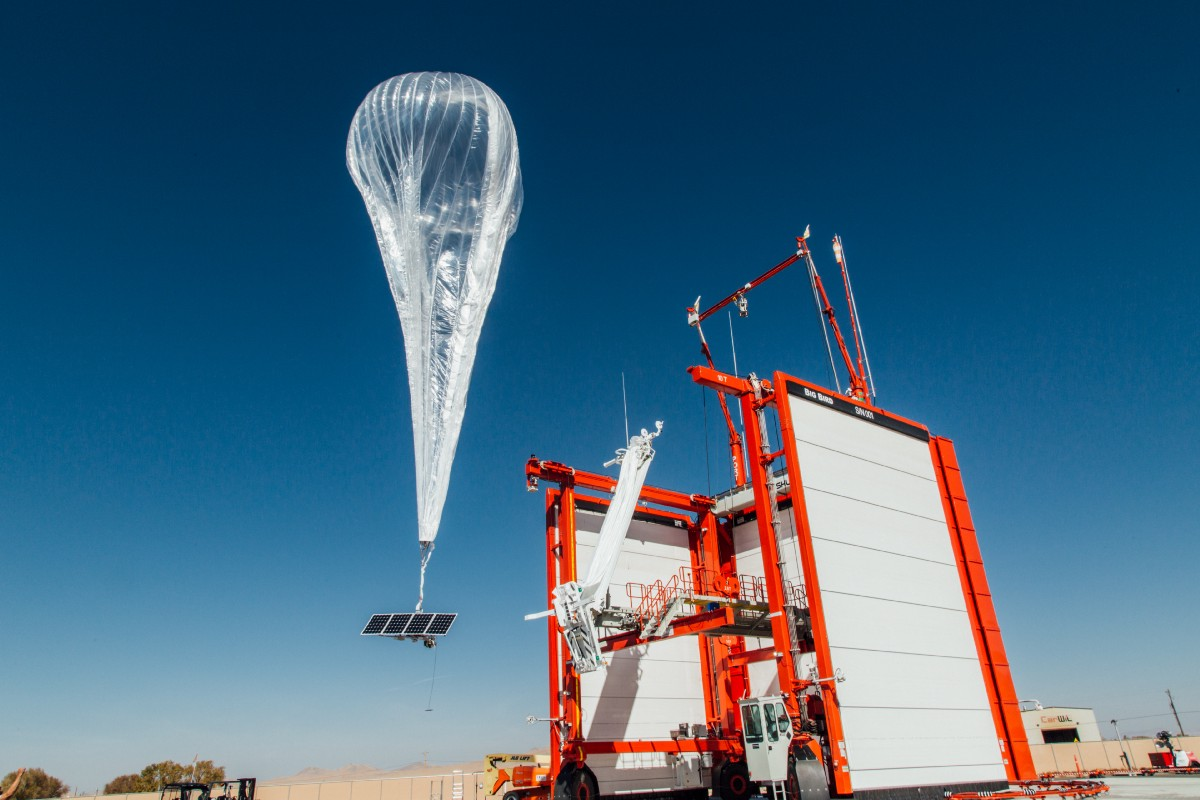
Google’s Project Loon has launched its first set of internet balloons in remote areas of Kenya. The East African country becomes the first in the continent to have balloon-powered internet and the first non-emergency commercial deployment in the world, according to the statement issued by Project Loon and Telkom Kenya.

The companies said that pioneering technology to customers is now on course for this month and will continually improve the technology to progressively offer better experience to customers.

It is the same model that is used in retail: mark down clothes by 20% in the last few days of any quarter, and in the process “burn” $5 million. But in a few weeks, report your earnings, and beat market revenue consensus (who cares about profit?), and magically, add extra $100 million in your market cap.

If you are MTN, 9Mobile, Glo, etc, as you get ready to strike partnerships with balloons, remember the media sector’s partnership with social media. Yes, you can partner and just fade over time. Shine your eyes because everyone likes balloons!

Google Launches Balloon Internet in Kenya

1

Google’s Project Loon has launched its first set of internet balloons in remote areas of Kenya. The East African country becomes the first in the continent to have balloon-powered internet and the first non-emergency commercial deployment in the world, according to the statement issued by Project Loon and Telkom Kenya.

The companies said that pioneering technology to customers is now on course for this month and will continually improve the technology to progressively offer better experience to customers.

“Telkom and Loon are proud to announce the availability of mobile internet service via the Loon technology to Kenyans, starting July 2020. This important milestone comes as the project partners approach the completion of their network integration tests that have seen them successfully assess service quality across their infrastructure and respective networks,” Telkom and Loon said in a statement.

The service is targeted at the underserved and unserved Kenyans. It will cover a region of about 50,000 sq.km of rural Kenya including Iten, Eldoret, Baringo, Nakuru, kakamega, Kisumu, Kisii, Bomet, Kericho and Narok.

The project has been in trial for years now, as part of Google’s effort to provide internet for rural Africa.

According to the statement, in one of the field’s testing last June, Loon and Telkom registered an uplink speed of 4.74 mbps, a downlink speed of 18.9 mbps, and latency of 19 milliseconds (ms). The internet speed was tested through the use of email, web browsing, data calls, video calls and social media apps.

Telkom’s Kenya CEO, Mugo Kibati said it’s a milestone that will help Kenyans living in remote regions to enjoy the internet.

“This is an exciting milestone for internet service provision in Africa and the world, more so that the service will pioneer in Kenya. This being a purely data service and with the continued migration of communication towards data-supported platforms, the internet-enabled balloons will be able to offer connectivity to the many Kenyans who live in remote regions that are underserved or totally unserved, and as such remain disadvantaged.

“This new technology will also complement Telkom’s ongoing strategy to further widen our network coverage, enabling us realize our brand promise; to be Kenya’s preferred data network,” he said.

Alastair Westgarth, Loon’s chief executive said the support of government agencies in Kenya made the project a dream come true.

“We could not be more excited to launch service in Kenya. This is the culmination of years of work and collaboration between Loon, Telkom, and the government. Without the support and engagement by various governmental stakeholders who helped usher in Africa’s first application of this innovative technology,” he said.

The balloons are made from polyethylene sheets and are about the size of tennis courts. They are being launched from locations in the United States and navigated to Kenya through wind currents in the stratosphere.

Africa has a massive population of people who have no access to the internet. According to a 2019 report by the Alliance for Affordable Internet, only 28% of Africa’s 1.3 billion people has access to the internet.

In the wake of COVID-19 pandemic that has stifled traditional practices and forced activities to go virtual, the need to serve the unserved has become greater. Online education and the digitization of telemedicine are becoming priorities for many countries, as part of the new normal. To achieve that, stable internet service is needed in remote areas.

“In light of the spread of COVID-19, Telkom and Loon are working as fast as we can to realize service deployment. This will also enable us support the Kenyan Government’s efforts to manage the current crisis in the short-term, and to establish sustainable operations to serve communities in Kenya in the long-term.

“The Loon service has the capacity to bring about positive impact; connecting targeted communities to emergency services, as well as ensure enhanced and alternative communication options during this time,” Westgarth added.

The statement explained that the Loon service works by beaming internet connectivity from ground stations to balloons 20 km overhead. The balloons are linked to the ground stations that have been connected to Telkom’s network. The ground stations use millimeter wave spectrum to send connectivity from the ground to the balloons overhead.

However, there are challenges. Loon acknowledged that impediments like the wind patterns and restricted airspace may hinder internet service. And because the balloons are solar-powered, users will only have the 4GLte internet service from 6: 00 am to 9: 00 pm. But the companies hope that the technology will get better as they gain more experience flying in Kenya, and dispatching more balloons to the service region.

Google and Facebook have been working on undersea internet cables to provide internet access to remote places in Africa. While that is yet to materialize, the Loon balloon project has offered a faster alternative that the company hopes to extend to other African countries.

Securing Personal Data: The Data Subject’s Responsibilities and Rights

2

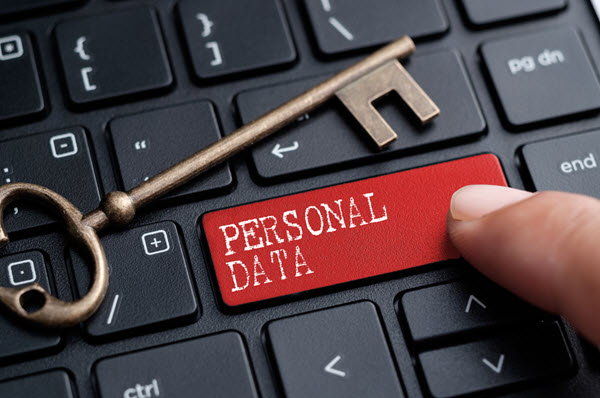
When we walk on sand, lands and in the air, we leave footprints that don’t last long before they are wiped away. The walk on the internet leaves footprints that are hard to clear. These footprints are not just ordinary things but expensive information. 

These footprints are called Personal Data. According to the extant Data protection regulations in the different jurisdictions of the world, Personal data includes all information that identifies and is peculiar to a person. 

Personal data include but not limited to the following :

  • Names, Date of birth, gender, relationship status, nationality, ID number and location data 
  • Online Identifiers such as email,social media posts, IP address, Mac addresses, SIM etc
  • Bank Information such as pin, cvv, card number etc. 
  • Personal Pictures and videos 
  • All information specific to the physical, physiological, genetic, mental, economic, cultural or social identity of that natural person. These may consists of walking style, religious beliefs, voice, style of doing things, patterns, habits etc 

In addition to the above are data that relates to the personal data i.e. information that indirectly relate to a person.

All these are expected to be protected by the Data Controllers (Any Organization that collects these data from Persons). This is the aim of the different Data Protection regulations. 

However, we data subjects have roles to play. We can decide in whose hands our data goes. I mean guarding and watching our steps online. (whether we like it or not our personal data will still be processed online for one important reason or the other).

Should we now share data anyhow because we know there’s GDPR, NDPR and others? Of course no. 

Data Subjects Responsibilities/ Cybersecurity Tips 

  1. Never share personal data on unsecured sites. Sites without the padlock sign or site with HTTP without S behind it
  2. Don’t insert important data on sites you personally don’t trust. Trust your instincts. 
  3. Don’t be too open on social media platforms. I mean practice a little bit of privacy. You don’t need to talk about everything in your life. 
  4. Secure your passwords, don’t just write it on paper and don’t use weak passwords. Check out my pinned tweet for more on that.
  5. Browse on incognito mode while using external Wi-Fi or use a trusted VPN to stay secure.
  6. Stay away from Apps from untrusted sources. 
  7. Don’t just click on every link you see. Read my thread on demystifying fraudulent URL
  8. Update your Apps and use genuine antivirus 
  9. I know this is hard, don’t allow a flash drive into your PC. 
  10. Don’t leave your mobile devices in untrusted hands locked or unlocked. 
  11. If you discover your device is operating itself. Talk to the IT guys as fast as possible. 
  12. Just like 2 above, never put your data on a site that your browser has warned you of its insecurity. You should not even go there as such may expose you to attack.
  13. Control your cookies settings in your browser. Don’t just agree to any user policy of apps or sites.

I always like to say that you should use your common sense online.  Before you post your personal life issues, ask yourself if this is necessary. All those personal stories carry your data which can be used against you later.

 Note that this post is not to be taken as a professional advice. Also it is not in any way reducing the responsibilities of Data processors and controllers in securing personal data. 

Personal Data Rights

Since we are well aware of our personal data, it is necessary we know what rights the data protection regulations provide us. I will look at the major rights provided by the GDPR, NDPR and CCPA. 

If you are giving out your data to a company, agencies or even NGOs, the data protection regulations recognize the fact that your data is just you and as you have certain inalienable rights so also your personal data. In essence your data is you going where you can’t go.

Let’s look at these rights in seriatim

  1. Right to be informed 

Most data protection regulations (I know of GDPR, CCPA & NDPR) provide that the data subject has a right to be informed of what data is collected, what it is used for and how such will be processed. The data controllers cannot collect or process data contrary to the information given to the data subject. 

Also, if a third party will have access to the personal data, the data subject must be informed. In essence you must know how your data is being processed. 

  1. Right to Erasure 

This is also called the right to be forgotten. It means you can request that your data in the hands of  the data controllers, processors and third parties be pulled away from the internet and deleted.

There are exemptions to this right

Exemptions to right to erasure includes:

  • Where such erasure infringes Freedom of expression 
  • Research purposes e.g. health research 
  • In compliance with legal obligation
  • Establishment and defense of legal claims 
  1. Right to object / opt-out

Data subjects can oppose the use of their data partially or totally. This can come in withdrawal of consent or objecting to use of data for direct marketing .

In fact the CCPA provides that business must provide a link caption “Do not sell my personal information “. In essence consumers have the right to opt-out from the selling of their personal information. 

GDPR only provides that data subjects can oppose the processing of data unless data controllers can demonstrate that such is legitimate. It is silent on restriction of selling of data.

  1. Right to Access

Data subjects can request to have access to all personal data the data controllers hold about them. Whether such was freely given, obtained or generated in the course of transactions or modified version of the one freely given. 

In answering, data controllers must state the categories of data, the purposes of the processing, recipients of such data(third parties)  and sources from which those data were generated.

  1. Right to Rectification

Data Subjects can request that errors in their personal data be rectified by the data controllers. Requests can be made orally or in writing.

Available in both GDPR & NDPR. 

Not provided by CCPA

  1. Right to Data portability 

Both GDPR and NDPR provide explicitly that data subjects can request that their data be given to them in a written or electronic format. It allows them to copy or move such data to be used in other services.

CCPA groups this under Right to access.

  1. Right to Restrict Data Processing

Data subjects can decide to restrict the way their data is being processed or used. It is not absolute but applicable in certain situations. Data controllers can still keep the data. 

GDPR & NDPR provide for such. Not applicable in CCPA

  1. Rights related to automated related decision making and profiling 

Both GDPR & NDPR implicitly provide for data subjects to know and restrict automated decision being made through their data. 

CCPA is silent on this.

Note that all the personal data rights are applicable to data collected on hard copy forms as well as online. So data collected during medical consultation, financial analysis etc are covered. It is easy to assume that data rights only covered data submitted online, this is a wrong assumption. Data protection also covers orally delivered data also. 

Now, that you know your personal data rights, you can take action for any breach of your data. Remember, only give out data when important. Data protection cannot enforce your right where you give it to a Con Artist.

Keep staying safe online! 

(This article was collated from two different threads by the author on Twitter on June 12 and 26, 2020. The author does a bi-weekly thread on cyber security and data protection issues on twitter.) 

GTBank’s Segun Agbaje Joins PepsiCo Board

0

Nigerian banking prodigy Segun Agbaje has joined the board of PepsiCo. The Guaranty Trust Bank managing director was announced on Wednesday as the newest member of the PepsiCo board in a statement issued by the company through Nasdaq website.

“I am delighted to welcome Segun to the PepsiCo Board,” said PepsiCo Chairman and CEO, Ramon Laguarta. “Segun is a well-respected and proven business leader with a deep understanding of complex businesses and fast-growing markets, particularly Sub-Saharan Africa where we recently acquired Pioneer Foods as part of our strategy to expand in the region.

“His experience in business transformation and passion for delivering consumer value will serve PepsiCo well as we continue our journey to be the global leader in convenient foods and beverages by winning with purpose.”

Prior to becoming Managing Director and Chief Executive Officer of Guaranty Trust Bank plc in 2011, Agbaje held several positions at the bank after joining in 1991, including Executive Director and most recently Deputy Managing Director from 2002 to 2011. Previously, Agbaje served as an auditor for Ernst & Young LLP in the United States from 1988 to 1990.

“We look forward to Segun joining the PepsiCo Board and to the valued global perspective he will add to our team,” said Daniel Vasella, chair of the Board’s Nominating and Corporate Governance Committee. “His knowledge and experience of embracing and scaling new technologies and critical capabilities will be valuable as we continue to invest in opportunities that create shareholder value and deliver long-term sustainable growth.”

Agbaje also currently serves as a director of MasterCard Advisory Board Middle East and Africa. He holds a Bachelor of Science in Accounting and a Masters in Business Administration from the University of San Francisco.

Under his leadership, the Guaranty Trust Bank has become one of the biggest financial institutions in the world, having over N4.057 trillion asset base. The bank has grown to have branches in Cote d’ivoire, Kenya, Liberia, Gambia, Ghana, Rwanda, Tanzania, Uganda, the United States and the United Kingdom.

About PepsiCo

PepsiCo products are enjoyed by consumers more than one billion times a day in more than 200 countries and territories around the world. PepsiCo generated more than $67 billion in net revenue in 2019, driven by a complementary food and beverage portfolio that includes Frito-Lay, Gatorade, Pepsi-Cola, Quaker and Tropicana. PepsiCo’s product portfolio includes a wide range of enjoyable foods and beverages, including 23 brands that generate more than $1 billion each in estimated annual retail sales.