DD
MM
YYYY

PAGES

DD
MM
YYYY

spot_img

PAGES

Home Blog Page 627

TikTok Expands Direct Messaging Features with Voice Notes and Media Sharing

0

TikTok is giving users new ways to interact with others via direct messages (DMs), the company told TechCrunch on Friday. Users will now be able to send voice notes and share up to nine images or videos in one-to-one and group chats on the platform.

With these new features, TikTok is positioning itself as more than just an entertainment platform, aiming to become a place where users interact regularly beyond simply sending each other TikTok videos. Additionally, the new capabilities bring TikTok’s messaging experience more in line with that of other popular social apps and services.

With voice notes, users can record and send audio messages up to 60 seconds long. The launch of the feature comes as services like Instagram already offer the ability to send voice notes to others via DMs.

It makes sense for TikTok to add voice notes to its DMs, especially as a growing number of people, particularly Gen Z, are embracing the format for communication. The feature is rolling out over the next few weeks, TikTok says.

As for sharing photos and videos, users can either take a photo or video with their camera or select one from their camera roll to share it with others. They can also choose to edit the content before sending it.

For user safety, people can’t send an image or video as their initial message request. For example, if someone messages you for the first time, they can’t send a photo or video they have taken themselves; they can only share content already on TikTok. Additionally, when someone chooses to send a photo or video, TikTok will remind them to protect their privacy and be mindful of who they’re sending that content to.

While DMs on TikTok are unavailable to users under the age of 16, the company is adding protections for users between the ages of 16 and 18. For instance, TikTok has automated systems in place to detect and block images containing nudity. This means that the sender will be blocked from sending the nude image, and the receiver won’t see the image at all. Users above the age of 18 can choose to toggle this safety feature on in their app settings.

TikTok sees the new features as a way for users to express themselves and connect with others in ways that they’re already accustomed to. The move comes as TikTok has been working to build out its messaging product. Last year, the platform launched group chats, giving users the ability to chat with up to 32 people at once. TikTok also recently rolled out Creator Chat Rooms, a dedicated space for creators and their followers to connect and interact with each other.

TikTok’s Long Road to Becoming a “Social Platform”

TikTok’s DM expansion is the latest chapter in the app’s ongoing attempt to reposition itself from being viewed solely as a short-video entertainment hub to functioning as a full-fledged social platform. The company has experimented with this idea before. One notable effort was TikTok Now, a feature launched in 2022 that closely mirrored BeReal, the French social app that encouraged users to post real-time, unfiltered photos. The experiment was aimed at sparking more spontaneous social sharing, but it failed to gain significant traction and was quietly retired in many markets.

Beyond TikTok Now, the platform has also struggled to rival Instagram’s messaging ecosystem, where DMs are central to how users interact daily—sharing memes, posts, and short-form videos seamlessly. Instagram’s head start and Meta’s broader integration across WhatsApp and Messenger created an entrenched messaging network that TikTok has long sought to challenge but has yet to match in depth or adoption.

This history underscores why TikTok is doubling down on DMs today. The company is attempting to replicate the daily-use features that keep users locked into rival apps, while also leveraging its massive Gen Z audience already engaged with short-form video content.

Messaging Beyond Messaging Apps

TikTok is not alone in adding messaging capabilities as a way to expand beyond its core offering. Spotify, for instance, recently introduced its own in-app messaging tools, allowing users to share and discuss music directly inside the platform rather than relying on external apps. This signals a broader trend in the tech industry where platforms are trying to capture more of users’ social interactions within their ecosystems, reducing reliance on competitors like WhatsApp, iMessage, or Instagram.

The bigger aim for TikTok is to use the conversations that happen within its app to boost revenue. The more engaged users remain, the more opportunities the platform has to strengthen community bonds, surface content, and ultimately increase revenue through advertising and potential new features.
ETFs Surpasses Number of Individual Stocks For First Time in History

0

In August 2025, the number of exchange-traded funds (ETFs) in the U.S. surpassed the number of individual stocks for the first time, with over 4,300 ETFs compared to approximately 4,200 stocks, according to data compiled by Morningstar.

Ethereum is a decentralized, open-source blockchain platform that enables the creation and execution of smart contracts and decentralized applications (dApps). Launched in 2015 by Vitalik Buterin and others, it’s the second-largest cryptocurrency by market capitalization after Bitcoin.

Its native cryptocurrency, Ether (ETH), is used to power transactions and computations on the network. Ethereum hosts a significant portion of DeFi protocols, enabling lending, borrowing, and trading without intermediaries.

This milestone reflects the rapid growth of the ETF industry, which has seen assets under management in U.S. ETFs reach $9 trillion by 2024, driven by their low costs, diversification, and trading flexibility. The surge in ETF numbers, up from just 9% of investment vehicles a decade ago to about 25% today, highlights their increasing dominance in the investment landscape.

With over 4,300 ETFs surpassing the ~4,200 individual stocks in the U.S. as of August 2025, investors face a broader but more complex array of options. This can overwhelm retail investors, requiring greater due diligence to avoid overlapping or niche ETFs with higher risks or costs.

ETFs enhance market liquidity by offering intraday trading and diversified exposure, often at lower costs than mutual funds. However, the proliferation of niche or leveraged ETFs may introduce volatility or systemic risks, especially in less liquid underlying assets.

The dominance of ETFs signals a shift toward passive and index-based investing, reducing the focus on individual stock picking. This could pressure active fund managers and alter capital allocation, potentially concentrating investments in larger, index-heavy stocks.

The rise of ETFs fosters innovation, with products targeting specific themes (e.g., AI, clean energy) or strategies (e.g., leveraged, inverse). However, this may lead to market fragmentation or speculative bubbles in oversaturated sectors.

ETFs’ low fees and accessibility democratize investing, but the sheer volume of niche ETFs with higher expense ratios could erode cost advantages for uninformed investors.

ETF Growth Factors

ETFs typically have lower expense ratios than mutual funds (e.g., average ETF expense ratio of 0.44% vs. 0.93% for mutual funds in 2024, per Morningstar), attracting cost-conscious investors.

ETFs provide exposure to broad markets, sectors, or themes in a single trade, appealing to both retail and institutional investors seeking diversified or tactical strategies. ETFs’ in-kind redemption process minimizes capital gains distributions, making them more tax-efficient than mutual funds, a key draw for long-term investors.

The launch of thematic and specialized ETFs (e.g., targeting ESG, cryptocurrencies, or AI) has fueled growth, with 500+ new ETFs launched in 2024 alone, per Morningstar data. The shift toward index-based investing, driven by consistent outperformance of low-cost index funds, has boosted ETF assets, which reached $9 trillion in the U.S. by 2024.

Favorable SEC regulations, like the 2019 ETF Rule, streamlined approvals and reduced costs for launching ETFs, spurring growth. Brokerages offering commission-free ETF trading and fractional shares have lowered barriers, driving retail adoption, especially among younger investors.

This milestone reflects structural shifts in markets, but investors must navigate the growing complexity to capitalize on ETFs’ benefits while avoiding potential pitfalls.

Kalshi Adds Solana Support, BMNR Buys Ethereum Amid Pump.Fun’s $10M PumP Buy

0

Kalshi Adds Solana Deposit Support 

Kalshi, a U.S.-regulated prediction market platform overseen by the Commodity Futures Trading Commission (CFTC), announced on May 23, 2025, that it now supports Solana (SOL) deposits, alongside Bitcoin (BTC), USD Coin (USDC), and Worldcoin (WLD).

This integration allows users to fund their Kalshi accounts directly from Solana-compatible wallets, with deposits instantly converted to U.S. dollars via Zero Hash for trading on real-world event outcomes. This move is expected to boost Solana’s liquidity and adoption by tapping into Kalshi’s growing user base, which saw $1.97 billion in trading volume in 2024.

BMNR Buys Over 78K ETH This Week

Posts on X indicate that BitMNR purchased 414,914 ETH, valued at approximately $1.85 billion, increasing their total holdings to 1,565,177 ETH (~$7 billion), a 36% increase in seven days. This suggests significant accumulation, with some claiming BitMNR is outpacing other institutional buyers like BlackRock, which reportedly stacked $2.31 billion in ETH this week.

Pump.Fun Buys Back Over $10M Worth of PUMP

Pump.Fun, a Solana-based memecoin launchpad, has been actively repurchasing its native token, PUMP, to counter sell pressure. Reports indicate buybacks totaling approximately $15 million over two weeks, with $6.68 million spent on August 8, 2025, to acquire 1.77 billion PUMP tokens using 33,000 SOL.

This contributed to a 22% price increase for PUMP, with its market cap climbing above $1 billion. Despite a drop in monthly revenue to $24.96 million in July 2025 (an 80% decline from January), Pump.Fun’s daily fees exceeded $1 million in early August, supporting these buybacks. The platform also launched the Glass Full Foundation to provide liquidity for promising projects, reinforcing its dominance in Solana’s memecoin ecosystem.

By integrating Solana (SOL) deposits, Kalshi, a regulated prediction market platform, enhances Solana’s utility and accessibility. This could drive demand for SOL as users deposit tokens to trade on real-world event outcomes, potentially increasing its price and liquidity.

Kalshi’s move strengthens its position against competitors like Polymarket, which also operates on blockchain networks. Supporting Solana could attract crypto-native users, expanding Kalshi’s market share in the growing prediction market space.

The addition of SOL alongside BTC, USDC, and WLD signals a trend toward mainstream platforms embracing cryptocurrencies, potentially encouraging other regulated platforms to follow suit. This could legitimize Solana further in traditional finance circles.

BMNR’s purchase of 78K ETH (part of a reported 414,914 ETH, ~$1.85 billion) signals strong institutional interest in Ethereum. Such large buys could fuel bullish sentiment, potentially driving ETH’s price higher in the short term due to reduced circulating supply. BMNR’s aggressive buying, alongside claims of BlackRock’s $2.31 billion ETH purchases, suggests growing institutional confidence in Ethereum’s long-term value, possibly driven by its role in DeFi, NFTs, and layer-2 scaling solutions.

Large-scale purchases by a single entity could reduce ETH liquidity in spot markets, increasing volatility if BMNR later sells or if other whales follow suit. Pump.Fun’s $15 million buyback program, including $6.68 million in one day, aims to counter sell pressure and stabilize PUMP’s price.

The resulting 22% price surge and $1 billion+ market cap reflect boosted investor confidence in the token and platform. As a leading Solana-based memecoin launchpad, Pump.Fun’s buybacks and the Glass Full Foundation initiative demonstrate commitment to supporting its ecosystem. This could attract more projects and users, reinforcing Pump.Fun’s dominance in memecoin creation.

Despite high daily fees ($1 million+), Pump.Fun’s 80% revenue drop from January to July 2025 suggests potential sustainability concerns. Buybacks may strain liquidity if revenue continues to decline, risking long-term financial health. The buybacks, funded by SOL, highlight Pump.Fun’s reliance on Solana’s infrastructure. Increased activity could drive SOL demand, but heavy SOL liquidation for buybacks might temporarily depress SOL’s price.

Solana Mobile’s Seeker Season and Rabby Wallet’s Teased Hyperliquid Support Advance Web3 and DeFi

0

Solana Mobile announced the launch of “Seeker Season,” starting September 8, 2025, to enhance the Web3 mobile experience for Solana Seeker phone users.

This initiative introduces weekly featured decentralized applications (dApps), exclusive rewards, and early access to new on-chain experiences via the Solana dApp Store. Users can expect enhanced DeFi yields, gaming perks, DePIN rewards, and social features, all tied to the Seeker’s ecosystem, including the Seed Vault Wallet, Seeker ID, and Genesis Token.

Over 100 dApps are already available, with more expected, aiming to drive engagement through a decentralized economy powered by the SKR token. Pre-orders for the Seeker phone have surpassed 150,000 units globally, reflecting strong demand for its crypto-native features like hardware-level security and seamless transaction approvals.

Rabby Wallet’s Teased Hyperliquid Support

Rabby Wallet, known for supporting over 110 EVM-compatible networks, has been highlighted in discussions for its potential compatibility with Hyperliquid, a decentralized trading platform.

Users report smoother integration with Hyperliquid compared to MetaMask, particularly for avoiding connection issues like recursive loops. However, challenges remain, such as tokens not populating in the wallet, indicating setup complexities. Rabby’s mobile app is noted as a work-in-progress, with its browser extension offering better functionality for EVM-based transactions.

By integrating features like the Seed Vault Wallet and Seeker ID, Solana reduces barriers for non-technical users, potentially attracting new demographics to DeFi, NFTs, and DePIN (Decentralized Physical Infrastructure Networks). However, the dApp Store’s limited functionality (e.g., only 24 of 141 apps updated recently) may hinder retention if user experience doesn’t improve.

The Seeker’s built-in Seed Vault Wallet uses a Trusted Execution Environment to isolate private keys, offering hardware-grade security with biometric authentication (e.g., fingerprint scanning). This simplifies secure transactions, making them as intuitive as mobile payments like Apple Pay.

Enhanced security could build trust among crypto enthusiasts and newcomers, reducing risks like phishing or malware attacks. This positions the Seeker as a compelling alternative to traditional software wallets, potentially shifting user preference toward hardware-integrated solutions.

However, reliance on a single device raises concerns about vendor lock-in or recovery challenges if the device is lost, despite seed phrase backups. Seeker Season’s economy, powered by the SKR token and Genesis Token (a soulbound NFT), offers exclusive perks like enhanced DeFi yields, gaming rewards, and DePIN incentives.

These rewards incentivize user engagement and dApp development. The token-based economy could drive a virtuous cycle of user retention and developer activity, mirroring the success of the Saga’s BONK airdrop, which sparked demand. However, the value of these rewards depends on the Solana ecosystem’s growth and the SKR token’s market performance, which could be volatile or speculative.

By offering a fee-free distribution platform, Solana Mobile challenges the 20–30% fees charged by Google Play and Apple’s App Store. This could attract developers to build on Solana, fostering a richer dApp ecosystem. A thriving dApp Store could disrupt centralized app marketplaces, aligning with Solana’s vision of a decentralized mobile ecosystem.

Implications of Rabby Wallet’s Teased Hyperliquid Support

Rabby Wallet’s potential support for Hyperliquid’s HyperEVM (Chain ID: 999) enhances its multi-chain capabilities, already covering 122 EVM-compatible networks. User reports indicate smoother integration with Hyperliquid compared to MetaMask, with features like automatic network switching and transaction signing via hardware wallets like Ledger.

This strengthens Rabby’s position as a go-to wallet for DeFi users managing assets across EVM chains and trading on high-performance platforms like Hyperliquid. It could attract users seeking seamless cross-chain experiences, especially for Hyperliquid’s gasless trading and perpetual futures. However, unconfirmed support and issues like tokens not populating in Rabby highlight integration challenges that need resolution for widespread adoption.

Rabby’s pre-transaction risk scanning, transaction previews, and multiple security audits (e.g., SlowMist, Cure53) make it a secure choice for Hyperliquid’s trading environment. Its ability to connect with hardware wallets like Ledger adds an extra layer of protection.

For traders handling significant capital on Hyperliquid, Rabby’s security features could reduce risks associated with DeFi exploits, appealing to institutional and high-net-worth users. However, the mobile app’s limitations (e.g., inability to sign transactions independently) may frustrate users seeking a fully mobile solution, potentially limiting its appeal compared to native Hyperliquid wallets like Okto.

Rabby’s teased Hyperliquid support, alongside its acquisition of Solsniper and integration of Phantom Perps for up to 40x leverage trading, positions it as a versatile wallet aggregator competing with MetaMask, Phantom, and Okto.

Increased competition could drive innovation in wallet functionality, benefiting users with better interfaces and features. However, Rabby’s reliance on user reports for Hyperliquid support (rather than official confirmation) risks creating uncertainty, potentially ceding ground to competitors like Okto, which offers native Hyperliquid integration with a mobile-first design.

Rabby’s point system and Hyperliquid’s $HYPE token (a top-10 non-stablecoin by market cap) fuel speculation about future airdrops for users bridging or trading on Hyperliquid via Rabby. Airdrop speculation could drive short-term adoption of Rabby for Hyperliquid users, mirroring Solana’s BONK success.

Both announcements highlight a trend toward integrating DeFi into mobile-first experiences. Solana’s Seeker Season leverages a crypto-native phone to simplify on-chain interactions, while Rabby’s Hyperliquid support enhances cross-chain trading accessibility. Together, they bridge the gap between hardware and software solutions, potentially accelerating Web3 adoption.

Solana’s fee-free dApp Store and Rabby’s multi-chain support incentivize developers to build on their platforms, potentially leading to richer ecosystems. Solana’s developer tools (Solana Mobile Stack) and Rabby’s DeFi aggregation capabilities lower barriers for innovation.

Success hinges on improving the dApp Store’s quality and ensuring SKR token rewards are sustainable. The device’s niche appeal may limit its market unless broader use cases (beyond crypto enthusiasts) emerge. Users should monitor dApp updates and test exclusive features cautiously to avoid over-reliance on unproven apps.

Robinhood’s TON Listing and CyberKongz’s KONG Airdrop Fuel FOMO

0

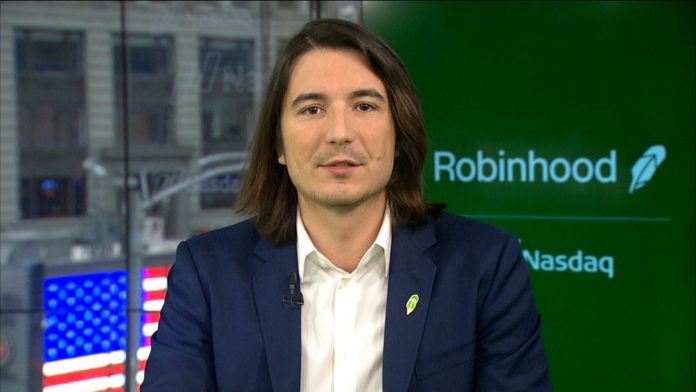
Robinhood has listed The Open Network (TON) for trading, as announced in a post on X on August 28, 2025. This allows users to trade TON on the Robinhood platform, expanding access to this cryptocurrency.

CyberKongz KONG Token Airdrop

CyberKongz announced a new token, KONG, which will replace their original BANANA token. According to reports from August 19, 2025, 2% of the total KONG token supply (1 billion tokens on the Ethereum mainnet) will be airdropped to active OpenSea users who have been engaged since 2023, during the bear market.

Further details about the airdrop process are expected to be shared closer to the token generation event (TGE). The KONG token aims to integrate DeFi and NFT features, including staking, reward distribution, and deflationary burn functions.

Robinhood’s listing of TON expands its availability to a broader retail investor base, as Robinhood is a popular platform known for low-cost trading. This move enhances TON’s legitimacy and visibility in the crypto market, potentially driving mainstream adoption.

TON, associated with Telegram’s blockchain ecosystem, benefits from integration with Telegram’s vast user base, making it appealing for applications like buying anonymous phone numbers or memes on-chain. The listing creates a sense of urgency among investors who fear missing out on a newly accessible, high-profile asset.

TON’s price and open interest have surged recently, signaling bullish sentiment. Investors may rush to buy TON, anticipating further price increases due to Robinhood’s large user base and the hype around Telegram’s ecosystem, fearing they’ll miss the next big crypto rally.

Listings on major platforms like Robinhood often act as catalysts for price surges due to increased liquidity and speculative trading. TON’s integration with Telegram’s GameFi and DeFi ecosystems (e.g., FOMO token’s success on TON) suggests potential for further growth, attracting speculators.

Robinhood’s decision to list TON signals confidence in its regulatory compliance and market potential, despite past scrutiny of crypto listings. This could encourage other exchanges to follow, further boosting TON’s credibility.

Investors may feel compelled to act quickly, fearing that TON’s growing legitimacy could lead to rapid price appreciation, especially if other platforms list it or if Telegram’s ecosystem expands further.

Implications of CyberKongz KONG Token Airdrop

CyberKongz’s announcement on August 19, 2025, to airdrop 2% of its 1 billion KONG token supply to active OpenSea users since 2023 rewards long-term NFT community members, particularly those who remained active during the bear market. This strengthens community engagement and incentivizes participation in the CyberKongz ecosystem.

The airdrop creates excitement among OpenSea users, who may fear missing out on free tokens if they don’t qualify or act swiftly. The exclusivity of rewarding bear market participants heightens the urgency, as users may rush to verify their eligibility or increase OpenSea activity to ensure future airdrop inclusion.

Revitalizing NFT Market Interest

The KONG token, replacing the BANANA token, aims to enhance the CyberKongz ecosystem with new utility (e.g., staking, rewards, and burns). This move, alongside the airdrop, could reignite interest in NFTs, especially after a bearish period, as seen with other projects like Pudgy Penguins facing sell pressure post-launch.

The promise of a new token with DeFi and NFT integration fuels speculation that KONG could appreciate significantly post-launch. Users may feel pressured to participate in the airdrop or buy related NFTs (e.g., Genesis or Baby Kongz) to gain access to future distributions, fearing they’ll miss a potential “moon shot.”

CyberKongz received a Wells notice from the SEC, indicating potential regulatory action, which introduces uncertainty. However, the project’s defiance and hope for a more favorable stance under a new administration could rally community support.

The regulatory scrutiny paradoxically amplifies FOMO, as some investors may perceive CyberKongz as a high-risk, high-reward opportunity. The fear of missing out on a project that could overcome regulatory hurdles and thrive drives speculative interest, especially among “degen” investors.

The KONG airdrop’s limited 2% allocation to active OpenSea users creates a sense of scarcity, as only a select group qualifies. Similarly, TON’s listing on Robinhood feels like an exclusive opportunity for early adopters before broader market adoption. This scarcity drives FOMO, as users fear missing out on limited rewards or early investment opportunities.

Both events leverage strong community-driven narratives. CyberKongz emphasizes NFT culture and rewards loyal users, while TON benefits from Telegram’s massive user base and integration with apps like the FOMO token platform. Social media buzz, such as CyberKongz’s X posts and Robinhood’s announcements, amplifies hype, pushing users to act quickly to avoid being left out.

Airdrops and exchange listings historically trigger price surges, as seen with tokens like Pudgy Penguins’ PENGU (despite its later crash). The anticipation of KONG’s launch and TON’s price momentum on Robinhood fuels speculation that early participation could yield significant returns, driving FOMO among traders and NFT enthusiasts.

The crypto market thrives on trends, and airdrops are a leading driver of liquidity and user acquisition. The success of projects like FOMO on TON and the buzz around CyberKongz’s airdrop create a bandwagon effect, where users fear missing the next big project or token rally, prompting impulsive participation.

While these events drive FOMO, they also carry risks. TON’s price surge may be tempered by declining network activity, suggesting hype-driven rather than fundamental growth. Similarly, CyberKongz’s SEC scrutiny could deter cautious investors, and the KONG token’s success depends on effective execution of its DeFi and NFT features.