DD
MM
YYYY

PAGES

DD
MM
YYYY

spot_img

PAGES

Home Blog Page 6444

Tekedia Mini-MBA: Market Expert Will Lead Session On Capital Markets, Investing And Fundraising

0

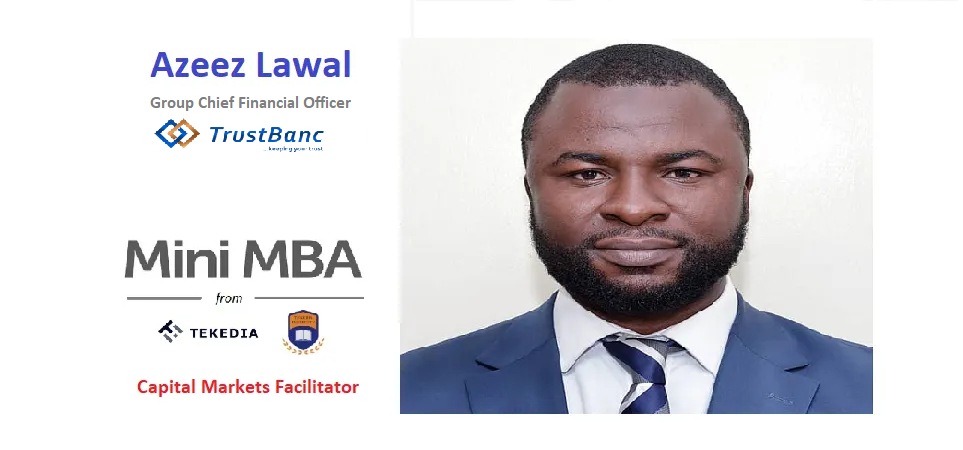
One more week to complete the business basics of AI, blockchain, cloud computing and big data on the ongoing Tekedia Mini-MBA. We do think every business leader needs an executive-level understanding of these technologies. So, bringing the experts who work on them, we think, makes sense. From next week, we will move back to the “business” of business. It will begin with Azeez Lawal, the Group Chief Financial Officer of TrustBanc Group who will take us on Capital Markets, Investing & Fundraising. 

Azeez is a capital market expert and a market maker. He will bring clarity on many elements including investing, fundraising, finding values in markets, and managing business risks.  In the turbulence coming from coronavirus and the naira at the risk of devaluation, he will break the implications and provide guidance.

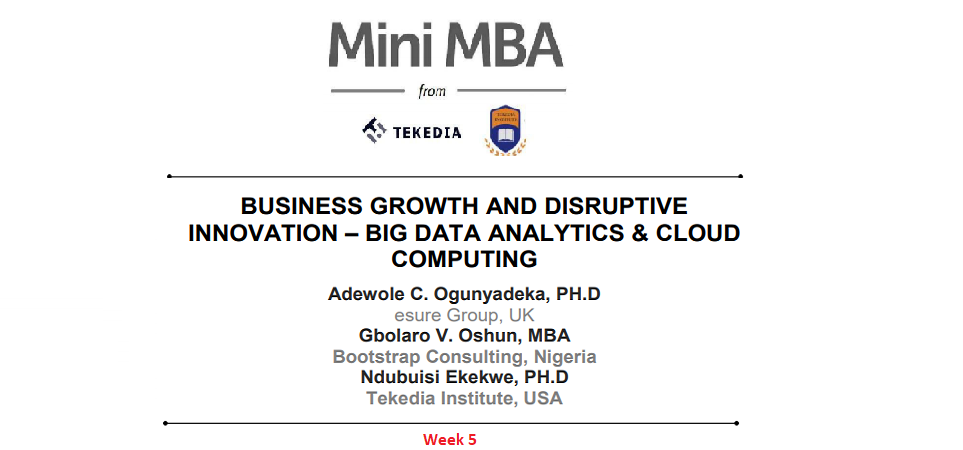
This week’s contents on cloud computing and big data analytics are already on the Board.

Tekedia Mini-MBA: Week 5 Contents Are Live

1

I quoted William Shakespeare where Hamlet responded to Lord Polonius with “Words, Words, Words” in my introductory video. In Week 5 session of Tekedia Mini-MBA, the “words” are data. Yes, data everywhere and someone has to make sense of it to find leverageable factors to utilize the factors of production effectively. Gbolaro Oshun takes care of the cloud computing module while Dr. Adewole C. Ogunyadeka handles the big data analytics part. Four companies made into the flash cases which are extensively discussed. And they have Challenge assignments which I guess can give someone a promotion if executed in any firm. Contents are live in the Board – have a profitable week ahead.

Osun Decentralises Teaching Service Recruitment Exercise as Access Portal Fee Becomes Examination Fee

0

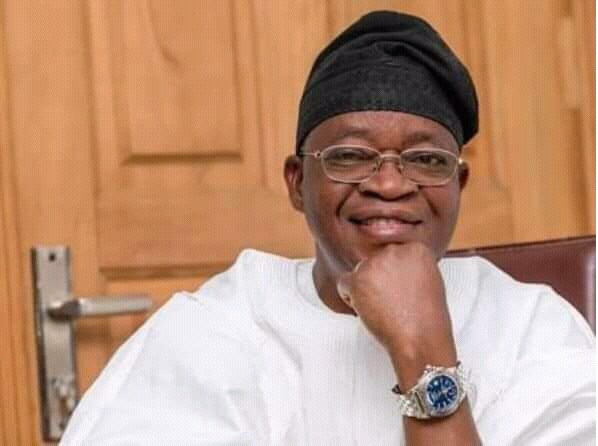
In the last few days, it has emerged that Osun state government is responding to the concerns of the citizens and group in the state regarding its approach to the ongoing recruitment of prospective teachers into public primary schools. At the wee of the announcement of the beginning of the recruitment exercise, people and group fumed about the portal access fee of N3,000, saying it is exploitative and unacceptable considering the dwindling socioeconomic status of the prospective teachers.

Earlier reports show that the Commissioner of Education in the State, Folorunso Bamisayemi responded, saying he could not involve in recruitment exercise that would not provide the right and qualified teachers for the growth of education sector in the State. Reacting, Jamiu Baatunde Olawumi, Special Adviser to the Governor on Education announced in a widely circulated statement on social media that the State Government has decentralised the sales of PIN Code for access by the prospective teachers, “most especially those who desire to take up appointment as teachers in the State owned Basic and Post Basic Schools.” According to the statement the exercise will now hold at 5 different centers as follow;

  1. Ministry of Education, State Secretariat.
  2. Osun East District Education Office at Oduduwa College, Ile-Ife
  3. Osun Central District Education Office at Akinorun Grammar School, Ikirun
  4. Osun West District Education Office at Ikire.
  5. Unity Bank Plc. Ogo-Oluwa, area, Osogbo.

Meanwhile, it has appeared that the State Government has changed its intent on the fee being paid by the prospective teachers. This could be gleaned from the Special Adviser’s last paragraph of his widely circulated statement. According to him “Interested and prospective teachers are therefore advised to pick the PIN Number through which they are paying for the examination charges to be conducted by JAMB CBT at a time to be communicated to them by JAMB headquarters.”

The Positive Agenda Nigeria had earlier said “it unthinkable that candidates, who are indigenes of Osun are expected to pay a sum of N3,000 to the coffers of the state government before they could be allowed to submit their applications for employment into the public service of the state.”

African doctoral students charged to be more creative in finding solutions to societal problems through their researches

0

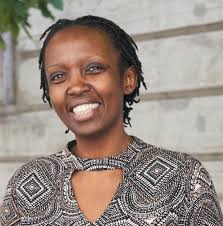
African doctoral students have been charged to find a link between their researches and the problems faced by their society. This advice was made by Dr. Connie Nshemereirwe last Saturday at an online seminar organized by the Department of Communication & Language Arts, University of Ibadan for its doctoral students.”The seminar tagged Science and Policy Facilitation was meant to assist the doctoral students of the department find their feet after their studies,” said Professor Ayo Ojebode, the Head of the Department. This seminar is one of the series of seminars targetted at strengthening the capacities of the PhD students on conducting researches and buiding careers after completing their PhD research.

Dr. Nshemereirwe, who is a Science and Policy Facilitator, posited that the few PhD holders on the continent are leaders in their own right whether they are aware or not and are expected to be part of the solutions to the problems faced by different countries within the continent. She decried the wide gap that exists between policy makers and researchers in Africa. She advocated that the narrative of scientists trying to understand the problem not sitting with the politicians trying to solve the problem in the same room must change. This could only happen if only more researchers are not only conducting policy relevant empirical investigations but are also making attempts to let policy makers understand the importance of such endeavours with little or no scientific jargons.

“The space between science and policy is wide open, and really appreciates a scientist who not only  knows her science, but who can also speak plainly and tie the science to societal problems,” Nshemereirwe noted. She identified the fact that policy makers need more scientific minds to interact with them. She observed that a trained scientist has a number of transferable skills and knowledge which could assist in plugging identifiable loopholes in policies made by those in government. She therefore charged the audience to key in their vision into solving the problem of their country asking them “what impact would you like to have, and have you explored all the different ways in which you can do that, including creating your own way?”

The seminar had in attendance the Departmental PG (PhD) Coordinator, Dr. Bisi Olawuyi.

According to Global Young Academy, Dr. Connie Nshemereirwe, an independent science and policy facilitator, is a trainer, writer and speaker. She is on the steering committee of the Africa Science Leadership Programme (ASLP) based at the University of Pretoria in South Africa. She also works with the Partnership for African Social and Governance Research (PASGR) based in Nairobi, Kenya.

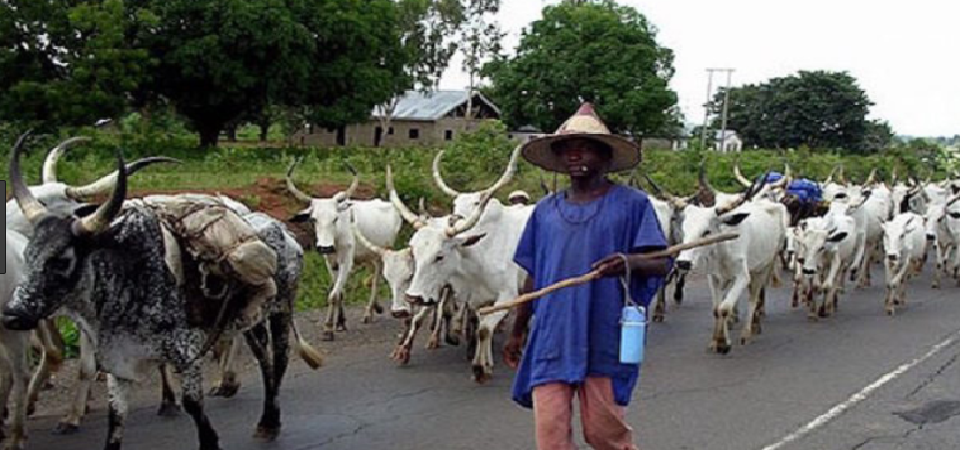
Leadership Lessons from the Herdsman – Leading from the Rear

0

 “I am behind you, follow me.” John Maxwell

Back in my younger days, I had a limited knowledge about leadership. I believed I was a leader and I must always be in front. I felt uncomfortable walking behind in a group; I always walked faster to be ahead. Also, I didn’t like being held by the hand by whomever, I must be the one to hold the other person’s hand. I never rolled with a group where I am not the one calling the shots. My innermost desire was to be number one amongst the rest. From my primary to secondary and tertiary education, I dreamed of being the senior prefect, and the SUG president; nothing else could appease me. You can guess my ultimate desire by now. If you say, to be the president of Nigeria someday, you are right! 

However, as my leadership experience and capacity increased with the passage of time, my craving for the front position regressed as I find myself deliberately walking behind the group. Why? My selfish desire changed to a selfless one. When I walked in the front, I always looked back to make sure everyone was following and no one was missing. Then it dawned on me that the best place to lead was from the rear. I would like to call this the Herdsman Leadership Style. 

If you have seen cattle herders with their herds, you would notice that most of the time, the herders are either behind them or by their sides. They occasionally move to the front if they perceive danger. The oldest of the herd, the lead cow, is usually the one in front leading the rest as it takes instructions from the herdsman from the back. The Herdsman Leadership Style has some obvious benefits that I think is worthy of emulation. 

Characteristics of the Herdsman Leadership Style

  • Protection

Every leader is obligated to provide protection for his team members or followers just as the herdsman protects his herd. It is very dangerous to lead the vulnerable like school children from the front. Have them walk in front of you, this way you won’t turn back and find someone missing. In a formal setting, a leader who leads from the rear is telling his team members that, “I got your backs, just trust your instincts and keep moving.” 

  • Vision

The best vision is enjoyed by the one in front but the leader who leads from the rear has foresight. From this position, the leader can see how his entire team and individual members move and no one can stray under his focus and coordination. In a formal setting, this will afford the leader the best opportunity to assess the team’s and individual’s performance with respect to the collective goal. This will also show if the team members are achieving theirs in the whole. 

  • Delegation

The herdsman uses the principle of delegation a lot in that he entrusts the lead cow with the responsibility and with commensurate authority to lead the rest. No one undermines the leadership of the lead cow. In a formal setting, a good leader should and must delegate. Delegation makes leaders out of followers by building capacity, trust, confidence, and productivity. A leader that fails to delegate has failed already. Moses succeeded in leading the Israelites out of bondage in Egypt to respite in the wilderness through delegation as advised by his father in-law, Jethro, in Exodus 18. 

  • Freedom

It is in man, nay, in all creatures, to be free in thoughts, in action, destination, and expression. Every creature remonstrates when its freedom is restricted. No living thing wants to be chained and led. Goats become more obstinate when tethered about their necks. Bullocks become violent when pulled with a rope. However, we notice a different reaction when the herdsman allows his herd to be led by the lead cow without being tied and dragged. In a formal setting, this can be likened to being free from being micromanaged on the job. Leaders who micromanage suffer from personality disorder and very soon will lose their influence when the team members fight back. This is reminiscent of how Chelsea players got Jose Mourinho sacked. 

  • Creativity and Innovation

When leaders lead from the rear, it affords the followers the opportunity to be creative and innovative. The young and energetic calves go into wild excitement playing around the older cows. It is so much fun watching them gallop with dexterity. Every team member is gifted and only freedom from strict regulations can make them birth ideas and initiative in a formal setting. In a nutshell, when a leader leads from the rear, he affords his team members the time and space to discover themselves. 

  • Development of More Leaders

The herdsman leadership style precludes the possibility of a leadership vacuum. We see the principle of hierarchy and protocol as the lead cow leads. The rest of the herd does not break the rank by following the herdsman directly. From the rear, the herdsman speaks to the lead cow and the latter lowers the instruction to the rest. In a formal setting, when a leader fails to adequately grow leaders from his team members, he will become a demigod, at best, and if anything should happen to him that is the end of the vision. Even when he delegates, only a few team members will accept the person and leadership of the delegated. 

  • Communication and Productivity

I grouped these leadership traits to underscore the significance of communication to the success of leadership. The herdsman has developed a unique communication style for his herd. By whistling and making other kinds of sounds with his mouth, and sometimes the use of his staff on the cattle when they err make them conform. In Nigeria, a major objective of the herdsman is to secure adequate pasture for his cattle. The search for green pastures is dictated by the seasons. In a formal setting, when a leader holds grudges with his team members, communication suffers, and he outlives his relevance. Each team member needs to be communicated to in the way he or she will grasp. A uniform style will not yield the desired outcome. 

On a final note, the herdsman leadership style of leading from the rear affords him a 360 degree view of his leadership. He can look up to see what lies ahead, look sideways to ward off danger, and he can look back to see/assess the distance covered  or work done. 

You may want to take some steps back for the obvious reasons.