DD
MM
YYYY

PAGES

DD
MM
YYYY

spot_img

PAGES

Home Blog Page 6486

TAFFD USA Honours Ndubuisi Ekekwe Among 20 Best Futurist Keynote Speakers 2019

11

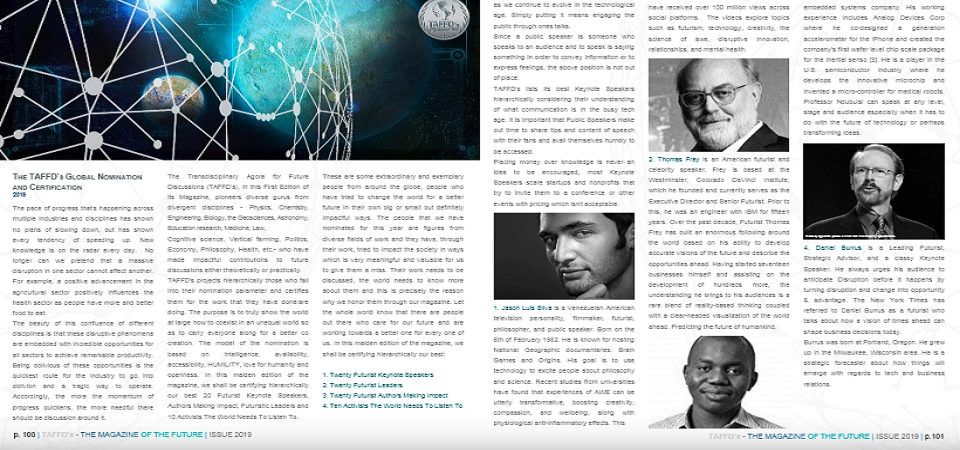
The day I heard that Goldman Sachs paid Hillary Clinton $675k for a speech, I froze. But as small people, we have been climbing in this industry in America and beyond,  where thinkers are asked to inspire people by x-raying the future. Even with my Nigerian accent (working harder to keep it), the calls keep coming. Today, the highly respected Transdisciplinary Agora for Future Discussions, Inc (TAFFD), Georgia, USA selected me as one of the 20 Best Futurist Keynote Speakers 2019. I also got into their 120-page magazine. From their email informing me.

Congratulations for being certified as one of the TAFFD’s Twenty Best Futurist Keynote Speakers for 2019. Your bio and picture form part of the TAFFD’s Magazine available at – https://amp.issuu.com/visual-stories/dnk47FPTHQH or https://issuu.com/taffds/docs/taffd_s_magazine_2019. The nomination is hierarchical and our parameter brought you in as one of the best and outstanding  keynote speakers.

Great moments ahead – thank you TAFFD.

The Causes of High Poverty Rate in Northern Nigeria

2

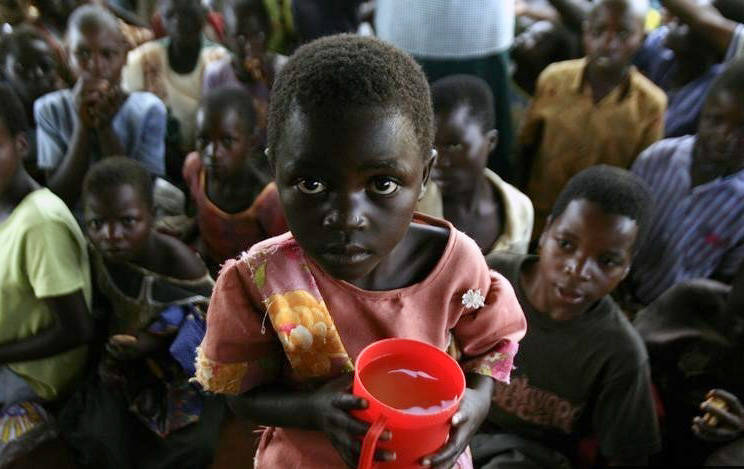
In 2018, the World Poverty Clock estimated that about 90.8 million Nigerians live below the poverty level. That report earned Nigeria the title, “The Poverty Capital of the World”, that didn’t go down well with many Nigerians. But more light has been thrown into the report of the World Poverty Clock by the World Bank through its recently released report on the poverty rate in Nigeria.

The World Bank report, titled “Advancing Social Protection in a Dynamic Nigeria”, was based on a research conducted in Nigeria from 2011 to 2016, but it was published on 28th January, 2020. This report stated that there is geographical inequality in Nigeria because poverty is mostly concentrated in the North and in rural areas.

The reports states, “Nigeria experiences high inequality along geographical lines, with poverty mostly concentrated in the North and in rural areas.” To buttress its point, this report expresses that, “poverty in the northern region of the country has been increasing, especially in the North-West zone. Almost half of all the poor lived in the North-West and the North accounts for 87% of all the poor in the country in 2016.”

One couldn’t help but wonder why there should be such “inequality” in the poverty stratification in the country when one considers that northern part of the country is duly represented in every arm of government, federal allocations, endowments by natural resources and federal government employments. One thing everybody is sure of in this country is that no northern state is marginalised in any way. So the big question remains, “Why should the North-West be the poverty capital of Nigeria?”

Of course, the report said that northern Nigeria experiences a high rate of poverty, so North-West is not the only affected zone.

In its bid to identify the causes of poverty in the country, the World Bank reports placed blame on insurgency, conflicts, poor education system, poor infrastructure and social service delivery. To buttress this, the following excerpts are culled from the report:

  • Insurgency and Conflict as Causes

“Disasters and conflict have displaced many Nigerians, especially in the North-East. According to estimates provided by the International Displacement Monitoring Centre, there were more than two million internally displaced persons in Nigeria on 31 December, 2018.”

  • Poor Social Service Delivery as a Cause

“Social protection measures in the country are neither well-suited to respond to conflict, nor well-placed to anticipate and mitigate the risks of natural disasters caused by climate change.”

  • Poor Infrastructure as a Cause

“Poverty remains high in Nigeria due to its dire social service delivery and lack of basic infrastructures.”

  • Poor Education System as a Cause

“Nigeria has the highest number of out-of-school children of primary school age in the world with nine million children out of school.”

  • Poor Healthcare Delivery as a Cause

“There has been little change in vaccination rates over the last 25 years and Nigeria is set to overtake India as the country with most under-five deaths in the world.”

Note that the above-mentioned factors are given as the causes of poverty in Nigeria. This means that these factors affect every part of the country. But somehow, only the northern part feels the impact the more.

There is something in the report that might truly point to the major culprit. The report states, “Regionally, the North lags far behind the South in every HUMAN CAPITAL outcome.”

It is good that the World Bank realises that despite bad governance, some people from some parts of the country have been able to develop themselves and pull out of poverty. If you ask me, I will say that this is what the Northerners are yet to embrace.

Professionalism and innovations are rare in northern Nigeria. Don’t get me wrong, we have professionals from the North but there are not many. Before, I thought that the overly relaxed attitudes of the northerners towards career pursuits and self development was a result of their religion. But then, I met Yoruba Muslims and found out that religion has nothing to do with this at all. From my experiences with some of the northerners, I think the underlying causes of this include:

A different kind of mindset.

It was in the north that I found people that believe that poverty and wealth come from predestination. The poor are content with their poverty and wouldn’t want it any other way. They don’t struggle to climb even a rung up the ladder of social mobility. To them, they are where they were meant to be. This makes me wonder if the World Bank considered these people’s way of life as they carried out this research.

Talking about mindset also brings up the issue of almajiri in the north. Unless the mindset of these people is reformed, almajiri will not stop in the nearest future.

Information Underload

This might not go down well with the Northern leaders, but they need to hear this. A lot of northerners are deprived of important and life-changing information. The World Bank report talked of Nigeria not capturing a lot of young children through vaccination, but it failed to say that vaccination is hard to administer in the North because the northerners rejected it due to misinformation and information underload.

Information underload is also the reason out-of-school children are more in the north. A lot of them do not see the need to go to school; they will rather go to Islamia schools, which is only there to uplift their spiritual lives and not their social or financial well-being. Some parents believe that regular schools teach Western education and religion, and so keep their children away from them.

Let’s be honest here, most of the people living in rural areas in northern Nigeria are ignorant. Worst is they have no one to ask. Those that are curious may end up asking the wrong people that will pass on worse information to them. By the end of the day, poverty continues to permeate deep into them.

Waiting on the Government for Everything

I think this is something the northerners need to learn from the South-Easterners and South-Westerners. Depending on the government to provide everything, including employment, is also the bane of the North. For instance, an Igbo man knows he has to develop himself, build his house, construct the road that goes into his house, supply his electricity and water, and so on. He waits for no government to give him a source of living; he has to develop himself in order to become employable in the competitive world. He has to make life comfortable and easy for him. This attitude and ideology is quite foreign to Nigerian northerners, who wait for the government to do most of the things for them.

Anyway, as I stated earlier, I don’t think the World Bank considered people’s ways of life before ascertaining which zone is the poverty capital of Nigeria (because ‘poverty’ still remains a relative term). The people that are considered poor in this report may be content with what they have. However, the northern leaders can improve the living standard of their people by working on their mindsets, giving them access to important information and eradicating insurgency.

LinkedIn Local Abuja will open the door of opportunities. An interview with Ezinne Eke

0

Anything is possible with networking. These days, job seekers do little when it comes to networking. Get your facts right: you can’t get a job in your house. You have to go out there and meet people. Build connections and rapport with people because people hire people they trust and know. People do business with people they also know and trust as well.

Jobs these days don’t come on a platter of gold, someone must recommend you to your potential employees. That’s what makes it easier. For job seekers that sit at home and apply for jobs online, you have to do better.

This reminds me of a fresh graduate, Ezinne Eke. She graduated from the Department of Pharmacy, University of Ibadan. Ezinne is a hardcore networker. She’s one of the few graduates who leverage the internet to get what she wants.

Having met with her several times, I had the pleasure to learn from her again. She shared her journey. The transition into the labour market and how networking on Linkedin has helped her to gain meaningful connections and provide a great opportunity for her to learn in Kigali.

Ezinne Eke, it’s good to have you here again. The last time I have you here was late last year and you shared meaningful insights. What have you been up to these days?

It’s good to have a chat with you as always, Chinedu. I am doing very well.

Well I am basically making changes with my creative mind.

I saw from one of your posts that you visited Kigali some few weeks ago, what’s happening there?

Oh sure, I got funded for training there on HCD. So I was being trained to help develop sustainable solutions for Africa and for my beloved country, Nigeria.

Really! That sounds great. I never doubted your ability to transform the world. What are the things you learn and how did you plan to implement it in our beloved country and continent?

Human Centered Design is a process. During my visit to Kigali, I learnt how to solve problems basically and how to design solutions.

For me, it’s the Education, Health System and Finance. These issues pique my interest based on my own experience.

I can see you have been fully loaded. Is it something feasible in a country like Nigeria?

Sure! I love that we have a lot of problems in Nigeria. I really do.

It just takes being connected with the cables of influence. I sincerely do pray for that everyday.

We have room for development, our people face issues, real issues that look abnormal to the world but normal to us.

I don’t know how exactly but I really am interested.

I am sure you will overcome this. Let’s talk about Abuja. I have been seeing your recent posts about Abuja. What’s happening in Abuja?

Do you mean the LinkedIn Local event?

Well, we are hosting the Abuja LinkedIn Local.

Just like all local events, we hope to bring real connections for partnership and deals.

We are hosting 100 LinkedIn professionals.

Wow, a hundred professionals are massive. What’s the theme of the event and what do you want to achieve with it?

Well,I am not the primary host of the event. The chief host is Fife Banks.

This would be the third edition. Just because I love networking and I also have excellent organizational skills, I became a part of the team.

That’s amazing to hear from you my dear friend. As a member of the team, why would you advise people to join the event?

I will definitely advise the people to attend due to several reasons:

  • The event is going to be amazing.
  • The list of panels and Calibre of professionals is something to tap in.
  • It would be a great time to learn, strategize and build meaningful connection

You have mentioned a list of panels but we still don’t know them. If I may ask, who are the guests?

The list of panels include the following top professional:

  • Kai Orga
  • Shofola Osho
  • Dayo Benjamin laniyi and amongst others.

I know a few names from that list that you have mentioned and I am sure there are amazing more professionals that will grace the event. How can interested people register for this?

Via this link: http://bit.do/linkedinlocalabuja

Thank you Ezinne, for the chat. I wish you a wonderful event in Abuja.

Thank you, Chinedu. The pleasure is all mine.

On Central Bank of Nigeria’s Ban of Milk Importation

0

In the latest turn of events in the Nigerian milk industry, the Central Bank of Nigeria (CBN) has lifted the ban against milk importation, but restricted the right to six dairy companies only.

In a circular published by the Apex bank on Tuesday, the new authorization was granted only to companies that keyed into the integration initiative of the Bank.

“As part of efforts to increase local production of milk, its derivatives and dairy products, the Central Bank of Nigeria has engaged with some companies in the industry who have keyed into the bank’s backward integration program to enhance their capacity and improve local milk production.

“Accordingly, all authorized dealers are to note that all Forms ‘M’ for the importation of milk and its derivatives shall only be allowed for the following: FrieslandCampina WAMCO Nigeria, Chi Limited, TG Arla Dairy products Limited, Promisador Nigeria Limited, Nestle Nigeria Plc (MSK only) and integrated Dairies Limited.

“For the avoidance of doubt, all established Forms ‘M’ for the importation of milk and its derivatives for companies other than the above for which shipment has not taken place should be cancelled immediately,” the statement from CBN said.

In July last year, CBN added milk to the items restricted from forex access; it was in a bid to boost local production of dairy products. Therefore, the Apex bank urged stakeholders to embrace backward integration to cut the $1.2 billion being spent on milk importation annually. Many were thrown out of business since they couldn’t keep up with the new rules, a few others remained.

It has been about six months since the trial of the backward integration started, and the attempt appears to have failed to live up to its aim. Currently, Nigeria’s milk production stands at about 500,000 metric tonnes per year, which leaves a demand gap of 1.7 million tonnes.

The director, Corporate Communications Department at the CBN, Isaac Okoroafor, said the Apex bank engaged the six companies because they showed interest in the backward integration initiative of the Bank, and have shown their willingness to support it. He said the aim of the Central Bank is to increase milk production to 550,000 at the end of the year.

As the CBN continues to push to curtail the amount of forex going into importation of goods that can be produced in Nigeria, there is a chance that it could be attained. But it will happen at the detriment of the sufficiency of goods and services.

For instance, given the existing demand gap in milk, the possibility of the six selected companies meeting the demand is not guaranteed, and that means paying more for the products due to its scarcity.

Attaining sufficiency in milk production following the 550,000 tonnes per annum projected by CBN will take 34 years. If the exploding population is considered, it may never be attained.

This decision has been criticized by experts who believe it’s more political than economic. In 2019, Dr. Kunle Hamilton, the Chief Executive Officer of Virgin Consulting UK and a Consultant to a dairy multinational said the CBN is using politics to make economic decisions.

“We need to consider that the manufacturers have always supported the decision to backwardly integrate, and that is why our members are exploring local sourcing of raw materials. However, stakeholders have to agree on the right step to take. The effects of such a decision need to be considered to ensure that artificial scarcity does not occur due to the inability to meet local demands.

“There should be the right mix of measures and the right timing. There should be fair hearing from the stakeholders. The CBN should not carry out the action without adequately carrying manufacturers along,” he said.

Stakeholders complain that the deficiencies in dairy productions have more to do with infrastructural decays in the country than it has to do with forex. Unfortunately, the infrastructural challenges that have been obstructing production seem not to be part of the issues the CBN’s backward integration aims to address.

In the end of milk importation ban trial, the whole idea failed to boost local production or to create any opportunity for existing companies to thrive. It glaringly pointed to where the problem lies. So narrowing access to Form “M” to six companies only is believed to be another experiment that its outcome will not be different from the first.

I Resigned from My job with an Official car to pursue my Dream. An interview with Oladosu Stephen

0

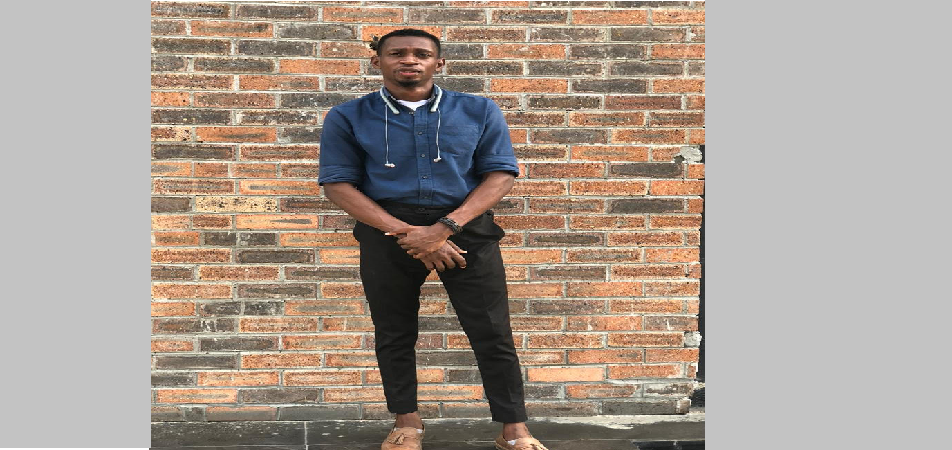
If you have a passion for something, do everything to make it come to reality. Stephen is a great example of a burning desire to make a change in this world. Here’s what he shared with me in this interview:

Can you briefly introduce yourself?

I am Oladosu Stephen Damilare, a Biochemistry (HND) graduate of the Federal Polytechnic Ede, Osun State, Nigeria.

I am a person with a burning passion and undying love for technology and also, I love helping people grow.

I have known you for a long time. You are a man of vision. So what have you been up to since graduation?

Thank you, Chinedu, for the compliment. I have been up and down trying to align my purpose in life with my ambitions.

It is necessary. I see you are trying to run an NGO, can you share more about it?

Let me start with a brief story behind the Vision:

I grew up in a comfortable family that exposed me to the early use of technology devices.

If I knew that was my future, I would have studied a Computer related course in school. But eventually, I found my way back to technology.

I resigned from a job that was paying me 60000 naira with a Car in Abuja to go and learn Website Design and Digital Marketing last Year.

This was where I experienced what youths are facing. I took to the street daily and saw continuous increase in the number of school dropouts and many jobless youths.

That spurred me to found a Tech-based NGO. I feel there is a big need in the society to bridge the gap of the unemployed dropouts and graduates. I don’t have the money to start, but I realised if I should gather a youth community by starting from Nigeria, and teach them tech-based  professions of their choice, then we will have a smaller number of youths roaming the street, youths committing crimes, and youths that has lost their future.

That’s a big vision Stephen. Considering the demand of this project, how do you plan to go about this?

The NGO is a tech-based for Nigerian and African Youths.

Firstly, I have a team of dedicated male and female (youths), who are ready to join in making this a reality.

Also by doing all legal clarifications and clearance so has to register the NGO and finally comes the most important thing, the funding.

I will find all the possible means to source for funds, be it from individuals, government, organizations, etc.

If all the necessary equipment needed for training is set, I have connections with a few friends in the tech Industries, who the NGO can pay a little amount of money to carry out different training.

What has been the major challenges of actualizing this dream?

Funds.

It is well. What do you want from the audience reading this interview right now?

I want them to help the NGO with funds, connections, prayers and love.

We want to register the NGO. We need money to do that. That way, the NGO will pass the first test and will be recognised by any organization who will approve our grants.

Have you leveraged several social media pages to achieve this?

Yes, we do register on a free donation site in Nigeria just like the Gofundme, but there has been no response. Although, we have not opened a social media platform for the organization.

Can you share the link to the page you said you created?

Sadly, the link has been broken by the site because of the lack of response for 30 days. So I will have to create a new link.

Sure. Feel free to share with me when it is ready. What should we expect from you in the next five years?

Wow! That’s a big question.

Expect an impactful NGO that will have reformed the future of more than 50,000 Nigerian Youths and at least 20,000 of the youths working with top tech companies, like Facebook, Google, etc

Where can the people reading this interview contact you if they want to?

They can contact me via my email or phone number.

Email: stepbaba@gmail.com or vigracreatives@gmail.com

Phone: +2348169685553

Thank you, Stephen Oladosu. I wish you a successful journey in this initiative.

Thank you very much Chinedu for having me on your show.