DD
MM
YYYY

PAGES

DD
MM
YYYY

spot_img

PAGES

Home Blog Page 6505

Tekedia Mini-MBA Webinar for Week 1 – Now 4pm Lagos Time Today (Feb 15)

1

Update: This event will now take place at 4 pm Lagos time today. We have figured out a way to run this via in-browser with no installation. Link provided in the class Digital Board.

Original Post

The Webinar link for Week 1 of the Tekedia Mini MBA is active; it begins at 4 pm Lagos time today. This week has focused on the The Innovation of Firms. We would be discussing the feedback, questions, comments and your live questions. Everything will be recorded in case you cannot make it. But where you have time, go to Week 1 Digital Board to connect to the Webinar.

Tekedia Mini-MBA continues to welcome new registrations. Our program is designed in such a way that you can join at any time. We have archived and recorded all materials. Visit here to register using any of the registration options.

The 360-Degree Team

3

Two Questions from Tekedia Mini MBA Discussion Board

  1. A Founder who is more focused on the technical aspect in building his project could find it quite hard to integrate the business model canvas template for his growing start-up, why is it so?

  2. Do you think that he should focus more(as a CTO) on the technical part, and hire more business-inclined personnel to do it for his start-up?

My Response here:

On the questions, it is always recommended for technical-only founders to have business-skilled people around them since they have limited business skills. Technology is very important; yet, it is nothing but a tool. It does wonders when there is what I have called “friction-purpose” superimposed on it. Simply, you want to be sure the business model is sound based on many factors. Most times, tech-only founders cannot deliver on that. 

Yet, this is not a binary: you can be a techie and still understand business very well. But where that is not the case, get help by hiring someone that will complement you from the business side. Bill Gates had Steve Balmer in Microsoft, Mark Zuckerberg has Sheryl Sandberg in Facebook, Google boys had Eric Schmidt.

In some cases, the business mentors could be invisible but someone is playing the drum for the music the Aneke bird is seen dancing by the roadside.

You need a team that is complete with capabilities on tech and business strategies: the 360-degree team. Next week lectures will focus on those strategies and I am sure working on the canvas will become easier.

https://www.tekedia.com/mini-mba/

The FCMB’s Scholarship to Dele, and the Failures that Enabled It

0

On the 5th of February, a photo of a little girl doing her home work with First City Monument Bank (FCMB)’s ATM light surfaced online and went viral. The little girl identified as Dele has gone to the ATM in Ondo City as darkness has taken over her environs, and the ATM proved to be the only source of light that could enable the vision she needed to do her homework.

The viral tweet caught the attention of FCMB and the bank declared her wanted.

On Thursday, the bank issued a heartwarming statement that got everyone talking.

“FCMB is pleased to announce the award of full scholarship to Fathia Dele Rasheed, the 7 years old girl who was recently spotted using lights from the ATM Gallery at our branch in Ondo City to do her homework. The scholarship will cover Dele’s education from her current primary Grade 1 to higher education level in a Nigerian institution.

“We commend Dele’s determination, as well as that of other young Nigerians just like her, who aspire to a better life and are relentless in their pursuit of it.

“As a caring and inclusive Brand, FCMB will continue to empower individuals and communities by championing and executing initiatives that enrich the life of Nigerians,” the FCMB’s statement said.

Fathia has become fortunate beyond everybody’s imagination. Her determination to finish her homework has got her a scholarship she didn’t see coming, and took a load of financial responsibility off her parents’ shoulders.

On the other hand, FCMB has made a difference where it is uncommon. This style of Corporate Social Responsibility (CSR) has an inspiring impact that goes beyond a push for brand recognition. It came with a touch of humanity that may be replicated in the future to impact other aspiring youngsters.

But beneath the celebrations and encomiums that have followed the development, Nigerians see hurting truth; it is a systemic failure that resulted in poor infrastructures like poor electricity supply that has kept many in dense darkness and stymie their aim to do better in their endeavors.

In the past, corporations had made provisions to help students to attain their academic goals. In 1948, UAC introduced the Secondary School Scholarship Scheme, to foster students of its serving and retired employees. The Nigerian National Petroleum commission (NNPC) introduced the annual national quiz competition for secondary schools across the country. These gestures were seen as encouragement, opportunity for students to overcome the hindrances in their pursuit of education.

As time progressed, the vacuum in the education sector of Nigeria kept getting bigger that these corporations started seeing reasons to do more. These companies budget a handful of money to help schools in different host communities where there is a wide gap in lack of education facilities as a result of government’s negligence. From banks to every other private institution, the engagement in fostering school activities became popular that it is gradually becoming a requirement.

This is evidence that CSR has taken the place of the government in education. A study conducted by Thistle Praxis, a consultancy outfit said: “The past few decades have seen a steady evolution of the practice of CSR from a form of corporate philanthropy to a more structured and all-encompassing model…there is reason to believe that there has been an increased interest in CSR, and that Nigerian corporate establishments have begun to take CSR seriously.”

Specialists in education believe that these companies are shouldering education responsibilities because the government has failed to measure up to UNESCO’s standard that encourages allocating 26% of the country’s budget for education.

While it has become acceptably the case in the education sector, other issues of infrastructure happening outside the academic environment has begun to expand the corporate social responsibility of these companies beyond the school corridors. Dele was at the FCMB’s ATM because there was no light at home when she needed to do her homework for school the next day. She was only discovered because someone took a picture of her while she was at it and posted it online.

While the little girl showed determination to succeed by going extra mile to do her school work, people are saying that she is not alone; there are millions of school kids like her across the country whose only wish is light and other basic amenities to succeed in education. But her story, like in other cases, exposes a system decay that has gone from a government’s failure to a collective shame.

How to use Freemium Model to Unlock Value

3

Your money is in the hands of the people you meet daily, both online and offline. The business legend continued, how will you get this money from them? I pondered on these words. He said value is good but business models are better. That is how entrepreneurs get money from people. 

So, it was nightfall, I was going home from my office. I stopped by to buy Suya (Nigeria roasted meat) from a Suyaman (Suya Seller). The first thing the seller did was to cut a piece of the roasted meat for me to taste. The meat was very inviting. I took it from the seller and ate it in order to test how delicious it is. Guess what happens after that, I bought more than I wanted to buy. 

While I reasoned the business application of this experience, I discovered that this is simply a freemium model. So, you can unlock value in your business after going through and digesting this article. But, how? See how. 

The Two Components of Freemium Business Model:

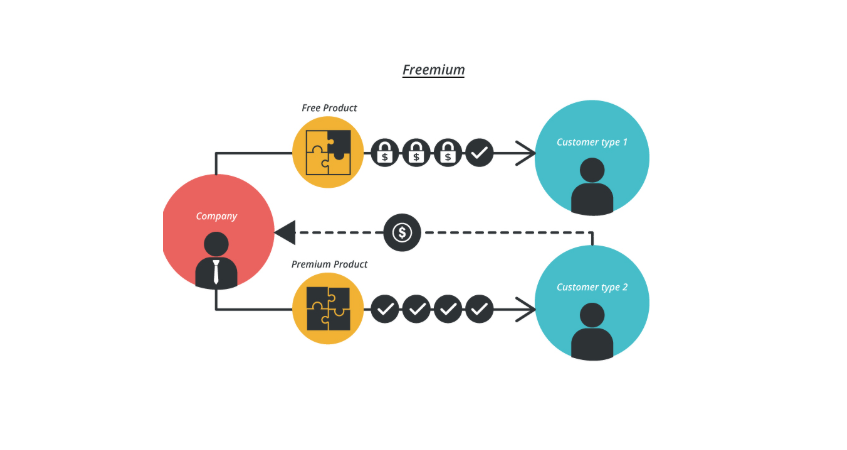
According to Harvard Business Review freemium model is a business model that combines free services and premium services. The Entrepreneur has explained that Freemium business model works in two ways;

  1. If it’s combined with the launch of your company, because being “new” will bring some intrigue, and a free introductory version reduces barriers to entry.
  2. If your product or service is established and so loved by users that they’ll pay for something before losing access to it.

So, the two components of freemium business model are;

Free Component

The business gives perfectly free services to the customers and the customers derive huge value from these services. I will explain how this works in the next section of this article.

Revenue Model

The business offers higher services to the same users that they will pay for. This is how the companies that operate on the Freemium model make money.

How Three Modern Companies Apply this Freemium Model Effectively?

We shall be considering how three leading companies in tech adopt the freemium model and these businesses are growing in the now and will continue to thrive. Here are the insights;

  • Google Search Freemium.

Google is a business under Alphabet Inc. I will analyse these businesses under the free Service component and revenue models headings.

  • Google Search Free Services:

Google provides the world’s information and makes it universally accessible and useful. This information can be accessed by anyone across the globe without having to pay for making a search query. You will agree with me that the information on Google is very useful to your day to day activities. The value of Google Search free service is enormous. I feel you can testify to that.

  • Google Search Revenue model:

While you search for information on Google Search, they mine your data. They use this data to provide advertising services to other companies in the form of Google Ads, display adverts etc. For you to advertise your business on Google you’ve to pay to rank for relevant keywords. This is how Google makes money.

  • Youtube Freemium:

YouTube is Google Search engine for virtually any form of video contents. The platform has created great value. How does its freemium model work?

  • Youtube Free Services:

You can watch videos free of charge. All you may need is your smartphone or device and data subscription. Many people have become professionals and experts in different things by watching free video tutorials on Youtube. What a great value!

  • Youtube Revenue Model:

Youtube revenue model is similar to that of google search. It uses the activities of users to provide advertising services to companies and individuals that need marketing. 

  • Linkedin Freemium

Have you been charged since you started using the Linkedin platform for networking? Have you seen great value in a platform that is for professional connection? You see the caliber of people you’ve met, how grateful are you for that? This is how the Linkedin freemium’s free component works;

  • LinkedIn Free Service:

In the book “3S Rules” Reid Hoffman has a principle which states that humans are social animals that they find fulfillment connecting with other human beings. So, on Linkedin you get access to great experts and professionals that you could network with without payment for the value. You can join great groups, write and connect with people and organizations

  • LinkedIn Revenue Model:

Linkedin offers other services that are only accessible to people that subscribe to premium services. Some of the examples are; learning on Linkedin, having access to people that view your profile etc. They also advertise using your activities on the platform. This is how they make money.

Freemium model can be a business model to a certain business and can also be used as a marketing strategy by other businesses. But the goal is that users or people graduate from the free services to premium just like the Suyaman’s example or find a way to monetize their activities as Google and YouTube are doing.

What do you think about this interesting business subject? Do you plan to adopt this business model? Comment below.

Dundee to Accra: Creative Industries Mapping and Potential Collaborations

2

With the transition from the over-reliance on the STEM (science, technology, engineering and mathematics) to the recognition of the Arts, in what has now become widely accepted as STEAM, the importance of the creative industries has deepened its roots.

With the recent realisation of the  contribution of the creative industries to the global economy, I would be making a presentation to colleagues (both staff and students) on the shared cultural heritage of two cities – Dundee and Accra –  well into the Tayside and the Cape Coast. Think about Jute @VerdantWorks in Dundee and the Kente weavers in Ghana.

In my presentation I would be reflecting on my recent article on Arts Marketing to propose collaboration between Accra, Ghana (Africa) and Dundee, Scotland (UK). This proposition is based upon my recent ManaGlobal secondment from Dundee to Accra in Jan-Feb 2020, where I explored the creative industries in the context of the latter, with a view to mapping this against the backdrop and/or experience of the City of Discovery, Dundee, in the latter quarter of 2019.

Coincidentally, a similar potential avenue for collaboration between these two cities has been recently captured in #LinkedIn post by Iain Walker, the Dundee-born UK High Commissioner to Ghana & UK Ambassador to Benin, Burkina Faso and Togo highlighting insights from The Ghana Grand Project

https://youtu.be/gCNg17SG69k


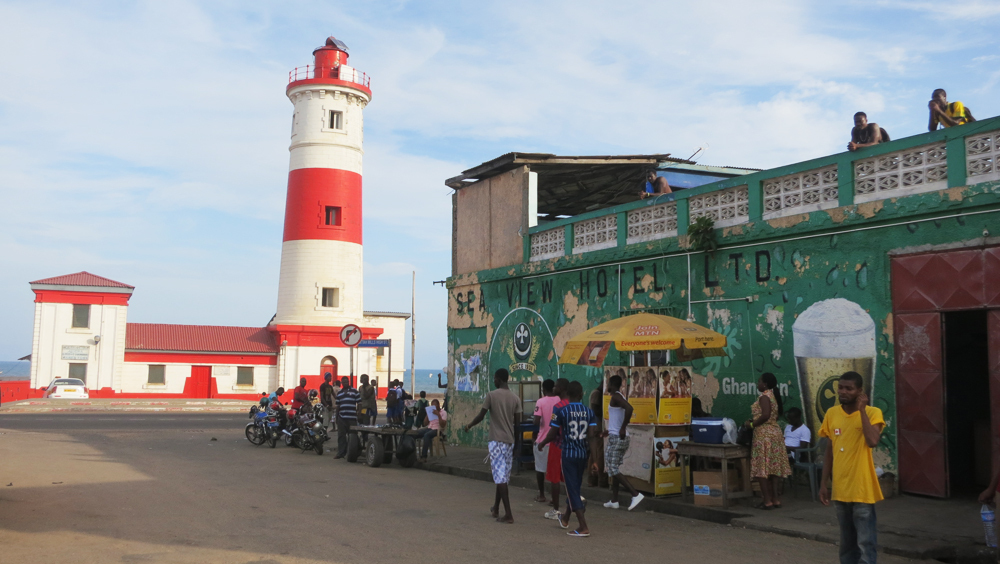
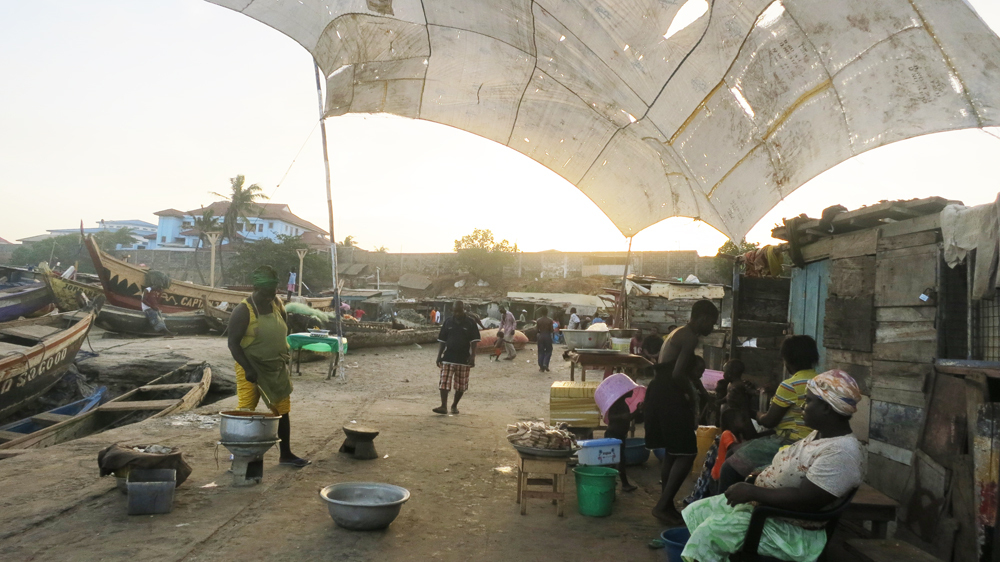
Let me take you through some snippets from the Weave initiative at the Hannah Maclure Centre at the Abertay University Dundee to the Jamestown cultural quarter in Accra Ghana.

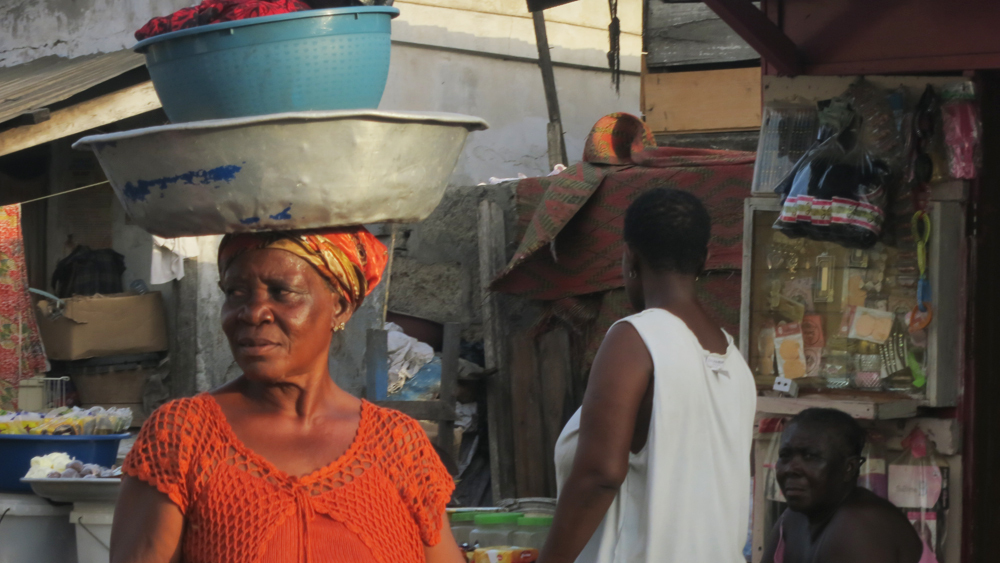
Set on the coast of downtown Accra, the [Jamestown] neighbourhood is listed as Lonely Planet’s #1 top sight in the city, and boasts both a fascinating history and vibrant local community.

Source (Jamestown Walking Tours)


To sum up, there are obvious implications for theory, management and policy and especially considering recent events such as the UK-Africa Summit in London, the African Union Summit in Addis Ababa, location of the Secretariat of the African Continental Free Trade Area (AfCFTA) in Ghana come July 2020, and the appointment of Wamkele Mene who was installed as the new secretary-general.