DD
MM
YYYY

PAGES

DD
MM
YYYY

spot_img

PAGES

Home Blog Page 6531

What the Future of Enyimba City Really Looks Like

0

Aba is a city in the southeast of Nigeria and the commercial center of Abia State. Upon the creation of Abia state in 1991, Aba was divided into two local government areas namely; Aba South and Aba North. Aba south is the main city centre and the heartbeat of Abia State, south-east Nigeria. It is located on the Aba River. Aba is made up many villages such as; Aba-Ukwu, Eziukwu-Aba, Obuda-Aba,Umuokpoji-Aba and other villages from Ohazu merged due to administrative convenience. Aba was established by the Ngwa clan of Igbo People of Nigeria as a market town and then later a military post was placed there by the British colonial administration in 1901.

It lies along the west bank of the Aba River, and is at the intersection of roads leading to Port Harcourt, Owerri, Umuahia, Ikot Ekpene, and Ikot-Abasi. The city became a collecting point for agricultural products following the British made railway running through it to Port Harcourt. Aba is a major urban settlement and commercial centre in a region that is surrounded by small villages and towns. The indigenous people of Aba are the Ngwa. Aba is well known for its craftsmen. As of the 2006 census, Aba had a population of 534,265.[1]

There is a lot of rich history that is associated with the ever bubbling town called Aba. Aba is well known for the “Aba Women’s Riot” that happened in 1929. Aba is also known to be the commercial center of the South East and South South of Nigeria as there is nothing you are looking for regarding clothing apparels, leather works and car parts that you wouldn’t find in Aba. Oh what a town!

I was born and bred in Aba, the city is one of a kind. It shaped me into the man I am today. If you’re familiar with Aba you’ll know places like: Brass, Okigwe Rd, Akalanna, Omenazu, Umungasi, Abayi, Ehi Rd, Umuocham, Samek, Ariaria, Ngwa Rd, Port Harcourt Rd, Uratta, and more because Aba ma ndi Aba.

People who are driven by the need to bring about change are never resilient in its pursuit. Aba is known to all parts of the world partly due to this popular maxim “Made in Aba”. But regardless of how Aba is, there is a problem that has even been looming. In this article, I take a look at if the probability of Aba competing with Lagos is every possible.

Problems of Aba

Aba in Abia state is in a terrible condition because of the decay in critical infrastructures in the state. To be honest, the state needs a total repair as most of the critical infrastructural amenities built by the late Michael Okpara had been abandoned by the government.

There is need for total change of ethics in order to take Abia state to a greater height. Aba needs to be repaired. Umuahia needs to be repaired. Abia state doesn’t have a government house. Abia state doesn’t have government lodge. Aba is in a terrible state. We have refuse littered all over the whole place. If you go to Aba now, you will shed tears. If you go to Ogbo hill, where they slaughtered animals, you’ll find it difficult to eat. Aba doesn’t have abattoir. Aba doesn’t have running water. Aba doesn’t have roads, that is the truth.

Another of Aba’s problem is also that we need experts, town planners to sit and redesign Aba because majorly of Aba’s problem is drainage problem. So, if there’s no solution to that, and you tarred roads, it wouldn’t last beyond one rainy season. You find out that when it rains in Aba, the area is flooded and if you’re not fortunate you’ll have to swim your way down to your home.

Aba is powered by the Enugu electricity distribution company(EEDC), it is a product of the unbundling of the Nigerian electricity power authority(NEPA), there is another electrical company that is yet to start power generation called the geometric power company (if this starts the daily hours of electricity will improve in aba and the electricity generator is a household item in every home that can afford it, for some places in Aba it is the only source of electricity), unfortunately the Geometric Power Company have put their physical infrastructures but they are not functional.

There are many problems with waste management in Aba, stemming from the lack of a regular garbage disposal, which means that trash piles up in the streets from the many markets that dot the city. Waste Management problems have been tried to be solved through the Federal and State Governments, however, the problems still exist, and have not been solved. “Aba is the commercial hub of eastern Nigeria”. There are well known markets (such as Ariaria International Market, Ahia Ohuru (New Market), Eziukwu Road Market (Cemetery Market ), Shopping Centre (Ekeoha) etc.) that serve the entire region with quality wares, provisions, cosmetics, etc.

The list is endless, but is there hope?

The Desired Future

When you hear Abians discussing the contributions made by the duo of late Michael Okpara and late Chief Sam Mbakwe to Abia’s development, there’s always a nostalgic expression on their faces that you’re sure to find very relatable, especially as a first time visitor to the state.

Both men were instrumental in the development of the infrastructure, inner city roads and industries that still dot the state landscape till this day, but which have mostly deteriorated as a result of years of use and disrepair.

Starting with the infamous Aba, there’s been considerable improvements in the areas of road construction and rehabilitation and repositioning of the city as the commercial hub of not just Abia, but also the adjoining South-south and South-east states that come to Aba to trade on a daily basis.

Aba (and the state capital, Umuahia) is so strategically placed that it is said to be 30 minutes (without traffic) away from other major cities like Uyo in Akwa Ibom, Port Harcourt in Rivers, and also 45 minutes away from Owerri in Imo state and less than two and a half hours from the city of Enugu in Enugu state.

Like a confluence, Aba’s attraction for traders from cities far and near is first because of its strategic geography, but also for the people’s legendary trade and commerce characteristics. Described as the China of Africa, the city daily plays host to business people from neighbouring states and countries.

Travel routes in and out of Aba to neighbouring cities used to be problematic. For instance, there was no motorable road to Akwa Ibom state from any part of Aba until the administration of Governor Okezie Ikpeazu. Business people and shoppers from Port Harcourt found it hard (and still do) accessing Aba because of the state of disrepair of the Enugu-Port Harcourt federal highway.

The Akwa Ibom channel was said to be so bad to the point that traders from the famous Ariaria Market in Aba, who were affected and losing business, would take their products to markets in Akwa Ibom to sell. State government statistics claim 60 percent of the Ariaria Market daily business transaction comes from the Akwa Ibom and Cross River axis, which include from neighbouring Cameroon. The rest 40 percent come from Port Harcourt, Owerri and Enugu.

Also it is claimed that close to 30 million people do business in Aba everyday.

Judging from these facts, it is understandable why Ikpeazu decided right from inception that his administration would focus on developing Aba.

“I decided on this path to progress because I believe if we get Aba right, developing the rest of Abia won’t be difficult,” according to Ikpeazu. This account for the numerous road projects that has turned the city to a construction site.

Over 70 roads have so far been constructed by the Ikpeazu administration, and the governor in an interview with THISDAY, appears confident about their quality and durability. “I am confident they will stand the test of time,” he said.

Some of the strategic and important roads include Faulks, MCC, Ukegbu, Ire, Umuola, Umuehilegbu, Umule, and Umuocham, to mention a few. If you’re a regular visitor to Aba and your business takes you to the famous Ariaria market then you’re much more likely to appreciate the reconstructed Faulks Road.

Until recently, it used to be that when it rained in Ariaria, the entire market would be flooded. The opposition parties and their supporters enjoyed sharing photos of this on social media in their attempt to sway the voters.

Much has changed with the construction of Faulks Road. Once again business is booming and shop owners are no longer finding it difficult locating their shops. Add this to the ongoing construction of the Osisioma Flyover, and then you’ll have a situation where the market and city as a whole would be better accessible once the flyover is opened for use upon completion.

On repositioning Aba as a commercial hub, no Nigerian city epitomise the Made-in-Nigeria narrative like Aba does. Aware of this, Ikpeazu has spared no effort in getting the federal government, federal agencies and foreign governments in Africa interested in patronising Nigerian made goods.

Nigeria’s military ordered 50,000 pairs of shoes. There’s also been orders from the Navy and National Youth Service Corp (NYSC). Last year the governor was in the Gambia with Aba shoemakers for a meeting with the Gambian President to discuss the prospect of producing shoes for the country’s security agencies. Also, in the same 2018, the state government sponsored 30 Aba-based shoemakers to China for capacity building in the use of automation in shoe making.
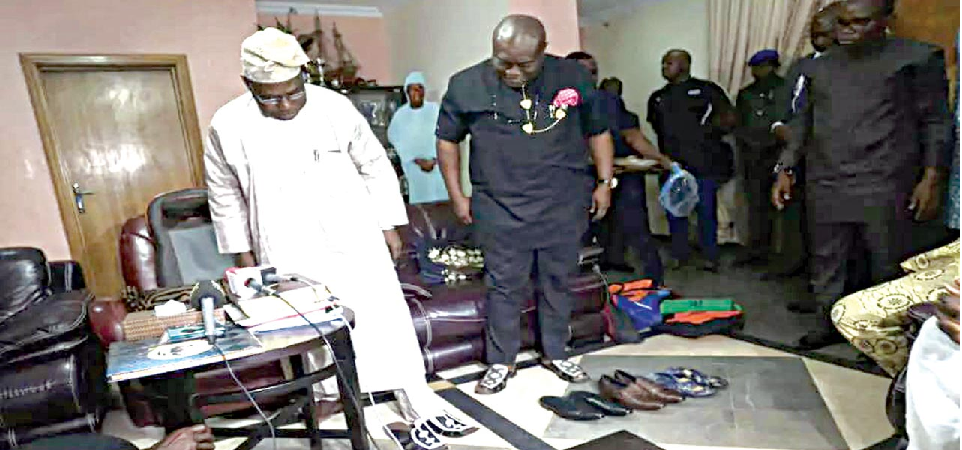
Aba shoes sector would grow with partnerships [source: technomy]
For some of the governor’s supporters, if nothing else, the construction of Faulks Road – once a sore point to the state – supports the assertion that Abia under the Ikpeazu administration is resurging. But they think there’s more claim to a resurgent Abia, and point to the Enyimba Economic City (EEC).

Private sector driven, investors from Nigeria, China, Germany and the U.S. will run the various components that include an industrial, electronics, leisure and education parks, and a training institute, ICT section, garments and shoe factories, tourism, sports section, logistic hubs, and many more.

The $25 billion project, modeled after the Dubai markets, sits on a land space of 9,800 hectares located majorly in Abia state, and portions of Akwa Ibom, Rivers and Imo states, and is managed under the corporate name, the Enyimba Economic City Development Company (EECDC).

China’s Ruyi Group of Companies is the EEC’s largest private-sector investor, and in collaboration with Geometric Power Plant, Aba, is investing $2.5 billion for power generation, for steady electricity supply to the Economic City.

The federal government has co-opted the EEC as part of its broader industrial revolution plan as conceived in the Economic Recovery and Growth Plan, part of which is the ‘Made in Nigeria for Exports’ (MINE) project, conceived to position Nigeria as the manufacturing hub in Sub-Saharan Africa.

Recently, the federal government signed a $30 billion industrial revolution agreement with the Africa Export and Import Bank (AFREXIM), Africa Finance Corporation (AFC), African Development Bank (AfDB), Bank of Industry (BoI), and Nigerian Sovereign Investment Authority (NSIA) to boost export earnings from made in Nigeria products from Special Economic Zones (SEC).

Abia’s EEC, Funtua Cotton Cluster in Katsina State and the Lekki Model Industrial Park in Lagos State, have been penned down for the take-off stage.

Reminiscent of the Michael Okpara era, the idea behind the EEC is for Abia to metamorphose from Made-in-Aba to a Make-in-Aba hub. Upon completion the EEC would create nearly a million jobs, 300,000 units of urban housing, an urban population of more than 1.5 million people, and over 2,000 industrial units with estimated annual value output of more than $5 billion.

Recently, the Governor appointed Sam Hart to overseer improvements in the manufacturing industries. Sam Hart traveled to China and brought a whole load of Chinese Engineers as they have assembled a Shoe Factory to boost Aba made Shoes. All can’t happen in a day, as they say that Rome wasn’t built in a day, but with this development, it’s certain that Aba would practically become the favored spot for business and living.
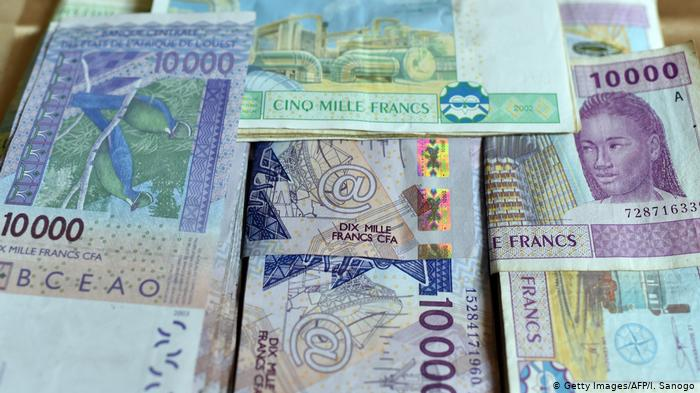

The Challenge Ahead as West Africa Quits CFA franc for Eco

0

The anticipated abolition of the C.F.A in West Africa has come into play following an agreement between France and its West African states users. The agreement has been to rename the CFA with a West African regional currency – Eco, and cut off its entire financial links to France. This was announced a few days ago by the Ivorian president, Alassane Dramane Ouattara, following an agreement between France and the concerned West African States, in Abidjan, Ivory Coast capital.

The C.F.A stood for the ‘French Colonies of Africa’ when the then colonial power introduced the currency in 1945, though it was changed after independence to ‘Financial Community of Africa.’

For years, blazing criticism has trailed the French originated currency because the countries using it are required to keep 50% of their foreign currency reserves in the French treasury.

Earlier in the year, the president of Benin Republic, Patrice Talon, has announced the decision of the eight West African countries using the C.F.A to adopt a new currency.

Under the new deal, the African countries using the C.F.A wouldn’t have to keep 50% of their treasury in France, and there will no longer be a French representative on the currency union’s board, though the currency is still tied to the Euro.

The quest for a currency free from colonial sentiment has been pushed for long with no success, owing to the disapproving reaction of the French authorities. The situation has resulted in activism from pan-Africanists from around the world that pushed viciously for the eradication of whatever remains of colonial influence in Africa.

The C.F.A comes at the forefront of activism as it appears as a symbol of French presence and authority in Africa. The currency is used in 14 African countries with a combined population of about 150 million and $235 billion of gross domestic product.

However, not all the 14 countries are in the deal to break out from the currency, only the 8 countries of West African region: Benin, Burkina Faso, Guinea Bissau, Ivory Coast, Mali, Niger, Togo and Senegal.

The remaining six countries are mainly from Central Africa: Central African Republic, Equatorial Guinea, Congo Republic, Cameroon, Chad and Gabon. These countries are still sticking to the CFA, though it has been renamed Financial Cooperation in Central Africa, (Cooperation Financiere en Afrique Central.)

This historic turn of event was hinted on in 2017, when the French president Emmanuel Macron indicated willingness in letting the Africans have their way, unlike his predecessors. He said it’s left to African leaders to decide what happens to the C.F.A.

“Yes, it’s the end of certain relics of the past. Yes it’s progress… I do not want influence through guardianship; I do not want influence through intrusion. That’s not the century that’s being built today,” Macron said.

The need for a single currency to foster trade in the West African region has been a topic of serious concern for leaders in the region. Following a meeting held in Abuja on December 21, they came to a consensus to implement an already existing agreement – the creation of Eco in 2020. That means severing ties with the C.F.A.

But while there is optimism that the Eco will change the economic outlook of West African region, there is also concern that, by pegging the Eco to Euro, the idea of creating independent economy for West Africa has been altered.

Hady Ba, a Senegalese philosopher and a staunch advocate for a single currency for West Africa said the whole idea has been to liberate the region from economic dependence. But he doubts if the idea would ever be actualized given the kind of leaders Africa has. The author of “The Last Colonial Currency: The Franc C.F.A Story.” Ndogo Samba Sylla, said Ouattara and the rest of C.F.A. countries had hijacked the original Eco plan by allowing the Eco to be pegged to the Euro, which by his interpretation means that they have chosen to keep their ties with France instead of establishing new ones with their African neighbors.

He said the whole thing has been superficial and would have no positive impact on the countries’ ability to control their own currency. “As we’re still pegged to the Euro, we’ll have to have conservative monetary policy,” he said.

What is not sure so far is if Ghana and Nigeria will yield to the Eco being pegged to Euro when the fifteen West African countries introduce the Eco in 2020.

Things to Bear in Mind when Seeking for Help

0

A friend said some days ago that some people don’t want to help others to grow. She’s not the only person that has this view. A lot of articles and memes on this subject matter can be found in all social media including LinkedIn that is very professional in nature. In most of these posts, it’s made to look as if people deliberately don’t want to help out because that’s their way of ensuring the downfall of others. The long and short of it is that those whose request weren’t granted have it at the back of their mind that people don’t want their progress. But this is not always the case, at least as far as I can tell.

From personal experiences and that of close associates, I have realised that most times, the manner of approach, nature of request, and history of the individual concerned could stand in the way of obtaining help from people. I will do my best to explain these below.

  1. Some people that ask for assistance don’t really know what they wanted. This may sound outrageous but it is true. I know a lot of people can testify to this as well. A good example is when a director of an MDA visited his home town and his relatives asked him to help them find something doing. When he asked people like this exactly what they wanted, some of them gave answers like, “I don’t know”, “Anything will be ok for me”, “Just find something for me in your office or city”, and so on. The usual response from him on cases like this, if he even responds at all, is “when you know what you want to do, send message across to me,” and that ends it there. This is how most people lost opportunities of getting help. As for this director in question, his village people still complain that he helps no one.
  2. Some people request for things the benefactor cannot afford or grant. The problem with people that make this kind of request is that they feel so entitled and deem it their right to be provided with their demand. For example, if this same director mentioned above was asked for the sum of two million naira by a close relative, how sure are we that he could provide that amount of money? Another good example here is when someone who isn’t qualified for a position in a company asks for a referral from a close relative who works there, or when an applicant expects automatic employment in a company because his connection works there as a senior officer.
  3. Some people request for assistance over failed projects. A lot of benefactors are sceptical about sponsoring projects and businesses that had flopped earlier. I know it’s not unusual to fail several times before attaining success, but is it easy to sponsor someone on a project he has failed several times? Wouldn’t your first suggestion be that he tries something else?
  4. Some people only want to collect without giving back. What I mean here is that there are people that want money, jobs or other things to be easily handed over them but wouldn’t want to be of help in any way to their benefactors. For instance, there’s this young man that is good in block moulding. He went to someone to seek for assistance in starting up a block industry. The man he met told him he has an interest in the business but lacks the technical know-how. He agreed to sponsor the business by providing start-up capital but on the condition of being a partner. I don’t know the terms of the partnership but the young man turned down the offer because, as he said to me, the “old man” wants to use him to set up a business.

But the major reason for dropping this piece is that people that ask for assistance need to bear certain things in mind as they do so. Some of these include:

  • A lot of benefactors want to invest in people and not just dash out money. I know people will talk about charity, but let us also remember that the essence of lifting people up is for them to lift others too. People give to those they know that will utilise it well and account for it properly. So, if you have a bad reputation for mismanagement, don’t expect positive responses for your requests.
  • People help those with potentials. This is why scholarships always go to the very intelligent ones. So for you to obtain that help you seek, you should ensure that you have something worthwhile that will attract the attention of the benefactor.
  • Benefactors have their own worries. I don’t know how to say this without sounding sarcastic. People need to understand that they are not the worries of these benefactors. Everybody has his own problem and stress; so expecting that another person should add yours to his already burdened shoulder is quite unfair. Be empathic as you table your problems and needs, it will help you to understand in case you didn’t get what you asked for.
  • Time is hard. I’m stating this here because a lot of people felt that there are those that have money making machines in their houses. People should understand that there is every possibility that those whose assistance they asked for may not be buoyant. Let them not see the inability of being helped as a deliberate act to stall their progress. It is quite possible that the person asked couldn’t meet the demands.
  • Money isn’t the only means of assistance. I think this is one of the major problems we have. People believe that the only way someone could help them is by giving them money or physical assets. There are so many other ways assistance could be rendered which doesn’t include money. For example, that someone is ready to spare some of his time to attend to your worries and suggest ways you could overcome your challenges is quite valuable. Everything mustn’t be about money.

So, as you approach that “Big Man” or woman, remember, things aren’t always what they seemed. Don’t be discouraged if you receive “No” as an answer, it could be that you haven’t met the right person yet. But first of all, check yourself very well to be sure are not behind the reason your request was denied.

NITDA Launches Investigation Into Public Data Breach by Lagos State Internal Revenue Service

0

The National Information Technology Development Agency, has launched an investigation into data breach by Lagos State Internal Revenue Service. The agency issued a statement on Friday confirming the incident and the steps it is taking to address it. The statement reads:

“The National Information Technology Development Agency (NITDA) was reliably informed and duly ascertained that the Lagos State Internal Revenue Service (LIRS) published…

…a web portal – https://t.co/gpLxOjgIjE – where personal information of tax payers of Lagos State was gleaned by the general public in breach of the Nigeria Data Protection Regulation (NDPR), 2019.

“We have also been informed that the LIRS has indicated that public access to the portal was a glitch from a consultant of the Service and that the portal has been duly disabled.

We commend LIRS for the swift remedial action in disabling the portal and pulling the website away from the public domain.

“We however warn that glitches of this kind do not insulate LIRS from responsibility or culpability from whatever actions, civil or criminal, that may arise from such glitch, as personal and confidential information of data subjects were made available to the public illegally.

“We stress that such glitches are in breach of the NDPR and invariably the National Information Technology Development Agency Act 2007.

“The Agency will further investigate this breach and the circumstances surrounding it with the aim of assessing the impact of the breach as well as determine responsibility and culpability of data controllers or processors connected to the breach and prevent future occurrence.

“We also advise the public to be vigilant and to report immediately to NITDA or other law enforcement agencies if they notice that the information of any data subject on the LIRS database is further disclosed or used in any manner in violation of the NDPR.

“We enjoin all parties to cooperate with NITDA as we seek to protect the personal and confidential information of Nigerian Citizens from misuse and abuse.

“The Agency can be reached through its email address: info@nitda.gov.ng”

NITDA was established in 2007 as the ICT policy implementing arm of the Ministry of Communication of the Federal Republic of Nigeria. It was saddled with the responsibility of developing programs that caters for the running of ICT related activities in the country. It is also mandated with the implementation of policies guidelines for driving ICT in Nigeria. NITDA plays an advisory role in copyright law by verification and revision of applicable laws in tandem with the application of software and technology acquisition.

In January 2019, NITDA issued the Nigeria Data Protection Regulations (NDPR). The overall objective of NDPR is to safeguard personal data rights, enhance security of transaction involving personal data rights, protect transactions involving personal data and improve the access of Nigerian companies to cross border data. Among the requirements it set out for data collecting organizations are, the mandate to publish a data protection policy, conducting a mandatory self-audit on data protection, every 6-12 months.

It didn’t take long before some organizations came under the radar of the data agency. It could be recalled that earlier this year, Truecaller came under the investigation of NITDA for breach of users’ data rights. That’s among others which include, Nigerian Immigration Service, Banks, Fintechs and telcos.

Upon the establishment of a framework to guide all organizations in the personal data collection business, NITDA stipulated penalties for those who would breach the rules and advised organizations to get professional advice from Data Protection Compliance Organizations (DPCO) on the compliance risks, obligation and responsibility under the NDPR.

This framework is supposed to guide companies and organizations that collect, store and use personal data. However, there have been a series of breach here and there, indicating a huge vacuum in the compliance.

Though Lagos State Internal Revenue Service blamed the breach on a third party, the incident is just an indication that many of the organizations are yet to come in terms with the seriousness of personal data rights and protection in Nigeria.

The website has been taken down until further notice, but the prevalence of these occurrences is a cause for worry. As many organizations delve into fintech and other personal data collection businesses, the need to protect users’ information becomes a business they should be conscious about.

Unlock Your Abundance in 2020 By Acquiring a Unique Capability

2

If markets are perfect, there would not be a single company in the world. Yes, if a buyer can find a seller and a seller can discover a buyer seamlessly, we would not have companies. But because of huge frictions that exist between buyers (demand) and sellers (supply), we need to have a force to overcome them. That force is what we call companies. Yes, companies exist because of one reason: markets are inherently imperfect in nature.

To make markets tend toward being “perfect”, companies offer services in markets. For offering those services, people pay them, and companies earn the revenue. Revenue is the compensation earned by companies for creating forces (products and services) which are used to overcome frictions in markets. There are different levels which companies operate in pursuing this mission.

(If I have $1,000 which I do not need for a year, and open to lend it to somebody at 10% interest rate, I will need to find that person for that deal to go through. Also, the person that would receive that money from me needs to know someone who is open to lend $1,000 at 10% for a year. Unfortunately, there is a huge information asymmetry as I cannot easily find that person and the person cannot easily find me. What happens is that to ensure that money does not stay idle, I will take it to a bank which will pay me 10% interest rate. Also, the person that needs $1,000 will go to a bank to ask for a loan, and the bank will lend that my $1,000 to him for say 17%. That extra 7% is the cost of fixing the friction and by overcoming the friction, a new equilibrium point is set, bringing a largely imperfect market into a more perfect one. This is what happens in all market systems, across sectors and industries.)

For one to wake up one morning and conceive to launch a company, the person must have noticed a friction which has not been fixed. In other words, in that specific domain, there is an imperfect market system between demand and supply. So, there is an opportunity.

To pursue the opportunity, the next phase is this: do I have the capability to deliver that force necessary to earn revenue with the cost of generating the force lesser than what people would pay for the frictions I am fixing in their lives? For that business to be sustainable, the cost of creating the force must be lower than what people pay for it (yes, if this is the case, you can make a profit).

Acquiring capabilities can come in many ways – education, training, apprenticeship, hiring labour, etc.  Indeed, that process is a continuum as you never finish the process of accumulating capabilities.

In Nigeria and indeed continental Africa, there are frictions everywhere. Those frictions are waiting for great forces to overcome them. As we sojourn into 2020, take this from me: the future is one of abundance, unlockable by those with compounding capabilities. To elevate your career, acquire a special capability which you can use for a better job or to run something yourself. Yes, unlock your abundance in 2020 by acquiring a unique capability.

Go for it – and Happy New Year ahead.