DD
MM
YYYY

PAGES

DD
MM
YYYY

spot_img

PAGES

Home Blog Page 6538

The Full Insight on Trump Impeachment – And the Nigerian Context

1

As Donald Trump begins the U.S Impeachment proceedings, many Nigerians think Impeachment means removal from office as do most Americans. This article explains why Impeachment isn’t Acquiting.

Impeachment Doesn’t Mean Removal from Office

Impeachment doesn’t mean removal from office, but it’s often a prelude to removing a public official from office. To impeach is to “charge (a public official) with an offense or misdemeanor committed while in office.”

In other words, it means to formally accuse a public official of a crime. In the United States, it is only the House of Representatives that has the power to impeach the president. The next procedure after impeachment is trial and then removal or acquittal.

Who has the Power to Remove a Sitting President

In the US, only the Senate has the power to try and remove or acquit a president who has been impeached (by the House of Representatives).

Only two presidents have been impeached in America’s history, and both were acquitted by the Senate. They are President Andrew Johnson (America’s 17th president who was acquitted by just one vote) and President Bill Clinton (America’s 42nd president). Donald Trump will be the third president to be impeached, but he won’t be removed because his party constitutes the majority in the US Senate.

What Nigerians Think of Impeachment

Nigerian newspapers interchange “impeach” with “remove from office” because they are copying the authors of the Nigerian constitution who don’t seem to know what “impeachment” really means.

In the only two passages in the Nigerian constitution that the word “impeachment” appears, it is used as if it meant “removal.”

Section 146 (3) (a) of the document says, “where the office of vice president becomes vacant – by reason of death, resignation, impeachment, permanent incapacity or removal in accordance with section 143 or 144 of this Constitution….”

Again, in Section 191 (3) (a) of the constitution the following sentence appears: “where the office of deputy governor becomes vacant – by reason of death, resignation, impeachment, permanent incapacity or removal in accordance with section 188 or 189 of this Constitution….”

Why Impeachment isn’t Acquiting

Well, an office can’t possibly become vacant by reason of “impeachment.” Just like people don’t go to prison simply because they have been accused of an offense, a vice president’s office can’t become vacant simply because he or she has been impeached. That would be a perversion of justice.

Impeachment simply means accusation, and accusation alone is never a basis for conviction. To convict an accused person, you have to try him or her first. Plus, conviction is not the only possible outcome of a trial.

An accused (or impeached) person can be acquitted after trial, as was the case for the two US presidents that were impeached. Curiously, the Nigerian constitution never uses the word “impeachment” in relation to the president and state governors; it instead talks of the procedures for the “removal” of the president and of governors from office.

The people who wrote the 1999 Nigerian constitution are clearly not sufficiently educated about the meanings of the terminologies they deployed in the constitution.

Thus they passed on their ignorance to the Nigerian news media and to the Nigerian populace.

Fun Fact: Some Americans also think impeach means to remove.

Credit: Farooq Kperegi’s thread proved helpful writing this.

Competitive Threat for Innoson Motors Nigeria as Hyundai Assembly Plant Arrives

0

Car maker, Hyunda,i has reached an agreement with the Federal Government of Nigeria to establish vehicle assembling plant in the country, president Buhari announced on Tuesday.

Hyundai CEO, Mr. Chang Hag Kim was at the state house, Abuja, yesterday where he was received by Buhari, and assured of adequate support to help him make the plant a reality.

“We will collaborate and support to make the investment a reality,” Buhari assured.

The President further stated that his goal has been to achieve self-sufficiency in the supply of petroleum products within the next three years.

Mr. Hag Kim promised to use his existing resources to set up the plant and the refinery: “We have been building refineries worldwide. We have the biggest in South Korea, with 650, 000 barrels per day capacity. We are also in Venezuela, Iraq and many other places. We would be glad to contribute our quota in Nigeria,” he said.

He also noted that Hyundai has a workforce of 15, 000 personnel globally, and will gladly use it to contribute to the development of the Nigerian economy.

Hyundai Oilbank is an oil refining company established in 1964, with refining capacity of 650, 000 barrels per day. The business portfolio of Hyundai Oilbank and its five subsidiaries include oil refining, base oil, petrochemicals and a network of gas stations.

Saudi Aramco, the most valuable company in the world just acquired 17 percent of Hyundai Oilbank from Hyundai Heavy Industries Holdings for US$1.2 billion. So there is no questioning if Hyundai has the capacity to fulfill its promise on refinery.

However, Hyundai’s plan to establish vehicle assembly plant has not gone well with some Nigerians. The displeasure stems from concern that Innoson Motors, the only indigenous vehicle manufacturing company in Nigeria will have to compete with Hyundai. And at a time when the government is keen on banning every imported product in the name of promoting local products, one wouldn’t blame them.

But in other climes where there are indigenous vehicle producing companies, foreign automakers are also allowed. And the system has enabled healthy competition that cut down the cost of vehicles.

For instance, China has recently opened its doors to many American car producing companies; Ford, Tesla etc. while the U.S, Germany, France and other major car producing countries have been in the deal for a long time. Interestingly, these countries have more than one car manufacturing company. In the case of Nigeria, there is only Innoson, and left to it, Nigeria’s car demand can never be met.

Yearly, Nigeria spends N2.4 trillion on vehicle importation which Hyundai models are significant part of. Although most of the cars imported into Nigeria are fairly used (Tokunbo), having a notable brand establish a vehicle plant will cut the amount of money that goes out of the country annually. And also, having a notable brand of foreign origin established in Nigeria will create choices of new vehicles within reach; where buyers will pay no duties – a cost saving idea, if not that it will hurt indigenous car makers.

Should Nigeria copy China?

In 1994, China issued policy for its Automotive Industry. The “1994 Auto Policy” introduced restrictions on foreign automakers to owning more than 50 percent in any Sino foreign joint venture and also limits the foreign automakers to no more than 2 joint ventures for any single type of vehicle in China. Lexology noted that the 50% + 2 rule was the bane of existence for many foreign automakers.

For years, the 50% + 2 rules were considered as a necessary policy to buy local automakers time to gain the skills, master the technology, and build their brands to allow them to compete before international automakers would be given access to the Chinese market.

Chinese policies on auto-manufacturing and foreign investment was gradually eased as the country attain its goals for the automotive industry. For instance, in 1995, China introduced the “Foreign Investment Catalogue” which detailed the shareholding limitation on foreign automakers. Since then, the Foreign Investment Catalogue has been amended eight times to reflect China’s evolving views on foreign investment’s role in industrial policy.

Innoson cars

Generally, the Chinese policy was considered successful. China gradually became the world’s largest automaker, a position it has held since 2009. Having achieved its objective to this degree, China has been relaxing its policy on the automotive industry.

In 2018, Chinese authorities jointly issued the Special Administrative Measures for Admittance of Foreign Investment (2018 Negative List). The 2018 Negative List confirmed the pledge to fully remove foreign investment ownership limits on auto industry over a 5-year transition period.

The relaxation of this rule has enabled foreign companies such as Elon Musk’s Tesla, to establish vehicle manufacturing plants in China, especially NEVs. And there will be more beneficiaries of the short term policy relaxation window.

But while the Chinese strategy brilliantly helped its auto industry to occupy a prominent position on the world stage, peculiarities may hinder it in Nigeria if copied. For instance, Innoson is the only indigenous automaker in Nigeria for now, unlike China that had several vehicle manufacturers competing to get to the top at the same time. There is significantly no other company of Nigerian origin pushing its brand in the auto industry. Therefore, the government cannot reasonably restrict foreign auto investments in the country when the long term production capacity of local manufacturers is not enough to make cars that will go round.

5G Roll-Out: Huawei Turning Attention to Africa as Its Western Apathy Grows

0
Most parts of the world have been pushing to cage Huwaei

The recent approval of 5G trialing came to a successful end and birthed hope of future where internet services thrive on the fastest speed in Nigeria.

The Ministry of Communication and Digital Economy has been on its toes in providing modalities needed to foster a 5G future in the country. But the interest appears to be attracting tech companies as Huawei promised to provide MTN with the needed support for the 5G-roll out.

The company assured MTN that it would provide advanced and innovative support that will enable efficient roll out of 5G services Nigeria.

Speaking in Abuja, earlier this week, Managing Director of Huawei Technologies Company, Mr. Zhang Lulu, said the company will supply MTN with the innovation that will offer customers the best experience.

Huawei has been at the forefront of 5G roll-out globally, and wishes to offer the technology behind it to MTN, especially as they are in partnership. This is coming at a time when there is global quest to establish 5G network as a faster alternative to 4G and 3G networks.

Since Huawei’s ouster in the U.S market, following a dispute with the government, the company has been looking for ways to expand its lead role in 5G roll-out, seeking partnership with telcos in Europe and Africa.

In Europe, the company has been noted to lobby its way far above its counterparts and competitors for 5G services, Ericsson and Nokia. Not wanting to limit itself to Asian markets only, Huawei has cashed in on the recently launched #Votefor5G campaign, strategizing methods to win the approval of European MEPs for a prominent position in the continent’s 5G roll-out.

Transparency reported that Huawei has had 42 meetings, 10 of which specifically mentioned the deployment of 5G technologies. This represents 24% of all 5G related meetings declared, a share that puts it in the top three together with Qualcomm, an American manufacturer of 5G chips for mobile phones and the 5G automotive association, a large consortium of companies seeking to market self-driving vehicles. Ericsson is reportedly having only 9.5% of its high-level meetings on 5G while Nokia has only 6%.

However, a politically inspired controversy keeps following Huawei wherever it goes in the West. In December last year, a Huawei executive was arrested in Poland on charges of spying for China, though the company insisted it has nothing to do with its operations, the development only heightened an already intense suspicion about Huawei’s activities in Europe.

The consequence of being an independent enterprise of Chinese origin is that you never really have to be treated as one in the West, because everything in China is under the control of the Chinese Communist Party (CCP). Martin Thorley, an expert on international engagement with China at the University of Nottingham explains it this way:

“Imagine if the Conservative party in the UK controlled the army, the judiciary, all newspapers, the police force, major companies, and all universities. It would be a very different country.

“Huawei is part of this network and subject to these forces, so the question is whether a company ultimately subject to the whim of the CCP should be involved in sensitive security projects abroad. Some may argue that it should but they need to understand that when called upon Huawei must do as the part says.”

Gradually, countries and companies are keeping their distance from Huawei. Vodafone was among the first in the UK to cut every tie with the Chinese company. Huawei has also been barred from supplying next-generation 5G equipment, the technology that will connect to the Internet of Things (IoT) to Australia and New Zealand.

It is through this path filled with politically-charged hurdles that Huawei struggles to exert a leadership role in 5G roll-out across the world. But it seems to be weighing its options, and Africa is becoming a destination of interest because of China’s influence in Africa or seeming less-government interest in its activities. Therefore, Huawei’s only obstacle in Africa will be lack of governments’ will to push 5G trials.

So in African countries where 5G has been trialed and approved, technical innovations needed to implement the roll-out become a barrier, but an opportunity for Huawei to get in the way.

From 5G network equipment to devices, African countries have little options than to accept excitedly, anything that Huawei has to offer. MTN is the first in Nigeria; many more operators in the telecom industry will join the list in no time.

Acting in “Tuism”: A Model for Contemporary Self-Branding

0

In the age of connectivity and perfect competition. What you know is known when you can successfully announce to the world that you know. Else, you end up speaking grammar at the vendor’s stand.

“Tuism” is a term I coined in 2017. It has its origin from the two Igbo words ‘itu onu’ – bragging. I have argued that, in recent times when we have many intellectuals, if you don’t “brag in ideas”, no one will get you noticed. It’s just like someone meeting a group of persons and ask a question about a thing. Two persons might know the answer but one will intentionally not speak up in the name of, I don’t want to show off. While another who may not even know it full well will attempt and as such, a message passed. This also happens on socials. Let’s not forget that opportunity doesn’t announce its coming. Always be proactive. Unless you wish not to expand. 

Tuism gets its meaning in praxis. Whatever you brag with must be seen in theory and practical. Anything short of that is a semantic noise. 

Thus, for you to get to where you wish, you need to act like eagles and not chickens, discipline yourself, following the necessary steps being at your best. 

You are not at your best if no one has noticed you. Start acting to be noticed. Package yourself and be prepared for what follows it – OPPORTUNITIES. 

Never ‘untui’ yourself until it amounts to something meaningful. Let us know what you can do. 

It was said by John C. Maxwell that, ” we communicate and connect”, but I say to you today that, the only way to fit into this perfect competitive world is by, “being at your best, connecting and communicating”. 

In life, all you need to do is building self-confidence, believing the authenticity of what you have for reality. With this, every form of fear becomes instrumental to your success and not a stumbling block.

the author

The Amazing Zenvus

3

The Government of Canada has put a solid proposal: we want to have Zenvus and its team from Nigeria to Canada.  But there is a major problem: the United States Government gave me money to build Zenvus. You see why I always write “the beautiful America”. It is a country where an immigrant with no connection can get funding to do something amazing, purely based on the quality of his vision. We channel our market deals via Aba in Abia state (Nigeria) to help my home state revenue, and U.S. is just fine with it. 

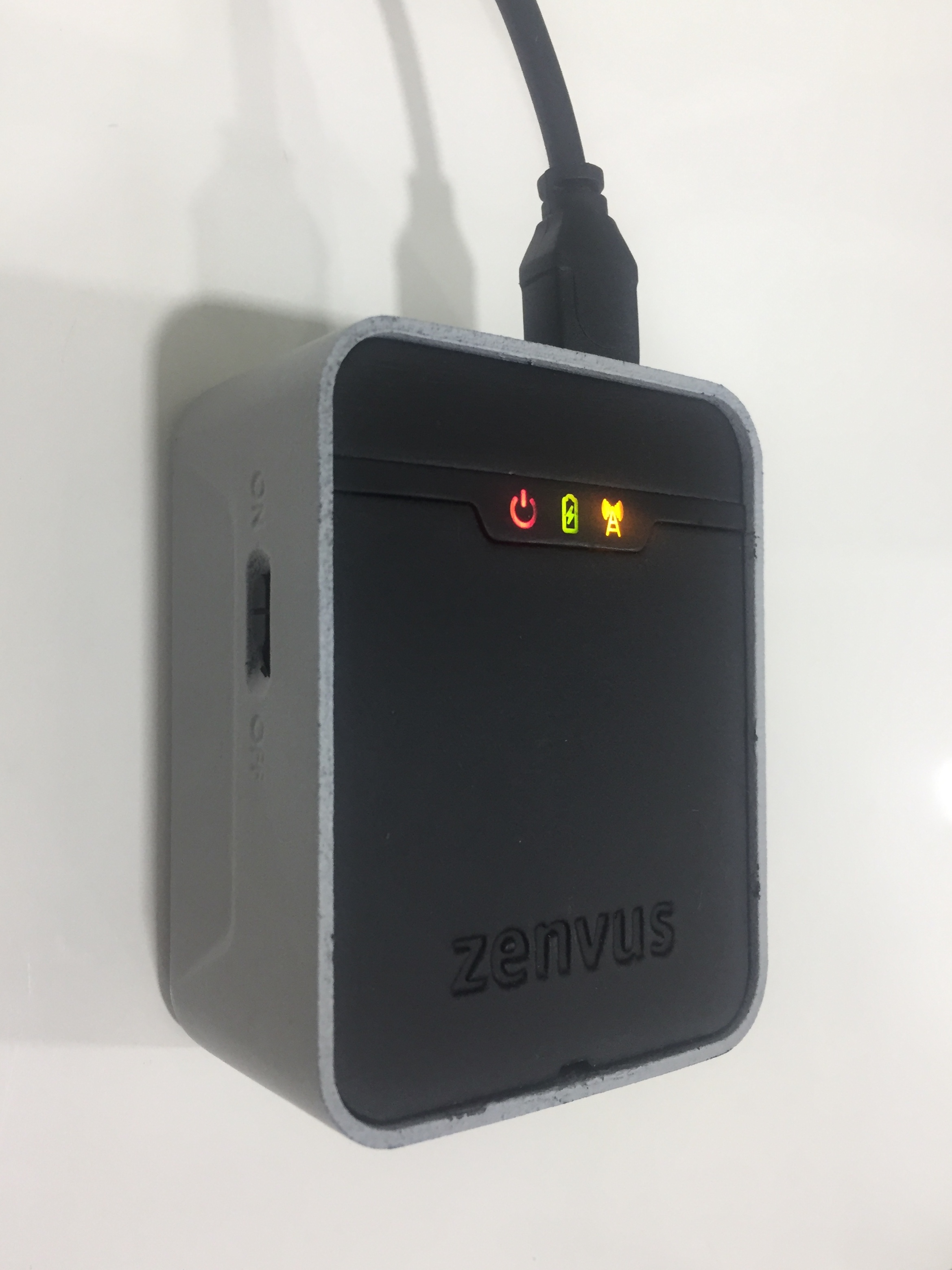
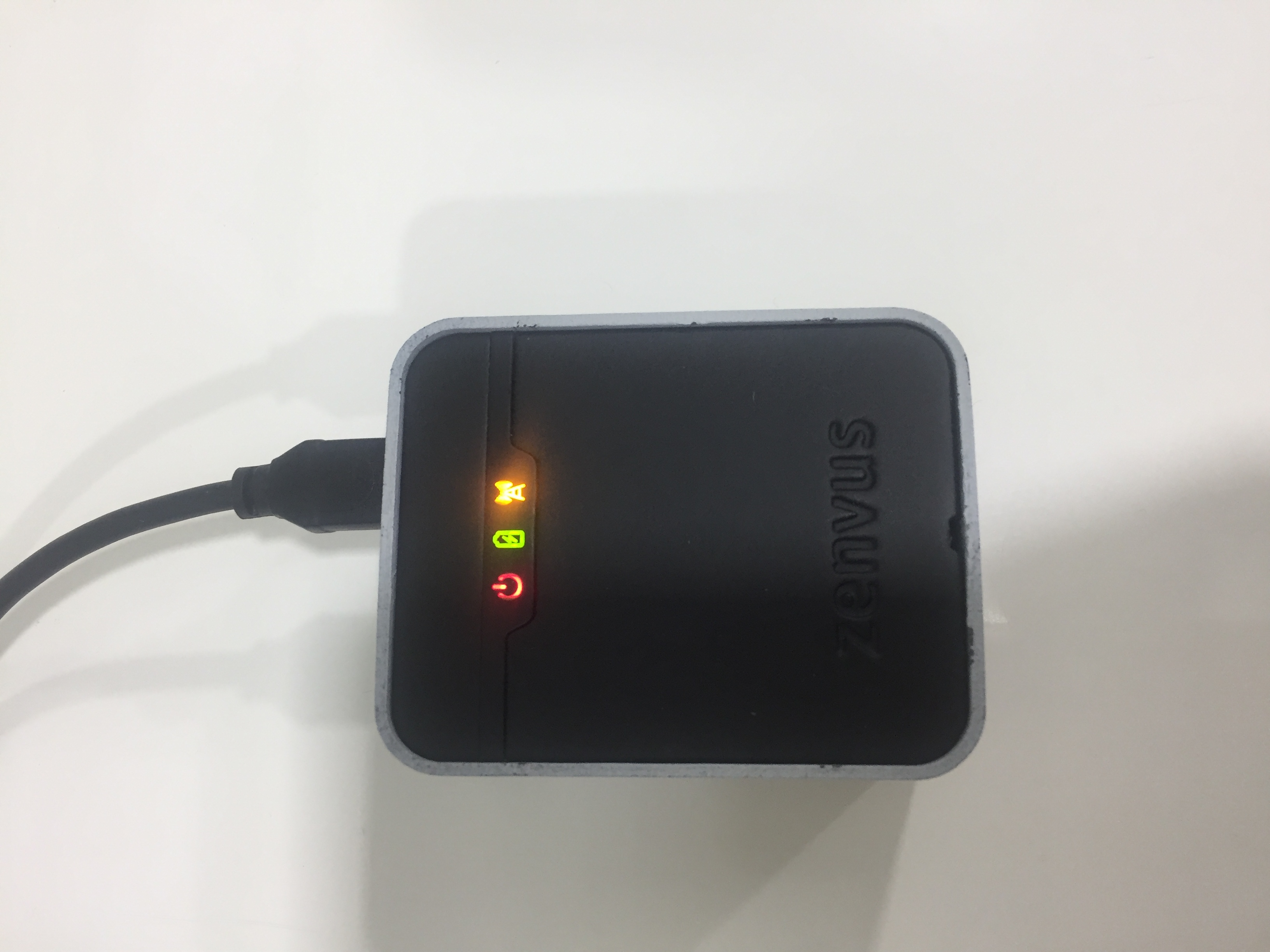
This image (above) is from a farmer in Asia who uses Zenvus to track and monitor something we did not design for. Of course, a product is useful for whatever customers (legally) use it for.

Zenvus is an intelligent solution for farms which uses proprietary electronic sensors to collect soil data like moisture, nutrients, pH, etc. It then sends the data to a cloud server via GSM, satellite or Wifi. Algorithms in the server analyze the data and advice farmers on farming processes. As the crops grow, the system deploys special cameras to build crop vegetative health index for detection of drought stress, pest and diseases. Our system has the capability to tell a farmer what, how, and when to farm. It has in-built GPS, compass and XL making it possible to map farm boundaries which could be useful during loan and insurance applications.

In 2020, we will open a new playbook: any farmer, not just cooperatives or governments, can buy Zenvus. That includes Zenvus Smartfarm (farm sensors), Zenvus Yield (our camera) and Zenvus Loci (disposable & reusable trackers).

Zenvus >> intelligent solutions