DD
MM
YYYY

PAGES

DD
MM
YYYY

spot_img

PAGES

Home Blog Page 6552

In Search of Refined Herbs for Global Diseases

0

Every day, medical scientists and practitioners are not relenting in researching towards finding permanent cures for varied diseases affecting people and animal globally. From the traditional era to the modern period, diseases have been the greatest threat to healthy living. Before the modernization of health processes and healthcare delivery, human have been known to apply different herbs to cure diseases.

The arrival of modern medical scientists and practitioners couple with the message that traditional medicines are not good because of lack of scientific verification and appropriate measurement of dosage, the world, especially Africans, Asians and other nationals of developing continents were made to believe that using traditional medicines is tantamount to having health complications.

However, the same modern medical scientists and practitioners, and global health organisations that kick against the use of traditional medicines later recognised the place of the orthodox medicines in curing global diseases. For instance, in 2018, 98 Member States of the World Health Organisation incorporated Traditional and Complementary Medicine in their national health systems, 109 had launched national laws or regulations on T&CM, and 124 had implemented regulations on herbal medicines.

As pointed out earlier, developing countries are embracing traditional medicines faster than the rest of the world. They are being used mostly in Africa, Asia and Latin America. According to the World Health Organisation, people in these continents are using the medicines because of easy availability and affordability. The world health body says about 80 percent of the population in these continents still depend on traditional medicine for their Primary Healthcare (PHC) needs.

As the debates rage on the side effects of using traditional medicine, it is instructive to note that the growth remains steady globally amidst the inability of finding total cure for many diseases and high rate of poverty, which is preventing the poor from accessing adequate healthcare solutions. From 2020 to 2023, the global herbal medicine market is expected to reach a valuation of more than USD 129 billion.

The interest in the medicine has led to substantial investment in researching how the various herbs could be proved and certified safe for the human consumption. Three developing countries, one developed country and WHO have made significant research investment in traditional herbal medicines. Companies have also invested million of US dollars searching for promising medicinal herbs and novel chemical compounds.

The Conflicts and Drivers of Herbal Medicine

In the course of searching for the right herbs for global diseases, two incidents shocked the world in 1999 and 2007 to 2016. In 1999, Nigerian Surgeon, Dr Jeremiah Abalaka announced the development of a vaccine for the Human Immunodeficiency Virus (HIV). The announcement was trailed by mixed reactions from the public, the Nigerian government and the global community. A few years of treating 30 people with the virus, report has it that 29 died of complications during treatment. Till today, Dr Abalaka remains resolute in his discovery, saying the Nigerian government and the western world are frustrating his efforts because of the huge money being made from the sale of anti-retroviral drugs.

Like Dr Abalaka, the former Gambian leader and President, Yahya Jammeh announced that he had a cure for Aids in 2007. From 2007 to 2016, the President through his Presidential Alternative Treatment Programme (PATP) treated AIDS patients in confinement. Throughout the months of the treatment, the patients were made to drink herbal concoctions. Similar to the issues that trailed Dr Abalaka’s vaccine, experts and medical researchers believe that the treatment violated the human rights of people living with HIV in The Gambia and compromised HIV health service delivery.

Two years after the President was ousted in an election, survivors of the treatment sued and asked for compensation from the former Gambian leader. A recent study notes that “the emergence of the presidential treatment can be understood in the political and scientific context of recent global AIDS funding and programming, and longstanding tensions between ‘ foreign’ and local concerns with biomedicine and research.”

Despite the controversies on the two incidents, it has appeared that people will continue to seek knowledge about herbs and apply them as alternative medicines to cure different diseases. Our analysis shows that since the beginning of this year, people in Zimbabwe, Ghana, Jamaica, Uganda, Trinidad and Tobago, Nigeria, Zambia, Australia, New Zealand and South Africa have had significant interest in herbs, looking for specific ones that could cure the diseases affecting them.

Exhibit 1: People’s Interest in the Diseases and Herbs, 2019
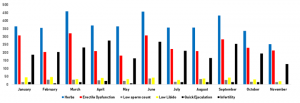
Source: Google Trends, 2019; Infoprations, 2019

Select Diseases as Case

Within the Alternative and Natural Medicine, the world interest in getting the right herbs for erectile dysfunction and infertility is on the increase.   About 5 percent of men that are 40 years old have complete erectile dysfunction, and that number increases to about 15 percent of men at age 70. Mild and moderate erectile dysfunction affects approximately 10 percent of men per decade of life (i.e., 50 percent of men in their 50s, 60 percent of men in their 60s). Erectile dysfunction can occur at any age, but it is more common in men that are older. Older men are more likely to have health conditions that require medication, which can interfere with erectile function. Additionally, as men age, they may need more stimulation to get an erection and more time between erections.

From January to November, 2019, the interest has been high on how Ayurvedic herbs could be used for the infertility treatment. The interest has been huge on the place of Ashoka, Dashmoola, Shatavari, Aloe vera, Guduchi and Jeevanti in treating Ovulation Disorder and Premature Ovarian Failure (POF). Throughout our study period, we equally found that herbs that could cure erectile dysfunction were mostly sourced from the United States and Canada.

Globally, there is a 68.5% connection between herbs and erectile dysfunction. Herbs and low sperm count (70.00%); herbs and libido (55.2%); herbs and quick ejaculation (15.00%); herbs and infertility (76.6%). Analysis further reveals that one percent interest in herbs translated to 46.90% of looking for the herbs that could cure erectile dysfunction. It was 48.90%, 30.50%, 2.20% and 58.60% for low sperm count, low libido, quick ejaculation and infertility respectively [see exhibit 2].

Exhibit 2: Link and Facilitation of Herbs with Select Diseases
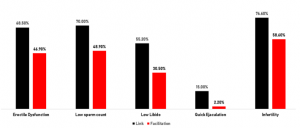
Source: Google Trends, 2019; Infoprations Analysis, 2019

Strategic Options

From the insights, it is clear that traditional medicine must be developed along with the modern medicine if the world is truly ready to eliminate a number of diseases by 2030, especially attaining Sustainable Development Goal 3 (Ensuring  healthy lives and promoting well-being for all at all ages – by achieving universal health coverage (UHC), addressing health emergencies and promoting healthier populations).

As we enter a new decade, the decade that would be used to measure the realisation of the goal and others, global leaders, experts and industries need to see the reason for the integration of the best traditional medicine practice with the modern medicine practice. This will go in a long way of tackling the peculiar health challenges in each continent.

Lionel Messi Scores 6th Ballon D’or, Dribbles Liverpool Van Dijk

0
Stars like Messi are the attraction

“It is 10 years since I won my first Ballon Do’r here in Paris and I remember coming here with my three brothers, I was 22 and it was all unthinkable for me what I was going through.

“Now ten years on, this is my sixth, in a very different time, very special in my personal life with my wife and three children. I am aware of the age I have but I hope I have several years left to keep enjoying my football and doing this.

“As my wife said, you must never stop dreaming but always work to improve and continue to enjoy. I am very lucky, I am blessed.

“I would like to thank all the journalists who voted for me and wanted me to have this prize.

“Thank you so much to my colleagues who actually contributed a lot to this prize. It is amazing, thank you so much,” Messi said after winning his sixth Ballon D’or.

The 2019 Ballon D’or has come against the greatest odds since Messi didn’t win the champions league or any international trophy to better his chances of winning it. And he was contending with those who won. Though some football fans argue that the prize should be given to someone who has the champions league medal, Messi’s meritocracy is measured beyond the trophies won by his teams.

On Sunday night in Wando Metropolitano, Barcelona FC’s chance of staying on top of La Liga was minutes away from impossible when Lionel Messi did what he usually does; set up a chance and broke Atletico Madrid’s defense that had proved impregnable for the past 80 minutes. And Barcelona went home with all three points.

It was a classy display of salvage that was exciting but not surprising.

In the last 2018/19 season, Messi put up such displays in quantifying numbers that got Barcelona the league and champions league semi-finals.

Although Liverpool ended Barcelona’s campaign in champions league in a very sad way, overturning a 3-0 first leg lead to qualify for the final, his individual play assured that he made the final three alongside Virgil Van Dijk and Cristiano Ronaldo in the list of Ballon D’or nominees.

And on Monday night in Paris, Messi won the Ballon D’or for the sixth time in his professional career: A milestone that no other player has attained in the history of football.

Messi won the Ballon D’or in 2009, 2010, 2011 and in 2012, and in 2015, he got his 5th, before losing to his closest rival, Cristiano Ronaldo who held it until 2018, when Luca Modric usurped the duopoly between Messi and Ronaldo, and won the laurel for the first time.

So the 2019, voters looked at the numbers and voted. And when it comes to numbers, Messi is ahead of every other player this year with 54 appearances, 46 goals and 17 assists. He also has the most goals in Europe and Spain, most assists in the league, most points won for the team, most free-kick goals and most hat-tricks.

Messi won the golden boot and the European Best based on these numbers.

Other awards Messi has won this year are:

  • UEFA Men’s Player of the Year
  • The Best FIFA Men’s Player of the Year
  • FIFA World Player of the Year
  • UEFA Club Footballer of the Year.

His closest rival in the competition, Virgil Van Dijk, even though he won the champions league with Liverpool and stood a great chance to clinch the honor, did not fail to give respect to whom it is due.

He said, “You need to respect greatness as well. I was close, but there was just someone a little bit better. I’m very proud of what I achieved last year with Liverpool and the Netherlands, and hopefully we can do that again this year. But that will be tough with those guys around here still.”

Virgil Van Dijk came second behind Messi, beating Cristiano Ronaldo to take the third position. The Liverpool duo, Sadio Mane and Mo Salah came fourth and fifth respectively.

Meanwhile, the Ballon D’or for women’s football was given to U.S soccer star, Megan Rapinoe. Her role in the 2019 Women’s World Cup ensured that the U.S took the cup home.

Why Nigeria Doesn’t Need Military Universities

0

“Tomorrow, President Buhari will lay the foundation stone of the University of Transportation in Daura, Katsina State. The Transport University which will be built by China Civil and Construction Company (CCECC) will be the first specialized institution of its kind.” So says the statement issued by the Presidential Media Aid, Bashir Ahmad.

It’s not the first time that the government is taking such a step, even though there’s Nigerian Institute of Transport Technology Zaria striving through underfunding.

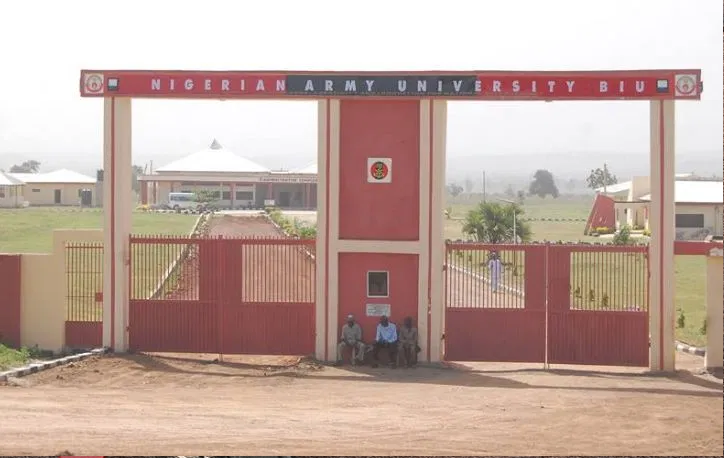
In 2018, the Chief of Army Staff, Tukur Yusuf Buratai, spearheaded the establishment of Nigerian Army University in Biu, Borno State. According to the Nigerian Army, the university was to focus on nuclear technology, and since Borno State is rich in uranium, and it is the center of the war with Boko Haram terrorists, Biu became the right location for the university.

The Military University of Biu also offers degrees on environmental courses, biotechnology, cyber security and intelligence gathering. But it wasn’t the first degree awarding institution by the military. There is also the Nigerian Defence Academy (NDA) that has been in existence since 1964, offering certification and degrees in different categories of security studies.

The Nigerian Army University wanted to do something different, going beyond the professional army activities. Buratai said then:

“The Nigerian Army of today cannot afford to remain static and must therefore explore the fields of science, engineering and even the humanities.”

According to the chairman of the University Planning and Implementation Committee, Major General Mathias Efeovbokhan (rtd), the university would accommodate 75% civilians and 25% military personnel. He said there is need to train civilians and the military together to foster cordial relationship among them. Moreover, the university will play the role of Silicon Valley in offering tech-based services to the Nigerian people.

In response to the establishment of the Military University, prof. Abubakar Rasheed, the executive secretary, the National Universities Commission (NUC) said:

“We at the NUC are excited that the Army University will not be exclusively for the military but instead will cater for the entire society. This will lead to the advancement of knowledge. When people of all strata participate in research generation in the university, there will be a harvest of knowledge that will positively impact the nation’s development.”

While the army was working to establish the university, the Nigerian Navy and Nigerian Air Force were submitting application to the NUC for their own universities.

Less than a year after Buratai established the Army University in his home town in Biu, the Chief of Air Staff, Air Marshal Sadique Abubakar has toed the same lane to establish Air Force University in his home town in Bauchi. The Chief of Naval Staff is the next in line, and the trend is likely going to go beyond that.

While the development has become a cause for rejoicing to some, others are worried about the intent and outcome of establishing universities in the name of armed forces and other government agencies.

Human Rights lawyer, Femi Falana, (SAN) told Punch that the decision of service chiefs to establish universities is abuse of office and contravenes the federal character principle.

“The Nigerian Defence Academy already exists and it awards certificates. The same NDA is not well funded and yet the military is establishing new universities in the hometowns of service chiefs. Interestingly, NDA, the army university and the new air force university and other institutions are mostly concentrated in the North. This is against the federal character principle,” he said.

There are over 200 universities and tertiary institutions in Nigeria, and each one of them is remarkably underfunded. The incessant strike action by the Academic Staff Union of Universities (ASUU) has been based mainly on lack of adequate funding by the federal government: A situation that has resulted in successive mediocrity in the universities. Earlier this year, the NUC published ranking of universities in Nigeria, and those who made it to the top went celebrating.

The twist in the moment of joy came when the Times Higher Education (THE), published its rankings for universities around the world, and only three out of the top 10 Universities in Nigeria made the list below 1,000. Covenant University was ranked 401, the University of Ibadan, 501, and the University of Lagos, 801.

Underfunding has been the major reason for lack of competitiveness of Nigerian universities in the world stage. And the federal government seems not interested in providing the needed fund to facilitate the needed infrastructure that will enable competitiveness beyond the shores of Nigeria.

The Federal Executive Council (FEC) has approved N2 billion for the Air Force University, while the already existing universities need more than that to stay in shape.

Nigerians are concerned that the establishment of universities in the North while already existing ones are neglected is a political precedent that will do more damage to the already wobbling academic foundation than good: One of the reasons being that the courses offered by the new universities are all available in several other universities in the country. So it is regarded as a waste of scarce resources that should be channeled to something more profitable.

It is also believed that following the pattern, other government agencies like the FRSC, EFCC, NPF etc. will be opening their respective universities soon.

Important Plumbing Business Startup Tips

0

Plumbing business startups are always tricky to manage. You always have competition and you need to deal with many things that are unexpected. The truth is most plumbers do not have business experience. This can easily lead to numerous problems. With this in mind, here are some important tips that will help you launch the plumbing business in the right way.

Take the time needed to analyze everything in your plumbing business. Eventually, you will be able to make good choices and you will get more clients.

Focus On The Best Service

This is, perhaps, the most important thing that you need to do when you start a plumbing business. As you can see with successful startups like https://www.fixitrightplumbing.com.au/plumber-belconnen/, the focus should be put on those services that you are best at. All plumbers are specialized in something or are simply better at a service than other services. That service is the one you should focus on.

As an example, let us say that you are very good at drain cleaning. If this is the case, start promoting your plumbing business startup by being focused on drain cleaning.

Plumbing Is Always About People

As you move from offering remote plumbing services as an individual to being a business, it is normal to be overwhelmed. You start to think about technology and making money. This can always lead to big problems when you lose sight of people.

It is the customer that makes a purchase. He/she buys from other people. Because of this, you want to hire people that are really good sellers and really good plumbers. Always focus on having a very good staff and you will be successful.

Selling Never Stops

This is something you need to learn as fast as possible when you launch a plumbing business startup. Unfortunately, after getting some leads, plumbers tend to stop promoting their services. This is a huge mistake since you never know when the influx of customers disappears.

With plumbing, you have to keep selling. This is what guarantees that you get a steady flow of customers. Remember the fact that people need plumbing services when problems exist.

It needs to be added that every single person in the plumbing business is a salesperson. This includes the person that answers the phone and responds on social media. Every single employee represents your business so selling training is actually needed for everyone.

Always Plan Your Next Step

Launching a business means that you make an investment. It takes a really long time for a plan to mature. You need to write down your visions and business ideas. Then, analyzing them and creating plans around them is needed for success.

The plans that you created have to be shared with those that you trust. This is because brainstorming helps make better plans. When you talk about your plans and you keep analyzing them, it is easy to get excited. Then, when you get excited, it is easier to turn your ideas into reality.