DD
MM
YYYY

PAGES

DD
MM
YYYY

spot_img

PAGES

Home Blog Page 6579

Nigerian Government to Launch National Youth Policy to Support Entrepreneurship

0

The Nigerian government is planning to launch the National Youth Policy that will strengthen entrepreneurship across the country. The plan is to develop a policy that will empower Nigerian youths to succeed in their entrepreneurial endeavors.

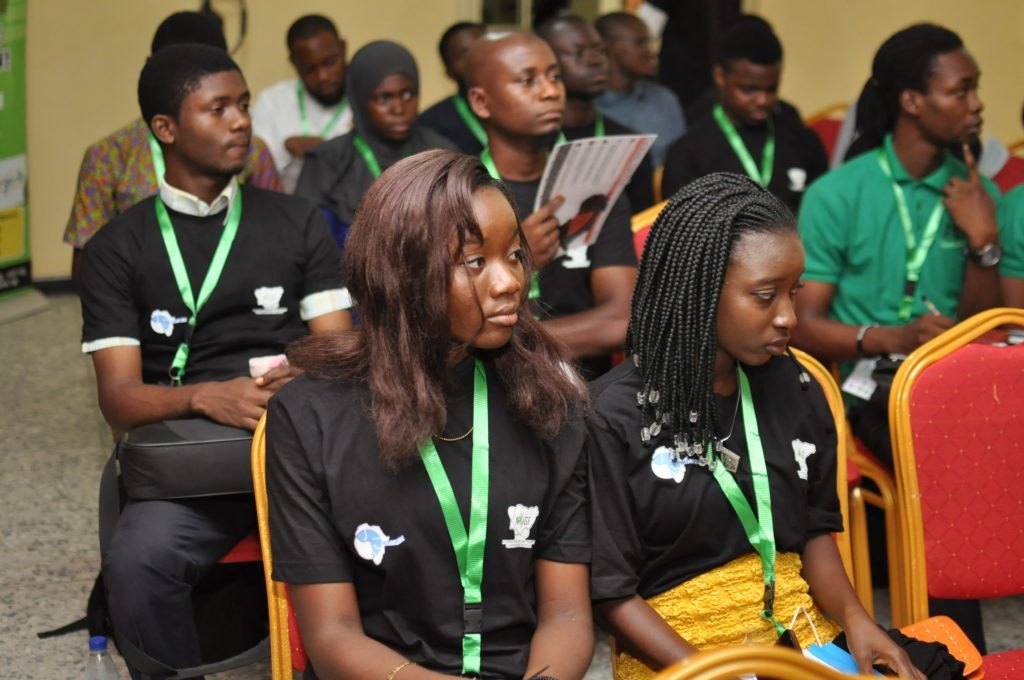
The Minister of Youth and sports, Sunday Dare, disclosed this during the Student Entrepreneurship Activity Hub (SEA-Hub), National Competition held in Abuja on the 7th of November. He said there have been misconceptions about Nigerian youths, and it is the mandate of the Ministry of Sports and Youth Development to correct them.

“Our youths no longer need empowerment but investment in entrepreneurship and skills development. We will be launching the National Youth Policy to ensure that more youths have access to employment and entrepreneurship development program,” he said.

The Minister was full of praises for the German Ministry for Economic Corporation and Development, Deutsche Gesellschaft fur Internationale Zusammenarbeit (GIZ), for the empowerment of over 14, 000 students through the SEA-Hub intervention programme.

“It’s exciting to know that over 14, 000 students have benefited from this programme. This is a good way to prepare the youths for the future. The future belongs to the youths who are innovative, bold and creative,” he said.

The head of SEDIN, Detlev Holloh, said that GIZ has continued to expand its empowerment activities through the sustainable development cluster. He noted that there has been an increase in employment and income generation through many programmes like the pro- poor growth and promotion of employment in Nigeria program-SEDIN.

According to him, the GIZ initiatives are designed to promote economic development, employment, rural development, governance and democracy among others.

“The SEDIN program promotes entrepreneurship through several approaches such as the SEA-Hub which have direct impact on some of the sustainable development goals.

“SEA-Hubs are extracurricular clubs created in schools to help young people build life-long skills and prepare them for the future. So far, SEA-Hub has reached close to 15, 000 students in Edo, Niger, Ogun and Plateau states.

“It is our hope that we continue to work together at the state and national levels to build and inclusive and sustainable future for our young entrepreneurs,” Holloh said.

The representative of the Minister of Education, Ayodele Adegun, didn’t save her delight at the development. She said that challenges facing youths in entrepreneurship in Nigeria cannot be ignored, and the fact that they need help to develop their skills and tackle unemployment is a naked truth.

“I want to commend GIZ for the empowerment programs that touched thousands of lives, the ministry will continue to support your efforts in improving the lives of the Nigerian youths,” she said.

The 2009 National Youth Policy was centered on five areas of priority that needed to be given attention for the improvement of the lives of Nigerian young age. These include the impact of globalization, access and use of communication technology, the impact of STDs and HIV/AIDS, intergenerational issues in an aging society, and youth perpetrators and victims of armed conflict.

Several years have passed since then and a lot has changed. There has been a host of new challenges facing the country, and of the most significant of them is unemployment.

Nigeria has a vibrant median age of 19.7, facing the challenge of unemployment. According to Spectator Index, 36 percent of Nigerian youths is unemployed, the second highest rate in the world. Only South Africa with 58 percent is ahead of Nigeria.

The alarming increase in unemployment figures in Nigeria is an indication that the youths do no longer need to depend on the government for jobs. In the age of internet and data technology, skill acquisition offers an alternative to scarce white collar jobs, but not when there is poor infrastructure to back it up.

Therefore, the promise of the youth and sports minister to launch a National Youth Policy that will meet the challenge of entrepreneurship in Nigeria beams hope. It will not only encourage organizational participation in capacity building, it will also empower youths to develop their individual skills gainfully.

Nigeria Border Closure: Winning Customs Revenue Battle But Losing War of Regional Exports Dominance

2

As the days go by, the Nigerian closed borders are yielding in increment different results. The Nigerian Customs Service (NCS) claims it is generating more revenue as a result of the closed borders, and there have been drastic decrease in arms smuggling among other things. There has also been an increase in rice production and local producers are selling more than ever before. To the people on this side of the story, the border should remain closed indefinitely; after all, it’s tripled the revenue generation of the NCS and encouraged local production of food items.

The argument sounds genial until you listen to some other producers in Nigeria who need to cross the borders in order to sell their products. Some of them are sending SOS to the government to open the borders because they are close to going out of business.

In a chat with Vanguard, exporters whose markets are within the West African coastline counted their losses and the gloomy future ahead of them if the borders are not open as soon as possible.

The CEO of Multi-mix Academy, an export focused institution, Dr. Obiora Madu said the situation is crippling the export business within the Ecowas region. He also said that the speed of export activities has been so slow, owing to the fact that a lot of thorough inspections now take place before cargo could leave for their destinations.

“It is definitely impacting negatively on the economy as the exports done within the Ecowas region and our neighboring countries are now in decrease. These countries that benefit from the open border, since we have closed it, even though we used to export to them before, you don’t expect to get the level of cooperation that we are getting before because they are hit hard by these closed borders.

“The fact is that it definitely has impact on volume, it will also impact on speed and it will not be as swift as it used to be because of scrutiny,” he said.

Another export executive who voiced his concern is Ofon Udofia, the CEO, Institute of Export Operations and Management (IEOM). He said Nigeria is losing more than it’s gaining since most of the country’s products have West African nations as sales destinations.

“It is a big problem. We are losing money because when we talk about exporting goods, we are not only talking about exporting it to countries in Asia, Europe or America. We are also talking about exports taking place within the West African sub-region.

“We in the private sector are victims of this border closure. Take a look at companies like Unilever, they supply goods to other countries through Nigeria and for many years, they make use of the land borders. We have lost a lot of money because of this. Even Dangote who exports cement to Benin Republic has lost a lot,” he said.

The alternative to exportation using land borders have been airline cargoes or shipping, depending on their volume. The most practical considering the weight of the goods being exported is shipping. Udofia argued that shipping is not yet a viable means of transporting goods from Nigeria through West African waters because currently, Nigeria doesn’t have any vessel that ply the routes.

He also noted that in the absence of Nigerian owned ships, the international shipping lines will have the opportunity to increase their shipping fares, and that will result in high cost of goods and services.

“Even when they say we can make use of the sea, do we have vessels? We don’t have vessels plying the West Coast or even a vessel that can carry the volume of what we are exporting.

“Even Maerskline Shipping Company, MSC, or any other international shipping line that will pick products from Nigeria and take it to these West African countries must charge extra fees.

“This is because we don’t have any shipping line. Which flag are we flying, we are just deceiving ourselves. When they said that we should use inland waterways for export, we are still negotiating on how we can partner with shipping lines and the ship is already in Nigerian waters, but we have to pay five percent duty of the cost of that vessel before it comes.

“This is not what you do overnight because we are unprepared. Shipping is not like going to a market to buy a trailer, it goes beyond that. We are talking about shipping line that will be going across West and Central which we don’t have, and its possibility is still in question,” he concluded.

The plights of exporters go beyond transportation. The closed borders have generated trade apathy toward made in Nigerian goods and services. Two weeks ago, a Ghanaian news outlet, my joyonline reported that Ghanaians are shutting shops belonging to Nigerians in anger over the closed borders.

With the African Continental Free Trade Area (AfCFTA) set to go into play in July 2020, the border closure is setting an antitrust precedent between Nigeria and other African countries. The Nigerian government seems adamant, and to other African countries, it appears like a foretaste of what is to come. The Nigerian government’s insistence to keep the borders closed is as a result of smuggling activities that have resulted in inflow of substandard goods into the country among other things.

The federal government of Nigeria has vowed to keep the borders shut until the neighboring nations find a solution to the problem. However, experts believe that smuggling activities owing to porous borders is evidence of weak customs, and cannot be solved by closing the borders.

The president of the African Export-Import Bank, Prof. Benedict Oramah, has urged Nigeria and other African countries to deploy technology in their fight against smuggling. He also expressed confidence that Nigeria will not renege on AfCFTA since it is the key to the development that the continent needs.

“Africa consists of 55 fragmented markets. AfCFTA will create one market one market in Africa. Unless we turn it to one market, the continent will remain underdeveloped,” he said.

Nigeria is encouraging local production of goods and services it has been known for importing, in view to export them in the near future. The steps the country has taken with the border closure seems more like shooting yourself in the leg when you have a thousand miles to walk.

Tecno Phones Evolve As PalmPay Raises $40M To Pay You As You Use It!

3

It is here – I predicted it that after Transsion – the parent of Tecno, Infinix and Itel- has conquered mobile devices, in Africa, it would move into platforms. Platforms give you customers, devices produce consumers. Today, we are learning that PalmPay has moved into the big league. Yes, through Transsion, PalmPay has a $40 million war chest to battle deeper into the African fintech sector. The decade of application utility is around the corner, in Africa, and that inflection year of 2022 cannot come faster. In Nigeria, “PalmPay will offer 10% cashback on airtime purchases and bank transfer rates as low as 10 Naira ($.02)”, notes Techcrunch. In other words, as you use it, you get paid!

Africa focused payment startup PalmPay has launched in Nigeria after raising a $40 million seed-round led by Chinese mobile-phone maker Transsion.

The investment came via Transsion’s Tecno subsidiary, with participation from China’s NetEase and Taiwanese wireless comms hardware firm Mediatek — a Transsion spokesperson confirmed to TechCrunch.

PalmPay had piloted its mobile fintech offering in Nigeria since July, before going live today at a launch in Lagos.

The future of the publicly traded Transsion cannot be selling hardware – services provide a deeper sustainable path. Hardware reaches maturity, reducing margins, while services could be likened to the tree that produces cash as fruits. PalmPay will offer a package of mobile based financial services, including no fee payment options, bill pay, rewards programs, and discounted airtime.

Like MTN, OPay and others, PalmPay has the Central Bank of Nigeria (CBN) mobile money license. And it has one advantage: if most Africa users depend on Transsion devices, it means the PalmPay app being pre-installed will create millions of entry points on day one.

“On channel and access, we’re going to be pre-installed on all Tecno phones. Your’e gonna find us in the Tecno stores and outlets. So we get an immediate channel and leg up in any market we operate in,” said PalmPay CEO Greg Reeves.

The future looks exciting for consumers. But for those in the heat, it is getting hotter! Why? The Chinese are not buying local startups – they prefer to start from scratch. What does that tell me? Simply, the market is still at infancy; no one has won yet. And I do believe that, because cash remains king in Africa and eating the “ 98%” with software, is a massive generational opportunity, in places like Nigeria where the central bank started the party of all-time with digital money license galore!

Join Me For 2019 FUTO Commencement Address – Dec 7, 2019

0

I invite you to join me in one of Africa’s finest technical universities – Federal University of Technology Owerri (Nigeria) – and my undergraduate alma mater, on Dec 7, 2019, as I deliver before royal fathers, parents, faculty and graduates, the Commencement Address. Few minutes ago, I sent the speech titled “Innovators for the Rise of All”. 


Ginika Shares The Key To Reducing Unemployment In Nigeria In This Interview

0

Fresh graduates always face an uphill battle to land a job after graduation. It doesn’t sound nice to have spent at least four years in school and still struggle to relevant.

What’s the way forward?

How can our fresh graduates become relevant after their first degree?

Meet Ginika, as she offers her own solution to unemployment in the country.

Can you give detailed information about yourself to the audience, please?
Okay, thank you!

Ginika Chukwudi is a Career Development Coach who is passionate about the career development of individuals.

I am the director of IHTIL COACHING, a platform where career people are equipped to thrive. I am goal-driven, detail-oriented and I love to impart knowledge.

I am also a good networker, with project management and leadership skills.

Upon graduating from the University, being a victim of the ills of unemployment, and identifying its cause as lacking the requisite employability skills, unexplored potentials, and opportunities, I became motivated to be a remarkable solution provider to the menace of unemployment and wrong career choice; this led her to create a career development platform, this platform has trained over 1000 individuals.

In my spare time, I love to network, volunteer, attend insightful events and spend a memorable time with family and friends.

I believe everyone can thrive, my favourite quote is – “Life is not a bed of roses but you can make life your bed of rose”.


Wow! That’s a quote I’ll remember forever. You mentioned your platform, can you explain what you mean by that?
IHTIL Coaching Service is a platform that helps individuals thrive in their career by equipping them with the necessary skills and information needed to become pacesetters in their career.

We have a free online training every month that addresses workplace related issues, choosing a career path, identifying skills needed to succeed in the career. We bring in Career professionals that handles this training from career development, financial management, Goal setting, Employee job search tools, Work-Life Balance, Handling Mentoring Relationships,  to workplace ethics etc.

We also hold offline trainings that also brings a physical and practical aspects of this training, knowing that some people learn better when it’s a physical training we merge both to strike a balance.

IHTIL COACHING is birthed to bridge the gap between Passion, Profession and Purpose and its relevance in the 21st Century Workplace.


What gave you this vision?
As an undergraduate, the drive and passion towards graduating with either a first-class or Second class upper was one career goal for me, fortunately for me I graduated with a 3.49 CGPA. I used the word fortunately because if not for the disappointment and frustration I experienced after seeing my result, the vision of IHTIL COACHING will not have been birthed.

Now upon graduating from the university, I couldn’t count myself worthy for a job because of my results and the information we get from society, especially our parents about making good grades, which of course is very important. This incident created a yearning in me to find out what could be my plus so I can stand out.

I started going for career development training and this brought to my knowledge that the result is good but not a prerequisite for being a good candidate or a great employee.

I began to understand that their are so many others like me in the society that needs the good news and to crown it all, I prayed about it and God gave me a scripture which is first where the name IHTIL was birthed and secondly my role as the director.

JOHN 1 vs 4a IN HIM THERE IS LIFE

ISAIAH 42.6 – 7
“I, the LORD, have called you in righteousness; I will take hold of your hand. I will keep you and will make you to be a covenant for the people and a light for the Gentiles,

”Isa.42.7 – to open eyes that are blind, to free captives from prison and to release from the dungeon those who sit in darkness.”

I had to start preaching the gospel of career development.


That’s a great mission which must be spread all over the world. Considering the rate of unemployment in the country, how has your company been able to help?
I will say of a truth that with collaborations and relationships we have been able to carry out most of the plans.

The first medium we have created is the online platform which has been used to train individuals and we have gotten so many testimonials of standing out during interviews, internships, job offers, scholarship offers.

From time to time, we post job openings, career development training opportunities, seminars and workshop on the platform, educate people on how to apply for job, do CV reviews, LinkedIn profile review, scholarship awareness programs etc.

We also have a group of mentors that provide career mentorship support and give career advice.

We have physical core hard skill trainings, Our offline training programs are paid mostly to cover up for logistics and appreciate the facilitators.

We have another one coming up in November, by God’s grace this is one of our goals for IHTIL Coming through, it’s a combination of both hard skills and soft skills training.

The testimonials has really been our motivation pill, that we are really giving our quota in reducing the rate of unemployment. And we hope to do more.


That’s interesting. You have trained many graduates in your company, so far so good, what can you say about our graduates?
Are we really producing problem solver or just bookworms?
The truth is I won’t put the outcome of what we have as graduates on the graduates. The truth is they will do better if they know better. The workplace skills has changed and what is being taught in our universities do not efficiently meet the demands of the workplace except for some science related profession like Medicine.

I won’t call them bookworms, because the knowledge does not even provide a solution. Our educational system needs to bridge the gap between graduation and employment, they are not just aware of the graduate gap, so many measures needs to be put in place. Career development courses should be encouraged to help nurture employability skills in our graduates.


Ginika, I can definitely testify to this – if you know better, you will do better. You mentioned about an event coming up, I am interested to know more. I hope you don’t mind sharing about it?
The Career Benchmark 2.0 is designed to equip graduates with the skill that makes them job-ready and employable.

With the current trend in recruitment, employers are not ready to recruit prospective employees to get them trained, rather they want candidates with the required skill to just get to work.

This is because the market is very competitive, and time is an effective tool and needs to be maximized.

Career Benchmark MASTERCLASS 2.0 is set to engage and train this graduate with skills that would make them stand out as graduates and prospective employees to help them get planted in the workplace.

Some of the skills we will be addressing are listed below

1. Digital Marketing
– Social Media Management
– Content Creation

2. Advanced Microsoft skill

– Word
– Powerpoint
– Advanced Excel Data analytics
– Power BI

3. Career Development
– Vision Boarding
– Goal Setting
– Career Planning

4.  Finance
– Make
– Multiply
– Manage & Invest

5. Work Ethic
– Elevator Pitch
– Communication & presentation
– Workplace etiquette

6.  Employment & Job Search Tools
– CV & Cover letter writing
– Email Etiquette
– LinkedIn Profile URL
– Interview skills

7. Networking Skill
– Mentor Relationship
– Workplace Relationship
– Social media Networking skills

8. Sales & Marketing

I think I should come and learn too. This is a whole lot of professional tools to excel in life. Where is this taking place, and who are the facilitators?
You are the boss, we hope to learn from you too.

The training is being held in Lekki, Lagos

The Facilitators:
– Kayode Abass
– Steph Redd
– Funmilola Kehinde (Careers with Funmi)
– Louis Adie
– Kanyi Adio Moses
– Omawunmi Ogbe
– Chukwuemeka Ezeogu
– Victor Onyekere
– Segun Ekeleme


Who are the audience to benefit from this blockbuster event?
Our targeted audience is the Unemployed, Fresh graduates and even the employed that need to upskill.


How can they register for this?
They can register via the link below:

http://bit.ly/careerbenchmarkmasterclass

Or send a mail to: ihtilcoaching@gmail.com

Better still, they can call 08168490861, for more details.


What’s your plan for the graduates in the next five years?
We are taking employability skill training to the universities, so that the undergraduate has this skill outrightly before they coat the Term Graduates.

This is a big one for us, because it more of addressing the challenge from the root.

In the next five years, we hope to produce graduates that are fit for the job by not just getting employed but also creating jobs

We are also looking out for collaboration from the government and private institution, so that we are not in the situation where there are no candidates to fill job roles or no job to get people employed. Rather we have graduates that are being employed and also creating job opportunities with their skills.


What would you like the government to do for your company?
It’s easier when we have this facilities planted here and there for seamless operation, when we have policies that support the funding the employability skill training in our universities, it makes it easier to focus more on building content.

Thank you, Ginika, for the chat. I wish you success in all your endeavours.
Thank you, Chinedu, for the warm reception, I had a nice time too.