DD
MM
YYYY

PAGES

DD
MM
YYYY

spot_img

PAGES

Home Blog Page 6586

Japan’s SoftBank Softened by First Loss in 14 Years

0

SoftBank has inadvertently become a victim of WeWork’s predicament. In what it said to be its first loss in 14 years, the Japanese conglomerate suffered a surprising loss that got the CEO, Masayoshi Son, to a humble mood.

On Wednesday, SoftBank posted figures that indicated loss of $4.7 billion out of the $6 billion it invested in WeWork, and its Vision fund lost $3 billion out of the $4 billion it put into the troubled giant.

So the week offered SoftBank news of losses, $6.4 billion in all, denting its Vision Fund which now looks like a drag on its parent company because of poorly performing investments in WeWork, Uber and Slack. The Vision Fund lost nearly $9 billion in the quarter.

“SoftBank Group Corp. is a Japan-based company principally engaged in the communication and Internet related business. The Company operates in six business segments. Softbank segment is involved in the sale of mobile terminals, the provision of mobile communication services and fixed communication services in Japan. The Segment also sells mobile terminal accessories, PC software and peripherals. Sprint segment is involved in the provision of mobile communication services and others in the US. Yahoo segment conducts advertising business on the Internet, e-commerce business and membership service business. ARM segment is involved in the design of IP and related technologies for microprocessors, and the sale of software tools. Softbank Vision Fund and Delta Fund segment conducts investment activities in the technology area. Bright Star segment conducts distribution of mobile terminals overseas. The Company is also involved in Fortress and Fukuoka Softbank Hawks related business.”

Though the loss broke a 14 years old record and opened the way for other possibilities, Son said it is part of the process, it’s not all about winning. “We can’t win every time, but our return is twice the average industry return,” he said.

Son admitted a poor investment strategy as a reason for the huge loss. Throwing huge sums around for startups was a risk that its price comes in billions.

SoftBank is trying to restore confidence in its big bets, after its backing of WeWork has drawn months of scrutiny. That means shoring up the corporate governance at some of the companies it backs and restrictions on dual-class shares, moves designed to restrict the nearly free reign enjoyed by some founders—like WeWork founder Adam Neumann, who departed his company with a $1.7 billion payout. (Fortune newsletter)

WeWork’s ordeal brought questions about Son’s commitment to unconventional tech founders which have necessitated it to spend extra cash to keep them in business.

A month ago, SoftBank paid $10 billion bailout fund to keep WeWork in existence, it includes $5 billion in new financing, a tender offer of up to $3 billion for existing WeWork shareholders and an acceleration of an earlier promise of $1.5 billion in funding. It’s a huge bailout that investors considered avoidable if SoftBank has done its homework before venturing into WeWork.

Questionable corporate governance practices are believed to be responsible for the troubles of WeWork.

Initially, Son appeared defiant and said he was not going to change anything or do things differently due to the recent losses. But in a sudden change of tone, he acknowledged in a news conference that such corporate challenges exist, and he regrets taking some steps.

“Various negative media reports about WeWork were true in some sense,” he said.

“The perception is that Softbank is being dragged down into the quagmire of Wework. I am looking back with true regret about the mistaken investment moves that I have made.”

Although SoftBank has been mainly at the receiving end of these poor decisions, Son said that investors are still reaping profits from their total investments and the Vision Fund’s value for shareholders has not fallen despite the latest losses because of gains from other stock holdings of SoftBank.

SoftBank has series of investments cuts across array of companies like Alibaba, Uber, Didi and Grab, Yahoo, Internet of Things (IoT), British based company Arm. So SoftBank has relied on its investment in these companies to keep its shareholders away from losses incurred in WeWork.

Although some of its investment companies like Uber and Slack have been suffering its own losses recently, SoftBank said it’s not that bad. Son also said that though Uber is losing money, SoftBank’s investment with the ridesharing company has kept it from becoming worse.

One of the concerns raised by the media is that SoftBank is more a real estate company than it is a tech company, and demanded to know why Wework is viewed as technology investment. Son said it is due to the internet technology used by the company, which offers office spaces to startups.

Though it all seems gloomy, Son said “it’s not a sinking ship.” It’s a common thing that happens with new companies, even those considered successes. “But there is no storm, and things are under control,” he assured.

SoftBank is counting on the good performances of its other various investments to keep the sinking ones afloat, a method that appears so practical as long as the majority of the investments stay on top of their game.


New Logistics Framework For Africa In The Age of AfCFTA

3

Over the last few months, my practice has been examining new operating models for logistics sector in Africa. From air to road, sea to space, African logistics remains at infancy. Intra-city and intra-national logistics remain stymied by marginal cost challenges and lack of enabling infrastructures, even as the promise of cross-national border logistics, anchored on AfCFTA (African continental free trade agreement), may become unrealized.

If commerce runs on supply chain, frictions on logistics remain central in the lack of competitiveness and efficiency in the utilization of factors of production across African markets and territories. Specifically on trucking logistics, there are many ways stakeholders can improve margins, reduce costs for customers, and scale into more domains, to stimulate economic activities, across industrial sectors, in the continent.

In February 2020, I will be making a presentation in Addis Ababa, Ethiopia. We are examining a new framework which I have called Addis Alliance, named after the headquarters of the African Union, Addis Ababa. This Alliance will mirror the aviation’s Star Alliance where some airlines cooperate and compete simultaneously by enabling better utilization of assets based on comparative advantages on routes. For example, Delta Airlines could run routes for KLM  in U.S. while KLM handles Delta customers from Europe to East Africa.

In our thesis, all the logistics players may not have to be operating in all African countries to execute AfCFTA if better operating protocols are established on taxes, pricing, etc. For example, a Kenya-domiciled logistics company can focus on Kenya using its scarce resources to deepen capabilities and fix logistic frictions in both urban and rural areas, over expanding rapidly to South Africa. But as it does that, it finds a good partner in South Africa so that it can move cargo more optimally by using the South African partner on reverse logistics. Through this integration, overall costs will drop, and margins will improve for the players even as customers get better values. Our optimization model shows more than 37% efficiencies for partners at  -/+ 15% disparity scales.

We do believe that an integrated network of alliances will help these players grow over excessive competition which will not necessarily make them better since cross-national border scale cannot wholly improve unit economics. To move a truck from Nigeria to Ghana, and return empty will be bad. But to work with a Ghanian partner who can make it possible that on reverse you have goods to carry will make everyone better. While you can operate in Nigeria and Ghana simultaneously, our data shows that most times, the nexus happens without deepening value creation in any of the countries. Interestingly, building a solid moat through scale is exceedingly difficult due to market fragmentation, and structure.

Alliances built on multi-point aggregation of partners will deliver better value not just to investors and startups, but shippers, just as Star Alliance does indeed reduce costs for flyers by reducing marginal costs for the cooperating airlines!

Logistics and Fintechs are among the areas we are spending time to understand at deeper levels for post-AfCFTA; we are available to offer thought-leadership to global clients.

Saudi Arabia Invests $400M in Ex-Uber CEO Travis Kalanick’s CloudKitchens

0

The former CEO of Uber, Travis Kalanick, is making another big move with CloudKitchens, a startup he’s been secretly working on for months. CloudKitchens has attracted the interest of Saudi Arabia’s sovereign wealth fund. The Wall Street Journal reported that Kalanick has raised $400 million from the Saudi’s sovereign wealth fund.

“A cloud kitchen is basically a takeaway outlet that provides no dine-in facility. They function as a production unit with a space for the preparation of food. The food can be ordered online, hence the name, cloud kitchen.”

Saudi Arabia’s previous attempts to make new investments in Silicon Valley have failed for a number of reasons, including the death of journalist Jamal Khashoggi. His death among other things put a dent on the chances of the oil rich country to expand its investment from oil to tech in the United States.

Although the sovereign wealth fund is Uber’s fifth-largest outside shareholder, several companies backed away from doing business with Saudi in a protest, after the death of Khashoggi.

Recently, Uber has been struggling, incurring loss after loss to keep investors wary of other businesses, especially startups. But the Saudis seem not care about the troubles of Uber and have refused to allow it to deter them from approaching Silicon-based businesses for investment.

CloudKitchens is a kitchen rental that has caught the eye of the Saudis, and since there was an existing relationship with Kalanick, the deal was easily struck. The media campaign that smeared Saudi Arabia following the death of Khashoggi, is eventually succumbing to the draconian oil wealth, and Kalanick didn’t wait to cash in on it.

CloudKitchens is valued at $5 billion, a huge figure for a startup, and it’s the reason the Public Investment Fund (PIF) saw the need to invest in it as early as January despite the uncertainties that usually surround startups.

Kalanick has put $300 million in CloudKitchens in his push to make the ghost cooking business reach as many countries as possible. So far, it is operational in seven countries including India, China and the U.S. a promising development for a startup that began in January.

Kalanick’s hope to attract investors and increase his capital must have been jeopardized by Uber’s many troubles. But the Saudis seem not bothered about any of that, a fact they proved by rolling out a whopping $400 million which outweighed Kalanick’s own fund by $100 million. It is believed that the gesture is suggesting that Kalanick must have developed a personal relationship with the Saudis.

In June 2006, PIF rolled out $3.5 billion investment into Uber, giving the sovereign wealth fund over 70 million shares. But Uber’s woes have adversely affected the shares. The quarterly loss of over $1 billion earlier this month means that the stock has lost about 40 percent of its value. Uber’s stock is currently at $26.92, and that means PIF has a stake of about $1.9 billion in Uber.

So in three years, PIF has lost over $1.5 billion in its investment with Uber. So staking a staggering sum once again in a startup of Kalanick’s origin suggests there is trust between him and them. Some argued that PIF’s confidence stems from the fact that Kalanick cannot be held responsible for the events at Uber, since he is no longer at the helm of affairs. So the Saudis are ready to take another chance on him.

Meanwhile, the sudden rise in cloud kitchen is creating fear and hope. There is fear it is going out those operating regular restaurants out of business and eventually narrows the eatery business to a dominant few cloud food vendors. And there is hope that it will evolve to be better and open time saving opportunities to both eaters and restaurateurs.

While conventional restaurant cannot be totally overridden by cloud kitchen, the stiff competition it will stir as more people embrace it will be damaging. Cloud kitchen restaurants focus on maximizing the number of orders per day, by focusing on the mass production of food and decreasing the overall production and packaging time.

Cloud kitchens are trying to automate most of the works of food production to cut down the time. One way many are trying to achieve this is by adopting the Hub and Spokes model and central kitchen management. The central kitchen is the hub where food will be prepared, and then delivered to the spokes or the food outlets where the remaining cooking is done.

This requires a lot of capital that many restaurants may not keep up with. And the enthusiasm of eaters who just want something different from the regular dine-in eateries may eventually die down. That means, cloud kitchens will function on “survival by the fittest.”

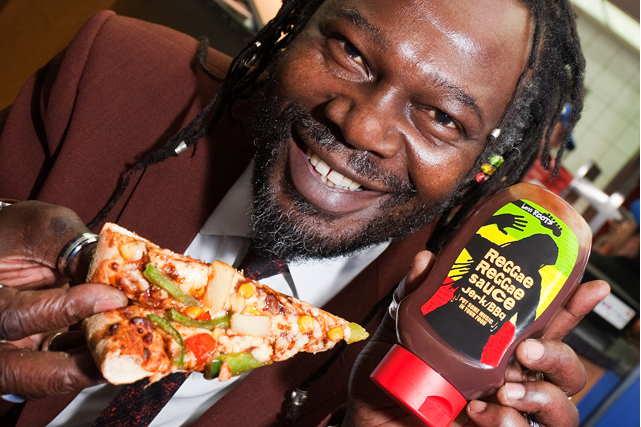
How Caribbean Food Went Mainstream in the UK: The Levi Roots Story

1

This article is inspired by my former student’s essay as part of her completion of a module entitled Small Business Management.

All credit goes to my co-author, Denise Aschenkewitz. A Business Management Graduate with First Class Honours! She has also recently bagged an MSc in Project Management from the University of Westminster.

Levi’s story begins in a tiny little village in Clarendon, Jamaica. As a young boy, Levi helped his grandmother in the kitchen. She taught him the secrets and subtleties of mixing Caribbean flavours, herbs and spices. At the same time, Levi also discovered his love for music at the church his grandmother sung at. While he lived with his grandparents in Jamaica, his parents were in Brixton working hard so that Levi and his five older siblings could move to England. This was an annual ritual of relocation to Britain, as every year the Brixton-resident parents would send for another child from the eldest to the youngest – notice the pecking order? Eventually it was Levi’s turn to leave Jamaica.

(Source: Levi Roots)

In London Levi went to school for the first time and also visited the The Notting Hill Carnival, an annual event that has taken place in London since 1966 on the streets of the Notting Hill area of Kensington, coinciding with the traditional August bank holidays.

“I loved the music, the food, the colours.”

Little did he know he would later have his own stall at the festival selling the Reggae Reggae Sauce that would make him his fortune.

Fast forward to the 1990s. Levi made the sauce from his kitchen in Brixton with the help of his seven children, selling his overwhelmingly popular sauce out of bag on his back.

At the 1991 Notting Hill Carnival, Levi created a fusion between the food he was cooking and the music he was playing, opening the ‘Rasta’raunt’, which was so popular it is now an annual fixture at the Carnival.

Come in 2000s. Despite the sauce’s popularity, however, it took another 16 years of rejection from banks and businesses to invest in the product who thought it looked and sounded ‘too black’.

In 2006, Levi was spotted at the World Food Market by a BBC researcher, and invited to appear on the programme Dragons’ Den. Would you believe this? Levi had never even heard of the show and went home to his kids asking them what Dragons’ Den was. How about our #1 fans, immediate family? No, they begged him not to appear saying:

Dad, don’t go on that show, they’ll just tear you to pieces!

Although he was doubtful about the programme, Levi’s mother encouraged him to come back as a ‘Dragon Slayer’. Levi put his faith in Reggae Reggae Sauce to win over those fiery Dragons.

The sauce was an instant hit – hot sauce. In exchange for a 40% stake in his business, he secured the support of millionaire ‘Dragons’, Peter Jones and Richard Farleigh for £50,000. Peter Jones helped to get the sauce listed by Sainsbury’s, turning the dream into a reality.

Levi’s success has been nothing short of a whirlwind and he has even been invited by occupants of #10 Downing Street, in recognition of his notable success as a black man in Britain attaining financial achievement through enterprise. Levi equates his success to putting himself into the product. Picture this:

“I will never forget that little paradise content (in Jamaica) and my saintly grandmother, who helped to make me the success I am now.”

Levi’s main focus has been to promote the Reggae Reggae brand and the message it symbolises. Now here’s some motivational speech for the next generation.

“I want to spread the word that if a Black ‘Brixtonian’ Rastafarian can make it with just a sauce, then you can make it too.”

The Levi Roots range continues to grow with Caribbean inspired cooking sauces, ready meals, soft drinks, desserts and more. Numerous high-profile restaurant chains have signed deals with Levi to use the sauce on their menus including Weatherspoon’s and other high street franchises

In 2008, Levi hosted his debut TV series ‘Caribbean Food Made Easy’ where he showcased vibrant tastes and healthy ingredients of Caribbean food as being more accessible not to mention being accompanied by his iconic book of the same name.

Quick distraction. Other ethnic foods in the UK need to borrow a leaf from the need to make it easy and this goes to African Food outlets epitomised by the Nigerian Restaurants in London, which I profiled over a decade ago in 2007.

Ok let’s get back to the main gist. As well as cooking, Levi continued to fulfil his passion for credible roots music by releasing his studio album ‘Red Hot’ (sounds like a hot sauce, right?) with its catchy summer single ‘So Out of My Mind’, in 2009.

Only four years later in 2013 he launched his “School of Life Tour” taking his message to children across the country, inspiring them to follow their dreams and showing them how to make tasty, healthy food. He has published six cookbooks and a business book, released a new album and eventually realised his ultimate dream of opening a Caribbean restaurant in December 2015. The Levi Roots Caribbean Smokehouse opened its doors to the public in Westfield Stratford City, bringing authentic sights, sounds and tastes of the Caribbean to the masses.

With seemingly endless possibilities for the popular Levi Roots brand, Levi continues to bring the sunshine of the Caribbean to all of his ventures while popularizing the spicy flavours of his Jamaican heritage. Always focused and ever motivated Levi Roots remains true to his inspired mantra of success, ‘Put some music in your food!’

Ok, the love affair seems to have ended, but then again is any business really immune from failure. One particular article entitled Understanding the Causes of Business Failure Crises, readily comes to mind at this juncture. Indeed, the list of business failures on the British Highstreet is endless from BHS, through Thomas Cook and now Mothercare. The question now is who cares?

Now isn’t that some “Food” for thought.


Denise Aschenkewitz & Nnamdi Madichie 2019

See Selected Book Cover Designs – Publish At Tekedia

0

Good people, our help for book cover design, for Tekedia book series, is due Nov 11, 2019 (Monday) –  “Tekedia will be publishing short books covering many areas. The books will have dedicated pages on our site. If you have a short book, published or unpublished, provided you control the rights, we will be happy to publish same.To help on this project, as usual, we will need crowd-sourced cover designs.”

Help Needed On Book Cover Designs

We have received great cover designs and more books are being processed by my team. There is no font style, size, etc, since we will publish online at Tekedia. However, we require a minimum of 15,000 words count. It can cover any topic excluding politics. Your book will not be under any paywall – I mean, it will be freely available to our readers. And more people will read them if you work with us.

To send your design or a book, email my team here.