DD
MM
YYYY

PAGES

DD
MM
YYYY

spot_img

PAGES

Home Blog Page 6587

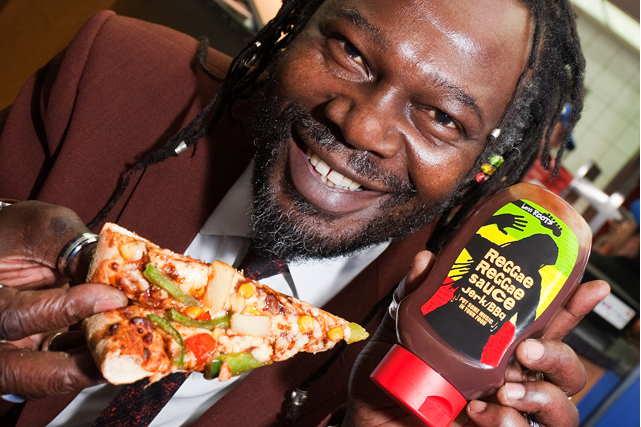
How Caribbean Food Went Mainstream in the UK: The Levi Roots Story

1

This article is inspired by my former student’s essay as part of her completion of a module entitled Small Business Management.

All credit goes to my co-author, Denise Aschenkewitz. A Business Management Graduate with First Class Honours! She has also recently bagged an MSc in Project Management from the University of Westminster.

Levi’s story begins in a tiny little village in Clarendon, Jamaica. As a young boy, Levi helped his grandmother in the kitchen. She taught him the secrets and subtleties of mixing Caribbean flavours, herbs and spices. At the same time, Levi also discovered his love for music at the church his grandmother sung at. While he lived with his grandparents in Jamaica, his parents were in Brixton working hard so that Levi and his five older siblings could move to England. This was an annual ritual of relocation to Britain, as every year the Brixton-resident parents would send for another child from the eldest to the youngest – notice the pecking order? Eventually it was Levi’s turn to leave Jamaica.

(Source: Levi Roots)

In London Levi went to school for the first time and also visited the The Notting Hill Carnival, an annual event that has taken place in London since 1966 on the streets of the Notting Hill area of Kensington, coinciding with the traditional August bank holidays.

“I loved the music, the food, the colours.”

Little did he know he would later have his own stall at the festival selling the Reggae Reggae Sauce that would make him his fortune.

Fast forward to the 1990s. Levi made the sauce from his kitchen in Brixton with the help of his seven children, selling his overwhelmingly popular sauce out of bag on his back.

At the 1991 Notting Hill Carnival, Levi created a fusion between the food he was cooking and the music he was playing, opening the ‘Rasta’raunt’, which was so popular it is now an annual fixture at the Carnival.

Come in 2000s. Despite the sauce’s popularity, however, it took another 16 years of rejection from banks and businesses to invest in the product who thought it looked and sounded ‘too black’.

In 2006, Levi was spotted at the World Food Market by a BBC researcher, and invited to appear on the programme Dragons’ Den. Would you believe this? Levi had never even heard of the show and went home to his kids asking them what Dragons’ Den was. How about our #1 fans, immediate family? No, they begged him not to appear saying:

Dad, don’t go on that show, they’ll just tear you to pieces!

Although he was doubtful about the programme, Levi’s mother encouraged him to come back as a ‘Dragon Slayer’. Levi put his faith in Reggae Reggae Sauce to win over those fiery Dragons.

The sauce was an instant hit – hot sauce. In exchange for a 40% stake in his business, he secured the support of millionaire ‘Dragons’, Peter Jones and Richard Farleigh for £50,000. Peter Jones helped to get the sauce listed by Sainsbury’s, turning the dream into a reality.

Levi’s success has been nothing short of a whirlwind and he has even been invited by occupants of #10 Downing Street, in recognition of his notable success as a black man in Britain attaining financial achievement through enterprise. Levi equates his success to putting himself into the product. Picture this:

“I will never forget that little paradise content (in Jamaica) and my saintly grandmother, who helped to make me the success I am now.”

Levi’s main focus has been to promote the Reggae Reggae brand and the message it symbolises. Now here’s some motivational speech for the next generation.

“I want to spread the word that if a Black ‘Brixtonian’ Rastafarian can make it with just a sauce, then you can make it too.”

The Levi Roots range continues to grow with Caribbean inspired cooking sauces, ready meals, soft drinks, desserts and more. Numerous high-profile restaurant chains have signed deals with Levi to use the sauce on their menus including Weatherspoon’s and other high street franchises

In 2008, Levi hosted his debut TV series ‘Caribbean Food Made Easy’ where he showcased vibrant tastes and healthy ingredients of Caribbean food as being more accessible not to mention being accompanied by his iconic book of the same name.

Quick distraction. Other ethnic foods in the UK need to borrow a leaf from the need to make it easy and this goes to African Food outlets epitomised by the Nigerian Restaurants in London, which I profiled over a decade ago in 2007.

Ok let’s get back to the main gist. As well as cooking, Levi continued to fulfil his passion for credible roots music by releasing his studio album ‘Red Hot’ (sounds like a hot sauce, right?) with its catchy summer single ‘So Out of My Mind’, in 2009.

Only four years later in 2013 he launched his “School of Life Tour” taking his message to children across the country, inspiring them to follow their dreams and showing them how to make tasty, healthy food. He has published six cookbooks and a business book, released a new album and eventually realised his ultimate dream of opening a Caribbean restaurant in December 2015. The Levi Roots Caribbean Smokehouse opened its doors to the public in Westfield Stratford City, bringing authentic sights, sounds and tastes of the Caribbean to the masses.

With seemingly endless possibilities for the popular Levi Roots brand, Levi continues to bring the sunshine of the Caribbean to all of his ventures while popularizing the spicy flavours of his Jamaican heritage. Always focused and ever motivated Levi Roots remains true to his inspired mantra of success, ‘Put some music in your food!’

Ok, the love affair seems to have ended, but then again is any business really immune from failure. One particular article entitled Understanding the Causes of Business Failure Crises, readily comes to mind at this juncture. Indeed, the list of business failures on the British Highstreet is endless from BHS, through Thomas Cook and now Mothercare. The question now is who cares?

Now isn’t that some “Food” for thought.


Denise Aschenkewitz & Nnamdi Madichie 2019

See Selected Book Cover Designs – Publish At Tekedia

0

Good people, our help for book cover design, for Tekedia book series, is due Nov 11, 2019 (Monday) –  “Tekedia will be publishing short books covering many areas. The books will have dedicated pages on our site. If you have a short book, published or unpublished, provided you control the rights, we will be happy to publish same.To help on this project, as usual, we will need crowd-sourced cover designs.”

Help Needed On Book Cover Designs

We have received great cover designs and more books are being processed by my team. There is no font style, size, etc, since we will publish online at Tekedia. However, we require a minimum of 15,000 words count. It can cover any topic excluding politics. Your book will not be under any paywall – I mean, it will be freely available to our readers. And more people will read them if you work with us.

To send your design or a book, email my team here.

How To Become A Better Citizen

0

Do you want to be relevant in Nigeria and Africa at large? Be a citizen! Get involved in the good governance process of your country. Does this mean you will automatically become a politician? No! It means you are a good citizen! Many people, especially professionals, fear getting involved in the governance process of their country because they hate being called a politician or the idea of becoming one owing to the bad name and perception attributed to it.

If you don’t want to be a politician, at least be a citizen.

Yes, citizenship participation is the citizen’s major weapon of mass correction and development. Political leaders fear the unity of citizens. But do the citizens know this? Do they use what they have for the good of their country? The citizens form the Human Resource department of the political management of any nation. They have the power to fire and hire public office holders. They run performance checks and improvements for political leaders and the citizens are the biggest source of finance for any political arrangement – you can call it a country. 

If the employee did his own part during the interview process – campaign and town hall meetings – and the HR (citizens) did part of their work by employing the candidate through elections, then why should the HR go to sleep when the employee resumes work? Is that not negligence of duty?

Citizen participation in governance is a key and most important people-government interaction that must exist to birth a sustainable democratic atmosphere where every citizen including leaders have equal access to the Commonwealth of their country.

The absence of citizen engagement is the absence of good governance and the tenets of good governance are only attainable in a democratic system of government.

Mourice Lévy, Chairman and CEO of Publicis Groupe, must have had a true society built by good governance in mind when he said the beauty about the world is that everyone can change it

The ability for any citizen to influence his government activities is universal but the willingness and actual action to get involved in the processes employed by any government in running and sustaining its people is in short supply, especially in societies like Nigeria, where citizens have been conditioned through military interventions and political orchestrations for the ruling few to go on unchecked or unquestioned. Poverty, illiteracy and political ignorance are some of the inhibitions to citizen engagement in many developing countries. However, in the face of all these inhibitions, there should be no other way or excuse for citizens not to ensure an equitable, egalitarian and sustainable state of their society.

The mere act of voting a leader into government is one aspect out of many key civic duties required of every Nigerian citizen. The act of electing leaders into power is so critical that it controls and affects every other aspect of governance.

Frank Herbert vividly captures the whole discussion in this short quote – Good governance never depends upon laws, but upon the personal qualities of those who govern. The machinery of government is always subordinate to the will of those who administer that machinery. The most important element of government, therefore, is the method of choosing leaders.

It is therefore important for all of us in Nigeria to know that when we decide to take part in the process of choosing our leaders, we are performing one requirement that achieving good governance demands. If we don’t participate in engaging our leaders, we don’t have a moral justification to complain about their actions. They need us to engage them so that they can make the right policies and legislations that are good for the entire people and not for only the privileged few.

After we have begun our citizenship engagement by actively electing our leaders, we must not go to sleep thinking our leaders, who we thought were trusted individuals as we knew them before they got into power are still the same men and women. No, they are not the same again! Something has changed about them – their dependents, advisers, aides, influencers are now more than they were before they got into power. A man or woman in power is a totally different fellow, at least they aren’t perfect to always do the right thing and make the best decisions in all situations. That is where we begin to know that citizens need to engage more with their government in areas of policy formulation and implementation, and in all areas of executive, legislative and judiciary function performances.

These engagements can come in forms of public debates, journalism or editorials, other Media engagements, protests or demonstrations, active involvement in governmental programmes and projects. This article itself is a form of citizen engagement which is tailored to increasing citizen participation in governance.

So, whatever actions citizens take by which they seek to criticize, influence policies or bring a government to account on any matter concerning public governance is public participation or citizen engagement. By doing so, they are actively involved in the economic, social and political processes that affect their lives.

All the above being said, we must as citizens learn to become better by doing the right thing ourselves so we can have a moral justification to call our leaders to order. There is this judicial Maxim – he who comes to equity must come with clean hands.

Let us together call on all well meaning Nigerians, young and old, to take Nigeria as our own and let us build her together. We have no other country to call our own, our leaders need us, and we also need them to lead us alright. We elected them, but we must not leave them to themselves, we will all regret our actions or inactions, not because they deliberately would make us regret our choice of voting them, but because we refuse to tell them what we want and what is good for all of us including them.

If you say you are fine with where you are, don’t worry, it’s only a matter of time, they will reach you – how? The policies they make will either affect your business or take your job. So, get involved in any way you find reasonably practicable and within your budget and safety. Just ensure you are doing something to make Nigeria a better place.

If you create jobs, educate the conscience of the youth, organise vocational education, seminars for motivation, anything at all, you are doing something.

Nigeria’s Five Conditions To Neighbors Before Opening Land Borders

2

Good people, many months ago, as President Buhari was contemplating signing AfCFTA, the pan-African trade agreement, I wrote that Nigeria was not ready because the rules of origin could be rigged by member states. My conclusion in that piece was thus: fix the rules of origin clause before signing AfCFTA. Of course, after pressure on Mr. President, he signed. But it seems that reality has checked in as ECOWAS has become a lab even before AfCFTA. 

Nigeria should SIGN but must make sure the “rule of origin” clause is strong. We cannot afford goods produced outside Africa to be repackaged in a treaty member state and then shipped to Nigeria at a low tariff that is exclusive to member states.

Here are the evolving conditions which Nigeria’s neighboring countries must adhere to and maintain before the closed land borders could be opened. You can extend this redesign to AfCFTA even before it begins. Simply, Nigeria is fixing the rules of origin, at the moment.

–          Any import coming from outside an ECOWAS region and imported into an ECOWAS member state must maintain its original packaging. They must be escorted from the port directly to the designated entry point in the Nigerian border, presented to the Nigerian customs with their original packaging. Compromises will not be tolerated.

–          Goods produced predominantly in ECOWAS member states must satisfy the ECOWAS rules of origin to avoid any possibility of downplay. Goods must be majorly produced in ECOWAS countries.

If the goods are coming from outside ECOWAS, the value addition must be over 30 per cent for it to be accepted within the framework of the Economic Trade Liberalisation Scheme that ECOWAS countries have to promote trade among them.

This is to avoid countries outside member states from exporting their goods into ECOWAS region repackaged, as though they are coming from an ECOWAS region.

–          All warehouses along the shared borders of Nigeria must be dismantled.

–          Goods being transported must be put in proper recognized packaging. No longer will we have goods of all shapes and sizes going through the borders. To maintain the best practices of those goods, an accepted condition for packaging will be established.

–          In regards to free movements of persons, all persons moving through Nigerian borders must present themselves through recognized entry points and must have recognized travel documents (country passport).

Interestingly, AfCFTA could just be a paper with no heart to make it happen as anyone losing can activate anything to justify exclusion. Because the bigger economies like Nigeria will not like to lose, I do not see how harmony can reign. Yes, I do not expect an engagement with Togo from Nigeria to be a win-win; unless Nigeria is open to lose marginally, there is nothing in it because the economic disparity is highly asymmetric. Of course, Nigeria has to do what it has to do, as it battles eroding middle class, even as population continues to grow, in a time of very low economic growth. But do not sleep thinking AfCFTA will be magical – it is already collapsing before it begins!

Why Data Price Reduction In Nigeria May Not be Possible

0
Nigeria's minister of digital economy

The Minister of Communication and Digital Economy, Dr. Isa Ali Pantami, on Tuesday, reiterated Federal Government’s resolve to bring the cost of data down. He said his office has been flooded with complaints by consumers who decry the high cost of data and other sharp practices by network operators.

Read: Why Telecom Consumers Experience Early Data Depletion.

He therefore directed Nigerian Communication Commission (NCC), to work out modalities with network service providers and other stakeholders to see that the cost of data is reviewed downward.

“I am urging the management of NCC to work towards reducing the price of data in Nigeria. It is too costly and people are complaining every day.

“If you go to other countries, even countries that are not as largely populated as Nigeria, data prices are not this high.

“I am also a victim of some of the infractions that are so common in the industry. You load your data, but you barely used 20 percent of it and the entire data is wiped off.” The Minister said.

The issue of data price reduction has dragged on for some time now, and the Minister of Communication is no longer having any of it. He therefore issued 5 days ultimatum the Commission to put the saga to rest.

“The last time I commented on the issue of illegal data deduction… this is one of the issues that worry me badly today. Engr. Wakil was making a presentation on behalf of the Executive Vice Chairman, he tried to defend operators on one hand and the commission on the other, but I was not fully convinced with the explanation.

“Please go, sit down and review that issue. It is very important and I want to get your feedback with that report in the next five working days with the decision on it because the complaint from Nigerians are beyond what I can handle, as it is today, people are complaining.” He added.

Reacting to the marching order, the Chairman of ALTON, Engr. Gbenga Adebayo, told Daily Trust: “I don’t know how the government is going to achieve that data reduction in five days. Have they put into consideration the high cost of operating our businesses and the very harsh operating environment we are in”? He asked

“Why are they trying to muzzle the NCC and stampede it into doing what is unrealistic? Do they know that operators don’t just sit down and fix tariffs? They, with NCC rely on so many things before coming up with tariffs.

“We do not know under what circumstances the directive was given, and to be honest with you, we don’t know how that is going to be achieved. We have said it several times that when policies interfere with commercial matters, the industry will be jeopardized. Government needs to be careful not to whittle down the powers of the regulator.

“To arrive at prices, NCC normally conducts survey and research, and after all that, it will benchmark the country’s tariffs based on what is obtained in other jurisdictions,” he said.

The Cable UK’s Data figures compared according to regions in Africa varies in prices. In West Africa, Nigeria network operators sell 1GB for about $3.22 while you get the same amount of data in Chad for $23.3. In Cameroon it’s way cheaper at $1.7 while in Ivory Coast it costs $4.1 and $2.92 in Niger Republic.

In North Africa, 1GB can be obtain countries like Algeria, 1GB is sold for $5.15, Egypt $1.49, Libya, $4.87 and Sudan $0.6.

While in Southern Africa, 1GB goes for $11.2 in Namibia, $14.12 in Botswana and $7.19 in South Africa.

These varying figures show that there is no formula to determine the cost of data but each country uses infrastructure and market forces to determine the cost. And when it comes to infrastructure, Nigeria like many other African countries is way behind – a recipe for high cost of data.

For instance, the cost of fueling the generators powering network service masts in Nigeria is enough to influence the cost of data. And there is issue of vandalism that has become a norm that the operators are helplessly dealing with. And there is also the issue of Right of Way (ROW) that the Minister of communication himself acknowledged.

The NCC knows that these challenges exist and cannot force telcos to reduce the cost of data when the problems instigating it have not been fixed. That would be tantamount to forcing them to operate on loss which will have its own adverse effects.

The Ministry of Communication has a good intention by directing the NCC to protect the interest of subscribers, but it shouldn’t be at all cost because the interest of telcos needs to be protected too. Although the errors of telcos have become too many that they seem inexcusable, Dr. Pantimi acknowledged that they need help too:

“The way we pursue the mobile operators to do what is right, we should also protect their interest and resolve the challenges they face,” he said.

Providing them with the needed infrastructure will reduce the cost of operation and in turn, the cost of calls and data. So the federal government should play their role by providing basic infrastructure like electricity and security, and then watch market forces reduce the cost of telecommunication. If it doesn’t happen, then there will be basis for government to act on behalf of the people.