DD
MM
YYYY

PAGES

DD
MM
YYYY

spot_img

PAGES

Home Blog Page 6588

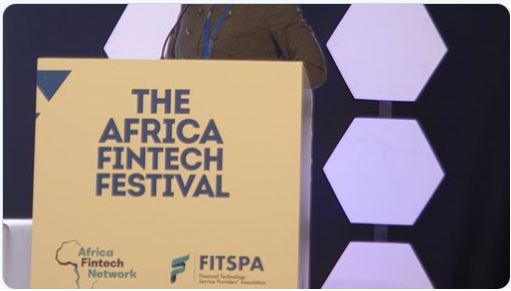
African Fintech Festival Is ON in Kampala, Uganda #AFFUG

0

I have made it into Uganda, and tomorrow will deliver the Keynote in this year’s Africa Fintech Festival. Here, the exhibitors are showcasing some of the finest new products in African fintech sector. Our Interswitch is big here, UBA is everywhere with the flag welcoming all. Cellulant, Citi Bank, Ecobank, Standard Bank, etc are all here. It is indeed a festival; I hope to deliver a good lyrics tomorrow.

The time is 8.45am for my keynote tomorrow. And I will be speaking on a new species of companies, called fintech.  The title is “Fintech – Africa’s New Growth Operating System”. If you are in Kampala, Uganda, come over (Serena Hotel), and let us discuss the mechanics of building a sectoral operating system that would power Africa’s commerce.

Ndubuisi Ekekwe To Keynote the Africa Fintech Festival, Nov 2019 in Kampala, Uganda

Understanding The Physics Of Selling

0

“Most times, the best selling books are not the best written books.”

The moment you understand that statement, the ball game changes for you. You’d have more advantage in whatever you do.

What makes a book a best selling book is sometimes because it was sold best or it was selling best irrespective of the content it has.

While I’d strictly recommend that it’s good for a best selling book to be the best written book, I’d also be very plain that having a book with the best content doesn’t automatically mean it would be a best seller.

Now, let’s take this and relate with humans and my observation over the past few months. I have noticed that there’s a new religion flying around and I’m glad I play a huge role in the spread of the religion.

The religion is that “Africa is about to experience a new shift in few years to come, 2023 to be precise.” There will be a good change in the economy of Africa and entrepreneurship will enter a new phase.

This is not just entrepreneurship but there will be exciting opportunities for Africans but only those who embrace this religion will thrive. I have spent about a year preaching this religion.

The religion is all about changing the narrative of education in Africa to a simple definition;

“Education means having access to information that makes you relevant for the world of work in a society at a given time”

Whatever information you receive that makes you relevant in a society to be part of the labour force is a form of education either formal or informal.

Now, before I digress too much, I think I should leave those new religion discussion for another day and how it would change the narrative of Africa. Let me focus on the real issue which is about skills.

The impact of this new religion is that a lot of people are now learning different skills in several fields, several sectors and for several reasons. This is quite interesting to know that Africans are waking up!

We are in the skill economy!!

Let’s not be too fast right here. Do not run before the gun is shot is a warning I’m giving to you reading this. I have a lot of students on this space and months back, about a year plus to be precise, I have also recommended that you learn at least a skill.

A skill doesn’t necessarily mean that you should learn software development, it could be writing, speaking, even singing. Matter of fact, it could be some basic tools in your profession.

I have several skills that I have learnt over the past one year ranging from marketing to business strategy to storytelling, to business writing, to consumer psychology, to product development and a host of others.

I learnt all my skills on my mobile device and I never attended a physical event to learn anyone and I am an expert in them.

Now that everyone is rushing to learn a skill, so many persons have turned themselves to skills coach to make money from this gold rush.

Once you know a little stuff, the next thing is to hold master-classes and monetize it. I don’t have an issue with that anyway even though I don’t do that, I only have an issue with the new narrative flying around which is;

“Once you learn a skill, you’d get a high paying job”

This is the biggest lie of this present age. To every religion comes a fake one. I have seen a couple of people invest hundreds of thousands to learn a skill because they have been told that this is one of the most relevant skills in this age.

Starting from digital marketing to software development to copywriting to a host of others. While it’s true that these skills should give you good jobs, the reality remains that the opportunity for these jobs is still limited and only a very few out of the many will benefit from this.

In case you’re out there and you’ve learnt so many skills yet don’t have a job yet you feel you’d get a job sooner or later, I’m here to tell you that you may not.

You may still remain broke for the rest of your life because jobs firstly are scarce then seeing we’re in Africa, the opportunities for these jobs are limited.

If you’re earning less than one hundred thousand naira from these skills yet it has been two years of practicing full time, then you’re missing a piece of information that will change the whole game for you.

Perhaps, you have learnt the skill and you’re having an issue monetizing it, it is simply because having a skill is not what brings the money, the selling of the skill is what does.

Having a skill is important but selling the skill is just as important. Now, this is where the issue lies because most of these coaches do not really know the application of such skills so they do not know how to teach you to sell it.

I made a post earlier this year when I emphasized on why you should learn a skill to solve a problem. When I mean learn a skill to solve a problem, I don’t mean learning a skill to solve a community problem, neither do I mean learning a skill to go look for a problem to solve.

What I mean is that the approach you follow in learning a skill should be in such a way that you hope or plan to solve a problem with the skill. This helps you understand the fundamentals of such skill, it helps you know what exactly such skill does and gives you a background understanding of what to do with the skill.

To learn more on how to learn a skill to solve a problem, follow here.

Now, that’s by the way. I want to teach you in simple words how to sell your skills. I want to remind you again that; A best selling book doesn’t necessarily have to be the best written book.

I feel you should understand this already. There are few facts I will be sharing with you and you may seem sad after reading it but it’s for the better in order to give you the desired result.

The honest truth is that once you have a skill, it is left for you to create a channel from where such skill is to where it will bring you money. Most people do not know this so they keep fighting or hoping.

The worst thing you can ever do as an African is to hope without taking action. This however is the posture of many youths who have good skills. Hope is not enough.

Yet, I also understand that many people are also trying hard to get their skill out there but they’re not are not also getting results. You are very consistent but consistency is not enough.

Consistency without fully understanding what you’re doing might end up futile for you which is why I decided to write this post.

Firstly, you must know that your friends are not your customers. I wish I can repeat it again but I just hope this sinks into you. When people have skills, the first place they’re quick to show it is on Whatsapp.

If your Whatsapp list consists of your friends alone, then you just wasted your time pushing whatever information you have on the space.

I’d only recommend that you use your Whatsapp for showoff to show friends how you’re making progress with such skill or how very good you are, else you’re just wasting your time.

The only way Whatsapp can benefit you is if you understand Whatsapp marketing or you have strangers on your list. Strangers are your customers and not friends in most cases except your friends fall into the category of those who need your service.

Friends can only be your fans and support but they hardly fit in for customers. So take away the mentality that; “I have posted my content on Whatsapp, at least I’m sharing what I do, I’m loud about it”

You’re not loud about it in the presence of your friends, you’re only trying to make ends meet.

Next, you must be ready to dish out contents. Now, there’s a posture i see people take when dishing out contents. Well, let me first say when I mean dish out contents, I’m not talking about writing them out. No, that’s far from it.

I mean pushing out whatever you do to the best platform that suits what you do. If you’re the shy type, I’d strictly recommend that you get over your shyness as soon as possible. You cannot sell yourself if you keep hiding.

I must quickly add that whatever you do that is legal and has integrity, you shouldn’t be shy about it.

Well, this is a bit of digression but I really need to hammer on this because so many people care about what others say about them. They are scared of criticism, they are scared of mockery and all.

If I was scared, I wouldn’t be writing this remember but I don’t care. Just a few months ago, I had a little business knowledge, wrote for cheaper rates and now I don’t write in Naira anymore. I charge higher.

I wouldn’t get here if I kept my writing to myself. Pushing them out without the fear of criticism got me some spotlight and I’m enjoying them.

Now back to the posture people often take when dishing out contents. People take the posture of; “I’m trying to get better, please understand” or “I just love what I do, that’s all that matters”.

I really wish you all reading this could organize a small event where I could teach on skills physically. Typing is wearing me out because I want to throw my hands in the hair to emphasize a point but you cannot see me.

Stop pushing out your contents without a “chat me up to get my service” posture. The goal of pushing your content is to get people to patronize your service right?

Then I want you to close your eyes and imagine once again. Ask yourself this; “By the time my readers, viewers, followers follow my content up to this point, what should they be thinking? What would they be thinking about me?

Would they be thinking about following me or chatting me up to thank me?

Would they see me as someone who is just enjoying their passion and say “great job” in their mind?

You need to be able to program how to structure your content.

This requires a lot of mental effort but if you understand the problem your skill solves, it makes it a little easier for you.

Interswitch Goes Double Play Strategy, Acquires a Healthtech Company eClat

0
Interswitch

Interswitch acquires eClat, a health technology company that aims to improve healthcare delivery in Africa. Press release below. This is a quasi double play strategy as the financial technology company looks for volume transactions in a diversification playbook.

INTERSWITCH EXPANDS PRESENCE IN HEALTH-TECH SPACE THROUGH ACQUISITION OF E’CLAT

Interswitch Limited, a leading technology-driven company focused on the digitization of payments in Nigeria and other African countries is pleased to announce the acquisition of eClat Healthcare Limited, a Nigeria-based health technology company that aims to improve healthcare delivery in Africa. The deal was completed on September 30, 2019, and it involves Interswitch acquiring a 60% stake in eClat through the purchase of shares from current shareholders and subscription to new shares issued by the company.

Founded in 2012, eClat Healthcare Limited specializes in assisting healthcare service providers in planning, designing and operating their unique practices through the deployment of its bespoke healthcare technology platform, designed specifically for the healthcare environment in Africa. eClat’s healthcare technology platform, consists of a core e-Clinic software (including electronic billing, immunization, ante-natal and care pathway functions), as well as a variety of additional specialist modules. Prior to the acquisition, eClat’s platform had become a leading Electronic Health Record (EHR) platform used in over 250 public and private healthcare facilities in Nigeria.

Nigeria’s healthcare system currently lacks adequate funding and a national framework, leading to operational inefficiencies. Interswitch’s strategic investment in healthcare technology aims to address these challenges by modernising the healthcare sector in Nigeria and eventually in Africa through its innovative products and services. The combined product offerings of Interswitch and eClat are expected to, amongst other things, enable operators in the healthcare sector develop new capabilities, improve the efficiency of their core operations and facilitate seamless payments.

Due to the growing adoption of Interswitch’s healthcare product offerings by the operators, Interswitch’s healthcare technology platform aims to be one of the top industry platforms in Nigeria, which can be utilised as a major data source by healthcare policy makers for planning and efficiency improvements in the sector. As a result of this acquisition, the combined healthcare technology solutions are expected to position the Interswitch group as a health-tech solution and payments provider of choice to the healthcare industry going forward.

Commenting on the transaction, Mitchell Elegbe, Founder and Group Managing Director/Chief Executive Officer of Interswitch, said:

“We are a technology company that is innovating to deliver value across sectors that are critical to Africa’s social and economic development, our acquisition of eClat demonstrates strong progress along this strategy and alignment with our corporate vision.

Healthcare is rapidly evolving towards new, integrated and scalable models of care delivery that put the consumer at the centre. At the core of Interswitch’s expansion into healthcare is our ambition to provide customers with greater access to healthcare across different interaction points beyond hospitals, such as at pharmacies and primary health care facilities, providing much needed services to patients across Nigeria and, in the future, in Africa. It also represents an opportunity to introduce a number of Interswitch’s products, such as our Verve Health cards, as well as our payment collection & disbursement solutions (Quickteller for business), that will drive much needed efficiency in payments for health services across the value chain”.

Also remarking on the acquisition, Dr. Wallace Ogufere co-founder/CEO of eClat Healthcare Limited stated The growing adoption of value-based care, combined with the increasing level of usage of patient portals across the industry, has made it critical to take a new approach to patient engagement solution design in Nigeria. We expect to tightly integrate the eClat capabilities into the Interswitch platform, adding functionality that would enable providers to reach their entire patient populations by leveraging existing patient contact information

This new acquisition by Interswitch represents the latest of several strategic investments executed by the company to enhance Interswitch’s product and service offering and expand its reach into new markets as the payments technology sector in Africa expands rapidly. In 2016, Interswitch acquired the mobile financial services player, VANSO. Interswitch had earlier closed the acquisition of Paynet Group in February 2015 in a deal that resulted in the creation of a combined network of over 100 financial institutions, deepening Interswitch’s footprint in East Africa. Interswitch intends to continue with its expansion strategy whilst refining its offering, creating innovative payments solutions that are tailored to the demands of the African market. The acquisition of eClat Healthcare Limited is expected to further enhance Interswitch’s capability to provide comprehensive solutions that involve making payments a seamless part of everyday life across critical social sectors in Africa.

The Best Way To Introduce Technology To Your Business

2
Source: Dreamstime.com

I wrote a post some time ago titled How To Save Your Company.

This would be another long post as usual, and if you really want to become an entrepreneur, and you’re not accustomed to reading posts that have over a thousand word contents, then you’re not ready. You’re just fraternising with the idea of hustling, you are hustling because it just shows you’re not reading books.

I have established the fact that solving a problem is different from building a business. You can solve a problem and make no dime from it if you do not know how to build a business around it. Also, you can build a business without really solving a problem.

This may be the first time someone is telling you this because a lot of people who you pay huge money to learn from might just say – if you want to start a business, look for a problem to solve and monetize it.

If we look at it in the skeletal view, it’s very correct, however so many wantpreneurs have misunderstood this to be solving huge problems, solving dire problems. Well, it is not so. A good example is the reality show called “Big Brother Nigeria”. That’s a business on its own and there’s no problem it’s solving.

You may want to debate that it’s solving the problem of entertainment. But is it a dire need? Do people really need Big Brother?. Were people really craving a reality show like Big Brother Nigeria before it started? The simple answer is No!

No one could have imagined such a show will bring millions of naira in turn over for the organizers. They just built the “business” around some human realities. I had to state this point to make you as an entrepreneur understand that you really need to understand business aside from solving a problem, else your business wouldn’t scale.

The first lesson I want you to note down today is: NEVER BUILD YOUR BUSINESS ON ASSUMPTIONS OR SPECULATIONS

What I mean is that it can cost you your head to set up a busy assuming there’s a need, assuming there are 1 million customers, assuming the clients will come. In the last piece, I simply explained how the market size for the Edtech industry is 11 million customers but in real sense they are not up to 1 million.

What this should point out is that you need to do your assignment as an entrepreneur on research. Your research has to be well grounded, it has to be real, it has to be very correct. I will stop here shortly and continue before the peace ends.

The second lesson to take note of is: NEVER JOKE WITH THE POWER OF NUMBERS

It’s simply a continuation of the previous point. I feel a lot of entrepreneurs do not take this seriously or do not even understand this. Numbers help you plan and succeed. I quite agree that it’s not easy understanding numbers when it comes to the business world.

There are so many entrepreneurs yelling that they’d become billionaires just by running a particular business whereas in the real sense, such a business cannot make them more richer than a hundreds of thousands for decades and eternity. This is what I simply termed as optimism bias.

Let me give a quick illustration of this so you’d understand my point before I continue on the real point;

Let’s assume I want to join the Super Eagles team of Nigeria as a young guy, I will be full of optimism that I will one day join the team if I am consistent with training. While that may sound true, it is so very untrue. I might be consistent for eternity and not get a chance to even play for any club in the state. The reason is simple;

Super eagles team just needs 11 players on the team at a time andets say there are 2 million young Nigerians who also want to play for Super eagles; this means that my chances are low.

Optimism will not help you consider the numbers or look at the reality. There should be an optimism check or boundary. Once you realize that the probability of playing for the super eagles team is low, it gives you the awareness that your chances are slim and this helps you pivot and make the right strategies which could be

Change location

Train 15 hours instead of 5

Try to chat some players up

Block their cars

Play for the school team

etc

I just gave this as examples. The issue is a lot of people are taking this path already but they don’t know. They just feel it’s the next step while some are just confused. This analogy to just gave will help you to come up with the right strategies after understanding the boundary of your optimism.

You cannot be optimistic enough to claim you’d build a company that will beat Facebook. I can. The reason is because I know the boundary of my optimism, let’s say the probability is 1: 2 billion chances. That’s the boundary of my optimism and once I am fully aware of this, I need to go learn and understand what I need to measure up to make the probability 1:1.

Why did I go through the stress to analyze this for you? I did that because I want to talk about technology and your business. The first problem around this will be in the form of lessons as well.

  1. You don’t introduce your business to technology, rather introduce technology to your business.

People just start from the wrong side of things. A business should be built from the foundations first and not the roof. When people want to build businesses, they are in a haste to implement all the technological opportunities available, the technological tools available. It’s very wrong.

The reason is not far fetched; you have a business, you already know your numbers and the fact that your business cannot fetch you more than some millions in Nigeria and you want to become a billionaire, this is where you begin to apply technology.

I’d give the proper analysis even though it’s pretty hard trying to explain it. Firstly, I will begin by saying that technology plays so many roles in businesses of which one is to help reduce cost and increase reach which can be simply explained as productivity.

I mentioned earlier that due to the African culture at the moment, some businesses have higher potential of scaling especially in the need economy. However, if your business is in the techecosyem or service economy, then you need more than just building a product. Let me give this simple example;

I want to sell a pair of shoe for 1 thousand naira, from understanding numbers, I know that only 1000 customers are available in Nigeria, this means I’d have a revenue of 1 million naira. Yet, I want to make billions from this business or get investments to expand. I need to make technology play a key role know this.

Now, before technology plays a key role, I need to understand exactly what the business wants to achieve and map them out before I use technology to achieve them. Let’s say the goal is to make 1 billion naira instead; I can ask questions like;

  1. Can a customer buy more than one shoe? So, how can technology solve this?

Simple answer, you do branding using social media and use customer retention strategy. I won’t explain further than that. 

  1. Can I get more than 1000 customers in Nigeria?

Yes, by using customer attraction strategy and building a community. But creative Ads would have done it’s work as well.

  1. Can i expand beyond Nigeria?

I’d leave you to answer that. Once you answer it, the next question is how can you apply technology to achieve this.

And many more steps. This is how technology should work with your business.

What an Employee Must Prove in a Case of Wrongful Dismissal from Employment

0

Working or rendering services for paid wages is a concept as old as human race. From working in cocoa farms and sugarcane plantations to fixing cars or building computers or developing Apps and software or managing public image of celebrities or promotion of brands and products of a company for remuneration is called Employment which is regarded as the status of having paid work in a company or by private individuals for a particular skill set or abilities within a given period of time.

In this article, we explore the legal perspectives of what an employee must prove in cases of wrongful dismissal from employment with the sole aim enlightening the labour force with relevant laws and related cases.

What is employment?

Employment is regarded as the status of having paid work in a company, the act of which involves two parties who are: 

  • The employer and 
  • The employee

Who is an employer?

By virtue of section 91 of Labour Act, CAP.L1, Laws of the Federation of Nigeria, 2010; an employer means any person who has entered into a contract of employment to employ any other person as a worker either for himself or for the service of any other person, and includes the agent, manager or factor of that first-mentioned person and the personal representatives of a deceased employer;

Who is an employee?

An employee is referred to as a “worker”, pursuant to section 91 of Labour Act, CAP.L1, Laws of the Federation of Nigeria, 2010 which means any person who has entered into or works under a contract with an employer, whether the contract is for manual labour or clerical work or is expressed or implied or oral or written, and whether it is a contract of service or a contract personally to execute any work or labour, but does not include:-

  • Any person employed otherwise than for the purposes of the employer’s business; or
  • Persons exercising administrative, executive, technical or professional functions as public officers or otherwise; or
  • Members of the employer’s family; or
  • Representatives, agents and commercial travelers in so far as their work is carried on outside the permanent workplace of the employer’s establishment; or
  • Any person to whom articles or materials are given out to be made up, cleaned, washed, altered, ornamented, finished, repaired or adapted for sale in his own home or on other premises not under the control or management of the person who gave out the articles of the material; or
  • Any person employed in a vessel or aircraft to which the laws regulating merchant shipping or civil aviation apply;

The employee is the person who is hired for a salary or fee to perform work or task for the employer under which circumstances; the employee usually negotiate terms and conditions of employment with the employer either orally or by written agreement generally referred in law as “Contract of Employment”. See the case of Union Bank of Nigeria Ltd v. Edit (1993) 4 NWLR (Pt. 287) p.288 where the court held that:

“A contract of employment means any agreement, whether oral or written, express or implied, whereby one person agrees to employ another as a worker and that other person agrees to serve the employer as a worker whereby terms and conditions are stipulated”.

In Nigeria, there are Labour Laws and Regulations which cover common issues regarding protection of wages, terms and conditions of contract of employment, employee rights and privileges in the workplace as well as employee representation and industrial relations to guard against discrimination and unfair treatment within the workplace, and ultimately setting up sanctions and resolution mechanisms where conflict arises between the employer and the employee.

Meaning of Contract of Employment

Generally, a contract of employment is an agreement between an employer and employee whereby the terms and conditions of employment are stipulated. See the case of Union Bank of Nigeria Ltd v. Edit (1993) 4 NWLR (Pt.287) p.288.

Thus, a contract of employment means any agreement, whether oral or written, express or implied, whereby one person agrees to employ another worker and that other person agrees to serve the employer as a worker and this is by the definition of the Labour Act (CAP.198) Laws of the Federation, 1990 which applies to workers strictly defined to the exclusion of the management staff. See the cases of Iyere v. Bendel Feed & Floor Mill Ltd. (2009) All FWLR (Pt. 453) 1217, Latimer v. AEC Ltd (1953) AC 643, Paris v. Stepney Borough Council (1951) AC 367 at 384 per Lord Oakley.

A contract of employment can be divided into two broad categories as follows:

  • Master and servant employment,
  • Employment where the office is held at pleasure,
  • Employment protected by statute

It will be very important to analyze these categories of employment one after the other as follows:

  • Master and servant employment:

The court held in the case of Olarewaju v. Afribank (2001) 13 NWLR (Pt.731) 691, that a master and servant employment is one in which a contract of service is between an employer and an employee, where the service terms do not contain a statutory flavour. In this form of employment the master is under no obligation to give reasons for terminating the appointment of his servant.

In the case of Daodu v. U.B.A Plc. (2004) 9 NWLR (Pt. 878) 276 at 279, per Adekeye, J.C.A held that in master and servant contract of employment, the master can terminate the contract with his servant at any time and for any reason or for no reason where he held:

“An officer’s appointment can lawfully be terminated without first telling him what is alleged against him”.

Under master and servant employment, either of the parties can abrogate the contract on a week’s or month’s notice, or upon payment of wages in lieu of such notice. 

  • Employment where the office is held at pleasure of the employer:

In determining if an employment is held at the pleasure of the employer, recourse should be had to the contents of the letter of appointment of the employee. Where the office is held at pleasure of the employer, then there is a written contract of employment between the employer and the employee.

Employment where the office is at the pleasure of the employer, the employment covers the common law and ordinary master and servant relationship governed by written law and not subject to any statutory restrictions or limitations in which case the duty of the court is to apply the terms, conditions and provisions of the contract as they appear without resort to any provisions of statute regulating such employment. See the case of N.I.I.A v. Ayanfalu (2007) 2 NWLR (Pt. 1018) p.246.

In essence, employment where the office is at the pleasure of the employer, the relationship is that of master and servant under the common law which appointment is terminable with or without reason at the will or pleasure of the master. See the case of N.E.PA v. Ango (2001) 15 NWLR (Pt.737) 627.

Again under common law ordinary mode of employment, the contract is basically oral, but where the contract is reduced into writing, the courts are enjoined to determine the rights, duties and obligations of the parties by references to the written agreement only.

  • Employment protected by statute:

An employment with statutory flavour is one where the procedure for employment and discipline are governed by statute. A contract of employment with statutory flavour occurs when the contract of service is governed by statute or where the conditions of services are contained in regulations derived from statutory provisions. Such statutory provisions invest the employee with a legal status higher than an ordinary master and servant relationship. See the case of Shitta-Bey v. Federal Public Service Commission (1981) 1 SC 40.

An employer of an employee whose appointment has statutory flavour has no right to terminate his appointment at will because he does not hold the appointment at the pleasure of such an employer and to determine the appointment, the employer has a duty to comply with the conditions precedent laid down in the conditions of appointment failing which such termination will be held ineffectual or invalid.

Where an employment is protected by statute, such an employee does not hold his office at the mercy of the employer. The employer has no right to terminate his appointment without first complying with conditions set down for his removal under the contract of service. Employment protected by statute is contract of a special character and this differentiates the contract of employment under the public service from one under common law where the appointment is a mere master and servant relationship where termination of employment is at the mercy of the employer. See the cases of Iderima v. R.S.C.S.C (2005) 7 SC (Pt. 111) 135 (2005) 16 NWLR (Pt. 951) 378 and Olaniyan v. University of Lagos (1985) 2 NWLR (Pt. 9) 599.

Ways of Terminating Employment

Having considered the various categories of employment under common law and statutory protection, it is considered necessary to discuss methods of terminating employment as follows:

  1. Employment with statutory protection must be terminated in the manner prescribed by the statute and any other manner of termination of employment with statutory flavour which is inconsistent with the relevant statute is null and void and of no legal effect. See the cases of Iderima v. R.S.C.S.C (2005) 16 NWLR (Pt. 951) 385 and NEPA v. Ango (2001) 15 NWLR (Pt. 737) 627 at 631.
  2. Under the common law, an employer is entitled to bring the appointment of his employee to an end for any reason or for no reason at all so long as the employer acts within the terms of the employment, his motive for doing so is irrelevant. See the case of Commissioner for Works, Benue State v. Devcon Ltd (1988) 3 NWLR (Pt. 83) 407 at 423. An employer who hires under the common law has the corresponding right to fire him at anytime, even without assigning any reason for so doing. He must however fire him within the four walls of the contract between them. Where the employer fires an employee in compliance with the terms and conditions of their contract of employment, there is nothing the court can do as such termination is valid in the eyes of the law.  It is only where the employer in terminating or dispensing with the services of an employee, does so without due regard to the terms and conditions of the contract of employment between the parties that problems arise as such a termination is usually not tolerated by the courts and are, without hesitation, usually declared wrongful and appropriate measure of damages awarded to employee. See the cases of Isheno v. Julius Berger (Nig.) Plc (2008) All FWLR (Pt. 415) 1632 at pg. 1654, paras. A-D.

Whether a master is entitled to dismiss his servant from employment for good or for bad reason or for no reason at all?

At common law, the well established principle is that ordinarily, a master is entitled to dismiss his servant from his employment for good or for bad reason or for no reason at all and consistent with this principle, is also the law that the court will not impose an employee on the employer as hardly does the court order for specific performance of contract of employment.

In order words, it is an aberration that is rarely made, but often, the only remedy the servant has is to claim for the wrongful act of his master, because the master has the right to hire and fire for good or for bad reason and the court cannot compel the employer to continue to keep an employee it does not want.

On the other hand no employer could prevent an employee from resigning from his employment to seek elsewhere for “greener pastures”, but where the termination is wrongful; the servants’ remedy lies in a claim for damages. See the cases of Garuba v. Kwara Investment Co. Ltd (2005) NWLR (Pt. 917) 160, and Osisanya v. Afribank (Nig.) Plc (2007) 6 NWLR (Pt. 1031) 565. 

Consequences of Termination of Employment

The law is well settled that where a contract of employment is terminable on notice and the employee is not given the requisite notice, what the employee could have earned during the period of the notice is the damages that the employee can get. See the case of I.D.C v. Ajijola (1976) 2 S.C 115 at 119-120 per Oguntade J.S.C at p.17, paras B-C.

However, if the master terminates the contract with his servant in a manner not warranted by the contract, he must pay damages for breach of contract. The remedy is in damages as the court cannot compel an unwilling employer to re-instate a servant it has dismissed. The exception to the general rule is in cases where the employment is especially protected by statute and in such cases, the employee who is unlawfully dismissed may be re-instated to his position. See the case of Shitta-Bey v. Federal Public Service Commission (1981) 1 SC 40.

Exceptions that an employer has to follow when terminating a contract of employment:

Although an employer is not bound to follow a proper procedure in summarily dismissing an employee, there is a long line of judicial authorities identifying some exceptions where to properly and effectively terminate a contract of employment, the employer has to follow the proper procedure. The following are the exceptions:

  1. Where the contract itself has made provisions for a procedure to be followed, that procedure has to be followed to effectively determine the contract;
  2.  Where a statute regulated the appointment and dismissal of a servant, the requirements of the statute must be complied with and in that instance, the master and servant relationship has what is known as a “statutory flavour”;
  3. The other third category affects holders of offices involving public function and here the rules of natural justice must be complied with in the dismissal.

See the cases of Imoloame v. WAEC (1992) 9 NWLR (Pt. 265) 303 and Audu v. Petroleum Equalization Fund (Management) Board & Anor. (2010)LPELER-CA/A/274/2007.

What an employee needs to prove when complaining of wrongful termination of employment:

Generally, an employee who seeks a declaration that the termination of his appointment was wrongful must prove the following material facts:

  1. That he is an employee of the employer;
  2. The terms and conditions of his employment; and
  3. The way and manner and by whom he can be removed. 

In Nigeria, there are three types of contracts of employment with different consequences as follows:

  1. Under the common law, where in the absence of a written contract, each party could abrogate the contract on a week’s notice or month’s notice or on payment of wages for a week or month or whatever the agreed period for payment of wages.
  2. Where there is a written contract of employment between the employer and employee, in such a case the court has a duty to determine the rights of the parties under the written contract; and
  3.  Where the employment is covered with statutory flavour as in the case of public servants, the conditions of service or agreement will guide termination. See the cases of Olaniyan v. Unilag (1985) 5 NWLR (Pt. 9) 599 and Shitta-Bey v. Federal Public Service Commission (1981) 12 NSCC 28, (1981) 1 SC 40.

It has also been firmly established that when an employee complains that his employment was wrongfully terminated, he has the onus of proving the following:

  1. To place before the court the terms of the contract of employment and;
  2. To prove in what manner the said terms were breached by the employer.

It is not the duty of the employer as a defendant in an action brought by the employee to prove any of these facts. See the cases of Okomu Oil Palm Co. v. Iserhienrhien (2001) 5 NSCQR 802. 

Measurement of damages to be awarded in cases of wrongful dismissal and termination of employment:

The law as it relates to the remedy available to an employee, whose employment is wrongfully or unlawfully determined by the employer in contravention of the terms or conditions of service between the parties is now very settled. It is that in cases of ordinary employment where the terms provides for a specific period of notice before termination or salary in lieu thereof, the only remedy awardable to an employee whose employment was wrongfully terminated is the award of salary for a period of notice and other legitimate entitlements due to the employee at the time the employment was brought to an end. In other words, such an employee is neither entitled to an award of general damages nor a decree of reinstatement and the rationale for this is that the employee cannot be imposed by the court on an unwilling employer. See the case of Ativite v. Kabel Metal Ltd (2008) 10 NWLR (Pt. 1095) 399 at 415.

Again, dwelling on the damages recoverable in cases of wrongful dismissal and termination of employment in the case of Shena Security Co. Ltd v. Afropak (Nig.) Ltd & Ors (2008) 4-5 SC (Pt. 11) 117, the Supreme Court said thus:

“The damages recoverable usually in cases of wrongful dismissal and termination have been pronounced upon by our courts in several decided cases, such damages are said to be the losses reasonably foreseeable by the parties at the time of the contract as inevitable arising if one breaks faith with the other. Certainly, they do not include or take account of speculative or sentimental values. The court in awarding damages will certainly not include compensation for injured feelings or the loss that may have been sustained from the fact that the employee having been dismissed makes it more difficult for him to obtain fresh appointment.” See the case of Ajolore v. Kwara State College of Technology & Anor (1980) FNLR 414.

Lastly, in the case of Osisanya v. Afribank (Nig.) Plc (2007) 6 NWLR (Pt. 1031) 565 and Ifeta v. SPDC of Nigeria Ltd. (2006) All FWLR (Pt. 314) 305; the Supreme Court dwelling on the measure of damages in an action for wrongful termination of employment held to the effect that in a claim for wrongful dismissal, the measure of damages, prima facie is the amount which the employee would have earned had the employment continued according to the contract of employment. That the measure of damages in situation where the employer on giving the prescribed notice has a right to terminate the contract before the end of the term apart from other entitlements should be limited to the amount the employee would have earned over the period of the notice bearing in mind that the employee has a duty to minimize the damages he sustains by the wrongful dismissal.

Conclusion

It is settled law that under common law, an employer can summarily dismiss an employee in all cases of gross misconduct or for no reason at all provided that the affected employee is given fair hearing and this is so whether the affected employee is in private employment or statutory employment. See in this regard the cases of Ziideeh v. Rivers State Civil Service Commission (2007) All FWLR 243 at 265 – 266 and Annam v. Benue State Judicial Service Commission (2006) All FWLR (Pt.296) 843. 

Before an employer can dispense with the services of his employee, all he needs to do is to afford the employee an opportunity of being heard before exercising his power of summary dismissal even when the allegation for which the employee is being dismissed involves accusation of crime. See the cases of Jirgbagh v. UBN Plc (2001) 2 NWLR (Pt. 396) 11 at 28-29; Yusuf v. Union Bank of Nigeria Ltd. (1996) 6 NWLR (Pt. 457) 632.

It is trite that the rules of fair hearing is not a technical doctrine but are of substance and the question is not whether injustice has been done because of lack of fair hearing, but whether a party entitled to be heard before a decision had in fact been given an opportunity of fair hearing and in this instance, several cases need be referred to for guidance such as Dangote v. Civil Service Commission of Plateau State (2001) 9 NWLR (Pt. 717) 132 SC.

Where there is an accusation of the commission of criminal offences, the burden of proof to be established by the accuser before a criminal a criminal tribunal established by law is that the commission of the offence has been proved beyond reasonable doubt and no matter the fairness of the findings of a tribunal of inquiry, an administrative body cannot usurp the constitutional functions of the courts by making a finding of guilt in such cases. See the cases of F.C.S.C v. Laoye (1989) 2 NWLR (Pt.106) 652, Garba v. University of Maiduguri (1986) 1 NWLR (Pt. 18) 550 and UNTHMB v. Nnoli (1994) 8 NWLR (Pt. 363) 376.

Thus, once an appellate court comes to the conclusion that a party was entitled to be heard before decision was reached but was not given the opportunity of a fair hearing, the decision of the tribunal is liable to be set aside.