DD
MM
YYYY

PAGES

DD
MM
YYYY

spot_img

PAGES

Home Blog Page 6593

Help Needed On Book Cover Designs

2

Tekedia will be publishing short books covering many areas. The books will have dedicated pages on our site. If you have a short book, published or unpublished, provided you control the rights, we will be happy to publish same.To help on this project, as usual, we will need crowd-sourced cover designs.

Dr A.J. Ajengbe has sent us six short books. Now, we need creative people to help on cover designs. The book titles and the author preferred name are provided below. 

To thank you, you will have a one year free access to Tekedia exclusive sections with all the deeper insights therein. And you will attend my next webinar free! Send your designs to my team (on click).

  • #1. 
  • Title of book: Mastering the Concept of Perception: Reasons you are Esteemed or Disdained
  • Author: Dr A. J. Ajengbe
  • #2. 
  • Title of book: Covenant Pathway to Parental Blessing
  • Author: Dr A. J. Ajengbe
  • #3.
  • Title of Book: The Secret of Exploits
  • Author: Dr A. J. Ajengbe
  • #4.
  • Title of Book: The Price of Perseverance
  • Author: Dr A. J. Ajengbe
  • #5.
  • Title of Book: Ingredients of Success
  • Author: Dr A. J. Ajengbe
  • #6. 
  • Title of Book: Optimizing Yourself
  • Author: Dr A. J. Ajengbe

Deadline to Send Nov 11, 2019

Amy Blaschka – A Change Might Be All You Need To Move Your Life Forward

0

”Transitions are tough.” Amy Blaschka

Change is constant and most times, painful. You had better fall in love with it because there is absolutely nothing you can do about it.

According to a Forbes Contributor and a Published Author, Amy Blaschka, she said: ”Most of us dislike change, particularly when it’s thrust upon us unexpectedly. But even when we know it’s coming, we dread at its arrival.”

I have never seen anyone growing in the comfort zone. Even animals do have to make a change when the time comes. Remember, when the going gets tough, only the tougher ones get  going. It is called a transition.

Amy Blaschka shared the lesson she learned from a good friend.

Recently, I recalled a conversation I had with a good friend of mine who, at the time, was preparing for her daughter to leave for college. My friend had been struggling for months with the idea of her only child going away to school until she made a simple but powerful mindset shift – ’It’s not a loss, it’s a change.’

”At that moment, it dawned on me that if my friend could come around from a place of sadness, anxiety, and worry to acceptance, then perhaps we could adopt her mindset for other transitions in life and career.” Amy Blaschka

Change does not necessarily have to be negative. Let’s take a look at the eagles who has the longest life span amongst the birds. An eagle has to replace its feathers when it gets to 40 years. If it wants to live for another 30 years, then the eagle must do the unthinkable.

That is, it must go to the top of a mountain for a rebirth. The eagle can only do this if it accepts that shedding its feathers is not a loss but a change that must occur to grow and live many more years.

But before it can shed off the feathers, it has to get rid of the old bent beak because the longer the eagle lives, the beak becomes bent and weak. At that point, the beak can not even pick up its prey to feed.

The breaking of the old beak for a new one is the hardest part of the change that must occur for the eagle. This is what makes it hard, the eagle has to fly to the top of a mountain and hit the old beak against a rock. If the eagle thinks about the pain, then it can decide to leave the old beak. Leaving the old beak means – the eagle will starve and eventually die.

But the eagle always chooses to lose the old beak and grow a new one. Meaning, it will continue to hit the beak against a rock until it falls off. Then the eagle waits on the mountain top for many days for the beak to grow.

When the beak grows, it uses it to pluck off all the old feathers. The old and heavy feathers that have always stopped it from soaring higher. Then the eagle becomes light and sharp. Goes hunting as always and lives for 30 years.

Here’s one lesson to learn from this – change is not meant to be easy, that is why it is called change. It is getting comfortable with the uncomfortable. It wasn’t convenient for the eagle to break the beak or pluck off its feathers, but the eagle must do it to live. The eagle endured 150 days of hardship to live for 30 years.

It doesn’t matter what situation you are going through, you can not help but accept that – it has happened. So, what do I do about it?

How you respond to the situation is what determines your growth.

”Reframing a situation as a change rather than a loss means that you accept that things will be different (and possibly even okay or better).

”The one thing we know is constant is change. And the only thing we can control is how we respond to it.

”So the next time you’re faced with a transition, remind yourself that “it’s not a loss, it’s a change.” Amy Blaschka

You need to shed off the burden that has always drawn you back. Let go of it!

It could be a change of career, business, home, partner, or even friends. Life is too short to live with regrets. Remember that the change may be just what’s needed to move your life forward. I wish you success in your endeavours.

Finding the Right Balance Between Work and Your Private Life

0

Maintaining a healthy work/life balance is simple right? After all, once you’ve left the office for the day you can pretty much close the book on your work-related activities. However, for many of us in today’s always-on world, finding the ideal balance between your professional and private life is more difficult than it may first appear. 

With the rise of smartphones, remote working and freelancing, the boundaries drawn between work time and free time are being stretched ever thinner. Now, we reply to emails on our commute, we work from home and take our smartphones to bed with us, we even take calls at the weekend or late at night from people working in different time zones. 

However, there should definitely be a line drawn between the two. After all, professional burnout is a very real possibility, leaving you unable to relax while you’re at home or complete your work to the best of your ability. Here then, we take a look at how to find the right balance so you can successfully juggle all of your responsibilities—both professional and personal. 

Turn Off Your Phone 

While technology helps us in so many ways, it can also be a bit of a double-edged sword. Sure, answering a few emails from time to time from home or on your commute can be useful, however, we tend to take it too far—even compulsively checking our inboxes when we know there’s no new emails. Turning off your phone is one of the most liberating things you can do. This is especially true for those of us still checking that little blue screen in bed—just leave it in the lounge and give yourself a break. 

Ask About Flexitime

Some companies are recognizing that the traditional 9 to 5 is no longer suitable for many people’s lifestyles. Flexitime is one way in which companies are becoming more responsive to our changing needs, and it’s worth asking about your options. This can be particularly useful for those with families, after all, it’s very difficult to keep your work/life balance in check when you also have to fit your schedule around school and other daytime appointments. Flexitime can also be useful if you often work with clients or customers in different time zones, giving you the opportunity to better fit your schedule around your appointments. 

Learn to Say No

This one is particularly important, and anyone who regularly has an overloaded schedule will understand why. Learning to say no, however much you want to impress your bosses, is the only way you’ll ever reclaim your work/life balance. Constantly taking on more work than you can handle will ensure that your stress levels remain high and your standards will slip. This means that when your boss returns work to you because it is not up to the required levels, you’ll spend even more time trying to bring it up to scratch. Learning to say no is key to maintaining a balance between work and your private life.

Use All of Your Vacation (and breaks)

Everyone loves vacation, but it’s amazing how many people waste their allocated days each year. In order to ensure a good work/life balance, it is crucial to make sure you take advantage of your annual leave. You should try to spread them out across the year to ensure you always have at least a few days to spare when you feel particularly stressed. 

The same is true for your break time, and eating lunch at your desk is likely to leave you less productive than if you had taken an hour or two away from the screen. 

Of course, if you’re workload is simply too packed to implement any of these changes, then it’s time to think about hiring new staff to share the burden. However, wherever possible, try these steps first and see if you can regain that elusive work/life balance. 

The Counter-Productivity of Nearsighted Economic Policies: Putting Nigeria’s Closed Borders in Perspective

7

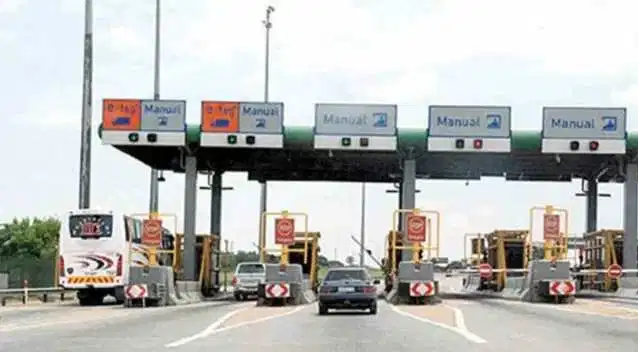
Many government policies (many would quite justifiably argue), in recent times, in Nigeria, have borne underlying demonstrations of insensitivity to the plights of Nigerians in various sectors such as finance, taxation, and international trade. One could cite the recent Central Bank of Nigeria (CBN) cashless policy, the proposed increase in VAT, the imposition of tax funding by corporate citizens for the police force, to name a few. Perhaps, the government’s recent decision, as announced by the Nigerian customs chief, Hameed Ali, that all land borders have been closed until further notice, could assume a front roll seat in the public poll of policies that have been gravely insensitive to the economic plight of Nigerians, especially as the reasons given by the government are the blanket economic and security reasons.

Reality check for me was the unsolicited alterations in my Sunday vitality routine. Traditionally, my Sundays enjoyed the pleasure of eating well prepared rice, at least until now. In what I would better describe as a dramatic turn of events, my desire for a rice meal was supplanted by the reality of eating Eba. Enquiries revealed that the price of rice had become astronomically steep and indeed, it naturally followed that the closure of the borders would have mangled the ordinary courses of demand and supply. 

In the Judging Eye, R, Scott Baker stated that “a beggar’s mistake harms no one but him.” A king’s mistake however, harms everyone but the king. Too often the true measure of power lies in the number who are likely to suffer from a ruler’s stupidity. 

Without much ado, this disquisition is focused on condemning the recent government policy of closing its borders – the same government whose fiscal policies have remained inconsiderate of economic realities and welfare of its citizens or whose tax policies violate the canons of taxation. Clearly this government has become the painted devil frightening its citizens.

The closure of the land borders may be the biggest hit yet on the citizens regardless of the genuine reasons given. Understandably, the government is deeply concerned with the rate of importation which if not looked into is likely to cripple the domestic economy, the influx of illegal and prohibited goods and the influx of illegal immigrants through the land borders which have increased security threats. One thing is established -our borders are porous and badly managed. To that extent, we can applaud the government for its reactive measures but before we do that, take note of the African proverb that reminds the Baboon who celebrates the death of the farmer. For that farmer was he who planted the bananas the baboon ate. 

In truth, this policy in another clime or given different circumstances, may not have been condemned, at least not in its entirety but when placed with the present climes and  given factors such as the strength of our economy, the possible negative implication on the citizens, then this policy becomes bad for failing to match up these realities before implementing the same policies.

In simpler terms, Nigeria’s domestic strength is too weak to cater and meet up to the nation’s need which means that Nigeria must in one way or the other rely on some external trade to meet up with the nation’s need, and create the needed balance in the economy. If it intends closing its borders, then it must bear in mind this reality before doing so, or stand a risk of the negative effects outweighing the positive intention of such act. 

Nigeria’s market structure is more of an oligopoly as compared to a perfect competition market and this is notwithstanding how, in principle, we are termed as a perfect competition market as we have very limited handful of producers who dominate the market hence, never vanishing traces of monopoly in the Nigerian economy. This accounts for why the government regulatory agencies should pay more attention to matters affecting our economy. 

Be that as it may, the closing of land borders will further shrink market participation while encouraging domestic producers to become monopolistic since demand will consequently become higher than supply. Whether this was the undertone intention of the government cannot be known, at least not to the public but the fact is that the citizens are hung out to dry and that is worthy of public outcry.

In all of history’s verifiable annals, statistics have never been in favour of shutting borders as veritable weapon for economic growth or as a reactive measure except in extreme circumstances. The far-reaching effect are onerous, obnoxious and too extreme for those locked within the borders as incidence such as; increase in death tolls, starvation and malnutrition  are close consequences of such act. The Bengal Famine in India in 1943, Cambodia (1976), Chinese Famine in 1959-1961 are historical facts to ponder before taking such decisions. 

Characteristically, in 1984, General Mohammed Buhari did shut Nigeria’s borders ostensibly to stop corrupt officials from escaping justice, and then used military strategy in fighting against basic principle of demand and supply by forcing traders to reduce their price. The effect of this was that a lot of traders closed down their shops, an act which threw Nigeria into a paranoia. Starvation, poor human conditions, lack of health facilities became a rising issue that attracted the United States’ sympathy and beckoned on the then head of state to open the borders. Interestingly, the borders remained closed until 1985 when General Ibrahim Babaginda overthrew the government.

If something isn’t done now and fast, it is only a matter of time for things to take a downward slope and then we will have to watch rice disappear from our table followed by every other amenity or vitality and time ticks slowly when you look at the clock and 2023 is over 1,000 days away from today. 

Furthermore, the diametric contradictions of the border closure against Nigeria’s foreign policy only reeks of hypocrisy on the Nigerian government given its ratification of ECOWAS Agreement on the free movement of member states within agreeing countries, and Nigeria’s signature to the African Continental Free Trade Agreement. It won’t be a stretch to anticipate retaliation from neighboring countries and the African Union, as Nigeria is expected to be a key participant to the AfCFTA. The policy only weakens Nigeria’s position as front liners in these organizations particularly with the ECOWAS except there is a “Brexit” move yet to be revealed. If there is anything this government has taught us, it is to expect surprises. Like Zee world, it gets extraordinary every day.

Notwithstanding the above, we may be at the precipice but then we are not beyond saving, and so the following shall be offered as recommendations to wit:

RECOMMENDATIONS
1. The Federal Competition and Consumer Protection Commission must live out its full use. One of which is to advise the Federal Government on national policies upon investigation of such policies, on matters touching the economy, and capable of destroying competition, and so matters as delicate as this with possibilities of altering economies of scale, competition and market prices thereby leaving consumers at the mercy of producers. These factors should be investigated by the commission and necessary intervention is taken to ensure that competition is not crippled and consumers are protected.

2. The government must become deliberate on increasing local production. Nigeria’s economy does not encourage start-ups; SMEs are not giving enough incentives to encourage growth nor are there good enough policies to increase local production of agricultural produce. If Government intends to protect domestic market, then it must be concerned of its growth not just in principle but in practice. By this I mean, being involved in the agricultural sector just as it is in the oil sector and most recently, the technology sector, loan facilities should not be dubious but accessible to local farmers.

3. The reasons given by the Federal government on the closure of all land borders are too flimsy for such reactive measures. It speaks more of our failures than our successes. If the Nigerian Customs can be more diligent in its duties then our borders will become more law compliant. The level of connivance between importers and the Nigerian customs is a contributory factor to the illegal importation of goods, and so if the government believes its news of border porosity, then the Nigerian Customs must as a matter of urgency be revamped and restructured to actively tackle these issues.

4. The purchasing power of domestic consumer is on a decline as income is either stagnant or decreasing while the cost of products is taking an upward slope. If this distress is not attended to Nigeria’s local production, economic strength may never go up and so Nigeria must restructure its cash injection policies to ensure even distribution across all tiers.

5. Towing the advice, as given by Femi Falana, SAN, the land borders of Nigeria must be open to avoid repercussion and retaliation from neighboring countries who are likely to be affected.   

Twitter UnTweets Political Ads

0

In a surprising move on Wednesday, Twitter CEO and co-founder, Jack Dorsey announced that the social media platform is no longer going to accept political ads.

The debate on the need to ban political ads on social media has been on for months now with Facebook on the forefront.

The influence of social media on elections is growing to a worrisome degree, due to lies and false information dissemination by political mongers.

At a time when fake news and hate speech are seen as threat to human existence, the call to quell political ads on social media has been sounding on high volume, and Twitter is the first to heed the call.

The policy comes in on 22 November so will affect the UK general election in December.

Jack Dorsey’s statement reads thus:

“We’ve made the decision to stop all political advertising on Twitter globally. We believe political message reach should be earned, not bought. Why? A few reasons…

“A political message earns reach when people decide to follow an account or retweet. Paying for reach removes that decision, forcing highly optimized and targeted political messages on people. We believe this decision should not be compromised by money. While internet advertising is incredibly powerful and very effective for commercial advertisers, that power brings significant risks to politics, where it can be used to influence votes to affect the lives of millions.

“Internet political ads present entirely new challenges to civic discourse: machine learning-based optimization of messaging and micro-targeting, unchecked misleading information, and deep fakes. All at increasing velocity, sophistication, and overwhelming scale. These challenges will affect ALL internet communication, not just political ads. Best to focus our efforts on the root problems, without the additional burden and complexity taking money brings.

“Trying to fix both means fixing neither well, and harms our credibility. For instance, it‘s not credible for us to say: “We’re working hard to stop people from gaming our systems to spread misleading info, buuut if someone pays us to target and force people to see their political ad…well…they can say whatever they want! ?” We considered stopping only candidate ads, but issue ads present a way to circumvent.

“Additionally, it isn’t fair for everyone but candidates to buy ads for issues they want to push. So we’re stopping these too. We’re well aware we‘re a small part of a much larger political advertising ecosystem. Some might argue our actions today could favor incumbents. But we have witnessed many social movements reach massive scale without any political advertising. I trust this will only grow. In addition, we need more forward-looking political ad regulation (very difficult to do). Ad transparency requirements are progress, but not enough.

“The internet provides entirely new capabilities, and regulators need to think past the present day to ensure a level playing field. We’ll share the final policy by 11/15, including a few exceptions (ads in support of voter registration will still be allowed, for instance). We’ll start enforcing our new policy on 11/22 to provide current advertisers a notice period before this change goes into effect.

“A final note. This isn’t about free expression. This is about paying for reach. And paying to increase the reach of political speech has significant ramifications that today’s democratic infrastructure may not be prepared to handle. It’s worth stepping back in order to address.”