DD
MM
YYYY

PAGES

DD
MM
YYYY

spot_img

PAGES

Home Blog Page 6598

How Investigative Journalists and Informants Could Be Protected

0

There’s this news on Sahara Reporters of 27 October, 2019, about one Mr. Afiz Jamiu, who claims that he is threatened by the Department of State Services (DSS) because he revealed to one of the national dailies that one Mr. Abdullahi Ahmadu has been in DSS detention since 2013 without trial and access to his lawyer and relatives. According to Mr. Jamiu, he was able to find out about this unlawful detention because he shared the same cell with Ahmadu when he (Mr. Jamiu) was in DSS custody.

This claim sounds similar to that of Mr. Fisayo Soyombo, who now claims to have gone into hiding because, according to Sahara Reporter of October 22, 2019, “Nigerian security operatives hunt for him”. This “hunt” was declared (if it is so, anyway) because Mr. Soyombo exposed the corrupt practices that exist in Nigerian judicial and executive arms. He gathered this knowledge when spent two weeks as a detainee – five days in a police cell and eight days as in inmate in a Nigerian prison. Unknown to his detainers, Mr. Soyombo is an investigative reporter, who sorts to have a firsthand experience of the corrupt practices that exist in “Nigeria’s criminal justice system,” (Sahara Reporters). 

The ‘bomb’ he released is now asking for his head on a ‘tray’ (I’ve never seen a platter in Naija, so tray is where his head will be displayed). It is believed that whenever Fisayo is caught, he will be tried by whatever, whatever law that is found in Nigerian Correctional Service Act (kindly search for and read up the post on this).

Another claim that isn’t so far from this type is from Kiki Mordi, the undercover journalist that raised the ‘Sex-for-Grade’ dusts some weeks ago. She claimed to have received “subtle” threats since she featured in the documentary. She, however, claimed to have trust in the BBC to protect her. Well, several people have told her not to put all her trust in BBC because they didn’t protect Late Ahmed Hussein-Sule, a Ghanaian investigative reporter who collaborated with the BBC to reveal the rate of corruption among Ghanaian top government officials and other crimes in his country.

I know that attempts to ‘silence’ investigative journalism exist in every country of the world, but it seems Nigeria hasn’t really done much to stop that. Truth is that investigative journalism is very necessary because it is one aspect of journalism that corrupt officials are truly afraid of. But I believe there are other ways through which this job could be done without the undercover journalists being put in danger.

My Suggestions

  1. Hidden Identity

The more I think about these reporters, the more I wonder at their reasons for being exposed. I mean, does it mean they take joy being known for doing such risky jobs? Isn’t it possible that they can reveal these secrets without their identity being revealed? I believe they have lots of lessons to learn from the undercover agents who work as intelligence officers. This group of people (the intelligence officers) live and work in different sectors of the economy as they carry out their investigative roles. They make no noise and they seek for no glory in their work. They have one goal in mind – to get the job done.

Maybe these investigative reporters should keep their vanity aside and think of their security and that of their loved ones. They should focus more on doing their jobs and not creating many followers, because most of their followers may not be their fans but their predators.

If their employers are the ones that insist that their identity be revealed (obviously to avoid lawsuits), then they (the reporters) should consider working with other media houses that will protect them, or look for other subtle ways to reveal their information. There is no need for exposing themselves to danger – even their employers and numerous ‘fans’ won’t protect them.

  1. Responsibility of Media Houses

I believe it is wrong for media houses to reveal the identity of their undercover reporters. Now, let’s look at this. What is the essence of being an undercover agent when the world knows you already? How can you go back into investigative journalism when the ‘harm’ you caused has been tagged on you?

I don’t really know if I’m making any sense here, but I believe the careers of these revealed undercover reporters have been ruined – at least to a large extent. Unless these people go for serious plastic surgery that will change all their physical features, they are stuck with ‘normal’ news reporting, where they may have to run after events. Besides, they are going to face hostilities from their respondents because people will be wary of them. In other words, the reports they will gather may not be authentic because it is possible that their respondents may ‘doctor’ what they reveal to them.

So, I’ll suggest that media houses – in whatever form they come – should open columns and programmes for anonymous investigative reports. The only thing I will say is that they should make sure that these reports have enough evidence to prove them correct so that they can avoid facing some legal music and dance.

  1. Constitutional Backing

This one may not really hold water because if the interpreters of the law are themselves the law breakers, I don’t know how this will work out. But it is worth a try. So, let Naija enact a law that will protect these journalists – I mean investigative reporters. I don’t know if a law like this already exists, but it should be reviewed and necessary additions and subtractions done to it. For example, there should be a law that demands that every media house puts something in place to protect their reporters from harm. There should also be laws that will ban reporters using their names in publishing high-risk information (whether the name is real or not, it is still a name).

I know some people will say that some of these reporters enjoy the ‘adventure’ that comes from the risk of being revealed to the world as undercover agents that dealt the massive blow, I still want to state it here that these reporters aren’t the only ones facing the risk. Most of their close relatives that have no ‘hand’ in the investigation are also affected. For that, there is a need to protect these reporters, whether they like it or not.

The GTBank’s Gift to Students

0

A student once narrated how he was counting on the last N1000 in his account to survive the weekend at school. He got to the ATM to discover that about N200 has been taken from the money for transaction charges, and that proved to be one of the longest weekends he’s ever had at school. Unfortunately, it’s an experience that so many other students can relate with. But that’s about to be changed, there is good news.

The Guaranty Trust Bank (GTB), is changing the story of multiple transactional charges that Nigerian banks are known for. With its GTCRea8 Account, GTB is offering students a waiver in the cost of banking services.

The bank has removed all charges for undergraduates between the ages of 16 and 25 using its GTCRea8 Account. This is part of the bank’s commitment to support academic pursuit of young people, which has been displayed through other offers like the Education Support Grants, digital training, masterclasses etc. all powered by the academic oriented GTCReat8 Account.

In the latest development, account holders who are within the age range have had their transactional charges forgiven. Bank transfer charges, transaction notification charges and every other inter-bank related charges. Undergraduates have also been excluded from charges emanating from 737 transactions.

There is also relatable discount for other services obtainable on GTB’s platforms, like music and video streaming through Habiri, shopping, bill payment, messaging etc.

The gesture has attracted encomiums from many, especially students who have had to deal with the painful experiences of having their funds taken by the banks in the name of transaction charges.

Segun Agbaje, GTBank’s CEO said the bank has for long found delight in making life easy for young people, especially graduates.

“Empowering young people in every way we can is the most valuable investment that we can make for the future. That is why we have taken the bold step to cover the cost of all their banking charges, not just to allow them to the bank for free, but also to inspire them to imagine a world free of all limits to their ambitions, and in which they can achieve their greatest dreams,” he said.

Other banks have been urged to emulate the example set by the Guaranty Trust Bank in easing the burden of Nigerian students. One of the major challenges the students face has been fund and the banks helping them to manage the little they have, by quashing the transaction charges as part of their Corporate Social Responsibility, will bring the students a sense of relief.


The press release

GTBank removes all Bank Charges for Young Undergraduates on its GTCRea8 Account Product

If you are an undergraduate, between the ages of 16-25, then you can now bank for free with Guaranty Trust Bank (GTBank). The leading, youth-focused, financial institution has announced that it will cover all charges on transfers, USSD transactions and bank alerts for holders of its GTCrea8 Account, a bespoke banking product for young undergraduates between the ages of 16-25.

GTCRea8 has been a core part of the GTBank’s value proposition to deliver value adding banking services to young people whilst empowering them to pursue excellence in their academics and respective interests. Over the years, tens of thousands of university undergraduates have benefited from GTCrea8 concerts, masterclasses, digital trainings, Education Support Grants, and several other initiatives championed by the bank to ensure students have a more rewarding campus experience. Now, millions of students across the country will be able to bank for free following the Bank’s commitment to cover the cost of all banking charges for GTCrea8 account holders. 

Some of the bank charges that GTCrea8 account holders will no longer have to pay include charges on bank transfers, even when the transfer is to other banks. Undergraduates will also not be charged for using 737, the bank’s industry-leading USSD service, nor will students be charged for transaction alerts received whether via SMS or email. GTCrea8 account holders will also enjoy special offers and discounts when they make use of GTBank’s trendsetting digital platforms, such as Habari, which offers access to music and video streaming, shopping, messaging, and bills payment all in one place. 

Commenting on the Bank’s removal of bank charges for young undergraduates, the Chief Executive Officer of Guaranty Trust Bank, Segun Agbaje said, “Empowering young people in every way we can is the most valuable investment that we can make for the future. That is why we have taken this bold step to cover the cost of all their banking charges, not just to allow them to bank for free, but also to inspire them to imagine a world free of all limits to their ambitions, and in which they can achieve their greatest dreams.”

He further stated that “At GTBank, we will continue to find innovative ways and create new initiatives to give young people all the motivation, support and platform that they need to thrive. This is the reason we have made banking free for young undergraduates, and it is also the reason we are organizing the GTBank Fashion Weekend, the biggest fashion event in Africa, on November 9-10, 2019 to champion the talent, creativity and endeavours of our young entrepreneurs.” 

Guaranty Trust Bank plc has been at the forefront of supporting education for all and champions several initiatives that provide undergraduates with various avenues to learn, interact and have fun while in school. The Bank is also regarded by industry watchers as one of the best run financial institutions across its subsidiary countries and serves as a role model within the financial service industry due to its bias for world class corporate governance standards, excellent service quality and innovation.

Uber Goes Big on Fintech in Nigeria

0

From Mastercard data, out of $301 billion consumer transactions in Nigeria, about 98% were done with cash as at 2018. Simply, digitizing financial services is the gold rush as we enter a decade of application utility in Nigeria. That is why fintech is hot in Nigeria, and investors are deploying capital in the sector. If you win, glory awaits, massively.

That would take you to the primary source, Mastercard.com, where it notes “According to research done by The Fletcher School and Mastercard Center for Inclusive Growth, of the $301 billion of funds flows from consumers to businesses in Nigeria, 98 percent is still based on cash.”

When OPay executed a massive unification with OBus, ORide, etc, all linked to a payment system, a double play strategy was made evident. Other companies are learning fast, and Uber is in the game; “Uber Money provides financial products that help you access, manage, and grow your money, putting opportunities you want within reach”.

Uber Nigeria has the following products:

  • Uber Debit Card: Access earnings after every trip, and grow your money with real-time cash-back savings.

Airtel Africa’s Asset-light Business Model is Working

0

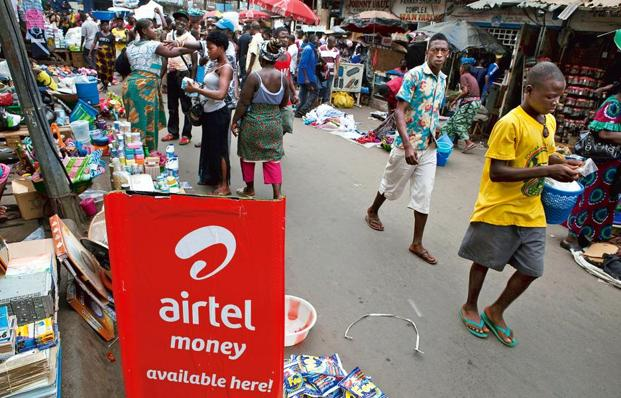
The Airtel Africa asset-light business model is working. The firm outsources some heavy infrastructure investments and projects, focusing on customer experiences as I have noted in the past. This is a clear evidence that business model can transform a company besides whatever technology capabilities you may possess. Few years ago, Airtel Africa was about running out of town; quickly, it changed its strategy and today, it is a “telemoney” firm where the business is growing  with mobile money at 47% and data revenue at 38%. Yes, being a quasi-financial institution is working for Airtel Africa.

In May 2018, I explained why Airtel Nigeria would continue to grow: asset-light business model where outsourced partners do the core infrastructure works while Airtel stays ahead running the customer experiences. Doing that means it can grow faster because it can deploy dozens of partners (who get paid only when they deliver services) working across Nigeria at the same time. It is a very risky business model as the weakest link is now the weakest delivery partner. But it has a solid positive: Airtel Nigeria can largely leave Nigeria with a briefcase, largely unhurt by any turmoil. The only thing it has is the mobile license and the logo: others carry the risks!

This is a summary from TC Daily: Airtel Africa, one of the continent’s biggest telcos, has posted $1.64 billion in revenue for the first half of 2019. The company grew its data revenue by 37.8 percent and recorded a 46.5% growth for its mobile money business. The company, which is present in 14 African countries, now has 100 million subscribers on the continent. Airtel Africa completed a $750 million initial public offering (IPO) with a market capitalization of $3.9 billion. Going forward, the telco says it is prioritizing 4G expansion in its 14 markets.

“In the first six months of this financial year, we delivered revenue growth of 11.4 per cent in constant currency terms, with even higher underlying Earnings before interest depreciation and amortisation (EBITDA) growth as we continued to improve our operating leverage and tight focus on costs. This performance underlines our ability to consistently grow in double digits, powered by our growth engines of Data and Airtel Money growing at 37 per cent and 46 per cent respectively,” he said.

New Business Model Powers Airtel Nigeria over Glo to Second Mobile Operator

Global Skill Partnership: World Bank Urges Nigeria to Export Labor

0

The World Bank has urged Nigeria to see labor migration as a succor to its demographic boom. Nigeria’s population explosion is creating unemployment void that the slow pacing economic growth cannot fill. It is estimated that by 2050, the working population will increase by 125 percent. According to World Bank data, those aged 15 to 64 will increase from 107, 702, 000 in 2019 to 242, 994, 000.

With the current economic outlook, the possibility of finding a job in the near future will be slim because the labor market will be unable to absorb new entrants.

In view of this threat, Nigeria has been urged to reduce the pressure and make most of remittance and skills transfers by promoting new legal labor migration pathways with countries of destination across the globe.

Nigerians are known for their immigration exploits, and the current economic situation has pushed the trend further to a life threatening point. One in 3 Nigerians desires to leave the country.

In June last year, Nigeria overtook India to assume the position of world poverty capital. According to World Poverty Clock, over 94 million Nigerians are living below $1.9 daily, resulting in increased immigration desires among the working age. A situation the labor market has enabled due to lack of productive, gainful employment opportunities for the overgrowing population, most among them, the youths.

The National Bureau of statistics (NBS), reported 23.1 percent unemployment rate in Nigeria for the last quarter of 2019. A 15.6 increase from the 7.5 percent of 2015, and the situation is set to get worse. The World Bank estimated that by 2030, additional 30 million jobs will be needed to usurp the pressure that population increase will have on the country. A challenge the current GDP growth and economic policies are falling short to take on. The GDP growth rate is barely over 2 percent whereas the World Bank noted that even at 6 percent consistent growth per year, only one in four Nigerians will be able to obtain good, wage-paying jobs in the formal sector.

The migration population in Europe has an overwhelming number of Nigerians, most of them traveling illegally. The worst of the situation was exposed through immigrant crisis in Libya, where many Sub-Saharan Africans were captured and sold in an open slave market. Many of them were Nigerians who took the risk of crossing the desert and were willing to risk their necks in unfriendly waters just to get Europe.

The driving force behind the risks has been survival, and the hope of getting to developed countries with higher demand for labor and skilled workforce. Canada, Australia, Iceland and all the countries with deficiency in work-age population are looking to close the gap through migratory manpower. The World Bank is thus urging Nigeria to cash in on external destinations as a potential source of employment for Nigerians.

Such migration is upheld in the National Policy on Labor Migration 2014, but the pathway requires preparing people with the needed skills.

Undertaking projection of human resource requirements in countries of labor and skills demand, with special attention to emerging skills requirements to anticipate meeting demand with matching skills.

Developing financial support schemes to help youth acquire skills that are sought after in both domestic and foreign labor markets.

Promoting the participation of employers and trade union organizations in the provision and funding of vocational training and skills upgrading institutions, to meet international skills requirements.

The potentials of the migration pathway can be maximally utilized through the Global Skill Partnership – a bilateral agreement between the two countries on labor. The country of destination agrees to provide technology and finance to train potential migrants with targeted skills in the country of origin, prior to migration. In return, they will receive migrants with the precise needed skills to integrate and contribute their best upon arrival.

The country of origin will provide the training and ascertain that the migrants are equipped to fit into the work environment abroad. Nigeria is one of the 163 countries who put pen to the agreement.

The pathway, if developed and utilized maximally, has the potential of reducing high rate of illegal immigration while providing good job opportunities for Nigerians.

The World Bank has thus urged the Nigerian Government to test the Global Skill partnership tool in preparation for the pathway initiative as it is currently being trialed around the world.