DD
MM
YYYY

PAGES

DD
MM
YYYY

spot_img

PAGES

Home Blog Page 6608

Graduates Turn Okada Riders But Here’s The Way Forward

0
Okada driver

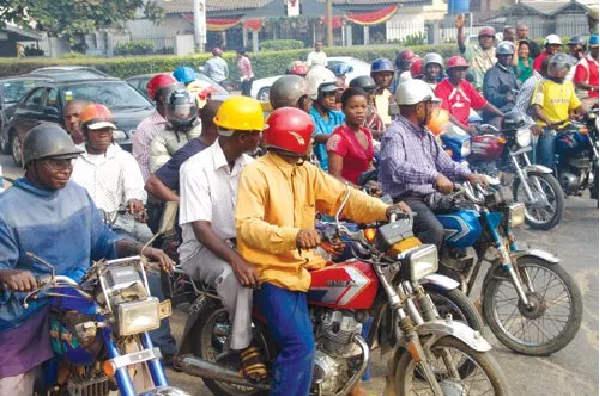
When a graduate turns an Okada rider, then it says a lot about the future of the country.

I was commuting to the market on a motorcycle today when I had the pleasure of chatting briefly with the rider, Sanmi Ajayi.

According to him, ”I am a University graduate, but after an unsuccessful job search and ridiculous job offers, I ventured into Okada business (motorcycle).”

Sanmi is a graduate of the University of Ibadan, with a Second Class Upper in Geology.

I can imagine the challenges many job seekers out there are going through. But the recruiters are also facing the same.

It hurts to see graduates still do odd jobs to survive. Do you know the number of fresh graduates mobilized for the national youth service scheme every year?

If you divide it into three batches, add them to the waiting list of job seekers in the country and see the unemployment rate that you will come up with. Until Nigerians start creating industries instead of buying properties in Dubai, the problems won’t go away.

According to a respondent, Macs Ezebuno, who engaged my article on LinkedIn, he shared his opinion about doing menial jobs like Okada as a graduate. He said, ”Chinedu, I do not see anything wrong in doing menial jobs.

”In fact, it doesn’t matter what anyone does as a university graduate or non-graduate. What matters is what they have in mind before venturing into the menial jobs.

  • ”Did they venture just to sustain or to gather resources for better?
  • ”Did they venture with the future in mind or they ventured for the now?
  • ”Again, the little they got, did they reinvest in themselves or they wasted it?


”Many graduates and non-graduates have gone through a lot but are better entrepreneurs today because they learnt what they would not have learnt in classrooms. Kudos to those who became better persons through dignity of labour (the hard way).”

Another respondent also shared his own perspective too. David Ferdinand Uche said, ”I will always take my advice to the side of Nigerian graduates.

”One big mistake to make in Nigeria is to study a course that requires very sophisticated training before one will become employable. Very Sophisticated courses give little or no room for personal development in the required practical skills for employability – Geology and Petroleum Engineering for example.

”The advantage of an unsophisticated course in Nigeria is that an undergraduate, while still in school, can be personally developing himself in the required practical skills in his area of interest under the supervision of an expert – Computer Science, Chemistry and Electrical Engineering for example.

”Another problem of Nigerian graduates is that we don’t pass through school for a purpose. Example: I wanted to understand and learn Chemistry so I can formulate and develop chemical products like personal care and cosmetic products among all, and I decided to study industrial chemistry – that’s purpose!

”Undergraduates with purpose don’t think like others! They always look for a way, while still in school, to get the required practical skills for them to be employable in an area of interest.
Some labs knew I existed in my undergraduate time.”

Festus Oyewole had a different view to what Ferdinand said. Festus said, ”What Uche said is what I call human reasoning. Anyways, it is not really about the course of study. We just need to face the reality that our population is more than the available jobs like what the writer said. We need to think about Self development.

”Above all, God is what we need.”

There are pools of graduates out there and hence, it makes it very difficult to choose the right candidate. The uphill battle to filter thousands of resumes in their job portals is really overwhelming. This calls for new ways of looking at the issues, necessitating the use of technology.

Ease of Doing Business 2020: Counter and Alternative Celebration on Nigeria’s Ranking Stride

1

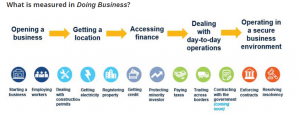
On Wednesday, the news that Nigeria has moved from 146th position in 2019 to 131th position for the year 2020 on the Ease of Doing Business Report, a global business enabling environment report of the World Bank, excited the Federal Government, while the Nigerian business community and other nationals with the investment interest were uncomfortable with the ranking pace. Since the release of the report that measures regulations across 190 economies in 12 business regulatory areas to assess the business environment in each economy, counter and alternative celebration have been recorded across the country.

Source: World Bank, 2019

According to the report, New Zealand (with a score of 86.8 out of 100), Singapore (86.2), Hong Kong SAR, China (85.3), Denmark (85.3), the Republic of Korea (84), the United States (84), Georgia (83.7), the United Kingdom (83.5), Norway (82.6), and Sweden (82) are the top 10 best places in the world to do business.

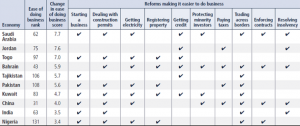
While acknowledging this, the report also identifies economies that made a number of significant reforms that impacted their ranking pace for 2020. Some of these countries are from the developing continents. The report notes that Nigeria and Togo from Africa made significant reforms in the last one year. Saudi Arabia, Jordan, Bahrain, Tajikistan, Pakistan, Kuwait, China and India were also found as the improved economies. Singlehanded, the report points out Nigeria’s reform on contract enforcement, which enhanced the quality of judicial processes as one of the core factors contributing to the country’s improvement.

Counter Celebration

Source: World Bank, 2019

Nigerian President, Muhammadu Buhari, and other government officials who have direct links with the enabling business environment creation in the country have been the vanguards of the celebration of the improvement in relation with the government decisive decisions and policies in the last one year on the provision of enabling environment for businesses to thrive.

On his verified Twitter handle, President Buhari tweets “Nigeria’s 15-place rise on the World Bank’s 2020 Doing Business Index is welcome news. We are now ranked 131st, from the 146th last year; and up 39 places since 2016, when we established the Presidential Enabling Business Environment Council (PEBEC). Our goal is a Top 70 position by 2023.”

Among the government officials, since 2016, the Nigerian government under the leadership of the President has been removing constraints preventing businesses to operate effectively. According to them, the government has been able to cut down the time it takes to register a business, provide new grid connections for electricity and upgrading election systems for imports and exports. To them, these actions, among others represent the government’s commitment to realise the projections of the economic growth as contained in the Economic Recovery and Growth Plan (ERGP 2017-2020), which is striving to deliver sustainable economic growth in Nigeria by restoring growth, investing in our people, and building a competitive economy.

Alternative Celebration

Though, some business leaders believe that the ranking truly represents the expected results of the government’s reforms. For instance, the introduction of visa on arrival has been described as a simple policy that changed some sectors. On the contrary, many business executives and citizens do not believe that it is easier to do business in the country.  The argument has been that there are many counterproductive policies from the government, crippling business operations and revenue generation. The excesses of the regulatory agencies, imposition of more taxes, closure of the borderlands, lack of social dialogue promotion and continuous engagement with the organized private sector among others remain the stumbling blocks on the road to the ideal enabling business environment, which requires ‘ideal celebration’ when they are achieved.

From the non-business leaders, the disagreement on whether the ranking should be celebrated or not is a pointer that Nigerian government and public officials are a facing legitimacy deficit test. It appears that the business community does not align with the policies and reforms initiated by the government on the ease of doing business improvement.

In a recent interview with the Infoprations, Femi Adefila, a Communications Expert and Chief Executive Officer of a Radio Station in South-West region, said: “Since socioeconomic activities of government is about the people, the citizens, they should therefore be central to policy formulation and execution. If a bottom up policy is entrenched by government, people will have a sense of belonging and it will own policies. This will lead to better policy success.”

Professor Ndubuisi Ekekwe and other eminent entrepreneurs-cum-scholars have also reiterated the need for the adequate and appropriate reforms in the procurement processes and tax system in the country. They made the submission during the Federal University of Technology, Owerri 2019’s Alumni Biennial Conference held at the Nigerian Institute of International Affairs, Lagos on 24th, October, 2019.


MSMEs Rejoice: Get Your Products Approved by NAFDAC Directly From Your Kitchen

1

Who would ever believe that NAFDAC will approve any food product produced in a private kitchen? Yes, MSMEs in the food sector can get their products approved right in their private kitchens. There are hygiene conditions though. Not only that, in line with the presidential mandate on the ease of doing business led by the Vice President, Prof Yemi Osinbajo, NAFDAC has approved a huge splash in the price of registering products.

16th of October, 2019 marked the beginning of a new era for Micro Small and Medium Enterprises (MSMEs) in Nigeria. A major hindrance has been cleared. NAFDAC has unveiled itself and calling on business owners to register their products with NAFDAC by themselves without any need for agents. 

Truth be told, many entrepreneurs have suffered untold exploitation and extortion in the hands of some staff of NAFDAC and some independent consultants or agents. Many have even turn some unsuspecting entrepreneurs into their breathing ATMs whenever they need quick money. Many self-acclaimed NAFDAC Agents and some staff recognise that the name NAFDAC strikes a chord of fear in the hearts of thousands of small business owners so they waste no time to use that opportunity to suck them dry of their hard-earned money trying to secure NAFDAC registration numbers for their regulated products.

Imagine a business owner having to pay extra NGN3,500 per product just for online registration. If one has 5 products, and each has three sizes, they count it as 15 different products which will cost NGN52,500…just for inputting details of companies and products on NAFDAC website! 

Having considered all these problems that Nigerians, especially MSMEs, are facing, the management of NAFDAC led by Prof. Mojisola Christianah Adeyeye, the Director-General, organised a 2-day Sensitisation Programme, in Lagos, on NAFDAC Guidelines for Registration of Micro, Small and Medium Enterprises (MSME) Regulated Products at the Lagos Chamber of Commerce and Industry (LCCI) hall, Alausa, Ikeja. The DG has assured that the problems constituted by agents or consultants are now a thing of the past as she noted that NAFDAC has changed a lot of things on its website and made it more user friendly. At the event, some entrepreneurs still pointed the DG to some areas on the NAFDAC website that still need further simplification and clear categorisation and she gave everyone an assurance that NAFDAC’s website will become a place every entrepreneur would love to go to get their NAFDAC registration sorted by themselves.

The event was graced by notable personalities like The Governor of Lagos State, Babajide Sanwo-Olu, the Iyaloja General of Ikeja Local Government Area, Alhaja Apena, among others.

There were also present at the event many organisations and Unions like the Lagos Chamber of Commerce and Industry (LCCI), National Association of Small Scale Industrialists (NASSI), Small and Medium Enterprise Development Agency of Nigeria (SMEDAN), Technology Incubation Centre (TIC), Nigerian Association of Chamber of Commerce, Industry, Mines and Agriculture (NACCIMA), Industrial Development Centre (IDC) and many others.

For an original taste of the good news served by the NAFDAC DG, below is the full text of her speech.

ADDRESS BY PROF. MOJISOLA CHRISTIANAH ADEYEYE, DIRECTOR-GENERAL (NAFDAC) AT THE SENSITIZATION PROGRAMME ON NAFDAC GUIDELINES FOR REGISTRATION OF MICRO, SMALL AND MEDIUM ENTERPRISES (MSME) REGULATED PRODUCTS HELD AT LAGOS CHAMBER OF COMMERCE AND INDUSTRY (LCCI) HALL, ALAUSA IKEJA ON WEDNESDAY, 16TH OCTOBER, 2019

Protocol

It is my pleasure to welcome you all to this meeting with our highly esteemed stakeholders. This meeting which is expected to be interactive, is focusing on sensitizing the general public and specifically the operators of the NAFDAC Regulated Products Micro, Small & Medium Enterprise (MSME) Industry.

NAFDAC has a statutory responsibility to safeguard public health through the execution of its mandate. We are charged with the responsibility to regulate and control the manufacture, importation, exportation, distribution, advertisement, sale and use of food, drugs, cosmetics, medical devices, bottled and packaged water, chemicals – generally referred to as regulated products.

Upon assumption of office on November 30, 2017, I resolved to consolidate the gains of the past and take the Agency to greater heights. This requires that our approaches to regulation imbibe best international practices and are aligned with global regulatory standards as we strengthen our regulatory oversight. With a very wide mandate, I do appreciate and recognize the broad stakeholder base of the Agency.   In the words of H.E., the Vice President of the Federal Republic of Nigeria, Prof. Yemi Osinbajo, ‘MSMEs are the bedrock of Nigeria’s industrialization and inclusive economic development; and the most important component of industrialization as set out in the Economic Recovery and Growth Plan.

The Statistician General of the Federation and CEO of the National Bureau of Statistics (NBS), Dr. Yemi Kale in his public presentation of the NBS-SMEDAN National Survey of MSMEs Report, revealed that about 41.5million MSMEs were registered in the year 2017. The contribution of this sector to the Gross Domestic Product (GDP) of the country is huge hence the reason for government’s serious attention.

This sensitization programme is expected to provide a platform for discourse and exchange of information, which relates to our expectations from the MSME regulated sector and get feedback from you all.

EASE OF DOING BUSINESS AND MSMEs: The Federal Government of Nigeria on May 18, 2017 signed the Executive Order 001 (EO1) on Promotion of Transparency and Efficiency in the business environment. We have continued to work with the Presidential Enabling Business Environment Council (PEBEC) to deliver on this and improve service delivery of services to customer in a more transparent and efficient manner.

In line with the Ease of Doing Business, the Agency created the Small Business Support Desk (SBSD) whose function is to facilitate registration processes for micro and small business operators through engagements such as MSME Clinics, Exhibitions, NAFDAC Product Registration Outreach (NaPRO).  One of the first milestone decisions made by the Agency on MSMEs is the 50% reduction in tariff for registration processing which has led to an increased number of applicants come forward to the NAFDAC.

DECENTRALIZATION OF REGISTRATION PROCESSES: The decentralization of registration of certain regulated products commenced in April 2018. This was done to make approvals at the zonal levels more effective and easily realizable for MSMEs businesses. This has been made possible after the creation of six Zonal, Lagos and FCT Offices all headed by Directors. In order to maximize the competencies of staff and overall output, some staff were transferred to man these Offices with input from the respective Directors.

Additionally, the laboratory analysis of MSME products are expeditiously treated with utmost urgency. The outcomes have been very satisfying as it has helped the Agency arrive at an improved official timeline for MSME registration as ninety (90) days. Sometimes, NAFDAC has been able to meet the timeline in about sixty (60) days.

For the ease of the MSME products exportation, the Agency has reviewed the guidelines such that applicants can make submission at the NAFDAC Zonal Offices and processed at the Ports Inspection Directorate (PID) within a timeline of 28 working days. This is believed to enhance the business and generate foreign exchange into the Nigerian economy.

QUALITY MANAGEMENT SYSTEM (QMS):  We are fully embracing institutional regulatory reforms for sustainability and are entrenching a Quality Management System (QMS) that is making our staff to think of the customer first in all its operations. This has led to certification on ISO 9001:2015 obtained on 7th June, 2019.  Being a customer-focused, Agency-minded business strategy, the goal has resulted in continuous improvement in overall performance in order to provide a stable foundation for entrenching a quality culture within the scope of our activities.

INFORMATION COMMUNICATION TECHNOLOGY (ICT): To increase efficiency we have embraced fully the deployment and use of ICT in our operations. Our website has been revamped to increase transparency and we will continue to strive to build a more robust ICT platform.  We have enhanced our communication mode with the use of more secured emails, with all staff activating their official NAFDAC email to ease communication with you our esteemed stakeholders as well as fostering internal communication.

MICRO SCALE LOCAL PRODUCTION: We have scaled down some of our processes for the micro scale manufacturers without compromising standards and put in place policies that will drive growth in the MSME sectors in line with ease of doing business, with emphasis on local production and the reason is not far-fetched. The number of documents, staff strength and room space was scaled down for the micro and likewise, the number of products they can manufacture. The boldest move made so far by the Agency is consent for use of personal kitchens to manufacture certain classes of MSME products under micro scale. ALBEIT, MAY I STATE CLEARLY THAT THE KITCHENS CANNOT BE USED FOR FAMILY COOKING, THEREFORE, THE HYGIENIC CONDITION MUST BE SUCH THAT SAFE PRODUCTS CAN BE MADE THEREIN.

SHARED PRODUCTION FACILITY (e. g., TECHNOLOGY INCUBATION CENTRE): Still in the spirit of ease of doing business, the Agency has put in place processes and procedures for companies with similar products and limited resources to use common facilities provided their products are similar. This initiative is designed to nurture new and small businesses by supporting entrepreneurs through the early stages of registration of their products. However, the initiative is restricted to MSME products only with examples being that of the Technology Incubation Centre (T.I.C), Ikorodu Development Centre (I.D.C).

ENGAGEMENT WITH THE INDUSTRY: In carrying out some of the core functions of NAFDAC, the Agency engages with you our stakeholders to ensure compliance with extant laws and regulations. This forum is one of such engagements.

We are aware of the Agency’s responsibility and commitment in growing local industries and her support for foreign companies doing business in Nigeria. In line with this, the Agency offers technical advice to manufacturers on matters such as factory location, grade of equipment materials, design / layout of factories and documentation requirements.  Appropriate guidance and support are also given to establishments, depending on type and nature of products, intended for registration. Furthermore, the Agency ensures timely inspection of production facilities as soon as all prerequisites are in place.

We are appealing to the Industry to support NAFDAC by adhering to Agency’s laws and regulations. These are enforced to ensure that operations and activities are in line with NAFDAC’s and regulations and guidelines. Self-audit and regular reviews of product information and labels are especially encouraged. Companies should ensure that they maintain a robust system, which allows for effective monitoring and control of their products that are already in trade. This is necessary for effective intervention in the event of unexpected product defects, which may necessitate immediate product recall.

It is expedient to state emphatically, that NAFDAC Management discourages the use of Middlemen/Agents for the purposes of product registration as Applicants are welcomed to visit the NAFDAC Office/s nearest to them when necessary and could also communicate through established official channels like e-mails.  I would like to mention here that the responsibility of ensuring the quality, safety and efficacy of regulated products does not lie solely with NAFDAC, but with all stakeholders.

In conclusion, the Agency wishes to increase collaboration with various stakeholders to ensure that the regulator, the regulated and other stakeholders are all on the same page, which is in line with global best practices.

We are looking forward to improved consultations, robust interaction and dialogue with all stakeholders in this very important MSME sector. The overall aim of this collaboration is for the Agency to act as a guide and partner rather than policing the regulated and to ensure that the economy is strengthened through active engagement of MSMEs .

Thank you,

Prof. Christianah Mojisola Adeyeye     PhD, FAS

P.S. – For further questions on the clarification of some points noted, kindly visit NAFDAC website or call any of their support service lines.

Driving IoT Inclusive solution in Nigeria

0

How is Nigeria approaching IoT implementation? Explore key insights from Taslim Saludeen’s UpNepa Project IoT Signals research into the increasingly important role of IoT in a critical industry?—UP Power.


As Taslim Saludeen would say: “Its one thing to think Innovatively. Its another to be an executor of an Innovative Concept. Its yet another thing to maintain and grow the executed Innovative Concept.To master this three (3) things one need to learn the act of managing human resources.”

When Taslim Saludeen geared up to introducing UpNepa it was just like what one would see in any Hollywood movie. Then, the awareness around IoT has not been so high. Thanks to Microsoft, IBM and UpNepa who have brought Nigerians closer to understanding the important role IoT plays in globalization and industrialization. But first, what is IoT? What is UpNepa? How does the IoT help in achieving industrialization and globalization? How can this be deployed in Nigerian Economic Sectors?

IoT, An Overview

The Internet of Things, or IoT, refers to the billions of physical devices around the world that are now connected to the internet, collecting and sharing data. Thanks to cheap processors and wireless networks, it’s possible to turn anything, from a pill to an aeroplane to a self-driving car into part of the IoT.—Zedge: August 21, 2018.

Wikipedia defines the Internet of Things (IoT) is a system of interrelated computing devices, mechanical and digital machines, objects, animals or people that are provided with unique identifiers (UIDs) and the ability to transfer data over a network without requiring human-to-human or human-to-computer interaction.

In a nutshell, the Internet of Things is the concept of connecting any device (so long as it has an on/off switch) to the Internet and to other connected devices. The IoT is a giant network of connected things and people —all of which collect and share data about the way they are used and about the environment around them.

That includes an extraordinary number of objects of all shapes and sizes?—?from smart microwaves, which automatically cook your food for the right length of time, to self-driving cars, whose complex sensors detect objects in their path, to wearable fitness devices that measure your heart rate and the number of steps you’ve taken that day, then use that information to suggest exercise plans tailored to you. There are even connected footballs that can track how far and fast they are thrown and record those statistics via an app for future training purposes.—IBM: November 17, 2016.

Benefits of IoT

Some benefits of IoT include:
IoT can help make sense of the raw data produced every minute by the thousands of connected things that make up your business, supply chain and products.
IoT can improve resource efficiency, reduce pollution and stimulate new thinking and innovation.

Heard of UpNepa?

We all get excited when the electric power is restored to our homes. We all remember shouting: “Up Nepa!”. Well, that’s the spirit. Nigeria has been struggling with producing steady power supply since inception. Now, UpNepa is a service aimed at notifying and updating users of the state of electricity supply(ON or OFF) in a selected location. Founded in Jan 10, 2017 it’s founders Salaudeen Abdulrahman,and Salaudeen Taslim came up with this innovative idea. The company’s IPO is Private.

UpNepa Founders.

Upnepa Nigeria is an analytics platform which has the ability to inform you on the hours of light and darkness of local communities in Nigeria. The mission at Upnepa, is to monitor, aggregate, and analyse power supply, power outages and power distribution in order to improve productivity in young people and students, provide power supply rates insight for SMEs, and foresights for governmental institutions, energy distribution companies and energy solution projects. Upnepa believes that with data, information and forecast on the electricity status at homes, universities, communities, and cities, people and authorities will be able to plan better and make sustainable decisions, save cost on research and development, as well as have higher productivity.

Deploying IoT using Upnepa’s Inclusive Solution Strategy

Driving IoT inclusive solution in Nigeria as a startup is quite difficult. But little by little they’re pushing through and making their dream a reality. They’ve successfully monitored, aggregated and analysed power supply stability across 3 pilot communities in Akure, leveraging on IoT technology for real time data collection, basic analytic tool for deriving basic insight and GIS tools for spatial information.

According to Upnepa they look forward to providing accurate data about Nigerian communities which would provide real-time information on their level of power deficiency (level of pain), level of financial capability (what solution they can afford) and total estimated number of houses and people living within each community (potential customers).

Taslim believes the data they mine and information they would provide, which cannot be found by searching Google or any online database in Africa, would help more startup and companies in the energy space with more insight on the exact type of energy solution needed by a community, if an average inhabitant of such community can afford it and the best point to locate their distribution outlet within community of interest. This would increase energy solution design and distribution.

Bonus

Here’re some data excerpts released by UpNepa as of October 2019.

9 Amazing Startups Changing the African Narrative

0

Africa is the world’s most enterprising continent. It has become fertile ground for innovation and development, and even though it seems like the wave of development came to us a little late, we are fast catching up. Ideas that would not have been dreamt about ten years ago are now reachable due to the influx of technology and advancement on the continent. Africa’s tech field is one of the fastest-growing in the world, and every year new ideas are given life. These serve to better the economy, alleviate poverty, create opportunities for youth, encourage creativity and fill the various gaps that are left in our development.

The following are nine of the more recent, craziest start-ups that have caused a buzz on the continent with their daring, ground-breaking and imaginative ideas. They are not just focused on technology-economic, medical and socially-focused start-ups are highlighted too, and the reasons why they stand out explored in length.


SBUBBLE

COUNTRY: CAPE TOWN, SOUTH AFRICA

FOUNDED IN: 2014

Being a parent is difficult at the best of times, and even more so when they have to leave your immediate sight to go to school, visit with friends and grow into the people that they will become. For parents,it is distressing not knowing where your child is, especially with the growing spate of kidnappings and child molesting in the society. This is where sBubble comes in. It keeps parents informed about their children’s movements in a way that is not intrusive to the child, creating a safe bubble of space they can interact in.

sBubble works with a small Bluetooth tag device attached to the child’s clothing, which is then connected by Bluetooth to the parent’s phone. This comes in very handy in rough neighborhoods, crowded places and when the child is left with a caregiver. Once the child steps out of the “bubble” which is the parent’s comfort zone, the parent gets an immediate notification on their phone.

The idea is smart, simple and works on already existing technology. It gives parents peace of mind and makes them not have to hover to keep their child safe, as they can know in what area the child is allowed to visit. It reduces the influence of child molesters and kidnappers and other nefarious activities that the child could get entangled in. sBubble is not limited to children, though, it can be used to tag pets, household items and other property to make them easier to find when misplaced and alert the owners if they are stolen.

While still under development, sBubble is already gathering some buzz both locally and internationally and is one start-up to watch.


YAOOTA

COUNTRY: EGYPT

FOUNDED IN: 2014

There are hundreds, if not thousands of online vendors of different products, and instead of making shopping a more relaxing experience, it makes choosing a vendor for specific products confusing. Yaoota is an Egyptian online search engine for the myriad of products sold online.

Yaoota helps shoppers to search online for the products they need, comparing prices and different brands of products from several online stores, making specific choices easy. The tech developers came up with an algorithm that computes all the products, providing an optimal user experience for the shoppers. The application then diverts sales traffic to the merchants who are included in their algorithms for a cost per click fee. With this, the shopper does not have to start searching for different websites to buy different products from, all they need is the Yaoota search engine to direct them where they need to go.

The growing e-commerce market in Egypt means that the market is expansible and fertile for exploitation by the right type of tech start-up. Seeing that the online shopping experience in Egypt was more of a chore than a pleasure, the founder Sherif ElRakabawy and his partner Mohammed Ewis devised a way to streamline the experience and make sure shoppers get what they want in a short amount of time with minimal stress.

This start-up began as a self-funded operation, but due to the rousing success and the growing demand in the market, they have attracted the attention of tech bigwigs KBBO Group based in Abu Dhabi who have raised them up to $2.7 million, the largest for an Egyptian tech start-up so far. The developers took advantage of the budding economic climate of the country to insert themselves into the industry and create an opportunity in the gap created by the recent political unrest in Egypt. They generate so much traffic that it has surpassed that of Google and Facebook in the country. This does not mean that they do not face challenges, as the political climate is still unsteady, but it is admirable that they still prevail.


WEFARM

COUNTRY: KENYA

FOUNDED IN: FEBRUARY 2015

Smallholder farmers usually depend on experience and trial-and-error to solve the problems they run into during the planting season. More experienced people who plant flowers and gardens and have access to the Internet only have to connect to Google to get the information they need, but most of these farmers who depend on agriculture for their livelihood are in rural areas where they do not have the access or literacy to use the Internet.

WeFarm is a peer-to-peer information sharing service, sort of like a search engine for rural farmers, but it uses an SMS service instead of the Internet. Farmers can ask questions and get answers from other farmers from across the globe via SMS, right from their farms in fact!

Kenny Ewan, the founder and CEO of WeFarm first started growing the seeds of the idea that would become this start-up when he was working abroad for an NGO based in Peru. He had first-hand experiences where a whole community of farmers helped each other with solutions for their agricultural problems, but a neighboring community would be at a loss for what to do with the same problem. There was no information dissemination or sharing, and it was affecting their productivity negatively.

With some other investors based in the UK, WeFarm started as an idea but quickly grew and finally, was launched in 2015.

The use of SMS instead of the Internet is the move that gave this start-up an extraordinary zest. Even though WeFarm is Internet-based, it is accessed through SMS for those who don’t access to it. As technology improves, WeFarm also makes provisions for the clients who can get access to their Internet database too. Because the ideas are crowd-sourced, the database is chock filled with simple, home-grown answers and solutions to most of the basic problems of both animal and plant farmers, solutions that have been used and found to be effective. This information sharing encourages creativity and development in the country, and as the enterprise expands to Uganda and Peru, it impacts more lives and contributes to the poverty and hunger alleviation goals of the government.


SAFEMOTOS

COUNTRY: RWANDA

FOUNDED IN: 2015

Most Africans depend mostly on commercial motorcycles to move around. They are fast, can meander through traffic and narrow streets and cost less than a taxi ride. This is the case in Rwanda. However, Rwanda also has one of the highest road accident prevalences in the world, with probability for one of the involved vehicles being a motorcycle being up to 80%. In Africa alone, road accidents are the second biggest killer after HIV/AIDS. Motorcycle accidents are frequent and commonplace, endangering lives and property. The SafeMotos service makes the drivers accountable for their driving and their passengers. This helps to streamline the driving methods of the moto drivers, who are notorious in Rwanda for their rough antics and concurrent accidents, most of which are fatal.

The service is like an Uber, except for motorcycles. There is an ongoing assessment of the driver as he provides the service. Interested drivers register with SafeMotos and are given a dedicated smartphone with the SafeMotos application, their vehicle particulars and performance charted. This information is fed into the database which runs an algorithm and based on their performance, they are chosen to work for the service. Drivers must get up to 90/100 and above to start and keep working for SafeMotos. They are provided with a helmet and chin guard and on each ride, the service collects a commission. The drivers are required to have up to three years of experience and are educated regularly with refresher courses on safety, traffic laws, and social responsibility.

Peter Karuiki and Barrett Nash, a Canadian, are friends who saw a unique need and devised a means to fill it. After a motorcycle accident in which they were both injured, their idea for a technology-controlled safety watch for the motorcycle riders that predominate in Rwandan traffic transitioned from a dream to a necessity. With private funding from the venture capitalist firm SOSV and Irish start-up investors Karma Axlr8r, the SafeMotos service was born.

Providing safety for the passengers and economic autonomy for the drivers, SafeMotos shows that there is no price too high for peace of mind. It encourages the drivers to drive more safely and considerately, as the better they are, the more passengers they have access to. SafeMotos drivers are sought after and have a competitive edge over their contemporaries, their red flags making them stand out to passengers who know that they can be trusted. It is economically empowering while reducing the burden of a vehicular accident statistic that is heart-breaking. It also ensures security, as SafeMotos drivers are recognized by the police as being more responsible than other motorcycle drivers and are given leeway due to their recommendations.

SafeMotos has been called “Africa’s answer to Uber”, but it is more than that. With founders in their twenties, it is a vision for what Rwanda could become, a country that is already making strides towards progress with the fastest and cheapest Internet on the continent.


KAJO-KEJI HEALTH TRAINING INSTITUTE

COUNTRY: SOUTH SUDAN

FOUNDED IN: 2013

There is a health practitioner deficit in the war-torn new nation of South Sudan. With a fast-growing population and civil war unrest, there is a great need for doctors and other medical professionals. As of April 2015, there were a reported 120 medical doctors serving an expanding population of 9 million with the highest maternity mortality in the world. The fledgling health care system desperately needs help, and that is what Lou Louis Koboji, Lokiri Peter and other visionaries at Kajo-Keli Health Institute daringly try to fill.

The Institute runs a three-year accelerated medical program to train doctors, laboratory scientists, nurses, and midwives who are desperately needed in the country as the health sector crisis debilitates a country already ravaged by civil war.

Loius Koboji fled Sudan when the civil war that would later divide the country into North and South Sudan was getting unbearable. He worked in Uganda as a Laboratory Technologist, and after South Sudan was created, he came back to the country to meet a health crisis. There were very few medical practitioners working, the practicing ones had a deficit of drugs and finances and equipment, and people were dying from very simple and treatable diseases. In September of 2013 with a class of 65 students, Kajo-Keji Health Institute was born, amidst skirmishes and disturbances of the war which keeps interrupting their medical program.

The accelerated medical program is training doctors who are meeting a very critical and necessary need. The school is in constant peril, with examinations interrupted by gunmen and students dropping out due to the war, but it is has graduated its first set of students in 2016 and is thriving. Even more remarkable is that the school was founded by ordinary citizens with a passion for their nation. Due to the visionary mission of the school, they have attracted international recognition and partnership and is fast becoming a force to be reckoned with in medical education.


BICYCLES AGAINST POVERTY

COUNTRY: GULU, UGANDA

FOUNDED IN: 2009

Most great start-ups are the literal drop in the ocean that creates a mighty flood. Bicycles Against Poverty is one such initiative, providing a much-needed service in predominantly small farming communities. In such small villages, having a means to move their produce to the market could be the difference between abject poverty and having enough to live by.

Most people who live in small villages are far from basic amenities like hospitals, water, and the marketplace. A means of transportation to get to all those services would make the difference in their standard of living, and bicycles are a simple and effective way to bridge that gap. The service provides bicycles for these small farmers on a hire-purchase basis with the option of paying back over one year. Those bicycles do not just provide a means for the farmers to move their products, it gives them the means to access healthcare, take their children to school and get to the water and other basic amenities. The bicycles are assembled locally and paying instalmentally makes the payments easy for the users while giving them immediate access to the means of transportation they need.

Muyambi Muyambi, the carrier of the vision that bore Bicycles Against Poverty, grew up in a family with a mother who suffered from a long-term chronic illness and whenever she needed to be taken to get to the hospital, they had to borrow a bicycle to get her the help she needed. Knowing firsthand that most people who grew up in small communities like him were most hindered from progress by their lack of a means of transportation, he conceived an initiative to alleviate poverty in his small way.

The program is small but effective, spreading through 13 communities and impacting more than four thousand lives. Having the means of transportation gives women autonomy and independence empowering them to take care of their families even without a male figure in the family. Added to that, it has precipitated up to a 30% increase in business creation and family income. A few bicycles in a community encourages sharing and empowers not just the owners but the other members of the community who can borrow it, and this comes in handy in case of medical emergencies and such occurrences when movement is necessary.


SUSTAINABLE POINT-OF-USE TREATMENT AND STORAGE (SPOUTS) OF WATER

COUNTRY: UGANDA

FOUNDED IN: 2011

Clean water is a luxury in the more impoverished parts of the world, which is ironic since two-thirds of our planet is covered in water. However, most of not is not drinkable. This is the plight of ten million Ugandans, almost one-third of the country’s population. The number one killer of children under the age of five years remains diarrhea precipitated by bad drinking water. The simplest means of purifying water is unavailable to most of the population who do not have access to chlorine, and proper filters. Moreover, boiling does not effectively purify contaminated drinking water. What is more, some of the population are averse to methods of purification that they are not familiar with.

SPOUTS of water is a non-profit organization that aims to make affordable and drinking water available to rural Uganda with its ceramic water filters. These filters are cheaper than the other commercially available filters in Uganda and because the material is made out of ceramic, it leaves a terracotta aftertaste that is preferred because the villagers are used to storing their water in clay pots. SPOUTS is the only water filtering plant in Uganda, using locally sourced materials to manufacture the PURIFAAYA filters which increase the local economy by creating jobs and opportunities. Their method of distribution by sale instead of through free aid encourages the users to view water as a commodity worth investing in, attaching its due importance to their lives. With the help of existing organizations, we will jumpstart a change in the way water is viewed.

The PURIFAAYA water filters are durable, lasting for up to two years, and it has been proven that having a stable water source keeps the family healthy, increasing their productivity and all-round improving the society.

In 2010, the founder Kathy Ku came to Uganda for the summer and spent too much on drinking water. The only source of water for drinking was bottled water, which she could only afford because she was a foreigner. This condition made her team up with her friend and fellow Harvard student John Kye to start the SPOUTS initiative with the sustainable ceramic filter initiative.

SPOUTS meets a need that not only improves the lives of the users of the ceramic filters but also creates a wave of socio-economic change that imparts the whole African continent. With aid from foreign organizations and donations, it has created a difference in many lives and continues to do so as they expand their operations to South Sudan and the Democratic Republic of Congo.


OKADABOOKS

COUNTRY: NIGERIA

FOUNDED IN: 2013

Writing is a dicey undertaking, and added to that is the hassle of publishing. Writers seldom get their money’s worth from the publishers and sellers-and that is for the writers who are even published. Okadabooks is a publishing platform that breaches that gap.

Okadabooks is a platform where the writers and readers can interact, with the readers paying to read the stories and the writers getting paid directly for every read. Books are not expensive, ranging from #75 to #500 except for some special cases like for new releases. Of course, the application gets a percentage of every sale as their remuneration-the writer gets 70% of the proceeds from the book by logging into their Okadabooks account and the money is uploaded to their bank account. The readers have the option of paying through their airtime credit or linking their account to the application platform to buy books directly and read directly it on the application. Readers who have bought a book can always access it whenever they log into their account.

Okechukwu Ofili, who is the founder of Okadabooks, is a prolific writer, satirist and comic book artist who has a great gift for using sarcasm to pass his messages on mental conditioning, cultural and educational limitations and other socio-economic barriers that Nigerians are faced with every day. Ofili used his own personal experience as a launching pad for the platform. As a writer, he experienced frustration after his book “How Stupidity Saved My Life” was published in 2011. The bookstores carrying his book withheld his payment for the longest time, prompting him to go on a social media crusade to get it back. His experience fostered the idea that became Okadabooks.

It makes publishing simple and controlled by the author – an autonomy that most writers don’t usually get. It is developed for the African market and converts the reader’s airtime credit into virtual money for the writers. It has opened up the market to writers of all genres and Nigerian languages who would generally find it difficult to be published in the mainstream publishing world.


DR CADX

COUNTRY: ZIMBABWE

FOUNDED IN: AUGUST 2016

It has been estimated that up to 170 million Africans do not have access to specialized health care providers like radiographers and medical imagery scientists and this leaves a gap in diagnostics. Dr. CADX is a mobile medical imaging specialist, helping health practitioners to provide well-rounded care to their patients even in rural areas without the delay of having to travel long distances for a specialist.

CADX provides an essential medical service by helping medical practitioners to read and interpret medical imaging files (x-rays, CTs, MRIs and ultrasound images) uploaded to their computers and tablets. It is a diagnostic system that is uploaded with the relevant data it needs to read medical images, focusing on head injuries, breast cancer, lung and heart diseases. This eliminates guessing and reaching, and proper all-round healthcare is achieved by the medic providers.

This start-up was founded by Gift Gana, a visionary physics degree holder and Tatenda Madzorera, a professional and experienced radiographer. They saw the mortality rates caused by lack of access to professional care and errors in medical imaging reading, and the vision to change the situation by involving more reliable technology was created.

With an 82% success rate of differentiating unhealthy from healthy tissue images and a growing database, Dr. CADX is one to watch. This beats the 70% accuracy that has been observed with human radiologists, who are not above making errors. Already they have been singled out by international investors who are watching out for the full version to be launched in 2018.