DD
MM
YYYY

PAGES

DD
MM
YYYY

spot_img

PAGES

Home Blog Page 6635

Credentialism – Public Perspective of Education in Nigeria.

0

  • Objective (what is the piece supposed to achieve?):  To educate the public on the danger of credentialism to our educational system. To eradicate the perception of certificate acquisition as a meal ticket.
  • Audience (who is the piece targeted at?): The Nigerian government, parents, students and educators.
  • What is the audience looking for?  To assess the threat of credentialism to the development of education in Nigeria and how it can it be ameliorated.
  • Thesis/Argument: Nigeria’s education sector is bleeding and may not recover so soon as a result of undue political interference, policies head-over-heels and the wrong attitude of the public towards education. The Nigeria’s environment emphasised on paper certificate as a key pre-requisite for job selection and placement over knowledge acquisition. This increase student’s insipidity towards reading and amplify their craving to acquire certificate by all means.

When knowledge acquisition or human capital formation becomes an end itself that is it becomes a decorative factor in developmental efforts, then investment in human beings becomes debatable. The acquisition of a chain of certificates is good, because curiosity is the basis of education, but the over dependence on credentials is toxic to our educational system. This is because not all schooling is education.  The notion of gaining qualification as a means of improving one’s social and financial status as against acquiring knowledge is one of the factors making our youth crave for paper qualification. Also, this gain momentum as a result to thrive due to the notion that education improves the standard of living and the illusion of getting more for outlay on education is by undergoing excessive procedure to access this height of first class education which will add value to their future.

The outcry by employers of labor on the quality of graduates and their unemployment status in our society today gives us a vivid picture of the poor learning pattern in our society. This cankerworm is also the major cause for upsurge in examination malpractices and the rush to acquire paper qualification for jobs lacking the right skills to be productive. The emphasis on certificates over knowledge is so prominent, prompting the former President Olusegun Obasanjo to say that students perceived education and getting a job only as a means of getting a meal ticket. He further argued that such mentality must be eradicated for learners to appreciate the intrinsic value of education, which brings about individual growth and orchestrate their tangible contribution to the society

Joe U. Umo (1985) in his book titled; Economics: An African perspective posited three motives for the ever-increasing importance attributed to paper chase mentality in our society. First is the desire of Nigerians to delight themselves in the numeral of degrees they can list after their names. Secondly, the propensity of students to consider their educational certificates as meal tickets which must be acquired, sometimes at all costs. Thirdly, there is the increasing preference among Nigerians to be addressed by their professional designations for example, Economist, Barrister or Banker. There is yet another cluster of those who seem to love certificate. They move from one department to another or from one field to another, that is accumulating one degree after the other including diverse first degrees and/or higher certificates. The possession of a chain of certificates gives them a sense of fulfillment and self satisfaction. Many of the people involved are those who have lucrative jobs and therefore have the financial capacity to study part time and are mostly resident in college towns. Here one may include University staffs (both academic and non-academic) who find it easy to pursue academic or professional degrees. 

In recent times, learning institutions are viewed as places where students will earn degrees and diploma certificates, so that they can enjoy a better job placement above their peers with fewer credentials than they do, when applying for a job. Thus making our learning institutions become more examinational oriented at the expense of a genuine education. This public view is in contrast to the primary purpose of higher institution, which is to specialize and expand knowledge.

Conclusion: Education is far more important than spending several years gaining credential in a specific discipline that does not interest you or that has no relevance to your prospects in life. Thus, a paradigm shift is needed on the value we place on education as a society.

ECONOMIC IMPLICATION OF FOCUSING ON CREDENTIAL

Credentialism and Disposable Income

Quality education is very expensive and finance is a major factor to take into consideration. Definitely, the acquisition of more education and certificates comes at an extra cost to the learners. In a developing country like ours where student loans and grants are unpopular across all academic strata. It is evident that most of the students will have little or nothing left because they have accumulated a considerable amount of debt. Thus, their marginal propensity to save will decline.

The Nigerian Graduate Report by Stutern shows that most recent graduate earns between N50, 000 to N99, 999 ($139 – $278). The average tuition fees for MBA program in public universities ranges between 500,000 to 1,500,000 while that of private universities ranges between 2,000,000 and above. Based on the available data, an average Nigerian graduate who desire to acquire more certificates will be financially handicapped. Thus, it is impracticable for any learner in our cost unfriendly and low income environment to have enough money left for consumption and savings.

Learners in developed countries have access to loans and grants for studies compared to those in developing countries like Nigeria. This serves as a income relief for the students and ease the pressure on their earned income. Thus, once they graduate and find a job where they are earning over the threshold to make repayments, they can slowly pay off loans spread across different years. Education is truly an investment in your future but it is not always guaranteed to pay off.

Credentialism and Employment/ Returns on investment in higher education

Educational attainment in present-day Nigeria does not really correlate to employment prospects. This serves as a reality shock as most people belief that the more credentials you acquire, the more job opportunities you should have. 

The Nigerian youth make up a staggering 60% of the Nigerian population that is over 190 million. The unemployment situation is even worse so, a stock and a flow challenge among this segment of our population. As secondary and tertiary institutions graduate more young people annually with poor skills, the new flow of entrants worsen the stock of the unemployed. The economic future and social stability of Nigeria is definitely vulnerable to the existential risk of having about 2.5 – 3 million young Nigerians annually enter the labor market without the prospect of jobs for about 40% of them (Stutern Report, 2016).

However, a report conducted by Stutern and BudgIT on recent graduates mostly between 2010 and 2016 showed that employment favors the most educated graduates. Graduate unemployment is at its highest for OND and HND degree holders, and it is at its lowest for MBA and PhD degree holders.  Labor is cheap in Nigeria. 1 out of 4 graduates earn less than ?20,000 ($40) per month as salary for entry level jobs while well over 80% of employed workers earn not more than ?150,000 as monthly.


References

Arnoye, R. F. (1980). Philanthropy and cultural imperialism. Bloomington: Indian a University Press.

Barrow, C. W. (1990). Universities and the capitalist State: corporate liberalism and the reconstruction of America higher education, 1894-1928. Madison: university of Wisconsin.

Benevot, A. (1992). Educational expansion and economic growth in the modern world, 1913-1985.”, 117-34 in the political construction of education, edited by Bruce fuller and Richard Rubinson. New York: Praeger.

Brown, D. (1995), Degrees of control: A sociology of educational expansion and occupational cerdentialism. New York: Teachers College Press.

Brown, D. (2001). The social sources of educational credentialism: status cultures, labour markets and organization.

Collins, R. (1979). The credential society. New York: Academic Press

Collins, R. (1979). The Credential Society: an historical sociology of education and stratification (New York, Academic Press)

Dore, R. (1976) The Diploma disease: education, qualification and development (London, George Allen and Unwin)

Dore, R. (1997). The Diploma Disease: Education qualification and development, 2nd ed London, Institute of Education).

Fuller, B., & Richard Rubinson (1992). Does the state expand schooling?” The political construction of education, edited by Bruce Fuller and Richard Rubinson. New York Praeger, 1, 30.

Gramsci, A. (1971). Selections from the prison notebooks. New York: International. (Original work published 1928). 

Illich, I. (1970). Deschooling society, New York: Harper & Row.

#AimHigher – Move Upstream.

2

Disruption requires creating a new basis (in a competition), usually parallel to any existing paradigm. If you are a typist that uses a typewriter, and your job feels at risk, improving your typing speed from 50 to 70 words per minute will not help you. Yes, you must disrupt your career in order to thrive tomorrow. That elevation can come via mastering Microsoft Word. Many did just that two decades ago, and were able to keep their domains across markets.

If you are an IT worker  and your job seems so common that everyone can do it, now is the time to disrupt that career. A decade ago, it was common to need help to get a new laptop going. Today, they have designed most digital systems that manuals are not evidently necessary. 

The message is this: go for something higher – move upstream and be separated from many. Create a new basis, acquire and accumulate new capabilities, and unlock new opportunities.

#AimHigher – Move Upstream.

How NCDMB Is Deepening Indigenous Capacity to Develop Nigeria’s Oil & Gas Sector

0

The Nigerian Content Development Board was established in 2010 to create and utilize indigenous capacity in Nigeria’s oil and gas industry which hitherto had been dominated by foreign entities. It was built on the following pillars which include

  • Building Indigenous Technical Capability
  • Compliance and Enforcement
  • Creating an Enabling Environment for Investments
  • Building Effective Internal Structures Which will lead to employee satisfaction

Since it’s current leadership led by industry thought leader and Executive Secretary Engineer Simbi Kesiye Wabote came on board in  September 2016, the NCDMB has embarked on innovative and transformative initiatives which has boosted the nation’s economy.

The Service Level Agreements which it introduced led to a reduction in the tendering cycle for oil and gas operators from 36 months to nine months. This initiative has led to a reduction in the unit cost of oil production in the country. The NCDMB has now leveraged full automation of all it’s processes such as the application and approval of expatriate quota approvals, Nigerian Content Plan, Nigerian Content Equipment Certification and Nigerian Content Compliance Certificate leading to efficiency and effective service delivery in the oil and gas industry.

It has deployed new monitoring and evaluation tools to gather data on the performance of Nigerian content in the hydrocarbons industry.

The 10 year Strategic Roadmap which Engr Wambote introduced will  increase the performance of Nigerian Content from 28 percent to 70 percent by 2027 unlocking about 300,000 jobs and retaining $14billion to the local economy out of the $20billion estimated annual spend in the industry.

Under his watch the introduction of  forensic audit of Nigerian Content Development Fund remittance by oil and gas companies has led to the huge recovery of arrears of unpaid NCDF levies by some defaulting companies promoting transparency and compliance.

Due to the lack of funding for oil and gas servicing companies, he established the Nigerian Content Intervention Fund a $200million facility for them and community contractors which has a single digit interest rate and a 1 year moratorium. To boost domestic refining capacity in Nigeria to reduce foreign imports which costs billions of dollars, the NCDMB has invested in modular refineries by Waltersmith Petroman a 5,000 barrels per day project at Imo State due for completion in 2020 and  Azikel refinery with 12,000 bpd capacity.

The game changer is Project 100 initiative to identify 100 oil and gas startups and deploy resources (capacity building, funding and access to market) for them to scale and become globally competitive organizations.

To encourage domestic production of tools, equipment and spare parts, two Oil and Gas Parks will come on stream in Bayelsa State and Cross River State.

The NCDMB should establish  Research Centre of Excellences at the Oil and Gas Industry Parks which will proffer cutting edge technologies to increase production capabilities by indigenous and marginal field operators, as well as deepen Nigeria’s local content capabilities for the startups, which will be incubated there so that they will leapfrog beyond the country into emerging hydrocarbon rich nations in Africa, such as Ghana, Mozambique and Uganda to provide services engineered for their markets.

Enyo Retail and Supply is Deploying Tech to Transform Fuel Marketing in Nigeria

0

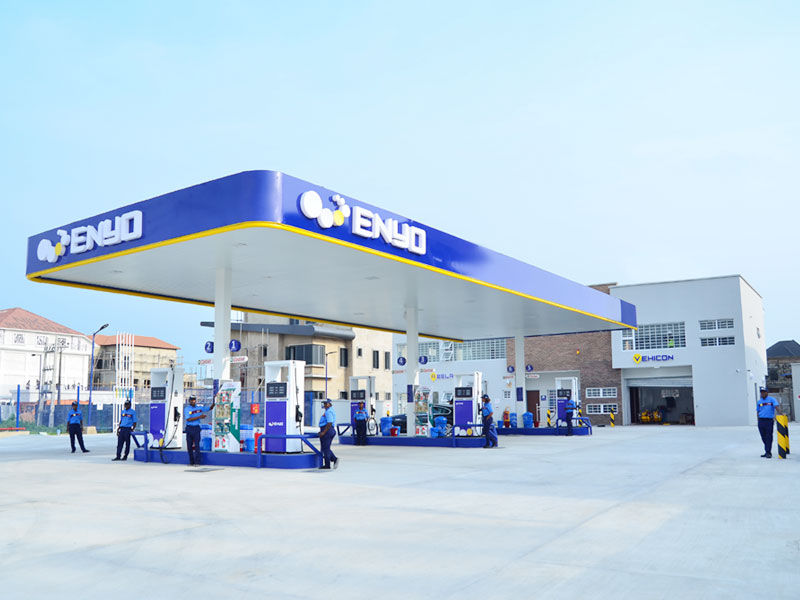
Enyo Retail and Supply is a new entrant into the downstream petroleum value chain with a vision to be the most innovative distributor of quality fuel products in Subsaharan Africa driven, supported with technology.

With over 700 employees and presence in 14 states, to be the preferred choice in a market that has several strong competitors, it has won the hearts of many by innovation in service delivery with proprietary technology deployed to boost its operations, relying on real time analytics.

It has a suite of products which include:


  • Diesel2Door, a quick and flexible and convenient manner to pay for automotive gas oil (diesel) and have it delivered at their convenience
  • Superior Liquefied Gas that allows its customers to purchase gas without having to pay for the cylinder
  • Vehicon an extra service which does vehicle diagnostics and other maintenance for free to reward customer loyalty in a sector where the consumer experience is bridled with underhand dealings from fuel station operators. It also does this to create a culture of vehicle diagnostics for Nigerians which will help in eliminating road accidents which could occur due to faulty vehicles.


To differentiate itself as a brand with integrity in service delivery amongst its pillars, it launched the ‘’Fuelled by Trust’’ initiative in 2018, to offer its customers commensurate value for the fuel purchased from its service stations as Nigerians are now wary of the accuracy and measurements of pump litres.

Another game changing extra value offering by this downstream brand is its MechTech service which has seen it deepen the capabilities of Nigerian mechanics by facilitating their education abroad, to upskill their capacity, in order to cope with the demands of fixing automotives of today and the future. Considering the fact that 80 percent of mechanics in the country lack the know how to repair state of the art vehicles which are brought to them, this corporate social investment by Enyo Retail and Supply must be commended.

Noticing the demand supply gap in STEM skills which is now critical for the socio-economic transformation of Nigeria, it partnered with leading social innovation lab Co-Creation Hub to launch a STEM Café at its service station where parents can bring their children to learn relevant skills such as coding, 3Dprinting, robotics, etc which will help them become players in a technology driven world.

Enyo’s long term vision is to become Nigeria’s first digitally smart self operating retail fuel brand which will offer 24 hour services autonomously. It is on the right track to make this promise a reality.

How to Minimize the Prolonged Duration of Postgraduate Studies in Nigeria

0
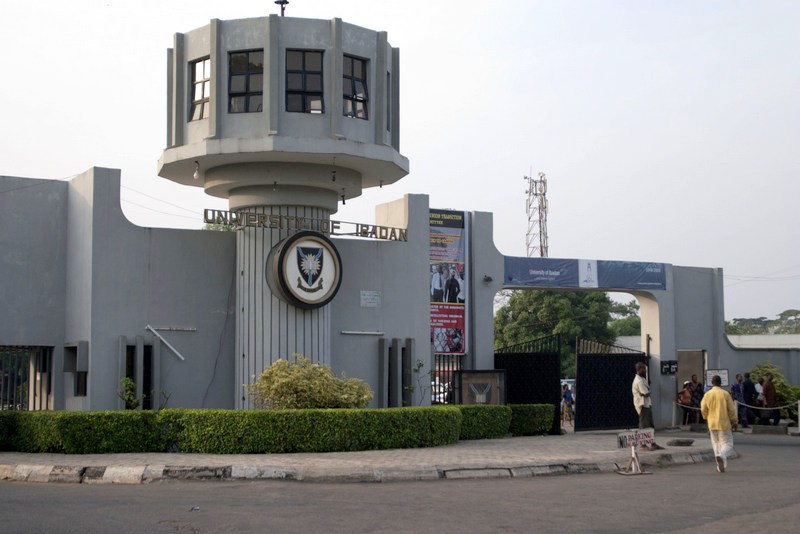
University of Ibadan, a federal university

I read a post on LinkedIn, where the writer said she studied Law in a Nigerian university for 9 years. She gained admission when she was 16 years and graduated at the age of 25. A lot of people may not believe her but I can quite relate with her. I didn’t study English in UNIZIK for more than 4 years, but it took 2 good years after my final exam for my result to be ‘computed’ and released.

The undergraduate students are actually enjoying, if compared to the postgraduate ones. Because of the need to send out students to NYSC, the undergraduates seem to be treated a lot faster than the postgraduate students. In postgraduate schools, regular students are given a duration of 18 months to complete their studies while the part-time students are expected to finish up within 24 months. Anyway, that is just for the admission letter, because in reality, both part-time and full time programmes last as long as God knows when. If you complete your programme in 36 months, my dear, you are fast.

This seems to have become a culture in Nigeria. People going for their master’s degree spend the same amount of time those going for PhD do. And those that are going for their PhD already know that they are to relax and wait for the school to get tired of them and push them out. This is quite unfortunate, and it’s not helping our system in any way.

Based on my experience and that of others, the reasons for the prolonged duration of postgraduate programmes in Nigeria include:

1. Inadequacy of Personnel: Believe me when I say that the number of lecturers in our tertiary institutions is not enough. The one that causes more concern is when institutions have to ‘borrow’ lecturers from other schools to teach some courses. If they fail to find lecturers, students will have to wait till one is found for the course – there is no waiver for any course so they may have extra year because the school couldn’t find a lecturer for them on time.

Another major concern here is that the lecturers that are in the school are over tasked. The same set of people will teach the regular undergraduates, part-time undergraduates, postgraduate diploma students, master’s students and, if available, PhD students. And each of these classes contains large number of students. So, what this means is that these lecturers will teach several courses, mark scripts and assignments, supervise projects and still struggle for their personal researches and publications. To be honest, the workload is too much for them.

2. Strike Actions: I know a lot of people that are still battling with their PhD for more than 7 years now because of different strike actions experienced for some years now. The strike action most people hear of is the one carried out by Academic Staff Union of University (ASUU) and Non-Academic Staff Union (NASU). But most schools still experience internal strikes done by the staff – academic or non-academic – of a particular school. Strikes can last for months; and by the time they are suspended, it will take another few months for the school and the students to readjust and continue with their academic works. Sometimes, as one organisation is suspending their strike, another one is resuming theirs. Honestly, strike is becoming a monster that is destroying our academic world.

We know that the delay of an academic programme comes with its consequences. These consequences include:

  • a. Students’ Drop Out: A lot of students get discouraged along the line as a result of the prolonged duration of academic programmes. This usually happens when the students get to the thesis writing level. This period can last for as long as two years without any tangible reason. This can easily make these students less motivated to continue with their academic pursuit.
  • b. Release of Half-Baked Certificate Holders: Because semesters, or rather lecture periods, are too short, students do not have enough time to study their courses properly. What they do is more like jumping in and jumping out of schools.
  • c. Extra Expenses: If you ask most people that did their master’s degree in Nigerian state and federal universities, you will find out that they spent about a million naira, or even more, in the programme. This extra expenses came as a result of the prolonged period of time spent on the programme. The painful thing here is that the school compels students to pay for those extra years, even though it wasn’t their faults.
  • d. Time Wasted: The time that would have been spent on other productive things is spent on running a master’s or doctorate programme. It is hard to decide how long you can spend in a school. You know when you enter, but you can’t tell when you will finish. This is quite unfortunate. If the time for these postgraduate studies are well managed, students can plan their lives better. What is more, people that spent so much time in school find it hard to go back for further studies.

We have seen the major causes of the prolonged duration of postgraduate studies in Nigeria and their effects. But something has to be done. It is left for the school authorities to make adequate adjustments to bring an end to this. I will make the following suggestions in this case:

i. Schools should engage a lot of part time and contract lecturers so as to balance up the ratio of lecturers and students in the school. This way, the school can save cost and still ensure that the works are well done. However, these part time and contract lecturers should be paid in due time (most federal and state higher institutions are known to owe their part-time lecturers).

ii. Two project supervisors should be assigned to a student. I know some schools do this, but others need to imbibe it as well. The essence of this is to ensure that students’ project works are well supervised and done in time too.

iii. School management should set up academic calendar for the PG school and ensure that it is adhered to. The place that needs more focus here is on seminar and thesis defence; this is usually the time most delays happen.

iv. Lecturers should be encouraged to embrace technology while doing their works. It is quite disheartening that supervisors do not allow their supervisees to submit drafts of their project works through email. They expect them to come to the office to submit hard copies. This would have been ok if the students are still in school. But in a situation where the course works have been completed and the students now work from home, I think it will be better if they communicate with their supervisors electronically. If such method is accepted for journal and textbook publications, it can also be applied to thesis writing. Besides, this method can allow supervisors and their supervisees to communicate from any part of the world. In other words, supervisors can comfortably travel for conferences and still be doing their jobs.

I believe that rounding off postgraduate studies within the time frame given in admission letters is possible in Nigeria. All that is needed is adjustment by the school and the lecturers. If a student decides to delay himself, he then can be made to pay for it. But it is improper for schools to tax students for extra school fees that they didn’t accrue. Let Nigerian universities, and other institutions of higher learning, start emulating their foreign counterparts.