DD
MM
YYYY

PAGES

DD
MM
YYYY

spot_img

PAGES

Home Blog Page 6636

Ndubuisi Ekekwe Will Deliver 2019 FUTO Convocation Lecture

5
FUTO is a top technical university in Nigeria

Few minutes ago, I accepted the invitation of the Senate of the Federal University of Technology Owerri (FUTO), my undergraduate alma mater, to deliver the Convocation Lecture during the 2019 convocation ceremony scheduled Dec 6-7, 2019.

To re-engineer and re-position the Federal University of Technology to be a truly world class university through recreating, nurturing and developing uniquely promising students and exceptional staff in Science, Technology and enterprise to the benefit of our globalized world.

To our Vice Chancellor (Prof Eze), the Governing Council, the Senate, the Committee of Deans, our Professors, the leaders of our alumni association, the FUTO alumni anywhere, and the very best – current FUTO students, I am truly honoured. Selecting who speaks to graduating students is an academic ritual, and to be invited to mount that podium is a moment.

Reading the letter, tears dropped from my eyes. Please believe in the promise of tomorrow; it is unbounded and unconstrained.

The Nigeria’s 9% Communication Tax

2

The rejection of the proposed 2.5% increment in Valued Added Tax (VAT) by the National Assembly was celebrated by businesses, companies and entrepreneurs. The National Assembly was praised for understanding the plights of SMEs and the implication the VAT increment would have on the overall economy of the country.

The decision of the lawmakers to halt the implementation of VAT was celebrated until they proposed 9% communication tax. It sent chills to the bones of the hopefuls, and anxiety to businesses that are already on life support.

If given the choice, many would prefer the 7.5% VAT although they are all seen as outrageous.

There is concern that the present government appears to be establishing a tax regime that will make up for the revenue lapses from other economic sectors. And they seem not to bother about whose ox is gored by the approach.

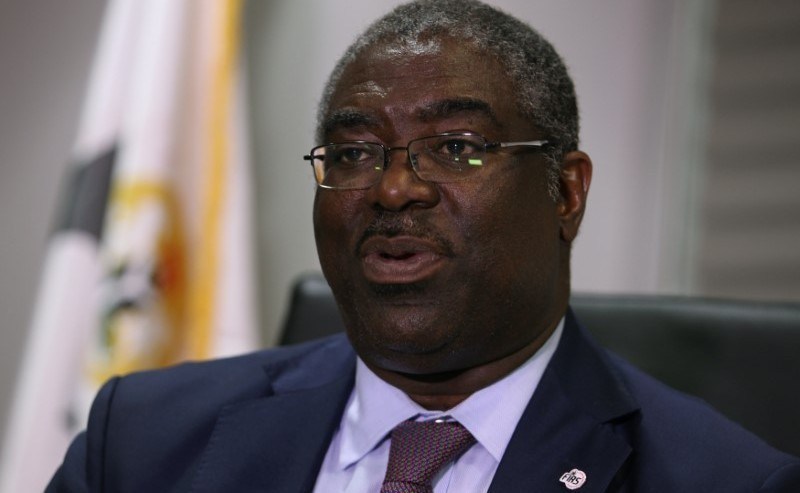
The chairman of the Federal Inland Revenue Service (FIRS), Mr. Babatunde Fowler, says the proposed communication tax is no big deal because Nigerians are equal to it.

“I will put it this way, Nigerians talk a lot on the phone; they even talk more than is required, so for them to capacity or revenue to talk that much, I don’t see any harm in paying a little bit more to government.” He said.

The 9% communication tax bill, if passed, will be levied on all electronic communications: SMS, MMS, voice calls and the internet. That means, every Nigerian phone user will have to pay based on the assertion that every Nigerian communicates like the rich.

The communication tax bill is coming at a time when internet data consumers, especially entrepreneurs, are complaining that the cost is becoming too high.

Mr. Fowler justified the move citing Ghana’s 2% education tax as an example. He said it has resulted in education development in Ghana, and Nigeria should borrow a leaf from that.

However, it is a popular knowledge that Ghana has made economic progress by cutting taxes, reducing their VAT, and waiving taxes for entrepreneurs.

The Nigerian government’s recent approach to taxes is said to be as a result of its dwindling revenue generation from the oil sector. Experts believe that attempts to make up for the losses through taxes will harm the already wobbling economy. Many SMEs in Nigeria are using their last lifelines due to lack of basic infrastructure to thrive on. So they need tax waivers to cushion the effects of the infrastructural decay.

In the age of data mining, when Information Technology is replacing natural resources, the Nigerian government has been encouraged to support internet based enterprises. Nigerians are concerned that the recent communication tax bill will only compound the woes of entrepreneurs.

Learning to Circumvent the Disconnect Between Schooling and Getting Industry Relevant Skills

0

When I mounted the podium to speak at the International World Youth Day programme organized by the Osun Zonal Youth Wing of NASFAT on Saturday, 24 August, 2019 in Ile Ife, Southwest Nigeria, I spoke deeply from my experience growing up, schooling and eventually becoming a gainfully engaged adult doing what I cherish most – teaching.

I spoke passionately about the education Nigeria is giving her youths. I was, as I have always been, pained by the disconnect between the ivory towers and the realities of our society. The implication is that many institutions churn out students that do not have the relevant skills required in the industry. The consequence of this is that we would continue to struggle with the menace of unemployment with the statistics running higher every year.

My stand then was buttressed recently by the Chairman of First Bank Plc., Mrs Ibukun Awosika, who has had to chide the Nigerian tertiary education system for wrongly training the teeming Nigerian youths. The financial expert also reiterated the need to urgently reform the nation’s curriculum. As urgent as this call was, my take is that the onus falls on the Nigerian students or graduates to realize the dire situation they have found themselves and take their own destinies into their own hands. And I charged them to stand up for themselves and turn their fortunes around.

I told my audience that the paths to tread to salvage the situation for themselves are the following:

Self Awareness : Whether you are an undergraduate or a graduate looking for a job, you have to be aware of the fact that unemployment predates your admission or graduation. You should also be aware that the courses you study might not give you the needed skills to get the job out there. You should know that you might get employed in an industry where your course of study might not even be relevant. Those skills you pay attention to or invest in while an undergraduate might come to your aid in your job search. Being employed or unemployed is not a function of the course you have gone to uni to study. It is a matter of how deliberate you are in building a life for yourself.

Self Education: At this time and age, you have to invest in yourself as a student in a higher institution of learning. I am talking about how much you are ready to invest in your own mental and intellectual development. How much are you ready to invest in building your skill sets to function in that dream industry you are aiming to work in? If your own excuse is lack of funds, there are a thousand and one free courses online: Future Learn, Udacity, Alison, Coursera etc. When you audit the resources you waste online without capturing any value, you might understand why you are unemployed. The charge is that you should continue to develop yourself both online and offline.

Mentorship: As a student aspiring to fit into a particular industry, you need to get mentorship from established people in the profession. This ensures you get guidance and even career opportunities. Your mentor would assist in reviewing your CV, give referrals and serve as referee when required.

Internship : It is a period of time devoted to learning from the industry usually designed by some professional courses such as Accounting, Mass Communication, Engineering and other science courses. Mostly, the period is sponsored by the Industrial Training Fund (ITF) for selected courses in both polytechnics and universities. It is indeed a time for self discovery. Whether formally stated or not, there is a need to go internship in your area of interest.

Social Media Literacy: As a student or graduate, it is important that you are literate about the use of social media. You have to review how you use your social media handles. Not only that, you must be able to differentiate between purely social networking sites such as Facebook and professional ones like LinkedIn. You can drive your career path with an educated use of social media.

In concluding my presentation, I asserted that doing all these might not guarantee success, but not doing them would mean you have not done enough to succeed. And in all of these, prayer remains a constant factor because experience has evidently shown that success is divine, to try to attain it is human.

Do Not Remove The LADDER After Using It

0

Do not remove this LADDER after you have used it to climb. The January day I landed at JFK New York airport, from Nigeria, for the first time in America, was the day I knew that the tallest mountain you have climbed is simply a starting base for another taller mountain! And if others remove the next ladder, you can’t make progress.

Ladder – as you climb it, remember there is a base. Before you took that first step, someone positioned or supported it, for you. It takes a man who has risen to the highest of mountains to appreciate the lowest of valleys. Extend the hands, while on that ladder, and get more to climb, to take the next step up. It does not make you less human or lesser focused-professional.

Simply, our best is the wish that everyone rises, and not just one rises. It was always a beauty, as a village boy, those days, when the iroko sang, and villagers assembled, and the elders began by reminding us: “to keep this village clean, everyone must join the sweeping”.

Ladder – do not climb alone.

African Telcos Need to Servitize Their Physical Assets for Growth

0

I recently read an old book; in one of the chapters, the author gave a scenario where the following dialogue took place between the founder of McDonald’s and a group of MBA students.

Founder: What business am I in?

MBA Students: Everyone laughed. Who does now know that you are in the hamburger business?

Founder: That’s what I thought you would say. I’m not in the hamburger business, rather my business is real estate.

The founder then went on to explain that even though his main focus was to sell hamburgers, he never lost sight of the land and location of the franchise, which were no doubt the most significant factors in the success of his franchise. Today, McDonald’s own some of the world’s most valuable street corners and intersections.

Telcos have constantly complained of increased competition and dwindling revenues from their connectivity businesses. Infact, telcos have constantly been advised to consider other digital offerings like data analytics, cyber security, cloud services, 24/7 connectivity etc to complement their traditional connectivity offering.

Even though these digital offerings would benefit telcos, they are yet to unlock value from their physical assets. Across Africa, it is common for telcos to own, manage and operate various cloud and data centres, retail outlets, antenna locations, offices, etc. These range of physical assets across various locations could be used to unlock value and therefore lead to significant commercial opportunities, just in a similar manner to the McDonald’s franchise model.

In order to unlock value from the physical assets, telcos need to servitize their physical assets to organisations in need of such offerings (leading to a business model of physical assets-as-a service). This no doubt requires innovative thinking.

In essence servitization is a transformation journey – it involves firms (often manufacturing firms) developing the capabilities they need to provide services and solutions that supplement their traditional product offerings.

Also, telcos need to start looking at their physical assets as commercial opportunities, rather than capital expenditures necessary for their connectivity business. The physical assets-as-a-service model, if implemented, would help to reduce the expenditures currently incurred by telcos on these assets as well as unlock significant value which would no doubt benefit their businesses.