DD
MM
YYYY

PAGES

DD
MM
YYYY

spot_img

PAGES

Home Blog Page 6656

Thomas Cook Collapses

0
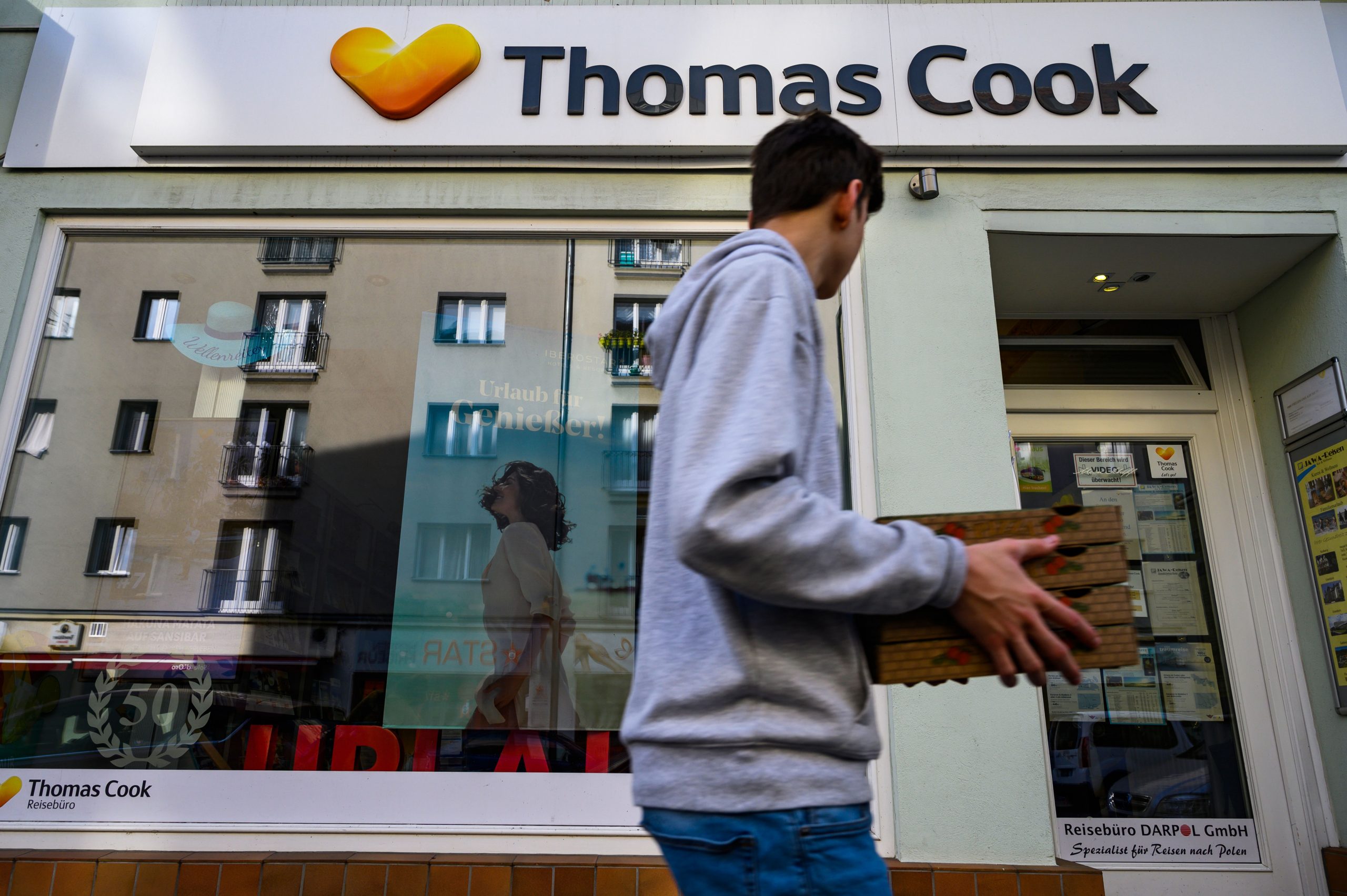
A young man passes by a travel agency of the British tour operator Thomas Cook in Berlin on September 23, 2019. - As British tour operator Thomas Cook declared bankruptcy, some 600,000 tourists from around Europe had their holidays disrupted. (Photo by John MACDOUGALL / AFP) (Photo credit should read JOHN MACDOUGALL/AFP/Getty Images)

Editor’s Note: This company has actually collapsed; the title of this piece has been updated.

Thomas Cook’s issues went beyond Brexit. But Britain’s complicated departure from the European Union, and its impact on the pound, may have been the final nail in the troubled company’s coffin.

The travel operator’s dramatic collapse follows years of mismanagement and a failure to keep pace with online rivals, writes Hanna Ziady from CNN Business. And Brexit didn’t help.

Analysts say it was one of several factors that led to the 178-year old travel company’s demise, which has left 150,000 UK holidaymakers stranded abroad and cost thousands of employees their jobs


The 178 years existence of Thomas Cook is under serious threat with the British traveling company failing to secure £1.1 billion bailout fund to stay in business.

Thomas Cook Group have been struggling with a burden of £1.7 billion debt that has pushed it into administration. The Civil Aviation Authority announced the tour operator’s bankruptcy early Monday morning.

“Thomas Cook Group, including the UK tour operator and airline, has ceased trading with immediate effect. All Thomas Cook bookings, including flights and holidays, have now been canceled.” The aviation regulator announced in a statement.

In a statement issued on their defunct website, the company acknowledged the announcement of the Civil Aviation Authority.

“We are sorry to inform you that all holidays and flights provided by these companies have been cancelled and are no longer operating. All Thomas Cook’s retail shops have also closed.”

The Guardian reported that apart from the 9, 000 UK jobs at risk, about 150, 000 travelers, who use Thomas Cook services are stranded around the world. The unprecedented turn of events has prompted a backup plan by the UK government to evacuate her stranding nationals.

The UK Prime Minister, Boris Johnson, who has ruled out the possibility of £150 million bailout from the government said the only plan of action is to bring the Holidaymakers home.

“It is a very difficult situation, and obviously our thoughts are very much with the customers of Thomas Cook, holidaymakers, who may now face difficulties getting home. We will do our best to bring them home.” He said.

The contingency plan was also reiterated by the Foreign Secretary, Dominic Raab, who told the BBC that it’s all the government has on the table for now.

“We would wait to see and hope that Thomas Cook can continue but in any event, as you would expect, we’ve got the contingency planning in place to make sure that in any worst case scenario we can support all those who might otherwise be stranded.” He said.

The tour company has been making desperate moves to savage a dire situation that holds the fate of 21, 000 employees and about 600, 000 travelers around the world.

Before now, the company has accepted a £900 million bailout but was told to get £200 million more, which is proving difficult. Meeting with stakeholders, among them, Chinese conglomerate Fosun, has proved futile, instigating the kind of disappointment that the chief executive, Peter Fankhauser doesn’t want to talk about.

The guardian reported an indication that the company made a lot of proposals, which includes asking lenders to reduce a £200 million demand for extra funding and for credit card companies to release about £50 million of cash they hold as collateral against Thomas Cook bookings.

The whole situation has thrown the holidaymakers into panicky, especially those who are on a trip right now. However, Thomas Cook has reassured them that there is nothing to be scared of, since their interest is protected by the Atol scheme, a (sort of) insurance scheme that guarantees the welfare of holidaymakers. A staggering £600 million to bank on in case things go south.

But the twist in the hope is that not all the customers of Thomas Cook have the Atol coverage, and the company noted that repatriation flights are only available for passengers whose journey originated in the UK. Therefore, the cancellation means that many are going to get thrown out of hotels or planes.

Holidays companies usually don’t pay the bills until after 90 days, but in the case of cancellation and obvious liquidation, hotels try to get their money from holidaymakers.
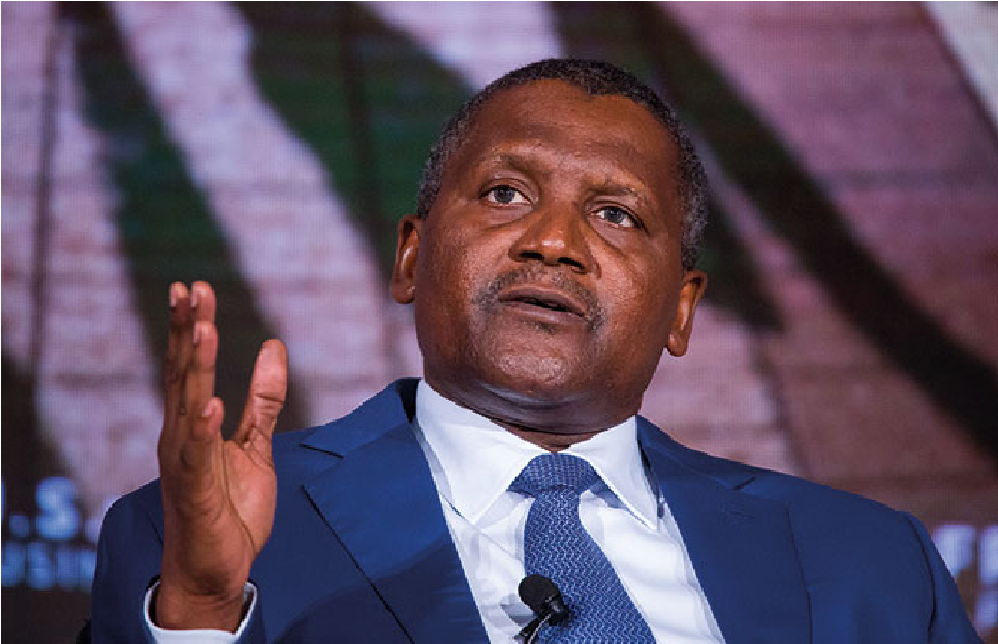

Conglomerate Tax – When Companies like Apple and Dangote Group Tax Citizens and Economies

2

Conglomerates are unique. They operate at the upstream level and are very unique species in markets. They make critical infrastructure investments which help to unlock values and opportunities in economies. The reward is that they become centrally critical that everyone depends on them to operate.  As that happens, they impose tax – the Conglomerate Tax – on the economy as they have accumulated capabilities to redefine policies in their favors. Conglomerate Tax is global; you can read more about it here.

For all the talks of startups in Nigeria, the reality is that nations need conglomerates because their sizes help them to make critical investments. For example, Dangote Refinery can help fix some challenges in the transportation sector through efficient supply of fuel in the economy. When you have many of them, your economy does better. That means, you have companies with capacities to tackle serious market frictions. Yes, as conglomerates do so, they get huge rewards: they become tax collectors on the economy. And they do keep those taxes with lots of goodies from governments.

This is the reason why Dangote Group can get favorable forex on dollars while the trader in Aba does not register in government’s radar. Dangote Group is fixing real market frictions which government wants to see solved at the upstream level while the trader is “who cares’ because his trade is commoditized, operating at the downstream. 

That is at the heart of why some companies receive government benefits while others do not. Today, the U.S. government shared the goodies with Apple because it wants Apple to make Mac Pro in Texas. Yes, it waived many import duties from China, for Apple,  because Mac Pro has to be built in America. If you run a small startup in Texas, and asks for those waivers, the U.S. government will not bother because the problems you are solving in the economy are not in the upstream, as of now.

People, as you grumble over Dangote’s favourable treatment from the government, relax and get over it. Dangote’s problem is that he is the only one at his scale in Nigeria. By the time he is done with the refinery, the rules will be changed to favour him. People will forget how it was before him; yes, those fuel crises. Interestingly, if you do exactly what he is doing in other domains, government will do the same for you, provided you have scale and can solve real frictions government wants fixed. That is the nature of capitalism! Apple and America showed it today for Mac Pro.

Apple will continue to manufacture its Mac Pro computer in Austin, Texas, the company announced today, just days after the Trump administration granted the company tariff exemptions for Mac Pro components made in China.

The U.S. Trade Representative last week granted 10 of the 15 exemptions that Apple requested, Bloomberg reported. Apple CEO Tim Cook today credited the Trump administration for the company’s decision to keep assembling the Mac Pro in Texas.


Ex-Andela Engineers Unveil a TaskRabbit Called Eden

0

“Eden is a tech-enabled service that puts your home’s chores on autopilot. It’s a superior answer to the question of an inferior lifestyle. If you’ve ever wanted better services for things like your Laundry, meals, house cleaning, equipment maintenance, etc. then you have silently prayed for Eden.”

This is how the CEO and Co-Founder of Eden, Nadayar Enegesi described the new invention. Enegesi led other two ex-engineers of Andela, Prosper Otemuyiwa and Slim Momoh, to develop the TaskRabbit for house chores.

Eden was developed on gig economy to provide quality home services for people who have a very busy schedule, by connecting them to the actual service providers they need for tasks.

Eden works by giving you a well-trained home concierge (we call them Gardeners), who handles your home’s chores while you go about your day.

You tell us about your home needs.

We assign you an Eden Gardener.

Your Gardener takes over all your home’s tasks.

You monitor the status of the chores on your app and leave feedback where necessary.

“If you are a Nigerian, you understand that things are just unnecessarily difficult. Buses are hot creaky metal death-boxes that could catch fire at any moment. You need to queue to join the queue that connects to the queue to get your voter’s card, driver’s license and international passport photographs. You enter a ride-hailing taxi so you can get stuff done on the go; only for the driver to ask you for directions.” Enegesi said.

It is in a bid to make life easier for people who can afford it that Eden was developed, so that they can hire professionals to take care of these tasks.

The founders explained that the services can be used with little budget. And there is hope and plan to get it across the African continent in no time.

“We have studied this phenomenon and used those insights to create a blueprint for our idea of sustainable African cities.

“We imagine a complete redesign of society and the principles that drive it. We are creating new cultures, systems and processes to ensure that people who provide services are rewarded properly and the people who require those services receive the highest quality of service possible.”

The Eden app mediates between services providers and customers, following the method of e-hailing services.

Devaluation of Naira Unavoidable Before Dec 2021

3
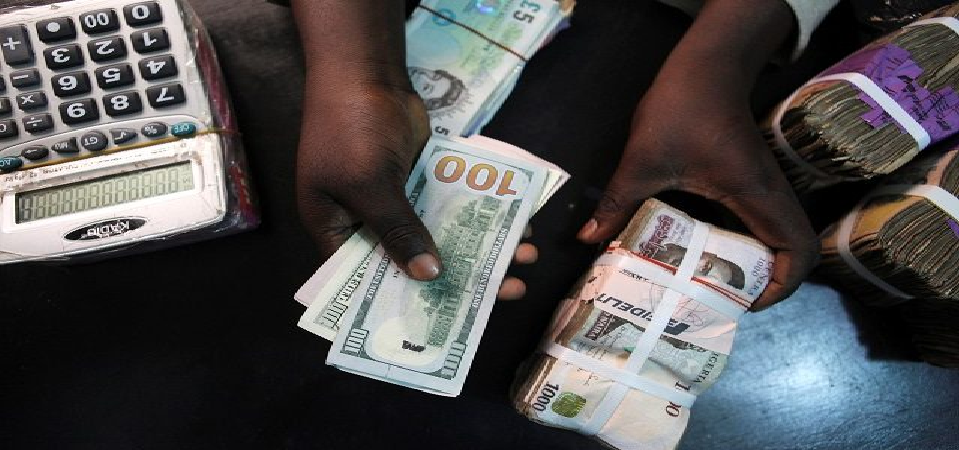
Nigeria Naira US Dollar

The Nigerian tax agency (FIRS) is closing offices, seizing bank accounts and writing customers of “tax defaulters” with unbelievable energy that if Nigeria has deployed the same zeal in fixing electricity and education, we will have a better nation. I support FIRS on its mission but it needs to calibrate its secondary sources: the FIRS algorithm is not evidently fault-tolerant. 

Yes, on Friday, a lady had her office locked up because FIRS did not believe her tax receipts. She drives a “big car” and by extrapolation, her company was making more money than she declared! Her plea that her husband bought the car was not accepted. Go figure.

Government will make marginal progress on tax receipts. But that will not fix anything as the economy is not growing healthy enough for tax to dent our debt paralysis. The question is this: what happens when all mechanics of tax collection have exhausted and yet nothing has improved the total receipts?

This is why I am projecting that Nigeria will devalue its currency in 2021. This devaluation will help offset internal debts we are packing now. Because our oil is sold internationally, government does not get the heat on devaluation since it still receives dollars which magically becomes a lot in a devalued naira. It uses the generated tons of naira to pay local bank loans, and other debt obligations.

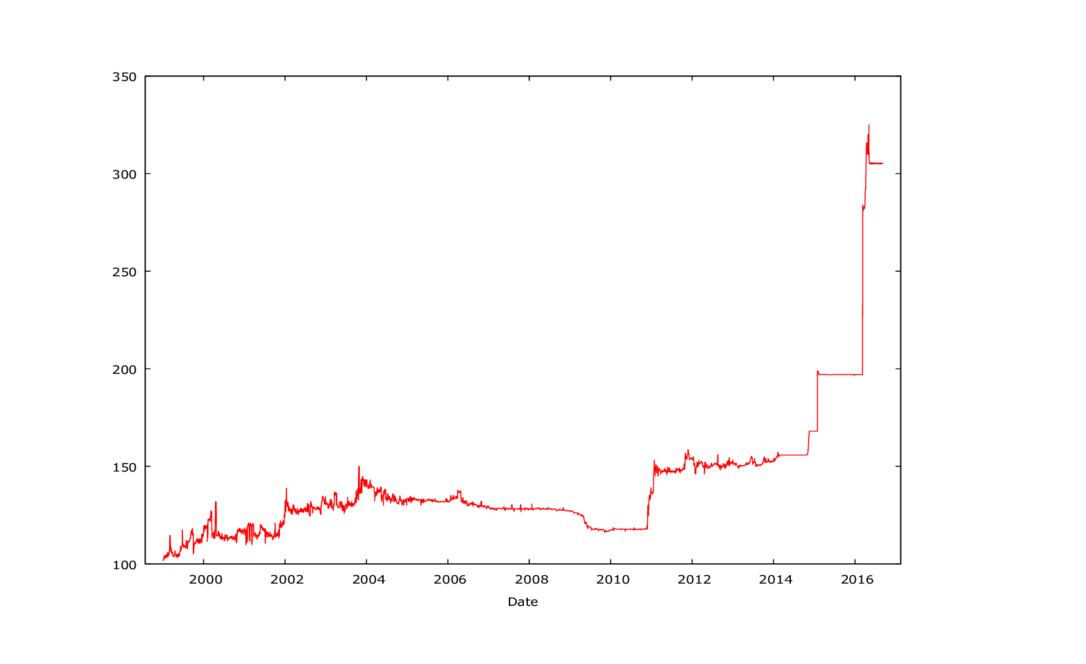
This mindset which started since the new democratic dispensation began in 1999 is the biggest risk to Nigeria: continuous use of currency devaluation as a core monetary tool to adjust disequilibrium in the economy. The military juntas protected the naira more than the civilians (see plot). Before 1999, it was below N100 to US$1 for decades; since 1999, it has risen to N500 before settling at N350! I expect the naira to fall to N450 to one USD by Dec 2021.

naira devaluation since 1999 (official rates used)


Why is that possible? Government has disintermediated bank lending by making treasury bills (TB) a solid investment mechanism in Nigeria. My Nigerian bank practically did not want me to invest in TB because its own money did not have enough space (I guess). So, it changed its rules that I must instruct it, monthly, to invest in TB over the “perpetual instruction” I had previously issued. With no way to be sending letters to reinvest my TB, they returned the capital, and after a while, I moved that money to something else.

Here is the problem: if the Nigerian treasury pays you 14% at practically no risk, why would you as a bank invest in any company in Nigeria for say 17% with all the associated risks? So, as CBN jacks up the TB rates,  investments in the real economy will keep dropping because anything but TB becomes unattractive. Of course, you do not pay tax on TB which means, compared with other sources of income, the effective returns could be close to 18%. Under that construct, any bank that invests in any other thing when there are treasury bills available in Nigeria, is not fiduciary responsible to its financial stakeholders.

With the economy not growing, now slower than the population growth, the government will panic in coming years to cover expenses. The panic will lead to currency devaluation. Unless Nigeria can magically grow economically at say 5% in GDP in coming quarters, the Naira will lose value to leading global currencies. Now is the time to plot your survival strategies!

Towards Made in Nigeria Products

7

The issue of scaling the sales and support of made in Nigeria products is very hard and authorities are getting exhausted with various approaches used to gain the trust of the Nigerian populace. As the GDP generated from locally made and sold products drops rapidly, there must be a way the vast stream of Nigerian SMEs who are producing locally made goods should benefit for their hard-work. But then, there is the problem that looms, it has shattered the hope of the common and average sized production companies locally. Whats the hope for made in Nigeria products?

According to Trading Economics, Imports to Nigeria surged 45.8 percent from a year earlier to NGN 1042 billion in June 2019, boosted by purchases of manufactured goods (100.5 percent); raw materials (38.5 percent); agricultural goods (1.6 percent) and solid minerals (86.9 percent). Among major import partners, purchases rose mostly from China (78.7%), India (70.2%), Japan (92.2%) and the US (181.6 percent); but fell from the Netherlands (-23.1%) and Spain (-34.6%). Imports in Nigeria averaged 234304.14 NGN Millions from 1981 until 2019, reaching an all time high of 2209385.78 NGN Millions in August of 2018 and a record low of 167.88 NGN Millions in May of 1984.

In a bid to boost local sales and production, President Muhammadu Buhari directed the Central Bank of Nigeria to block food importers’ requests for foreign currency in a bid to boost local agriculture in Nigeria.

It is a continuation of a policy that the president began after coming to office in 2015, when he banned the use of foreign exchange to import dozens of items including the staple food, rice. Since then, domestic production has increased, but the policy has been criticised for not taking the low capacity of local farmers into consideration. The policy has also coincided with a rise in food & product prices, which has been blamed on insecurity in some of the country’s main food producing areas.

To enable you understand this issue, lets consider the following pointers:

What is Made in Nigeria Product?

A made in Nigeria product is a product (goods or even services) that is produced locally in Nigeria. This means that the product (goods or services) was not imported. The materials used for the production of such goods and services were obtained locally.

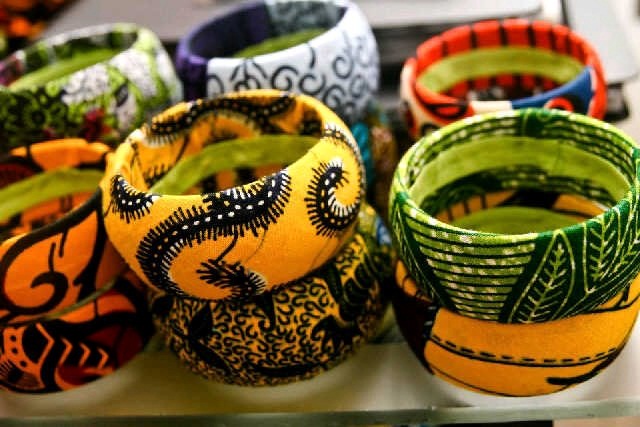
A footwear, Courtesy of Nairaland Forum

What are the Challenges of Made in Nigeria Products?

For the average to the large sized Nigerian production businessess, there worries are numerous. They include:

Corruption

One of President Buhari’s top priorities is to root out corruption. A recent poll conducted by NOIPolls and LEAP Africa revealed that 85% of adult Nigerians believe that the prevalence of corruption in the country is responsible for the bottlenecks that characterize the difficulty of doing business in Nigeria. Reasons given for the prevalence of corruption in Nigeria included weak government institutions (24%) and poverty (18%). Well-connected business people gain from anti-competitive practices that shield Nigeria from market forces. The Government of Nigeria has sought to address corruption through the Economic and Financial Crimes Commission (EFCC), the Independent Corrupt Practices and Other Related Offences Commission (ICPC), and the Extractive Industries Transparency Initiative.

Power Supply

A lack of a consistent access to reliable power costs businesses and the economy as a whole. Even with access to energy, unreliable power makes operating a business even more challenging than usual. Nigerian business and manufacturing enterprises experience power outages. As a result, firms lose sales revenues in the informal sector. Where back-up generators are limited, losses can be as higher. These losses have severe consequences for the health and growth of the wider economy, not to mention the dramatic impact in achieving other development objectives outlined by the sustainable development goals (SDGs).

Owners of small businesses in Nigeria seem to have adapted to the poor power and epileptic power supply in the country as they have resorted to alternative forms of getting electricity to power their businesses. Those that suffer most now are the SMEs and the micro operators that rely on generators, more so now that the fuel is not even available, their problems have been compounded. With a remarkable increase in operational cost and poor purchasing power of consumers, the manufacturing companies have had to lay off thousands in the last six months, with about three million still to go.

Selling Platforms

The average size and even large size Nigerian business relies on the facial selling pattern where the goods are bought at a cash rate during market sessions. The whole world are leveraging on different marketing schemes to help boost their business presence. Unfortunately, many SMEs who are into production of made in Nigerian goods are yet to catch the cruise.

The selling platforms such as Jumia, Konga, and even Amazon does not fully feature Made in Nigeria products as their strong points. Why? Policies, intents and objectives differ with respect to individual e-commerce companies. The platforms do not recognize the average Nigerian business on the streets. The average Nigerian production companies are in awe, as they see fellow citizens purchase foreign products that they can produce with more superiority and style.

Finally a Hope for Made in Nigerian Products!

The e-commerce scene is pretty much dominated, but there is a new kid on the block that promises to bridge the gap between foreign and made in Nigeria market. Launching on October 1st, Keanyi is the first indigenous e-commerce marketplace to sell strictly only made-in-Nigeria products! With a large database of vendors they seek to garner, it will definitely become a force to be reckoned with.

Currently, there are some vendors on the new platform. In time, the sore story of the poor selling process faced by Nigerian indigenous companies will become a history. Until then, we can only be optimistic as to what the future hold for Keanyi?—?Our Own!

Conclusion

The need to patronize made-in-Nigeria goods cannot be overemphasized as it is one major way to economic growth and development. The economy of any nation grows rapidly when locally made goods are promoted through patronage, first by its people then through export.

It is, however, dispiriting to know that we obviously have been growing other countries’ economies through our over-dependence on imported goods, especially those which have local substitutes. Nigeria can easily experience a breakthrough in the quest for local content development and a stable, strong and advanced economy if Nigerians would patronize made-in-Nigeria products.


Featured image  (source Nigerian News Direct)