DD
MM
YYYY

PAGES

DD
MM
YYYY

spot_img

PAGES

Home Blog Page 6660

Benefits and Disadvantages of China-Made Products in Nigerian Markets

0

I travelled over the weekend and, as usual, turned off my gas from the cylinder. I came back on Sunday afternoon and turned on the regulator only to hear the hissing sound of a leakage. I was so surprised because there was no such thing before I left, and that was just two days before. Besides, I only bought that regulator early this year. I didn’t find this funny because I had a similar experience with the precious regulator.

Well, I had to go for another one; gas is not something to toy with. Getting to the hardware store, I laid my complaint to the seller – I can’t be buying regulator every few months. He brought out 3 different regulators with prices pegged at #2,000, #2,500 and #4,500. He told me that the first two are China products, while the third one is Indian. He said the Indian one will last longer than the China ones.

Hmmmmm. The first two looked so attractive. I bought the one that just got spoilt #2,500 and it lasted for more than 8 months (and it’s ‘China’). Besides, I never had an issue with it until that very day. And to add to it, I was low on cash.

So, I took the one of #2,500. I got home, fixed it, used it for some minutes and noticed that I smelled gas. Well, safety first. So, I returned it and took the Indian one. When I unwrapped it, I saw a lot of differences – you can’t compare its durability with the other two.

I know a lot of people will blame me for even going for cheap things because we already have this belief that the more expensive something is, the more durable it is. This is true, but not in all cases. It is possible that I will pick up this Indian one, break the seal and still meet something close to the Chinko ones. So I initially didn’t want to take the risk.

Besides, I have had the opportunity of buying things directly from China, through Aliexpress. I found out that things may be cheap and still be durable in China. The jewellery I bought were gold plated and they are still in good conditions for over five years now. This is the same thing with some other things. The truth is that, in China, if you want cheap things that you will use and dispose immediately, you will get them; if you also want the not so cheap ones that will last longer, you will still find them.

Honestly, I believe that our importers buy those very cheap products and bring them into the Nigerian markets. If they had gone for something better, I don’t think we will have a lot of low quality materials in our markets.

Anyway, my interest today is not on our importers and the products they flood the Nigerians markets with. My concern today is to throw a little light on the benefits and disadvantages of Made in China products in our markets.

Their Advantages

I know this is debatable, but you will agree with me to some extent that those sub-standard goods in the market have been benefiting a lot of Nigerians. I’m not talking about the business men and women that make their millions from buying and selling them; I am referring to the consumers that benefit from buying and using them. Below are some of these benefits

  1. Price Regulation:

No matter how we see it, Chinko products help to regulate the prices of things in the market. That you are selling German product at #1000, while your neighbour is selling Chinese own at #150 means you will sit and watch your neighbour take your customers away. Trust me, you may stay a whole day selling just one product while your neighbour doesn’t even have time to sit down because he has so many customers to attend to. So, the only thing you have to do is call your German people and tell them to do something or you will switch to Chinko level.

  1. Affordability:

This is the commonest characteristics of every China made product. In fact, I always wonder if China deliberately reduces prices of goods to attract customers. For instance, I once checked ASOS, an American online shopping outlet, for gold plated jewellery and couldn’t find what I wanted. I then checked other jewellery and saw the ones made with steel. But what surprised me is that a plain simple-looking small earring was sold at $40 dollars; while in Aliexpress, I could buy a set of glamorous gold-plated earrings, necklace and pendant at $20 (for the whole set) or less. So, no matter how we look at it, Chinese products are affordable.

  1. Accessibility

I don’t really know the right word to use here. But what I have in mind is the way China made things easily accessible to people. Today, a lot of people use mobile phones because China made theirs cheap. For instance, there are phones of #2000 in the market these days (and I’m not talking about second hand o). I even saw Android phones of #7000, with big screen and all.

Their Disadvantages

In as much we enjoy some benefits from China made products, we should also remember that there are some problems we face as a result of them. These include:

  1. Disposal Problem:

We know that some China products sold in Nigeria spoil faster. Nigeria, which has yet to develop a sound waste disposal culture, is now faced with how to dispose of these wastes. A good example is the rechargeable torchlight (hope it doesn’t get banned, please). This type of torch costs as low as #250 and lasts for like 4 months. This means that in a year you may have to buy about 4 torchlight (that is, if you didn’t spoil any before its expiration date). Knowing the state of electricity in the country, you can imagine how many people buy torchlight every year.

  1. Disappointment:

This is another characteristic of China made products. They are known to disappoint at any time. If you rely solely on it, you may find yourself stranded one day.

  1. Lesser Value for Money Spent:

You know, you may look at Chinese products as cheap, but when you add up all you spent on replacing spoilt one, you will realise that you have actually spent a lot. Because of its cheapness, you won’t realise what is happening until you sit down to calculate how much you have spent. So, in the long run, these products aren’t cheap.

  1. Risk:

It is not advisable to go for China made when you are buying high-risk products. For instance, this regulator that suddenly started leaking gas could lead to gas explosion if I didn’t detect it on time (that the cylinder is outside may not stop that).

But all in all, I still believe that it is the fault of we, the Nigerians, that we have substandard goods flooding our markets. Our traders should be made to buy products that are of good quality and sell to us. If they want to buy from China, they should go for better products and bring into the country and not look for very cheap ones because they want to make profits.
What Is A Healthy Mind?

0

The brain is the box in the humans head that flash, memorize, sense, stimulus and solve a logical or mathematical problem.” The brain does not grow but it develop”.

The earth consists of the biosphere, ecosystem, biotic and abiotic factors in the world. Human beings are major organisms that control the planet without them no earth. “It is in the earth and in the world that there is nothing more important than to know what is right,” that’s the ethics; discovering the right and wrong. When a roof is strongly construct and built; this means that no amount of rainfall can destroy or penetrate inside the building because it’s been strongly constructed. Sequel to this, if the roof is not strongly constructed this means rainfall will penetrate into the building.

Likewise, building a house on a sinking sand. Building a house on the rock means having a healthy mind, no negative environment can change you, no unworthy friend can corrupt you, no negative vibes friend can corrupt you. But is your mind that corrupts you. This means when you carry out a particular project which can be positive or negative; it is from your mind the inbuilt and chips in man that project evil or good is the mind. The mind deals with the spirit and the spirit deals with the mind which means before a particular thing is been project or program the two must be applied effectively.

The Life of a Healthy Minded Individual

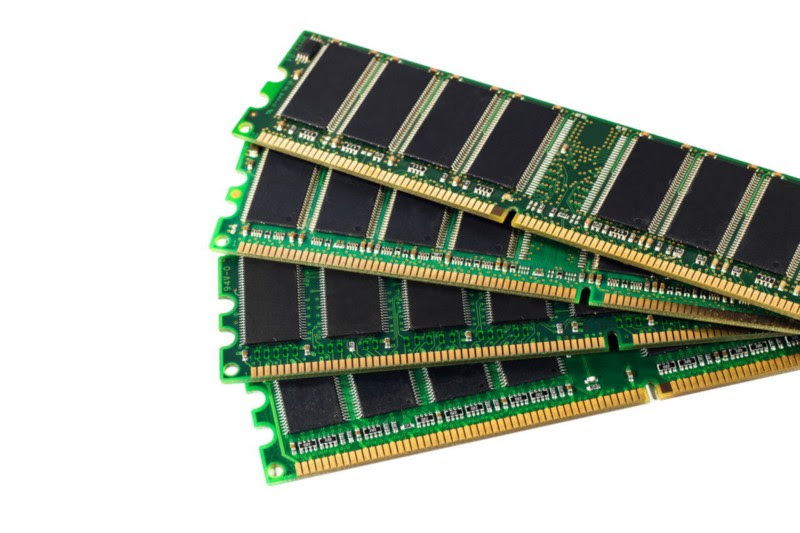
The Random Access Memory, Image copyright of Techspirited

The mind is like random access memory (RAM) in humans. In mind, positive things are plan and negative things are also plan in the memory. People will ask what the difference is between the mind and the brain? The brain is the box in the humans head that flash, memorize, sense, stimulus and solve a logical or mathematical problem.” The brain does not grow but it develop”.

The healthy mind I’m talking about is the right mind that obey the law of good nature; people will ask what is the law of good nature? Nature has a law that covers it or rule it; according to Murphy’s law it states: “Anything that goes wrong must surely comes bad” and I opine that anything that goes good must end well. If you project evil you ripe evil and if you project good you ripe good; this is the law that govern nature. When the mind is healthy what you will be thinking of how to create, establish , invent and also live and give off a life of morale support. A healthy minded person or individual is one who thinks about the right thing, who is law abiding, who is trustworthy, patient, honest and caring.

Qualities of a Healthy Minded Person

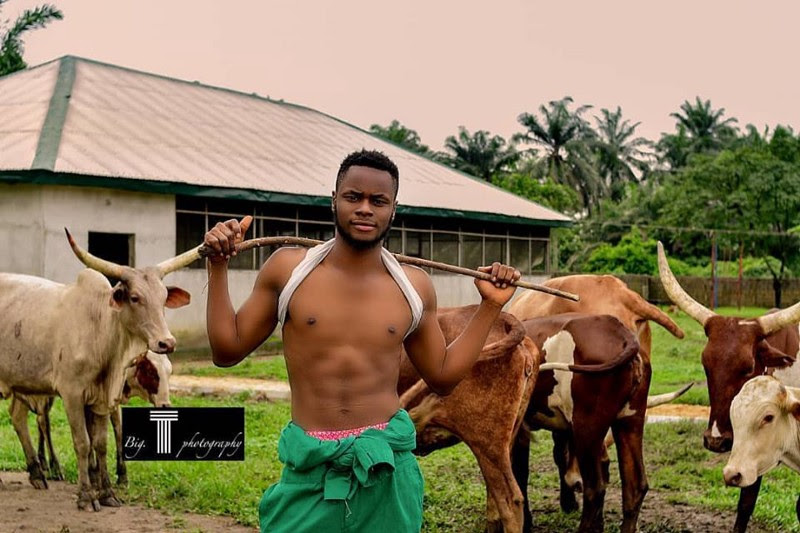
Image courtesy of Campusroyalty, depicting a health-minded Individual who is a Stock Agriculturist

A healthy minded person or individual lives an exemplary life, not egoistic and aggressive. A healthy minded person exhibit a good character in any environment he found himself. A healthy minded human shows interest of any good agenda to establish which can be effective to his life and his household. A healthy minded person thinks about the future. They project for good not for bad. They talk about the reality and are realistic in nature. A positive minded person is straight forward.

Some qualities of healthy minded person includes according to PyschCentral:

  • You’re Able to Hold Two Opposites in Your Mind at the Same Time.
  • You Can Manage Your Feelings While Communicating.
  • You’re Self-Aware.
  • You’re Comfortable in Your Own Skin.
  • You’re Willing to Take Risks.
  • Become Less Invested in Being Right.
  • Learn and Practice Mindfulness.
  • Work on Viewing Failure Differently.

Always remember that no one is perfect but will work towards a little, only our creator is perfect. We humans are imperfect, so we do our best. Be strong, Honest, Loyal, Be submissive to the master, Patient, Never outshine the master, Don’t argue, Don’t gossip, Always obey the law of the land, Think big, Create, Invent and Help others.

A healthy minded individual is strong in any environment he/she found his/her self. When you are in the midst of social smokers and your mind is healthy, the best thing to do is to go away from that spot because it will affect the mind by displaying or signal the cigarette to you to have interest. Abstaining from that spot is the best solution for the problem;

A man who think about sex outside marriage has unhealthy mind; be honest to your partner,fidelity and fully cherish he/she.

Be careful in any environment you find yourself and try to adapt positively. “Let your believe be your believe, let your yes be your yes and let your no be your no”; with this method no man on earth will confuse you”. We all know the right and wrong and it is left for us to choose the one that will suit us.

Conclusion

Brain conclusion (source Codeburst)

My spirit is the engine of my body likewise heart and mitochondria. The spirit and mind are twin brothers in me that works hand in hand to achieve a common goal which can be negative or positive. These two brothers agree in any decision they take and they are responsible for good or evil that affect man.

Traveling to America or Europe can not change your mind if you have an unhealthy mind; your mind is your mind and your spirit is your spirit.

Man is nothing without the twin brother in him. Thinking is a spirit which cannot be seen but it comes in when the mind is about to project. Humans are nothing without this twin brother because with them you think rationale. In conclusion, life is good when a healthy mind is apply in all ramifications and in every sector of your life this means that your life is your life in the spirit of your mind and it takes many years to construct, plan and build a bridge but it takes seconds to destroy it likewise the mind.

Lessons the National Assembly Should Learn from Anambra Lawmakers on Luxury Cars

0

The decision of the members of Anambra State House of Assembly, to turn down the proposal of purchase of Prado Jeeps at the cost of N1 billion has received a lot of encomiums.

It was reported that Anambra State Governor, Willie Obianor, had planned to give the cars to the lawmakers as gift.

But the members of the state assembly opted for Innoson Vehicles instead, saying it would save cost and add vigor to the economy.

The South East and South-South Governments had agreed in an economic summit, to patronize locally made goods in order to augment the economy of the zones. In line with this agreement and the need to save cost, the lawmakers have taken their stand.

Their decision to go Innoson has been praised as it resonates with principles of good leadership set out by the preceding Governor Peter Obi. It also serves as an example in a country where such traits are rare.

A week ago, the news broke that the National Assembly is proposing N5.5 billion for cars. A development that has stirred outrage among the people because the same government is crying lack of fund to implement the basic infrastructures needed in the country.

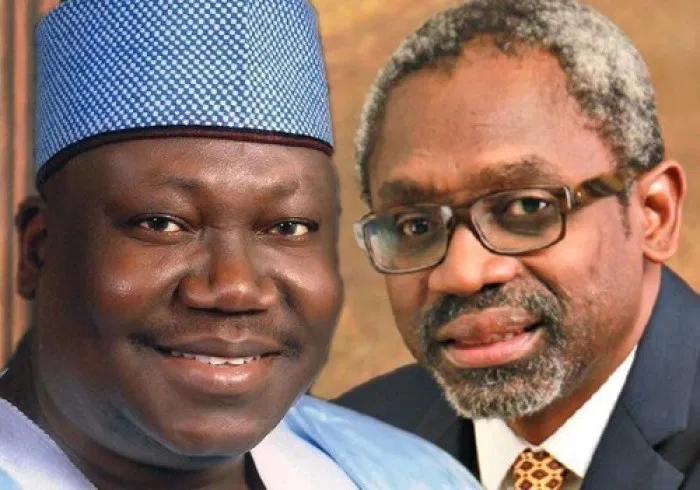
The criticism that trailed the announcement did not deter the lawmakers, neither did the obvious infrastructural decays gaining momentum on the daily. In fact, the Senate President, Ahmed Lawan, said it is an insult to the senate that Nigerians are complaining about such a huge sum. After all, the cars are going to be used in the interest of the country.

All these are taking place at a time when Nigeria’s foreign debt is at $25.6 billion, and the external debt is over $21.04, and the Government is in talks with the World Bank for a fresh $2.5 billion loan. The over N13.5 million running cost per a lawmaker in the National Assembly is taking over 25 percent of the annual budget. And basic infrastructural amenities are at the receiving end of the brute spikes.

Nigerians are urging the National Assembly to learn from Anambra lawmakers in cutting the cost of governance and putting the country first. If at all there is a justifiable reason to spend such a whopping sum on vehicles, local producers should be patronized to boost the economy.

Nigerian made car (source: Innoson)

The 8th senate was famous for its slogan, “Buy Naija to grow the Naira,” invented to encourage patronage of locally made goods and services. It is clear that unlike in many other commodities, the Nigerian Government is not going to ban foreign made vehicles in order to promote locally made ones.

Nigerians have thus urged the governments, especially the National Assembly to set a patriotic example by buying from Innoson Vehicles Manufacturing, or enact a law making governments’ patronage of local producers compulsory.

The Village Cooks for WeWork

5

An African proverb is clear – “no man, no matter how wealthy, can prepare enough food for his kinsmen, but if those kinsmen make food for him, he will be unable to consume the whole food”. That proverb is not saying that Dangote cannot feed his village kinsmen in Kano for an evening. Rather, the proverb is drawing on the strength that comes from unity and the “wisdom of many”. 

In the Igbo nation (Southeast Nigeria), parents name their children “Igwebuike” [strength in many] because despite the success of any person, the real strength comes in teamwork. The elders conclude by saying that no matter how big an iroko tree is, it can never be called a forest because a forest requires having many “trees”. They always drop that proverb when they task successful people to help others rise because without others coming up, there will not be a community.

(Sure, I agree that many have turned things upside down by requesting you upgrade pronouns in addressing them. So, you address a man as “Unu abiala” [Have you people come] even when only one man is standing before you. Yet, that one man cannot make a forest even though he is a big man (in body size) and certainly wealthy.)

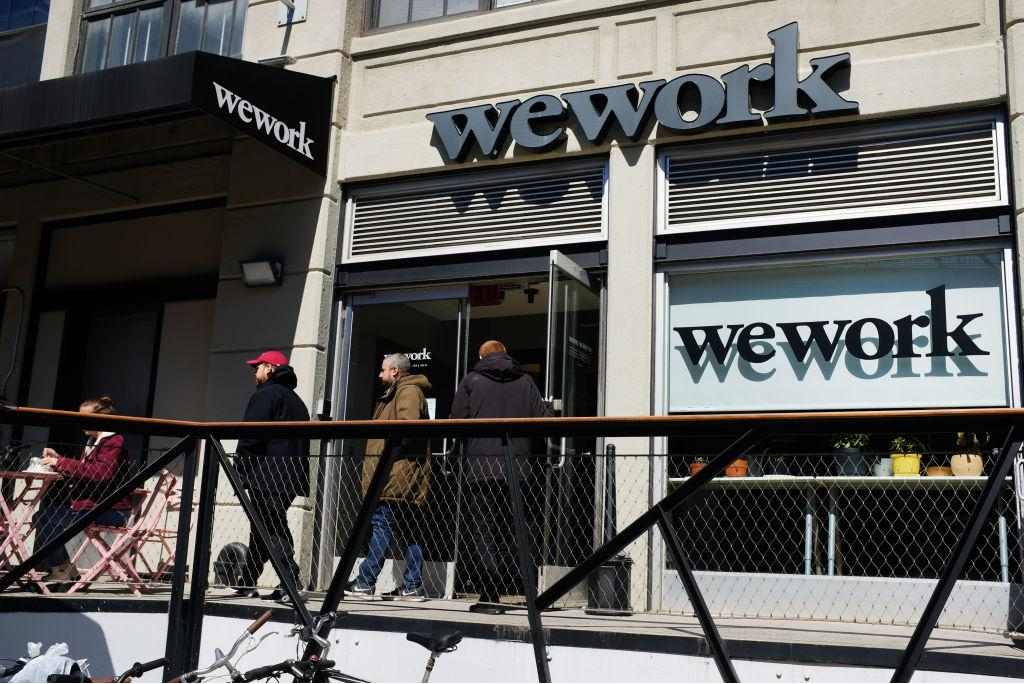
That brings me to the news that the CEO of WeWork, Adam Neumann, has resigned, though he remains as non-executive chairman of parent company We. WeWork is a real estate company in U.S. but with digital nativity, and has lost billions of dollars since its founding,. Yes, the difference between it and a typical real estate is the same as the one between twelve and a dozen. Sure – it rocks and is extremely exciting.

Major layoffs are all but inevitable at high-flying real estate startup WeWork after Adam Neumann succumbed to pressure today to step down as CEO and take the role instead of non-executive chairman of the company he cofounded nine years ago.

Two well-placed sources tell us that the scope is likely to be massive, and includes some of of its newest business divisions, which these same sources anticipate will be jettisoned to get the company’s focus back on its core business. One of these sources speculates that over time, up to half of WeWork’s 15,000 employees — 9,000 of whom have been brought on in the last two years — could be laid off to shore up the unprofitable company’s expenses. The sentiment echoes a new piece in The Information that reports a “group of executives from WeWork’s parent company and bankers” have discussed laying off as many as 5,000 employees—a third of its workforce.

WeWork’s valuation rose to $47 billion driven by the backing of Japan’s SoftBank. But as WeWork went public, public investors (“the people”) started seeing what they did not like. Within days, the company valuation fell from $47 billion to $19 billion to even $3 billion (if you believe the Financial Times). What happened? WeWork leadership carelessness on corporate governance.

This brings me to We Company, the parent of WeWork, a quasi-technology real estate company that operates mainly in U.S. We Company last raised private capital at a valuation of $47 billion. It wanted to go public and had filed paperwork with road shows planned. But it has many governance issues, triggering scenarios that its public valuation could fall below $20 billion. So the road show is cancelled and the IPO is postponed, the Wall Street Journal notes..

Now, SoftBank is possibly going to lose billions of dollars (in the interim); other investors will also have red eyes. Yet, you cannot claim that these companies and the extremely “brilliant investors” did not see the mess. But they ignored everything, hoping they could package the mess for the public investors to swallow for them.

No man can cook enough food for his whole village. But a village can always cook more than enough for a man. The point is this – never really think that these investors from all those great brands are smarter than “all of us”. Yes, do not be intimidated because the WeWork case has shown one thing: no one can understand any company until the village has tasted its food.

WeWork’s food is not tasting great at the moment; it has taken the meal back home with the IPO temporarily frozen. It plans to go back, update its recipes and return in the near future to the public market. But the damage has been done to the brand: most investors will not taste any meal coming from WeWork in the very near future.

Do the right thing – and always remember the brethren; all of them, as a tribe, will always be smarter than you!  The market is smarter than WeWork investors. Simply, for WeWork, there is no winner here as they have just lost a leader and possibly imperiled the company in the process. Uber has not recovered, in many ways, since the founder, Travis Kalanick, left; WeWork may experience the same decline as Adam departs. 

For years, he convinced private investors that WeWork, a company that leases space from landlords, renovates it, slices it up into offices, and rents them out at a premium, was worth more than every other office-rental company. It was Neumann’s charisma, conviction, and unfettered ambition—he has spoken about WeWork Mars, running for president of the world, and becoming the first trillionaire—that built WeWork into one of the world’s most valuable startups, with operations spanning 111 cities in 29 countries.

Then, in August, WeWork filed for an initial public offering, and in doing so exposed a raft of curious and troubling details about the inner workings of the company, which rebranded earlier this year as The We Company, or We.

Imagine – someone could have called Adam to order, reminding him that he would meet the village one day!

The Risk-Reward Geography of Africa

1

In secondary school, you might have learnt that action and reaction are equal and opposite (at least in the simple world). Extend that to business, you will understand that risks correlate with opportunities, but to be a good value builder, you must minimize those risks within the domains of the opportunities. 

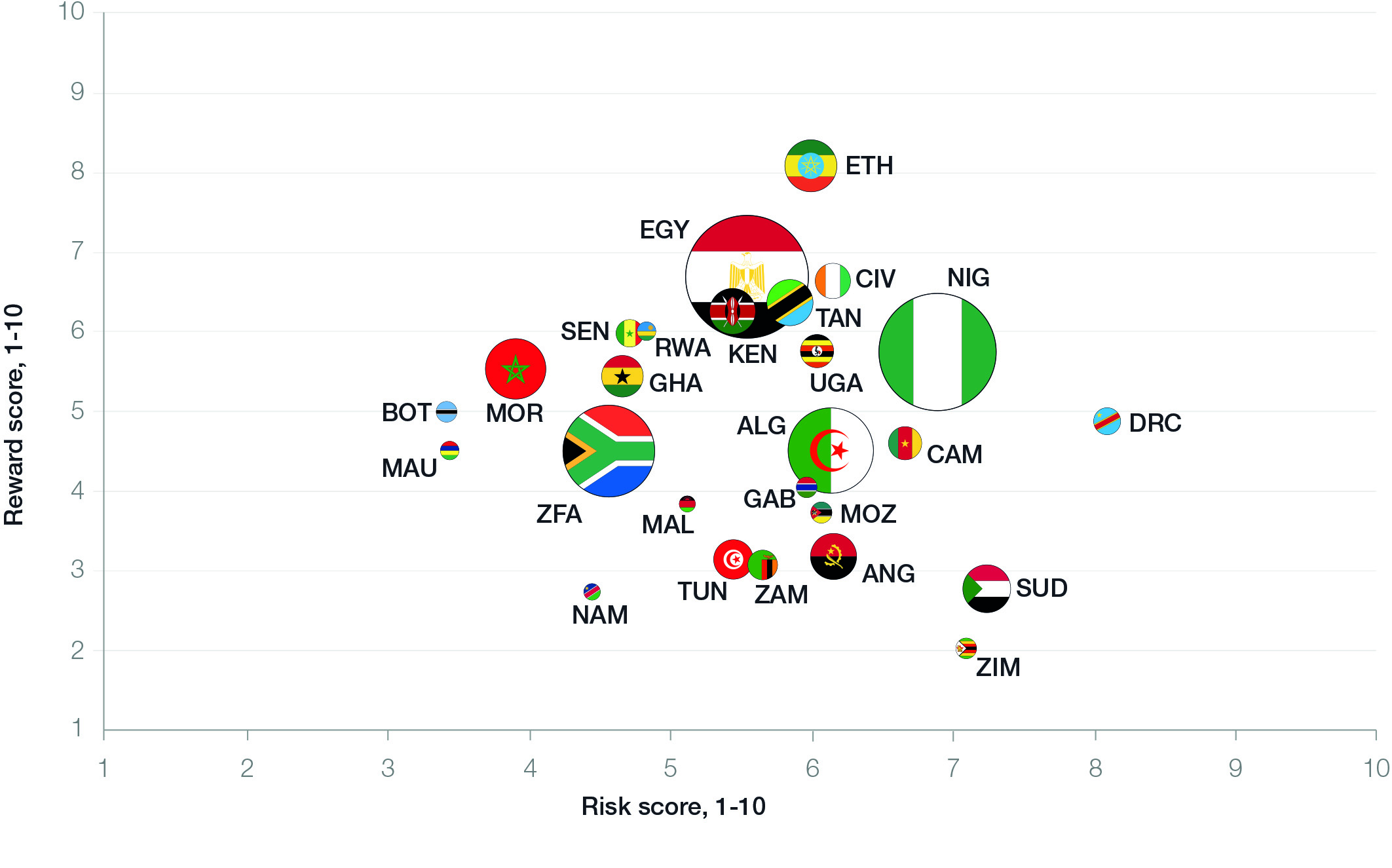
Just after hitting submit button on this piece which ran earlier this morning, I received this press release from Control Risk. Did you see Nigeria? Huge Risk but also massive Reward. That is the state of Africa in general – and if you want to eliminate all the risks, you will never buy a ticket from that Switzerland, Sweden or New York to venture into Nairobi, Lagos or Accra.

In short, do not pray that all the risks are gone. If they disappear, Warren Buffett will find Nigeria attractive. And by the time he pumps in $billions, you could be a spectator in that sector. That does not mean that we should not deal with our obvious bottlenecks, my thesis is this: risks will always be here, either from the paralysis in Nigeria or new species of competitors. If you have a habit of running away from them, you will never take action.

Read the press release below.

 The fourth edition of the Africa Risk-Reward Index from specialist global risk consultancy Control Risks (ControlRisks.com) and independent global advisory firm Oxford Economics (OxfordEconomics.com) has been released today. The report offers a comprehensive and up-to-date view of the highly-dynamic business investment landscape in Africa. The respected index tracks the evolution of the investment landscape in major African markets, and this year’s edition marks several important and intriguing trends that impact investment strategy across the continent.

The benchmark research recognises that elections in African markets can often fuel tensions and raise investment concerns. However, it also demonstrates how elections increasingly serve to stabilise Africa’s evolving political landscape. It is crucial to identify how elections can end prolonged uncertainty, provide legitimacy, and empower existing or new African leaders with the mandates required to push forward with reform or counter-reform agendas.

“Do not get carried away by enthusiastic reform promises by assuming that reform-minded ‘strong-man’ leaders can push their way through free of any constraints,” Barnaby Fletcher, Associate Director Analyst at Control Risks, warns. “The real political lesson of recent years is to not underestimate the strength of counter-reform efforts by existing political structures, as well as the complexity of the undertaking, ” he explains.

African investment has traditionally been dominated by its big economies but the long-awaited emergence of intercontinental trade blocs is shifting the balance of power. The paper explores the huge potential significance of introduction of the African Continental Free Trade Area (AfCFTA) in late May, while raising some concerns about its implementation. It also analyses the significant progress made by regional blocs such as the strengthening East African Community (EAC).

“The current edition of the index shows a slight increase in reward scores for some of the continent’s largest economies, including Nigeria, Angola, and Egypt, as the economic recoveries in these giants gain traction. However, the highest reward potential remains centred in the East Africa region, with expanding services and infrastructure development boosting demand and improving business environments,” says Jacques Nel, Chief Economist Southern & East Africa of Oxford Economics.

The comprehensive paper also tackles common misinterpretations of the external influences affecting African economies. Africa is no longer an even battlefield for US and Chinese players as commonly thought. Current US-Africa totals USD 39bn, while China-Africa represents more than USD 200bn, and EU-Africa trade is now over USD 300bn according to data revealed in the paper. The research also notes a surge of interest in Africa from smaller geopolitical players such as Russia, the Gulf states, Turkey, and India.

“The standard narrative of US-China rivalry in Africa had always looked like an over-simplification, but is certainly outdated now. China’s engagement with Africa is undergoing a fundamental shift, the US is playing catch-up, and a host of other countries are seeking to expand their influence in an increasingly multipolar landscape,” explains Barnaby Fletcher, Associate Director at Control Risks. “Geopolitical objectives are being supported by a flood of development finance, creating both opportunity and competition for private-sector players.”

Africa remains a desirable investment destination with a young and increasingly urban demographic, a wealth of natural resources, and a proven ability to leapfrog technologies in areas such as telecommunications or finance. The growing competition for investment across the continent is helping to promote reform, which in turn encourages greater investment. In Africa, diversification increasingly equals success and economies can no longer rely on merely holding the most mineral resources.

“Especially at a time of a trade war, which threatens to further depress Chinese demand for commodities and global demand for oil and gas, dependence on raw commodities exports is a serious weakness for an economy. It is for this reason that governments are competing to attract investment capital and firms in order to grow their manufacturing and services sectors, to supply goods and services to the many millions of Africans moving to the continent’s cities,” says François Conradie, Head of Africa Research at Oxford Economics.

For the less experienced investor in Africa, the index offers a comparative snapshot of market opportunities and risks across the continent – offering critical information for market entry strategies. For the more seasoned Africa investor, the index provides a grounded, longer-term outlook of key trends shaping the investment landscape in major African economies. The Africa Risk-Reward Index goes beyond the headline-grabbing news and noise surrounding the topic to provide an informed view on investment into Africa.