DD
MM
YYYY

PAGES

DD
MM
YYYY

spot_img

PAGES

Home Blog Page 6665

President Buhari Dissolves Investigation Panel Over Irregularities

0

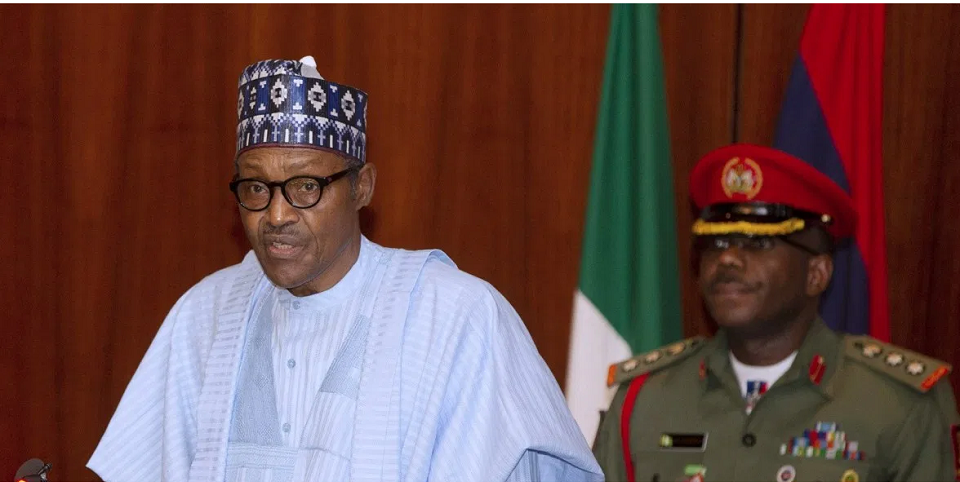
President Buhari has dissolved the Special Presidential Investigation Panel for Recovery of Public Property, (SPIP) headed by Mr. Okoi Obono-Obla.

In a statement signed by his Special Adviser on Media and Communication, Femi Adesina, Buhari disclosed his decision to put an end to the controversial panel.

Vice President Yomi Osinbajo, in his capacity as the acting president,  set up SPIP in August 2017, and appointed a 4-man panel, which Obono-Obla, who was then the Special Adviser to the President on Anti-corruption, was the head.

Series of allegations of misconduct trailed the SPIP,  in just 2 months after inception, prompting the vice president to write the panel a cautionary letter.

The letter did nothing to cautionary effect as complain of anyhowness continued to dent the image of the panel, especially, the chairman himself, Obono-Obla.

The vice president became worried that the Panel was flouting every rule in which it was established upon through its activities despite his repeated cautions.

In November 2017, President Buhari ordered Obono-Obla to stop every operation in his capacity as the head of SPIP, as investigation has commenced into the alleged excesses of the Panel. In December 2018, the Ad-hoc Committee set up by the House of Representatives to investigate the allegations called for the prosecution of Obono-Obla.

In the report submitted by the Committee’s Chairman, Aliyu Pategi, Obono-Obla was indicted for forgery and abuse of office.

It was based on these developments that the usefulness of SPIP came into serious questions. And evidently, the presidency believes it has overstayed its essence.

Therefore, the Attorney General of the Federation and Minister of Justice has been directed to immediately take over all outstanding investigations and other activities of the SPIP.

Meanwhile, Obono-Obla is still under the investigation of Independent Corrupt Practices and other related offences Commission (ICPC), and President Buhari is looking forward to receive the report as soon as possible.
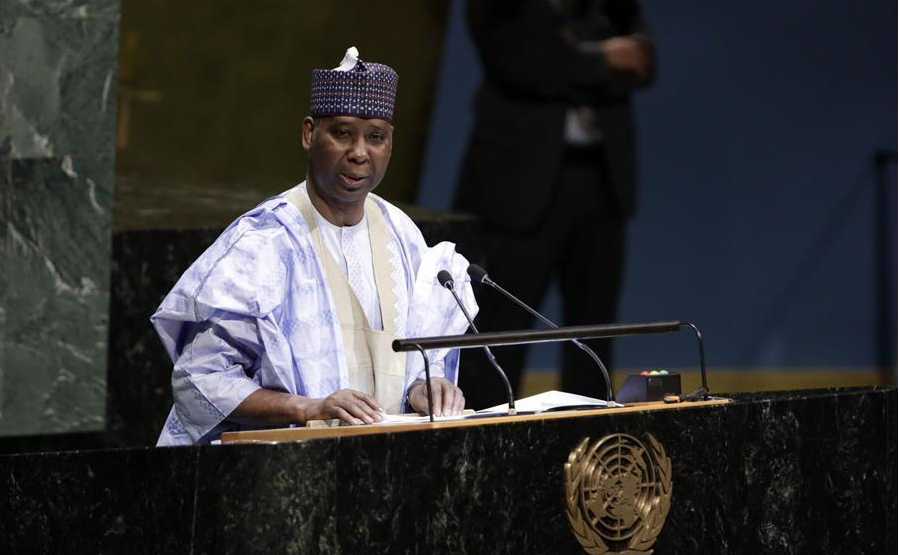
The Challenge Ahead for New UNGA President, Muhammad-Bande

0

The United Nations General Assembly (UNGA) has a new president. His name is Prof. Tijjani Muhammad Bande, permanent representative of Nigeria to the United Nations (UN).

Prof. Bande received a B.Sc in Political Science from Ahmadu Bello University, in 1979, in Northern Nigeria. And he proceeded for his Masters at Boston University, USA, in 1981. In 1987, he bagged his Ph.D. in Political Science at the University of Toronto, Canada.

17 years into his academic career that started in 1980, at Usman Danfodiyo University, Sokoto Nigeria, he rose from a Graduate Assistant to a full professor.

It has been a score of success in his many fields of play, which didn’t stop when he became the permanent representative of Nigeria to the UN. He served as the Vice President of the General Assembly during the 71st session, and also as the Chairperson of the UN Special Committee on Peace keeping Operations (C34), and was a member of the Advisory Board of the UN Counter-Terrorism Center and the Chairperson of ECOWAS Group in 2018/19.

This is the man who has ascended the presidential seat of the United Nations General Assembly. But a lot of challenges await him, though members of the General Assembly believe he has the prodigy to handle them.

It’s been decades since many members of the UNGA began looking for a permanent seat at the United Nations Security Council (UNSC), pushing for reforms that will accommodate other members who seem qualified to take a seat.

Year after year, the negotiation for reform gets pushed over, irritating member countries who believe it’s long overdue. India, Germany, Japan and Brazil, all share the view of the need for reform. The opportunity for reform, based on Intergovernmental Negotiation (IGN), passed by in September following the inability of the preceding President, Maria Fernanda Espinosa, to bring members to a table of agreement.

As Muhammad Bande takes the baton, pressure beckons on him to pull resources together to effect the reform. India, who has criticized Co-Chairs of the IGN for exclusionary approach to the UNSC reforms, has expressed confidence that Muhammad Bande, being an African, will get the job done.

The general reform needed in the UN has been stalled by the inability of IGN to reach a workable consensus on the UNSC reforms: a fact Muhammad Bande acknowledged.

“Negotiations are continuing and they will continue. We will try to hasten those negotiations in the spirit of fairness and in the spirit that an organization 73 years later cannot continue to talk the same language that was spoken 50 – 70 years ago.” He said.

Africa is also pushing to have a permanent member representation in the UNSC, which has made the reform a global goal. But the UNGA President acknowledged that such a goal can only be attained when there is fairness.

“It is a consensus element involving Member States. Progress is being made, we will continue to push this and at some point we will get to the point where the Security Council will be more democratic and more efficient.” He said

He promised that the report of the IGN’s draft will be studied as he pushes to see if there could be compromise among Member States so that the differences could be minimized to the degree of a possible solution.

There are also the challenges of peace and security, hunger, health etc.

The Sustainable Development Goals (SDGs) for these challenges have been falling short. And there is need to double effort if they are to be attained.

For instance, the 2030, Zero Hunger SDG benchmark is far from being a reality. As a result of economic lapses around the world, especially in Africa and Asia. The number of people who go to bed hungry has increased from about 700 million last year to 820 million this year. The need to double up efforts to quell it has become a responsibility the UNGA has to take by spurring member countries to implement sustainable economic policies.

The CBN Gift

2
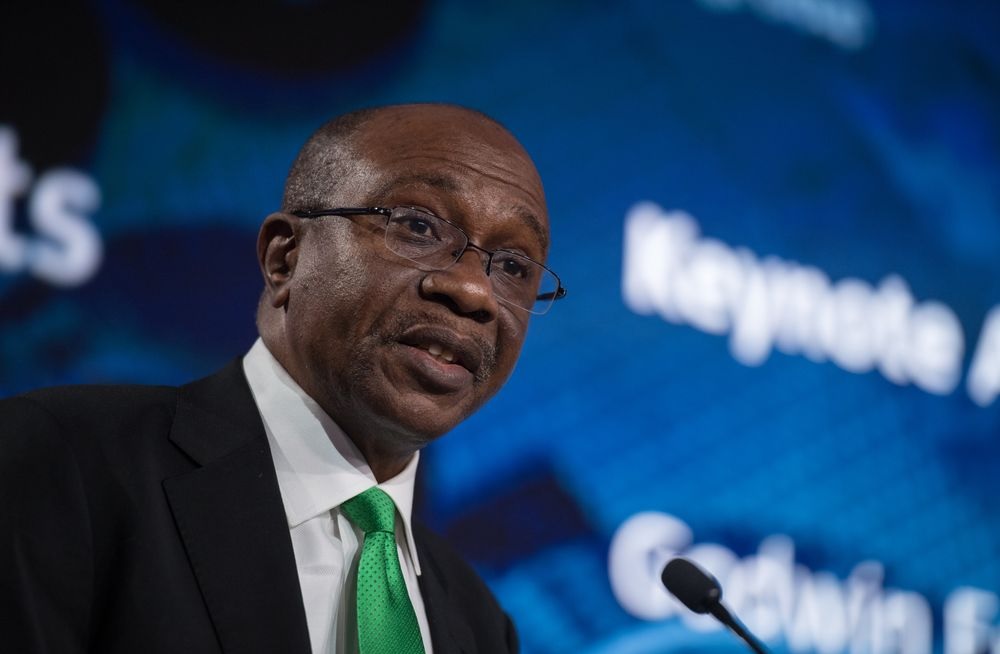
CBN Governor

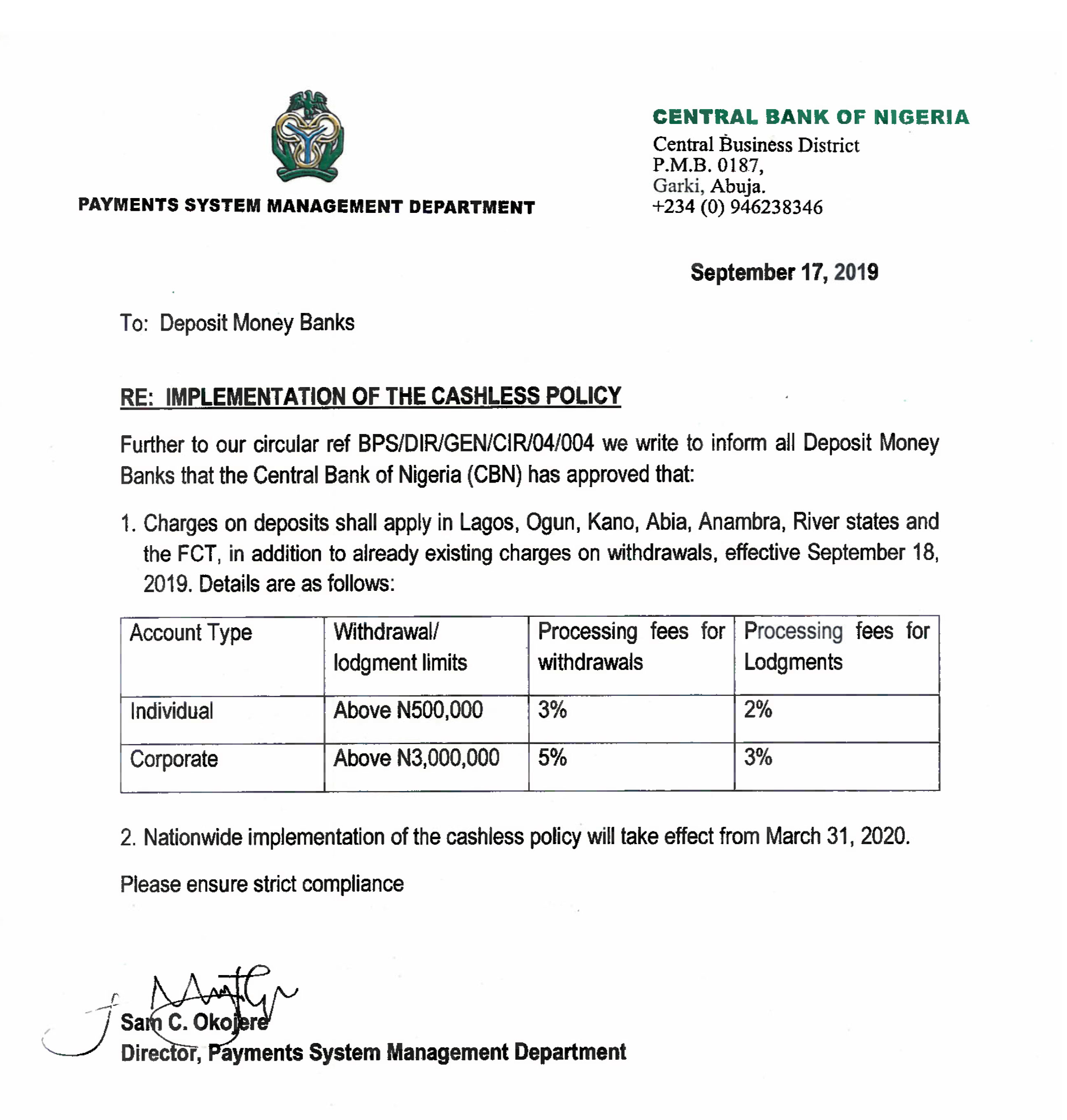
The Central Bank of Nigeria (CBN) has unveiled a policy directive which stipulates that cash lodgements in excess of N500k (individual) and N3m (corporate) will attract 2% and 3% fines respectively. For withdrawals, the fines are 3% and 5% for individuals and corporate respectively. This directive is part of the CBN’s efforts to deepen the cashless policy. 

Of course, if the CBN succeeds on cashless policy, tax receipts will improve in Nigeria. So, this is using one stone to kill two birds in the nation. Already, the tax agency (FIRS) has notified banks to transfer money from accounts of tax defaulters to the Federation account.

“In this regard, you are required to set aside the aforesaid sum and pay same to the credit of these attached companies in full or partial amortisation of its aforesaid tax debt. This should be done prior to the execution of all or any related transactions involving these companies or any of its subsidiaries.

“I further request that the FIRS be informed of any transactions prior to execution on the accounts, especially the transfer of funds to or from offshore or local accounts of these companies or any of its subsidiaries. Only on my authority should such transactions be exited.”

This is actually a great gift to most Nigerian fintech companies. As the 98% cash of the $301 billion consumer transactions shrink, digital payment or broad fintech startups will boom.

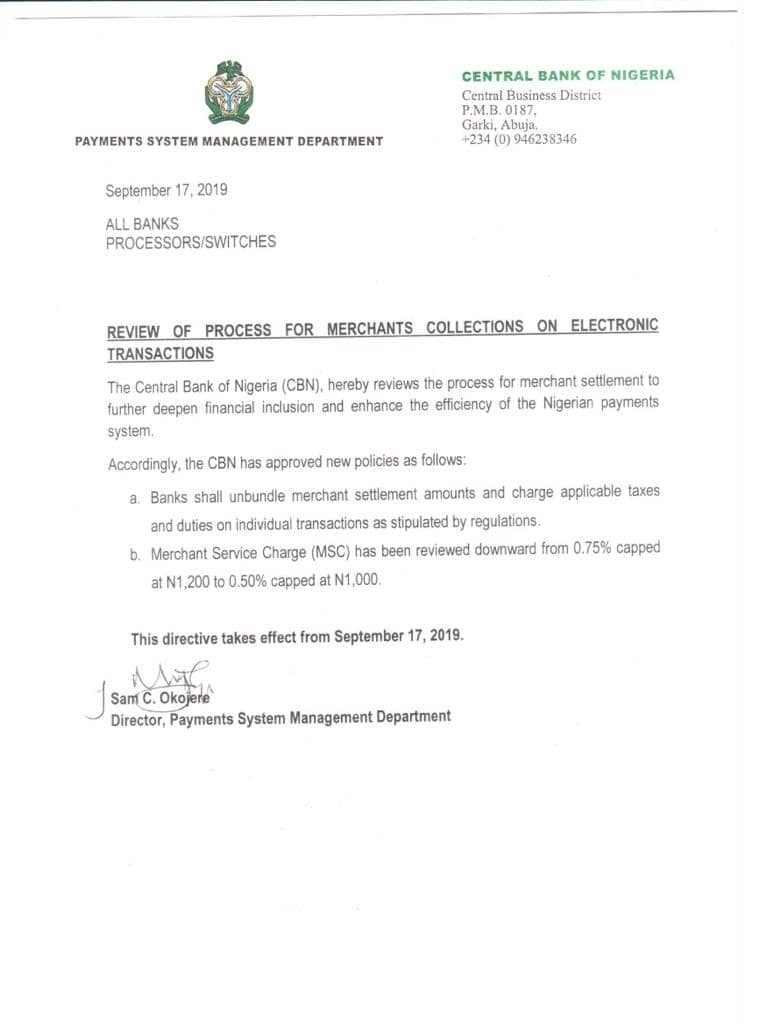
There is also the reduction of fees.

Peace on Zero Revenue Leakage will Reign Supreme in Your State and Nigeria [Video]

Way Forward for TRANEX

0

I was perplexed when I saw the news about TRANEX, a provider of multi-faced logistics and transportation solutions, current market cap being just about US$1 million on the Nigerian Stock Exchange, it means if you bring the right cutlery to the table you could get a whole chunk if not all of the meal. 

I think it’s really sad to know that a company of over 35 years; founded in 1984 to be precise is actually closing up in such a manner when we have newer companies like Kobo360 and GIGL sprouting up and disrupting the market rapidly. 

For worth it’s worth, I have spoken time without number why businesses fail citing two major reasons out of the many reasons I listed; 

1.) Failure to Innovate : you must have an active Technology and Innovation Department and be willing to Innovate to bring convenience to your customers. Convenience I always tell people is the best product any company can sell. Be willing to think outside the box and research widely.

 2.) Inability to Steal : It’s simple average artist create, great and exceptional artist steal, ain’t  nothing being done is new under the sun.

I call on the management of Kobo360 to look into buying off this business and saving of it what remains, I mean they could easily do that after recently raising $30m dollars in funding. This would further cement their stand in the Pan-African global logistics trade.

Nigeria Needs Integration of Advanced Technologies in Fixing Security Challenges

0

Nigeria is currently facing one of its greatest security challenges ever since it attained political independence on October 1st 1960. From the bandits having a field day in some parts of the Northwest, to kidnappers in the South West, and herdsmen clashes in the Middle Belt and parts of the South East and South South, as well as the decade long Boko Haram insurgency, the nation has lost lives and property worth billions of naira.

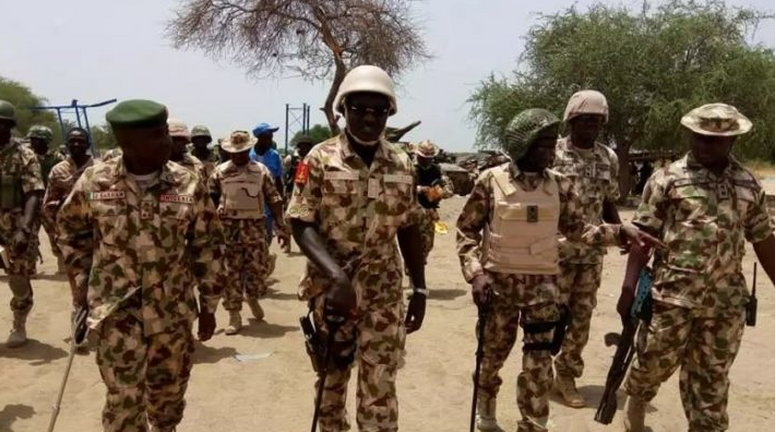
An unsecured nation will not be the darling of investors no matter its economic potentials. Nigeria spends billions of naira on security annually provided for in the budget, yet not yielding expected results. Recently the Boko Haram insurgents have started using drones in monitoring Nigerian troops of the Operation Lafiya Dole Joint Task Force to know when to launch attacks on our combatant warriors.

Now that the future of warfare has gone hi-tech, Nigerian security agencies should invest in deepening its capabilities to defend the nation’s sovereignty internally and externally from threats against its existence in advanced technologies like Cybersecurity, Internet Of Things, Blockchain, Artificial Intelligence, Augmented Reality, Robotics, etc.

Integration of Artificial Intelligence and Robotics into the Defense Headquarters operations will help the Military Operations Centres predict, identify security threats in real time, monitor piracy and bunkering activities within the Niger Delta, attack insurgents autonomously while Augmented Reality can be used in training cadets at the Nigerian Defence Academy and Command and Staff College Jaji, Kaduna on battlefield scenarios. Also, relaying 3D visuals of combatant situation reports and Internet Of Things technologies like smart wearables will capture real time data on all security officers on field mission including their health conditions in case of attacks suffered while the Nigerian Police, Customs and Immigration Services can leverage Blockchain technology to establish a secure non tamperable digital record of all criminal cases, track import and export of goods across Nigeria’s ports, airports and borders as well as store information of all expatriates and will eliminate passport fraud at their offices. Cyber security capabilities can help the EFCC, Police to be effective in the fight against cyber criminals while the Department Of State Services and armed forces will use their knowledge to neutralize domestic and foreign cyber threats to Nigeria’s existence

The National Security Adviser Major General Babagana Monguno(Rtd) should set up a Security Innovation Lab which will set up a programme to train Nigeria’s military and paramilitary units in skills such as Cyber Security, Internet Of Things, Blockchain, Artificial Intelligence, Robotics and Augmented Reality which will enhance their operations for efficiency. Upon their training they should be allocated Research Funding to develop cutting edge technology solutions to the nation’s security challenges and the successful inventions will be developed to become market ready at the Security Innovation Lab incubator which will deploy them to the various units and agencies and commercialized by creating security tech startups that will build solutions for local and global challenges.

The office of the National Security Adviser can learn from the US Central Intelligence Agency which funds security tech startups in order to protect America’s national security interest such as Palantir which is now a multi billion dollar company.