DD
MM
YYYY

PAGES

DD
MM
YYYY

spot_img

PAGES

Home Blog Page 6669

WeWork and Nigeria’s Stock Exchange Latency Lever

3

The Nigerian Stock Exchange is unique for many things. But one surprises me: news hardly move prices of equities in the short-run. It is like investors do not follow the news.  The day an energy company got a big hammer from the Securities and Exchange Commission, I watched to see the impact on the equity. At the end of the day, nothing significant happened. 

A bank CEO was locked up by EFCC over a weekend, the bank equity traded on the Monday largely unchanged. A bank declares record profit, and the next day, nothing significant happens on its valuation. Sure, over time, the trajectory becomes noticeable. 

I have coined a phrase to explain this observation – latency lever; Nigeria has one of the longest in the world. Latency lever is a period between a significant news on a company, and when a visible associated impact (i.e. the lever is pulled) is seen on its traded equity.  In U.S, it is near instantaneous; in Nigeria, give it at least a week!

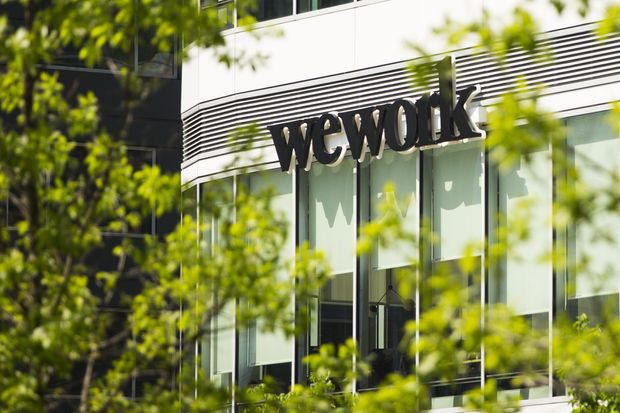
This brings me to We Company, the parent of WeWork, a quasi-technology real estate company that operates mainly in U.S. We Company last raised private capital at a valuation of $47 billion. It wanted to go public and had filed paperwork with road shows planned. But it has many governance issues, triggering scenarios that its public valuation could fall below $20 billion. So the road show is cancelled and the IPO is postponed, the Wall Street Journal notes..

WeWork’s parent postponed its initial public offering after investors questioned how much the company is worth and raised concerns about its corporate governance.

The shared-workspace company—which had planned to begin a roadshow to market the shares as early as Monday ahead of a trading debut next week—shelved the offering until at least next month, people familiar with the matter said.

This company has not even gone public but the impacts of news are evident. Its main backer, Japanese SoftBank Group,  is even facing pushback as it works to raise a new fund from its partners.

The biggest backers of SoftBank Group Corp.’s gargantuan Vision Fund are reconsidering how much to commit to its next investment vehicle as an oversized bet on flexible workspace provider WeWork sours.

Saudi Arabia’s Public Investment Fund, which contributed $45 billion to the $100 billion Vision Fund, is now only planning to reinvest profits from that vehicle into its successor, according to people familiar with the talks. Abu Dhabi’s Mubadala Investment Co., which invested $15 billion, is considering paring its future commitment to below $10 billion, the people said, asking not to be identified in disclosing internal deliberations.

Contrast that with when a bank CEO is locked up by EFCC, a financial crime fighter, and the bank market cap unchanged at the end of the next trading day, you will appreciate the uniqueness of public investors in Nigeria. Yes, that lack of visible action cannot be explained by rules designed to avoid drastic fall on market valuation of companies. Of course, wait for a few weeks, those investors will begin to run. I am not sure if it is due to the structure of the exchange since it has become computerised to a large extent. I just think the investors are unique in how they process information, and take actions on Buy, Sell and Hold.
Employees Are The Problem of Employees

0
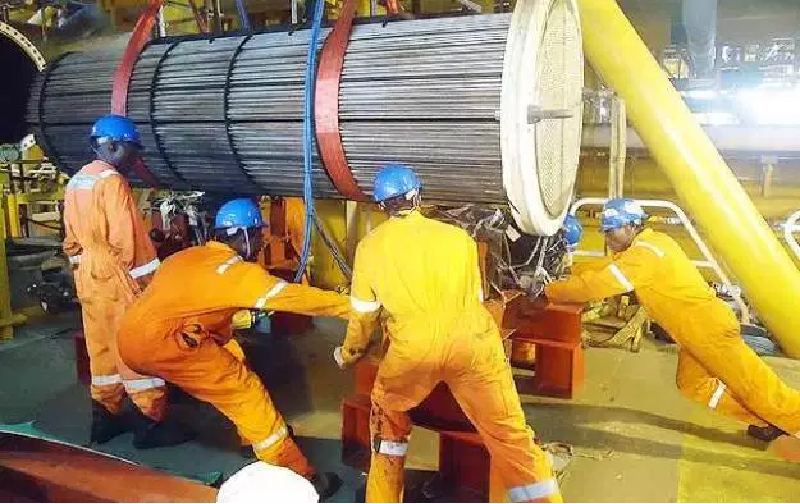
Oil workers

I met a friend who told me about his company.

He asked his supervisor for three days break. He was travelling to Abuja to write a professional exam.

He was granted permission on one condition – the three days off will be deducted from his monthly salary.

So shocking!

Like seriously, do we still have companies that do that?

If a company won’t support the career growth and development of employees, then why is it necessary to work in such a company?

To worsen the matter, he told me – ”If I don’t resume after three days, I will lose the whole of my salary for September.”

That’s so ridiculous. Considering the journey would take him, 5 – 8 hours.

Break it down – he’s writing the exam on Thursday. So he travels for 5 – 8 hours on Wednesday, meaning he will spend the whole day on the road. He writes the exam on Thursday evening and travels back on Friday for another 5 – 8 hours. He’s expected to resume back to work on Saturday.

I have no idea why a supervisor would treat a fellow employee that way. Sometimes, the problem is not the CEO or business owner, I realized that employees are actually the problem of employees in the company.

How?

Unhealthy competition and eyeservice are rampant in some work environments. Employees trying to compete with other employees in order to receive favour from management or to appear like an angel before them.

When unhealthy competitions start to exist in the company, then every employee starts playing games against each other. This causes disunity amongst them and makes it easier for the management to manipulate them.

In the end, employees are always at the losing side because management will replace everyone seen as incapable or unproductive. Or the company closes down, and both employees and employers lose out, making everyone a job seeker again.

Nothing compares to teamwork. Indeed, it makes the dream work.

The first thing every management should strive to have in the company is teamwork. But if management only favours those who work well, that could breed jealousy and envy in the work environment.

Over the course of time, it may end up killing everyone’s morale and productivity. One thing is for sure – ”every worker is important to the company.”

Nigerian Government Sets Up Committee for AMCON’s Debt Recovery

0

The Federal Government of Nigeria, through the office of the vice president, has set up an Inter-Agency task force on the 5 trillion naira Asset Management Corporation of Nigeria (AMCON)’s debt recovery. The office of the vice president announced on Tuesday.

This is coming a day after the Economic Management Team (EMT), headed by the vice president prof. Yomi Osinbajo was dissolved and the new Economic Advisory Council (EAC), was inaugurated.

It appears the vice president is taking a new role in the place of EMT, and it is on AMCON debt recovery. With the challenges that the government has encountered in its bid to recover from debtors the sum of 5 trillion naira, it’s obvious that the method used didn’t work, therefore, the idea of an Inter-Agency Committee was welcomed.

The Committee was tasked to turn the table around in what has been a difficult process that has seen debtors incessantly default in their payment obligations.

According to the statement issued by the office of the vice president: about 67% of the outstanding 5 trillion naira AMCON debt is said to be owed by just 20 individuals or entities.

The vice president charged the Committee to live up to its responsibilities, one of them, developing a workable timeline.

“One of the terms of reference is for the Committee to prepare a report, giving us a sense of what the timeline would be.” He said.

Under the chairmanship of the Chairman of the Independent Corrupt Practices and other related offences Commission (ICPC), prof. Bolaji Owasanoye, the Committee was charged to consider every lawful means in their quest for the debt recovery. Even if it means taking enforcement measures.

“I congratulate you on the very onerous task that has been set, to render this service. I know that, given the kind of individuals here, you will definitely turn this whole narrative around. So I wish you all very well.” The vice president encouraged.

Members of the Committee who are made up of the heads and representatives of financial agencies such as the AMCON, EFCC, NFIU, ICPC, CBN, NDIC and Federal Ministry of Justice, are expected to review the status of all debts in respect to AMCON, consider the practicality of recovery, work out a recovery strategy with specific timelines for completion.

The Importance of Tertiary Education in Nigeria

0
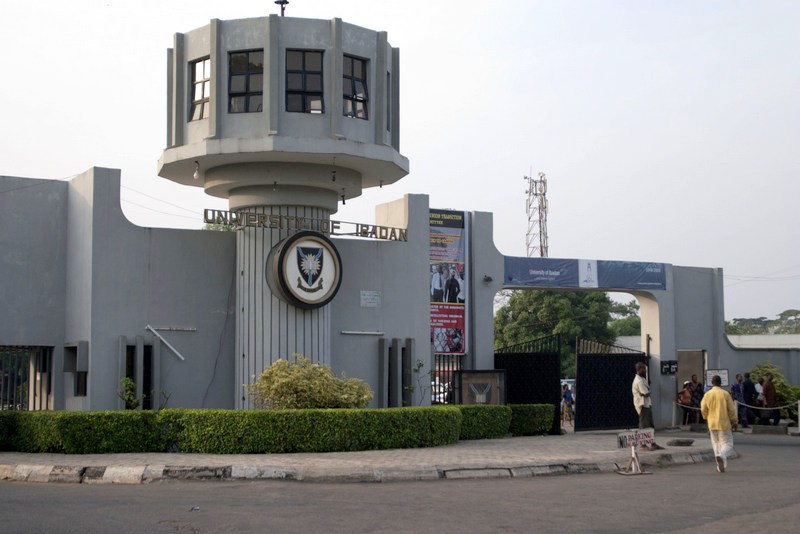
University of Ibadan, a federal university

There is this funny meme someone posted on his WhatsApp status, which showed that Bill Gates and Mark Zuckerberg ‘dropped’ out of school and made it big while a Nigerian dropped out and ended up a Lagos Danfo driver. This meme is quite hilarious but educating. If there is anything I understand from that meme, it is that Nigerians need to pass through higher institutions to be successful in their careers.

I know there are so many Nigerian mega millionaires that aren’t graduates. But most of our billionaires making waves today are all graduates. For instance Aliko Dangote, Mike Adenuga and Abdul Samad Rabiu are all university graduates. Even those that didn’t go to tertiary schools employ graduates to help them set up and manage their businesses. They know the importance of education and that’s why they don’t fill up their establishments with ‘dropouts’.

Nigerians need to change their mindsets about referring to foreign countries that don’t need degree qualifications to offer employments. They should understand that this is Nigeria, where certificates matter. We can’t change this overnight so we need to do whatever we can to sustain ourselves in the country. The only thing I can say that is gradually changing is that skills are becoming important too. So, very soon, certificates alone will not guarantee someone a job in Nigeria.

Besides, I don’t really know which of these countries encourage ‘lack’ of tertiary education because most of them that I know of seek for highly educated immigrants that will join their labour force. Some German universities even went as far as offering free tuition to international students just because they need more graduates to work in their system. So, I believe it is not true that developed countries of the world do not value tertiary education any more. But I believe they want skills in addition to certificates.

I am not saying that everybody must attend a university before becoming successful. What I am trying to point out here is that there is need to go further than secondary school education. Nigeria as it is today does not have enough in the curriculum for her secondary school leavers to acquire needed skills and knowledge that will pull them through their career path. Usually, the higher institutions are the places where Nigerians are introduced to life in the career world. So, if a person can’t make it to the university, he should try out polytechnics, monotechnics, colleges of education and certificate awarding specialised higher institutions. There are so many of them in this country (approved and fully accredited).

There are several reasons why people need to go to higher institutions. These include:

a. Learning from people’s experiences. This is actually very necessary. When you go to a tertiary institution, you will be exposed to both the mistakes and success of others. This means that you will have the opportunity of discovering and avoiding wrong decision makings. In other words, you will learn how to try out new paths towards success.

b. Deeper knowledge of your field. Of course, you will have an intense study into your area of specialization.

c. Acquisition of academic certificates. A lot of people will say that there is nothing in a higher school certificate. But that isn’t true because someone that has a post secondary school certificate can easily fall back on it when he needs to change his source of income. For example, if someone that is self-employed encounters some challenges in his business, he may decide to find a paid job with his certificate until he could sort himself out.

d. Greater advantage in job hunt. People that have higher certificates have added advantages when it comes to getting competitive jobs, especially if they have experience, desired skills and professional certificates.

e. Better status in the society. As far we know, Nigerian society respects knowledge. And the easiest way to showcase your knowledge is by obtaining certificates. In fact in Nigeria, the higher your certificate is, the greater your respect in the society will be.

f. You are an authority. If you happen not to study a course in the university or any other school of higher learning, people will not really trust your ideas and judgements on related matters. I always experience this anytime I discuss matters outside the boundary of the English language. If the discussion requires deeper knowledge about the concerned topic, I am always reminded that I’m going into an unknown zone even if I’m talking out of experience.

g. Healthier self-esteem. I know that if you have an argument with some that didn’t attend a higher institution, he will be quick to remind you that he won’t be intimidated by you because you went to school. I’ve also seen people that went to tertiary schools because they want to obtain certificate to boost their status in the society, not because they want to look for a corporate job or use the knowledge they gathered.

I know most of the reasons people do not continue to higher institutions after their secondary schools is because of fund or UTME ‘frustration’. I’ll advice people like this to attend part-time and weekend programmes in universities and other schools of higher learning. They can also try out National Open University of Nigeria (NOUN), which admits students without JAMB. They may have to look for jobs to keep them busy and help them sort their financial needs.

It is never too late to try. If you don’t have an added certificate to your SSCE, try to enrol into one school of higher learning this September, no matter what you do for a living. Trust me, it will do you a lot of good.

The Indomie Strategy Goes To Business School

2

I received some Thank You notes today from some MBA students somewhere in Africa. They informed me that they enjoyed the Indomie Strategy and how to defend competitive flanks. From The Art of War by Sun Tzu, we learn of the importance of protecting flanks, and by building moats through accumulated capabilities, we rule our markets and become category-kings.

No other company has demonstrated how to defeat Dangote Group in a direct business combat than Indomie maker. The competitive war, on noodles, was not evidently asymmetric, as Dangote Group usually wishes, nevertheless, the moats built by Indomie were enough to win Dangote Noodles, and then bought out the brand!

In this videocast, I explain how the makers of Indomie noodles used the same strategy Dangote Group had deployed across industrial sectors to defeat Dangote Noodles. The  accumulation of capability which Dangote Group uses to crush competitors did not work because Dufil Prima Foods (makers of Indomie) did the same thing from electricity generation to production, for its noodles business. With their vertically integrated business, there was no left efficiency which Dangote could exploit to improve quality and reduce price. At the end, an established brand won and Dangote Noodles could not dislodge the firm.